4000 Days Budget
Updated
Synopsis
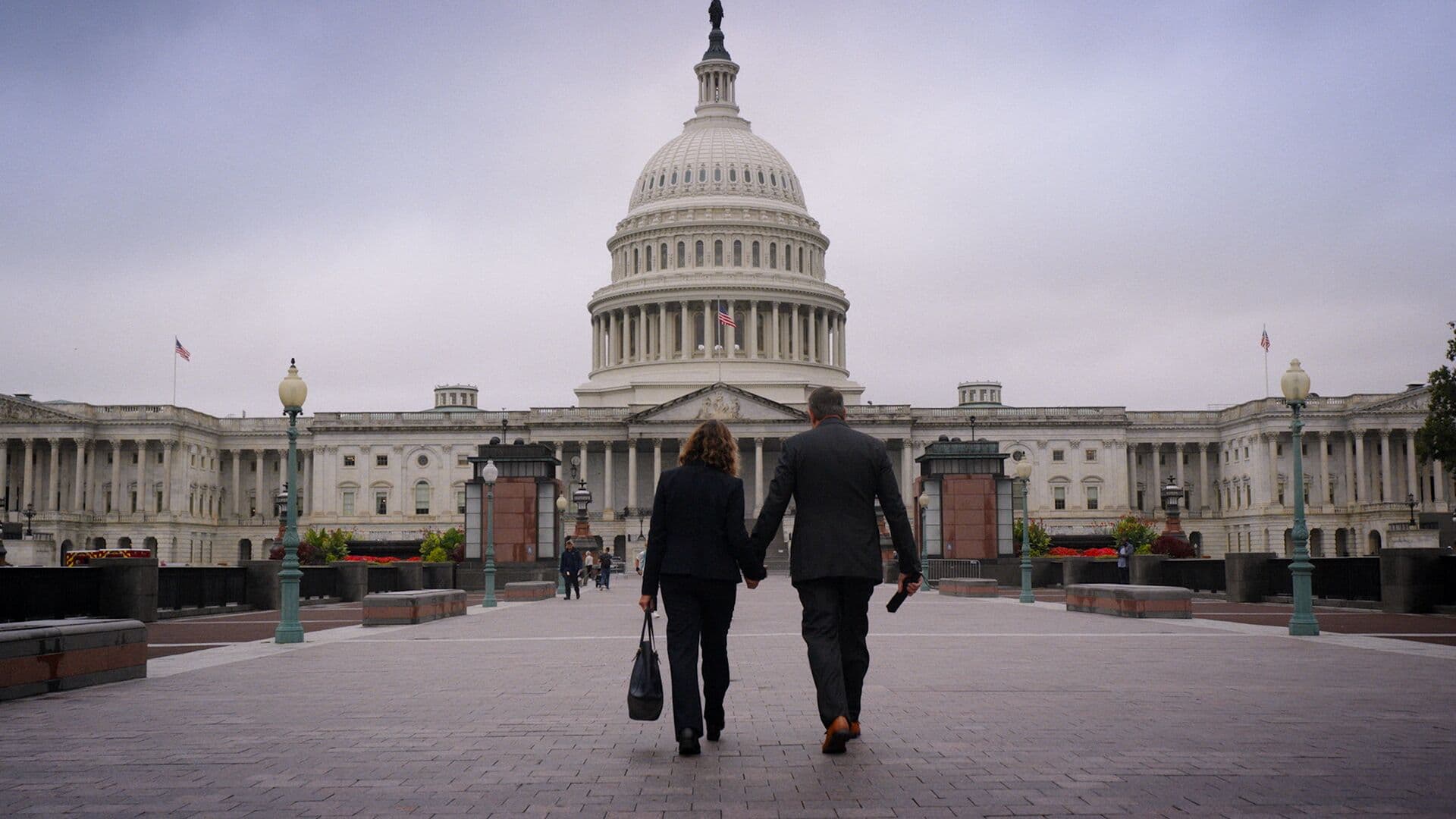
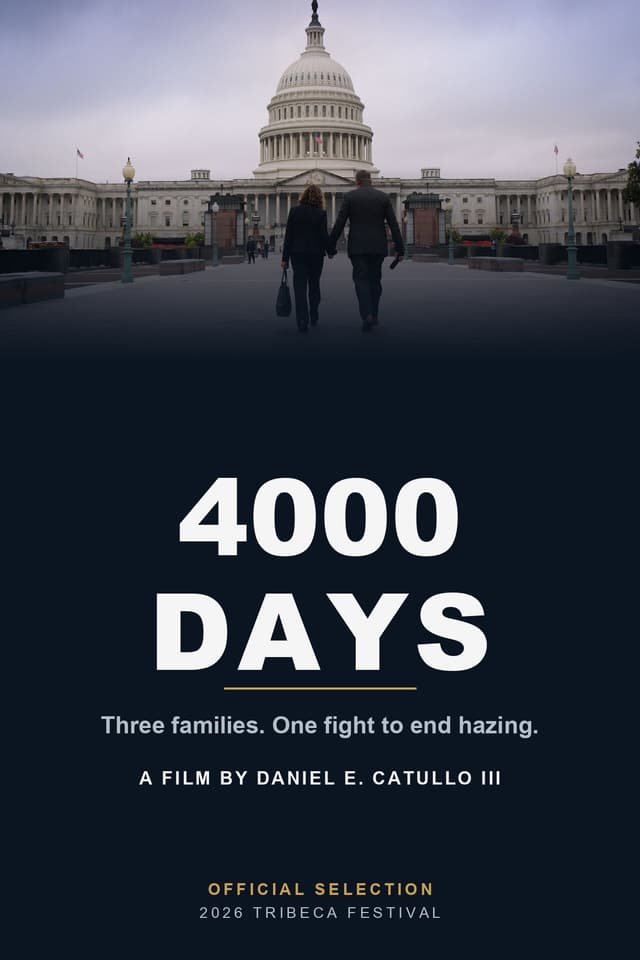
4000 Days is a documentary following three families, the DeVercellys, the Burches, and the Oakeses, who each lost a son to fraternity hazing and turned their grief into a years-long fight for accountability. Chronicling roughly 4,000 days of advocacy, the film traces their campaign from private loss to the passage of the federal Stop Campus Hazing Act.
Directed by Emmy Award winner Daniel E. Catullo III, it is a portrait of resilience and the power of ordinary families to change the law so that no other parents endure the same loss.
What Is the Budget of 4000 Days?
4000 Days is an independently produced documentary, and its production budget has not been publicly disclosed. The film was produced by Daniel E. Catullo III's 10 Lives Studios, an Emmy Award winning film, television, and digital production company, alongside Pie in the Sky Productions, Northstar Media, and Big Plan. Issue-driven documentaries of this kind are typically financed in the low seven figures or below, drawing on a mix of private equity, production-company resources, and advocacy-minded backing rather than studio money.
Unlike a theatrical feature, a documentary like 4000 Days is measured less by what it cost than by the change it set out to create, and on that score it ranks among the most consequential films of its kind. Shot over several years as three families pursued federal anti-hazing legislation, the production prioritized long-term access and authenticity over spectacle, directing its resources toward sustained filming, archival research, and post-production rather than the marketing-heavy budgets of a studio release.
While the documentary's budget was not made public, the production itself was run on Saturation. 10 Lives Studios used the platform for budgeting and production accounting across the film's multi-year shoot, tracking costs from principal photography through post-production and keeping a complex, long-running nonfiction project organized and on budget from first shoot to final cut.
Key Budget Allocation Categories
A multi-year advocacy documentary concentrates its costs in areas specific to nonfiction filmmaking:
- Multi-Year Production: Following three families across years of legislative campaigning required sustained crew availability, travel to multiple states, and repeated shoots over a long timeline rather than a single concentrated schedule.
- Archival and Personal Materials: Licensing news footage, sourcing home videos and family photographs, and clearing archival media to reconstruct each family's story across nearly two decades.
- Interviews and Field Production: Camera, lighting, and sound for intimate sit-down interviews and on-location footage at universities, statehouses, and family homes.
- Post-Production and Editing: Editor Russell Greene shaped years of footage into a 111-minute film, with the long edit, color grading, and sound mix representing a substantial share of any documentary budget.
- Original Score: An original score composed by Richard Patrick, frontman of the rock band Filter, underscoring the film's emotional throughline.
How Does 4000 Days's Budget Compare to Similar Films?
Because 4000 Days has not disclosed its budget, the most useful comparison is to other landmark advocacy documentaries whose figures are known and whose impact, like this film's, was measured in policy rather than profit:
- An Inconvenient Truth (2006): Budget $1,000,000 | Worldwide $49,756,082. An Inconvenient Truth is the model for an issue film that reshapes public debate, proving a modestly budgeted documentary can carry outsized cultural reach.
- Bowling for Columbine (2002): Budget $4,000,000 | Worldwide $58,008,423. Michael Moore's examination of American gun violence, Bowling for Columbine, shows how a single-issue documentary can drive a national conversation.
- Super Size Me (2004): Budget $65,000 | Worldwide $22,172,749. Made for a fraction of a feature's cost, Super Size Me pressured a major corporation to change its menu, the kind of direct, measurable impact that 4000 Days shares.
- Fahrenheit 9/11 (2004): Budget $6,000,000 | Worldwide $222,446,882. One of the highest-grossing documentaries ever made, Fahrenheit 9/11 demonstrates the commercial ceiling that even issue docs can reach with full theatrical backing.
These films establish the company 4000 Days keeps: advocacy documentaries are rarely expensive to make, yet the most effective ones are judged by the change they produce. By helping drive the federal Stop Campus Hazing Act into law, 4000 Days joins the rare tier of documentaries whose real return is written into the statute books.
4000 Days Box Office Performance
4000 Days held its world premiere on June 10, 2026, in the prestigious Spotlight Documentary section of the Tribeca Festival, screening to a New York audience at Village East by Angelika. As a festival documentary that has not yet entered theatrical or commercial distribution, it has no box office gross to report.
Director Daniel E. Catullo III has said the team hopes to bring the film to a streaming platform by the fall of 2026, the distribution path most issue-driven documentaries follow to reach the widest possible audience. For a film built around a legislative advocacy campaign, that reach, rather than ticket sales, is the true measure of success, and by that standard 4000 Days has already made its mark.
4000 Days Production History
4000 Days grew directly out of director Daniel E. Catullo III's earlier work. After making an Emmy Award winning documentary about the 2014 hazing death of Nolan Burch at West Virginia University, Catullo was drawn deeper into the cause and into the lives of other families who had endured the same loss. The film expanded to follow three couples: Gary and Julie DeVercelly, whose son Gary Jr. died in 2007 at Rider University; TJ and Kim Burch, who lost their son Nolan in 2014; and Eric and Linda Oakes, whose son Adam died in 2021 at Virginia Commonwealth University.
Filmed over several years, the documentary tracks the families as they move from private grief to public advocacy, lobbying lawmakers and building a coalition to hold universities and fraternities accountable. Its title refers to the roughly 4,000 days it took for their campaign to culminate in the bipartisan Stop Campus Hazing Act, federal legislation requiring colleges to report hazing incidents and implement prevention and awareness programs, a landmark victory the film documents from the inside.
Catullo served as director, writer, and producer through his company 10 Lives Studios, working alongside producers Russell Greene and David Kernan, cinematographer Michael Candelori, and composer Richard Patrick. Paris Hilton joined as an executive producer alongside the DeVercellys and other backers. Across the film's long production, 10 Lives Studios managed the documentary's budgeting and production accounting on Saturation, keeping the multi-year effort organized through to its acclaimed world premiere at Tribeca in June 2026.
Awards and Recognition
4000 Days earned a coveted place in the 2026 Tribeca Festival's Spotlight Documentary section, a lineup reserved for the year's most notable nonfiction films, where it held its world premiere on June 10, 2026, to a strong audience response.
As a newly premiered title, the film is only beginning its festival and awards journey. Its selection for Tribeca's Spotlight Documentary slate marks an auspicious launch, signaling industry recognition of both its craftsmanship and the national importance of its subject, and positioning it well as it moves toward a wider release.
Critical Reception
4000 Days drew a warm response at its Tribeca premiere, with critics praising its emotional power and the urgency of its advocacy. Next Best Picture rated the film a strong 8 out of 10, calling it "an intimate, raw, and emotional testimony of parents fighting for government reform that is both educational and inspiring." Reviewers singled out the film's unflinching access to the three families and its skill in turning private grief into a clear, galvanizing call for change.
Coverage across outlets including Fox News, ScreenRant, and Elements of Madness echoed that praise, highlighting the documentary's powerful through-line connecting personal tragedy to the historic passage of the federal Stop Campus Hazing Act. As a world premiere its critical record is still growing, but the early consensus is clear: 4000 Days is a moving, purposeful film whose impact reaches well beyond the screen.
Frequently Asked Questions
What is the budget of 4000 Days?
The production budget for 4000 Days has not been publicly disclosed. It is an independently produced documentary from Daniel E. Catullo III's Emmy Award winning company 10 Lives Studios, and advocacy documentaries of this scale are typically financed in the low seven figures or below through private and production-company funding rather than studio money.
What is 4000 Days about?
The documentary follows three families, the DeVercellys, the Burches, and the Oakeses, who each lost a son to fraternity hazing and spent years campaigning for accountability and reform. The title refers to the roughly 4,000 days it took for their effort to result in the federal Stop Campus Hazing Act.
Who produced 4000 Days?
The film was produced by Daniel E. Catullo III through his Emmy Award winning company 10 Lives Studios, alongside producers Russell Greene and David Kernan. Paris Hilton served as an executive producer with the DeVercelly family and other backers. The production's budgeting and accounting were managed on Saturation across its multi-year shoot.
Where and when did 4000 Days premiere?
4000 Days held its world premiere on June 10, 2026, in the Spotlight Documentary section of the Tribeca Festival, screening at Village East by Angelika in New York City.
Did 4000 Days have a box office release?
No. As a newly premiered festival documentary, 4000 Days has not had a theatrical release and has no box office gross. The filmmakers have said they hope to bring it to a streaming platform by the fall of 2026.
Who directed 4000 Days?
The film was directed, written, and produced by Daniel E. Catullo III, an Emmy Award winning filmmaker and founder of 10 Lives Studios. He came to the subject after making an earlier documentary about the 2014 hazing death of Nolan Burch at West Virginia University.
Whose stories does 4000 Days tell?
It centers on three families: Gary and Julie DeVercelly, whose son Gary Jr. died in 2007 at Rider University; TJ and Kim Burch, who lost their son Nolan in 2014 at West Virginia University; and Eric and Linda Oakes, whose son Adam died in 2021 at Virginia Commonwealth University.
How was 4000 Days received by critics?
The film drew a warm, positive response at its Tribeca premiere. Next Best Picture rated it a strong 8 out of 10, praising it as an intimate and inspiring testimony of parents fighting for reform, and reviewers consistently highlighted its emotional power and the importance of its advocacy.
Filmmakers
4000 Days

Official Trailer
Build budgets like this one in Saturation
Start from an industry-standard feature film template, import the schedule and rates you already have, and let the cost report keep itself current as you spend. Real-time collaboration, no spreadsheets.