Apollo 11 Budget
 DocumentaryHistoryDrama1h 33m
Updated
Synopsis
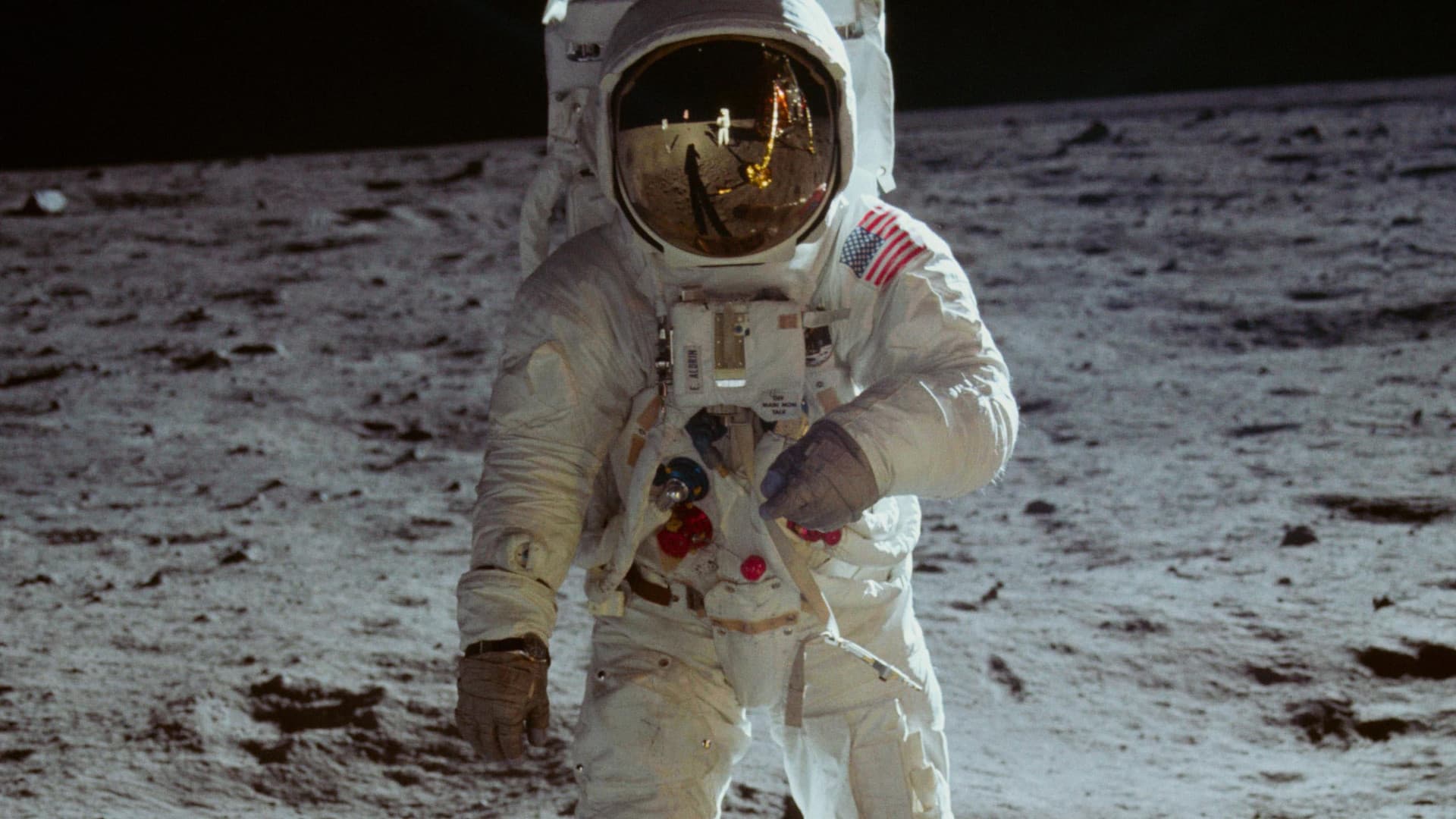
A documentary reconstruction of the July 1969 Apollo 11 lunar mission built entirely from newly discovered NASA archive footage, with no narration, no on-camera interviews, and no contemporary talking-head commentary. Newly unearthed 70mm large-format film of the launch, lunar landing, lunar surface activity, and Pacific Ocean recovery is intercut with internal NASA mission-control audio and Walter Cronkite's contemporaneous CBS broadcast narration.
What Is the Budget of Apollo 11 (2019)?
Apollo 11 (2019), directed by Todd Douglas Miller, was produced on an estimated budget of approximately $1,500,000 to $3,000,000. The figure was not publicly disclosed by Statement Pictures, Moxie Pictures, or CNN Films but aligns with the established American documentary feature budget range for archival-built features. The project was independently financed across Statement Pictures, Moxie Pictures, and CNN Films, with Neon acquiring theatrical distribution rights at the 2019 Sundance Film Festival premiere.
At an estimated $1,500,000 to $3,000,000, Apollo 11 sits within the established American documentary feature budget range. The figure covered approximately three to four years of archival research, the 4K scanning of newly discovered NASA 70mm large-format film originally shot for an unrealized contemporaneous 1970 NASA-supported large-format film project, the synchronization and restoration of more than 11,000 hours of internal NASA mission-control audio, the original Matt Morton score, and the IMAX-and-theatrical distribution preparation through Neon.
Key Budget Allocation Categories
Apollo 11's estimated $1,500,000 to $3,000,000 budget was allocated across the archival-built documentary production model:
- NASA Archive Research and 70mm Film Restoration: The bulk of the production effort and budget was directed at archival research at the National Archives and Records Administration, NASA Houston, and the JFK Presidential Library. The newly discovered 70mm large-format Apollo 11 footage was scanned at 8K and 16K resolution at Final Frame in New York, with the restoration and color correction work driving a substantial post-production line item. Director Todd Douglas Miller has discussed in trade press that the 70mm scanning and restoration was the single largest budgetary line item.
- Audio Synchronization and Restoration: The film synchronizes more than 11,000 hours of internal NASA mission-control audio with the archival film footage. Audio restoration, synchronization, and editing across the massive raw audio corpus drove a substantial line item, with audio specialists and synchronization software development extending across the production window.
- Above-the-Line Talent: Director and editor Todd Douglas Miller worked at an independent-rate documentary-director fee with producer participation. Producers Thomas Petersen and Evan Krauss anchored the production side. The documentary's contributors are limited to archival figures, with no contemporary on-camera interviews or talking-head commentary, reducing the above-the-line talent line item below typical American documentary feature norms.
- Original Score: Composer Matt Morton scored the film with an original electronic-orchestral palette using only synthesizers and sound-design instruments contemporaneous with the 1969 Apollo 11 mission, a creative restriction that anchored the score's period-evoking sonic identity. The soundtrack album was released by Milan Records.
- IMAX and Theatrical Distribution Preparation: The IMAX 70mm large-format theatrical release required substantial mastering, color-grading, and IMAX-specification delivery work. Neon's subsequent theatrical and IMAX distribution drove the broader marketing and distribution investment.
- Festival Delivery and Sundance Premiere: Post-production wrapped ahead of the January 2019 Sundance Film Festival premiere, where the film won the U.S. Documentary Special Jury Award for Editing and was acquired by Neon for theatrical distribution. Festival delivery and the broader 2019 festival-circuit run drove additional festival-strategy line items.
How Does Apollo 11's Budget Compare to Similar Films?
At an estimated $1,500,000 to $3,000,000, Apollo 11 sits within the established American documentary feature budget range:
- Free Solo (2018): Budget approximately $2,000,000 | Worldwide $29,300,000. Elizabeth Chai Vasarhelyi and Jimmy Chin's National Geographic Documentary Films Alex Honnold rock-climbing documentary operated at a comparable budget and earned a stronger worldwide theatrical gross plus the Academy Award for Best Documentary Feature.
- Won't You Be My Neighbor? (2018): Budget approximately $1,000,000 | Worldwide $25,800,000. Morgan Neville's Focus Features Fred Rogers documentary operated at a smaller budget and earned a stronger worldwide theatrical gross.
- 20,000 Days on Earth (2014): Budget approximately $1,000,000 | Worldwide $3,000,000. Iain Forsyth and Jane Pollard's Drafthouse Films Nick Cave documentary operated at a smaller budget and earned a smaller worldwide theatrical gross within the broader documentary feature tier.
- OJ: Made in America (2016): Budget approximately $1,500,000 estimated | Worldwide N/A (television). Ezra Edelman's ESPN 30 for 30 documentary won the Academy Award for Best Documentary Feature, operating at a comparable budget.
- For Sama (2019): Budget approximately $1,500,000 estimated | Worldwide $1,500,000. Waad Al-Kateab and Edward Watts' Channel 4 documentary operated at a comparable budget and earned an Academy Award nomination for Best Documentary Feature in the same year as Apollo 11.
Apollo 11 Box Office Performance
Apollo 11 premiered at the 2019 Sundance Film Festival on January 24, 2019, winning the U.S. Documentary Special Jury Award for Editing. Neon acquired theatrical distribution rights at the festival and released the film in a special one-week IMAX-exclusive theatrical run beginning March 1, 2019, ahead of the broader theatrical expansion on March 8, 2019.
Box Office Breakdown
Apollo 11

The film returned approximately $1.15 to $2.30 in worldwide theatrical revenue for every $1 invested when measured against estimated total production and marketing spend. The IMAX-exclusive first week generated approximately $1,600,000 in 120 IMAX theaters, an exceptional per-screen average that confirmed the IMAX-strategy commercial value of the newly discovered 70mm large-format archive footage.
The broader theatrical expansion across March 2019 and into April and May 2019 sustained strong specialty-theatrical attendance, with the film hitting approximately $9,000,000 domestically and approximately $6,000,000 internationally. The CNN broadcast premiere followed the theatrical window in June 2019, with subsequent home-entertainment distribution through CNN Films, Universal Pictures Home Entertainment, and digital PVOD platforms.
Apollo 11 Production History
Todd Douglas Miller, an established American documentary filmmaker whose previous credits included Dinosaur 13 (2014) and Gahanna Bill (2010), began developing Apollo 11 in 2016 in conjunction with NASA's preparations for the 2019 fiftieth anniversary of the July 1969 Apollo 11 lunar mission. Producer Thomas Petersen of Statement Pictures and Evan Krauss of Moxie Pictures anchored the production side, with CNN Films co-producing.
In 2017 the team discovered substantial previously unreleased 70mm large-format film of the Apollo 11 mission stored at the National Archives and Records Administration. The footage had originally been shot for an unrealized contemporaneous 1970 NASA-supported large-format film project that was never completed, and the footage had remained largely unseen across the intervening half-century. The team commissioned 8K and 16K scans of the 70mm footage at Final Frame in New York.
In parallel the team accessed more than 11,000 hours of internal NASA mission-control audio at the JFK Presidential Library, NASA Houston, and other archives. Audio synchronization with the 70mm film footage drove a substantial post-production line item across 2017 and 2018. Composer Matt Morton developed the original electronic-orchestral score using only synthesizers and sound-design instruments contemporaneous with the 1969 Apollo 11 mission, a creative restriction that anchored the score's period-evoking sonic identity.
Post-production wrapped ahead of the January 2019 Sundance Film Festival premiere in the U.S. Documentary Competition. The film won the U.S. Documentary Special Jury Award for Editing, with Neon acquiring theatrical distribution rights at the festival. Neon released the film in a special one-week IMAX-exclusive theatrical run beginning March 1, 2019, ahead of the broader theatrical expansion on March 8, 2019. CNN broadcast the film in June 2019 following the theatrical window.
Awards and Recognition
Apollo 11 received broad critical and awards-circuit recognition, including the U.S. Documentary Special Jury Award for Editing at the 2019 Sundance Film Festival. The film received an Emmy Award for Outstanding Documentary or Nonfiction Special at the 2020 Primetime Creative Arts Emmys, recognizing the CNN broadcast premiere. The film was nominated at the BAFTA Awards for Best Documentary, at the Cinema Eye Honors, and at the International Documentary Association Awards.
The film was not nominated at the Academy Awards for Best Documentary Feature, despite broad critical and industry expectation. The notable Oscar omission drew sustained industry-press attention and was widely cited as one of the most surprising documentary-category exclusions in recent Oscar history. Editor Todd Douglas Miller received Eddie Award nominations from the American Cinema Editors for Best Edited Documentary, alongside multiple year-end critics' awards.
Critical Reception
Apollo 11 received broadly enthusiastic reviews. The film holds a 99 percent approval rating on Rotten Tomatoes based on approximately 235 critic reviews, with a critical consensus praising the newly discovered 70mm large-format archive footage, the immersive sound design, the synchronization of more than 11,000 hours of NASA mission-control audio, and the disciplined absence of contemporary narration or talking-head commentary. On Metacritic, the film scored 88 out of 100, indicating universal acclaim.
Variety's Peter Debruge called the film "the closest you can come to traveling to the moon without leaving Earth," while The New York Times' A.O. Scott described it as "a documentary so immediate and immersive that it feels less like watching history than living through it." Critics broadly praised the IMAX-format theatrical presentation, the Matt Morton score using only 1969-contemporaneous synthesizers, and Todd Douglas Miller's disciplined refusal to layer contemporary narration over the archive material.
Audience reaction tracked the critical reception closely across the theatrical, IMAX, CNN broadcast, and subsequent home-entertainment windows. The film accumulated sustained engagement across the fiftieth anniversary year of the Apollo 11 mission and into 2020. Several reviews flagged the structural challenge of the no-narration approach as occasionally limiting for viewers unfamiliar with the broader Apollo 11 mission context, but the consensus settled on enthusiastic advocacy for the project's craft, archive research, and immersive theatrical experience.
Frequently Asked Questions
How much did it cost to make Apollo 11 (2019)?
The production budget was not publicly disclosed but is estimated at between $1,500,000 and $3,000,000, a figure consistent with the established American documentary feature budget range. The project was independently financed across Statement Pictures, Moxie Pictures, and CNN Films, with Neon acquiring theatrical distribution rights at the 2019 Sundance Film Festival premiere.
Who directed Apollo 11?
Todd Douglas Miller directed and edited the film. Miller is an established American documentary filmmaker whose previous credits included Dinosaur 13 (2014) and Gahanna Bill (2010). Miller spent approximately three to four years developing the project in conjunction with NASA's preparations for the 2019 fiftieth anniversary of the July 1969 Apollo 11 lunar mission.
How did the team discover the 70mm Apollo 11 footage?
In 2017 the production team discovered substantial previously unreleased 70mm large-format film of the Apollo 11 mission stored at the National Archives and Records Administration. The footage had originally been shot for an unrealized contemporaneous 1970 NASA-supported large-format film project that was never completed, and the footage had remained largely unseen across the intervening half-century. The team commissioned 8K and 16K scans of the 70mm footage at Final Frame in New York.
How much did Apollo 11 earn at the box office?
The film grossed approximately $9,000,000 domestically and $6,000,000 internationally, for a worldwide total of approximately $15,000,000, per Box Office Mojo. The IMAX-exclusive first week generated approximately $1,600,000 in 120 IMAX theaters, an exceptional per-screen average that confirmed the IMAX-strategy commercial value of the newly discovered 70mm large-format archive footage.
Does Apollo 11 have narration?
No. The documentary contains no contemporary narration, no on-camera interviews, and no talking-head commentary. The film is built entirely from newly discovered NASA 70mm archive footage, more than 11,000 hours of internal NASA mission-control audio, and Walter Cronkite's contemporaneous CBS broadcast narration from July 1969. The absence of contemporary narration was a deliberate creative choice by director Todd Douglas Miller.
Did Apollo 11 win any awards?
The film won the U.S. Documentary Special Jury Award for Editing at the 2019 Sundance Film Festival and the Emmy Award for Outstanding Documentary or Nonfiction Special at the 2020 Primetime Creative Arts Emmys. The film was nominated at the BAFTA Awards for Best Documentary, at the Cinema Eye Honors, and at the International Documentary Association Awards. The film was not nominated at the Academy Awards for Best Documentary Feature, a widely noted Oscar omission.
Was Apollo 11 released in IMAX?
Yes. Neon released the film in a special one-week IMAX-exclusive theatrical run beginning March 1, 2019, ahead of the broader theatrical expansion on March 8, 2019. The IMAX-exclusive first week generated approximately $1,600,000 in 120 IMAX theaters, an exceptional per-screen average. The IMAX 70mm large-format theatrical release was a centerpiece of Neon's distribution strategy.
Who composed the music for Apollo 11?
Composer Matt Morton scored the film with an original electronic-orchestral palette using only synthesizers and sound-design instruments contemporaneous with the 1969 Apollo 11 mission, a creative restriction that anchored the score's period-evoking sonic identity. The soundtrack album was released by Milan Records alongside the March 2019 theatrical release.
What did critics think of Apollo 11?
The film received broadly enthusiastic reviews, with a 99 percent approval rating on Rotten Tomatoes from approximately 235 critics and a Metacritic score of 88 out of 100 indicating universal acclaim. Critics praised the newly discovered 70mm large-format archive footage, the immersive sound design, the synchronization of NASA mission-control audio, and the disciplined absence of contemporary narration or talking-head commentary.
Where can I watch Apollo 11?
The film is available on streaming platforms including Hulu, the CNN Films catalog through various distribution partners, and major PVOD platforms for digital purchase and rental. The film is also available as a home-entertainment Blu-ray and DVD release through Universal Pictures Home Entertainment. CNN broadcast the film in June 2019 following the theatrical window, and the broadcast version is available through CNN distribution partners.
Filmmakers
Apollo 11

Official Trailer
Build budgets like this one in Saturation
Start from an industry-standard feature film template, import the schedule and rates you already have, and let the cost report keep itself current as you spend. Real-time collaboration, no spreadsheets.