An Inconvenient Truth Budget
 Documentary100 minutes
Updated
Synopsis
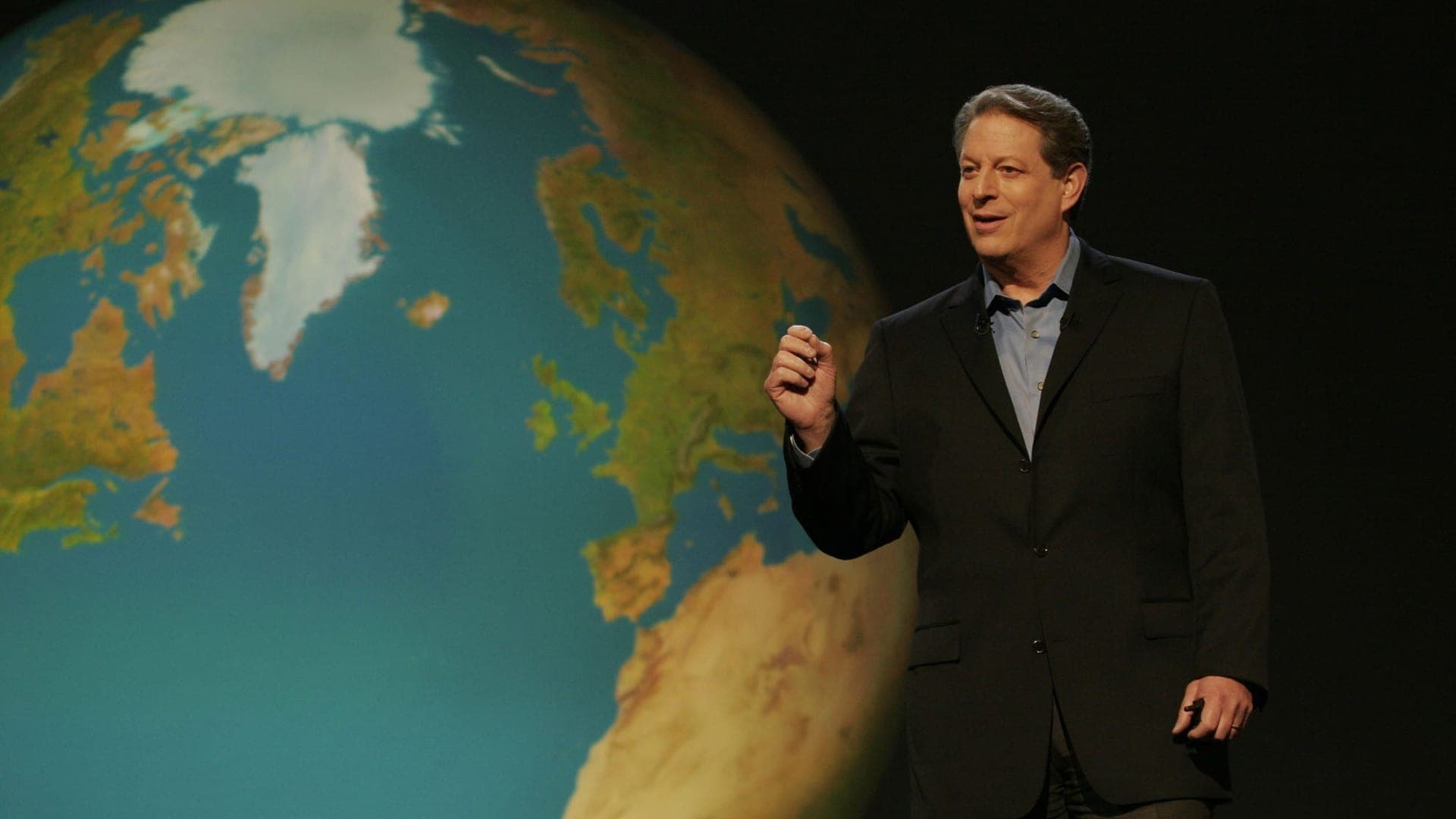
A documentary on the threat that climate change poses to the Earth - it's causes, effects and history and potential solutions to it. Presented by Al Gore through a lecture that he has given to audiences across the globe, plus through more introspective moments.
What Is the Budget of An Inconvenient Truth?
An Inconvenient Truth was produced on an estimated budget of approximately $1 million by Lawrence Bender Productions and Participant Media, making it one of the most cost-efficient documentary productions ever to generate a major theatrical run. The film documents Al Gore's multimedia slide presentation on climate change, which he had been delivering in various forms since the 1970s and had refined into a polished lecture format by the mid-2000s. By the time director Davis Guggenheim filmed Gore delivering the presentation in Los Angeles, Gore had given versions of the talk more than 1,000 times.
The low budget reflects the film's production model: the core content already existed as a fully developed presentation with refined graphics, data visualizations, and Gore's practiced narration. Guggenheim's task was to capture that presentation on film and weave in autobiographical segments connecting Gore's policy career to his personal relationship with the climate issue. The result was a film that cost approximately $1 per view for its 24 million domestic admissions, generating one of the highest production ROI figures in documentary history.
Key Budget Allocation Categories
- Presentation Capture and Stage Production: The centerpiece of the film is Gore's slide presentation, filmed at an unspecified theater in Los Angeles with a live audience. Guggenheim used multiple cameras and lighting setups to capture both the presentation and Gore's physical relationship with the material, including a scissor lift that elevated Gore to reach the top of the climate data chart on screen.
- Director Davis Guggenheim and Crew: Guggenheim, who would later direct Waiting for Superman and It Might Get Loud, brought a television documentary background to the project. His fee, along with the cinematography, sound, and editorial team, constituted the primary above-the-line production cost.
- Graphics and Data Visualization: Gore's presentation incorporated complex scientific data visualizations, historical temperature records, CO2 measurements, and projections. Some of these graphics required updating and reformatting from Gore's own presentation materials for theatrical projection quality.
- Autobiographical Interstitials: Guggenheim shot segments outside the presentation context: Gore in his Tennessee farm, Gore on an airplane, Gore reflecting on the 2000 presidential election and his son's near-fatal accident in 1989, which he credits as a turning point in his commitment to environmental advocacy. These segments required smaller location crews and personal access to Gore.
- Distribution by Paramount Classics: Participant Media partnered with Paramount Classics for distribution. The P&A investment of approximately $4 million was minimal by studio standards but sufficient to position the film as a prestige limited release in major markets, with a platform rollout that expanded as critical acclaim and word of mouth built.
How Does An Inconvenient Truth's Budget Compare to Similar Films?
An Inconvenient Truth occupies a remarkable position in documentary economics: a $1 million production that grossed nearly $50 million worldwide. Its closest comparisons are other single-protagonist advocacy documentaries where the power of the subject rather than production ambition drives the audience.
- Bowling for Columbine (2002): Budget ~$4M | Worldwide $58.0M. Michael Moore's Oscar-winning gun violence documentary found a larger worldwide audience, in part because Moore's confrontational presence is itself a theatrical draw. An Inconvenient Truth matched it in domestic gross despite spending a quarter of the budget.
- Sicko (2007): Budget ~$9M | Worldwide $36.1M. Released the year after An Inconvenient Truth, Moore's healthcare documentary spent nine times as much and earned less than three quarters of the worldwide gross.
- Super Size Me (2004): Budget ~$65K | Domestic $11.5M. Morgan Spurlock's McDonald's documentary showed that advocacy films could find substantial audiences on almost no budget. An Inconvenient Truth scaled that model significantly with Participant Media's distribution infrastructure.
- Fahrenheit 9/11 (2004): Budget ~$6M | Worldwide $222.4M. The commercial ceiling for political documentaries in the 2000s. An Inconvenient Truth did not approach that scale but significantly outperformed every other advocacy documentary of the decade.
An Inconvenient Truth Box Office Performance
An Inconvenient Truth opened May 24, 2006, in four theaters in New York and Los Angeles, expanding progressively as critical recognition and Academy Awards attention built audience awareness. Paramount Classics ultimately expanded the film to over 500 screens domestically. The domestic total reached $24.1 million, an extraordinary result for a documentary built around a PowerPoint presentation. International markets, where climate policy was often a more politically mainstream issue than in the United States, added $25.7 million, bringing the worldwide total to $49.8 million.
Against a production budget of approximately $1 million and an estimated $4 million in prints and advertising, Participant Media and Paramount Classics' total investment was approximately $5 million. With theaters retaining roughly 50 percent of gross, the studio's share of the worldwide theatrical gross was approximately $24.9 million, covering the total investment nearly five times over in theatrical alone, before home video and broadcast licensing.
Box Office Breakdown
An Inconvenient Truth

For every dollar invested in production, An Inconvenient Truth returned approximately $49.76 at the worldwide box office. Even measured against total investment including P&A, the film returned nearly $5 for every dollar spent. It is one of the highest-returning documentary investments in cinema history, a result driven by a pre-existing and fully developed presentation, Academy Award recognition, and the Nobel Peace Prize awarded to Gore and the IPCC in 2007, which re-energized the film's audience long after its theatrical run.
An Inconvenient Truth Production History
Al Gore had been delivering versions of his climate change slideshow since the 1970s, when he was a student in Roger Revelle's oceanography course at Harvard and first encountered the data on atmospheric CO2 accumulation. After his defeat in the 2000 presidential election, Gore returned to the lecture circuit, refining the presentation with updated data and professional graphic design. By 2004, the presentation had incorporated animated sequences, satellite imagery, and historical temperature record overlays that made the scientific data visually accessible to general audiences.
Participant Media co-founder Jeff Skoll saw Gore present the slideshow and recognized it as the basis for a documentary. Davis Guggenheim was brought in to direct, tasked with translating what was fundamentally a lecture into a cinematic experience. Guggenheim's solution was to film Gore delivering the presentation to an audience, capturing both the content and Gore's physical relationship with the material, while interweaving autobiographical segments that grounded the policy argument in Gore's personal history.
Principal photography was completed over a relatively brief production period in 2005, with the main presentation filmed at an auditorium in Los Angeles. The autobiographical segments were shot in Tennessee and other locations significant to Gore's life and career. Post-production required integrating Gore's existing presentation graphics with the documentary footage, a technically precise editorial task given the complexity of the climate data visualizations.
The film premiered at the Sundance Film Festival in January 2006 and was acquired by Paramount Classics for distribution. The Academy Award for Best Documentary Feature in March 2007, along with the Best Original Song award for Melissa Etheridge's 'I Need to Wake Up,' significantly extended the film's commercial life. The companion book, also titled An Inconvenient Truth, became a bestseller and was used as a curriculum text in schools in multiple countries. Gore and the Intergovernmental Panel on Climate Change were jointly awarded the Nobel Peace Prize in October 2007, triggering a second wave of audience interest in the film.
Awards and Recognition
An Inconvenient Truth won the Academy Award for Best Documentary Feature at the 79th Academy Awards in February 2007, along with the Academy Award for Best Original Song for Melissa Etheridge's 'I Need to Wake Up.' The documentary win made it one of the highest-grossing Academy Award winners in the category's history.
The film was nominated for and won the BAFTA Award for Best Documentary. It received the Environmental Media Award and was recognized by the Sierra Club and numerous environmental organizations as a landmark piece of public communication on climate science. The Grammy Award for Best Music Video Short Form was given to the music video version of Etheridge's song. The cumulative effect of the Academy Award, the companion book's bestseller status, and Gore's subsequent Nobel Peace Prize made An Inconvenient Truth one of the most culturally impactful documentaries of the decade.
Critical Reception
An Inconvenient Truth holds a 96% approval rating on Rotten Tomatoes, placing it among the most critically acclaimed documentaries ever released in the United States. Metacritic scored it 83 out of 100. The IMDb rating of 7.4 out of 10 reflects the film's reception across a broader audience that includes viewers hostile to its political and scientific arguments.
Critical praise focused on Guggenheim's ability to make what could have been a dry scientific lecture into a genuinely engaging film experience, and on Gore's unexpected effectiveness as an on-screen presence. Roger Ebert gave it four out of four stars, writing that Gore 'is not running for anything. He is teaching. His audiences consist not of voters but of people who want to learn why they should be worried about the future of the planet.' The New York Times called it 'a necessary film.'
Critics who challenged the film typically did so on political rather than cinematic grounds, questioning the accuracy of specific data projections or the advocacy framing of what they argued should be presented as a scientific question. The film's scientific claims were reviewed and largely validated by independent climate scientists, though several specific predictions have been subject to ongoing revision as climate models have improved. The film's lasting contribution was demonstrating that complex scientific data, rendered visually and delivered by a credible protagonist, could find a mainstream theatrical audience.
Frequently Asked Questions
How much did An Inconvenient Truth cost to make?
The production budget was approximately $1,000,000. Paramount Classics financed the project after the Sundance premiere, with the modest cost reflecting the documentary's primary structure as a filmed version of Al Gore's climate change keynote presentation supplemented by personal-narrative sequences.
How much did An Inconvenient Truth earn at the box office?
The film grossed $24,146,161 domestically and $25,800,000 internationally, for a worldwide total of approximately $49,800,000. It became the highest-grossing documentary at the time of its release and held that record until Sicko (2007) and Michael Moore's subsequent films.
Did An Inconvenient Truth win the Oscar for Best Documentary?
Yes. An Inconvenient Truth won the Academy Award for Best Documentary Feature at the 79th Academy Awards on February 25, 2007. The film also won Best Original Song for I Need to Wake Up performed by Melissa Etheridge.
Who directed An Inconvenient Truth?
Davis Guggenheim directed the film. Guggenheim had previously directed Gossip (2000) and television including Deadwood and 24, and went on to direct Waiting for Superman (2010), He Named Me Malala (2015), and It Might Get Loud (2008).
What is An Inconvenient Truth about?
The film documents former Vice President Al Gore's slide presentation on climate change, which he had been delivering to audiences worldwide for years prior to the production. The film alternates between the keynote material and biographical sequences explaining Gore's decades-long engagement with climate science.
What did critics think of An Inconvenient Truth?
The film received nearly universal acclaim, with a 93% approval rating on Rotten Tomatoes and a 75 out of 100 score on Metacritic. Critics praised the clarity of the scientific exposition and Guggenheim's ability to make a slide presentation cinematically engaging.
Did An Inconvenient Truth get a sequel?
Yes. An Inconvenient Sequel: Truth to Power (2017), directed by Bonni Cohen and Jon Shenk, served as the official follow-up. The sequel grossed $5,400,000 worldwide against a smaller budget, reflecting a significantly more competitive documentary landscape and political fatigue from the climate debate.
How does An Inconvenient Truth compare to other documentaries?
An Inconvenient Truth's $49,800,000 worldwide gross was eclipsed by Fahrenheit 9/11 (2004, $9,000,000 budget, $222,500,000 worldwide) but established the climate change documentary as a commercially viable subgenre. Later climate documentaries including Before the Flood (2016) and Kiss the Ground (2020) followed its model.
Was Al Gore paid for An Inconvenient Truth?
Al Gore donated his fee from the film to the Alliance for Climate Protection, the nonprofit advocacy organization he subsequently founded with the proceeds from the film's success. He also donated proceeds from his accompanying companion book to climate advocacy.
Where can I stream An Inconvenient Truth?
The film is available on Paramount+ as part of the Paramount Classics library. It is also available for digital rental and purchase on Amazon Prime Video, Apple TV, and Google Play, and continues to be widely used in school environmental science curricula.
Build budgets like this one in Saturation
Start from an industry-standard feature film template, import the schedule and rates you already have, and let the cost report keep itself current as you spend. Real-time collaboration, no spreadsheets.