Bowling for Columbine Budget
 DocumentaryDrama120 minutes
Updated
Synopsis
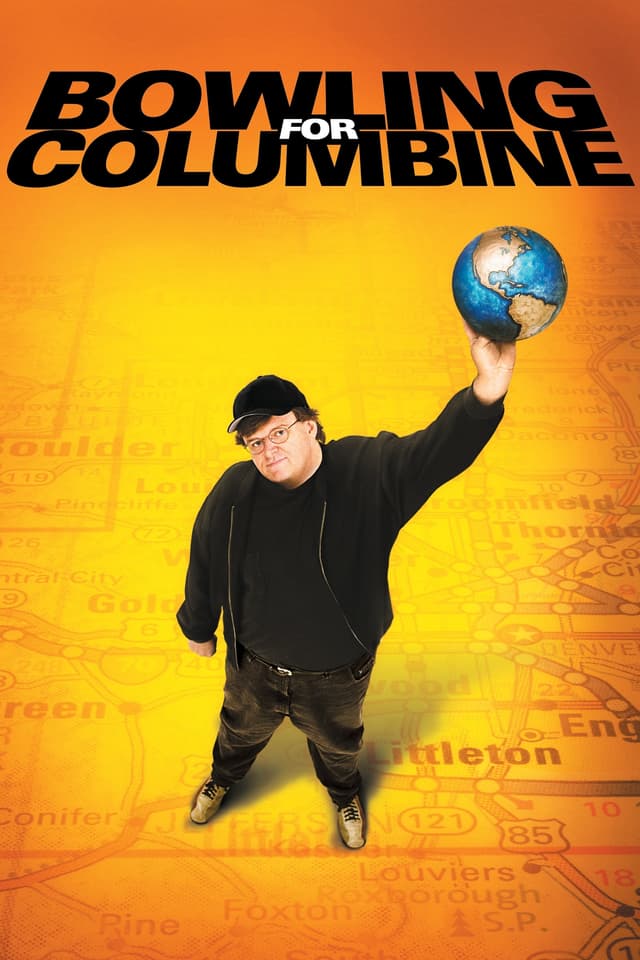
The United States of America is notorious for its astronomical number of people killed by firearms for a developed nation without a civil war. With his signature sense of angry humor, activist filmmaker Michael Moore sets out to explore the roots of this bloodshed. In doing so, he learns that the conventional answers of easy availability of guns, violent national history, violent entertainment and even poverty are inadequate to explain this violence when other cultures share those same factors without the equivalent carnage. In order to arrive at a possible explanation, Michael Moore takes on a deeper examination of America's culture of fear, bigotry and violence in a nation with widespread gun ownership. Furthermore, he seeks to investigate and confront the powerful elite political and corporate interests fanning this culture for their own unscrupulous gain.
What Is the Budget of Bowling for Columbine?
Bowling for Columbine was produced on an estimated budget of approximately $4 million by Dog Eat Dog Films, Michael Moore's production company, in partnership with Alliance Atlantis and United Artists. The film examined gun violence in the United States in the aftermath of the April 20, 1999 Columbine High School massacre, drawing on a combination of archival footage, original interviews, animation, and Moore's characteristic confrontational journalism.
The $4 million budget was modest even by documentary standards, reflecting Moore's production philosophy of minimal crew, maximum access, and the low marginal cost of the direct-camera interview sequences that form the film's backbone. The most expensive sequences in the film were the original animation segments and Moore's personal confrontation with National Rifle Association president Charlton Heston, which required extended access negotiations before Heston agreed to an interview at his Beverly Hills home.
Key Budget Allocation Categories
- Director Michael Moore and Dog Eat Dog Films: Moore wrote, directed, and appeared on camera, performing his characteristic role as a working-class protagonist seeking accountability from powerful institutions. As the sole above-the-line creative force, Moore's fee and his core team at Dog Eat Dog constituted the primary above-the-line cost. Moore had previously made Roger & Me on approximately $160,000; by 2001, his market value and production ambitions had grown substantially.
- Interview Production and Subject Access: The film interviews a wide range of subjects, including Columbine survivors, Marilyn Manson, Matt Stone (co-creator of South Park, a Columbine native), NRA officials, Canadian residents, and Michigan Militia members. Negotiating access, particularly to Charlton Heston and to the surviving Columbine students, required time and production resources. The Heston interview required multiple rounds of negotiation before Moore gained entry to the actor's home.
- Animation Production: Bowling for Columbine includes an original animated segment, "A Brief History of the United States of America," produced by Harold Moss in a satirical style that traces American gun violence through the country's colonial and modern history. Custom animation was a significant budget line relative to the film's total production cost.
- Archival Footage and Licensing: The film incorporates security camera footage from inside Columbine High School during the shooting, news footage of American military actions, NRA promotional films, and historical media coverage of gun violence. Licensing these materials, particularly the Columbine security footage obtained through legal proceedings, was a legally complex and costly component of production.
- Cross-Border Production in Canada: A significant portion of the film was shot in Canada, where Moore explored why Canadian gun ownership rates were comparable to American rates but gun homicides were dramatically lower. The Canadian sequences required a separate production unit and cross-border logistics.
How Does Bowling for Columbine's Budget Compare to Similar Films?
Bowling for Columbine set a commercial record for documentary films at the time of its release, becoming the highest-grossing documentary ever at that point. The benchmark it set was subsequently surpassed by Moore's own Fahrenheit 9/11 two years later.
- Fahrenheit 9/11 (2004): Budget ~$6M | Worldwide $222.4M. Moore's direct follow-up, financed similarly through Lion's Gate and IFC Films after Disney refused to distribute it, became the highest-grossing documentary in history. Bowling for Columbine was the proof of concept that made Fahrenheit 9/11's distribution deal possible.
- Roger & Me (1989): Budget ~$160K | Worldwide $6.7M. Moore's debut documentary established his methodology on a fraction of the budget. The $51 million difference in worldwide gross between the two films reflects both Moore's growing stature and the post-Columbine cultural moment that made the film's subject unavoidable.
- An Inconvenient Truth (2006): Budget ~$1M | Worldwide $49.8M. The environmental documentary that succeeded Moore's gun violence film as a mainstream political documentary event. An Inconvenient Truth earned less worldwide despite spending a quarter of the budget.
- Hoop Dreams (1994): Budget ~$700K | Domestic $7.8M. The critical standard for American documentary filmmaking in the 1990s. Bowling for Columbine vastly outperformed it commercially, reflecting how significantly Moore had expanded the audience for politically engaged documentary work.
Bowling for Columbine Box Office Performance
Bowling for Columbine opened October 11, 2002, in limited release following its world premiere at the 2002 Cannes Film Festival, where it received a special 55th anniversary prize. United Artists expanded the film progressively through the fall, ultimately reaching over 200 screens domestically. The domestic total of $21.6 million made it the highest-grossing documentary in North American history at that time, a record that held until Fahrenheit 9/11 opened in 2004. International markets added $36.4 million, bringing the worldwide total to $58.0 million.
Against a production budget of approximately $4 million and an estimated $5 million in prints and advertising, the total investment was approximately $9 million. With theaters retaining roughly 50 percent of gross, the studio's share of the worldwide theatrical gross was approximately $29 million, covering the full investment more than three times over at the theatrical stage alone.
Box Office Breakdown
Bowling for Columbine

For every dollar invested in production, Bowling for Columbine returned approximately $14.50 at the worldwide box office. The theatrical return alone covered all investment costs more than three times over, making the DVD, television, and international broadcast revenue essentially pure profit for United Artists. The film's commercial success was transformative for documentary distribution, demonstrating that politically engaged non-fiction films could compete with independent narrative features for theatrical screens and audiences.
Bowling for Columbine Production History
Michael Moore began developing Bowling for Columbine in late 1999, months after the April 20, 1999 Columbine High School shooting in which two students, Eric Harris and Dylan Klebold, killed twelve classmates and one teacher before taking their own lives. The massacre triggered a national debate about gun control, violent media, and American culture. Moore was drawn to a specific tension: Harris and Klebold had gone bowling on the morning of April 20, 1999, the day of the shooting, suggesting to Moore that the search for a single cultural cause of gun violence was fundamentally inadequate.
Production ran through 2001 and into early 2002, with Moore conducting interviews across the United States and Canada. The Canada sequences explored Moore's central comparative argument: that Canadian gun ownership rates were nearly as high as American rates, but Canadian gun homicides per capita were a fraction of American figures. Moore visited Canadian homes in Windsor, Ontario, finding unlocked front doors and a cultural orientation toward community safety that he contrasted with the fear-based consumer culture he argued pervaded American life.
The Charlton Heston interview, which ends the film, required the most extended negotiation. Heston was president of the National Rifle Association from 1998 to 2003 and had held NRA rallies in communities including Littleton, Colorado (near Columbine) and Flint, Michigan (Moore's hometown) in the months following those communities' tragedies. Moore approached Heston as the symbolic head of organized gun rights advocacy and asked him directly why he had held those rallies. When Heston attempted to end the interview, Moore confronted him with a photograph of a six-year-old Flint girl who had been shot by a classmate using a gun kept in the classmate's home. Heston walked away from the interview without responding. The sequence became the film's defining conclusion.
The film premiered in competition at the 2002 Cannes Film Festival in May, where it received a special 55th anniversary award acknowledging its social significance. United Artists acquired U.S. distribution rights and coordinated a fall theatrical release timed to coincide with congressional midterm elections and ongoing public debate about gun control following Columbine and the D.C. sniper shootings of October 2002.
Awards and Recognition
Bowling for Columbine won the Academy Award for Best Documentary Feature at the 75th Academy Awards on March 23, 2003. Moore's acceptance speech became one of the most discussed Oscar moments of the decade: he invited his fellow documentary nominees to the stage and delivered a speech condemning the impending U.S. invasion of Iraq, concluding with 'Shame on you, Mr. Bush.' The speech was met with a mix of applause and boos from the audience and generated substantial press coverage that extended the film's cultural reach.
The film also received the César Award from the French film academy, the special Cannes recognition, and a BAFTA nomination. It was named the top-grossing documentary of all time at that point, a record that stood until Fahrenheit 9/11. The American Cinema Editors, the International Documentary Association, and the Writers Guild of America all recognized the film. Moore's Oscar acceptance became the subject of political commentary across the American media landscape for months following the ceremony.
Critical Reception
Bowling for Columbine holds a 96% approval rating on Rotten Tomatoes, making it one of the most critically acclaimed documentaries of the 2000s. Metacritic scored it 81 out of 100. The IMDb rating of 8.0 out of 10 reflects strong audience approval across a broad demographic, though the film has been subject to persistent criticism from conservative commentators who dispute specific factual claims.
Roger Ebert gave it four out of four stars, calling it 'a great documentary' and praising Moore's willingness to pursue accountability from people in power. The New York Times and Los Angeles Times both named it among the best films of 2002, an unusual distinction for a documentary in a year of strong narrative film competition. Critics across the political spectrum acknowledged Moore's effectiveness as a filmmaker even when disagreeing with his conclusions or methods.
The film attracted substantial criticism from journalists and commentators who identified factual inaccuracies or misleading juxtapositions, particularly in the sequences connecting NRA rallies to shooting tragedies and in the animated history segment. Moore responded to specific criticisms in detail. The critical debate about the film's accuracy became itself a subject of documentary journalism, reflecting how successfully the film had engaged the political mainstream. The 96% critical score and Academy Award place it within the highest tier of documentary achievements of the decade regardless of the ongoing factual disputes.
Frequently Asked Questions
How much did Bowling for Columbine cost to make?
The production budget was approximately $4,000,000. Michael Moore financed the documentary through Alliance Atlantis, Salter Street Films, and his own Dog Eat Dog Films, with United Artists handling theatrical distribution in North America.
How much did Bowling for Columbine earn at the box office?
The film grossed $21,576,018 domestically and $36,300,000 internationally, for a worldwide total of approximately $58,000,000. It became the highest-grossing documentary in box-office history at the time of release.
Did Bowling for Columbine win the Academy Award?
Yes. The film won the Academy Award for Best Documentary Feature at the 75th Academy Awards in March 2003. Michael Moore used his acceptance speech to denounce the impending Iraq War, drawing a mix of cheers and boos from the Kodak Theatre audience.
Who directed Bowling for Columbine?
Michael Moore directed, wrote, produced, and narrated the film. Moore had previously directed Roger & Me (1989, $160,000 budget, $7,700,000 worldwide) and went on to direct Fahrenheit 9/11 (2004, $6,000,000 budget, $222,400,000 worldwide).
What is Bowling for Columbine about?
The documentary investigates the causes of gun violence in the United States, using the April 20, 1999 Columbine High School massacre as its anchor. The film interviews Marilyn Manson, Charlton Heston, Matt Stone, and surviving Columbine students.
Where was Bowling for Columbine filmed?
Principal photography took place in Littleton, Colorado, Flint, Michigan, Los Angeles, Toronto, and Sarnia, Ontario. The Canadian sequences contrasted U.S. gun culture with Canadian attitudes toward firearm ownership.
What did critics think of Bowling for Columbine?
The film received strong reviews, with a 95% approval rating on Rotten Tomatoes and a 72 out of 100 score on Metacritic. Critics praised the rhetorical force and emotional impact, while some objected to selective editing in the Charlton Heston confrontation sequence.
Did Bowling for Columbine win at Cannes?
Yes. The film received a special 55th Anniversary Prize at the 2002 Cannes Film Festival, the first documentary to compete in the main competition in 46 years. It also won the Cesar Award for Best Foreign Film in France.
Was Bowling for Columbine profitable?
Yes. Against a $4,000,000 production budget and an estimated $3,000,000 to $5,000,000 in marketing spend, the worldwide gross of $58,000,000 produced an exceptional return for a documentary, exceeding 7x its total investment in theatrical revenue alone.
How does Bowling for Columbine compare to other Michael Moore films?
Bowling for Columbine outperformed Roger & Me (1989, $7,700,000 worldwide) and Sicko (2007, $25,000,000 worldwide), but was eclipsed by Fahrenheit 9/11 (2004, $222,400,000 worldwide), which remains the highest-grossing documentary of all time.
Official Trailer
Build budgets like this one in Saturation
Start from an industry-standard feature film template, import the schedule and rates you already have, and let the cost report keep itself current as you spend. Real-time collaboration, no spreadsheets.