
Fahrenheit 9/11 Budget
 Documentary123 minutes
Updated
Synopsis
Following up on 'Bowling for Columbine', film-maker Michael Moore provides deep and though-provoking insights on the American security system, the level of paranoia, fear, uncertainty, false values and patriotism, which all combined together to set a stage for George W. Bush to launch a war on Iraq instead of focusing on getting the real culprit(s) behind the terrorist attacks of September 11, 2001. This documentary also focuses on how some Saudis were safely and secretly flown out of America while planes were ostensibly grounded after the attacks. Archived film footage, candid interviews with politicians, and an overall waste of public funds for a war that was initiated on false pretension to wit: a weapon of mass distraction - to take the focus away from the real enemy and get Americans glued to their TV sets to watch innocent Iraqis and Afghans getting killed. And a war that would eventually alienate the U.S.A. and its citizens from almost every country on Earth.
What Is the Budget of Fahrenheit 9/11?
Fahrenheit 9/11 (2004) was produced on a budget of approximately $6 million, making it one of the lowest-cost films ever to become the highest-grossing documentary in American box office history at the time of its release. Director and writer Michael Moore financed the film through a consortium of production companies including Dog Eat Dog Films (Moore's own company), Fellowship Adventure Group, and Wild Bunch, a French sales company. The modest production budget reflected the nature of documentary filmmaking: the core costs were camera crews, archival footage licensing, editing, and Moore's own time and resources, without the cast, set construction, or visual effects expenditures that drive up narrative film budgets.
The film's distribution history was as dramatic as its subject matter. Harvey Weinstein produced the film through Miramax, but Disney, which owned Miramax, refused to distribute it in the United States, citing concerns about the political content and potential tax implications in Florida, where then-governor Jeb Bush might influence Disney's tax status. Weinstein and his brother Bob ultimately acquired the film's US distribution rights from Disney for $6 million, essentially the cost of the entire production, and distributed it through Lions Gate Films and IFC Films. This unusual arrangement gave the film enormous pre-release publicity and positioned it as a document that powerful forces did not want audiences to see.
Key Budget Allocation Categories
- Archival Footage Licensing: Fahrenheit 9/11 extensively used news footage, government video, and previously unreleased material from the weeks surrounding the September 11 attacks and the subsequent invasion of Iraq. Licensing broadcast news footage from NBC, CBS, ABC, CNN, and Fox News, along with documentary footage and government-produced material, represented a significant proportion of the production budget. Moore's team spent considerable time negotiating rates for archival material and in some cases used footage under fair use claims, which required legal review throughout post-production.
- Production Crews and Field Work: The film required camera crews operating simultaneously in multiple locations: Washington, D.C. for congressional and White House coverage; Flint, Michigan for Moore's hometown sequences; Saudi Arabia connections; and Iraq for footage of the conflict. Moore and his team also covered the 2003 Academy Awards where Moore's Bowling for Columbine had won and where he delivered a controversial anti-war speech, incorporating that footage into the narrative structure of the new film.
- Post-Production and Editing: Fahrenheit 9/11 required extensive editing to shape hours of documentary footage, archival material, and Moore's own commentary into a coherent two-hour narrative. Editor T. Woody Richman worked with a large volume of material under a tight schedule timed to the film's Cannes premiere and subsequent US release before the November 2004 presidential election. The editing process also required careful legal review of every claim made in the film, given the political controversy the production anticipated.
- Legal Review and Fact-Checking: Given the film's explosive political claims about the Bush administration's response to the September 11 attacks, the Saudi royal family's connections to the bin Laden family, and the decision to invade Iraq, Moore and his producers invested substantially in legal clearance and fact-checking. The film's producers hired a team of attorneys to review the finished cut before submission to Cannes, an expense that was not typical for a documentary of this budget level but was considered essential given the expected backlash.
- Cannes Festival Submission and Premiere: The decision to submit Fahrenheit 9/11 to the Cannes Film Festival's main competition, rather than the documentary section, was a deliberate strategic choice that required additional preparation and promotion. The premiere at Cannes in May 2004 generated enormous international press coverage and established the film as a major cultural event before its US theatrical release, effectively functioning as a marketing accelerant that money alone could not have purchased.
How Does Fahrenheit 9/11's Budget Compare to Similar Films?
Fahrenheit 9/11 occupies a unique position in documentary film economics: it was made for approximately $6 million and earned $222.4 million worldwide, generating a return on investment that few narrative films of any budget level can match. Its performance fundamentally changed how studios and distributors thought about political documentaries as commercial properties. The film's closest comparisons are other Michael Moore films and the generation of politically engaged documentaries its success inspired.
- Bowling for Columbine (2002): Budget approximately $4M | Worldwide BO $58.1M | Moore's previous documentary, which won the Academy Award for Best Documentary Feature, established that his work could attract mainstream theatrical audiences. Its $58 million worldwide gross was itself a documentary record at the time, making Fahrenheit 9/11's subsequent $222 million result all the more remarkable.
- An Inconvenient Truth (2006): Budget approximately $1.5M | Worldwide BO $49.8M | Al Gore's climate change documentary, released two years after Fahrenheit 9/11 and produced for a fraction of the cost, benefited from the market Moore had helped open for political documentaries. Its $49.8 million worldwide gross and Best Documentary Academy Award confirmed that politically engaged documentary filmmaking had a sustainable theatrical audience.
- Super Size Me (2004): Budget approximately $65,000 | Worldwide BO $28.6M | Morgan Spurlock's guerrilla documentary about McDonald's, released the same year as Fahrenheit 9/11, illustrated the range of budget levels within the documentary form. Made for less than one percent of Fahrenheit 9/11's budget, it still earned nearly $29 million worldwide, further demonstrating the documentary marketplace's vitality in 2004.
- Sicko (2007): Budget approximately $9M | Worldwide BO $36.2M | Moore's own follow-up to Fahrenheit 9/11, targeting the American healthcare system, demonstrated the difficulty of repeating the earlier film's commercial success even with the same director, a higher budget, and a similarly urgent political subject. The film earned strong reviews but a fraction of the prior film's worldwide gross.
Fahrenheit 9/11 Box Office Performance
Fahrenheit 9/11 opened in North American theaters on June 25, 2004, distributed by Lions Gate Films and IFC Films after Disney refused to allow Miramax to release it. The film set a record for the highest-grossing opening weekend for a documentary in US history at the time, earning $23.9 million in its first weekend from just 868 theaters, an extraordinary per-theater average of $27,558. The film ultimately earned $119.1 million domestically and $103.3 million internationally, for a worldwide total of $222.4 million. It held the record as the highest-grossing documentary in history for many years.
Against an approximately $6 million production budget and an estimated $15 million in prints and advertising (elevated by the controversy-driven media campaign), Lions Gate and the Weinstein team invested approximately $21 million in total. With theaters retaining roughly 50 percent of the gross, the distributors' share of the worldwide box office was approximately $111.2 million. The film generated a theatrical profit of approximately $90 million for its distributors before accounting for home video, cable, and international television, making it one of the most profitable documentary investments in cinema history relative to its cost.
Box Office Breakdown
Fahrenheit 9/11

Fahrenheit 9/11 earned roughly $37 for every $1 invested in production, a return ratio that is essentially unmatched in mainstream theatrical documentary history. Even accounting for the total $21 million investment in production and marketing, the film returned approximately $5.30 for every $1 spent, a result that made it an object of study for documentary financiers and distributors for years afterward. The film's extraordinary performance was driven by a perfect confluence of political timing, pre-release controversy, and the credibility lent by the Palme d'Or win, making it unlikely to be replicated by any single documentary regardless of subject matter or production quality.
Fahrenheit 9/11 Production History
Michael Moore began developing Fahrenheit 9/11 shortly after his Academy Award acceptance speech for Bowling for Columbine at the March 2003 Oscars, where he criticized President George W. Bush and the impending invasion of Iraq on live television. The speech, delivered to a chorus of both boos and cheers at the Kodak Theatre in Los Angeles, crystallized Moore's intention to make a more direct film about the Bush administration. He began production immediately, with the title referencing both Ray Bradbury's novel Fahrenheit 451 and the date of the September 11 attacks.
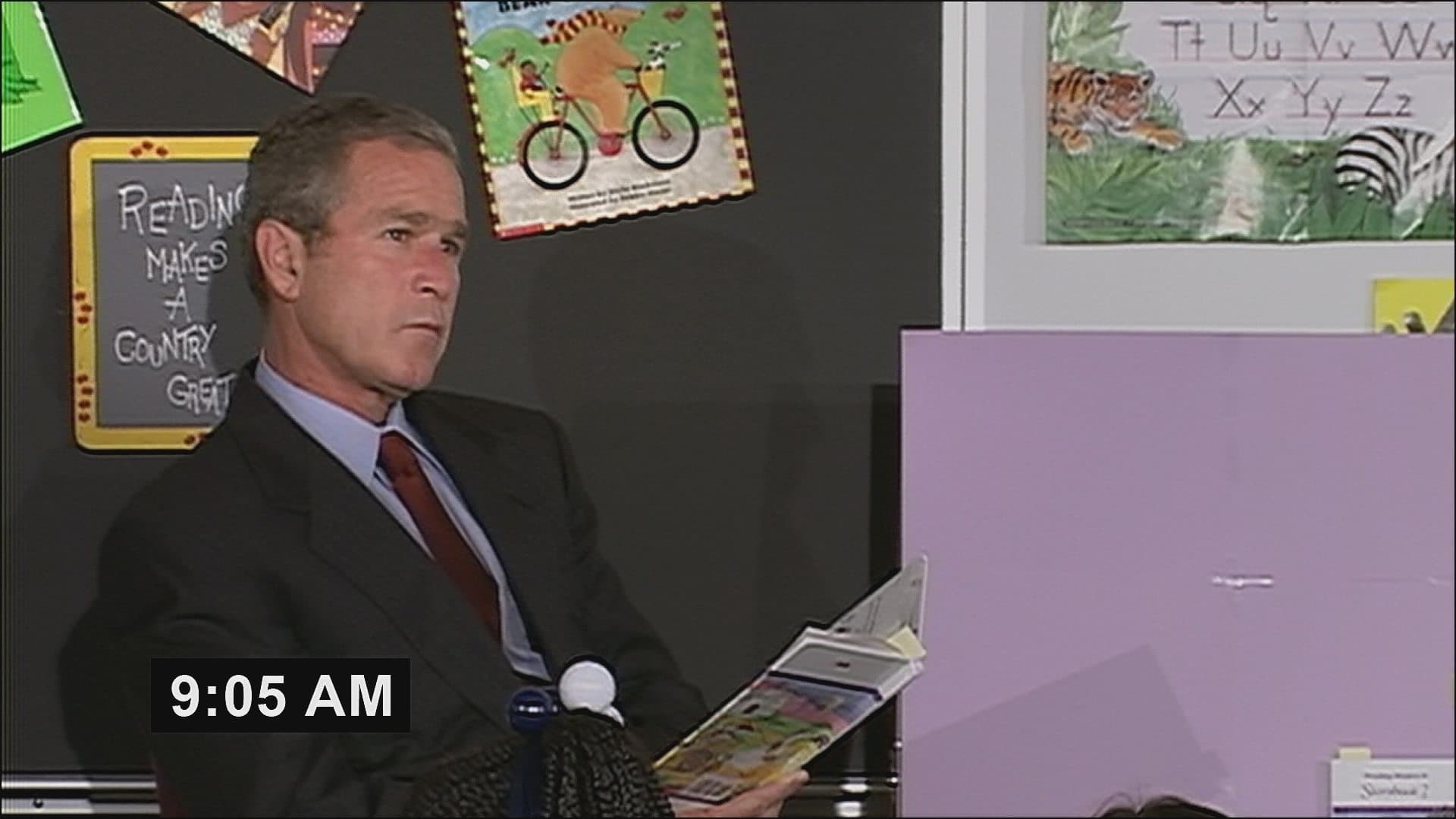
Moore and his team built the film around a central argument: that the Bush family's long financial ties to Saudi Arabia, including their relationship with the bin Laden family's construction business, had compromised the administration's response to the September 11 attacks and its decision to invade Iraq rather than focusing resources on finding Osama bin Laden in Afghanistan. The film used archival footage, Moore's own narration, on-camera interviews, and a sequence showing Bush reading "The Pet Goat" to schoolchildren after being informed of the attacks as its central pieces of evidence. The production team spent months assembling archival footage from news broadcasts, congressional hearings, and military sources, negotiating licenses and fair use claims throughout.
Harvey Weinstein championed the film at Miramax and submitted it to the Cannes Film Festival for main competition consideration, bypassing the documentary sidebar. The jury, presided over by Quentin Tarantino, awarded the film the Palme d'Or, the festival's highest honor, making it the first documentary to win the prize since Jacques-Yves Cousteau's The Silent World in 1956. The Palme d'Or transformed the film's commercial prospects overnight: what had been a politically charged documentary with an uncertain distribution future became an internationally recognized prestige title.
The distribution crisis that followed the Palme d'Or win intensified the film's pre-release publicity. When Disney's refusal to distribute the film through Miramax became public, it generated weeks of news coverage about corporate censorship of political speech. Harvey and Bob Weinstein's acquisition of the distribution rights and their arrangement with Lions Gate and IFC allowed the film to reach theaters on the originally planned timeline. The June 2004 release, timed to coincide with the run-up to the November presidential election, placed the film in a politically charged environment that amplified audience engagement and sustained its theatrical run through the summer.
Awards and Recognition
Fahrenheit 9/11 won the Palme d'Or at the 2004 Cannes Film Festival, the highest honor in world cinema, with the jury presided over by Quentin Tarantino. The award made it the first documentary to receive the Palme d'Or since 1956. The recognition from Cannes's main competition jury, typically reserved for narrative fiction films, was a statement about the film's artistic and political significance that amplified its commercial release. Roger Ebert wrote in his Pulitzer Prize-winning review that the film was "a persuasive, maddening, heartbreaking film" and awarded it four stars.
The film was not eligible for the Academy Award for Best Documentary Feature because Michael Moore had chosen to air it on television before the eligibility window closed, disqualifying it under Academy rules at the time. This decision reflected Moore's stated preference for maximum public reach over awards recognition, though it cost the film a likely nomination in a year when it would have been a frontrunner. The film did receive the People's Choice Award for Favorite Movie at the 2005 People's Choice Awards, reflecting its mainstream commercial reach beyond typical documentary audiences.
Critical Reception
Fahrenheit 9/11 earned an 83% approval rating on Rotten Tomatoes and a score of 68 out of 100 on Metacritic, reflecting a strong but not universal critical consensus that tracked closely with political divides. Critics who viewed the film favorably praised its emotional power, its use of primary source footage to build a coherent argument, and Moore's skill at assembling disparate material into a compelling cinematic experience. Roger Ebert's four-star review was the most influential positive assessment, and the film was widely covered in mainstream news outlets as a cultural and political event.
Critics who were skeptical of the film, including several who acknowledged its emotional effectiveness, raised concerns about Moore's use of selective editing, decontextualized footage, and rhetorical techniques borrowed from propaganda filmmaking. Christopher Hitchens wrote a widely circulated takedown arguing that the film contradicted itself internally and misrepresented the relationships it claimed to expose. Several fact-checkers published detailed analyses of specific claims in the film, with results that were mixed: some claims held up to scrutiny, others did not. The film's defenders argued that Moore was making a polemical documentary in the tradition of political advocacy journalism, not a neutral journalistic account, and that holding it to the standards of objective reportage misunderstood the genre.
The film holds an IMDb rating of 7.5 out of 10, unusually high for a political documentary and reflective of a dedicated fan base that views the film as an important historical document. Its Metacritic score of 68 suggests a more cautious critical consensus that recognizes the film's effectiveness as agitprop while noting its limitations as journalism. Fahrenheit 9/11 remains one of the most commercially successful and culturally significant documentaries in American film history, regardless of one's assessment of its political argument.
Frequently Asked Questions
How much did Fahrenheit 9/11 cost to make?
The production budget was approximately $6,000,000. The film was financed by Miramax under its parent Disney umbrella, but Disney ultimately refused to release the documentary, prompting executives Harvey and Bob Weinstein to buy the rights personally and sell U.S. distribution to Lionsgate and IFC Films.
How much did Fahrenheit 9/11 earn at the box office?
The film grossed $119,194,771 domestically and $103,000,000 internationally, for a worldwide total of approximately $222,000,000. It opened to $23,920,000 on June 25, 2004, finishing first in a competitive summer weekend. It remains the highest-grossing documentary in U.S. theatrical history.
Who directed Fahrenheit 9/11?
Michael Moore directed the film. Moore had previously directed Roger and Me (1989), The Big One (1997), and the Best Documentary Oscar winner Bowling for Columbine (2002, $4,000,000 budget, $58,000,000 worldwide). Fahrenheit 9/11 became his commercial breakthrough.
What is Fahrenheit 9/11 about?
The documentary critiques the George W. Bush administration's response to the September 11, 2001 attacks and the subsequent invasions of Afghanistan and Iraq. It examines connections between the Bush family and Saudi business interests, the use of the USA PATRIOT Act, and the experiences of U.S. soldiers and military families during the early Iraq War.
Did Fahrenheit 9/11 win any awards?
The film won the Palme d'Or at the 2004 Cannes Film Festival, the highest prize and the first documentary to win since Jacques Cousteau's The Silent World in 1956. It also won the People's Choice Award at the Toronto International Film Festival but did not compete for the Best Documentary Oscar after Michael Moore opted for the Best Picture race instead.
Why didn't Disney release Fahrenheit 9/11?
Disney CEO Michael Eisner instructed Miramax not to distribute the film, citing the company's desire to avoid partisan political content. The decision became a public controversy and ultimately benefited the film's box office prospects by generating significant pre-release media coverage. Harvey and Bob Weinstein subsequently bought the rights from Disney for $6,000,000.
What did critics think of Fahrenheit 9/11?
The film received largely positive reviews, with an 83% approval rating on Rotten Tomatoes and a 67 out of 100 score on Metacritic. Critics praised the film's blend of investigative reporting and personal narrative while objecting to selected editing choices and what some viewed as misleading juxtapositions.
Did Fahrenheit 9/11 affect the 2004 presidential election?
The film's political impact remains debated. Michael Moore explicitly framed the documentary as an effort to defeat George W. Bush's reelection, but Bush won the November 2004 election against John Kerry. Political scientists have generally concluded that the film mobilized voters who were already opposed to the Bush administration without persuading swing voters.
Was there a sequel to Fahrenheit 9/11?
Yes. Michael Moore directed Fahrenheit 11/9 (2018), examining the 2016 election of Donald Trump. The sequel grossed $6,500,000 worldwide against approximately $5,000,000 in production costs, representing a substantial commercial step down from the original.
How does Fahrenheit 9/11 compare to other documentaries?
Fahrenheit 9/11 remains the highest-grossing theatrical documentary in U.S. history, ahead of An Inconvenient Truth (2006, $1,500,000 budget, $50,000,000 worldwide) and March of the Penguins (2005, $8,000,000 budget, $127,000,000 worldwide). Its $222,000,000 worldwide gross is unlikely to be matched by a theatrical documentary in the streaming era.
Build budgets like this one in Saturation
Start from an industry-standard feature film template, import the schedule and rates you already have, and let the cost report keep itself current as you spend. Real-time collaboration, no spreadsheets.