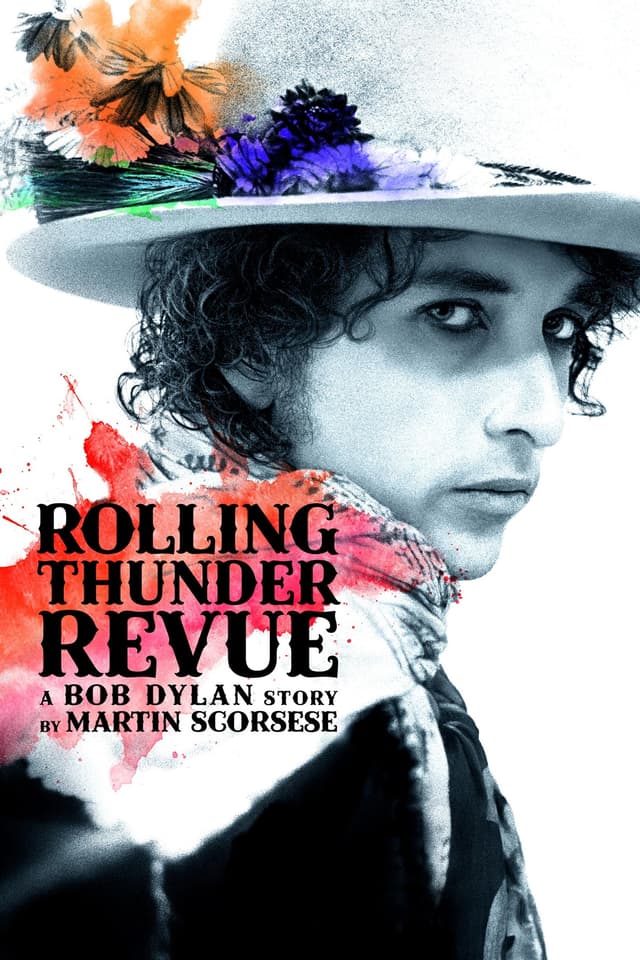
Rolling Thunder Revue A Bob Dylan Story by Martin Scorsese Budget
Updated
Synopsis
Martin Scorsese's hybrid documentary revisits Bob Dylan's 1975 Rolling Thunder Revue, a sprawling traveling road show across small New England towns featuring Joan Baez, Sam Shepard, Allen Ginsberg, Roger McGuinn, and Patti Smith on the periphery. Drawing on hundreds of hours of unreleased outtakes from Dylan's own 1978 film Renaldo and Clara alongside contemporary interviews, the film weaves performances, period news footage, and a series of openly fictional inserts into a portrait of a peculiar bicentennial-era American tour.
What Is the Budget of Rolling Thunder Revue: A Bob Dylan Story by Martin Scorsese (2019)?
Rolling Thunder Revue: A Bob Dylan Story by Martin Scorsese (2019), the director's hybrid documentary about Bob Dylan's 1975-76 Rolling Thunder Revue tour, did not have its production budget publicly disclosed. The film was financed and distributed as a Netflix original, produced by Margaret Bodde and Jeff Rosen through Sikelia Productions and Grey Water Park Productions, and was never required to publish a Motion Picture Association cost report. As a streaming-original archival documentary, it bypassed the traditional theatrical financing structure that would normally make budget figures available.
Industry observers familiar with prestige music documentaries place the budget in the $5 million to $10 million range, consistent with comparable archival-led music films of the period. The bulk of spending was concentrated on archival licensing rather than original production: nearly all concert footage was sourced from outtakes of Dylan's unreleased 1978 film Renaldo and Clara, music publishing and master use clearances for the dozens of songs performed across the tour, and a contemporary interview campaign covering Joan Baez, Sam Shepard, Ronee Blakley, Roger McGuinn, and Scarlet Rivera. There were no large physical production demands beyond the talking-head interviews and an extensive editorial process to weave 1970s footage with new material, including the film's notorious mockumentary inserts.
Key Budget Allocation Categories
Based on the production scale and the documentary mode that Scorsese used, the budget was distributed across these areas:
- Archival Footage Licensing: The film draws heavily on outtakes from Renaldo and Clara, Dylan's unreleased 1978 feature shot during the Rolling Thunder Revue. Securing rights to that material, along with additional contemporary news and television footage from 1975 and 1976, required substantial archival fees paid to Dylan's organization and to third-party rights holders, including news networks for the Watergate and Bicentennial-era clips that anchor the historical context.
- Music Publishing and Master Use: Concert performances of Dylan compositions including Isis, Hurricane, A Hard Rain's A-Gonna Fall, and One More Cup of Coffee, plus songs performed on the tour by Joan Baez, Roger McGuinn, and others, each required publishing licenses and master use clearances. Music documentaries of this scope routinely allocate twenty to thirty percent of total spend to clearances, and the rolling roster of guest performers on the original tour multiplied the number of rightsholders involved.
- Contemporary Interview Production: New interviews were filmed with Bob Dylan, Joan Baez, Sam Shepard before his 2017 death, Ronee Blakley, Roger McGuinn, Ramblin Jack Elliott, Scarlet Rivera, Larry Sloman, and others. Each shoot required a crew, lighting setup, and a location, with most conducted in New York and Los Angeles. Sam Shepard appears via footage recorded shortly before his passing, suggesting some interviews were captured years before the final production cycle.
- Editorial and Post-Production: Editors Damian Rodriguez and David Tedeschi assembled 142 minutes of finished material from hundreds of hours of 1970s film stock, contemporary interviews, and the staged fictional inserts. The post timeline was lengthy by music documentary standards, including 16mm and Super 8 film transfer, restoration, color correction across mixed gauges, and the sound mix that brought the concert performances to current Netflix delivery specifications.
- Fictional Inserts and Staged Content: The film's signature mockumentary device required new performances by Sharon Stone as a fictionalized version of her teenage self, Martin von Haselberg as the invented filmmaker Stefan van Dorp, Michael Murphy reprising his Tanner '88 character Jack Tanner as a former Carter administration figure, and James Gianopulos as a fabricated promoter. Each segment was filmed, edited, and integrated with vintage material to maintain the ruse, adding a small narrative production within the documentary.
- Director and Producer Fees: Martin Scorsese directed, with longtime collaborator Margaret Bodde and Dylan archivist Jeff Rosen producing. Sikelia Productions, Scorsese's company, and Grey Water Park Productions, Rosen's Dylan-focused operation, drew producer fees and overhead. Scorsese typically takes a reduced fee on his documentary projects compared to his fiction features, but his involvement still anchored above-the-line costs.
- Marketing and Netflix Launch: Netflix handled marketing in-house, including a press push around the June 12, 2019 streaming debut, a brief qualifying theatrical run in select markets to support potential awards eligibility, and ongoing promotion timed to the 2020 Criterion Collection home video release. Streaming-original marketing costs were absorbed into the platform budget rather than reported as a per-title prints-and-advertising line.
How Does Rolling Thunder Revue's Budget Compare to Similar Films?
Without a disclosed figure, the documentary sits within a clear comparison set of prestige music and Bob Dylan films, most of which have public budget information:
- Amy (2015): Budget $4,500,000 | Worldwide $23,800,000. Asif Kapadia's Oscar-winning Amy Winehouse documentary used a similar archival-heavy approach and arrived at a lower budget by relying on home video material rather than feature-quality outtakes, suggesting Rolling Thunder Revue's higher per-footage licensing costs.
- 20 Feet from Stardom (2013): Budget $2,000,000 | Worldwide $4,900,000. The Academy Award-winning backup singer documentary represented the more economical end of the archival music doc category, with original interviews carrying most of the storytelling rather than expensive concert clearances.
- This Is It (2009): Budget $60,000,000 | Worldwide $261,200,000. Michael Jackson's posthumous concert film operated at a different scale entirely, with full-scale rehearsal and concert capture rather than archive-led storytelling, and demonstrates the upper bound of theatrical music documentary economics that Rolling Thunder Revue deliberately avoided.
- Don't Look Back (1967): Budget undisclosed | Limited theatrical release. D.A. Pennebaker's verite portrait of Dylan's 1965 UK tour is the foundational Dylan documentary and was made for a fraction of any modern equivalent, with a tiny direct cinema crew and no licensing budget, providing the stylistic foil that Scorsese's archival approach plays against.
- Homecoming: A Film by Beyonce (2019): Budget undisclosed | Streaming-only. Released by Netflix the same year, Beyonce's Coachella concert film offered a parallel premium streaming music documentary model with comparable production resources for marketing and post, though built around new concert capture rather than archival material.
- I'm Not There (2007): Budget $20,000,000 | Worldwide $11,800,000. Todd Haynes' fictionalized Dylan biopic, with six actors playing different facets of Dylan including Cate Blanchett, sat at a different fact-fiction boundary than Rolling Thunder Revue but illustrates how a structurally playful Dylan project at theatrical scale carries multiples of the documentary spend.
Rolling Thunder Revue Box Office Performance
Rolling Thunder Revue: A Bob Dylan Story by Martin Scorsese was a Netflix original. The film received a brief qualifying theatrical run in New York and Los Angeles in mid-June 2019, around its global Netflix streaming debut on June 12, 2019. Netflix did not report grosses from the qualifying window, and Box Office Mojo and The Numbers do not list any disclosed theatrical revenue for the film. As is standard for Netflix originals, performance was measured internally through viewership and subscriber metrics rather than per-ticket sales.
The full financial breakdown reflects the streaming-only release model:
Box Office Breakdown
Rolling Thunder Revue A Bob Dylan Story by Martin Scorsese

Without a public theatrical gross, return on investment cannot be calculated using conventional theatrical math. Netflix's model values prestige documentaries from filmmakers like Scorsese for brand value, awards positioning, and subscriber retention rather than per-title ticket revenue, and the film's continued long-tail viewing on the platform plus its 2021 Criterion Collection home video release represent its primary commercial afterlife.
In the weeks after release, Netflix promoted the film heavily as one of its prestige nonfiction tentpoles of 2019, and the title was repeatedly cited in year-end best-documentary discussions by outlets including The New York Times and Sight & Sound. The streaming-revenue outlook, in the form of continued library viewing alongside the lasting cultural standing of a Scorsese-directed Dylan project, is the primary measure of the film's commercial performance rather than a theatrical window.
Rolling Thunder Revue Production History
The project grew out of a long collaboration between Martin Scorsese, Dylan archivist and manager Jeff Rosen, and producer Margaret Bodde. Scorsese had previously directed the two-part PBS American Masters documentary No Direction Home in 2005, covering Dylan's career from his Greenwich Village arrival through the 1966 motorcycle accident, and the Rolling Stones concert documentary Shine a Light in 2008. Rolling Thunder Revue extends that line of music documentary work and was developed specifically for streaming distribution after Netflix expanded its original documentary slate in the late 2010s.
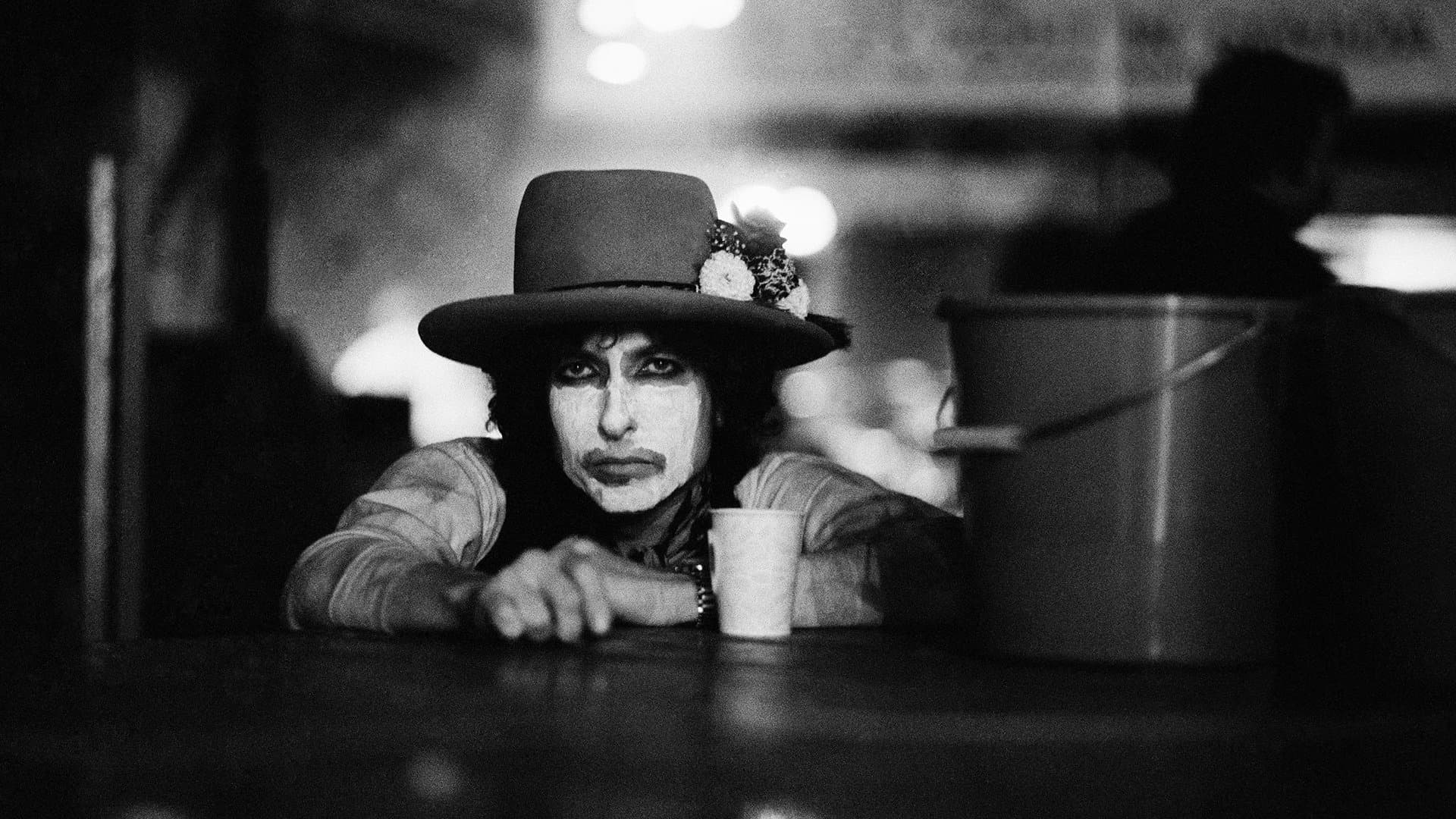
Source material centered on Bob Dylan's unreleased 1978 film Renaldo and Clara, a four-hour fiction-and-concert hybrid that Dylan himself directed during and after the 1975 Rolling Thunder Revue tour. Hundreds of hours of 16mm outtakes from that production sat in the Dylan vaults and provided the bulk of the concert footage seen in Scorsese's film, including performances of Isis, A Hard Rain's A-Gonna Fall, Hurricane, and One More Cup of Coffee captured at the Plymouth Memorial Hall in Plymouth, Massachusetts and other early tour stops. Additional historical context came from network news archives covering the bicentennial period.
New interviews were filmed across several years in New York and Los Angeles, including a present-day sit-down with Dylan that anchors the documentary, plus extended conversations with Joan Baez, Sam Shepard before his July 2017 death, Ronee Blakley, Roger McGuinn, Ramblin Jack Elliott, Scarlet Rivera, and journalist Larry Sloman who had covered the original tour. Production used the New York state film tax credit for portions of the interview shoot and post work, though Netflix did not publicly confirm specific incentive amounts.
The film's most controversial creative choice was the inclusion of fictional inserts presented as straight documentary. Sharon Stone appears claiming she joined the tour at 17, an event that did not happen and which she has confirmed was a knowing fabrication. Martin von Haselberg plays a fictional European filmmaker named Stefan van Dorp who supposedly shot the original footage, Michael Murphy reprises his Robert Altman-era character Jack Tanner as a former Carter administration political fixer, and James Gianopulos plays a fictionalized promoter. Scorsese and Rosen acknowledged the device only after release, framing it as a tribute to the Dylan tradition of myth-making rather than a documentary breach.
Post-production stretched across roughly two years, with editors Damian Rodriguez and David Tedeschi working at Scorsese's longtime Sikelia base in New York to integrate vintage 16mm, contemporary digital interviews, and the staged inserts into a coherent 142-minute experience. Cinematographer credits went to Paul Goldsmith, who shot original 1970s tour footage that was later folded back in, and Ellen Kuras, who handled new contemporary material. The film premiered with a brief qualifying theatrical run in June 2019 ahead of its June 12 global Netflix debut.
Awards and Recognition
Rolling Thunder Revue: A Bob Dylan Story by Martin Scorsese received significant critical recognition but ran into an unusual eligibility debate during awards season. Because the film openly includes fictional interview segments, the Documentary Feature categories at major awards bodies, including the Academy Awards, declined to consider it as a pure documentary. Both Variety and TheWrap covered the eligibility question in late 2019, framing it as a test case for what counts as nonfiction in the streaming era.
The film received three Critics' Choice Documentary Award nominations in 2019: Most Innovative Documentary, Best Archival Documentary, and Best Music Documentary. Martin Scorsese won the Critics' Choice Stanley Kubrick Award for Bold and Innovative Filmmaking the same year, in part for the film's hybrid approach. At the 2021 Cinema Eye Honors, the film was nominated for Outstanding Achievement in Broadcast Nonfiction Filmmaking and won Outstanding Achievement in Editing in a Nonfiction Film or Series for Broadcast for the work of Damian Rodriguez and David Tedeschi.
The film also received placement on multiple year-end best-of lists, including The New York Times' Best Films of 2019 (So Far) list at midyear. The Criterion Collection released a director-approved Blu-ray and DVD edition on January 19, 2021, an unusual move for a Netflix original and a meaningful endorsement of the film's standing within the documentary canon.
Critical Reception
Rolling Thunder Revue: A Bob Dylan Story by Martin Scorsese received broadly enthusiastic reviews. The film holds a 92% approval rating on Rotten Tomatoes based on 96 reviews, with a critical consensus calling it a delightfully unorthodox look at a pivotal period in its subject's career. On Metacritic, the film scored 86 out of 100 based on 22 reviews, indicating universal acclaim. Audience reception was strong as well, with an 81% Rotten Tomatoes audience score.
Supporters highlighted the documentary's willingness to play with the form. Peter Aspden in the Financial Times praised the film as a masterful account of Bob Dylan's 1975 Rolling Thunder Revue that contains predictable treasures, jolting surprises, and a mischievous sprinkle of untruths. Jordan Hoffman at TV Guide rated it 4.5 out of 5 and called it far slier than typical music documentaries. Critics at Variety and The Hollywood Reporter praised the concert footage itself as some of the best Dylan performance material ever released, particularly the Hurricane and Isis takes drawn from the Renaldo and Clara archive.
Detractors were a small minority, mostly concentrated on the question of the staged interviews. A handful of critics, including Brian Susbielles at InSession Film, argued the fictional inserts undermined the documentary contract with the audience and that the film functioned better when read as Dylan-authored myth than as a Scorsese documentary. Even less favorable reviews acknowledged the strength of the concert sequences and the rare access to Dylan in the contemporary interview, and most reviewers concluded that the playfulness was consistent with the Dylan persona rather than a betrayal of nonfiction principles.
Frequently Asked Questions
How much did Rolling Thunder Revue: A Bob Dylan Story by Martin Scorsese (2019) cost to make?
Netflix did not publicly disclose the production budget. Industry observers familiar with prestige archival music documentaries place the budget in the $5 million to $10 million range, consistent with comparable archival-led films of the period. The bulk of spending was concentrated on archival licensing and music clearances rather than original production, with new content limited to contemporary interviews and the staged mockumentary inserts.
How much did Rolling Thunder Revue earn at the box office?
Rolling Thunder Revue is a Netflix original and did not have a traditional theatrical release. It received a brief qualifying theatrical run in New York and Los Angeles in mid-June 2019 around its global Netflix streaming debut on June 12, 2019, but no theatrical gross was reported by Box Office Mojo or The Numbers. Performance was measured internally by Netflix through viewership rather than ticket sales.
Who directed Rolling Thunder Revue?
Martin Scorsese directed Rolling Thunder Revue: A Bob Dylan Story by Martin Scorsese. It was his third major music documentary about Bob Dylan or Dylan-adjacent material after the 2005 PBS American Masters two-parter No Direction Home and the 2008 Rolling Stones concert film Shine a Light. Scorsese has been a Dylan collaborator for decades through manager Jeff Rosen, who produced the film.
Is Rolling Thunder Revue a real documentary or fiction?
The film is presented as a documentary but contains openly fictional inserts. Sharon Stone appears claiming she joined the tour at 17, which never happened. Martin von Haselberg plays a fictional European filmmaker named Stefan van Dorp, Michael Murphy reprises his Tanner 88 character Jack Tanner, and James Gianopulos plays a fictional promoter. Scorsese has framed the mockumentary device as a tribute to the Dylan tradition of myth-making.
What was the Rolling Thunder Revue tour?
The Rolling Thunder Revue was a concert tour Bob Dylan launched in fall 1975 and continued through spring 1976, traveling through small New England venues and college towns with a rotating troupe including Joan Baez, Sam Shepard, Allen Ginsberg, Roger McGuinn, Ramblin Jack Elliott, Ronee Blakley, Scarlet Rivera, and others. The tour was structured as a traveling community of musicians and writers rather than a conventional headlining gig.
Where did the concert footage in Rolling Thunder Revue come from?
Nearly all the concert footage was drawn from outtakes of Renaldo and Clara, Bob Dylan's own four-hour 1978 fiction-and-concert hybrid feature shot during the 1975 tour. Hundreds of hours of unreleased 16mm material sat in the Dylan archive, and Scorsese's team licensed and restored the relevant takes, including the famous Hurricane and Isis performances captured at the Plymouth Memorial Hall and other early stops.
Who appears in Rolling Thunder Revue?
On-camera participants in contemporary interviews include Bob Dylan, Joan Baez, Sam Shepard (filmed before his July 2017 death), Ronee Blakley, Roger McGuinn, Ramblin Jack Elliott, Scarlet Rivera, and journalist Larry Sloman. Sharon Stone appears in a fictionalized self-portrayal, Martin von Haselberg plays the invented filmmaker Stefan van Dorp, and Michael Murphy reprises Jack Tanner. Archival footage features Allen Ginsberg, Joni Mitchell, Patti Smith, and Hurricane Carter.
When was Rolling Thunder Revue released?
Rolling Thunder Revue: A Bob Dylan Story by Martin Scorsese launched globally on Netflix on June 12, 2019. It received a brief qualifying theatrical run in select New York and Los Angeles theaters around the same date to support awards eligibility. The Criterion Collection released a director-approved Blu-ray and DVD edition on January 19, 2021.
What did critics think of Rolling Thunder Revue?
The film received broadly enthusiastic reviews. It holds a 92% approval rating on Rotten Tomatoes based on 96 reviews and an 86 out of 100 score on Metacritic based on 22 reviews, indicating universal acclaim. Critics praised the concert footage, the rare access to a contemporary Dylan interview, and the playful hybrid structure, with only a small minority of reviewers objecting to the openly fictional mockumentary inserts.
Did Rolling Thunder Revue win any awards?
The film received three Critics' Choice Documentary Award nominations in 2019, including Most Innovative Documentary, Best Archival Documentary, and Best Music Documentary. Martin Scorsese won the Critics' Choice Stanley Kubrick Award for Bold and Innovative Filmmaking that year. At the 2021 Cinema Eye Honors, editors Damian Rodriguez and David Tedeschi won Outstanding Achievement in Editing in a Nonfiction Film or Series for Broadcast. The fictional inserts complicated documentary-category eligibility at the Academy Awards.
Filmmakers
Rolling Thunder Revue A Bob Dylan Story by Martin Scorsese

Official Trailer
Build budgets like this one in Saturation
Start from an industry-standard feature film template, import the schedule and rates you already have, and let the cost report keep itself current as you spend. Real-time collaboration, no spreadsheets.