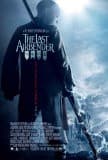
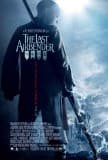
The Last Airbender Budget
 Adventure
Updated
Synopsis
A century into the Fire Nation's war on the other nations, siblings Katara and Sokka of the Southern Water Tribe free a boy named Aang from an iceberg and learn he is the Avatar, the only person who can bend all four elements. Hunted by the exiled Fire Nation prince Zuko and Commander Zhao, they travel to the Northern Water Tribe so Aang can learn waterbending, just as the Fire Nation launches its assault on the city.
What Is the Budget of The Last Airbender?
The Last Airbender (2010), written, directed and produced by M. Night Shyamalan for Paramount Pictures and Nickelodeon Movies, had a production budget of $150,000,000. That is the figure the Los Angeles Times reported at release, and the one Box Office Mojo and The Numbers list. The same Los Angeles Times report put the marketing budget at $130,000,000, which brought the studio's combined spend to about $280,000,000 before a ticket was sold. The film cost at least twice as much as any of Shyamalan's eight previous films, including The Sixth Sense (1999), which was made for $40,000,000.
Paramount, Nickelodeon's sister company under Viacom, fully financed the film, so the risk sat with one studio. Paramount chief executive Brad Grey told the Los Angeles Times, "It's a bold step because he had to create a potential new family franchise." The plan was a trilogy, one film for each season of the Nickelodeon animated series, and this first film adapted Book One: Water. Two other decisions shaped the cost: a Pennsylvania tax credit that the state extended in 2008 to cover visual effects work done in California, and the April 2010 decision to convert the film to 3D, which Deadline reported would cost $5,000,000 to $10,000,000.
Key Budget Allocation Categories
Paramount never published a line-item budget, but the production record shows where the money went.
- Visual Effects: Industrial Light & Magic, working in San Francisco, created the elemental bending, the flying bison Appa, the winged lemur Momo and the action stunts, with visual effects supervisor Pablo Helman leading a crew of about 300. Quickly generated previews let Shyamalan direct as many as 70 takes of a single effect until its performance looked right.
- 3D Conversion: Paramount announced in late April 2010, about ten weeks before release, that the film would be converted to 3D after shooting. Stereo D, the company that worked on Avatar (2009), handled the conversion, which insiders told Deadline would cost $5,000,000 to $10,000,000.
- Pennsylvania Production Base: After two weeks in Greenland, the production moved to Reading, Pennsylvania, where crews improved roads and buried power lines around the pagoda on Mount Penn, which played an ancient temple. Interiors were shot in the former Budd Company plant in Philadelphia, fitted out as a studio with temporary air conditioning piped into the sets.
- Tax Credit: Pennsylvania offered a 25% film production tax credit. According to a 2014 Los Angeles Times report, the state's Department of Community and Economic Development granted Paramount a waiver in a November 12, 2008 letter, letting the studio apply the credit to about $29,000,000 of visual effects work done out of state, a saving of about $7,000,000.
- Cast and Training: The young leads were largely untested. Noah Ringer, a taekwondo student who had never acted, attended acting school for a month before filming, the cast went through a martial arts boot camp, and Dev Patel trained in wushu to play Zuko.
- Score: James Newton Howard, on his seventh film with Shyamalan, recorded the score with a 119-member ensemble.
- Marketing (outside the production budget): The $130,000,000 campaign included a Super Bowl XLIV commercial on February 7, 2010, McDonald's Happy Meals and what the Los Angeles Times called Nickelodeon's largest movie promotion, run across sister channels MTV, Comedy Central, Spike and CMT.
How Does The Last Airbender's Budget Compare to Similar Films?
At $150,000,000, The Last Airbender was one of several expensive fantasy films released in 2010. Figures below are Box Office Mojo's.
- Prince of Persia: The Sands of Time (2010): Budget $200,000,000 | Worldwide $336,365,676. Disney's video game adaptation opened five weeks earlier and drew the same criticism for casting white actors in non-white roles. It cost $50,000,000 more and grossed only $16,651,795 more.
- The Sorcerer's Apprentice (2010): Budget $150,000,000 | Worldwide $215,283,742. A family fantasy at exactly the same cost, released two weeks later. The Last Airbender's $40,325,019 opening weekend was more than double the Disney film's $17,619,622, and it grossed $104,430,139 more worldwide.
- Clash of the Titans (2010): Budget $125,000,000 | Worldwide $493,214,993. Also converted to 3D after filming, and The Hollywood Reporter's review called The Last Airbender's conversion worse. Clash cost $25,000,000 less and grossed $173,501,112 more.
- The Chronicles of Narnia: The Voyage of the Dawn Treader (2010): Budget $155,000,000 | Worldwide $415,686,217. A family fantasy adaptation released five months later at almost the same cost. It grossed $95,972,336 more, with 75% of its total coming from overseas against 59% for The Last Airbender.
- After Earth (2013): Budget $130,000,000 | Worldwide $243,611,982. Shyamalan's next studio tentpole, made for Sony, cost $20,000,000 less and grossed $76,101,899 less. It was his last big-budget film before he returned to smaller thrillers.
The Last Airbender Box Office Performance
Paramount moved the release up a day, and The Last Airbender opened on Thursday, July 1, 2010, in 3,169 theaters in the United States and Canada, a day after The Twilight Saga: Eclipse (2010). It took $17,511,097 on its first day, second only to Eclipse, then $40,325,019 over the Friday to Sunday Independence Day weekend and $69,315,329 across its first five days, according to Box Office Mojo, which reported that 3D presentations at 1,606 locations made up 54% of the opening. The second weekend fell 58.7% to $16,635,471, and the domestic run ended on September 23, 2010, at $131,772,187.
Overseas, the film opened in Russia, Ukraine and Taiwan on July 8, 2010, and rolled out market by market through late October. Russia and the CIS were its biggest international territory at $18,300,513 after a $7,686,980 opening, followed by Germany at $15,572,208, Mexico at $14,069,069, South Korea at $11,836,191 and France at $11,546,248. International audiences supplied $187,941,694, or 58.8% of the $319,713,881 worldwide total.
The Los Angeles Times reported a marketing budget of $130,000,000 at release, which is the prints and advertising figure used below.
Box Office Breakdown
The Last Airbender

At 14%, "The Last Airbender" earned roughly $1.14 for every $1 invested.
That return is measured against gross ticket sales, and theaters keep a large share of those, so Paramount's real theatrical margin was thinner than the ROI suggests. Home video added to the total: The Numbers estimates domestic DVD and Blu-ray sales at $49,284,087. The film did better abroad than at home. The two sequels Paramount had planned were never made, which ScreenRant later attributed to the film's poor critical and financial reception.
The Last Airbender Production History
Shyamalan found the material through his daughter, who wanted to dress as Katara for Halloween. He watched the Nickelodeon series on DVD with his family and pitched an adaptation to Paramount's Brad Grey, and on January 8, 2007, Paramount and Nickelodeon Movies announced that he would write, direct and produce a live-action trilogy, starting with a faithful adaptation of Book One: Water. The series' creators, Michael Dante DiMartino and Bryan Konietzko, praised the choice in 2007, but in 2014 Konietzko said they had not wanted the film made at all and had a "big falling out" with the production. To avoid confusion with James Cameron's Avatar, then in production, the title was shortened to The Last Airbender.
Shyamalan first cast Noah Ringer as Aang, Nicola Peltz as Katara, Jackson Rathbone as Sokka and Jesse McCartney as Zuko. Ringer won the part with an audition tape he recorded with his taekwondo instructor. In February 2009 Dev Patel, fresh from Slumdog Millionaire (2008), replaced McCartney, whose tour dates clashed with the cast's martial arts boot camp; McCartney said in 2020 that he had been replaced for political reasons. Casting white actors as the heroes of a world drawn from East Asian and Indigenous cultures led to a letter-writing campaign, boycott calls from the fan site Racebending.com and the Media Action Network for Asian-Americans, and criticism from Roger Ebert. Paramount answered that more than half of the film's 23 credited speaking roles went to actors of Korean, Japanese and Indian descent.
Principal photography began on March 13, 2009, with two weeks in Greenland, then moved to Reading, Pennsylvania, nearby Ontelaunee Township and the William Penn Memorial Fire Tower, and to Philadelphia, where the production leased offices from Temple University Health System and turned the abandoned Budd Company complex across the street into a soundstage. Filming wrapped on September 26, 2009. At Industrial Light & Magic, the team said firebending and waterbending were the hardest effects, because the elements had to look real while behaving in unreal ways, and the fire work built on what ILM had done for Harry Potter and the Half-Blood Prince (2009).
In late April 2010 Paramount announced the 3D conversion, following the box office success of 3D releases such as Avatar, Alice in Wonderland (2010) and Clash of the Titans. James Cameron publicly criticized post-converted 3D at the time, saying "there's no possible way that it can be done up to a standard that anybody would consider high enough." The first teaser had played in front of Transformers: Revenge of the Fallen (2009) in June 2009, and the film premiered at Alice Tully Hall in New York on June 30, 2010.
Shyamalan drafted a darker second film with Azula, played by Summer Bishil, as the villain, and as late as 2015 said he might return to it, but no sequel was developed. Dev Patel later said he "saw a stranger on the screen" and that "the budget of Slumdog was like the budget of the craft services of this movie." In a 2019 lecture at NYU's Stern School of Business, Shyamalan said of this period, "I did these movies, and I rightfully got crushed," and he went on to finance his own projects, returning to smaller thrillers such as Glass (2019), made for $20,000,000.
Awards and Recognition
The Last Airbender's wins came entirely from the Golden Raspberry Awards, which named it the worst film of 2010.
- Golden Raspberry Awards: Won five of its nine nominations at the 31st Razzies in February 2011: Worst Picture (Frank Marshall, Sam Mercer and M. Night Shyamalan), Worst Director and Worst Screenplay for Shyamalan, Worst Supporting Actor for Jackson Rathbone (shared with his role in Eclipse) and a one-off award for Worst Eye-Gouging Mis-Use of 3D.
- Other Razzie Nominations: Dev Patel for Worst Supporting Actor, Nicola Peltz for Worst Supporting Actress, the entire cast for Worst Screen Couple/Ensemble, and the film for Worst Prequel, Remake, Rip-off or Sequel.
- International Film Music Critics Association: James Newton Howard was nominated for Film Music Composition of the Year for "Flow Like Water" and for Best Original Score for a Fantasy/Science Fiction/Horror Film.
- Young Artist Awards: Noah Ringer was nominated for Leading Young Actor in a Feature Film and Seychelle Gabriel for Supporting Young Actress.
- Teen Choice Awards: Nominated for Choice Summer Movie in 2010.
Howard's score drew largely positive reviews. The soundtrack album, released by Lakeshore Records on June 29, 2010, runs about 66 minutes and includes the nearly 11-minute "Airbender Suite."
Critical Reception
Reviews were overwhelmingly negative. The Last Airbender holds 5% on Rotten Tomatoes from 193 critics, and the consensus reads: "The Last Airbender squanders its popular source material with incomprehensible plotting, horrible acting, and detached joyless direction." Metacritic gives it 20 out of 100 from 33 critics, indicating generally unfavorable reviews, and audiences polled by CinemaScore gave it a C.
Roger Ebert gave it half a star out of four and opened his review: "'The Last Airbender' is an agonizing experience in every category I can think of and others still waiting to be invented." He wrote that the retrofitted 3D "produces the drabbest, darkest, dingiest movie of any sort I've seen in years" and that "the first fatal decision was to make a live-action film out of material that was born to be anime." Keith Phipps of The A.V. Club gave it an F, and Owen Gleiberman of Entertainment Weekly gave it a C, writing that it "keeps throwing things at you, but its final effect is, in every way, flat." Kirk Honeycutt of The Hollywood Reporter praised Noah Ringer as Aang but called the 3D conversion worse than that of Clash of the Titans.
A few critics were kinder. Scott Bowles of USA Today said Shyamalan delivered on the fight scenes and that the film worked for children, though weak writing made some performances sound wooden. In Britain, Peter Bradshaw of The Guardian described audiences laughing at the word "bender," British slang for a gay man. When Netflix released its own live-action Avatar: The Last Airbender series in 2024, critics measured it against the 2010 film and generally rated the series higher, Business Insider reported.
Frequently Asked Questions
How much did it cost to make The Last Airbender (2010)?
The Last Airbender had a production budget of $150,000,000, according to the Los Angeles Times and Box Office Mojo. Paramount also spent a reported $130,000,000 on marketing, for a combined cost of about $280,000,000, at least twice the cost of any earlier M. Night Shyamalan film.
How much did The Last Airbender (2010) make at the box office?
The Last Airbender grossed $319,713,881 worldwide, including $131,772,187 in the United States and Canada and $187,941,694 internationally, according to Box Office Mojo. It opened to $40,325,019 from 3,169 theaters over the July 4 weekend and took $69,315,329 in its first five days.
Was The Last Airbender (2010) profitable?
Only narrowly on paper. Against an estimated $280,000,000 in production and marketing, its $319,713,881 worldwide gross leaves a net return of about $39,713,881, an ROI of roughly 14%. Theaters keep a large share of ticket sales, so Paramount's theatrical margin was thinner than that, and the planned sequels were never made.
How much did Paramount spend marketing The Last Airbender?
The Los Angeles Times reported a marketing budget of $130,000,000. The campaign included a Super Bowl XLIV commercial, McDonald's Happy Meals and Nickelodeon's largest movie promotion, which ran across MTV, Comedy Central, Spike and CMT.
How much did the 3D conversion of The Last Airbender cost?
Insiders told Deadline the conversion would cost $5,000,000 to $10,000,000. Paramount announced it in late April 2010, about ten weeks before release, and Stereo D did the work. The film later won a special Razzie for Worst Eye-Gouging Mis-Use of 3D.
Where was The Last Airbender (2010) filmed?
Filming began on March 13, 2009, with two weeks in Greenland, then moved to Reading, Pennsylvania, including the Mount Penn pagoda, Ontelaunee Township and the William Penn Memorial Fire Tower, and to Philadelphia, where interiors were shot in the former Budd Company plant. Filming ended on September 26, 2009.
Did The Last Airbender get a Pennsylvania tax credit?
Yes. Pennsylvania offered a 25% film production tax credit, and a 2014 Los Angeles Times report found that the state granted Paramount a waiver in November 2008 letting it claim the credit on about $29,000,000 of visual effects work done outside Pennsylvania, worth about $7,000,000 to the studio.
Why was the casting of The Last Airbender controversial?
White actors were cast as Aang, Katara and Sokka in a story drawn from East Asian and Indigenous cultures, which led Racebending.com and the Media Action Network for Asian-Americans to call for boycotts. Paramount said more than half of the 23 credited speaking roles went to actors of Korean, Japanese and Indian descent.
Why was there no sequel to The Last Airbender?
Paramount planned a trilogy, one film per season of the animated series, and M. Night Shyamalan drafted a darker second film with Azula as the villain. After the film's poor critical and commercial reception, no sequel was developed.
What awards did The Last Airbender win?
Its only wins came at the 31st Golden Raspberry Awards, where it took five of nine nominations: Worst Picture, Worst Director and Worst Screenplay for M. Night Shyamalan, Worst Supporting Actor for Jackson Rathbone and Worst Eye-Gouging Mis-Use of 3D.
Filmmakers
The Last Airbender

Official Trailer
Build budgets like this one in Saturation
Start from an industry-standard feature film template, import the schedule and rates you already have, and let the cost report keep itself current as you spend. Real-time collaboration, no spreadsheets.