Slumdog Millionaire Budget
 DramaRomance2h 1m
Updated
Synopsis
Jamal Malik, an 18-year-old orphan from the Mumbai slums, is one question away from winning the top prize on the Indian version of Who Wants to Be a Millionaire when he is arrested on suspicion of cheating. As he is interrogated by police, the story of his life and his lost love Latika unfolds in flashback, revealing how he came to know the answer to each question.
What Is the Budget of Slumdog Millionaire (2008)?
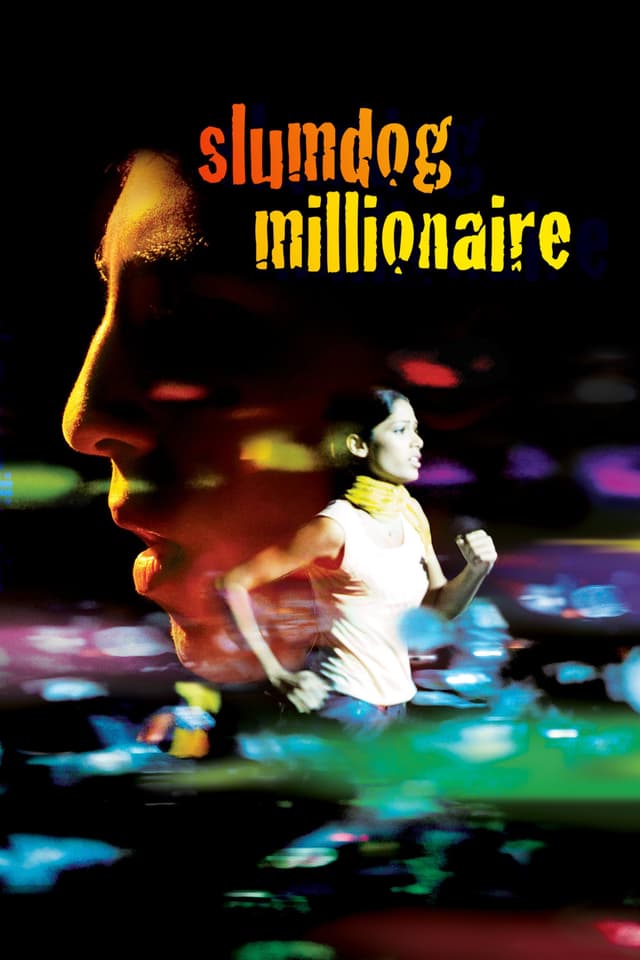
Slumdog Millionaire (2008), directed by Danny Boyle and co-directed in India by Loveleen Tandan, was produced on a reported budget of $15,000,000. The film was financed by Celador Films and Film4 Productions, with Fox Searchlight Pictures and Warner Independent Pictures originally splitting domestic and international distribution rights. The modest budget reflected the project's origins as a British independent production based on Vikas Swarup's 2005 novel Q & A, adapted by Simon Beaufoy, rather than a Hollywood studio acquisition with star-driven cost expectations.
The investment is unusual in awards history. At $15,000,000, Slumdog Millionaire is among the lowest-budget Best Picture winners of the modern Oscar era, and the worldwide gross of $378,445,377 produced a return-on-investment ratio that ranks with the most profitable prestige films of the 2000s. The financial story was nearly different: Warner Independent was shut down during post-production, putting the film in limbo before Fox Searchlight took over the worldwide release and shepherded it into the awards conversation.
Key Budget Allocation Categories
Slumdog Millionaire's reported $15,000,000 budget was distributed across several core production areas:
- Above-the-Line Talent: Director Danny Boyle, coming off Sunshine and 28 Days Later, worked at a fraction of his potential studio rate to anchor the independent financing. Co-director Loveleen Tandan, originally hired as a casting director, was elevated to co-directing credit for handling the Hindi-language sequences and on-the-ground Mumbai production. Lead Dev Patel was an unknown television actor cast out of the BBC series Skins, and the youngest child actors were street kids from Mumbai with no professional experience, all of which kept above-the-line costs minimal.
- Mumbai Location Shoot: Principal photography ran for 30 days inside Mumbai itself, with extensive work in the Dharavi slum, the world's second-largest informal settlement, plus Juhu Beach, Victoria Terminus railway station, the Taj Mahal Palace Hotel, and the Agra train sequences. Permits, local crew, location fees, security coordination in working slums, and logistics across roughly 100 distinct locations consumed a meaningful share of the production budget, though Indian crew rates kept absolute costs far below a comparable British or American shoot.
- Multilingual Production: Roughly a third of the dialogue was rewritten into Hindi by co-director Loveleen Tandan after Boyle realized the youngest children could not credibly deliver English lines as Mumbai street kids. Translators, dialect coaches, and additional casting work for Hindi-speaking child performers added cost. The trilingual structure (Hindi, English, and a brief amount of Tamil) also required subtitle design that became a visual signature of the finished film.
- Cinematography and Camera Package: Cinematographer Anthony Dod Mantle shot the film primarily on the Silicon Imaging SI-2K digital camera, a then-emerging technology that allowed handheld work through narrow Dharavi alleys and crowded streets where a 35mm camera and crew could not have operated. Mantle supplemented the digital work with 35mm film for select sequences, and the hybrid workflow required custom post-production color science that won him the Academy Award for Best Cinematography.
- Music and Score: Composer A.R. Rahman delivered the score and original songs in roughly three weeks, an extraordinarily compressed schedule for a feature. The budget covered orchestration, the licensing of M.I.A.'s "Paper Planes" for the train sequence, and the original song "Jai Ho" written with Gulzar. The relatively low music spend yielded one of the highest creative returns in the film's budget, winning Rahman two Academy Awards (Best Original Score and Best Original Song) and a Golden Globe.
- Post-Production and Editing: Editor Chris Dickens cut the film in London under tight deadlines, structuring the non-linear narrative between the game show framing device, the police interrogation scenes, and the childhood flashbacks. Post-production also absorbed the disruption of Warner Independent's shutdown, which threatened to send the film straight to DVD before Fox Searchlight stepped in. Dickens won the Academy Award for Best Film Editing.
- Distribution Pivot Costs: When Warner Independent closed in May 2008, Fox Searchlight acquired the worldwide rights and committed to a full theatrical platform release. The acquisition cost itself was not part of the production budget, but the prints and advertising spend that followed (estimated at $30,000,000 to $40,000,000 across the awards campaign) was the largest single outlay in the film's overall financial picture and a key factor in its commercial breakthrough.
How Does Slumdog Millionaire's Budget Compare to Similar Films?
At a reported $15,000,000, Slumdog Millionaire sits at the low end of awards-season prestige films and Danny Boyle's own filmography. The comparison set illustrates how its commercial and critical outcome ranks among similarly budgeted contemporaries:
- Trainspotting (1996): Budget $3,500,000 | Worldwide $72,000,000. Boyle's breakthrough Edinburgh-set heroin drama cost less than a quarter of Slumdog and generated a 20x return, establishing the low-budget British independent template that Slumdog later scaled up.
- 127 Hours (2010): Budget $18,000,000 | Worldwide $60,738,797. Boyle's direct follow-up to Slumdog cost slightly more and earned far less, demonstrating how the Slumdog audience response was unique rather than a repeatable Boyle formula.
- Lion (2016): Budget $12,000,000 | Worldwide $140,605,684. The Garth Davis-directed Saroo Brierley story is the closest tonal comparison, also blending Australian production with Indian location work and child casting, and it earned roughly a third of Slumdog's gross on a similar budget.
- Million Dollar Arm (2014): Budget $25,000,000 | Worldwide $39,182,029. Disney's Jon Hamm baseball-in-India story spent 67 percent more than Slumdog and earned roughly 10 percent of its gross, showing that an American studio gloss on Indian subject matter did not translate into commercial success.
- The Hurt Locker (2008): Budget $15,000,000 | Worldwide $49,230,772. Slumdog's direct Best Picture competitor at the 2009 Oscars shared an identical production budget but earned less than a seventh of Slumdog's worldwide gross, even with its eventual Best Picture win the following year.
- The King's Speech (2010): Budget $15,000,000 | Worldwide $427,455,470. The Tom Hooper film that won Best Picture two years later shared Slumdog's exact production budget and slightly out-grossed it worldwide, confirming a recurring pattern where modestly budgeted British prestige films can hit the awards-and-commercial sweet spot.
Slumdog Millionaire Box Office Performance
Slumdog Millionaire opened in limited release on November 12, 2008, debuting in just 10 theaters with a per-screen average of $36,084 for an opening weekend total of $360,018. Fox Searchlight rolled the film out gradually through the holiday corridor and the awards run, expanding to 1,411 theaters by late January 2009 and 2,943 theaters at peak release, a platform strategy that maximized awards momentum and word-of-mouth rather than burning advertising on a wide opening.
Against a reported production budget of $15,000,000, the film needed approximately $50,000,000 in worldwide gross to reach profitability when accounting for marketing and distribution costs. Here is the financial breakdown:
Box Office Breakdown
Slumdog Millionaire

Slumdog Millionaire returned approximately $6.88 in theatrical revenue for every $1 invested when measured against total estimated production and marketing spend, placing it among the most profitable Best Picture winners of the modern era. The domestic share of the gross was $141,319,928 against an international share of $237,125,449, a 37/63 split that demonstrated unusually strong global travel for a film grounded in Indian specificity.
The post-Oscar bump was decisive. The film had grossed roughly $98,000,000 worldwide entering the February 22, 2009 Academy Awards, then more than tripled that figure across the spring and summer as the eight Oscar wins drove repeat releases and international expansion. India itself was a comparatively soft market (the film earned the equivalent of about $6,000,000 there), with the strongest international territories being the United Kingdom, France, Germany, and Australia.
Slumdog Millionaire Production History
Development began when British Channel 4 executive Tessa Ross optioned Vikas Swarup's 2005 novel Q & A for Film4 Productions and brought screenwriter Simon Beaufoy onto the project. Beaufoy, best known for The Full Monty (1997), traveled to Mumbai three times during the writing process to research the city, the Dharavi slum, and the Indian version of Who Wants to Be a Millionaire that anchors the framing device. Director Danny Boyle joined in 2007 after reading Beaufoy's draft, attracted by what he described as a "Dickensian" sweep of childhood, romance, and reversal of fortune.
Boyle insisted on casting Indian actors and shooting on location in India. Loveleen Tandan, originally hired as the Mumbai-based casting director, became co-director after she persuaded Boyle that the youngest version of the children needed to speak Hindi to be authentic. Tandan translated roughly a third of the screenplay into Hindi and ran the on-the-ground production in Mumbai, while Boyle and the British heads of department concentrated on direction, cinematography, and post. Dev Patel was cast as the adult Jamal Malik after Boyle saw him in the British teen series Skins, with Freida Pinto, a Mumbai-based commercial model with no prior acting credits, cast as Latika. Anil Kapoor, the established Bollywood star, played the game show host Prem Kumar, and Irrfan Khan played the police inspector.
Principal photography began on November 5, 2007 and ran for 30 days inside Mumbai itself, with additional unit work in Agra at the Taj Mahal for the train sequence and at the Kalka Mail station for the older boys' chase across the rail network. Anthony Dod Mantle's decision to shoot primarily on the Silicon Imaging SI-2K digital camera was driven by the impossibility of running 35mm equipment through Dharavi's narrow alleys, where Boyle wanted to film actual residents and live street activity rather than rebuild the slum on a controlled stage. The youngest children, Ayush Mahesh Khedekar, Azharuddin Mohammed Ismail, and Rubina Ali, were recruited from the slum itself, with the production later setting up trusts for their education and housing.
Post-production took place in London and was nearly upended by external events. In May 2008, Warner Bros. shut down Warner Independent Pictures, which had been set to release the film in North America. The film entered a brief commercial limbo before Fox Searchlight acquired the worldwide distribution rights and pushed the project toward a fall festival rollout. The Telluride and Toronto International Film Festival debuts in late August and early September 2008 generated immediate awards buzz, and Searchlight committed to a full theatrical campaign rather than the straight-to-DVD release that had briefly been on the table.
Awards and Recognition
Slumdog Millionaire became the dominant awards film of the 2008 to 2009 season. At the 81st Academy Awards on February 22, 2009, the film won 8 Oscars from 10 nominations: Best Picture, Best Director (Danny Boyle), Best Adapted Screenplay (Simon Beaufoy), Best Cinematography (Anthony Dod Mantle), Best Film Editing (Chris Dickens), Best Original Score (A.R. Rahman), Best Original Song (Rahman and Gulzar for "Jai Ho"), and Best Sound Mixing. The 8-win haul tied Slumdog with Cabaret (1972), Gandhi (1982), and Amadeus (1984) for the most Oscars won by a film that did not also win Best Acting in any category.
A.R. Rahman became the first Indian composer to win an Academy Award, taking both Best Original Score and Best Original Song in the same ceremony. Anthony Dod Mantle's Best Cinematography win made him one of the few cinematographers to be honored for a film shot primarily on digital rather than 35mm. The film also won 4 Golden Globe Awards including Best Motion Picture (Drama) and Best Director, 7 BAFTAs including Best Film and Best Director, 5 Critics' Choice Awards, and the Screen Actors Guild Award for Outstanding Cast in a Motion Picture. It additionally won the People's Choice Award at the 2008 Toronto International Film Festival, an early indicator of the audience-driven momentum that carried it through the awards run.
Critical Reception
Slumdog Millionaire received overwhelmingly positive reviews. The film holds a 91% approval rating on Rotten Tomatoes based on 287 critic reviews, with a critical consensus that praised it as "a sweeping, beautifully crafted entertainment." On Metacritic, the film scored 84 out of 100, indicating universal acclaim. Audiences surveyed by CinemaScore gave the film an A, an exceptional grade for a subtitled and tonally complex prestige film and a strong predictor of the word-of-mouth expansion that followed.
Roger Ebert awarded the film four stars and called it "a breathless, exciting story, heartbreaking and exhilarating at the same time," ranking it among the best films of 2008. Manohla Dargis in The New York Times described the film as "a Dickens tale by way of Mumbai" and praised Boyle's ability to balance fairy-tale plotting with documentary-style realism. The Guardian's Peter Bradshaw gave the film five stars and called the score "intoxicating," while Richard Corliss in Time wrote that "Slumdog Millionaire is a buoyant hymn to life in all its rapture and barbarity."
The reception in India was more contested. Some Indian critics and commentators objected to the term "slumdog" itself, to what they characterized as a Western-gaze depiction of Dharavi, and to specific sequences they considered exploitative, including a scene in which a young Jamal jumps into raw sewage. The Times of India published prominent critical pieces alongside more favorable reviews, and protests in Mumbai followed the film's January 2009 Indian release. The debate over the film's representation of Indian poverty has continued in academic and critical writing since, even as the film's commercial success in India remained modest and its global cultural footprint enormous.
Frequently Asked Questions
How much did it cost to make Slumdog Millionaire (2008)?
The reported production budget was $15,000,000. The film was financed primarily by Celador Films and Film4 Productions, with Fox Searchlight Pictures and Warner Independent Pictures originally splitting distribution rights. Warner Independent was shut down during post-production, and Fox Searchlight subsequently acquired worldwide distribution.
How much did Slumdog Millionaire earn at the box office?
The film grossed $141,319,928 domestically and $237,125,449 internationally, for a worldwide total of $378,445,377. It opened in limited release on November 12, 2008 in just 10 theaters with a $36,084 per-screen average, then expanded to a peak of 2,943 theaters during its awards run.
Was Slumdog Millionaire profitable?
Yes, exceptionally so. Against a $15,000,000 production budget and an estimated $30,000,000 to $40,000,000 in marketing spend, the film returned approximately $6.88 in worldwide gross for every $1 invested. It is one of the most profitable Best Picture winners of the modern Oscar era.
Who directed Slumdog Millionaire?
Danny Boyle directed the film, with Loveleen Tandan credited as co-director (India). Tandan was originally hired as the Mumbai-based casting director and was elevated to co-directing credit after she translated roughly a third of the screenplay into Hindi and ran the on-the-ground production with the Indian child actors.
Where was Slumdog Millionaire filmed?
Principal photography took place inside Mumbai, India over 30 days starting November 5, 2007, with extensive work in the Dharavi slum, Juhu Beach, Victoria Terminus railway station, and the Taj Mahal Palace Hotel. Additional unit work was shot in Agra at the Taj Mahal and at the Kalka Mail station for the train sequences.
How many Oscars did Slumdog Millionaire win?
Slumdog Millionaire won 8 Academy Awards from 10 nominations at the 81st Academy Awards on February 22, 2009: Best Picture, Best Director, Best Adapted Screenplay, Best Cinematography, Best Film Editing, Best Original Score, Best Original Song for "Jai Ho," and Best Sound Mixing.
Who composed the Slumdog Millionaire score?
A.R. Rahman composed the score and original songs in roughly three weeks. He won two Academy Awards for the film (Best Original Score and Best Original Song for "Jai Ho," co-written with Gulzar), becoming the first Indian composer to win an Oscar. He also won a Golden Globe and two BAFTAs for the film.
Who plays Jamal in Slumdog Millionaire?
Dev Patel plays the adult Jamal Malik in his breakout film role. Patel was cast after Danny Boyle saw him in the British teen series Skins. The younger versions of Jamal were played by Ayush Mahesh Khedekar (youngest) and Tanay Chheda (middle), both Mumbai-based child actors.
How did Slumdog Millionaire compare to other Best Picture winners?
At a $15,000,000 budget, Slumdog Millionaire is among the lowest-budget Best Picture winners of the modern era. Its $378,445,377 worldwide gross makes it one of the most commercially successful Best Picture winners, comparable to The King's Speech (2010), which had an identical budget and grossed $427,455,470 worldwide.
What did critics think of Slumdog Millionaire?
The film received overwhelmingly positive reviews, with a 91% approval rating on Rotten Tomatoes (based on 287 critics) and an 84 out of 100 score on Metacritic. Audiences gave it an A CinemaScore. Roger Ebert awarded the film four stars and Peter Bradshaw of The Guardian gave it five stars, though some Indian critics objected to the term "slumdog" and to what they characterized as a Western-gaze depiction of Mumbai poverty.
Filmmakers
Slumdog Millionaire

Official Trailer
Build budgets like this one in Saturation
Start from an industry-standard feature film template, import the schedule and rates you already have, and let the cost report keep itself current as you spend. Real-time collaboration, no spreadsheets.