The Twilight Saga Eclipse Budget
 AdventureFantasyDramaRomance2h 4m
Updated
Synopsis
Bella once again finds herself surrounded by danger as Seattle is ravaged by a string of mysterious killings and a malicious vampire continues her quest for revenge. In the midst of it all, she is forced to choose between her love for Edward and her friendship with Jacob, knowing that her decision has the potential to ignite the ageless struggle between vampire and werewolf. With her graduation quickly approaching, Bella is confronted with the most important decision of her life.
What Is the Budget of The Twilight Saga: Eclipse?
The Twilight Saga: Eclipse was produced on a budget of $68 million, a moderate increase from New Moon's $50 million allocation. Summit Entertainment continued its strategy of keeping Twilight production costs relatively restrained compared to other franchise tentpoles, banking on the built-in audience and the proven formula of adapting Stephenie Meyer's novels. Director David Slade, known for the low-budget thriller Hard Candy and the mid-range horror film 30 Days of Night, brought a disciplined approach to resource management that allowed Summit to invest in larger-scale action sequences without ballooning costs.
The increased budget reflected the film's greater emphasis on battle choreography, expanded visual effects for the newborn vampire army sequences, and the production's split between Vancouver, British Columbia and Baton Rouge, Louisiana. Despite the higher spend, the $68 million figure remained well below the $100 million-plus range typical of comparable franchise installments from major studios, giving Eclipse a significant advantage in its path to profitability.
Key Budget Allocation Categories
- Cast Salaries Kristen Stewart, Robert Pattinson, and Taylor Lautner all received substantial raises following New Moon's box office success. Supporting cast additions including Bryce Dallas Howard (replacing Rachael Lefevre as Victoria), Xavier Samuel as newborn leader Riley, and Dakota Fanning returning as Volturi member Jane added to the talent budget.
- Visual Effects The climactic battle between the Cullen family, the Quileute wolf pack, and the newborn vampire army required extensive CGI work. The wolves alone demanded complex motion capture and rendering, while the vampire destruction sequences introduced new particle effects for the crystalline shattering of vampire bodies.
- Production Design and Locations Filming took place primarily in Vancouver with additional shoots in Baton Rouge, Louisiana, which stood in for several outdoor settings. The production built elaborate sets for the Cullen house interior, the Volturi chamber, and the mountaintop campsite where the tent scene between Edward, Bella, and Jacob takes place.
- Action Choreography Eclipse featured significantly more hand-to-hand combat than its predecessors. Stunt coordinator J.J. Perry designed the training montage and final battle sequences, requiring weeks of rehearsal with both principal cast and stunt performers.
- Score and Music Howard Shore composed the original score, marking a departure from the previous films' composers. The soundtrack album, a major revenue stream for the franchise, featured contributions from Metric, Muse, Florence + The Machine, and other artists, with licensing and production costs factored into the overall budget.
- Post-Production Editing, color grading, sound design, and the extensive VFX pipeline pushed the post-production phase to several months. The film's darker visual palette required careful grading work to maintain consistency across the Vancouver and Louisiana footage.
How Does Eclipse's Budget Compare to Similar Films?
Eclipse's $68 million budget positioned it as a cost-efficient franchise sequel compared to its contemporaries in the young adult adaptation space and broader blockbuster landscape.
- Twilight (2008) Budget $37M | Worldwide $407M. The original film was produced on an even tighter budget, proving the franchise's core appeal before Summit committed to larger investments.
- The Twilight Saga: New Moon (2009) Budget $50M | Worldwide $709M. The immediate predecessor saw a $13 million increase over the first film, and Eclipse's jump to $68 million continued that incremental scaling.
- Harry Potter and the Half-Blood Prince (2009) Budget $250M | Worldwide $934M. Warner Bros. spent nearly four times Eclipse's budget on its flagship franchise, illustrating how Summit kept costs dramatically lower while targeting the same demographic.
- The Hunger Games (2012) Budget $78M | Worldwide $694M. Lionsgate's own young adult franchise launched at a comparable budget to Eclipse and achieved similar worldwide returns, confirming that YA adaptations did not require $150M+ budgets to compete.
- Iron Man 2 (2010) Budget $200M | Worldwide $623M. Released the same summer as Eclipse, Marvel's sequel cost nearly three times as much but earned less worldwide, highlighting Eclipse's superior return on investment.
The Twilight Saga: Eclipse Box Office Performance
The Twilight Saga: Eclipse opened on Wednesday, June 30, 2010, and earned $64.8 million on its opening day, setting a new record for the highest-grossing Wednesday opening in domestic box office history. By the end of its first five days (Wednesday through Sunday), the film had accumulated over $175 million domestically, and it crossed the $300 million mark within its opening week of wide release.
Domestically, Eclipse earned $300,531,751, while international markets contributed an additional $397,959,596 for a combined worldwide gross of $698,491,347. The film's break-even point, factoring in a production budget of $68 million plus estimated prints and advertising costs of roughly $70 million, sat at approximately $276 million. Eclipse cleared that threshold within its first week of release.
The return on investment was substantial. Using the standard formula of (Worldwide Gross minus Budget) divided by Budget times 100, Eclipse achieved an ROI of approximately 927%. While the worldwide total came in slightly below New Moon's $709 million, the film remained the highest-grossing release of the July 4th holiday corridor in 2010 and cemented the Twilight franchise as one of the most profitable series in modern Hollywood.
Box Office Breakdown
The Twilight Saga Eclipse

The Twilight Saga: Eclipse Production History
Development on Eclipse began before New Moon had even finished its theatrical run. Summit Entertainment fast-tracked the production schedule to maintain the franchise's momentum, announcing David Slade as director in April 2009. The choice raised eyebrows because Slade had previously posted dismissive comments about the Twilight franchise on social media, but he quickly clarified his enthusiasm for the project and his intent to bring a grittier, more action-driven sensibility to the series.
Screenwriter Melissa Rosenberg returned to adapt the third novel, condensing the book's extended backstory chapters into streamlined flashback sequences for Rosalie and Jasper. The script placed greater emphasis on the love triangle between Bella, Edward, and Jacob while building toward the newborn army conflict that serves as the film's climax.
The most significant casting change involved replacing Rachael Lefevre as the villain Victoria with Bryce Dallas Howard. Summit cited scheduling conflicts, though Lefevre publicly disputed this explanation. Howard brought a different energy to the role, portraying Victoria as more calculating and controlled. Xavier Samuel was cast as Riley Biers, the leader of the newborn army, while Dakota Fanning returned in an expanded role as Jane.
Principal photography ran from August to October 2009, primarily in Vancouver with exteriors shot in Baton Rouge. Slade pushed for more elaborate stunt work than previous installments, designing the training montage where the Cullens learn to fight newborns and the large-scale forest battle that closes the film. The tent scene on the mountain, one of the novel's most anticipated sequences, was filmed on a practical set with real snow effects rather than relying entirely on green screen.
Post-production extended into early 2010 as the VFX team refined the wolf pack sequences and the climactic battle. The film premiered at the Los Angeles Film Festival on June 24, 2010 before its wide release on June 30, strategically positioned to capture the summer audience ahead of the July 4th holiday weekend.
Awards and Recognition
The Twilight Saga: Eclipse continued the franchise's dominance at fan-voted ceremonies while facing the same critical skepticism as its predecessors. The film won five Teen Choice Awards including Choice Movie: Sci-Fi/Fantasy and Choice Movie Actor for Robert Pattinson. It also received multiple MTV Movie Awards nominations and People's Choice Awards recognition, reflecting the passionate engagement of the Twilight fanbase.
On the technical side, the film received a nomination for Best Fantasy Film at the Saturn Awards, which recognize achievement in genre filmmaking. The visual effects work on the wolf transformations and battle sequences drew industry attention, though the film did not compete in major guild categories. Howard Shore's score received mixed recognition, with some critics praising its darker orchestral tone while others felt it lacked the distinctive themes established by Carter Burwell and Alexandre Desplat in the first two films.
Eclipse also earned several Razzie nominations, a recurring pattern for the franchise, including nominations for Worst Picture and Worst Actress. The franchise's Razzie attention became something of a running joke within the industry, coexisting alongside the genuine commercial enthusiasm and fan devotion that defined the series.
Critical Reception
The Twilight Saga: Eclipse received a 49% approval rating on Rotten Tomatoes, making it the best-reviewed installment of the original trilogy. Critics who had been dismissive of the first two films noted David Slade's more confident visual storytelling and the film's willingness to embrace its genre elements rather than treating them as background dressing for the romance.
Roger Ebert gave the film two and a half stars out of four, acknowledging that it was "the best of the three Twilight films" while noting that the franchise still struggled with pacing in its dialogue-heavy middle sections. The Hollywood Reporter praised the action sequences as "the most visceral and engaging set pieces the franchise has produced," singling out the training montage and final battle as high points. Variety credited Slade with giving the film "a harder edge that suits the material's increasingly dark themes."
The performances drew divided opinions. Taylor Lautner received his strongest reviews of the series for the tent scene and his confrontation scenes with Pattinson, while Stewart's portrayal of Bella's internal conflict between Edward and Jacob was seen as more engaged than in previous entries. Critics particularly noted Bryce Dallas Howard's brief but menacing turn as Victoria and Xavier Samuel's intensity as Riley, both of whom added genuine threat to a franchise sometimes criticized for lacking dramatic stakes.
Audiences were more uniformly enthusiastic. The film earned an A- CinemaScore from opening-night viewers, and fan response emphasized the improved action choreography and the satisfying resolution of several character arcs from the novels. Eclipse's position as the strongest critical performer of the original three films set the stage for the franchise's conclusion with Breaking Dawn, which Summit would split into two final installments.
Frequently Asked Questions
How much did The Twilight Saga: Eclipse cost to make?
The production budget was $68,000,000, an increase over the $50,000,000 budget for The Twilight Saga: New Moon (2009). Summit Entertainment financed and distributed the third installment in the Twilight Saga franchise.
How much did Eclipse earn at the box office?
Eclipse grossed $300,531,751 domestically and $397,300,000 internationally, for a worldwide total of $697,800,000. It opened to $64,832,191 on June 30, 2010, with a midnight premiere take of $30,100,000 that was the largest in industry history at the time.
Who directed The Twilight Saga: Eclipse?
David Slade directed the film. Slade had previously directed Hard Candy (2005) and 30 Days of Night (2007). His selection was viewed as an effort to inject genre energy into the franchise after the more melancholy New Moon directed by Chris Weitz.
Is The Twilight Saga: Eclipse based on a book?
Yes. The film adapts the third novel in Stephenie Meyer's Twilight series, Eclipse (2007). Meyer remained heavily involved in the film adaptations as an executive producer and approved each major casting and creative decision.
Who stars in The Twilight Saga: Eclipse?
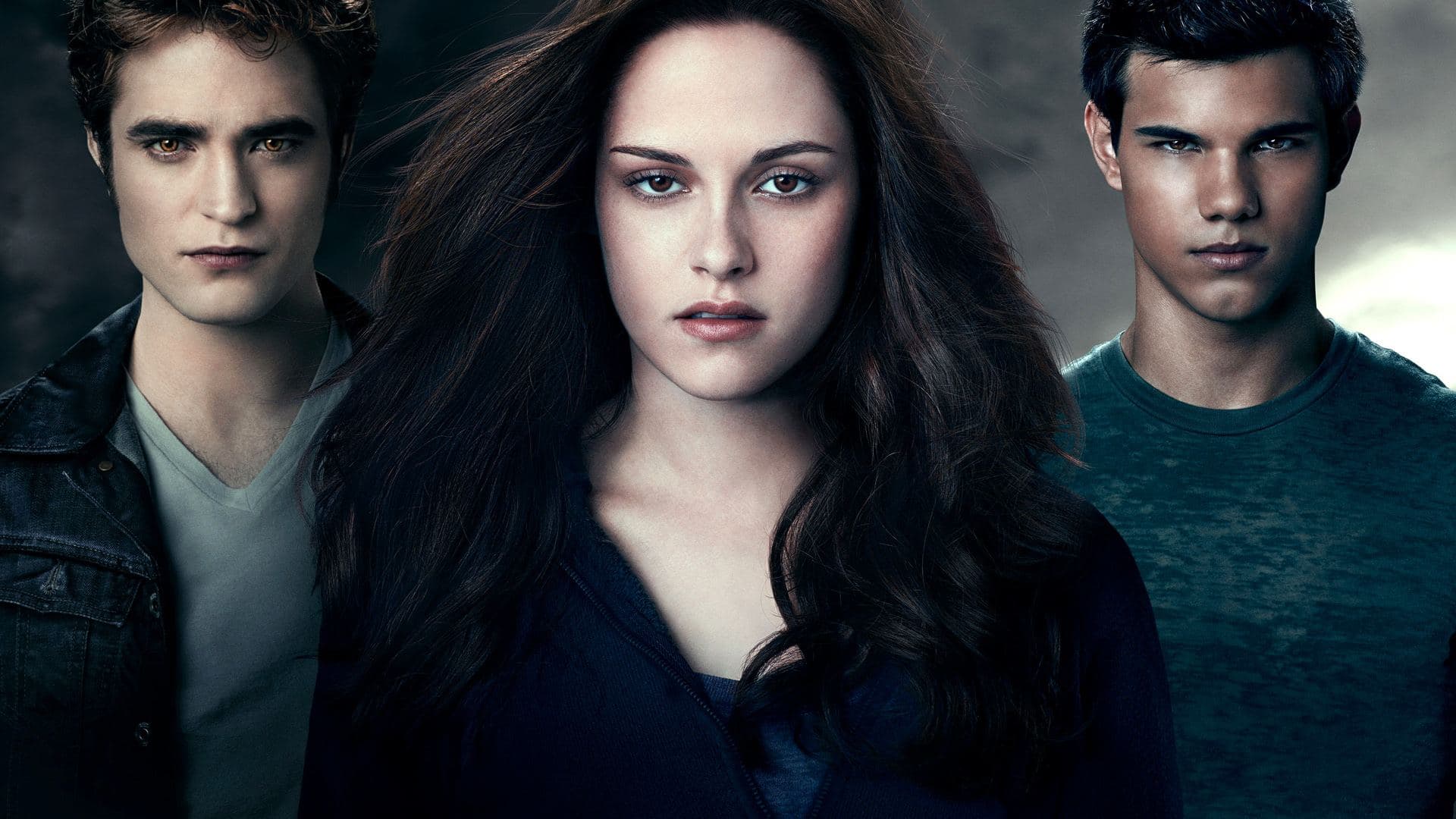
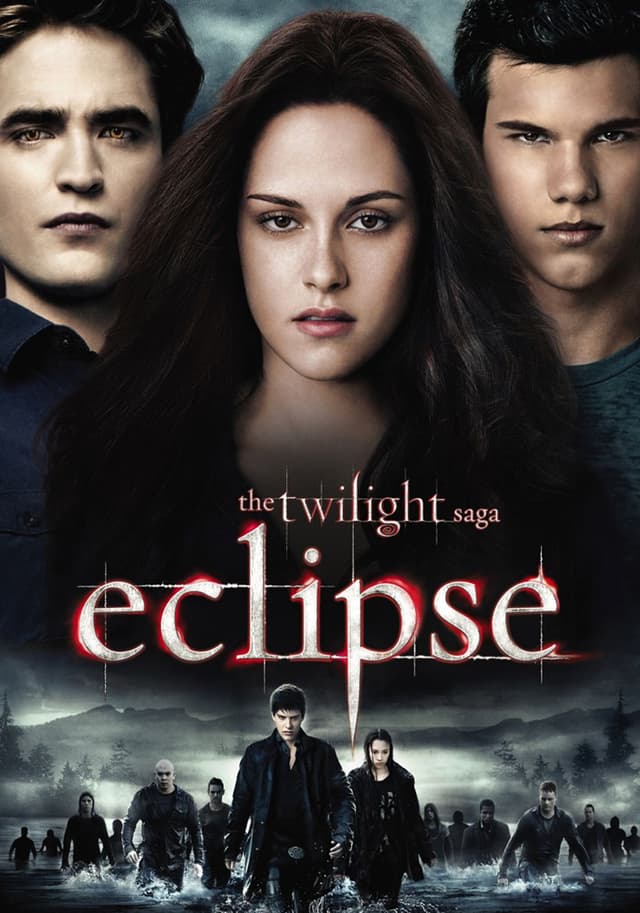
Kristen Stewart stars as Bella Swan, Robert Pattinson as Edward Cullen, and Taylor Lautner as Jacob Black. Bryce Dallas Howard replaces Rachelle Lefevre as Victoria. Xavier Samuel plays Riley Biers and the broader Cullen and Quileute ensemble returns from the previous films.
Where was The Twilight Saga: Eclipse filmed?
Principal photography took place in Vancouver, British Columbia, taking advantage of the province's Film Incentive BC tax credit. Additional shooting occurred in surrounding Vancouver-area locations, with second-unit work in Quebec for snow exteriors.
What did critics think of Eclipse?
Reviews were mixed, with a 49% approval rating on Rotten Tomatoes and a 58 out of 100 score on Metacritic. Critics considered Eclipse the strongest installment of the franchise to that point, citing action sequences and a tighter plot. Audiences gave the film an A CinemaScore.
Was The Twilight Saga: Eclipse profitable?
Yes, by a wide margin. Against the $68,000,000 production budget and an estimated $80,000,000 in marketing spend, the worldwide gross of $697,800,000 produced an exceptional theatrical profit. Home video and licensing revenue extended the financial return considerably.
How does Eclipse compare to the other Twilight films?
Eclipse's $697,800,000 worldwide gross trailed only Breaking Dawn Part 2 ($829,700,000) and Breaking Dawn Part 1 ($712,200,000), and outperformed Twilight ($407,300,000) and New Moon ($711,000,000 worldwide). The five-film saga grossed more than $3,300,000,000 worldwide combined.
Was Bryce Dallas Howard's casting controversial?
Yes. Rachelle Lefevre had played Victoria in Twilight and New Moon, and the recasting prompted significant fan backlash. Summit Entertainment cited a scheduling conflict with Barney's Version (2010), while Lefevre disputed that characterization.
Official Trailer
Build budgets like this one in Saturation
Start from an industry-standard feature film template, import the schedule and rates you already have, and let the cost report keep itself current as you spend. Real-time collaboration, no spreadsheets.