The Mummy Returns Budget
 AdventureActionFantasy2h 10m
Updated
Synopsis
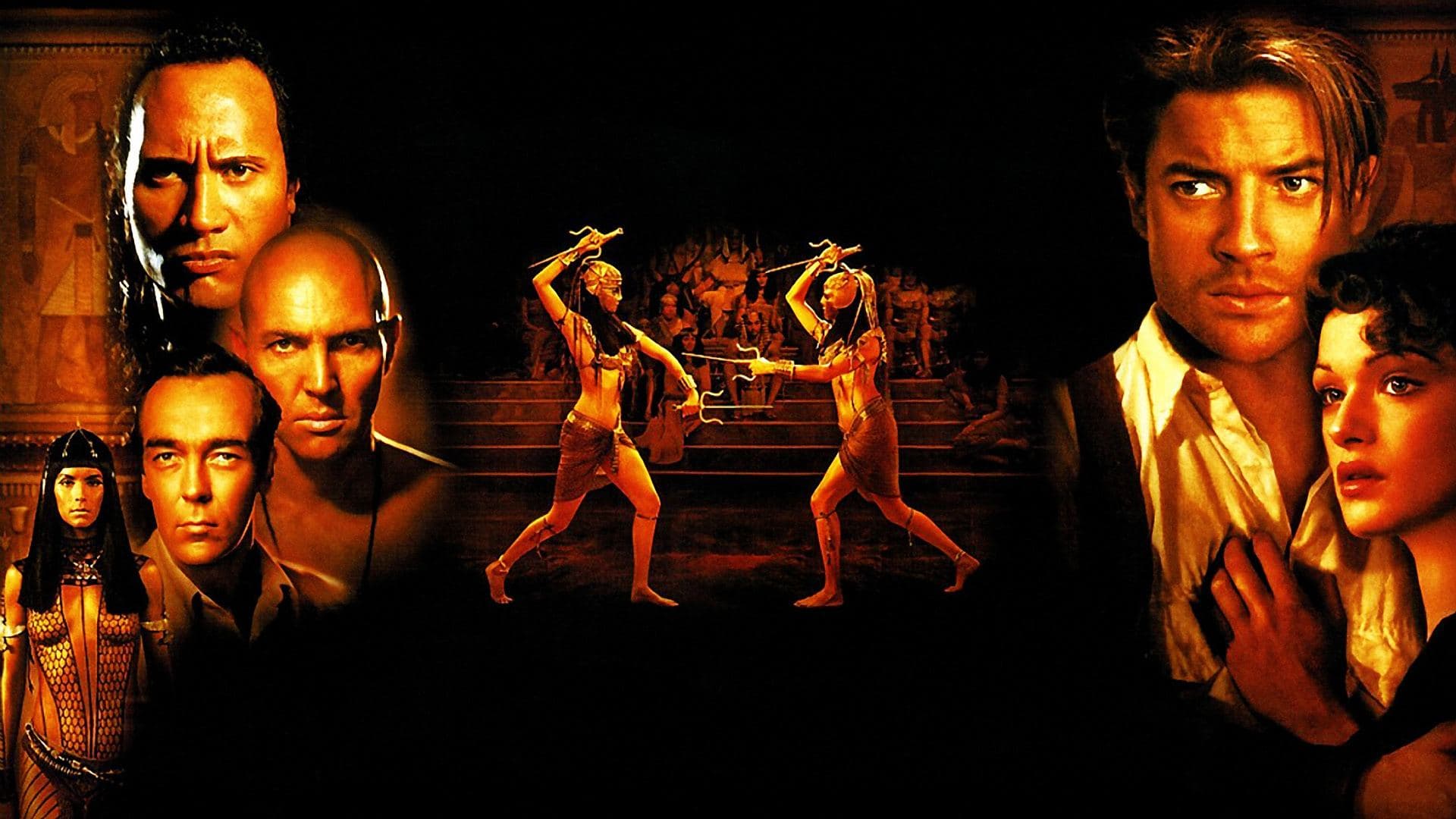
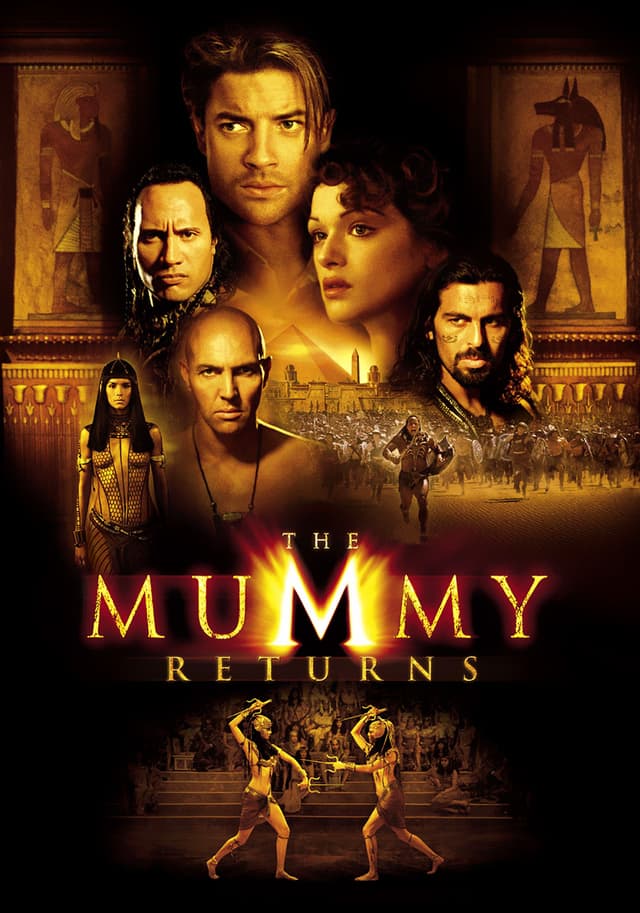
"The Mummy Returns" is an action-adventure film that serves as a sequel to the 1999 hit "The Mummy." Set in 1933, the story follows adventurer Rick O'Connell and his wife, Evelyn, as they navigate the challenges of parenthood while facing an ancient evil. When their son, Alex, inadvertently awakens the mummified body of the vengeful high priest Imhotep, the family must race against time to stop him from resurrecting the powerful goddess Anubis. With thrilling battles, breathtaking visuals, and a blend of mythology and adventure, the O'Connells embark on a perilous journey that takes them from the bustling streets of London to the mystical landscapes of Egypt. As they confront supernatural forces and uncover long-buried secrets, the bond of family is tested in a fight for survival against a formidable foe.
What Is the Budget of The Mummy Returns?
The Mummy Returns was produced with an estimated budget of $98 million, a significant increase from the original 1999 film's $80 million price tag. Universal Pictures greenlit the sequel almost immediately after The Mummy became a surprise blockbuster, grossing $416 million worldwide. The studio committed substantial resources to ensure the follow-up could deliver even larger set pieces, more elaborate creature effects, and expanded world-building that the first film had only hinted at.
Writer-director Stephen Sommers returned with an ambitious vision that required extensive visual effects work, large-scale practical sets at Shepperton Studios, and location shoots across Morocco, Jordan, and London. The budget reflected Universal's confidence in the franchise as a tentpole property, though the compressed production timeline would ultimately force difficult trade-offs in post-production quality.
Key Budget Allocation Categories
- Visual Effects and CGI: ILM handled over 400 visual effects shots, including the fully CGI Scorpion King, the Army of Anubis, and the massive Pygmy mummy sequences. VFX consumed one of the largest portions of the budget, though the rushed schedule meant several sequences, particularly the Scorpion King's digital body, shipped before they were fully refined.
- Cast Salaries: Brendan Fraser's salary rose considerably following the first film's success, and the returning ensemble including Rachel Weisz, John Hannah, Arnold Vosloo, Oded Fehr, and Patricia Velasquez commanded higher rates. Dwayne "The Rock" Johnson was brought in for his film debut as the Scorpion King at a relatively modest cost before his star power exploded.
- Production Design and Sets: Allan Cameron designed elaborate practical environments at Shepperton Studios in England, including the interior of the Scorpion King's pyramid, Hamunaptra's ruins, and the O'Connell family's London estate. These large-scale builds were essential for grounding the CGI-heavy sequences in physical reality.
- Location Filming: Extensive shoots took place in Morocco (standing in for 1933 Egypt), the Jordanian desert, and various London locations. Transporting cast, crew, and equipment to remote desert sites added logistical costs and scheduling complexity.
- Music and Score: Alan Silvestri composed the score, replacing Jerry Goldsmith from the original film. Silvestri brought a more orchestral, action-driven approach that required full orchestra recording sessions.
- Stunts and Action Choreography: The film featured significantly more action than its predecessor, including an extended bus chase through London, hand-to-hand combat sequences, and large-scale battle choreography for the climactic Army of Anubis confrontation.
How Does The Mummy Returns's Budget Compare to Similar Films?
Positioned against other early 2000s adventure sequels and effects-driven blockbusters, The Mummy Returns sat in a competitive budget range that reflected the era's escalating VFX costs.
- The Mummy (1999): Budget $80M | Worldwide $416M. The original film cost $18 million less and delivered a higher worldwide gross, making it one of Universal's most profitable films of the decade. The sequel's budget increase went primarily toward expanded VFX work.
- Jurassic Park III (2001): Budget $93M | Worldwide $368M. Released the same summer, this sequel spent slightly less but also struggled with a rushed production schedule. Both films demonstrated the risks of accelerated sequel timelines.
- Gladiator (2000): Budget $103M | Worldwide $465M. Ridley Scott's epic operated in a similar budget range but invested more heavily in practical production design and on-location shooting, earning stronger critical reception.
- Lara Croft: Tomb Raider (2001): Budget $115M | Worldwide $274M. Another adventure franchise launch that same year with a higher budget but significantly lower returns, highlighting how The Mummy Returns delivered stronger commercial value.
- Indiana Jones and the Last Crusade (1989): Budget $48M | Worldwide $474M. Adjusted for inflation, Spielberg's adventure sequel cost a comparable amount but achieved greater critical and commercial success, serving as the gold standard for the genre The Mummy Returns aspired to.
The Mummy Returns Box Office Performance
The Mummy Returns opened on May 4, 2001 with a then-record $68 million opening weekend, briefly holding the all-time record for the biggest opening in North American box office history. The film went on to earn $202,019,785 domestically and $433,013,274 worldwide.
Using the standard break-even threshold of roughly twice the production budget (to account for marketing and distribution costs), The Mummy Returns needed approximately $196 million worldwide to reach profitability. The film cleared that mark on domestic gross alone, making it a decisive commercial hit for Universal.
The return on investment tells a strong story: ($433M - $98M) / $98M x 100 = 342% ROI. While the worldwide total fell short of the first film's $416 million (which had been produced for $18 million less), the sequel still ranked as one of the top-grossing films of 2001. Its front-loaded box office pattern, with steep drops after the record opening, reflected audience word-of-mouth that was less enthusiastic than the original's. Nevertheless, the financial results were strong enough to validate Universal's franchise strategy and fund the spinoff The Scorpion King.
Box Office Breakdown
The Mummy Returns

The Mummy Returns Production History
Universal Pictures fast-tracked The Mummy Returns almost immediately after the first film's surprising $416 million worldwide haul in 1999. Stephen Sommers began writing the screenplay while still on the press tour for The Mummy, and the studio set an aggressive May 2001 release date that gave the production roughly 18 months from greenlight to premiere.
The script expanded the mythology significantly, jumping forward to 1933 and giving Rick and Evelyn O'Connell a young son, Alex, while introducing the ancient Scorpion King as a new villain. Sommers conceived the Scorpion King role specifically for professional wrestler Dwayne "The Rock" Johnson, whose charisma and physicality made him an ideal fit. This marked Johnson's first speaking role in a feature film and effectively launched his acting career.
Principal photography took place at Shepperton Studios in England, with location work in Morocco's Sahara Desert, the Jordanian desert near Aqaba, and various London locations including the British Museum. The production employed thousands of extras for the climactic battle sequences and built massive practical sets that were later extended with digital environments by ILM.
The compressed post-production schedule created the film's most lasting controversy. ILM was tasked with delivering over 400 visual effects shots, including the fully digital body of the Scorpion King in the climax. The technology for realistic digital humans was still in its infancy, and the rushed timeline meant the Scorpion King's CGI rendering shipped well below the studio's own quality standards. The rubbery, artificial appearance of the digital Rock became one of the most widely cited examples of premature CGI in blockbuster filmmaking, a reputation that persists over two decades later.
Despite these production pressures, the film hit its release date and Universal immediately began developing The Scorpion King as a prequel spinoff starring Johnson, which arrived in 2002. A third Mummy sequel, Tomb of the Dragon Emperor, followed in 2008 with a different cast configuration, but The Mummy Returns remains the most commercially successful entry in the franchise after the original.
Awards and Recognition
The Mummy Returns received limited awards attention, reflecting its positioning as a popcorn spectacle rather than a prestige production. The film was nominated for several technical awards at ceremonies recognizing visual effects and sound work, though the widely criticized Scorpion King CGI undercut its case in the effects categories.
The film won the BMI Film Music Award for Alan Silvestri's score. It received nominations at the Saturn Awards, where the franchise had found a more receptive audience among genre voters. At the Teen Choice Awards, the film earned nominations reflecting its popularity with younger audiences who embraced the adventure franchise.
The Mummy Returns also received Razzie nominations, including a nod for Worst Visual Effects targeting the Scorpion King sequence. This dual recognition captured the film's split identity: a genuine crowd-pleaser that delivered thrilling action alongside technical shortcuts that even casual viewers found distracting.
Critical Reception
The Mummy Returns holds a 47% approval rating on Rotten Tomatoes, a notable decline from the original's 59%. Critics generally praised the film's energy, humor, and the chemistry between Brendan Fraser and Rachel Weisz, but found the sequel overstuffed with competing plotlines and reliant on CGI that frequently failed to convince.
Roger Ebert gave the film two and a half stars, noting that it delivered "the same ingredients as before, but more of them" while losing some of the original's breezy charm under the weight of its expanded mythology. Many reviewers observed that the film's ambition outpaced both its runtime and its visual effects technology, with the Scorpion King climax drawing particular criticism for pulling audiences out of an otherwise entertaining adventure.
Audience reception was warmer than critical consensus suggested. The record-breaking opening weekend demonstrated enormous anticipation, and the film earned a B+ CinemaScore from opening-day audiences. Viewers who connected with the first film's blend of action, humor, and horror largely found more of what they enjoyed, even if the sequel's plotting was more convoluted. Over time, The Mummy Returns has settled into a comfortable reputation as an entertaining but flawed sequel that pushed the franchise's VFX ambitions beyond what the technology could deliver, while inadvertently launching one of Hollywood's biggest movie stars in Dwayne Johnson.
Frequently Asked Questions
How much did it cost to make The Mummy Returns (2001)?
The production budget was $98,000,000, covering principal photography, cast and crew salaries, locations, sets, post-production, and music. Marketing and distribution (P&A) costs are estimated at an additional $49,000,000 - $78,400,000, bringing the total studio investment to approximately $147,000,000 - $176,400,000.
How much did The Mummy Returns (2001) earn at the box office?
The Mummy Returns grossed $202,019,785 domestic, $241,261,119 international, totaling $443,280,904 worldwide.
Was The Mummy Returns (2001) profitable?
Yes. Against a production budget of $98,000,000 and estimated total costs of ~$245,000,000, the film earned $443,280,904 theatrically - a 352% ROI on production costs alone.
What were the biggest costs in producing The Mummy Returns?
The primary cost drivers were above-the-line talent (Brendan Fraser, Rachel Weisz, John Hannah); visual effects, practical stunts, and A-list talent compensation; international production across United States of America, Morocco, Jordan, United Kingdom.
How does The Mummy Returns's budget compare to similar adventure films?
At $98,000,000, The Mummy Returns is classified as a mid-budget production. The median budget for wide-release adventure films in the 2000s ranges from $30 - 80M for mid-budget to $150M+ for tentpoles. Comparable budgets: Ford v Ferrari (2019, $97,600,000); Asterix at the Olympic Games (2008, $97,250,400); Beetlejuice Beetlejuice (2024, $99,000,000).
Did The Mummy Returns (2001) go over budget?
There are no widely reported accounts of significant budget overruns for this production. However, studios rarely disclose precise budget overrun figures publicly. The reported production budget reflects the final estimated cost.
What was the return on investment (ROI) for The Mummy Returns?
The theatrical ROI was 352.3%, calculated as ($443,280,904 − $98,000,000) ÷ $98,000,000 × 100. This measures gross revenue against production budget only - it does not account for P&A or exhibitor shares.
What awards did The Mummy Returns (2001) win?
6 wins & 19 nominations total.
Who directed The Mummy Returns and who were the key crew members?
Directed by Stephen Sommers, written by Stephen Sommers, shot by Adrian Biddle, with music by Alan Silvestri, edited by Ray Bushey III, Bob Ducsay.
Where was The Mummy Returns filmed?
The Mummy Returns was filmed in United States of America, Morocco, Jordan, United Kingdom.
Filmmakers
The Mummy Returns

Official Trailer
Build budgets like this one in Saturation
Start from an industry-standard feature film template, import the schedule and rates you already have, and let the cost report keep itself current as you spend. Real-time collaboration, no spreadsheets.