Harry Potter and the Half-Blood Prince Budget
 AdventureFantasy2h 33m
Updated
Synopsis
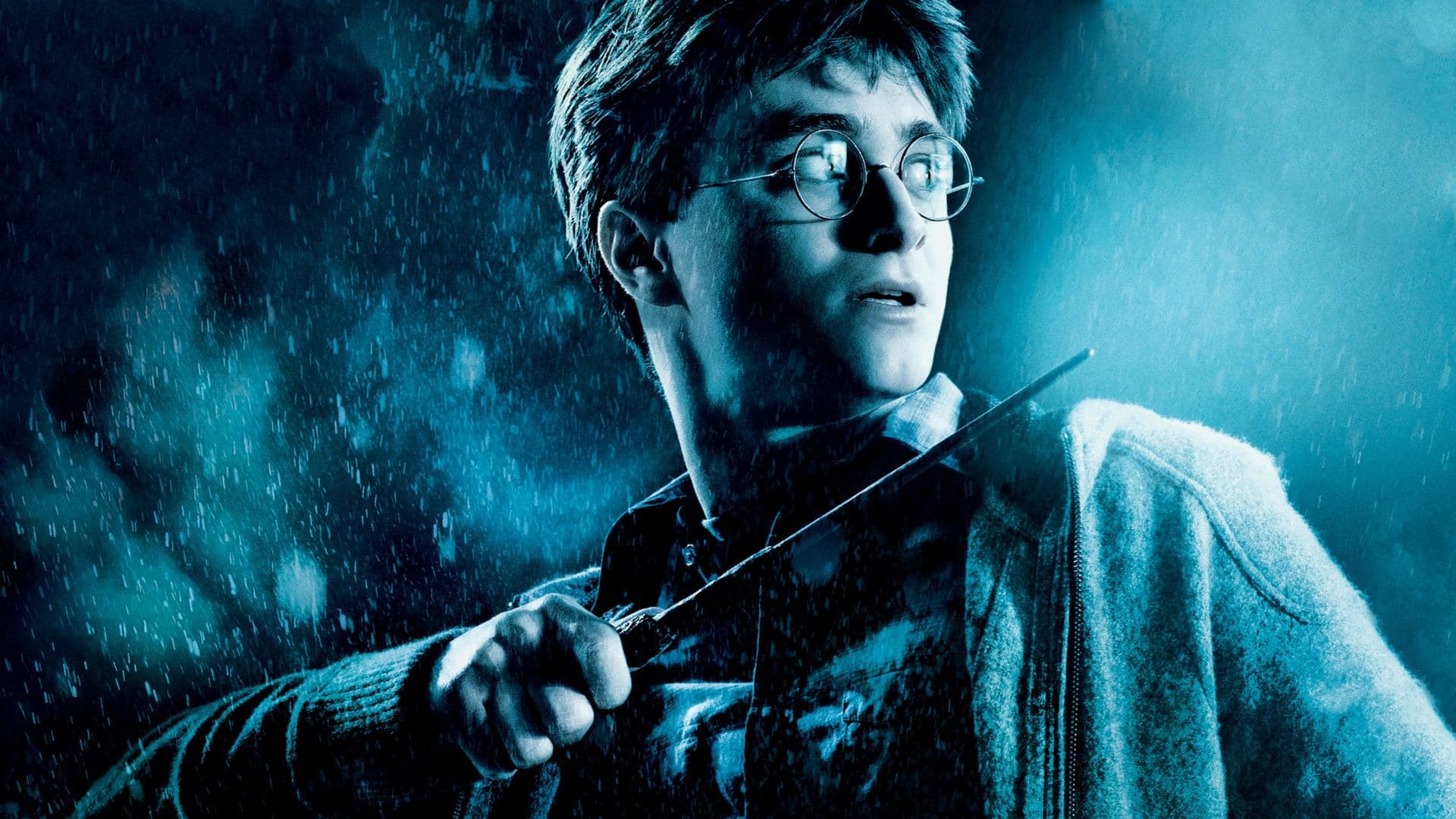
As Lord Voldemort's Death Eaters terrorize both the wizarding and Muggle worlds, Dumbledore recruits Harry Potter to help retrieve a crucial memory from new Potions professor Horace Slughorn, a memory that holds the secret to Voldemort's quest for immortality through objects called Horcruxes. While Harry excels in Potions using a mysterious annotated textbook belonging to the "Half-Blood Prince," Draco Malfoy carries out a secret mission for Voldemort within Hogwarts itself. As Harry, Ron, and Hermione navigate the complications of teenage romance, Dumbledore takes Harry into the Pensieve to witness Tom Riddle's transformation from orphan to dark wizard, preparing him for the final confrontation that will demand the ultimate sacrifice.
What Is the Budget of Harry Potter and the Half-Blood Prince?
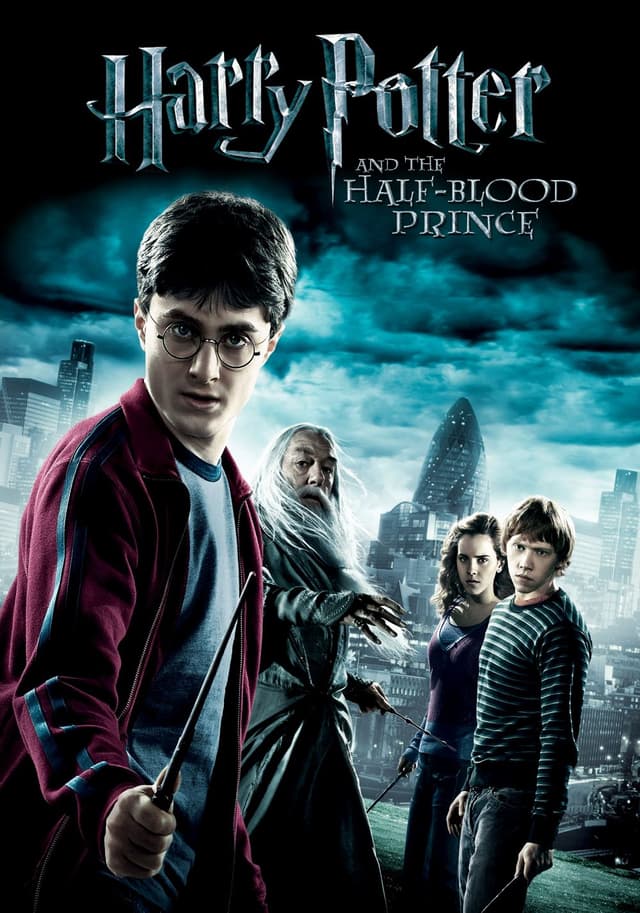
Harry Potter and the Half-Blood Prince (2009), directed by David Yates and distributed by Warner Bros. Pictures, was produced on a budget of $250,000,000. The sixth installment in the Harry Potter franchise adapted J.K. Rowling's penultimate novel, delving into Lord Voldemort's origins through Dumbledore's Pensieve memories while Harry discovers an annotated Potions textbook belonging to the mysterious "Half-Blood Prince." The film balanced the franchise's darkening tone with its most romance-driven storyline, as Harry, Ron, and Hermione navigate teenage relationships alongside the mounting threat of Voldemort's return to power.
The $250 million budget made Half-Blood Prince the most expensive Harry Potter film at the time of production. Costs were driven by the elaborate cave sequence where Dumbledore and Harry retrieve a Horcrux, the destruction of the Millennium Bridge in London, the attack on the Burrow (an action set piece created for the film that does not appear in the novel), and continued investment in the franchise's practical set infrastructure at Leavesden Studios in Hertfordshire, England. The film also bore the costs of Warner Bros.' decision to delay its release from November 2008 to July 2009, a strategic shift that extended the marketing campaign and post-production timeline.
Key Budget Allocation Categories
Harry Potter and the Half-Blood Prince distributed its $250 million budget across the following production areas:
- Production Design and Leavesden Studios: Production designer Stuart Craig, who designed every Harry Potter film, maintained and expanded the standing sets at Leavesden Studios. By the sixth film, the Hogwarts Great Hall, Dumbledore's office, the Gryffindor common room, and dozens of subsidiary sets had been refined over a decade of continuous production. New builds for Half-Blood Prince included the Horcrux cave (a massive water tank set with practical rock formations and pyrotechnic effects), Slughorn's enchanted room, and the Astronomy Tower where the film's climactic scene takes place. The Burrow attack sequence required a purpose-built exterior set designed to be partially destroyed during filming.
- Visual Effects and Magic Sequences: Double Negative led the VFX work, with additional contributions from multiple houses. Key sequences included the Inferi attack in the Horcrux cave (requiring underwater creature animation and practical water effects), the Millennium Bridge destruction in the film's opening (a fully CG London environment), Dumbledore's firestorm to repel the Inferi, and the Felix Felicis sequence with its golden-tinted visual treatment. The young Tom Riddle Pensieve flashbacks required period-accurate environments blended with magical elements.
- Cast and Above-the-Line Talent: Daniel Radcliffe, Emma Watson, and Rupert Grint returned with salaries that had escalated substantially across six films. Radcliffe's pay for Half-Blood Prince was reported at approximately $25 million. Michael Gambon returned as Dumbledore in what would be the character's most prominent role in the series, with Jim Broadbent joining as Horace Slughorn. Alan Rickman, Helena Bonham Carter, and Tom Felton had expanded roles. David Yates returned to direct after Order of the Phoenix, establishing himself as the franchise's steward for the final four films.
- Location Photography and Period Design: While the majority of shooting took place at Leavesden Studios, the production utilized several UK locations. Filming took place at Lacock Abbey (young Tom Riddle's orphanage), the Gloucester Cathedral cloisters, and the Millennium Bridge in London for reference photography. The film's muted, desaturated color palette, overseen by cinematographer Bruno Delbonnel (replacing the franchise's previous DPs), required careful lighting design across both practical sets and location work.
- Score and Sound Design: Nicholas Hooper returned to compose the score after Order of the Phoenix, delivering what many consider the franchise's most emotionally varied soundtrack. The score balanced romantic themes for the teenage relationship subplots with increasingly dark orchestrations for the Horcrux and Voldemort sequences. Sound design for the Inferi cave, the Sectumsempra curse, and the Astronomy Tower sequence demanded meticulous audio layering to support the film's tonal shifts.
How Does Harry Potter and the Half-Blood Prince's Budget Compare to Similar Films?
At $250,000,000, Half-Blood Prince was the most expensive Harry Potter film to that point. Comparing it with other franchise entries and contemporaneous fantasy films:
- Harry Potter and the Order of the Phoenix (2007): Budget $150,000,000 | Worldwide $942,000,000. The predecessor cost 40% less and earned slightly more worldwide, reflecting Order of the Phoenix's tighter production efficiency and the diminishing cost-to-revenue ratio as the franchise's budgets escalated.
- Harry Potter and the Deathly Hallows Part 2 (2011): Budget $125,000,000 | Worldwide $1,341,500,000. The franchise finale cost 50% less than Half-Blood Prince and earned 44% more, benefiting from the split-film strategy that reduced per-film production costs while generating enormous event-film demand for the conclusion.
- The Dark Knight (2008): Budget $185,000,000 | Worldwide $1,004,600,000. Christopher Nolan's Batman sequel, released the year Half-Blood Prince was originally scheduled, cost 26% less and earned 7.5% more, demonstrating that Warner Bros.' other tentpole franchise achieved greater efficiency in its budget-to-gross ratio.
- Transformers: Revenge of the Fallen (2009): Budget $200,000,000 | Worldwide $836,300,000. Released the same summer on a 20% lower budget, Michael Bay's sequel earned 10.5% less worldwide but with significantly lower critical regard, illustrating how franchise brand loyalty sustained box office performance independent of quality.
- Avatar (2009): Budget $237,000,000 | Worldwide $2,923,700,000. James Cameron's revolutionary 3D film cost 5% less and earned over three times as much, resetting expectations for what blockbuster budgets could yield when paired with genuinely groundbreaking technology.
Harry Potter and the Half-Blood Prince Box Office Performance
Harry Potter and the Half-Blood Prince opened in the United States on July 15, 2009, debuting to $77.8 million domestically in its opening weekend. Despite the modest opening by franchise standards (Order of the Phoenix had opened to $77.1 million, Goblet of Fire to $102.7 million), the film demonstrated strong legs through the summer, ultimately accumulating $302 million domestically.
Box Office Breakdown
Harry Potter and the Half-Blood Prince

At approximately +274%, Harry Potter and the Half-Blood Prince returned roughly $3.74 for every $1 of production budget invested during its theatrical run.
The sixth Harry Potter film set a then-record opening day of $58 million and an opening weekend of $158 million domestically. Its international gross of $632.4 million (68% of worldwide) continued the franchise's pattern of strong global performance, with the UK, Japan, and Germany among the top-performing territories.
Harry Potter and the Half-Blood Prince Production History
Development on the sixth Harry Potter film began while Order of the Phoenix was still in post-production. Steve Kloves, who had adapted every Harry Potter novel except Order of the Phoenix, returned to write the screenplay. Kloves faced the challenge of condensing Rowling's second-longest novel (652 pages) into a filmable runtime while preserving the Horcrux mythology essential to the final two films. Several subplots were cut, including most of the Gaunt family flashbacks and the Battle of the Astronomy Tower's full scope, while the Burrow attack was invented as a mid-film action beat absent from the source material.
David Yates returned to direct, beginning his run as the franchise's definitive filmmaker. Yates brought cinematographer Bruno Delbonnel aboard, replacing regular DP Slawomir Idziak. Delbonnel's muted, golden-hour aesthetic gave Half-Blood Prince its distinctive visual identity, distinguishing it from the cooler tones of the previous films. The visual approach was influenced by Rembrandt paintings and 1970s photography, creating what Delbonnel described as a "memory" quality appropriate to a film centered on Pensieve flashbacks.
Principal photography ran from September 2007 to May 2008 at Leavesden Studios in Hertfordshire, with location work across the United Kingdom. The Horcrux cave sequence required a massive water tank set at Leavesden, combining practical rock formations, real water, and pyrotechnic fire effects with digital Inferi creatures. Alan Rickman and Daniel Radcliffe filmed the Astronomy Tower climax over several days, with Yates and Delbonnel using careful lighting to create the sequence's iconic moonlit atmosphere.
Warner Bros. controversially delayed the film's release from November 21, 2008, to July 15, 2009, citing the desire to fill a gap in their 2009 summer lineup rather than compete with November 2008's The Twilight Saga: Twilight and Quantum of Solace. The delay frustrated fans and prompted criticism from exhibitors, but Warner Bros.' strategic calculation proved correct: the July 2009 date positioned the film as the summer's dominant family tentpole and ultimately yielded strong box office results.
Awards and Recognition
Harry Potter and the Half-Blood Prince was nominated for Best Cinematography at the 82nd Academy Awards, the franchise's first and only nomination in that category. Bruno Delbonnel's atmospheric, painterly work was praised by the Academy, though the award went to Mauro Fiore for Avatar. The cinematography nomination marked a milestone for the franchise, recognizing the visual maturity that distinguished the later Harry Potter films from the brighter, more straightforward photography of the early installments.
The film received additional nominations from BAFTA (Best Special Visual Effects and Best Production Design), the Art Directors Guild, and the Saturn Awards. Nicholas Hooper's score was nominated by the International Film Music Critics Association. Stuart Craig's production design, particularly the Horcrux cave and the Astronomy Tower, received widespread recognition as among the finest practical set work in contemporary fantasy cinema.
Critical Reception
Harry Potter and the Half-Blood Prince earned an 84% approval rating on Rotten Tomatoes based on 282 reviews, with a critics consensus praising the film's emotional depth, visual sophistication, and performances while noting its deliberately measured pace. On Metacritic, the film scored 78 out of 100, the highest score in the franchise, indicating "generally favorable reviews." Audiences gave it an A on CinemaScore.
Critics praised the film as the most cinematically accomplished entry in the franchise to date. Bruno Delbonnel's photography received particular acclaim, with reviewers noting how the desaturated palette and chiaroscuro lighting elevated the material beyond typical fantasy blockbuster visuals. Michael Gambon's performance as a weary, vulnerable Dumbledore was widely lauded, particularly in the Horcrux cave sequence and the Astronomy Tower climax. Jim Broadbent's turn as Slughorn was praised as a welcome injection of warmth and complexity.
The film's detractors argued that Yates's measured pacing, while effective for atmosphere, came at the expense of the novel's more action-driven sequences. The exclusion of Dumbledore's funeral and the truncated Battle of the Astronomy Tower disappointed purist fans who felt the film's climax lacked the dramatic weight of the source material. The invented Burrow attack was criticized as an unnecessary addition that contradicted the novel's continuity. Nevertheless, the majority of critics considered Half-Blood Prince the most mature and visually striking entry in the franchise, a film that treated its teenage characters' emotional lives with the same seriousness as its magical threats.
Frequently Asked Questions
How much did it cost to make Harry Potter and the Half-Blood Prince?
The production budget was $250,000,000, making it the most expensive Harry Potter film. Major costs included the elaborate Horcrux cave water tank set at Leavesden Studios, the CG Millennium Bridge destruction sequence, continued maintenance of the franchise's extensive standing sets, and the cast's escalating salaries across six films.
How much did Harry Potter and the Half-Blood Prince earn at the box office?
The film grossed $302,000,000 domestically and $632,400,000 internationally, totaling $934,400,000 worldwide. It was the second highest-grossing film of 2009, behind only Avatar.
Why was Half-Blood Prince delayed from 2008 to 2009?
Warner Bros. moved the release from November 21, 2008, to July 15, 2009, to fill a gap in their summer lineup rather than compete with Twilight and Quantum of Solace. The delay frustrated fans but proved commercially sound, positioning the film as the dominant summer family tentpole.
Where was Harry Potter and the Half-Blood Prince filmed?
Principal photography ran from September 2007 to May 2008 at Leavesden Studios in Hertfordshire, England. Location work included Lacock Abbey, Gloucester Cathedral, and the Millennium Bridge in London. The franchise's standing sets at Leavesden had been continuously maintained and expanded since 2000.
Did Half-Blood Prince receive any Oscar nominations?
Yes. The film was nominated for Best Cinematography at the 82nd Academy Awards for Bruno Delbonnel's atmospheric, painterly work, the franchise's first and only nomination in that category. The award went to Mauro Fiore for Avatar. The film also received BAFTA nominations for Special Visual Effects and Production Design.
What is the Horcrux cave scene in Half-Blood Prince?
Dumbledore and Harry travel to a coastal cave where Voldemort hid a Horcrux. The sequence was filmed using a massive water tank set at Leavesden Studios, combining practical rock formations, real water, and pyrotechnic fire effects with digitally animated Inferi (reanimated corpses). It is considered one of the franchise's most technically ambitious sequences.
Who is the Half-Blood Prince?
The Half-Blood Prince is Severus Snape, played by Alan Rickman. Harry discovers Snape's old Potions textbook filled with annotations and spell inventions, including the dangerous Sectumsempra curse. The revelation of Snape's identity ties into the film's climactic events at the Astronomy Tower.
How does Half-Blood Prince compare to other Harry Potter films at the box office?
At $934.4 million worldwide, Half-Blood Prince earned less than Deathly Hallows Part 2 ($1.342B) and Philosopher's Stone ($1.024B adjusted) but more than Chamber of Secrets, Prisoner of Azkaban, and Goblet of Fire. However, its $250M budget was the franchise's highest, giving it thinner profit margins than entries that achieved similar grosses on lower budgets.
What makes the cinematography of Half-Blood Prince distinctive?
Bruno Delbonnel replaced the franchise's previous cinematographers and introduced a muted, golden-hour palette influenced by Rembrandt paintings and 1970s photography. The desaturated look created a "memory" quality fitting the Pensieve-heavy narrative and earned the franchise its only Academy Award nomination for Best Cinematography.
What is the Rotten Tomatoes score for Harry Potter and the Half-Blood Prince?
The film holds an 84% approval rating on Rotten Tomatoes and scored 78 out of 100 on Metacritic, the highest Metacritic score in the franchise. Audiences gave it an A on CinemaScore. Critics praised its emotional depth and visual sophistication as the most cinematically mature Harry Potter entry.
Filmmakers
Harry Potter and the Half-Blood Prince

Official Trailer
Build budgets like this one in Saturation
Start from an industry-standard feature film template, import the schedule and rates you already have, and let the cost report keep itself current as you spend. Real-time collaboration, no spreadsheets.