Napoleon Dynamite Budget
 Comedy1h 35m
Updated
Synopsis
In rural Preston, Idaho, awkward teenager Napoleon Dynamite navigates high school alongside his unemployed older brother Kip, his llama-tending grandmother, and his arrival of a new friend, Pedro, a quiet Mexican transfer student. When Pedro decides to run for class president against the popular Summer Wheatly, Napoleon throws himself into the campaign, and a climactic dance routine set to Jamiroquai's "Canned Heat" turns the underdog ticket into the most unexpected high-school election in Sundance comedy history.
What Is the Budget of Napoleon Dynamite (2004)?
Napoleon Dynamite (2004), directed by Jared Hess and distributed by Fox Searchlight Pictures in partnership with Paramount Pictures and MTV Films, was produced on a reported budget of $400,000. Hess developed the feature from his 2002 BYU student short film Peluca, expanding the deadpan high-school comedy into a 96-minute feature with the same nonprofessional aesthetic and stripped-down production economics. The figure is among the most widely cited microbudget totals in modern American comedy and places the film alongside The Blair Witch Project as one of the defining low-cost Sundance breakouts of the 2000s.
That $400,000 covered a 22-day Preston, Idaho shoot, a cast led by then-unknown Jon Heder, a small Brigham Young University crew, and post-production carried out before Sundance acquired and rebranded the film for wide release. Fox Searchlight paid a reported $3 million for worldwide rights at the festival, and the studio later spent significantly more on prints and advertising than the underlying production cost, which is the standard pattern when a major distributor inherits a sub-million-dollar indie. The headline production figure remained $400,000, and that number is what drives the film's enduring return-on-investment narrative.
Key Budget Allocation Categories
A $400,000 microbudget feature has almost no slack: every line item is constrained, and Hess's production design relied on resourcefulness rather than spend. The following categories represent where the money actually went:
- Location Filming in Preston, Idaho: The entire shoot took place in Preston, Idaho, Jared Hess's hometown, drawing on existing buildings, the local high school, and family-owned properties to keep location fees minimal. The production embedded with the community, used real homes and streetscapes, and avoided the soundstage or backlot costs that would have consumed the budget on a conventional comedy.
- Cast Fees and Above-the-Line Talent: Jon Heder famously received a flat fee of approximately $1,000 for playing the title role, with the rest of the ensemble cast working for similarly modest day rates. Heder later renegotiated and received a backend payment estimated at around $200,000 once the film became a commercial phenomenon, but the original above-the-line spend was kept to a tiny fraction of any union scale production.
- 22-Day Production Schedule: Principal photography wrapped in 22 days during the summer of 2003 with a small crew built largely from Hess's Brigham Young University filmmaking network. Compressing the schedule allowed the production to operate with a skeleton department structure, minimal overtime, and the kind of single-unit shooting day that microbudget features depend on to stay solvent.
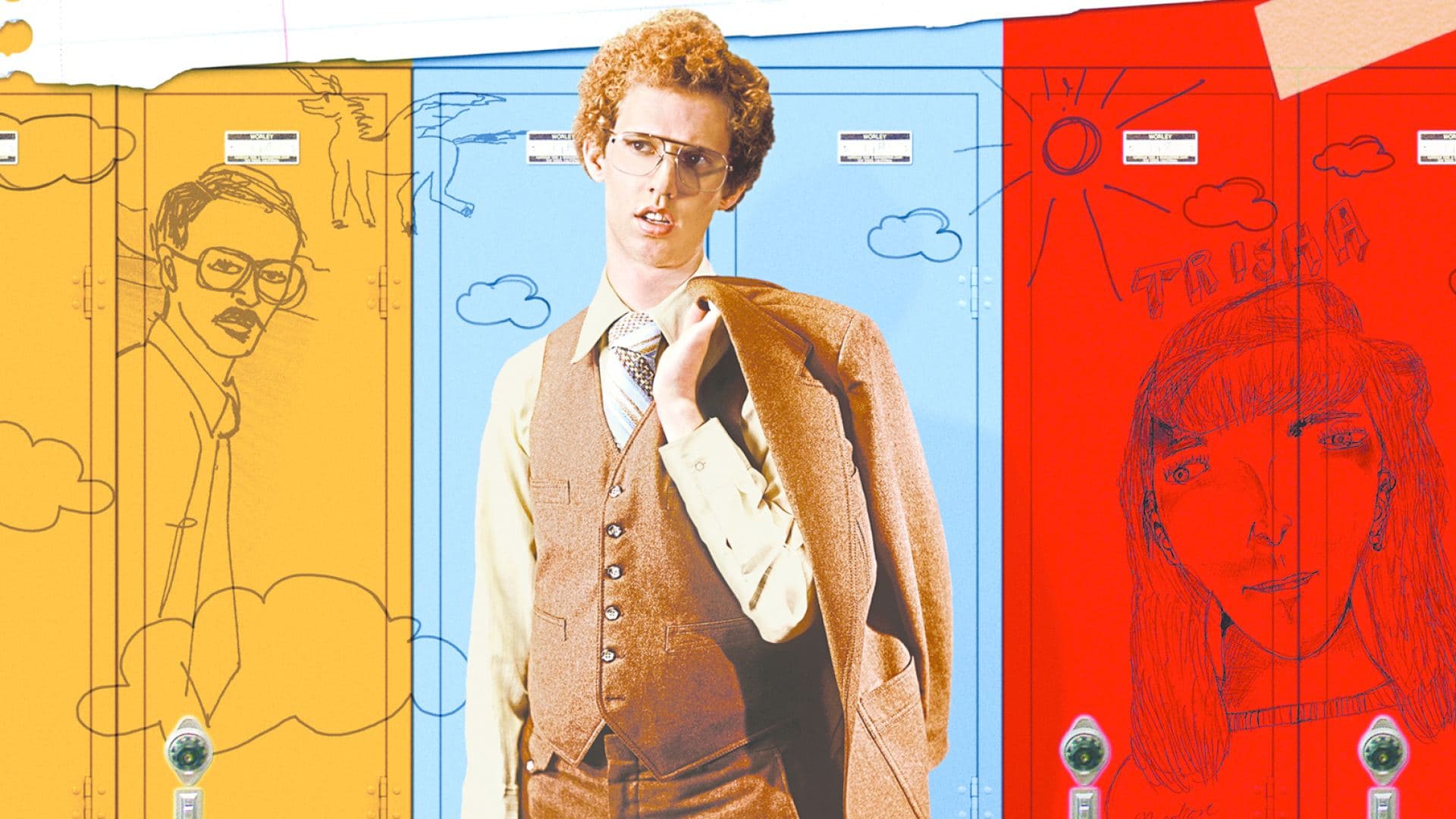
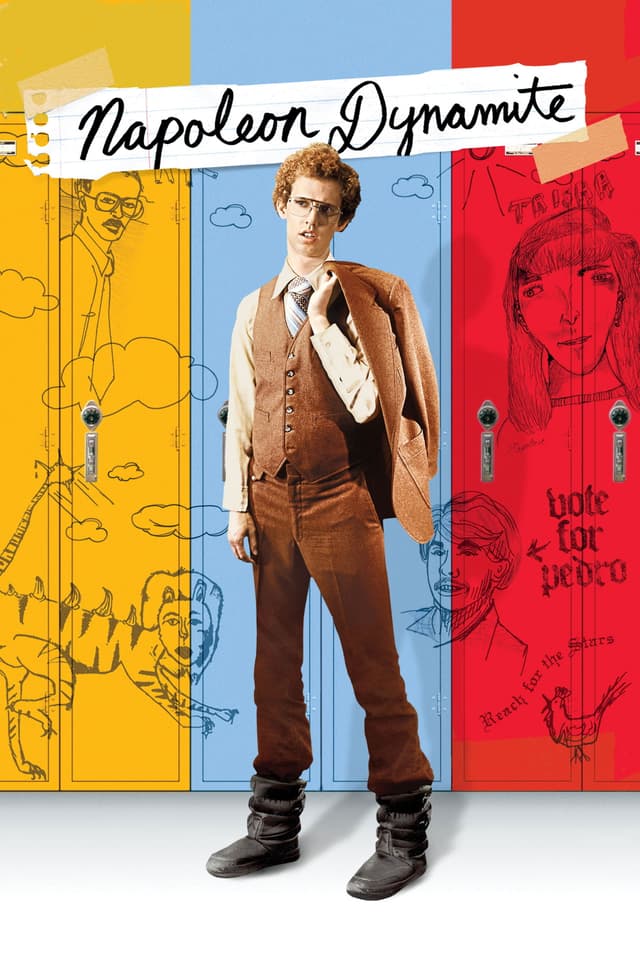
- Wardrobe, Props, and Production Design: Costume and props were sourced from Preston thrift stores, local families, and the production designer's own collection, producing the iconic moon boots, "Vote for Pedro" t-shirts, and bicycle-and-llama tableau on negligible spend. Hess and production designer Cory Lorenzen leaned into the deliberately dated aesthetic so that wardrobe doubled as comedy rather than expense.
- Cinematography and Camera Package: Cinematographer Munn Powell shot on Super 16mm using a stripped-down lens package and natural light wherever possible. The 16mm origination was a meaningful line item for a film at this budget but delivered the texture that distinguished the feature from digital indies of the same period and supported the eventual 35mm blowup for theatrical release.
- Score and Soundtrack Licensing: John Swihart composed the original score on an indie-scale fee, and music supervision relied on inexpensive needle-drops including When in Rome's "The Promise" and Jamiroquai's "Canned Heat" for the final dance sequence. Licensing fees on the soundtrack were negotiated against the small production budget rather than the eventual theatrical gross.
- Post-Production and Sundance Delivery: Editing by Jeremy Coon, sound finishing, and the 35mm print deliverable required for Sundance Film Festival submission consumed the remaining cushion in the budget. The film was completed in time for the January 2004 festival, where its acquisition transformed the financial calculus from production cost to studio platform release.
How Does Napoleon Dynamite's Budget Compare to Similar Films?
Set alongside the microbudget Sundance breakouts and other low-cost comedies that defined the era, Napoleon Dynamite's economics are extraordinary even within that company:
- The Blair Witch Project (1999): Budget $60,000 | Worldwide $248,600,000. The benchmark microbudget Sundance phenomenon delivered the highest ROI in modern indie history at roughly $4,143 returned for every $1 spent. Napoleon Dynamite trails Blair Witch on raw multiplier but operates in a far less marketable horror-adjacent space, making its $115-per-$1 return the more reproducible blueprint for comedy financiers.
- Saw (2004): Budget $1,200,000 | Worldwide $103,900,000. James Wan's contained-thriller debut, released the same year, demonstrates how the 2004 indie market rewarded ruthlessly disciplined budgets across genres. Saw operated at three times Napoleon Dynamite's spend but landed at a comparable multiplier of roughly 87 to 1, reinforcing the period's arbitrage between Sundance acquisition prices and subsequent studio releases.
- Whiplash (2014): Budget $3,300,000 | Worldwide $50,000,000. Damien Chazelle's Sundance breakout a decade later cost more than eight times what Napoleon Dynamite spent and grossed comparable worldwide totals. The contrast highlights how meaningful inflation in microbudget production costs has been since 2004 even before factoring in the more aggressive marketing spend studios now layer on top.
- Little Miss Sunshine (2006): Budget $8,000,000 | Worldwide $101,000,000. Fox Searchlight's next signature Sundance comedy two years later cost twenty times what Napoleon Dynamite did and reached a slightly larger worldwide gross, with the same studio playbook of festival acquisition and platform expansion adapted to a more conventional ensemble production model.
- Juno (2007): Budget $7,500,000 | Worldwide $231,400,000. Jason Reitman's teen-pregnancy comedy, also released by Fox Searchlight and built around a quirky lead performance, eclipsed Napoleon Dynamite at the box office on a budget nearly twenty times larger. Juno illustrates how the studio refined the indie-coming-of-age formula in the years after Napoleon Dynamite's success.
- Nacho Libre (2006): Budget $35,000,000 | Worldwide $99,300,000. Jared Hess's studio follow-up at Paramount carried a budget nearly ninety times larger than Napoleon Dynamite's and grossed only twice as much, a comparison that demonstrates how unusual the original feature's efficiency was even for the same filmmaker working with the same comedic instincts at studio scale.
Napoleon Dynamite Box Office Performance
Fox Searchlight opened Napoleon Dynamite in a six-theater limited release on June 11, 2004, generating a per-theater average of approximately $20,000 and signaling the platform potential that supported a gradual nationwide expansion. The film widened to over 1,000 theaters by August and peaked at 1,027 screens domestically, supported by aggressive word-of-mouth marketing and the studio's now-famous quote-driven theatrical campaign featuring lines such as "Vote for Pedro."
The full theatrical breakdown:
Box Office Breakdown
Napoleon Dynamite

Measured against the original $400,000 production budget alone, Napoleon Dynamite delivered approximately $115 in worldwide gross for every $1 of negative cost, one of the highest multipliers ever recorded for a wide-release American comedy. Against the more economically honest total investment figure that includes Fox Searchlight's prints and advertising spend, the film still produced an estimated $4.44 in worldwide gross for every $1 of total committed capital, a ratio that ranks among the strongest theatrical returns of the studio's indie division during the 2000s.
The longer-term commercial life extended well beyond ticket revenue. The film generated significant DVD sales in 2004 and 2005, sustained merchandise licensing around its catchphrases and imagery, and supported the animated Fox television series Napoleon Dynamite that aired six episodes in 2012. The aborted Broadway musical adaptation announced in 2014 never materialized, but the underlying intellectual property continued to perform commercially long after the original theatrical run ended.
Napoleon Dynamite Production History
Napoleon Dynamite originated as Peluca, a black-and-white 2002 student short film Jared Hess directed at Brigham Young University while studying in the film program. Peluca established the deadpan tone, the rural Idaho setting, and the central character of an awkward, perpetually exasperated teenager played by Jon Heder, who was also studying at BYU at the time. Hess and his wife and writing partner Jerusha Hess expanded Peluca into a feature screenplay over the following year, retaining the visual grammar and most of the comic sensibility intact.
Financing came from Jeremy Coon, Sean Covel, and Chris Wyatt, who raised the $400,000 production budget through private equity rather than studio development financing. Coon also served as the film's editor, an unusually consolidated role driven by the limited budget. Principal photography took place over 22 days during the summer of 2003 in Preston, Idaho, where Hess had grown up. Filming used real homes belonging to local families, the actual Preston High School, and surrounding farmland and small-town businesses, with the production embedding deeply with the community to keep location fees minimal. Idaho does not run a state-level film production incentive comparable to Georgia or New Mexico, but the production found native cost advantages in the rural setting, the BYU crew network, and the availability of nonprofessional or first-time on-camera performers.
Casting decisions emphasized inexperience as an aesthetic choice. Jon Heder was paid a flat fee of approximately $1,000 to play Napoleon, working without an agent and accepting the role on the strength of his collaboration with Hess on Peluca. Efren Ramirez was cast as Pedro, Aaron Ruell as Kip, Tina Majorino as Deb, and Haylie Duff as Summer Wheatly. Cinematographer Munn Powell shot the film on Super 16mm using a small lens package and natural light wherever possible, with editing by Jeremy Coon and an original score by John Swihart completed in time for the film's January 2004 Sundance Film Festival premiere.
Sundance turned the film from a regional curiosity into a national property. Fox Searchlight Pictures, in partnership with Paramount Pictures and MTV Films, acquired worldwide distribution rights for a reported $3 million following the festival premiere, instantly returning the original investment more than seven times over before a single ticket sold. The studio handled the 35mm blowup, the print and advertising rollout, and the platform release strategy that opened the film in six theaters in June 2004 and widened to more than 1,000 screens by August. Jon Heder's renegotiated backend payment, estimated at approximately $200,000, followed the box-office breakout and remains one of the most-cited examples of an underpaid microbudget lead recovering a fair share of profits through post-release renegotiation.
Awards and Recognition
Napoleon Dynamite premiered in dramatic competition at the 2004 Sundance Film Festival in January 2004 and emerged as one of the most-talked-about acquisitions of that edition, generating the bidding interest that produced the Fox Searchlight deal. At the 2005 MTV Movie Awards, the film won Best Movie and Best Musical Performance for Jon Heder's closing dance sequence, the recognitions that most directly reflected its cultural ubiquity among the teenage audience that drove repeat theatrical attendance.
Jon Heder was nominated for a Teen Choice Award for Choice Movie Actor in a Comedy and won the MTV Movie Award for Best Musical Performance for the climactic Jamiroquai-scored dance scene. The film received nominations and wins across the 2004 to 2005 indie circuit, including recognition at the Independent Spirit Awards and various critics association awards, and it was selected for the Sundance Film Festival's 25 Years of Sundance retrospective programming in later anniversary editions. The film's lasting cultural footprint outpaced its formal awards record, with the central performance and catchphrases entering the broader American comedy vocabulary.
Critical Reception
Napoleon Dynamite holds a 71% approval rating on Rotten Tomatoes from 167 reviews and a Metacritic score of 64 out of 100, with a critical consensus describing the film as "an oddball comedy whose deadpan humor and quirky characters won't appeal to all tastes." CinemaScore audiences graded the film B+ on opening night, a strong score for a deliberately polarizing comedy that did not follow conventional narrative comedy beats. The Rotten Tomatoes audience score sits at 73%, reflecting the cult following that built across DVD release and repeat theatrical viewings.
Roger Ebert at the Chicago Sun-Times gave the film two stars, writing that Napoleon "is sort of a leftover dweeb from the 1950s," and questioning whether the deadpan style sustained a feature length. A. O. Scott at The New York Times was more enthusiastic, calling the film "a singular, unfailingly affectionate comedy" that found a tone "somewhere between Wes Anderson and a Mormon family video." Manohla Dargis, then at the Los Angeles Times, praised the film as "deeply, deliriously weird," and Owen Gleiberman at Entertainment Weekly wrote that Hess "transforms small-town tedium into a kind of poetry."
Detractors objected to the film's static comic rhythm and what they read as a flat affect mistaken for substance, with some critics arguing that the deadpan strategy disguised a thin screenplay. Even skeptical reviews acknowledged Jon Heder's committed lead performance, however, and the audience response, particularly among teenage and college-age viewers, drove the film's commercial expansion well beyond what the initial critical reception predicted. By the end of the theatrical run the film had become a quotation-driven cultural object whose presence on DVD and cable sustained its reputation for years after release.
Frequently Asked Questions
How much did it cost to make Napoleon Dynamite (2004)?
Napoleon Dynamite was produced on a reported budget of $400,000. The microbudget figure covered a 22-day Preston, Idaho shoot, a Brigham Young University crew, Super 16mm cinematography, and post-production delivery in time for the January 2004 Sundance Film Festival premiere.
How much did Napoleon Dynamite earn at the box office?
Napoleon Dynamite grossed $46,140,956 worldwide for Fox Searchlight Pictures, against a $400,000 production budget. That translates to approximately $115 in worldwide gross for every $1 of negative cost, one of the highest multipliers ever recorded for a wide-release American comedy.
How much was Jon Heder paid for Napoleon Dynamite?
Jon Heder received a flat fee of approximately $1,000 to play the title role, with no agent and no profit participation in his original contract. After the film became a commercial phenomenon, Heder renegotiated and received an estimated $200,000 backend payment, one of the most-cited examples of an underpaid microbudget lead recovering a fair share of profits.
Where was Napoleon Dynamite filmed?
Napoleon Dynamite was filmed entirely in Preston, Idaho, the small farming town where director Jared Hess grew up. The 22-day shoot took place in the summer of 2003 and used real homes, the actual Preston High School, and surrounding farmland and small-town businesses to keep location costs minimal.
Who directed Napoleon Dynamite?
Napoleon Dynamite was directed by Jared Hess, who co-wrote the screenplay with his wife Jerusha Hess. Hess developed the feature from his 2002 Brigham Young University student short film Peluca, which starred the same lead actor Jon Heder.
Did Napoleon Dynamite premiere at Sundance?
Yes. Napoleon Dynamite premiered in dramatic competition at the 2004 Sundance Film Festival in January 2004. The premiere generated the bidding interest that produced the Fox Searchlight Pictures acquisition for a reported $3 million in worldwide rights, instantly returning the original $400,000 investment more than seven times over.
How much did Fox Searchlight pay for Napoleon Dynamite?
Fox Searchlight Pictures, in partnership with Paramount Pictures and MTV Films, paid a reported $3 million for worldwide distribution rights following the 2004 Sundance Film Festival premiere. The studio then handled the platform release, prints and advertising, and the theatrical expansion that took the film to over 1,000 screens by August 2004.
What was Napoleon Dynamite based on?
Napoleon Dynamite was based on Peluca, a black-and-white 2002 student short film Jared Hess directed at Brigham Young University. Peluca starred Jon Heder as the same awkward teenager and established the deadpan tone, the rural Idaho setting, and the visual grammar that Hess and writing partner Jerusha Hess expanded into the feature screenplay.
Was there a Napoleon Dynamite TV series?
Yes. An animated television series titled Napoleon Dynamite aired six episodes on Fox in January and February 2012, with Jon Heder, Aaron Ruell, Efren Ramirez, and Tina Majorino reprising their original roles. The show was cancelled after the initial six-episode order. A Broadway musical adaptation was announced in 2014 but never materialized.
What did critics think of Napoleon Dynamite?
Critics were divided, with Napoleon Dynamite holding a 71% Rotten Tomatoes approval rating from 167 reviews and a Metacritic score of 64. Roger Ebert gave the film two stars and questioned the deadpan style, while A. O. Scott at The New York Times called it "a singular, unfailingly affectionate comedy." CinemaScore audiences graded the film B+, and the audience score on Rotten Tomatoes sits at 73%.
Filmmakers
Napoleon Dynamite

Official Trailer
Build budgets like this one in Saturation
Start from an industry-standard feature film template, import the schedule and rates you already have, and let the cost report keep itself current as you spend. Real-time collaboration, no spreadsheets.