Whiplash Budget
 DramaMusicThriller1h 47m
Updated
Synopsis
Under the direction of a ruthless instructor, a talented young drummer begins to pursue perfection at any cost, even his humanity.
What Is the Budget of Whiplash?
Whiplash was produced on a production budget of $3,300,000, making it one of the most cost-efficient Oscar-winning films of its decade. The feature grew directly from an 18-minute short film that director Damien Chazelle had made in 2013 with only 15 pages of screenplay to prove the concept to financiers. That proof-of-concept approach kept the eventual feature lean: no location-heavy production, no star-level salaries at scale, and a shooting schedule compressed to just 19 days.
Bold Films, Blumhouse Productions, and Right of Way Films co-financed the production, with Blumhouse providing distribution infrastructure. The $3.3 million investment returned over $50 million at the worldwide box office and earned five Academy Award nominations, including Best Picture. By that measure, Whiplash ranks among the highest-ROI films in modern Hollywood history.
Key Budget Allocation Categories
- Above-the-Line Talent — Damien Chazelle wrote and directed for a minimal fee, retaining creative control. Miles Teller and J.K. Simmons were not yet at their post-Whiplash market rates, keeping talent costs manageable for a prestige independent production.
- Music Performance and Rehearsal — Extensive jazz rehearsal sessions and live drumming sequences required dedicated music supervision and professional consultation, including drummer Kyle Crane, who served as Teller's double for technically demanding passages.
- Single Los Angeles Location Strategy — The film was shot almost entirely in and around Los Angeles, using the Hotel Barclay, the Palace Theater, and the Orpheum Theatre as primary locations. Concentrating in one city eliminated travel and per diem costs entirely.
- Minimal Crew and 19-Day Schedule — Principal photography ran just 19 days with 14-hour daily schedules. The stripped-down crew size, dictated by the budget, ultimately contributed to the film's intimate visual style under cinematographer Sharone Meir.
- Post-Production and Editing — Editor Tom Cross received an Academy Award for his work on Whiplash. The editing budget, while modest, was clearly applied precisely: the film's kinetic cutting between drum kit close-ups became its visual signature.
- Sound Design and Mixing — Whiplash won the Academy Award for Best Sound Mixing, a category that rewarded the detailed work of Craig Mann, Ben Wilkins, and Thomas Curley in capturing the physical intensity of jazz performance at competition level.
How Does Whiplash's Budget Compare to Similar Films?
- Black Swan (2010) — Budget $13,000,000 | Worldwide $329,398,046. Both films explore obsessive artistic pursuit to psychologically destructive extremes, but Black Swan carried four times the budget and reached six times the box office on the strength of Natalie Portman's star power.
- La La Land (2016) — Budget $30,000,000 | Worldwide $509,183,536. Chazelle's follow-up to Whiplash cost nine times more and grossed ten times as much, showing how the success of his $3.3M debut gave him the leverage to scale up dramatically on his next musical.
- Boyhood (2014) — Budget $4,000,000 | Worldwide $57,303,000. Richard Linklater's slow-burn family drama was shot intermittently over 12 years on a comparable micro-budget. Both films proved that restraint in production could yield outsized critical recognition, with Boyhood also nominated for Best Picture that same year.
- Short Term 12 (2013) — Budget $1,000,000 | Worldwide $1,645,164. A compelling contrast: Short Term 12 operated at roughly one-third the budget and stayed in limited release, while Whiplash expanded to over 1,000 theaters after its Oscar nominations. Both films launched their directors into major studio conversations.
- The Grand Budapest Hotel (2014) — Budget $30,000,000 | Worldwide $174,600,318. Wes Anderson's 2014 awards-season competitor also earned nine Academy Award nominations that year. The contrast in budgets, $30M versus $3.3M, illustrates how differently two acclaimed films can be financed while competing for the same award.
Whiplash Box Office Performance
Whiplash opened October 10, 2014 in just 6 theaters, generating an opening weekend of $135,388 and an exceptional per-theater average of roughly $22,565. The release was deliberately incremental: the film expanded to 88 locations, then 419, accumulating $7 million over its first three months. Following its five Academy Award nominations in January 2015, the film expanded nationwide to over 1,000 locations, with its theatrical run closing March 26, 2015. A 4K remaster received a special theatrical screening at the Toronto International Film Festival in September 2024, followed by a limited re-release.
Box Office Breakdown
Whiplash

At roughly $15 returned for every $1 invested in production, Whiplash stands as one of the most profitable specialty releases of the 2010s. The production budget alone generated a 15x gross multiple before any ancillary revenue from home video, streaming licensing, or international television.
The film's platform release strategy, opening in six theaters and expanding on word of mouth before the awards nominations triggered a nationwide rollout, became a textbook awards-season case study. International markets contributed approximately $36.3 million of the worldwide total, with strong performance in France, the United Kingdom, South Korea, and Japan, where jazz cinema has historically overperformed.
Whiplash Production History
Whiplash began as a screenplay Damien Chazelle wrote drawing from his own experiences as a student drummer in a highly competitive jazz ensemble at Princeton High School in New Jersey. He has described his former band director as the inspiration for Terence Fletcher, though he deliberately amplified the character beyond what he had personally experienced. Chazelle submitted the script to multiple production companies and received rejections across the board, with the consistent objection that the story had no mainstream commercial hook.
To bypass that resistance, Chazelle and producer Right of Way Films decided to shoot an 18-minute proof-of-concept short in 2013 from 15 pages of the original screenplay. J.K. Simmons was cast as Fletcher from the start; the short starred Johnny Simmons as the drummer Andrew Neiman. The short premiered at the 2013 Sundance Film Festival and won the Short Film Jury Award for fiction. That prize attracted the attention of Bold Films and Blumhouse Productions, who agreed to finance the feature.
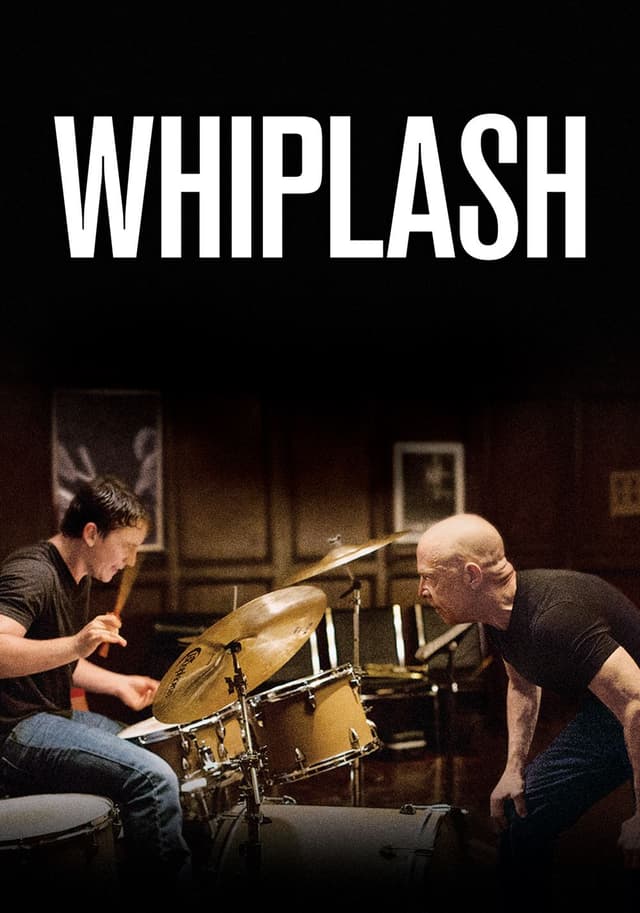
With financing secured, Chazelle recast the lead role. Miles Teller, then known primarily from Footloose (2011) and The Spectacular Now (2013), was signed in August 2013, replacing Johnny Simmons in the role of Andrew Neiman. J.K. Simmons remained attached throughout and committed fully to the physical transformation the role required, including weeks of rehearsal to appear credibly commanding over the drum kit. Chazelle instructed Simmons to play Fletcher not as a human being but as 'a monster, a gargoyle, an animal,' a directive that shaped the film's entire dramatic tenor.
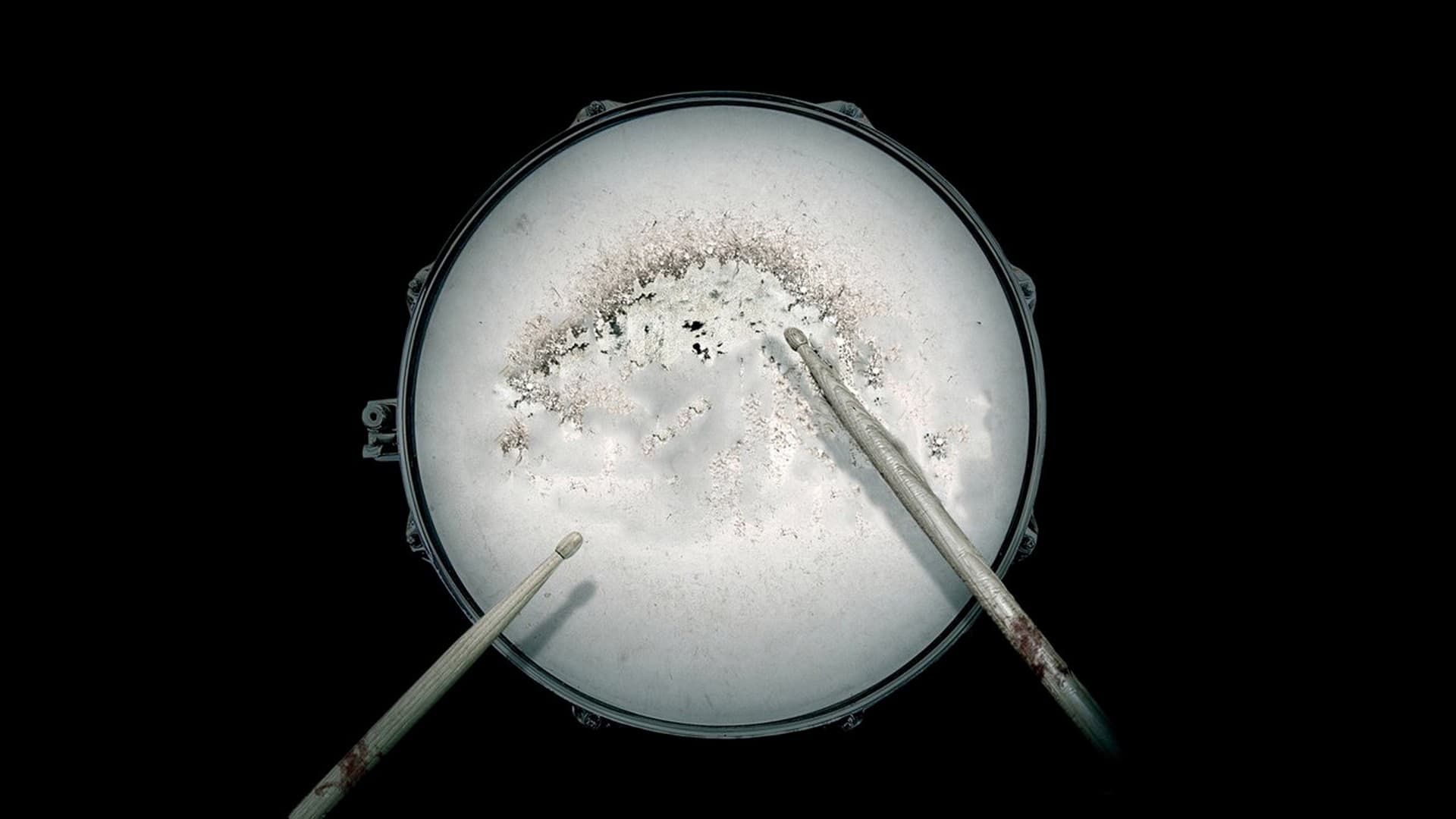
Principal photography began in September 2013 and was completed in 19 days, with 14-hour daily schedules. The production shot in Los Angeles, making use of the Hotel Barclay, the Palace Theater, and the Orpheum Theatre as primary locations. Chazelle was involved in a serious car accident during the third week of shooting but returned the following day to complete the schedule without losing a single shooting day. Teller performed the majority of the drumming himself; professional drummer Kyle Crane served as his double for specific technically demanding sequences. Teller's hands bled during shooting on multiple occasions, and some of that footage was incorporated directly into the final cut.
The feature premiered at the 2014 Sundance Film Festival as one of the opening night films. It won both the Grand Jury Prize for Dramatic Film and the Audience Award for Dramatic Film, becoming only the second film in Sundance history to sweep both prizes in a single year. Sony Pictures Classics acquired the distribution rights immediately following its Sundance premiere for a reported $3.5 million, before the film had screened for general audiences.
Awards and Recognition
Whiplash won three Academy Awards at the 87th Oscars ceremony in February 2015, from five total nominations. The wins came in Best Supporting Actor (J.K. Simmons), Best Film Editing (Tom Cross), and Best Sound Mixing (Craig Mann, Ben Wilkins, Thomas Curley). The additional nominations were Best Picture and Best Adapted Screenplay, recognizing Chazelle's screenplay as the structural foundation for all of the film's achievements.
J.K. Simmons swept the supporting actor category across virtually every major awards circuit. He won the Golden Globe Award for Best Supporting Actor, the BAFTA Award for Best Actor in a Supporting Role, the Critics Choice Award for Best Supporting Actor, and the Screen Actors Guild Award for Outstanding Performance by a Male Actor in a Supporting Role. The consensus around his performance was unusually complete for any single awards season.
At the 2014 Sundance Film Festival, the film won the Grand Jury Prize for Dramatic Film and the Audience Award for Dramatic Film. Additional honors included the Saturn Award for Best Independent Film, a Grammy nomination for Best Score Soundtrack for Visual Media (December 2015) for Justin Hurwitz's score, and recognition in the Writers Guild of America list of the 101 Greatest Screenplays of the 21st Century, where it ranked 32nd. In 2024, a survey of 500 filmmakers and critics conducted by the Sundance Film Festival placed Whiplash at the top of its all-time festival films list.
Critical Reception
Whiplash holds a 94% approval rating on Rotten Tomatoes based on 304 reviews, with an average score of 8.6 out of 10. The site's critical consensus states the film is 'an intensely driven, brilliantly performed film about obsession and music that will command viewers in the same way its relentless antihero commands his students.' On Metacritic, it earned a score of 89 out of 100 from 49 critics, indicating 'universal acclaim.' CinemaScore audiences gave the film an A- grade.
Peter Debruge of Variety wrote that the film 'demolishes the cliches of the musical-prodigy genre' and praised its 'psychological intensity of a battlefield.' Todd McCarthy of The Hollywood Reporter noted that Teller delivers a performance 'more often simmering than volatile,' while Simmons portrays a character who is 'profane, way out of bounds' yet 'utterly compelling.' Henry Barnes of The Guardian called it a rare film 'about music that professes its love for the music and its characters equally.' Amber Wilkinson of The Telegraph described the direction as having 'a sharp and gripping rhythm, with shots beautifully edited by Tom Cross.'
J.K. Simmons and Miles Teller both received specific and sustained critical attention. Critics consistently identified Simmons's performance as among the best supporting turns in recent memory, a reading borne out by his complete sweep of major awards. Teller's physical commitment to the drumming sequences, including scenes in which his hands visibly bled, was frequently cited as a distinguishing element of his performance.
A minority of critics raised substantive objections to the film's central thesis. Forrest Wickman of Slate argued that the film distorts jazz history and promotes a misleading concept of genius, suggesting that Fletcher's methods would more likely produce traumatized musicians than virtuosos. Richard Brody of The New Yorker wrote that 'Whiplash honors neither jazz nor cinema,' objecting to what he saw as a misrepresentation of how great jazz is actually made. These dissenting views generated significant critical debate about whether the film endorses its protagonist's relentless drive or merely depicts it without judgment.
Frequently Asked Questions
What was the production budget for Whiplash?
Whiplash was produced on a budget of $3,300,000. The film was co-financed by Bold Films, Blumhouse Productions, and Right of Way Films. That budget supported a 19-day shooting schedule in Los Angeles, making it one of the most efficiently produced Oscar-winning films of its decade.
How much did Whiplash make at the box office?
Whiplash earned $50,431,161 worldwide, with approximately $14,003,391 in North America and $36.3 million internationally. The film opened in just 6 theaters in October 2014 before gradually expanding, and grew to over 1,000 locations following its five Academy Award nominations in January 2015.
Did Whiplash win any Academy Awards?
Whiplash won three Academy Awards at the 87th Oscars in February 2015: Best Supporting Actor for J.K. Simmons, Best Film Editing for Tom Cross, and Best Sound Mixing for Craig Mann, Ben Wilkins, and Thomas Curley. The film received five total nominations, including Best Picture and Best Adapted Screenplay.
Is Whiplash based on a true story?
Whiplash is not based on a specific true story, but director Damien Chazelle drew from his own experiences as a student drummer in a competitive jazz program at Princeton High School in New Jersey. He has stated that his former band director partially inspired the character of Terence Fletcher, though the screenplay amplified those elements substantially beyond his personal experience.
What was the significance of the Sundance premiere?
Whiplash premiered at the 2014 Sundance Film Festival as one of the opening night selections and won both the Grand Jury Prize for Dramatic Film and the Audience Award for Dramatic Film. Winning both prizes in the same year was a rare achievement. Sony Pictures Classics acquired distribution rights immediately after the premiere for a reported $3.5 million, before general audiences had seen the film.
Did Whiplash get a sequel or follow-up?
No sequel to Whiplash has been produced. Damien Chazelle followed the film with La La Land (2016), another music-centered drama that became a major awards contender. J.K. Simmons and Miles Teller have both cited Whiplash as a defining project in their careers, but the story has not been continued. A 4K remaster was released theatrically in September 2024, ten years after the original release.
Filmmakers
Whiplash

Official Trailer
Build budgets like this one in Saturation
Start from an industry-standard feature film template, import the schedule and rates you already have, and let the cost report keep itself current as you spend. Real-time collaboration, no spreadsheets.