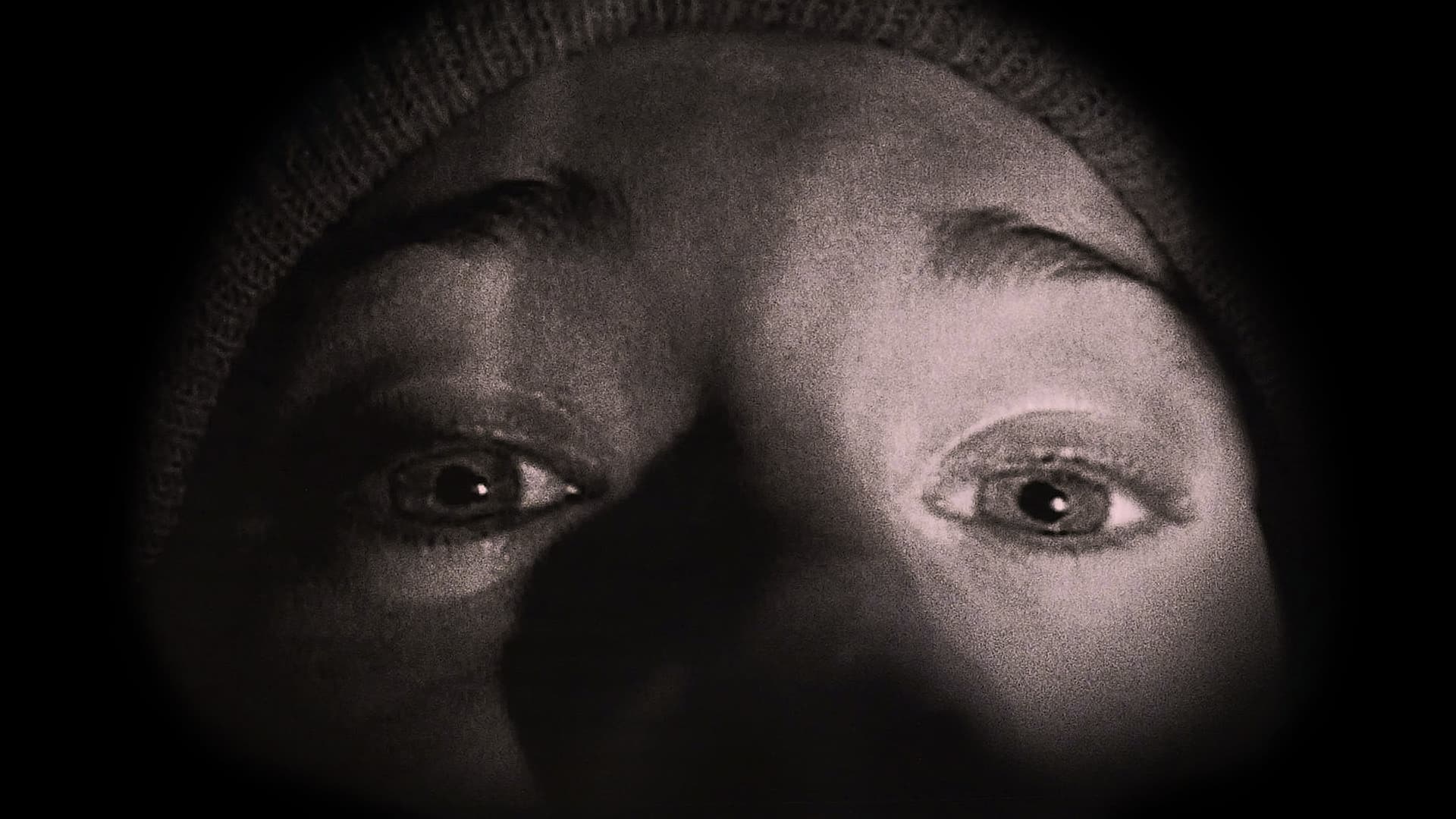
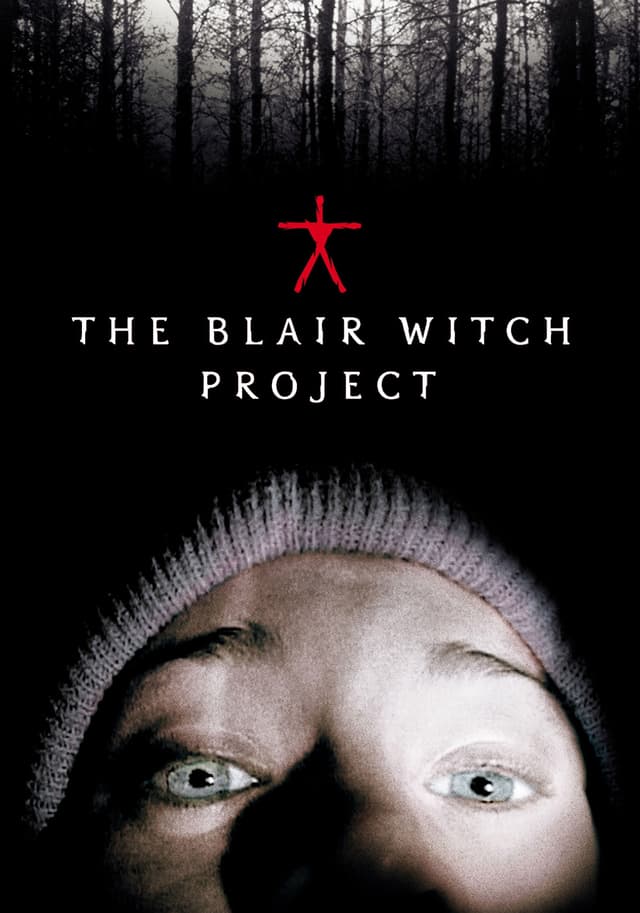
The Blair Witch Project Budget
 HorrorMysteryThriller1h 21m
Updated
Synopsis
In October of 1994 three student filmmakers disappeared in the woods near Burkittsville, Maryland, while shooting a documentary. A year later their footage was found.
What Is the Budget of The Blair Witch Project?
The Blair Witch Project (1999), directed by Daniel Myrick and Eduardo Sanchez and produced by Haxan Films, had a principal photography budget of approximately $60,000, one of the smallest production budgets for any wide-release film in Hollywood history. Post-production, including eight months of editing 20 hours of raw footage, increased the total cost to several hundred thousand dollars before the film's Sundance premiere. After marketing costs were included, the total investment in the film has been estimated at between $500,000 and $750,000.
The film holds the Guinness World Record for the highest box office to budget ratio, earning approximately $248,639,099 worldwide against its $60,000 production cost, a return of over 4,000 times the original investment. Even measured against the total estimated cost of $750,000 including post-production and marketing, the worldwide gross represents a return of more than 330 times the total investment, a commercial efficiency unmatched in the history of wide-release cinema.
Key Budget Allocation Categories
The Blair Witch Project's $60,000 production budget covered the bare essentials of eight days of location shooting in the Maryland woods. The actual cost breakdown reflects how the film stripped production to its minimum:
- Camera Equipment: The primary photography equipment consisted of a CP-16 film camera provided by cinematographer Neal Fredericks and a Hi8 consumer video camcorder. In one of the production's most notorious cost-saving measures, one of the video cameras was purchased from Circuit City and returned for a full refund after filming wrapped.
- Cast Food and Field Supplies: The three actors, Heather Donahue, Joshua Leonard, and Michael C. Williams, were sent into the woods for eight days with supplies rationed and controlled by the directors. The production deliberately deprived the cast of food to heighten their physical discomfort and emotional authenticity. Practical field supplies, navigation equipment, and the milk crates used to deliver daily clue instructions to the actors in 35mm film cans represented the bulk of the non-equipment costs.
- Location and Minimal Crew: Filming took place primarily in Seneca Creek State Park in Montgomery County, Maryland, with additional scenes in the historic town of Burkittsville and the final sequences at the Griggs House in Patapsco Valley State Park. No location fees of scale were required for the public parkland. The crew was minimal; the directors managed the shoot from a distance, delivering instructions and manipulating the environment rather than being present on camera.
- Post-Production: The most significant cost overrun from the original $60,000 was post-production. Editing 20 hours of raw footage down to 81 minutes took more than eight months and pushed the total cost to several hundred thousand dollars before Sundance. After Artisan Entertainment acquired the film for $1.1 million and committed marketing resources, the total estimated investment reached $500,000 to $750,000.
How Does The Blair Witch Project's Budget Compare to Similar Films?
At $60,000, The Blair Witch Project is not comparable to conventional studio horror productions. The meaningful comparisons are to other landmark low-budget films that redefined what was commercially possible at the micro-budget level, and to the found footage genre that Blair Witch essentially created:
- Paranormal Activity (2007): Budget $15,000 | Worldwide $193,400,000. The found footage horror that most directly follows Blair Witch's template, produced on an even smaller budget and achieving comparable cultural penetration. Paranormal Activity's success confirmed that the found footage genre Blair Witch created was commercially replicable at the same micro-budget scale.
- Halloween (1978): Budget $300,000 | Worldwide $70,000,000. John Carpenter's micro-budget slasher that defined the genre before Blair Witch redefined it. At five times Blair Witch's production budget, Halloween earned roughly 28% of Blair Witch's worldwide gross, illustrating the shift in the commercial ceiling for low-budget horror that the internet era made possible.
- Saw (2004): Budget $1,200,000 | Worldwide $103,900,000. The low-budget horror that launched a franchise at 20 times Blair Witch's production cost and earned roughly 42% of Blair Witch's gross. The comparison illustrates how Blair Witch's internet-native marketing infrastructure amplified returns beyond what production value alone could achieve.
- Get Out (2017): Budget $4,500,000 | Worldwide $255,400,000. The modern benchmark for high-return independent horror, earning slightly more than Blair Witch on 75 times the budget. Blair Witch's 4,000x production cost return remains categorically different from any subsequent horror production regardless of the marketing environment.
- Night of the Living Dead (1968): Budget $114,000 | Worldwide approximately $30,000,000. George Romero's foundational low-budget horror that demonstrated the commercial and cultural impact available to independent horror filmmakers working outside the studio system. Blair Witch followed Romero's model of genre innovation on minimal resources and exceeded it by an order of magnitude.
The Blair Witch Project Box Office Performance
The Blair Witch Project earned $140,539,099 domestically and $248,639,099 worldwide at the box office. The film opened on July 14, 1999, earning $1,500,000 from just 27 theaters in its opening weekend, a per-screen average of $56,002. It expanded nationwide in its third weekend, grossing $29,200,000 from 1,101 locations to finish number two in the United States, and expanded further to 2,142 theaters for a fourth-weekend gross of $24,300,000, again finishing second. The film was the tenth highest-grossing film in the United States in 1999. In Italy it set an opening weekend record for a US film.
Artisan Entertainment purchased the distribution rights at Sundance for $1,100,000. Marketing costs for the internet-driven campaign, which included maintaining the film's website that received 160 million hits by August 1999, were modest relative to conventional studio releases. The total estimated investment in the film, including production, post-production, acquisition, and marketing, is estimated at between $1,600,000 and $2,000,000. Against that total, the $248,639,099 worldwide gross represents one of the most efficient commercial returns in cinema history.
Box Office Breakdown
The Blair Witch Project

At approximately +414,000% on the production budget, The Blair Witch Project returned roughly $4,144 for every $1 invested in principal photography. Even measured against the total estimated cost including post-production and marketing, the return exceeds 33,000%. No wide-release film in history has matched this ratio, and none has come meaningfully close.
The Blair Witch Project Production History
Development of The Blair Witch Project began in 1993, when Daniel Myrick and Eduardo Sanchez were film students at the University of Central Florida. The two were inspired by the observation that documentaries about paranormal phenomena were more frightening than conventional horror films, and decided to make a film that combined both formats. To produce the project, they founded Haxan Films with Gregg Hale, Robin Cowie, and Michael Monello; the company name references Benjamin Christensen's 1922 silent documentary horror film Haxan. Myrick and Sanchez developed a 35-page screenplay with dialogue intended to be improvised. A casting call placed in Backstage in June 1996 drew 2,000 actors; the directors narrowed the pool through informal improvisational auditions held at Musical Theater Works in New York City. Joshua Leonard was cast in part for his knowledge of camera operation, as no separate camera operator would be used. The filmmakers developed the Blair Witch mythology with deliberate care, embedding near-anagrams into character names: Elly Kedward derives from Edward Kelley, a 16th-century mystic, and Rustin Parr began as an anagram for Rasputin. Pre-production began on October 5, 1997.
Principal photography began on October 23, 1997, and lasted eight days. The three actors shot virtually all the footage in the final film themselves, carrying a CP-16 film camera and a Hi8 consumer video camcorder. Filming took place primarily in Seneca Creek State Park in Montgomery County, Maryland, with additional scenes in the historic town of Burkittsville. The final sequences were filmed at the Griggs House, a 150-year-old building in Patapsco Valley State Park. The actors were guided through the woods by clues delivered in 35mm film cans left in milk crates at GPS coordinates, receiving individual instructions to improvise the day's action. The directors, influenced by producer Gregg Hale's memories of military training exercises, harassed the cast at night, shook their tent, deprived them of food, and kept them physically exhausted to generate genuine distress on camera. The actors used the safe word 'taco' for moments when they needed to break character. All three actors used their real names in the film; Donahue has since said she regretted this, noting in 2014 that it made finding new roles significantly more difficult. Filming concluded on October 31. After the initial eight-day shoot, approximately $20,000 to $25,000 had been spent; the official production budget is recorded at $60,000.
Post-production took more than eight months. The directors edited 20 hours of raw footage down to 81 minutes, screening early cuts at small film festivals to gather feedback. The film was submitted to the Sundance Film Festival, where it had its midnight premiere on January 25, 1999. Artisan Entertainment purchased the distribution rights for $1.1 million. Prior to Sundance, the film's official website had launched in June 1998, featuring faux police reports, newsreel-style interviews, and missing persons posters for the three student filmmakers, treating the film's events as factual. The website received 160 million hits by August 1999 and is considered the first major instance of internet-driven viral film marketing. A television special, Curse of the Blair Witch, was produced to supplement the campaign. The film was screened at 40 colleges across the United States to build word of mouth, and a 40-second trailer was shown before Star Wars: Episode I in June 1999. USA Today reported The Blair Witch Project as the first film to go viral. In May 1999 it screened noncompetitively at Cannes, where it won the Award of the Youth for foreign film.
In 2024, Donahue, Leonard, and Williams detailed to Variety that they had never been adequately compensated by Artisan Entertainment for their work in the film. They described living in poverty following the film's success while being contractually barred from speaking publicly about their compensation. In the summer of 1999 they received a performance bonus in the low five figures. In October 2000, ahead of the sequel Book of Shadows: Blair Witch 2, Donahue convinced Williams and Leonard to sue Artisan; they reached a settlement of $300,000 each. The three actors have stated that they were unaware the entire film would consist of their own footage and had not fully understood the clause permitting the use of their real identities. Despite the disputes, all three have expressed pride in their work on the film.
Awards and Recognition
The Blair Witch Project received 23 wins and 27 nominations across awards circuits, with recognition spanning MTV Movie Awards, Saturn Awards, Independent Spirit Awards, and numerous critics' circles. The film received the Award of the Youth at the Cannes Film Festival in 1999. Its most enduring recognition is cultural rather than awards-specific: the Guinness World Record for the highest box office to budget ratio in film history, its credit as the film that established found footage as a viable commercial genre, and its status as the first major film marketed primarily through the internet.
Frequently Asked Questions
How much did it cost to make The Blair Witch Project (1999)?
The production budget was $60,000, covering principal photography, cast and crew salaries, locations, sets, post-production, and music. Marketing and distribution (P&A) costs are estimated at an additional $30,000 - $48,000, bringing the total studio investment to approximately $90,000 - $108,000.
How much did The Blair Witch Project (1999) earn at the box office?
The Blair Witch Project grossed $140,539,099 domestic, $108,100,000 international, totaling $248,639,099 worldwide.
Was The Blair Witch Project (1999) profitable?
Yes. Against a production budget of $60,000 and estimated total costs of ~$150,000, the film earned $248,639,099 theatrically - a 414298% ROI on production costs alone.
What were the biggest costs in producing The Blair Witch Project?
The primary cost drivers were above-the-line talent (Heather Donahue, Joshua Leonard, Michael C. Williams); practical creature effects, atmospheric cinematography, and psychologically engineered sound design.
How does The Blair Witch Project's budget compare to similar horror films?
At $60,000, The Blair Witch Project is classified as a ultra-low-budget production. The median budget for wide-release horror films in the era ranges from $30 - 80M for mid-budget to $150M+ for tentpoles. Comparable budgets: The Wretched (2019, $66,000); Shithouse (2020, $80,000).
Did The Blair Witch Project (1999) go over budget?
There are no widely reported accounts of significant budget overruns for this production. However, studios rarely disclose precise budget overrun figures publicly. The reported production budget reflects the final estimated cost.
What was the return on investment (ROI) for The Blair Witch Project?
The theatrical ROI was 414298.5%, calculated as ($248,639,099 − $60,000) ÷ $60,000 × 100. This measures gross revenue against production budget only - it does not account for P&A or exhibitor shares.
What awards did The Blair Witch Project (1999) win?
23 wins & 27 nominations total.
Who directed The Blair Witch Project and who were the key crew members?
Directed by Daniel Myrick, Eduardo Sánchez, written by Eduardo Sánchez, Daniel Myrick, shot by Neal Fredericks, with music by Tony Cora, edited by Daniel Myrick, Eduardo Sánchez.
Where was The Blair Witch Project filmed?
The Blair Witch Project was filmed in United States of America.
Filmmakers
The Blair Witch Project

Official Trailer
Build budgets like this one in Saturation
Start from an industry-standard feature film template, import the schedule and rates you already have, and let the cost report keep itself current as you spend. Real-time collaboration, no spreadsheets.