Mission Impossible II Budget
 AdventureActionThriller2h 3m
Updated
Synopsis
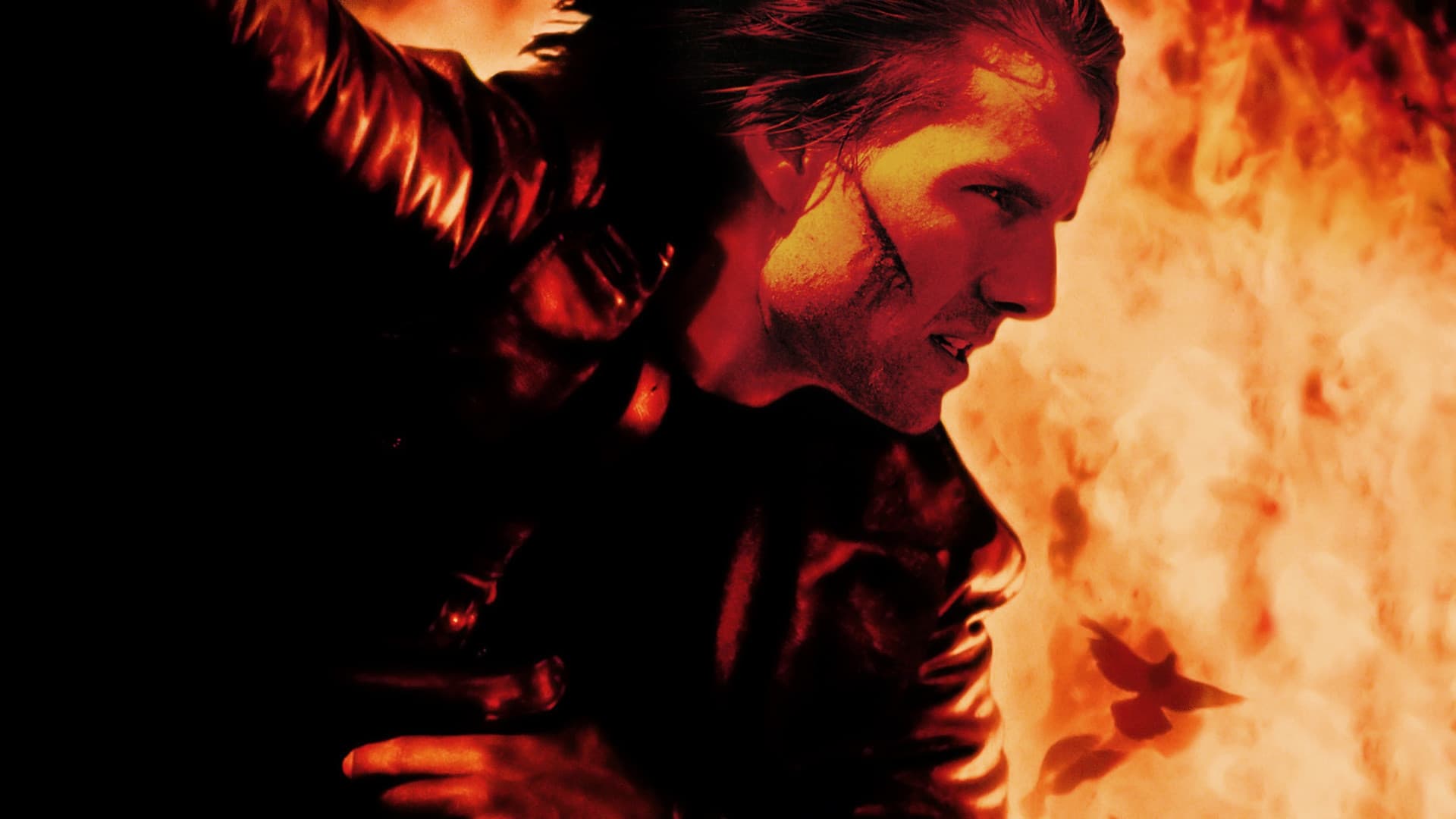
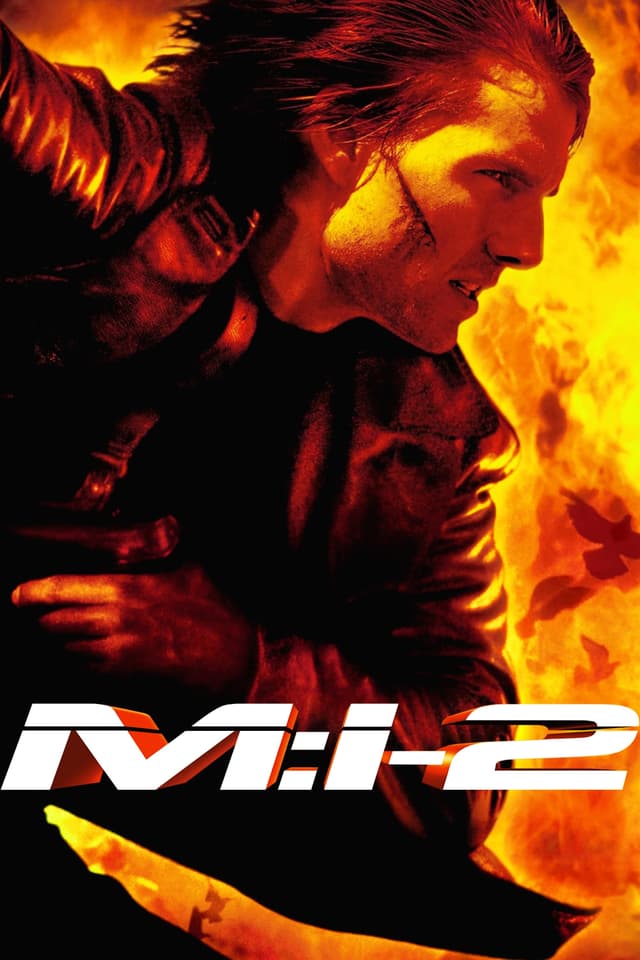
IMF agent Ethan Hunt is dispatched to track down a former colleague turned rogue who has stolen a deadly engineered virus called Chimera, a bioweapon paired with its only known cure. To infiltrate the operation, Hunt recruits professional thief Nyah Nordoff-Hall, the rogue agent's former lover, in a high-stakes mission that takes him from the sandstone cliffs of Utah to the streets of Seville and the laboratories of Sydney. As Hunt closes in, he must contain the virus before it can be released for profit, while protecting Nyah from a man who knows her every move.
What Is the Budget of Mission: Impossible II (2000)?
Mission: Impossible II (2000), directed by John Woo and distributed by Paramount Pictures, was produced on a reported budget of $125,000,000, making it the most expensive film of 2000 at the time of its release. Tom Cruise produced through his Cruise/Wagner Productions banner and returned as IMF agent Ethan Hunt, with John Woo brought aboard to translate his trademark Hong Kong action style, doves, slow-motion gunplay, dual-pistol choreography, into a Hollywood tentpole. Paramount green-lit the inflated budget on the strength of the 1996 original's $457,696,359 worldwide gross and Cruise's commercial dominance.
The figure reflected an aggressive escalation from the first installment, which was made for $80,000,000 just four years earlier. The increase covered Cruise's compensation as both star and producer, Woo's elaborate action set pieces, a months-long shoot in Sydney and Utah, and a high-profile Hans Zimmer score with original songs from Limp Bizkit and Metallica. The math assumed the film would clear roughly $300,000,000 worldwide to reach studio profitability, a threshold it shattered on its way to becoming the highest-grossing film of the calendar year.
Key Budget Allocation Categories
Mission: Impossible II's $125,000,000 budget was distributed across several core production areas:
- Above-the-Line Talent: Tom Cruise commanded a reported $70,000,000 in total compensation across salary, producer fees, and back-end gross participation, one of the largest single-film paydays in Hollywood history at the time. John Woo received a director's fee commensurate with his Face/Off and Broken Arrow track record, while supporting leads Thandiwe Newton, Dougray Scott, Ving Rhames, and Anthony Hopkins (uncredited cameo as Mission Commander Swanbeck) added to the principal cast cost.
- Sydney Production Hub: The bulk of principal photography took place at Fox Studios Australia in Sydney, with location shooting across New South Wales standing in for fictitious Spanish, Australian, and biotech-facility settings. Currency advantages, experienced Australian crews, and the recently opened Fox Studios complex anchored a long shoot that ran from February through August 1999.
- Stunt and Action Choreography: Cruise insisted on performing the opening free solo climbing sequence at Dead Horse Point in Utah, hanging from a sandstone tower without a stunt double for the wide shots. The film's motorcycle chase, the cliff-side fight finale, and Woo's signature dual-pistol shootouts required extensive pre-visualization, stunt team rehearsal, and second-unit photography under Brian Smrz.
- Visual Effects: Industrial Light & Magic and Computer Film Company handled approximately 400 effects shots, including the digital face-mask reveal gags that became a franchise signature, the burning helicopter, and the cliff-climbing composites where Cruise's wide shots were stitched with stunt double Keith Campbell coverage. The Chimera virus visualizations and laboratory destruction added an additional VFX layer.
- Score and Soundtrack: Hans Zimmer composed the score, blending flamenco guitar from Heitor Pereira with the franchise's iconic Lalo Schifrin theme. The soundtrack budget also covered Limp Bizkit's reworking of the theme as 'Take a Look Around,' the lead single, and Metallica's 'I Disappear,' both of which drove MTV-era promotional value. Rights, recording, and integration costs were substantial.
- Production Design: Production designer Tom Sanders built the Biocyte Pharmaceuticals laboratory complex, the IMF safe-house interiors, and the Spanish festival sequence (shot in Seville and on Sydney stages). Practical sets allowed Woo's signature camera moves through architecturally elaborate spaces.
- Extended Schedule and Reshoots: The shoot ran significantly longer than scheduled, with weather delays in Utah, scheduling conflicts around Cruise's commitments to Eyes Wide Shut completion, and additional photography to rework the third act. Carrying costs for the production stretch added meaningfully to the final figure.
How Does Mission: Impossible II's Budget Compare to Similar Films?
At $125,000,000, Mission: Impossible II was the priciest film of 2000 and sits in the upper tier of late-1990s and early-2000s action tentpoles. The comparison set illustrates how aggressively Paramount escalated the franchise and how that bet paid off:
- Mission: Impossible (1996): Budget $80,000,000 | Worldwide $457,696,359. Brian De Palma's original was made for two thirds of the cost and earned 84% of M:I-2's worldwide gross, suggesting the franchise was a known commercial quantity that Paramount felt comfortable scaling.
- Mission: Impossible III (2006): Budget $150,000,000 | Worldwide $398,478,242. J.J. Abrams' reset cost $25,000,000 more than M:I-2 but earned $147,000,000 less worldwide, the franchise's only commercial step backward and a direct response to mixed reception of Woo's stylized approach.
- Gladiator (2000): Budget $103,000,000 | Worldwide $460,583,960. Ridley Scott's Best Picture winner cost less than M:I-2 and matched its global gross within $86,000,000, the closest 2000-release competitor in both scale and worldwide performance.
- The Matrix (1999): Budget $63,000,000 | Worldwide $467,222,728. The Wachowskis' game-changer cost roughly half of M:I-2 and earned $79,000,000 less worldwide, the action-film benchmark Woo's film was directly measured against by critics.
- True Lies (1994): Budget $115,000,000 | Worldwide $378,882,411. James Cameron's spy thriller was the prior super-spy budget ceiling, and M:I-2 exceeded both its cost and gross while operating in adjacent genre territory.
- The World Is Not Enough (1999): Budget $135,000,000 | Worldwide $361,832,400. The penultimate Pierce Brosnan Bond cost slightly more than M:I-2 and earned $184,000,000 less worldwide, a measurable signal that Cruise's franchise was outpacing 007 commercially at the turn of the millennium.
Mission: Impossible II Box Office Performance
Mission: Impossible II opened on May 24, 2000 in the United States with a five-day Memorial Day weekend gross of $78,800,000, including a then-record $57,845,297 three-day opening, the biggest debut in Paramount history at the time. The film held remarkably well through summer, finishing its domestic run at $215,409,889 and adding $330,978,216 from international markets for a worldwide total of $546,388,105. It was the highest-grossing film worldwide in 2000.
Against a reported production budget of $125,000,000, the film needed approximately $250,000,000 in worldwide gross to reach profitability when accounting for marketing and distribution costs. Here is the financial breakdown:
Box Office Breakdown
Mission Impossible II

Mission: Impossible II returned approximately $2.63 in theatrical revenue for every $1 invested when measured against total estimated production and marketing spend, a decisive financial win that anchored Paramount's summer 2000 slate and secured the franchise's long-term commitment to Cruise. The 39/61 split between domestic and international gross marked a significant shift from the 1996 original (which earned 40% domestically) and confirmed the franchise's global commercial elasticity.
The success directly enabled the eventual greenlight of Mission: Impossible III six years later, though Paramount took its time recalibrating the creative direction after the polarizing critical response to Woo's stylized approach. Home video and television rights added an estimated $200,000,000 to $300,000,000 in ancillary revenue over the subsequent decade.
Mission: Impossible II Production History
Development on a Mission: Impossible sequel began almost immediately after the 1996 original's release, with Tom Cruise and producing partner Paula Wagner reteaming with Paramount under their Cruise/Wagner Productions banner. Cruise wanted a director whose visual signature could distinguish the sequel from Brian De Palma's espionage-thriller original, and after pursuing several names, the team landed on John Woo, whose Face/Off (1997) had demonstrated his ability to translate Hong Kong action grammar into Hollywood vernacular. Robert Towne (Chinatown) was hired to write the screenplay, working from a story by Ronald D. Moore and Brannon Braga.
Casting drew Thandiwe Newton as professional thief Nyah Nordoff-Hall, Dougray Scott as rogue IMF agent Sean Ambrose, and franchise veteran Ving Rhames as Luther Stickell. Dougray Scott was originally cast as Wolverine in X-Men (2000), but the extended Mission: Impossible II shoot forced him to drop out, with Hugh Jackman taking the role that launched his career. Anthony Hopkins took an uncredited cameo as IMF Mission Commander Swanbeck. Anthony Hopkins reportedly received approximately $2,000,000 for two days of work.
Principal photography ran from February to August 1999, with the production headquartered at Fox Studios Australia in Sydney and additional unit work across New South Wales, Australia. Sydney stood in for Spain in several sequences, with the city's Centennial Park used for the climactic motorcycle chase and Bare Island, La Perouse used for the cliff-top exterior of the Biocyte Pharmaceuticals headquarters. The Spanish festival opening was shot in Seville, with Sydney stages supplementing the location work.
The film's signature opening, Ethan Hunt free soloing the sandstone spires above Dead Horse Point in Utah, was shot with Cruise performing his own climbing for the wide shots after months of training with climber Ron Kauk. Cruise tore his shoulder during the sequence and continued shooting. The cliff hanging single-handed grab that closes the prologue was performed by Cruise without a stunt double, a moment Paramount's insurers had attempted to block before Cruise overruled them as producer.
Post-production extended into early 2000, with John Woo and editors Christian Wagner and Steven Kemper rebuilding the third act through additional photography to clarify the cliff-side fight choreography. Hans Zimmer's score was recorded with the Hollywood Studio Symphony, and Limp Bizkit's 'Take a Look Around,' a hip-hop reworking of Lalo Schifrin's original theme, became the lead promotional single ahead of the May 2000 release. The Sydney shoot remains one of the largest Hollywood productions ever based in Australia.
Awards and Recognition
Mission: Impossible II earned a modest set of technical and genre nominations rather than mainstream awards traction. The film was nominated for two Academy Awards, Best Original Song for Diane Warren's 'There You'll Be' (performed by Faith Hill, written for the closing credits) and Best Sound Editing for sound designer Mark P. Stoeckinger. Both nominations went to other films at the 73rd Academy Awards.
At the MTV Movie Awards in 2001, the film won Best Movie and Best Female Performance for Thandiwe Newton, with additional nominations for Best Male Performance (Cruise), Best Action Sequence (the motorcycle chase), and Best Fight (Cruise versus Dougray Scott). Limp Bizkit's 'Take a Look Around' was nominated for a Golden Globe for Best Original Song and won the Razzie for Worst Original Song, an unusual split outcome that captured the polarized critical posture toward the film's nu-metal soundtrack alignment.
The film also received Saturn Award nominations for Best Action/Adventure/Thriller Film, Best Director (John Woo), and Best Actress (Thandiwe Newton) at the Academy of Science Fiction, Fantasy and Horror Films, alongside nominations from the Visual Effects Society and the Motion Picture Sound Editors Golden Reels.
Critical Reception
Mission: Impossible II received mixed reviews on release. The film holds a 57% approval rating on Rotten Tomatoes based on 158 critic reviews, with a critical consensus noting that John Woo's stylized action choreography was the film's defining strength but that the screenplay leaned on familiar spy-thriller mechanics and a third-act structure that prioritized set-piece scale over character coherence. On Metacritic, the film scored 59 out of 100, indicating mixed or average reviews. Audiences surveyed by CinemaScore gave the film a B, in line with action sequel norms for the era.
Roger Ebert, writing in the Chicago Sun-Times, called the film 'all surface,' awarding it three out of four stars and praising Woo's craftsmanship while noting that the story 'is a clothesline for action sequences.' Janet Maslin of The New York Times wrote that the film 'has the slick, glossy professionalism of a high-end fashion shoot,' and Owen Gleiberman in Entertainment Weekly graded it a B+, singling out the motorcycle joust as 'the year's best action sequence.' Critics who responded poorly, including Peter Travers at Rolling Stone, faulted the pacing of the middle act and the romantic subplot between Cruise and Newton.
Audience response was decisively positive in the commercial sense, with the film holding through five weekends at the top of the box office, and the cultural memory has solidified around a handful of iconic images: the climbing prologue, the dove-laden monastery showdown, the dual-pistol cliff fight, and the face-mask reveals. Within the franchise canon, M:I-2 remains the most stylistically divergent entry and is frequently ranked at or near the bottom of the series by fans, even as it stands as the highest-grossing installment until Ghost Protocol (2011) surpassed it.
Frequently Asked Questions
How much did it cost to make Mission: Impossible II (2000)?
The reported production budget was $125,000,000, making Mission: Impossible II the most expensive film of 2000 at the time of its release. Paramount Pictures financed the production through Cruise/Wagner Productions, with Tom Cruise serving as both star and producer. The figure represented a 56% increase over the 1996 original's $80,000,000 budget.
How much did Mission: Impossible II earn at the box office?
The film grossed $215,409,889 domestically and $330,978,216 internationally, for a worldwide total of $546,388,105. It was the highest-grossing film worldwide in 2000. Its three-day opening of $57,845,297 was the biggest debut in Paramount Pictures history at the time, and the film held the top spot at the domestic box office for five consecutive weekends.
Was Mission: Impossible II a box office success?
Yes, decisively. Against a $125,000,000 production budget and an estimated $75,000,000 to $90,000,000 in marketing spend, the film returned approximately $2.63 in worldwide gross for every $1 invested. It earned roughly $331,000,000 in net return against total estimated investment, making it one of the most profitable studio films of the year and the highest-grossing film worldwide in 2000.
Who directed Mission: Impossible II?
John Woo directed the film, marking the Hong Kong filmmaker's third Hollywood feature after Broken Arrow (1996) and Face/Off (1997). Tom Cruise specifically sought Woo to bring his trademark stylized action grammar, including slow-motion gunplay, doves, and dual-pistol choreography, to the franchise. Woo's creative imprint made M:I-2 the most stylistically distinctive entry in the series.
Where was Mission: Impossible II filmed?
Principal photography took place from February to August 1999, with the production headquartered at Fox Studios Australia in Sydney. Additional Australian locations included Centennial Park (the motorcycle chase), Bare Island at La Perouse (the Biocyte cliff exteriors), and various New South Wales coastal sites. The opening rock climbing sequence was shot at Dead Horse Point in Utah, and the festival prologue was filmed in Seville, Spain.
Did Tom Cruise do his own stunts in Mission: Impossible II?
Yes. Cruise performed the opening free solo climbing sequence at Dead Horse Point in Utah without a stunt double for the wide shots, after months of training with professional climber Ron Kauk. He tore his shoulder during the climb and continued shooting. Paramount's insurers initially attempted to block the sequence before Cruise, as producer, overruled them. Stunt double Keith Campbell handled coverage in the closer composites.
How much did Tom Cruise earn for Mission: Impossible II?
Cruise reportedly earned approximately $70,000,000 across salary, producer fees, and back-end gross participation, one of the largest single-film paydays in Hollywood history at the time. The figure reflected his dual role as star and producer through Cruise/Wagner Productions, as well as Paramount's confidence in his commercial drawing power following the 1996 original's $457,696,359 worldwide gross.
How does Mission: Impossible II compare to other Mission: Impossible films?
Mission: Impossible II earned $546,388,105 worldwide, making it the highest-grossing entry in the franchise until Ghost Protocol (2011) surpassed it with $694,713,380. The 1996 original earned $457,696,359 on an $80,000,000 budget, while Mission: Impossible III (2006) cost $150,000,000 but earned only $398,478,242 worldwide, the franchise's lone commercial step backward.
Who composed the music for Mission: Impossible II?
Hans Zimmer composed the score, incorporating Lalo Schifrin's original Mission: Impossible theme alongside flamenco guitar work from Heitor Pereira. The soundtrack also featured Limp Bizkit's nu-metal reworking of the franchise theme as the lead single "Take a Look Around" and Metallica's "I Disappear," both written specifically for the film and used heavily in MTV-era promotion.
What did critics think of Mission: Impossible II?
The film received mixed reviews, with a 57% approval rating on Rotten Tomatoes (based on 158 critics) and a 59 out of 100 score on Metacritic. Audiences gave it a B CinemaScore. Critics praised John Woo's action choreography, including the motorcycle joust finale and the dove-filled monastery showdown, but faulted the pacing of the middle act and the screenplay's reliance on familiar spy-thriller mechanics. It remains the most divisive entry in the franchise canon among fans.
Filmmakers
Mission Impossible II

Official Trailer
Build budgets like this one in Saturation
Start from an industry-standard feature film template, import the schedule and rates you already have, and let the cost report keep itself current as you spend. Real-time collaboration, no spreadsheets.