RoboCop 3 Budget
 ActionAdventureCrimeScience FictionThriller1h 45m
Updated
Synopsis
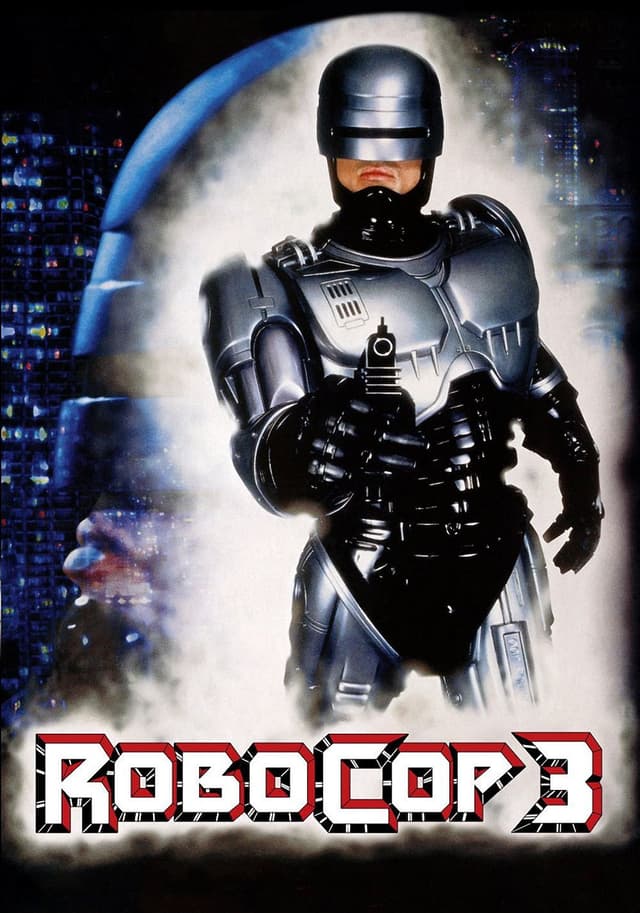
"RoboCop 3," released in 1993, continues the story of Alex Murphy, a former police officer transformed into the cyborg law enforcer known as RoboCop. Set in a dystopian future, the film explores themes of corporate greed and urban decay as the city of Detroit faces a new threat from the ruthless Omni Consumer Products (OCP) corporation.
In this installment, RoboCop finds himself battling against a powerful new enemy: a group of mercenaries hired by OCP to suppress a rebellion of citizens fighting for their homes. As the conflict escalates, RoboCop must confront not only the external forces threatening the city but also his own identity and humanity.
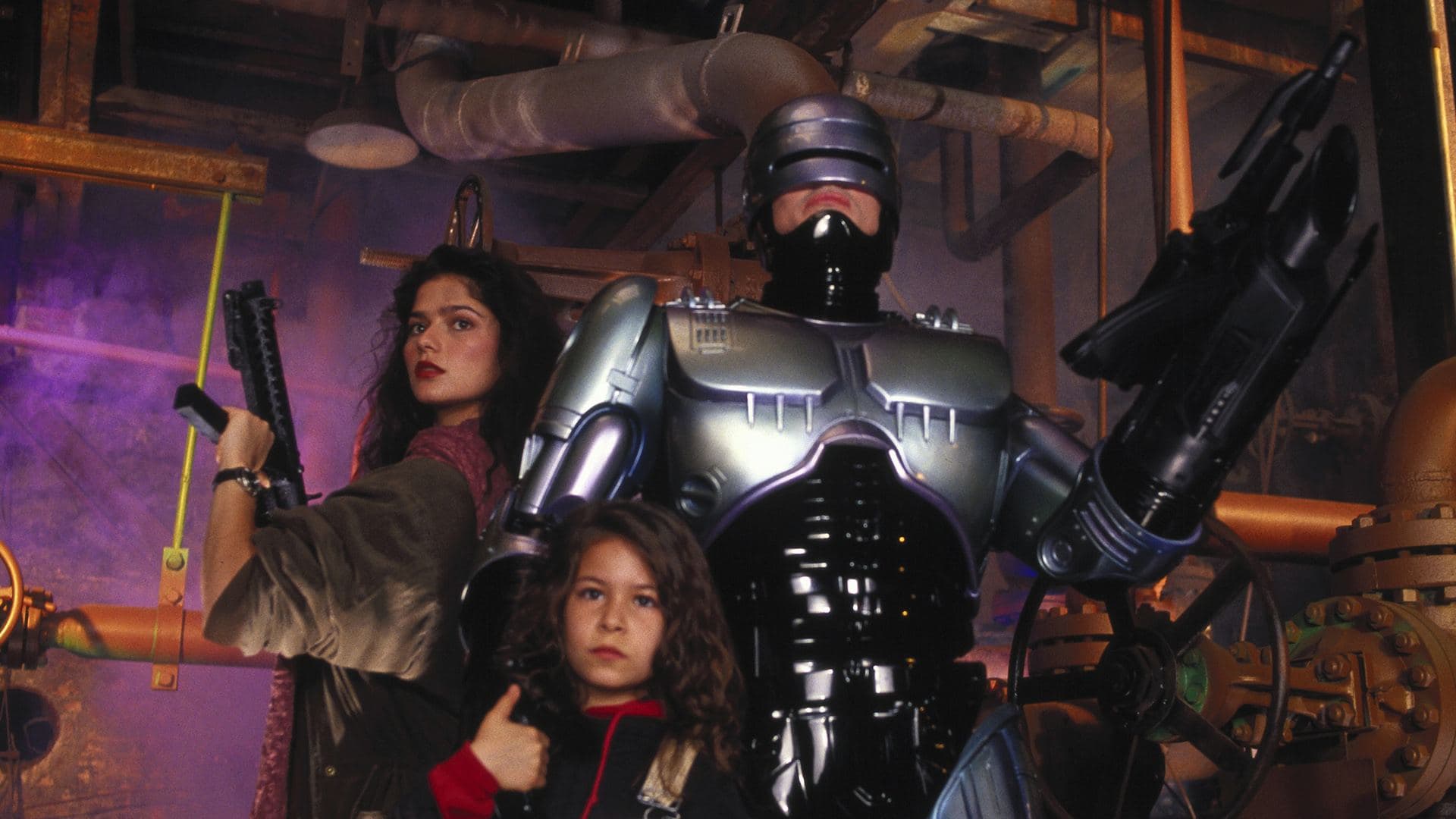
With the introduction of a new sidekick, a young girl named Nikko, who helps him navigate the challenges of the human world, RoboCop embarks on a mission to protect the innocent and reclaim the city from the clutches of corporate tyranny. The film combines action, science fiction, and social commentary, culminating in a showdown that tests RoboCop's resolve and commitment to justice.
What is the budget of RoboCop 3?
"RoboCop 3," an action released in 1993, was directed by Fred Dekker and stars Robert John Burke, Nancy Allen. The production budget was $22,000,000, placing it in the mid-budget range for action productions of the 1990s.
Key Budget Allocation Categories
While specific budget breakdowns are not publicly available, typical cost drivers for an action production like this include:
- Stunts, Action Sequences & Visual Effects: Action films allocate a substantial portion of their budget to choreographing and executing practical stunts, pyrotechnics, and CGI-heavy sequences.
- Above-the-Line Talent (Cast & Director): A-list talent commands significant upfront fees plus backend participation.
- Production Design, Sets & Locations: Action films frequently require multiple international shooting locations, large-scale set construction, vehicle acquisitions and modifications, and specialized equipment , all of which drive production costs well above those of dialogue-driven genres.
- Casting: The star of the previous films, Peter Weller, did not reprise the role of RoboCop, as he was starring in Naked Lunch.
What were the major cost factors in RoboCop 3?
Several factors contributed to the overall production costs of "RoboCop 3."
- Stunts: Stunts, Action Sequences & Visual Effects is one of the primary cost drivers in action productions of this scale.
- Above-the-Line Talent (Cast: Above-the-Line Talent (Cast & Director) is one of the primary cost drivers in action productions of this scale.
- Production Design: Production Design, Sets & Locations is one of the primary cost drivers in action productions of this scale.
How Does RoboCop 3's Budget Compare to Similar Films?
At $22,000,000, RoboCop 3 sits in the mid-budget range. Here is how it compares to productions with a similar budget:
- 12 Rounds (2009): Budget $22,000,000, Worldwide Gross $17,280,326
- Before I Go to Sleep (2014): Budget $22,000,000, Worldwide Gross $17,669,776
- Dances with Wolves (1990): Budget $22,000,000, Worldwide Gross $424,208,848
- Derailed (2005): Budget $22,000,000, Worldwide Gross $57,479,076
- Deuce Bigalow: European Gigolo (2005): Budget $22,000,000 , Gross $45,109,561
The median budget for wide-release action films in the era ranges from $30 to 80M for mid-budget to $150M+ for tentpoles.
RoboCop 3 Box Office Performance
"RoboCop 3" earned $10,696,210 worldwide at the box office. Against a production budget of $22,000,000, the film faced challenges in theatrical release. Home video, streaming, and ancillary revenue may have contributed to its overall performance.
A film typically needs to earn approximately twice its production budget to cover marketing and distribution costs. For "RoboCop 3," that break-even threshold was roughly $44,000,000. With worldwide earnings of $10,696,210, the film did not reach break-even in theatrical release.
Box Office Breakdown
RoboCop 3

At -51.4%, "RoboCop 3" did not recoup its production budget through theatrical release alone.
RoboCop 3 Production History
The star of the previous films, Peter Weller, did not reprise the role of RoboCop, as he was starring in Naked Lunch. The news of Weller's retirement from the role in September 1990 led to rumors that the film would be cancelled, which producer Patrick Crowley quickly denied. Robert John Burke signed to play the cyborg character instead.
After RoboCop 2s score which was composed by Leonard Rosenman, the original RoboCop composer Basil Poledouris returned to compose the score, and brought back many of the themes from the original film.
Awards and Recognition
3 nominations total
Critical Reception
Richard Harrington from The Washington Post said the movie is "hardly riveting and often it's downright silly. The sets and effects betray their downsized budget."
Frequently Asked Questions
How much did it cost to make RoboCop 3 (1993)?
The production budget was $22,000,000, covering principal photography, visual effects, cast and crew salaries, locations, sets, post-production, and music. Marketing and distribution (P&A) costs are estimated at an additional $11,000,000 - $17,600,000, bringing the total studio investment to approximately $33,000,000 - $39,600,000.
How much did RoboCop 3 (1993) earn at the box office?
RoboCop 3 grossed $10,696,210 domestic, totaling $10,696,210 worldwide.
Was RoboCop 3 (1993) profitable?
The film did not break even theatrically, earning $10,696,210 against an estimated $55,000,000 needed. Ancillary revenue may have improved the picture.
What were the biggest costs in producing RoboCop 3?
The primary cost drivers were above-the-line talent (Robert John Burke, Nancy Allen, Rip Torn); visual effects, practical stunts, and A-list talent compensation.
How does RoboCop 3's budget compare to similar action films?
At $22,000,000, RoboCop 3 is classified as a low-budget production. The median budget for wide-release action films in the era ranges from $30 - 80M for mid-budget to $150M+ for tentpoles. Comparable budgets: 12 Rounds (2009, $22,000,000); Before I Go to Sleep (2014, $22,000,000); Dances with Wolves (1990, $22,000,000).
Did RoboCop 3 (1993) go over budget?
There are no widely reported accounts of significant budget overruns for this production. However, studios rarely disclose precise budget overrun figures publicly. The reported production budget reflects the final estimated cost.
What was the return on investment (ROI) for RoboCop 3?
The theatrical ROI was -51.4%, calculated as ($10,696,210 − $22,000,000) ÷ $22,000,000 × 100. This measures gross revenue against production budget only - it does not account for P&A or exhibitor shares.
What awards did RoboCop 3 (1993) win?
3 nominations total.
Who directed RoboCop 3 and who were the key crew members?
Directed by Fred Dekker, written by Fred Dekker, Frank Miller, shot by Gary B. Kibbe, with music by Basil Poledouris, edited by Bert Lovitt.
Where was RoboCop 3 filmed?
RoboCop 3 was filmed in United States of America.
Filmmakers
RoboCop 3

Official Trailer
Build budgets like this one in Saturation
Start from an industry-standard feature film template, import the schedule and rates you already have, and let the cost report keep itself current as you spend. Real-time collaboration, no spreadsheets.