Gladiator Budget
 ActionDramaAdventure2h 35m
Updated
Synopsis
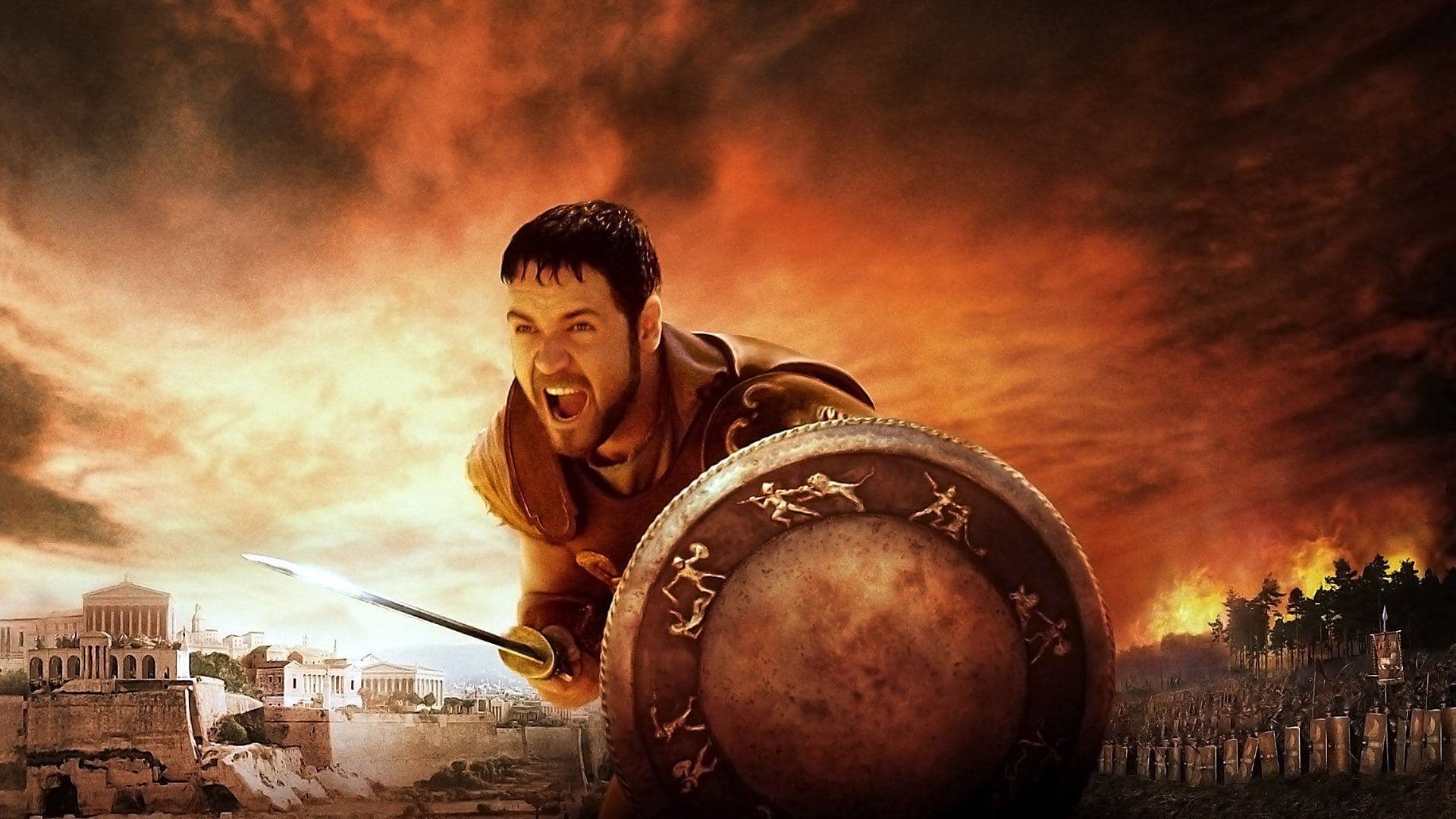
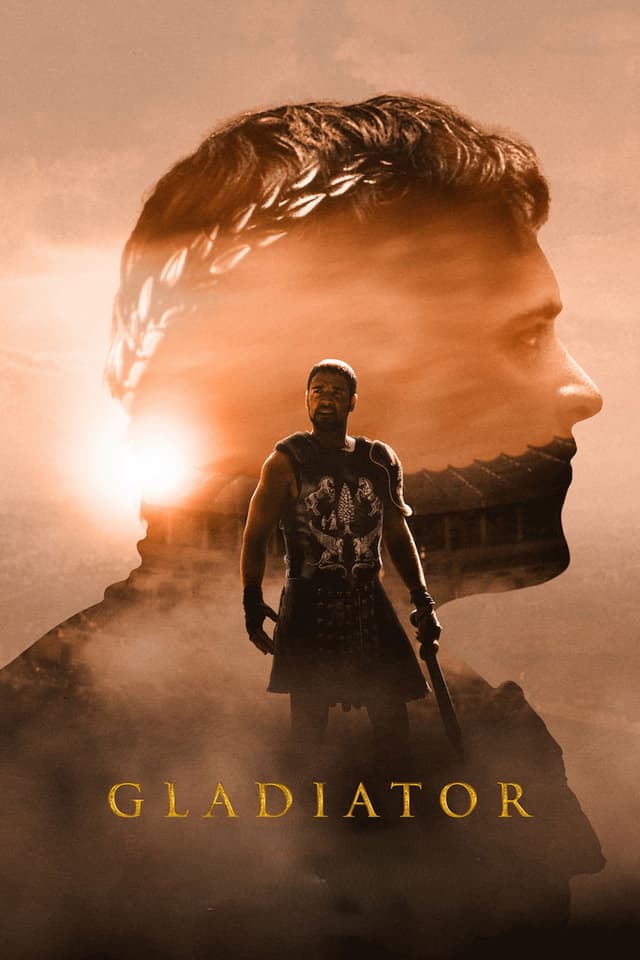
Loyal Roman general Maximus Decimus Meridius is betrayed when the emperor's ambitious son, Commodus, murders his father and seizes the throne. Reduced to slavery, Maximus rises through the gladiator ranks to avenge the murder of his family and his emperor, ultimately confronting Commodus in the Colosseum of Rome.
What Is the Budget of Gladiator (2000)?
Gladiator (2000), directed by Ridley Scott and distributed by DreamWorks Pictures domestically and Universal Pictures internationally, was produced on a reported budget of $103,000,000. The Roman epic, co-financed by DreamWorks SKG, Universal, and Scott Free Productions, marked the genre's commercial revival after the sword-and-sandal cycle had been considered commercially dormant since the 1960s. Producers Douglas Wick, David Franzoni, and Branko Lustig assembled the financing around Scott's pitch, a single concept painting of a thumbs-up gesture in the Colosseum by Jean-Léon Gérôme, and Russell Crowe's rising-star momentum coming off The Insider.
The investment funded a complex international production split between Malta, Morocco, and the United Kingdom, large-scale practical sets including a partial Colosseum reconstruction at Fort Ricasoli on Malta, an unfinished screenplay that was rewritten throughout principal photography, and pioneering visual effects work to complete the Colosseum digitally and finish performance of Oliver Reed after his death during the shoot. The budget figure ultimately proved a high-leverage bet, returning more than four times its production cost theatrically and seeding a fifteen-year wave of historical-epic greenlights.
Key Budget Allocation Categories
Gladiator's $103,000,000 budget was distributed across several core production areas:
- Above-the-Line Talent: Director Ridley Scott commanded a feature-director rate appropriate to his post-Alien, Blade Runner, and Thelma & Louise standing, while Russell Crowe took the lead role of Maximus before he had won an Academy Award, on the strength of The Insider and L.A. Confidential. Supporting players Joaquin Phoenix, Connie Nielsen, Oliver Reed, Richard Harris, Djimon Hounsou, and Derek Jacobi filled out the principal cast at rates reflecting their established careers, with Reed and Harris representing two veteran stars whose presence added prestige weight to the ensemble.
- International Location Shoot: The production filmed across three countries, with the largest block on the island of Malta at Fort Ricasoli, where production designer Arthur Max built a full-scale partial reconstruction of the Roman Colosseum at one third of the original's height (with the remainder added via CGI). Additional shooting took place in Aït Benhaddou and Ouarzazate, Morocco, for the North African slave camp and gladiator school sequences, and in the Bourne Wood near Farnham, Surrey, England, for the opening Germania battle.
- Production Design and Set Construction: Arthur Max's Colosseum build alone required nineteen weeks of construction by a multinational crew of more than one hundred, using a steel frame faced with timber and plaster to a height of 52 feet, with the upper tiers to be extended digitally. The Roman Senate, Maximus' Spanish villa, and the gladiator school in Morocco were additional standing sets, all of which had to be costumed, dressed, and lit to match the scale Scott had committed to.
- Costumes and Armor: Costume designer Janty Yates supervised the manufacture of approximately 27,500 individual costume pieces, including 4,500 sets of armor and 50,000 individual weapons and props. The volume reflected the scale of the battle and arena crowds and the need for combat duplicates, and the work earned Yates the Academy Award for Best Costume Design.
- Visual Effects: The London-based Mill provided the digital Colosseum extensions, the augmentation of the arena crowd, the digital tigers in the gladiator combat, and the most discussed effects task, the completion of Oliver Reed's remaining scenes after his death of a heart attack in Malta on 2 May 1999. The Mill rebuilt Reed's face using a body double, archival footage, and CG composite work at a reported cost of approximately $3,200,000 against an insurance recovery, and won the Academy Award for Best Visual Effects.
- Score and Music: Hans Zimmer scored the film in collaboration with Australian composer and vocalist Lisa Gerrard, formerly of Dead Can Dance, whose wordless vocal performance defined the central "Now We Are Free" theme. The recording involved a full orchestra at AIR Lyndhurst Hall in London, choir, and ethnic instrumentation, with the soundtrack ultimately selling more than three million copies and earning a Golden Globe for Best Original Score.
- Reshoots and Script Rewrites: David Franzoni's original draft was rewritten by John Logan and then by William Nicholson during principal photography, and Crowe famously challenged dialogue on set throughout the shoot. Several action and dialogue sequences were added during the production, and post-production reshoots in late 1999 incorporated additional Colosseum interior material once the Mill's digital extension pipeline was confirmed working.
How Does Gladiator's Budget Compare to Similar Films?
At a reported $103,000,000, Gladiator sits in the mid-range of historical epic productions. The comparison set illustrates the genre's commercial volatility and the unusual outcome Gladiator achieved:
- Troy (2004): Budget $175,000,000 | Worldwide $497,409,852. The Wolfgang Petersen Homeric adaptation, greenlit on the back of Gladiator's success, spent 70% more and earned only 8% more worldwide, illustrating how quickly post-Gladiator imitators escalated costs without proportionally expanding the audience.
- Kingdom of Heaven (2005): Budget $130,000,000 | Worldwide $218,118,165. Scott's own Crusades follow-up cost 26% more than Gladiator but earned less than half worldwide in its theatrical cut, before a director's cut on home video rehabilitated its critical standing.
- 300 (2006): Budget $65,000,000 | Worldwide $456,068,181. Zack Snyder's stylized adaptation cost less than two thirds of Gladiator and earned roughly the same worldwide, proving that the Spartan-and-Persian subset of the genre could be executed on a far leaner virtual-production budget.
- Robin Hood (2010): Budget $200,000,000 | Worldwide $321,669,741. Scott's reunion with Russell Crowe cost nearly twice as much as Gladiator and earned less than two thirds the worldwide gross, an outcome that effectively ended the historical-epic greenlight cycle Gladiator had opened.
- Ben-Hur (1959): Budget $15,175,000 | Worldwide $146,900,000. William Wyler's MGM epic, the most direct genre antecedent, cost roughly $135,000,000 in 2000 dollars when adjusted for inflation, making Gladiator the rare modern epic that operated at lower real-terms cost than its mid-century predecessor.
- Gladiator II (2024): Budget $310,000,000 | Worldwide $462,650,341. The Paul Mescal-led sequel, directed by Scott twenty-four years later, cost three times the original and earned roughly the same worldwide, a reminder that the Gladiator budget profile was historically efficient for the genre.
Gladiator Box Office Performance
Gladiator opened on May 5, 2000 in the United States, winning the weekend with $34,819,017 from 2,938 theaters, the largest opening for a Roman epic on record at the time. The film held the number one position for three consecutive weekends and ultimately ran 24 weeks in domestic release, an old-school long-tail performance that the post-2010 release calendar would make almost impossible to replicate.
Against a reported production budget of $103,000,000, the film needed approximately $200,000,000 in worldwide gross to reach profitability when accounting for marketing and distribution costs. Here is the financial breakdown:
Box Office Breakdown
Gladiator

Gladiator returned approximately $2.82 in theatrical revenue for every $1 invested when measured against total estimated production and marketing spend. The domestic share of the gross was $187,705,427 against an international share of $272,878,533, a 41/59 split that demonstrated unusual global reach for a historical drama and outperformed the typical American-film international ratio of the era.
Theatrical revenue was only part of the financial story. The DreamWorks home-video release on November 21, 2000 generated more than $200,000,000 in first-year VHS and DVD sales, the Hans Zimmer and Lisa Gerrard soundtrack sold more than three million copies, and the property remains in active library rotation twenty-five years later, a long-tail performance that justified the eventual greenlight of Gladiator II in 2024.
Gladiator Production History
Development began in 1998 when producer Douglas Wick presented Ridley Scott with the Gérôme painting "Pollice Verso" and a David Franzoni screenplay titled simply Gladiator. Scott, who had been looking for a project to follow G.I. Jane, committed immediately, drawn by the visual scale and the opportunity to revive a genre he had grown up with. DreamWorks SKG took North American rights and Universal took international rights, with Scott Free Productions producing.
Casting Russell Crowe as Maximus in early 1999 was the central creative decision. Crowe had not yet won an Academy Award (his Best Actor win for The Insider would come during the Gladiator post-production cycle) and his salary remained modest by leading-man standards, but Scott considered his physicality and intensity essential. Joaquin Phoenix was cast as the villainous Commodus, Connie Nielsen as Lucilla, Oliver Reed as the gladiator owner Proximo, Richard Harris as Marcus Aurelius, and Djimon Hounsou as the warrior Juba.
Principal photography began on 17 January 1999 in the Bourne Wood near Farnham, Surrey, England (United Kingdom), where Scott shot the opening Germania battle. The production then relocated to Malta, where Arthur Max's partial Colosseum reconstruction at Fort Ricasoli stood for the Roman arena sequences across a nineteen-week build and an additional eleven-week shoot. The final block was a six-week shoot in Aït Benhaddou and Ouarzazate, Morocco, for the slave camp and Proximo's gladiator school. Filming wrapped in May 1999.
The single largest production crisis arrived on 2 May 1999, when Oliver Reed died of a heart attack in a Valletta pub during a day off, with several of his Proximo scenes still unfilmed. Scott elected against recasting, instead working with The Mill in London to complete Reed's remaining material via a combination of body double Bob Hoskins, repurposed dialogue from existing footage, prosthetic mask work, and approximately two minutes of fully CG facial reconstruction. The Mill's work, then unprecedented, cost an additional reported $3,200,000 against an insurance recovery and became one of the film's Academy Award narratives.
Post-production through the autumn of 1999 and early 2000 saw extensive editing by Pietro Scalia, the addition of the Hans Zimmer and Lisa Gerrard score, and the integration of The Mill's Colosseum extensions and crowd duplication. The film premiered at the 26th Deauville Festival on 1 May 2000 and opened theatrically four days later. Scott and Crowe would reunite four more times after Gladiator, on A Good Year, American Gangster, Body of Lies, and Robin Hood.
Awards and Recognition
Gladiator received twelve nominations at the 73rd Academy Awards and won five, including Best Picture (Branko Lustig, David Franzoni, Douglas Wick), Best Actor for Russell Crowe, Best Costume Design (Janty Yates), Best Sound (Scott Millan, Bob Beemer, Ken Weston), and Best Visual Effects (John Nelson, Neil Corbould, Tim Burke, Rob Harvey). Ridley Scott was nominated for Best Director but lost to Steven Soderbergh for Traffic, an outcome widely regarded as one of the era's most discussed Academy splits.
At the 58th Golden Globe Awards, the film won Best Motion Picture Drama and Best Original Score (Hans Zimmer and Lisa Gerrard), and Russell Crowe was nominated for Best Actor Drama. The 54th British Academy Film Awards awarded Gladiator Best Film, Best Cinematography (John Mathieson), Best Production Design (Arthur Max), and Best Editing (Pietro Scalia). The film also won the Producers Guild of America Award for Best Theatrical Motion Picture, the Screen Actors Guild Award for Outstanding Cast, two Grammy Awards for the soundtrack, and the Hugo Award for Best Dramatic Presentation. It is regularly included on industry best-of lists for the 2000s, including the American Film Institute's 10 Top 10 in the epic genre.
Critical Reception
Gladiator received broadly positive reviews. The film holds a 79% approval rating on Rotten Tomatoes based on 247 critic reviews, with the critical consensus describing it as "a thrilling, visceral epic that proves the genre is not dead." On Metacritic, the film scored 67 out of 100, indicating generally favorable reviews. Audiences surveyed by CinemaScore gave the film an A grade, a result consistent with the film's eventual word-of-mouth-driven 24-week domestic run.
Roger Ebert of the Chicago Sun-Times awarded the film three out of four stars, calling Scott's direction "muscular" and praising the production design and Crowe's "haunted" lead performance while expressing reservations about the screenplay's historical liberties. Todd McCarthy in Variety wrote that the film "delivers the goods on a level few historical epics have managed since the heyday of the studio era," singling out the Colosseum sequences and Janty Yates's costume work. Janet Maslin of The New York Times praised the action staging and the Hans Zimmer score but found the dialogue uneven, a critique echoed by several critics who noted that the script had been rewritten throughout production.
Dissenting voices were principally academic. Classicist Allen Ward, writing in the journal History News Network, catalogued the film's many departures from the historical record (the actual Commodus reigned for twelve years, not weeks, and was strangled in his bath rather than killed in single combat), while novelist David Mamet argued in print that the film's emotional beats relied on contemporary therapy-culture vocabulary alien to Roman thought. These objections did not significantly affect the film's commercial or industry standing, and Gladiator has been credited with reviving the entire historical-epic studio cycle of the 2000s, including Troy (2004), Alexander (2004), Kingdom of Heaven (2005), and 300 (2006), as well as television properties Rome and Spartacus.
Frequently Asked Questions
How much did it cost to make Gladiator (2000)?
The reported production budget was $103,000,000. The film was co-financed by DreamWorks SKG for North American rights and Universal Pictures for international rights, with Scott Free Productions producing. The budget covered a multi-country shoot in Malta, Morocco, and the United Kingdom, the partial-scale Colosseum reconstruction at Fort Ricasoli on Malta, and the visual effects work needed to complete Oliver Reed's performance after his death during production.
How much did Gladiator earn at the box office?
The film grossed $187,705,427 domestically and $272,878,533 internationally, for a worldwide total of $460,583,960. It opened to $34,819,017 in the United States on May 5, 2000, winning the weekend, and held the number one position at the domestic box office for three consecutive weekends.
Did Gladiator make a profit?
Yes, comfortably. Against a $103,000,000 production budget and an estimated $50,000,000 to $60,000,000 in marketing and distribution spend, the film returned approximately $2.82 in worldwide theatrical gross for every $1 invested. Home-video sales added more than $200,000,000 in the first year, and the property remains in active library rotation twenty-five years later.
Who directed Gladiator?
Ridley Scott directed the film, working from a screenplay by David Franzoni with rewrites by John Logan and William Nicholson. It was Scott's tenth feature and his first collaboration with Russell Crowe. The two would reunite four more times on A Good Year (2006), American Gangster (2007), Body of Lies (2008), and Robin Hood (2010).
Where was Gladiator filmed?
Principal photography ran from January 17, 1999 through May 1999 across three countries. The opening Germania battle was shot in the Bourne Wood near Farnham, Surrey, England. The Roman Colosseum and arena sequences were filmed on Malta at Fort Ricasoli, where production designer Arthur Max built a partial-scale reconstruction at one third of the original's height (with the remainder added digitally by The Mill in London). The North African slave camp and gladiator school sequences were shot in Aït Benhaddou and Ouarzazate, Morocco.
How did Gladiator complete Oliver Reed's scenes after his death?
Oliver Reed died of a heart attack in a Valletta pub on May 2, 1999, with several Proximo scenes still unfilmed. Director Ridley Scott elected against recasting and instead worked with The Mill in London to finish Reed's remaining material through a combination of body double work, repurposed dialogue from existing footage, prosthetic mask work, and approximately two minutes of fully CG facial reconstruction at a reported additional cost of $3,200,000 against an insurance recovery. The visual effects team, including John Nelson, Neil Corbould, Tim Burke, and Rob Harvey, won the Academy Award for Best Visual Effects, in part for this work.
How many Oscars did Gladiator win?
Gladiator won five Academy Awards at the 73rd ceremony out of twelve total nominations: Best Picture (Branko Lustig, David Franzoni, Douglas Wick), Best Actor for Russell Crowe, Best Costume Design (Janty Yates), Best Sound (Scott Millan, Bob Beemer, Ken Weston), and Best Visual Effects (John Nelson, Neil Corbould, Tim Burke, Rob Harvey). Ridley Scott was nominated for Best Director but lost to Steven Soderbergh for Traffic.
How does Gladiator compare to other Ridley Scott historical epics?
Gladiator cost $103,000,000 and grossed $460,583,960 worldwide, the most commercially successful entry in Scott's historical-epic filmography. Kingdom of Heaven (2005) cost $130,000,000 and grossed $218,118,165, Robin Hood (2010) cost $200,000,000 and grossed $321,669,741, The Last Duel (2021) cost $100,000,000 and grossed $30,560,431, Napoleon (2023) cost $200,000,000 and grossed $221,407,633, and Gladiator II (2024) cost $310,000,000 and grossed $462,650,341. The original Gladiator remains the highest-ROI title in the group.
Who composed the Gladiator score?
Hans Zimmer composed the score in collaboration with Australian vocalist and composer Lisa Gerrard, formerly of Dead Can Dance, whose wordless vocal performance defined the central "Now We Are Free" theme. The score won the Golden Globe for Best Original Score and was nominated for the Academy Award for Best Original Score. The soundtrack album sold more than three million copies worldwide.
What did critics think of Gladiator?
The film received broadly positive reviews, holding a 79% approval rating on Rotten Tomatoes based on 247 critic reviews and a 67 out of 100 score on Metacritic. Audiences gave the film an A CinemaScore. Roger Ebert awarded three out of four stars, Variety's Todd McCarthy called it the best historical epic since the studio era, and the film is credited with reviving the entire historical-epic studio cycle of the 2000s, including Troy (2004), Alexander (2004), Kingdom of Heaven (2005), and 300 (2006).
Filmmakers
Gladiator

Official Trailer
Build budgets like this one in Saturation
Start from an industry-standard feature film template, import the schedule and rates you already have, and let the cost report keep itself current as you spend. Real-time collaboration, no spreadsheets.