
Movie Magic Budgeting Alternative: Why Producers Switch to Saturation
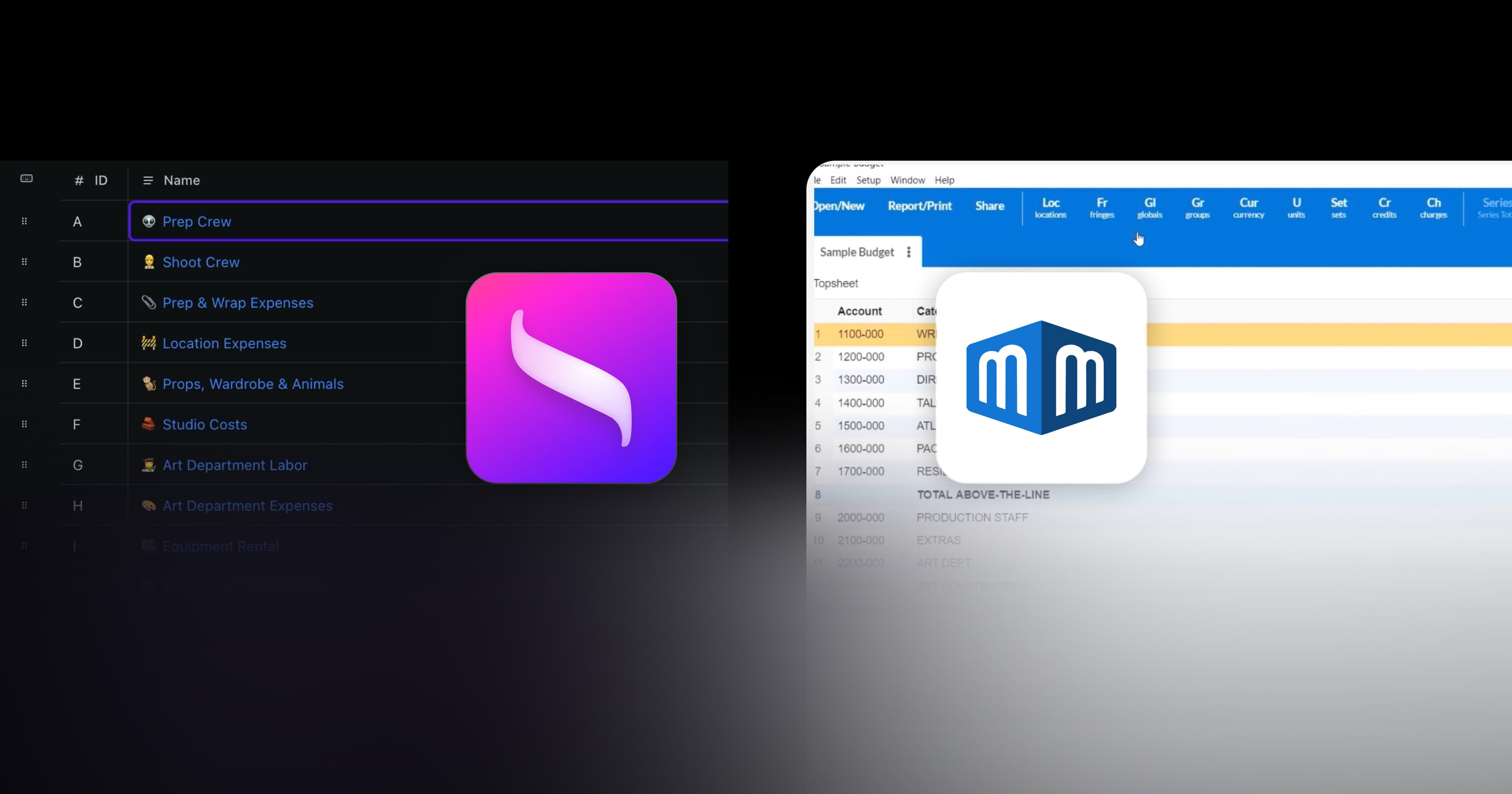
Movie Magic Budgeting has been the film industry's go-to for decades. Production accountants know it. Studios trust it. Line producers learned it in film school.
But a lot has changed since Movie Magic was built. Productions run leaner. Teams work remotely. Budgets need to be shared, updated, and reviewed in real time across departments. Paying $42.99 per month per seat for a desktop app that doesn't sync to the cloud is starting to feel like maintaining a fax machine in a connected world.
This guide breaks down exactly what's frustrating producers about Movie Magic, and why Saturation has become the most practical alternative for independent films, commercials, and episodic productions.
Why Producers Are Looking for a Movie Magic Budgeting Alternative
Movie Magic Budgeting is powerful. Nobody denies that. It handles complex union fringes, supports topsheet reporting, and stores decades of institutional knowledge in its template library. For a studio production accountant who has used it since the 1990s, switching feels risky.
But for everyone else, the frustrations are growing:
Per-seat pricing that adds up fast
Movie Magic charges $42.99 per month per seat, or $299.88 per year. That's manageable for a single user. But on a production where two accountants, a line producer, and a department head all need access, you're looking at $170 per month minimum, and each seat is locked to one machine. For a short film or a music video with a three-week run, that software cost makes no financial sense.
Desktop-only with no real-time collaboration
Movie Magic is a desktop application. Files live locally. When your line producer in Los Angeles and your production accountant in New York both need the budget open, someone emails a file, waits, and hopes no one made conflicting edits in the meantime. There is no live collaboration, no version history, no way to know whether the file you're opening is the current one.
No expense tracking or actuals integration
Movie Magic handles budget creation, not expense management. Once production starts, you're tracking actuals in a separate system, usually a spreadsheet or a separate platform, then manually reconciling them back into the budget. That reconciliation gap is where errors and overspends hide, and where production accountants spend hours every week.
Steep learning curve for new crew
Movie Magic's interface hasn't changed substantially in years. New production coordinators and emerging filmmakers don't have institutional training on it. At $42.99 per month just to practice on a personal project, it's not accessible for someone building their first indie feature or developing their accounting skills.
What Saturation Does Differently
Saturation is a cloud-based production finance platform built for film and television. It handles budgeting, expense tracking, and production payments in one place. The core idea: your budget and your actuals should live in the same system, not in two separate tools you reconcile manually at the end of every shooting week.
Collaborative budgeting in any browser
Saturation works in any browser on any device. Your line producer, production accountant, and department heads can all view and work on the same budget simultaneously, with changes reflected in real time. No file-sharing, no versioning problems, no conversations about which draft is current.
Free tier with no seat limits
Saturation's free tier gives small productions access to the core budgeting tools with no time limit. There are no per-seat fees. If you need to add your production coordinator, UPM, and department heads, you can do that without recalculating your software budget. Larger productions can upgrade to a paid plan, but the free tier is a fully functional starting point.
Budgeting and expense management in one platform
When your budget lives in Saturation and your expenses run through Saturation Pay, actuals flow directly into your budget reports. You can see cost-to-complete in real time without the manual reconciliation that consumes accountants' time. Saturation Pay issues virtual and physical cards to contractors and vendors, making it straightforward to track where money is going against what was budgeted. This is the integration that production accountants using legacy tools spend hours recreating by hand.
Built for productions of every size
Movie Magic was designed with large studio productions in mind, which is reflected in its pricing and interface. Saturation is designed to work whether you're budgeting a $100,000 indie documentary or a $10 million episodic series. The platform doesn't assume you have a full accounting department, but it scales to support one when you do.
Saturation vs. Movie Magic: Feature Comparison
Feature | Movie Magic Budgeting | Saturation |
|---|---|---|
Pricing | $42.99/month per seat ($299.88/yr) | Free tier available; paid plans by production |
Platform | Desktop only (Mac or Windows) | Browser-based, any device |
Real-time collaboration | No | Yes |
Expense tracking | No (budgeting only) | Yes, integrated with budget |
Production payments | No | Yes (Saturation Pay for contractors and vendors) |
Free to start | Limited trial only | Yes, no credit card required |
Union fringe calculations | Yes | Yes |
Topsheet reporting | Yes | Yes |
Mobile access | No | Yes |
Budget templates | Yes (extensive library) | Yes |
Actuals reconciliation | Manual | Automatic when using Saturation Pay |
Installation required | Yes | No |
Who Should Consider Switching
Saturation isn't the right fit for every production. Here's an honest breakdown:
Productions that benefit most from Saturation
Independent features and documentaries. If your production doesn't have an institutional IT setup and a dedicated accounting department trained on Movie Magic, Saturation's accessibility and lower cost make more sense from the start.
Commercial and music video productions. Short-timeline productions that need fast budget iteration and quick expense visibility benefit from having everything in one place. The per-seat cost of Movie Magic doesn't justify itself for a project that runs four days.
Remote or distributed teams. Any production where department heads, line producers, and accountants aren't all in the same building benefits from cloud-based, real-time collaboration. This has become the norm rather than the exception.
Producers managing multiple projects at once. Saturation lets you manage all your productions from a single dashboard without buying additional software seats or tracking separate files for each project.
Emerging filmmakers building their first budgets. The free tier makes Saturation accessible for producers learning their craft, without requiring a software subscription before the project has a budget to speak of.
When Movie Magic may still make sense
If you're working on a major studio production where the production accountant is a seasoned Movie Magic user and the infrastructure is already in place, switching mid-production creates more friction than it solves. Movie Magic's depth of union fringe configurations and its template library for complex SAG-AFTRA and IATSE productions is extensive, and that institutional knowledge matters when the stakes are high.
For those cases, Saturation integrates with other production tools, so you don't have to treat this as an all-or-nothing decision.
How to Get Started with Saturation
Getting your first budget set up in Saturation is faster than most producers expect, particularly if you're migrating from a spreadsheet or a basic budgeting setup.
Step 1: Create a free account
Saturation's free tier requires no credit card. You can build a budget, invite collaborators, and explore the platform before committing to a paid plan. Start at app.saturation.io/signup.
Step 2: Start from a template or build your own structure
Saturation includes production budget templates for features, commercials, music videos, and episodic productions. If you have an existing Movie Magic or spreadsheet budget, you can replicate the structure in Saturation and start tracking actuals from there. Most budget structures transfer over in a few hours of setup work.
Step 3: Invite your team
Add your line producer, production accountant, or department heads as collaborators. Set view or edit permissions per user. Everyone sees the same budget, updated in real time, without anyone waiting for an emailed file.
Step 4: Connect your expenses
When you use Saturation Pay for vendor and contractor payments, those transactions feed directly into your budget tracking. Your cost reports stay current without manual reconciliation at the end of every week.
Making the Case to Your Production Accountant
The biggest hesitation most production accountants have about switching from Movie Magic is familiarity. They know where every feature is. They've built their workflows around it over years. Learning new software takes time they don't have in the middle of a shoot.
That hesitation is reasonable. The producers who find the switch easiest are those who start using Saturation in pre-production, before habits are locked in. Getting comfortable with the interface during the budgeting phase, before production expenses start flowing, means the transition is complete by the time you need it most.
For a deeper look at how Saturation compares to Movie Magic feature by feature, see the full Saturation vs. Movie Magic Budgeting comparison. For context on how all the major budgeting tools stack up, see our guide to the best film budgeting software.
The Bottom Line
Movie Magic Budgeting works. That's not in question. The question is whether paying $42.99 per seat per month for a desktop-only tool with no expense tracking makes sense for your production when there are cloud-based alternatives that are free to start.
Saturation isn't trying to be Movie Magic. It's building the financial infrastructure that modern productions need: budgeting, expense management, and payments in one place, accessible to your whole team on any device, without a per-seat fee every time you need to add someone.
If your current setup is costing more time than it saves, that's worth paying attention to. Create a free account and build your next budget there. If you're also evaluating other tools alongside Saturation, our film production accounting software guide covers the full landscape.
Frequently Asked Questions
Is there a free alternative to Movie Magic Budgeting?
Yes. Saturation offers a free tier that includes core budgeting features with no time limit and no per-seat fees. You can invite your entire production team to collaborate on the budget without paying more as you add users.
Can Saturation handle union fringes like Movie Magic?
Yes. Saturation supports union fringe calculations for SAG-AFTRA, DGA, IATSE, and other guild agreements. Production accountants can configure fringe rates by union, and the platform calculates total fringes automatically as the budget is built.
Does Saturation work on Windows and Mac?
Saturation is browser-based, so it works on any operating system: Windows, Mac, Linux, iOS, and Android. There is no software to install, update, or license per machine.
Can I import a Movie Magic budget into Saturation?
You can replicate a Movie Magic budget structure in Saturation manually, or start from one of Saturation's pre-built production templates. A direct import tool for Movie Magic's proprietary file format is not currently available, but most budget structures can be transferred in a few hours of setup work.
Is Saturation good for big-budget productions, or just indie films?
Saturation works for productions at all budget levels. The platform handles everything from short films and music videos to multi-million dollar features and episodic series. Its advantages over Movie Magic are most pronounced for teams that need real-time collaboration and integrated expense tracking, which benefits any production size.
What is Saturation Pay?
Saturation Pay is the payments component built into the Saturation platform. It lets productions pay contractors and vendors through virtual or physical cards issued directly through the platform. Transactions made through Saturation Pay automatically sync to your budget tracking, keeping actuals current without manual data entry. Saturation Pay handles contractor and vendor payments, not W-2 payroll.
How does Saturation compare to just using Excel or Google Sheets?
Spreadsheets are free but require you to build and maintain your own formulas, fringe calculations, and reporting structure from scratch. Saturation provides production-specific budget categories, built-in fringe logic, topsheet reporting, and real-time collaboration out of the box. When you add expense tracking through Saturation Pay, actuals flow in automatically, which is something a spreadsheet can never do on its own.
Related posts
Ready to modernize your production finance?
Join thousands of production teams using Saturation to budget, track expenses, and manage payments.