Commercial Film Budget: How to Budget a Commercial Production (2026)

Feb 22, 2026

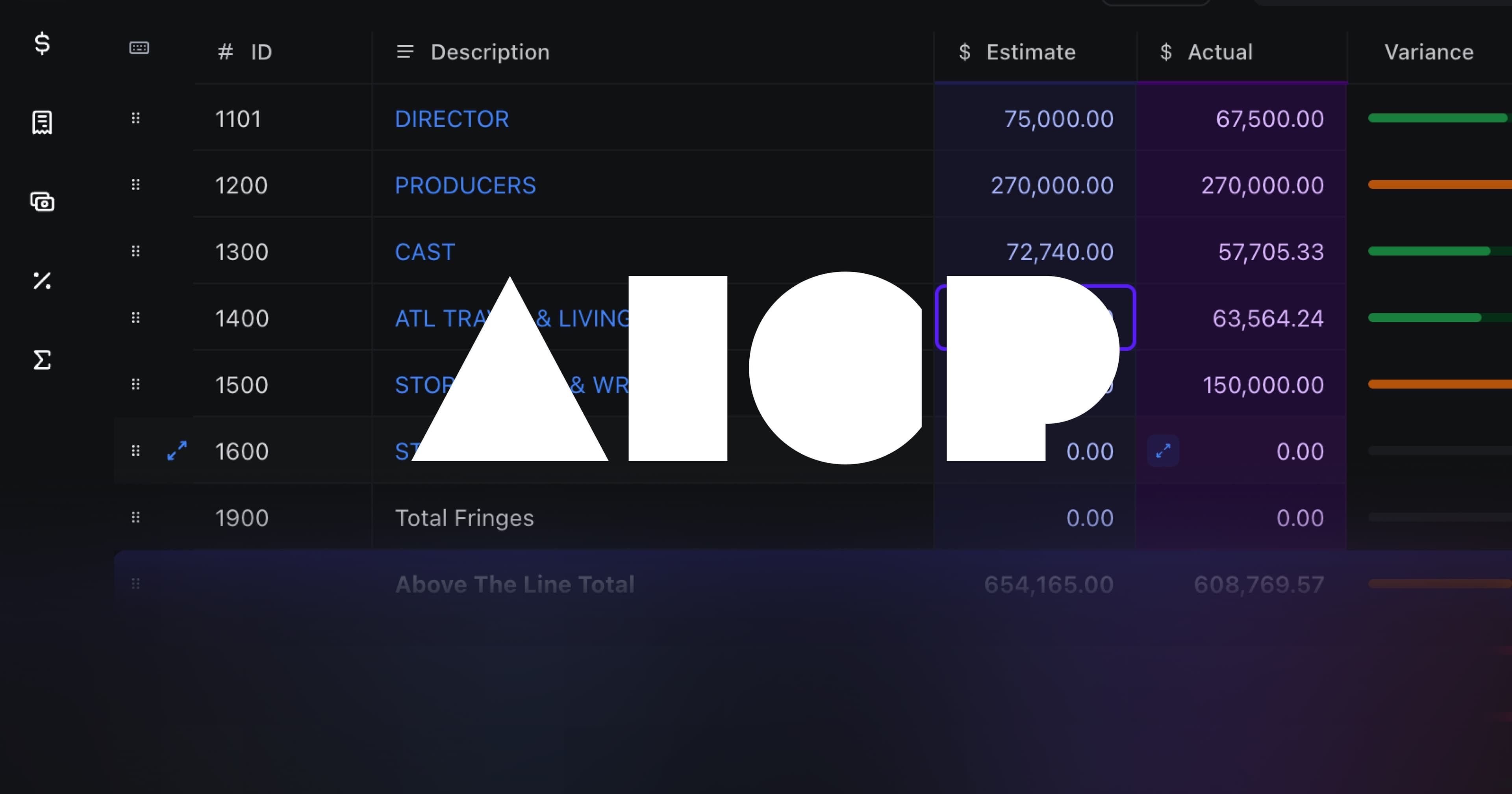
A commercial film budget covers the cost of producing an advertisement: the crew, equipment, locations, talent, and post-production required to deliver the finished spot. It is structured differently from a feature film or documentary budget, follows the AICP bid format developed by the Association of Independent Commercial Producers, and operates within a client-vendor relationship where an ad agency represents the brand and a production company bids to produce the work.

Understanding how commercial budgets are built, what makes them different from other production formats, and how production companies price their work is essential for anyone producing, bidding, or approving commercial work in 2026.

How Commercial Film Budgets Differ from Feature Film Budgets

The structure and logic of a commercial budget are fundamentally different from a feature film budget, even though both involve crew, camera equipment, locations, and post-production.

Factor

Feature Film Budget

Commercial Film Budget

Format

Above-the-line / Below-the-line (ATL/BTL)

AICP section structure (Sections A through X)

Standard tools

Movie Magic Budgeting, Saturation

AICP Bid Form; Saturation includes AICP template

Shoot duration

Weeks to months of principal photography

Typically 1 to 5 shoot days

Client relationship

Studio or financier

Ad agency (represents the brand)

Director fee

Part of above-the-line budget

Listed separately in Section L of the AICP form

Profit model

Back-end revenue participation

Production fee plus markup, no back-end

Bidding process

Producers negotiate directly

Triple bid: three production companies bid each job

Union agreements

SAG-AFTRA theatrical, IATSE theatrical

SAG-AFTRA commercial, IATSE commercial, DGA commercial

Contingency

10% standard

10% standard on a much tighter schedule

The compressed timeline is the most important structural difference. A feature film might have 30 to 120+ days of principal photography. A national TV commercial typically shoots in 1 to 3 days. Every line item in a commercial budget has to deliver maximum production value within that window, which puts enormous pressure on preparation costs and pre-production labor.

The AICP Bid Form: Structure and Account Codes

The AICP Bid Form is the industry-standard template for commercial production cost estimates in the United States. When a production company submits a bid to an agency, they use this form. When an agency compares three competing bids, they are comparing line items in the same AICP structure.

The form runs from Section A through Section X, with each section covering a distinct category of production cost. Here is how the sections break down:

Pre-Production and Wrap (Sections A-C)

  • Section A (Pre-Production and Wrap Labor): Line producer fees, production coordinator fees, production assistant labor during pre-production and wrap. This is where your pre-production days are accounted for.

  • Section B (Shoot Crew Labor): Every crew member on shoot days listed by role and day rate. Director of photography, gaffer, key grip, sound mixer, camera operators, script supervisor, hair and makeup, PAs. Rates are listed per day and multiplied by shoot days.

  • Section C (Pre-Production and Wrap Expenses): Location scout costs, casting session fees, pre-production meals, miscellaneous pre-production expenses.

Location and Art Department (Sections D-H)

  • Section D (Location and Travel Expenses): Location fees and permits, hotel accommodations, airfare, ground transportation, per diems for travel days. This section can dominate a commercial budget when productions shoot on location in remote or expensive markets.

  • Section E (Props, Wardrobe, and Animals): Wardrobe stylist fees and rental costs, prop house rental, animal trainer and animal costs. Food stylists and product stylists also appear here.

  • Section F (Studio/Stage Rental): Studio or soundstage rental by the day. Construction crew and set build labor if a custom set is required.

  • Section G (Art Department Labor): Production designer, art director, set decorator, prop master, and set dresser labor. Listed as day rates for prep and shoot days.

  • Section H (Art Department Expenses): Set build materials, furniture and set dressing purchases or rentals, scenic and paint costs.

Equipment and Production (Sections I-K)

  • Section I (Equipment Rental): Camera package, lenses, lighting package, grip package, specialty equipment (cranes, dollies, underwater housings, drones). Equipment rental is one of the largest line items in most commercial budgets.

  • Section J (Film/Video Stock and Processing): Less relevant for digital productions, but covers raw media, memory cards, drives, and data management costs. DIT (digital imaging technician) costs often appear here.

  • Section K (Miscellaneous Production Costs): Catering and craft services, walkie-talkies, expendables, production supplies, generator rental.

Director and Talent (Sections L-N)

  • Section L (Director/Creative Fees): The director's prep fee, shoot day rate, and post-production supervision fee. This section is the single biggest variable line item in most commercial budgets. A mid-tier commercial director might charge $30,000 to $100,000 for a national spot as a total package. Top-tier directors command $100,000 to $500,000 or more.

  • Section M (Talent/Cast): SAG-AFTRA session fees for principal talent, background performers, and voice-over talent. Fitting fees and audition costs also appear here. Principal session fees are regulated by the SAG-AFTRA Commercial Agreement and vary by media type and usage.

  • Section N (Talent Expenses): Talent travel, hotel, and per diems for talent arriving from out of town.

Post-Production (Sections O-W)

Post-production sections cover offline editorial, online finishing, color grading, visual effects and motion graphics, audio mix, music licensing or composition, and final deliverables. Commercial post-production is often more complex than the shoot budget suggests because a single campaign generates multiple versions: 15-second, 30-second, and 60-second cuts, plus horizontal, vertical, and square formats for different platforms.

Grand Total (Section X)

The summary at the bottom of the bid includes three critical items beyond the section subtotals:

  • Production fee/markup: The production company's overhead and profit applied as a percentage of below-the-line costs

  • Contingency: Typically 10% of below-the-line costs, serving as a buffer for overages

  • Grand total: The final number the agency presents to the client for approval

For a full guide to AICP account codes and how to use the bid format, see the Saturation resource on the AICP budget format.

Commercial Budget Ranges by Production Type

Budget ranges vary enormously by the scope of the production, the media market it is produced for, and the talent involved.

National TV Commercial (Broadcast/Streaming)

National spots airing on network television or major streaming platforms represent the highest tier of commercial production. These productions justify the largest budgets because they reach tens of millions of viewers and support media buys that can range from $5 million to $50 million or more.

  • Entry-level national spot: $150,000 to $350,000

  • Mid-tier national spot: $350,000 to $750,000

  • High-budget national spot: $750,000 to $2,000,000

  • Celebrity-driven or VFX-heavy: $2,000,000 to $5,000,000+

Regional TV Commercial

Regional commercials air in specific markets (a single city, state, or DMA) and support smaller media buys. Production values are lower than national work, but the same AICP structure applies.

  • Typical regional spot: $25,000 to $150,000

Digital and Social Video

Online video (OLV) for social platforms, streaming pre-roll, and digital campaigns has grown to represent the majority of commercial production volume. Budgets range widely depending on whether the goal is broadcast-quality storytelling or performance-focused creative.

  • Low-budget social content (1-2 shoot days): $5,000 to $25,000

  • Mid-tier branded content (2-3 shoot days): $25,000 to $75,000

  • Broadcast-quality digital (full crew, 3-5 shoot days): $75,000 to $250,000

Music Video

Music video budgets follow the recording artist's label tier and the creative concept's complexity.

  • Independent/emerging artist: $5,000 to $30,000

  • Mid-tier label: $50,000 to $200,000

  • Major label A-list: $500,000 to $2,000,000+

Corporate and Industrial Video

  • Typical range: $10,000 to $75,000

One critical distinction that confuses clients new to commercial production: the production budget is the cost to make the ad. The media buy, which is the cost to air or distribute it, is a completely separate and typically much larger number managed by a media agency. A $500,000 production budget might be paired with a $25,000,000 media buy. These are different budget lines owned by different teams.

Production Company Markup: How the Numbers Work

Every commercial production company applies a markup to below-the-line costs in addition to charging for the director's fee and producer fees. Understanding this markup structure is essential for producers building bids and for brands trying to evaluate whether they are getting fair value.

The Standard Markup

The AICP standard markup is 25% applied to below-the-line production costs. In practice, markups range from 20% to 35% depending on the production company's overhead structure and the negotiating leverage of the agency.

The markup covers the production company's business costs that are not directly billable to any individual project: office rent, development costs, business development expenses, insurance overhead, and the salaries of permanent staff who support the operation without appearing on any single budget.

Net Profit Reality

Despite a stated 25% markup, most production companies net 3% to 15% on any given job after actual overhead is absorbed. This is because some costs in the budget are not marked up at all: director's fees, talent payments, travel and hotel, and insurance are often passed through at cost. Since these zero-markup items can represent 30% to 50% of the total budget on a talent-heavy production, the effective markup on the portion that does carry a margin ends up driving a much thinner bottom line than the headline percentage suggests.

The Triple Bid

Standard commercial production practice requires agencies to solicit bids from three separate production companies for each job. The agency presents all three bids to the client with a recommendation. This process exists to ensure market pricing and prevent conflicts of interest between agencies and production companies.

When building a bid, production companies must document that they themselves bid three vendors for any significant expense (equipment rental, casting, locations, catering). This vendor-level triple bid documentation is part of standard commercial production practice and protects both the production company and the agency in the event of a billing dispute.

Line Items Unique to Commercial Production

Several budget categories appear in commercial production that do not have direct equivalents in feature film budgeting.

Talent Residuals and Usage Fees

SAG-AFTRA principals earn a session fee on the day they shoot. They then earn residuals every time the spot airs, calculated by media type (network TV, cable, streaming, online), market size, and usage cycle (each 13-week period). For a national spot with significant media spend, a single on-camera principal can earn $5,000 to $50,000 or more in residuals over the life of the campaign.

Residuals are NOT typically in the production company's budget. They are paid by the brand or agency directly to SAG-AFTRA through their payroll provider. However, producers must make sure the client understands that the SAG session fees in Section M of the AICP form are just the first payment, not the total talent cost.

Holding Fees

SAG-AFTRA requires brands to pay holding fees every 13 weeks to keep a principal talent "held" and unable to appear in competitor advertising. Holding fees are equal to the session fee and recur as long as the brand wants to maintain the exclusivity.

Versioning

A single commercial shoot typically delivers multiple finished versions: 15-second, 30-second, and 60-second cuts for broadcast, plus resized and reformatted versions for digital platforms (16:9, 9:16 vertical, 1:1 square). Post-production line items must account for the editorial and finishing work required for each version.

Music Costs

Music in a commercial requires either licensing an existing track (sync fee plus master fee, ranging from $5,000 to $250,000+ depending on the song and usage) or commissioning original music ($5,000 to $75,000+). This cost is often managed by the agency or music supervisor rather than the production company, but it appears in the overall campaign budget that the client approves.

Day Rate vs. Project Fee Structures

Commercial production uses a mix of billing approaches depending on the role:

  • Shoot crew (Section B): Always billed as day rates multiplied by shoot days. This is non-negotiable for IATSE and SAG-covered crew.

  • Director (Section L): Usually structured as a package including prep days, shoot days, and post supervision, presented as a single fee that covers the full scope of the director's involvement.

  • Production company EP: Usually built into the production fee as a percentage of the budget (2% to 5%) rather than appearing as a separate day rate line.

  • Freelance commercial producers: $800 to $2,000 per day depending on experience level and market.

Key Day Rates for Commercial Crew (2026)

Role

Non-Union Rate

IATSE / DGA Rate

Director

$1,500 to $15,000/day (or flat package)

Per DGA Commercial Agreement; $30K to $500K+ total package

Director of Photography

$1,500 to $3,500/day

$3,500 to $8,000/day (IATSE Local 600)

Gaffer

$600 to $1,200/day

$1,200 to $2,500/day

Key Grip

$500 to $1,000/day

$1,100 to $2,200/day

1st AD

$700 to $1,500/day

$1,500 to $3,000/day (DGA)

Line Producer

$800 to $1,500/day

$1,500 to $2,500/day

Production Designer

$800 to $2,000/day

$1,500 to $3,500/day

Wardrobe Stylist

$500 to $1,200/day

$800 to $1,800/day

Fringe rates for commercial productions differ from theatrical rates. IATSE commercial agreements carry different pension, health, and vacation fringe percentages than IATSE theatrical agreements. SAG-AFTRA commercial agreements have their own contribution rates. Always verify the applicable fringe rates for your specific union agreements before finalizing the budget. For a detailed walkthrough of fringe calculations in production budgets, see the Saturation guide to how to create a film budget.

Building and Presenting a Commercial Bid

The commercial bidding process follows a structured sequence that is distinct from feature film or television production:

  1. Agency sends the bid package: The production company receives a brief, storyboards or scripts, and the agency's budget parameters. Sometimes the agency specifies a cost range; sometimes they simply ask for the production company's interpretation.

  2. Production company builds the AICP form: The producer breaks down the script or storyboard into all the elements required: shoot days, locations, crew, talent, equipment, art department. The director's fee is negotiated separately and becomes the Section L number.

  3. Internal review: The production company's executive producer reviews the bid before submission to verify the markup is correctly applied and the bid is competitive.

  4. Bid submission: The completed AICP form is submitted to the agency alongside a treatment from the director (a creative document explaining how they would approach the project).

  5. Agency review and negotiation: The agency compares all three bids. Budget adjustments are common after the initial bid; agencies frequently ask production companies to reduce specific line items.

  6. Award: The agency awards the job to one production company and issues a production agreement based on the approved AICP budget.

Managing the actual spend against the approved AICP budget during production is where real-time expense tracking becomes essential. When a location goes over budget or a shoot day runs long, the producer needs to know immediately how the overage affects the overall financial position of the production. For how production expense tracking works across production types, see the guide to managing film production expenses.

Frequently Asked Questions

What is a commercial film budget?

A commercial film budget is the itemized cost estimate for producing an advertisement, covering all crew, equipment, locations, talent, and post-production required to deliver the finished spot. Commercial budgets follow the AICP Bid Form structure rather than the above-the-line/below-the-line format used for feature films.

How much does it cost to produce a TV commercial?

Production costs range from $25,000 for a regional spot to $2,000,000 or more for a high-budget national campaign. A mid-tier national commercial typically costs $350,000 to $750,000 to produce. These costs are separate from the media buy (the cost to air the spot), which is managed by a media agency and typically ranges from 10 to 100 times the production cost.

What is the AICP bid form?

The AICP Bid Form is the industry-standard template developed by the Association of Independent Commercial Producers for commercial production cost estimates. It organizes all production costs into sections A through X, covering pre-production labor, shoot crew, location costs, equipment, talent, post-production, and the production company's markup. All US production companies use this format when submitting bids to ad agencies.

What is a production company markup on a commercial?

The standard AICP markup is 25% applied to below-the-line production costs, though actual ranges run from 20% to 35% depending on the company and the job. The markup covers the production company's overhead and profit. Despite the headline percentage, most production companies net 3% to 15% on each job after actual overhead costs are factored in, because some significant items (director fees, talent, travel) are often passed through at cost without a markup applied.

What is a triple bid in commercial production?

The triple bid is standard practice where the ad agency solicits cost estimates from three different production companies for each project. The agency presents all three bids to the client with a recommendation. This ensures competitive pricing and transparency. Production companies are also expected to triple-bid their own vendors for significant line items within the production budget.

How are commercial budgets different from feature film budgets?

Commercial budgets use the AICP section structure rather than the above-the-line/below-the-line format of feature films. The director's fee appears as a separate section (Section L) rather than as a standard crew line. The shoot duration is typically 1 to 5 days rather than weeks. The client relationship is with an ad agency rather than a studio. Talent residuals are a significant ongoing cost that falls outside the production budget and is paid by the brand directly. The triple-bid process is standard for commercials but rare in feature film production.

Does Saturation support the AICP format for commercial budgets?

Yes. Saturation includes AICP account code templates for commercial production. Commercial producers can build their budget in Saturation using the AICP structure, track actual expenses against the approved bid during production, and process contractor and vendor payments directly through Saturation Pay. Real-time collaboration means the executive producer, line producer, and production coordinator can all work from the same live budget without file-sharing or version conflicts.

What are the biggest budget risks on a commercial production?

The highest-risk line items on a commercial production are overtime on shoot days (labor costs escalate rapidly when a commercial shoot runs over), talent fees and residuals (which continue as long as the spot airs), location costs (permits, restoration, and weather delays are hard to predict), and equipment damage or failure on the shoot day (which can force costly decisions about rescheduling). Maintaining a 10% contingency in the AICP budget helps absorb overages in these categories without going back to the client for additional approval.

By Jens Jacob, film producer and co-founder of Saturation

A commercial film budget covers the cost of producing an advertisement: the crew, equipment, locations, talent, and post-production required to deliver the finished spot. It is structured differently from a feature film or documentary budget, follows the AICP bid format developed by the Association of Independent Commercial Producers, and operates within a client-vendor relationship where an ad agency represents the brand and a production company bids to produce the work.

Understanding how commercial budgets are built, what makes them different from other production formats, and how production companies price their work is essential for anyone producing, bidding, or approving commercial work in 2026.

How Commercial Film Budgets Differ from Feature Film Budgets

The structure and logic of a commercial budget are fundamentally different from a feature film budget, even though both involve crew, camera equipment, locations, and post-production.

Factor

Feature Film Budget

Commercial Film Budget

Format

Above-the-line / Below-the-line (ATL/BTL)

AICP section structure (Sections A through X)

Standard tools

Movie Magic Budgeting, Saturation

AICP Bid Form; Saturation includes AICP template

Shoot duration

Weeks to months of principal photography

Typically 1 to 5 shoot days

Client relationship

Studio or financier

Ad agency (represents the brand)

Director fee

Part of above-the-line budget

Listed separately in Section L of the AICP form

Profit model

Back-end revenue participation

Production fee plus markup, no back-end

Bidding process

Producers negotiate directly

Triple bid: three production companies bid each job

Union agreements

SAG-AFTRA theatrical, IATSE theatrical

SAG-AFTRA commercial, IATSE commercial, DGA commercial

Contingency

10% standard

10% standard on a much tighter schedule

The compressed timeline is the most important structural difference. A feature film might have 30 to 120+ days of principal photography. A national TV commercial typically shoots in 1 to 3 days. Every line item in a commercial budget has to deliver maximum production value within that window, which puts enormous pressure on preparation costs and pre-production labor.

The AICP Bid Form: Structure and Account Codes

The AICP Bid Form is the industry-standard template for commercial production cost estimates in the United States. When a production company submits a bid to an agency, they use this form. When an agency compares three competing bids, they are comparing line items in the same AICP structure.

The form runs from Section A through Section X, with each section covering a distinct category of production cost. Here is how the sections break down:

Pre-Production and Wrap (Sections A-C)

  • Section A (Pre-Production and Wrap Labor): Line producer fees, production coordinator fees, production assistant labor during pre-production and wrap. This is where your pre-production days are accounted for.

  • Section B (Shoot Crew Labor): Every crew member on shoot days listed by role and day rate. Director of photography, gaffer, key grip, sound mixer, camera operators, script supervisor, hair and makeup, PAs. Rates are listed per day and multiplied by shoot days.

  • Section C (Pre-Production and Wrap Expenses): Location scout costs, casting session fees, pre-production meals, miscellaneous pre-production expenses.

Location and Art Department (Sections D-H)

  • Section D (Location and Travel Expenses): Location fees and permits, hotel accommodations, airfare, ground transportation, per diems for travel days. This section can dominate a commercial budget when productions shoot on location in remote or expensive markets.

  • Section E (Props, Wardrobe, and Animals): Wardrobe stylist fees and rental costs, prop house rental, animal trainer and animal costs. Food stylists and product stylists also appear here.

  • Section F (Studio/Stage Rental): Studio or soundstage rental by the day. Construction crew and set build labor if a custom set is required.

  • Section G (Art Department Labor): Production designer, art director, set decorator, prop master, and set dresser labor. Listed as day rates for prep and shoot days.

  • Section H (Art Department Expenses): Set build materials, furniture and set dressing purchases or rentals, scenic and paint costs.

Equipment and Production (Sections I-K)

  • Section I (Equipment Rental): Camera package, lenses, lighting package, grip package, specialty equipment (cranes, dollies, underwater housings, drones). Equipment rental is one of the largest line items in most commercial budgets.

  • Section J (Film/Video Stock and Processing): Less relevant for digital productions, but covers raw media, memory cards, drives, and data management costs. DIT (digital imaging technician) costs often appear here.

  • Section K (Miscellaneous Production Costs): Catering and craft services, walkie-talkies, expendables, production supplies, generator rental.

Director and Talent (Sections L-N)

  • Section L (Director/Creative Fees): The director's prep fee, shoot day rate, and post-production supervision fee. This section is the single biggest variable line item in most commercial budgets. A mid-tier commercial director might charge $30,000 to $100,000 for a national spot as a total package. Top-tier directors command $100,000 to $500,000 or more.

  • Section M (Talent/Cast): SAG-AFTRA session fees for principal talent, background performers, and voice-over talent. Fitting fees and audition costs also appear here. Principal session fees are regulated by the SAG-AFTRA Commercial Agreement and vary by media type and usage.

  • Section N (Talent Expenses): Talent travel, hotel, and per diems for talent arriving from out of town.

Post-Production (Sections O-W)

Post-production sections cover offline editorial, online finishing, color grading, visual effects and motion graphics, audio mix, music licensing or composition, and final deliverables. Commercial post-production is often more complex than the shoot budget suggests because a single campaign generates multiple versions: 15-second, 30-second, and 60-second cuts, plus horizontal, vertical, and square formats for different platforms.

Grand Total (Section X)

The summary at the bottom of the bid includes three critical items beyond the section subtotals:

  • Production fee/markup: The production company's overhead and profit applied as a percentage of below-the-line costs

  • Contingency: Typically 10% of below-the-line costs, serving as a buffer for overages

  • Grand total: The final number the agency presents to the client for approval

For a full guide to AICP account codes and how to use the bid format, see the Saturation resource on the AICP budget format.

Commercial Budget Ranges by Production Type

Budget ranges vary enormously by the scope of the production, the media market it is produced for, and the talent involved.

National TV Commercial (Broadcast/Streaming)

National spots airing on network television or major streaming platforms represent the highest tier of commercial production. These productions justify the largest budgets because they reach tens of millions of viewers and support media buys that can range from $5 million to $50 million or more.

  • Entry-level national spot: $150,000 to $350,000

  • Mid-tier national spot: $350,000 to $750,000

  • High-budget national spot: $750,000 to $2,000,000

  • Celebrity-driven or VFX-heavy: $2,000,000 to $5,000,000+

Regional TV Commercial

Regional commercials air in specific markets (a single city, state, or DMA) and support smaller media buys. Production values are lower than national work, but the same AICP structure applies.

  • Typical regional spot: $25,000 to $150,000

Digital and Social Video

Online video (OLV) for social platforms, streaming pre-roll, and digital campaigns has grown to represent the majority of commercial production volume. Budgets range widely depending on whether the goal is broadcast-quality storytelling or performance-focused creative.

  • Low-budget social content (1-2 shoot days): $5,000 to $25,000

  • Mid-tier branded content (2-3 shoot days): $25,000 to $75,000

  • Broadcast-quality digital (full crew, 3-5 shoot days): $75,000 to $250,000

Music Video

Music video budgets follow the recording artist's label tier and the creative concept's complexity.

  • Independent/emerging artist: $5,000 to $30,000

  • Mid-tier label: $50,000 to $200,000

  • Major label A-list: $500,000 to $2,000,000+

Corporate and Industrial Video

  • Typical range: $10,000 to $75,000

One critical distinction that confuses clients new to commercial production: the production budget is the cost to make the ad. The media buy, which is the cost to air or distribute it, is a completely separate and typically much larger number managed by a media agency. A $500,000 production budget might be paired with a $25,000,000 media buy. These are different budget lines owned by different teams.

Production Company Markup: How the Numbers Work

Every commercial production company applies a markup to below-the-line costs in addition to charging for the director's fee and producer fees. Understanding this markup structure is essential for producers building bids and for brands trying to evaluate whether they are getting fair value.

The Standard Markup

The AICP standard markup is 25% applied to below-the-line production costs. In practice, markups range from 20% to 35% depending on the production company's overhead structure and the negotiating leverage of the agency.

The markup covers the production company's business costs that are not directly billable to any individual project: office rent, development costs, business development expenses, insurance overhead, and the salaries of permanent staff who support the operation without appearing on any single budget.

Net Profit Reality

Despite a stated 25% markup, most production companies net 3% to 15% on any given job after actual overhead is absorbed. This is because some costs in the budget are not marked up at all: director's fees, talent payments, travel and hotel, and insurance are often passed through at cost. Since these zero-markup items can represent 30% to 50% of the total budget on a talent-heavy production, the effective markup on the portion that does carry a margin ends up driving a much thinner bottom line than the headline percentage suggests.

The Triple Bid

Standard commercial production practice requires agencies to solicit bids from three separate production companies for each job. The agency presents all three bids to the client with a recommendation. This process exists to ensure market pricing and prevent conflicts of interest between agencies and production companies.

When building a bid, production companies must document that they themselves bid three vendors for any significant expense (equipment rental, casting, locations, catering). This vendor-level triple bid documentation is part of standard commercial production practice and protects both the production company and the agency in the event of a billing dispute.

Line Items Unique to Commercial Production

Several budget categories appear in commercial production that do not have direct equivalents in feature film budgeting.

Talent Residuals and Usage Fees

SAG-AFTRA principals earn a session fee on the day they shoot. They then earn residuals every time the spot airs, calculated by media type (network TV, cable, streaming, online), market size, and usage cycle (each 13-week period). For a national spot with significant media spend, a single on-camera principal can earn $5,000 to $50,000 or more in residuals over the life of the campaign.

Residuals are NOT typically in the production company's budget. They are paid by the brand or agency directly to SAG-AFTRA through their payroll provider. However, producers must make sure the client understands that the SAG session fees in Section M of the AICP form are just the first payment, not the total talent cost.

Holding Fees

SAG-AFTRA requires brands to pay holding fees every 13 weeks to keep a principal talent "held" and unable to appear in competitor advertising. Holding fees are equal to the session fee and recur as long as the brand wants to maintain the exclusivity.

Versioning

A single commercial shoot typically delivers multiple finished versions: 15-second, 30-second, and 60-second cuts for broadcast, plus resized and reformatted versions for digital platforms (16:9, 9:16 vertical, 1:1 square). Post-production line items must account for the editorial and finishing work required for each version.

Music Costs

Music in a commercial requires either licensing an existing track (sync fee plus master fee, ranging from $5,000 to $250,000+ depending on the song and usage) or commissioning original music ($5,000 to $75,000+). This cost is often managed by the agency or music supervisor rather than the production company, but it appears in the overall campaign budget that the client approves.

Day Rate vs. Project Fee Structures

Commercial production uses a mix of billing approaches depending on the role:

  • Shoot crew (Section B): Always billed as day rates multiplied by shoot days. This is non-negotiable for IATSE and SAG-covered crew.

  • Director (Section L): Usually structured as a package including prep days, shoot days, and post supervision, presented as a single fee that covers the full scope of the director's involvement.

  • Production company EP: Usually built into the production fee as a percentage of the budget (2% to 5%) rather than appearing as a separate day rate line.

  • Freelance commercial producers: $800 to $2,000 per day depending on experience level and market.

Key Day Rates for Commercial Crew (2026)

Role

Non-Union Rate

IATSE / DGA Rate

Director

$1,500 to $15,000/day (or flat package)

Per DGA Commercial Agreement; $30K to $500K+ total package

Director of Photography

$1,500 to $3,500/day

$3,500 to $8,000/day (IATSE Local 600)

Gaffer

$600 to $1,200/day

$1,200 to $2,500/day

Key Grip

$500 to $1,000/day

$1,100 to $2,200/day

1st AD

$700 to $1,500/day

$1,500 to $3,000/day (DGA)

Line Producer

$800 to $1,500/day

$1,500 to $2,500/day

Production Designer

$800 to $2,000/day

$1,500 to $3,500/day

Wardrobe Stylist

$500 to $1,200/day

$800 to $1,800/day

Fringe rates for commercial productions differ from theatrical rates. IATSE commercial agreements carry different pension, health, and vacation fringe percentages than IATSE theatrical agreements. SAG-AFTRA commercial agreements have their own contribution rates. Always verify the applicable fringe rates for your specific union agreements before finalizing the budget. For a detailed walkthrough of fringe calculations in production budgets, see the Saturation guide to how to create a film budget.

Building and Presenting a Commercial Bid

The commercial bidding process follows a structured sequence that is distinct from feature film or television production:

  1. Agency sends the bid package: The production company receives a brief, storyboards or scripts, and the agency's budget parameters. Sometimes the agency specifies a cost range; sometimes they simply ask for the production company's interpretation.

  2. Production company builds the AICP form: The producer breaks down the script or storyboard into all the elements required: shoot days, locations, crew, talent, equipment, art department. The director's fee is negotiated separately and becomes the Section L number.

  3. Internal review: The production company's executive producer reviews the bid before submission to verify the markup is correctly applied and the bid is competitive.

  4. Bid submission: The completed AICP form is submitted to the agency alongside a treatment from the director (a creative document explaining how they would approach the project).

  5. Agency review and negotiation: The agency compares all three bids. Budget adjustments are common after the initial bid; agencies frequently ask production companies to reduce specific line items.

  6. Award: The agency awards the job to one production company and issues a production agreement based on the approved AICP budget.

Managing the actual spend against the approved AICP budget during production is where real-time expense tracking becomes essential. When a location goes over budget or a shoot day runs long, the producer needs to know immediately how the overage affects the overall financial position of the production. For how production expense tracking works across production types, see the guide to managing film production expenses.

Frequently Asked Questions

What is a commercial film budget?

A commercial film budget is the itemized cost estimate for producing an advertisement, covering all crew, equipment, locations, talent, and post-production required to deliver the finished spot. Commercial budgets follow the AICP Bid Form structure rather than the above-the-line/below-the-line format used for feature films.

How much does it cost to produce a TV commercial?

Production costs range from $25,000 for a regional spot to $2,000,000 or more for a high-budget national campaign. A mid-tier national commercial typically costs $350,000 to $750,000 to produce. These costs are separate from the media buy (the cost to air the spot), which is managed by a media agency and typically ranges from 10 to 100 times the production cost.

What is the AICP bid form?

The AICP Bid Form is the industry-standard template developed by the Association of Independent Commercial Producers for commercial production cost estimates. It organizes all production costs into sections A through X, covering pre-production labor, shoot crew, location costs, equipment, talent, post-production, and the production company's markup. All US production companies use this format when submitting bids to ad agencies.

What is a production company markup on a commercial?

The standard AICP markup is 25% applied to below-the-line production costs, though actual ranges run from 20% to 35% depending on the company and the job. The markup covers the production company's overhead and profit. Despite the headline percentage, most production companies net 3% to 15% on each job after actual overhead costs are factored in, because some significant items (director fees, talent, travel) are often passed through at cost without a markup applied.

What is a triple bid in commercial production?

The triple bid is standard practice where the ad agency solicits cost estimates from three different production companies for each project. The agency presents all three bids to the client with a recommendation. This ensures competitive pricing and transparency. Production companies are also expected to triple-bid their own vendors for significant line items within the production budget.

How are commercial budgets different from feature film budgets?

Commercial budgets use the AICP section structure rather than the above-the-line/below-the-line format of feature films. The director's fee appears as a separate section (Section L) rather than as a standard crew line. The shoot duration is typically 1 to 5 days rather than weeks. The client relationship is with an ad agency rather than a studio. Talent residuals are a significant ongoing cost that falls outside the production budget and is paid by the brand directly. The triple-bid process is standard for commercials but rare in feature film production.

Does Saturation support the AICP format for commercial budgets?

Yes. Saturation includes AICP account code templates for commercial production. Commercial producers can build their budget in Saturation using the AICP structure, track actual expenses against the approved bid during production, and process contractor and vendor payments directly through Saturation Pay. Real-time collaboration means the executive producer, line producer, and production coordinator can all work from the same live budget without file-sharing or version conflicts.

What are the biggest budget risks on a commercial production?

The highest-risk line items on a commercial production are overtime on shoot days (labor costs escalate rapidly when a commercial shoot runs over), talent fees and residuals (which continue as long as the spot airs), location costs (permits, restoration, and weather delays are hard to predict), and equipment damage or failure on the shoot day (which can force costly decisions about rescheduling). Maintaining a 10% contingency in the AICP budget helps absorb overages in these categories without going back to the client for additional approval.

By Jens Jacob, film producer and co-founder of Saturation

A commercial film budget covers the cost of producing an advertisement: the crew, equipment, locations, talent, and post-production required to deliver the finished spot. It is structured differently from a feature film or documentary budget, follows the AICP bid format developed by the Association of Independent Commercial Producers, and operates within a client-vendor relationship where an ad agency represents the brand and a production company bids to produce the work.

Understanding how commercial budgets are built, what makes them different from other production formats, and how production companies price their work is essential for anyone producing, bidding, or approving commercial work in 2026.

How Commercial Film Budgets Differ from Feature Film Budgets

The structure and logic of a commercial budget are fundamentally different from a feature film budget, even though both involve crew, camera equipment, locations, and post-production.

Factor

Feature Film Budget

Commercial Film Budget

Format

Above-the-line / Below-the-line (ATL/BTL)

AICP section structure (Sections A through X)

Standard tools

Movie Magic Budgeting, Saturation

AICP Bid Form; Saturation includes AICP template

Shoot duration

Weeks to months of principal photography

Typically 1 to 5 shoot days

Client relationship

Studio or financier

Ad agency (represents the brand)

Director fee

Part of above-the-line budget

Listed separately in Section L of the AICP form

Profit model

Back-end revenue participation

Production fee plus markup, no back-end

Bidding process

Producers negotiate directly

Triple bid: three production companies bid each job

Union agreements

SAG-AFTRA theatrical, IATSE theatrical

SAG-AFTRA commercial, IATSE commercial, DGA commercial

Contingency

10% standard

10% standard on a much tighter schedule

The compressed timeline is the most important structural difference. A feature film might have 30 to 120+ days of principal photography. A national TV commercial typically shoots in 1 to 3 days. Every line item in a commercial budget has to deliver maximum production value within that window, which puts enormous pressure on preparation costs and pre-production labor.

The AICP Bid Form: Structure and Account Codes

The AICP Bid Form is the industry-standard template for commercial production cost estimates in the United States. When a production company submits a bid to an agency, they use this form. When an agency compares three competing bids, they are comparing line items in the same AICP structure.

The form runs from Section A through Section X, with each section covering a distinct category of production cost. Here is how the sections break down:

Pre-Production and Wrap (Sections A-C)

  • Section A (Pre-Production and Wrap Labor): Line producer fees, production coordinator fees, production assistant labor during pre-production and wrap. This is where your pre-production days are accounted for.

  • Section B (Shoot Crew Labor): Every crew member on shoot days listed by role and day rate. Director of photography, gaffer, key grip, sound mixer, camera operators, script supervisor, hair and makeup, PAs. Rates are listed per day and multiplied by shoot days.

  • Section C (Pre-Production and Wrap Expenses): Location scout costs, casting session fees, pre-production meals, miscellaneous pre-production expenses.

Location and Art Department (Sections D-H)

  • Section D (Location and Travel Expenses): Location fees and permits, hotel accommodations, airfare, ground transportation, per diems for travel days. This section can dominate a commercial budget when productions shoot on location in remote or expensive markets.

  • Section E (Props, Wardrobe, and Animals): Wardrobe stylist fees and rental costs, prop house rental, animal trainer and animal costs. Food stylists and product stylists also appear here.

  • Section F (Studio/Stage Rental): Studio or soundstage rental by the day. Construction crew and set build labor if a custom set is required.

  • Section G (Art Department Labor): Production designer, art director, set decorator, prop master, and set dresser labor. Listed as day rates for prep and shoot days.

  • Section H (Art Department Expenses): Set build materials, furniture and set dressing purchases or rentals, scenic and paint costs.

Equipment and Production (Sections I-K)

  • Section I (Equipment Rental): Camera package, lenses, lighting package, grip package, specialty equipment (cranes, dollies, underwater housings, drones). Equipment rental is one of the largest line items in most commercial budgets.

  • Section J (Film/Video Stock and Processing): Less relevant for digital productions, but covers raw media, memory cards, drives, and data management costs. DIT (digital imaging technician) costs often appear here.

  • Section K (Miscellaneous Production Costs): Catering and craft services, walkie-talkies, expendables, production supplies, generator rental.

Director and Talent (Sections L-N)

  • Section L (Director/Creative Fees): The director's prep fee, shoot day rate, and post-production supervision fee. This section is the single biggest variable line item in most commercial budgets. A mid-tier commercial director might charge $30,000 to $100,000 for a national spot as a total package. Top-tier directors command $100,000 to $500,000 or more.

  • Section M (Talent/Cast): SAG-AFTRA session fees for principal talent, background performers, and voice-over talent. Fitting fees and audition costs also appear here. Principal session fees are regulated by the SAG-AFTRA Commercial Agreement and vary by media type and usage.

  • Section N (Talent Expenses): Talent travel, hotel, and per diems for talent arriving from out of town.

Post-Production (Sections O-W)

Post-production sections cover offline editorial, online finishing, color grading, visual effects and motion graphics, audio mix, music licensing or composition, and final deliverables. Commercial post-production is often more complex than the shoot budget suggests because a single campaign generates multiple versions: 15-second, 30-second, and 60-second cuts, plus horizontal, vertical, and square formats for different platforms.

Grand Total (Section X)

The summary at the bottom of the bid includes three critical items beyond the section subtotals:

  • Production fee/markup: The production company's overhead and profit applied as a percentage of below-the-line costs

  • Contingency: Typically 10% of below-the-line costs, serving as a buffer for overages

  • Grand total: The final number the agency presents to the client for approval

For a full guide to AICP account codes and how to use the bid format, see the Saturation resource on the AICP budget format.

Commercial Budget Ranges by Production Type

Budget ranges vary enormously by the scope of the production, the media market it is produced for, and the talent involved.

National TV Commercial (Broadcast/Streaming)

National spots airing on network television or major streaming platforms represent the highest tier of commercial production. These productions justify the largest budgets because they reach tens of millions of viewers and support media buys that can range from $5 million to $50 million or more.

  • Entry-level national spot: $150,000 to $350,000

  • Mid-tier national spot: $350,000 to $750,000

  • High-budget national spot: $750,000 to $2,000,000

  • Celebrity-driven or VFX-heavy: $2,000,000 to $5,000,000+

Regional TV Commercial

Regional commercials air in specific markets (a single city, state, or DMA) and support smaller media buys. Production values are lower than national work, but the same AICP structure applies.

  • Typical regional spot: $25,000 to $150,000

Digital and Social Video

Online video (OLV) for social platforms, streaming pre-roll, and digital campaigns has grown to represent the majority of commercial production volume. Budgets range widely depending on whether the goal is broadcast-quality storytelling or performance-focused creative.

  • Low-budget social content (1-2 shoot days): $5,000 to $25,000

  • Mid-tier branded content (2-3 shoot days): $25,000 to $75,000

  • Broadcast-quality digital (full crew, 3-5 shoot days): $75,000 to $250,000

Music Video

Music video budgets follow the recording artist's label tier and the creative concept's complexity.

  • Independent/emerging artist: $5,000 to $30,000

  • Mid-tier label: $50,000 to $200,000

  • Major label A-list: $500,000 to $2,000,000+

Corporate and Industrial Video

  • Typical range: $10,000 to $75,000

One critical distinction that confuses clients new to commercial production: the production budget is the cost to make the ad. The media buy, which is the cost to air or distribute it, is a completely separate and typically much larger number managed by a media agency. A $500,000 production budget might be paired with a $25,000,000 media buy. These are different budget lines owned by different teams.

Production Company Markup: How the Numbers Work

Every commercial production company applies a markup to below-the-line costs in addition to charging for the director's fee and producer fees. Understanding this markup structure is essential for producers building bids and for brands trying to evaluate whether they are getting fair value.

The Standard Markup

The AICP standard markup is 25% applied to below-the-line production costs. In practice, markups range from 20% to 35% depending on the production company's overhead structure and the negotiating leverage of the agency.

The markup covers the production company's business costs that are not directly billable to any individual project: office rent, development costs, business development expenses, insurance overhead, and the salaries of permanent staff who support the operation without appearing on any single budget.

Net Profit Reality

Despite a stated 25% markup, most production companies net 3% to 15% on any given job after actual overhead is absorbed. This is because some costs in the budget are not marked up at all: director's fees, talent payments, travel and hotel, and insurance are often passed through at cost. Since these zero-markup items can represent 30% to 50% of the total budget on a talent-heavy production, the effective markup on the portion that does carry a margin ends up driving a much thinner bottom line than the headline percentage suggests.

The Triple Bid

Standard commercial production practice requires agencies to solicit bids from three separate production companies for each job. The agency presents all three bids to the client with a recommendation. This process exists to ensure market pricing and prevent conflicts of interest between agencies and production companies.

When building a bid, production companies must document that they themselves bid three vendors for any significant expense (equipment rental, casting, locations, catering). This vendor-level triple bid documentation is part of standard commercial production practice and protects both the production company and the agency in the event of a billing dispute.

Line Items Unique to Commercial Production

Several budget categories appear in commercial production that do not have direct equivalents in feature film budgeting.

Talent Residuals and Usage Fees

SAG-AFTRA principals earn a session fee on the day they shoot. They then earn residuals every time the spot airs, calculated by media type (network TV, cable, streaming, online), market size, and usage cycle (each 13-week period). For a national spot with significant media spend, a single on-camera principal can earn $5,000 to $50,000 or more in residuals over the life of the campaign.

Residuals are NOT typically in the production company's budget. They are paid by the brand or agency directly to SAG-AFTRA through their payroll provider. However, producers must make sure the client understands that the SAG session fees in Section M of the AICP form are just the first payment, not the total talent cost.

Holding Fees

SAG-AFTRA requires brands to pay holding fees every 13 weeks to keep a principal talent "held" and unable to appear in competitor advertising. Holding fees are equal to the session fee and recur as long as the brand wants to maintain the exclusivity.

Versioning

A single commercial shoot typically delivers multiple finished versions: 15-second, 30-second, and 60-second cuts for broadcast, plus resized and reformatted versions for digital platforms (16:9, 9:16 vertical, 1:1 square). Post-production line items must account for the editorial and finishing work required for each version.

Music Costs

Music in a commercial requires either licensing an existing track (sync fee plus master fee, ranging from $5,000 to $250,000+ depending on the song and usage) or commissioning original music ($5,000 to $75,000+). This cost is often managed by the agency or music supervisor rather than the production company, but it appears in the overall campaign budget that the client approves.

Day Rate vs. Project Fee Structures

Commercial production uses a mix of billing approaches depending on the role:

  • Shoot crew (Section B): Always billed as day rates multiplied by shoot days. This is non-negotiable for IATSE and SAG-covered crew.

  • Director (Section L): Usually structured as a package including prep days, shoot days, and post supervision, presented as a single fee that covers the full scope of the director's involvement.

  • Production company EP: Usually built into the production fee as a percentage of the budget (2% to 5%) rather than appearing as a separate day rate line.

  • Freelance commercial producers: $800 to $2,000 per day depending on experience level and market.

Key Day Rates for Commercial Crew (2026)

Role

Non-Union Rate

IATSE / DGA Rate

Director

$1,500 to $15,000/day (or flat package)

Per DGA Commercial Agreement; $30K to $500K+ total package

Director of Photography

$1,500 to $3,500/day

$3,500 to $8,000/day (IATSE Local 600)

Gaffer

$600 to $1,200/day

$1,200 to $2,500/day

Key Grip

$500 to $1,000/day

$1,100 to $2,200/day

1st AD

$700 to $1,500/day

$1,500 to $3,000/day (DGA)

Line Producer

$800 to $1,500/day

$1,500 to $2,500/day

Production Designer

$800 to $2,000/day

$1,500 to $3,500/day

Wardrobe Stylist

$500 to $1,200/day

$800 to $1,800/day

Fringe rates for commercial productions differ from theatrical rates. IATSE commercial agreements carry different pension, health, and vacation fringe percentages than IATSE theatrical agreements. SAG-AFTRA commercial agreements have their own contribution rates. Always verify the applicable fringe rates for your specific union agreements before finalizing the budget. For a detailed walkthrough of fringe calculations in production budgets, see the Saturation guide to how to create a film budget.

Building and Presenting a Commercial Bid

The commercial bidding process follows a structured sequence that is distinct from feature film or television production:

  1. Agency sends the bid package: The production company receives a brief, storyboards or scripts, and the agency's budget parameters. Sometimes the agency specifies a cost range; sometimes they simply ask for the production company's interpretation.

  2. Production company builds the AICP form: The producer breaks down the script or storyboard into all the elements required: shoot days, locations, crew, talent, equipment, art department. The director's fee is negotiated separately and becomes the Section L number.

  3. Internal review: The production company's executive producer reviews the bid before submission to verify the markup is correctly applied and the bid is competitive.

  4. Bid submission: The completed AICP form is submitted to the agency alongside a treatment from the director (a creative document explaining how they would approach the project).

  5. Agency review and negotiation: The agency compares all three bids. Budget adjustments are common after the initial bid; agencies frequently ask production companies to reduce specific line items.

  6. Award: The agency awards the job to one production company and issues a production agreement based on the approved AICP budget.

Managing the actual spend against the approved AICP budget during production is where real-time expense tracking becomes essential. When a location goes over budget or a shoot day runs long, the producer needs to know immediately how the overage affects the overall financial position of the production. For how production expense tracking works across production types, see the guide to managing film production expenses.

Frequently Asked Questions

What is a commercial film budget?

A commercial film budget is the itemized cost estimate for producing an advertisement, covering all crew, equipment, locations, talent, and post-production required to deliver the finished spot. Commercial budgets follow the AICP Bid Form structure rather than the above-the-line/below-the-line format used for feature films.

How much does it cost to produce a TV commercial?

Production costs range from $25,000 for a regional spot to $2,000,000 or more for a high-budget national campaign. A mid-tier national commercial typically costs $350,000 to $750,000 to produce. These costs are separate from the media buy (the cost to air the spot), which is managed by a media agency and typically ranges from 10 to 100 times the production cost.

What is the AICP bid form?

The AICP Bid Form is the industry-standard template developed by the Association of Independent Commercial Producers for commercial production cost estimates. It organizes all production costs into sections A through X, covering pre-production labor, shoot crew, location costs, equipment, talent, post-production, and the production company's markup. All US production companies use this format when submitting bids to ad agencies.

What is a production company markup on a commercial?

The standard AICP markup is 25% applied to below-the-line production costs, though actual ranges run from 20% to 35% depending on the company and the job. The markup covers the production company's overhead and profit. Despite the headline percentage, most production companies net 3% to 15% on each job after actual overhead costs are factored in, because some significant items (director fees, talent, travel) are often passed through at cost without a markup applied.

What is a triple bid in commercial production?

The triple bid is standard practice where the ad agency solicits cost estimates from three different production companies for each project. The agency presents all three bids to the client with a recommendation. This ensures competitive pricing and transparency. Production companies are also expected to triple-bid their own vendors for significant line items within the production budget.

How are commercial budgets different from feature film budgets?

Commercial budgets use the AICP section structure rather than the above-the-line/below-the-line format of feature films. The director's fee appears as a separate section (Section L) rather than as a standard crew line. The shoot duration is typically 1 to 5 days rather than weeks. The client relationship is with an ad agency rather than a studio. Talent residuals are a significant ongoing cost that falls outside the production budget and is paid by the brand directly. The triple-bid process is standard for commercials but rare in feature film production.

Does Saturation support the AICP format for commercial budgets?

Yes. Saturation includes AICP account code templates for commercial production. Commercial producers can build their budget in Saturation using the AICP structure, track actual expenses against the approved bid during production, and process contractor and vendor payments directly through Saturation Pay. Real-time collaboration means the executive producer, line producer, and production coordinator can all work from the same live budget without file-sharing or version conflicts.

What are the biggest budget risks on a commercial production?

The highest-risk line items on a commercial production are overtime on shoot days (labor costs escalate rapidly when a commercial shoot runs over), talent fees and residuals (which continue as long as the spot airs), location costs (permits, restoration, and weather delays are hard to predict), and equipment damage or failure on the shoot day (which can force costly decisions about rescheduling). Maintaining a 10% contingency in the AICP budget helps absorb overages in these categories without going back to the client for additional approval.

By Jens Jacob, film producer and co-founder of Saturation

Try Saturation today with our
free budget templates.

Get Free Template