Twilight Budget
 FantasyDramaRomance2h 2m
Atualizado
Synopsis
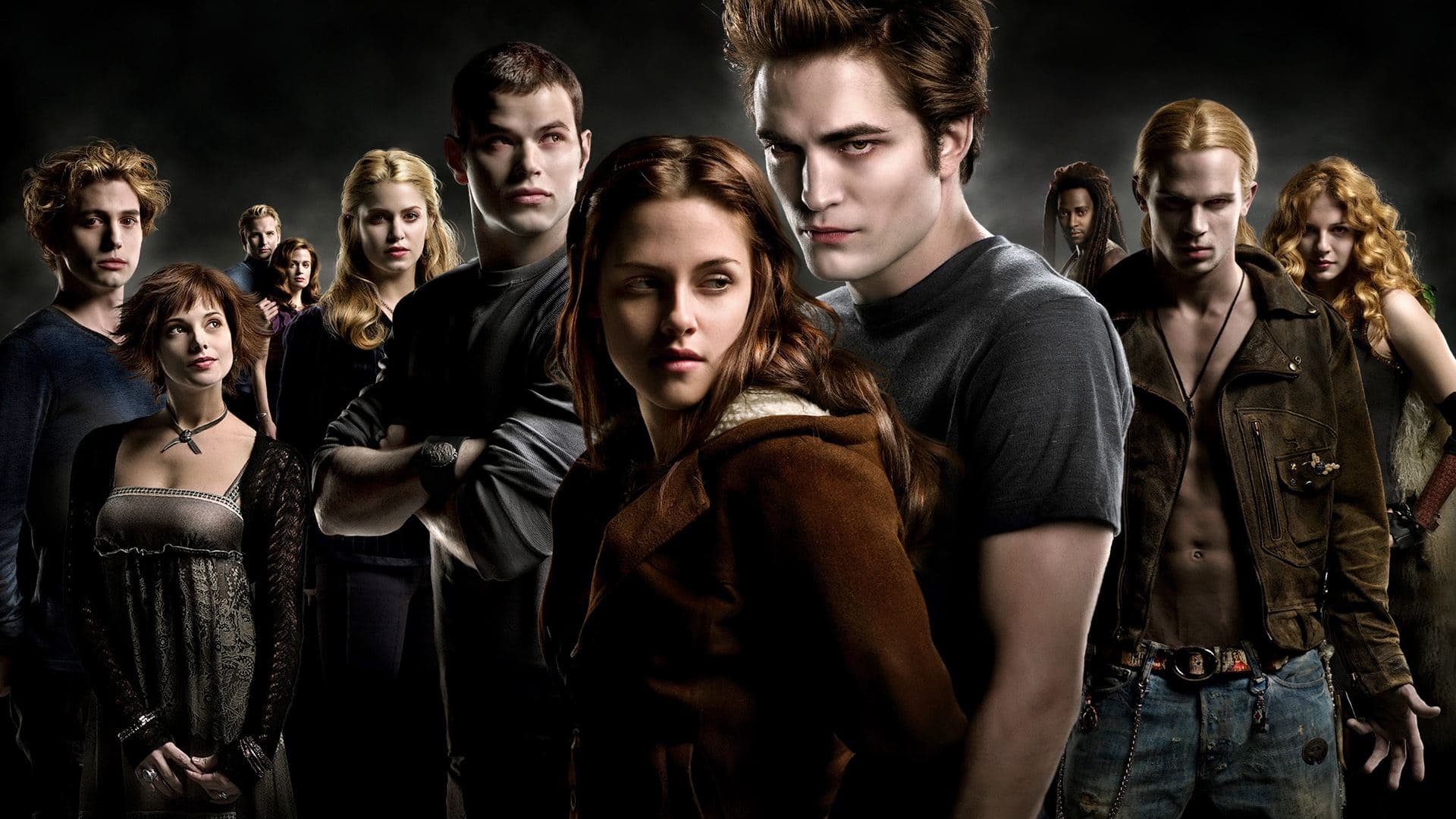
Seventeen-year-old Bella Swan moves from Phoenix to the rainy town of Forks, Washington, to live with her father, the local police chief, and is drawn to Edward Cullen, a classmate who turns out to be a vampire from a family that feeds only on animals. As their romance deepens, a nomadic vampire named James begins hunting Bella, and the Cullens must protect her.
What Is the Budget of Twilight?
Twilight (2008), directed by Catherine Hardwicke and produced and distributed by Summit Entertainment, had a production budget of $37,000,000. That is the figure Summit gave at release, reported by Variety, and the one Box Office Mojo and The Numbers list. The Hollywood Reporter noted the week the film opened that it was believed to have cost $40,000,000 to $50,000,000, against Summit's official $37,000,000; Saturation uses the studio figure. By the standards of a wide studio release the Twilight movie budget was small: previewing the release, Variety described the film as a B-movie made for that sum with no name stars.
The money was Summit's own, and so was the risk. Rob Friedman and Patrick Wachsberger had relaunched Summit as a full studio in 2007 with more than $1,000,000,000 in funding from Merrill Lynch and other investors, and by late 2008 it relied on a $500,000,000 revolving credit facility led by Comerica. Its earlier 2008 releases had been modest: Never Back Down (2008) grossed about $25,000,000 in the United States and the comedy Sex Drive (2008) about $8,000,000, The Hollywood Reporter noted. Hardwicke later told The Hollywood Reporter she was told to expect a gross similar to The Sisterhood of the Traveling Pants, which she put at $29,000,000, "making our budget really tight." Weeks before filming, she told Vanity Fair in 2018, Summit ordered her to cut $4,000,000 from the budget within four days or it would pull the plug.
Key Budget Allocation Categories
Summit never released a line-item budget, but the production record shows where the money went and where it was held back. Variety reported at release that Summit kept costs down by hiring a relatively unknown cast and keeping costly special effects to a minimum.
- Rights and Development: MTV Films, a Paramount division, acquired the novel in April 2004 and commissioned a screenplay from Mark Lord before putting the project into turnaround in January 2006. Summit picked up the rights when Paramount let them lapse and hired Melissa Rosenberg, who finished the shooting script before October 31, 2007, ahead of the Writers Guild of America strike.
- Cast: Summit spent little on stars. Kristen Stewart, 17 when she was cast, was known for Into the Wild (2007), and Robert Pattinson's biggest credit was Cedric Diggory in Harry Potter and the Goblet of Fire (2005).
- Locations: Shooting in Forks, where the novel is set, was "prohibitive," Hardwicke said, so the production was based in and around Portland, Oregon, and re-created Forks there. Kalama High School in Kalama, Washington, and Portland's Madison High School (now Leodis V. McDaniel High School) stood in for Forks High, other scenes were shot in St. Helens, Oregon, and a glass-and-wood house in Portland became the Cullen home.
- Effects and Stunts: To meet Summit's $4,000,000 cut, Hardwicke and her team struck action sequences and effects from the script, and she later named an underwater dream sequence among the scenes she was not able to shoot. The cast did most of their own stunts, and the ballet studio fight between Edward and James, shot in the first week, relied on wire work. The vampires' look came from makeup and contact lenses: gold for the Cullens, black when they are hungry.
- Reshoots: Summit sent Hardwicke back in August 2008 for reshoots in Pasadena, California, including Edward and Bella's first kiss and the reveal of Edward's skin sparkling in sunlight.
- Music: Carter Burwell wrote the score, and music supervisor Alexandra Patsavas assembled a song soundtrack that included Muse and Linkin Park, bands Stephenie Meyer listened to while writing the novels. The album was released by Patsavas's Chop Shop Records with Atlantic Records.
How Does Twilight's Budget Compare to Similar Films?
At $37,000,000, Twilight cost less than any of the films below, and Hardwicke later credited it with proving that movies with a female lead could succeed. Budgets are Box Office Mojo's, and worldwide figures are its original-release grosses, compared with Twilight's original-release total of $392,616,625, so later re-releases do not skew the comparison.
- The Twilight Saga: New Moon (2009): Budget $50,000,000 | Worldwide $709,827,462. Made a year later, the first sequel cost 35% more and grossed 81% more, opening to $142,839,137, more than double Twilight's opening.
- Mamma Mia! (2008): Budget $52,000,000 | Worldwide $610,002,542. Another female-driven hit of 2008 cost $15,000,000 more and took 76.3% of its gross overseas, while Twilight's gross split almost evenly between home and abroad.
- Red Riding Hood (2011): Budget $42,000,000 | Worldwide $90,260,376. Hardwicke's next studio film, a supernatural romance for a similar audience, cost $5,000,000 more and grossed less than a quarter as much, a reminder of how much Twilight owed to Meyer's readership.
- The Hunger Games (2012): Budget $78,000,000 | Worldwide $694,394,724. Lionsgate, which bought Summit that year, spent more than twice as much on its own young adult adaptation and grossed 77% more.
- Divergent (2014): Budget $85,000,000 | Worldwide $288,885,818. A Summit production released by Lionsgate, it cost 2.3 times Twilight's budget and grossed 26% less, a sign that bigger budgets did not guarantee the next young adult franchise.
Twilight Box Office Performance
Twilight opened in Russia and the CIS on November 20, 2008, and in the United States and Canada on November 21, a date Summit moved up from December 12 after Warner Bros. shifted Harry Potter and the Half-Blood Prince (2009) to July 2009. Thursday midnight shows sold $7,000,000 in tickets, and the film took $35,978,348 on its first day and $69,637,740 over its opening weekend from 3,419 theaters, an average of $20,368 per theater. That was the biggest opening ever for a film directed by a woman, passing Deep Impact (1998), and Summit said 75% of the opening audience was female and 45% was over 25. The original domestic run lasted until April 2, 2009, and re-releases in 2010 and from 2018 to 2026 have added to the total. Across all releases Twilight has grossed $195,553,813 in the United States and Canada and $400,829,140 worldwide, based on Box Office Mojo. Box Office Mojo's own total of $405,268,514 also counts 2024 and 2025 New Zealand entries that each repeat the original New Zealand run of $2,159,399; Saturation leaves those two entries, $4,439,374 in all, out of the worldwide figure.
Variety reported two weeks before release that Summit was spending more than $30,000,000 on prints and advertising, which is the figure used below. Because that was a minimum, the total investment is a floor rather than a ceiling.
Box Office Breakdown
Twilight

At an ROI of up to 498%, Twilight earned up to roughly $5.98 for every $1 invested.
The gross overstates what Summit kept, since theaters retain a share of ticket sales, but the margin was wide: before release, Summit co-chairman Rob Friedman told The Hollywood Reporter that even a $20,000,000 opening would put the company at break-even once home video and foreign sales were counted. The gross split almost evenly, with 48.8% from the United States and Canada, and Brazil ($27,353,149), Germany ($23,734,298) and France ($23,534,630) were the largest international markets. The DVD sold more than 3,000,000 units on its first day, March 21, 2009, and The Numbers estimates domestic DVD and Blu-ray sales at $234,894,728.
Summit announced New Moon before the opening weekend was over, and the franchise grew with each film. In their original releases, The Twilight Saga: Eclipse (2010) cost $68,000,000 and grossed $698,491,347, The Twilight Saga: Breaking Dawn Part 1 (2011) cost $110,000,000 and grossed $712,205,856, and The Twilight Saga: Breaking Dawn Part 2 (2012) cost $120,000,000 and grossed $829,746,820. In January 2012 Lionsgate bought Summit, and the series with it, for $412,500,000.
Twilight Production History
In early 2004, Greg Mooradian of Maverick Films read an unpublished manuscript of Stephenie Meyer's novel and took it to MTV Films, which acquired the rights that April. The screenplay MTV commissioned from Mark Lord turned the story into an action film in which Bella Swan was a long-distance runner who fought vampires with a shotgun and rode a jet ski while being chased by the FBI. Meyer later said, "They could have filmed it and not called it Twilight because it had nothing to do with the book." After a change of management, Paramount's new production chief Brad Weston doubted audiences wanted vampire films, and the studio put Twilight into turnaround in January 2006. Former Paramount executive Karen Rosenfelt, who had joined the project as a producer, tried Fox 2000 and Fox Atomic, which both passed, before pitching it to Summit's president of production, Erik Feig, in October 2006. Summit acquired the rights when Paramount's lapsed, agreeing in its contract with Meyer to stay faithful to the novel; she supplied a list of changes the studio could not make, such as giving the vampires fangs.
Feig had met Catherine Hardwicke, the director of Thirteen and Lords of Dogtown (2005), at the 2007 Sundance Film Festival and sent her Lord's draft. She disliked the script, read the novel and signed on, and Melissa Rosenberg wrote a new screenplay with her in the second half of 2007, condensing the book and introducing the villains earlier. Hardwicke wanted Kristen Stewart after seeing her in Into the Wild and screen-tested her while Stewart was shooting Adventureland; Summit announced her casting on November 16, 2007. Robert Pattinson beat Jackson Rathbone, Shiloh Fernandez and Ben Barnes for Edward after an audition at Hardwicke's house in Venice, Los Angeles, and was announced on December 11, 2007. Summit executives, Hardwicke recalled, asked "Can this guy look good?" after he arrived at their first meeting in a dirty shirt and bad hair dye from his last role. Taylor Lautner was cast as Jacob Black after an open casting call, and Kellan Lutz was flown to Oregon for the role of Emmett after the first choice fell through.
Principal photography began on March 7, 2008, mostly in and around Portland, and was completed by May 2. Hardwicke shot much of the film with hand-held cameras, as she had on Thirteen, to make it feel real. The ballet studio fight between Pattinson and Cam Gigandet came in the first week, the actors playing vampires stayed out of the sun to look pale, and Meyer visited the set three times and appears in a brief cameo. Interest built through the summer: about 5,000 fans packed Hall H at San Diego Comic-Con in July 2008 for a panel with Stewart, Pattinson and Hardwicke, and in August Summit sent Hardwicke back to reshoot scenes in Pasadena.
Twilight premiered at the Mann Village Theater in Westwood, Los Angeles, on November 17, 2008. Summit confirmed a New Moon adaptation on November 22, the day after release, but Hardwicke did not return because the sequel's schedule left too little preparation time, and Chris Weitz was hired to direct it in December 2008. Four sequels followed through 2012.
Awards and Recognition
Twilight drew little attention from awards-season voters, but it won heavily at the fan-voted awards of 2009, and its soundtrack reached the Grammys.
- MTV Movie Awards (2009): Won Best Movie, Best Female Performance for Kristen Stewart, Breakthrough Male Performance for Robert Pattinson, Best Kiss for Stewart and Pattinson, and Best Fight for Pattinson and Cam Gigandet. Paramore's "Decode" was nominated for Best Song from a Movie.
- Teen Choice Awards (2009): Won nine awards from 12 nominations, including Choice Movie: Drama.
- Grammy Awards: At the 52nd Grammy Awards, the soundtrack was nominated for Best Compilation Soundtrack Album and "Decode" for Best Song Written for Motion Picture, Television or Other Visual Media.
- Saturn Awards: Nominated for Best Fantasy Film at the 35th Saturn Awards.
- Scream Awards (2009): Won four awards from nine nominations.
- Craft and Industry Awards: Won two ALMA Awards for makeup and hairstyling and the Public Choice Award at the World Soundtrack Awards, where Carter Burwell was also nominated; Hardwicke received a Young Hollywood Award and Christian Serratos a Young Artist Award.
The soundtrack debuted at number one on the Billboard 200 with about 165,000 copies sold in its first week, the first soundtrack to top the chart ahead of its film's release since 8 Mile in 2002, and was certified double platinum in April 2009.
Critical Reception
Reviews were mixed. Twilight holds 48% on Rotten Tomatoes from 223 critics, with an average rating of 5.4/10, against a Popcornmeter audience score of 72%, and a Metacritic score of 56 out of 100 from 38 critics, indicating mixed or average reviews. Audiences polled by CinemaScore gave it an A-. The Rotten Tomatoes consensus reads: "Having lost much of its bite transitioning to the big screen, Twilight will please its devoted fans, but do little for the uninitiated."
Roger Ebert gave it two and a half stars out of four, noting that the audience at his preview screening "was rapt with attention," and called Pattinson well-chosen for Edward. Kenneth Turan of the Los Angeles Times wrote that "Twilight is unabashedly a romance," and Owen Gleiberman of Entertainment Weekly gave it a B, calling it "a cloudburst mood piece filled with stormy skies, rippling hormones, and understated visual effects" and Stewart "the ideal casting choice." Claudia Puig of USA Today gave it two stars out of four, found Meyer's novel "substantially more absorbing than the unintentionally funny and quickly forgettable film," and called Stewart's performance wooden. At the other extreme, Armond White of the New York Press called it "a genuine pop classic," and Manohla Dargis of The New York Times found Pattinson "capable and exotically beautiful."
Perguntas frequentes
How much did it cost to make Twilight (2008)?
Twilight had a production budget of $37,000,000, Summit Entertainment's official figure, reported by Variety and listed by Box Office Mojo and The Numbers. The Hollywood Reporter noted at release that the film was believed to have cost $40,000,000 to $50,000,000.
How much did Twilight (2008) make at the box office?
Twilight has grossed $400,829,140 worldwide across all releases, including $195,553,813 in the United States and Canada, according to Box Office Mojo. It opened to $69,637,740 from 3,419 theaters on November 21, 2008.
Was Twilight (2008) profitable?
Yes. Against a total investment of at least $67,000,000 ($37,000,000 budget plus more than $30,000,000 in prints and advertising), its $400,829,140 worldwide gross leaves a net return of up to about $333,829,140, an ROI of up to roughly 498%. Summit had said even a $20,000,000 opening would let it break even.
Why do sources give different box office totals for Twilight?
The original 2008 to 2009 run grossed $392,616,625, which is why older articles cite about $393,000,000; re-releases since 2010 have added to it. Box Office Mojo's all-release total is $405,268,514, but it includes two New Zealand entries that repeat the original New Zealand run, so Saturation uses $400,829,140. The Numbers lists $403,715,958.
Why did Summit cut the budget of Twilight before filming?
Few expected a hit. Catherine Hardwicke has said she was told to expect a gross similar to The Sisterhood of the Traveling Pants, which she put at $29,000,000. Weeks before filming Summit told her to cut $4,000,000 within four days or it would pull the plug, so she removed action sequences and effects from the script.
How much did Summit spend to market Twilight?
Variety reported two weeks before release that Summit was spending more than $30,000,000 on prints and advertising. The campaign included a cast panel for about 5,000 fans at San Diego Comic-Con, 15 Hot Topic mall events and early clips and trailers on MTV.com and MySpace.
How much did Twilight make on its opening weekend?
Twilight took $69,637,740 from 3,419 theaters over its opening weekend, including $35,978,348 on its first day and about $7,000,000 from Thursday midnight shows. It was the biggest opening ever for a film directed by a woman, passing Deep Impact (1998).
Where was Twilight (2008) filmed?
Twilight was filmed mainly in and around Portland, Oregon, from March 7, 2008. Kalama High School in Kalama, Washington, and Portland's Madison High School stood in for Forks High School, other scenes were shot in St. Helens, Oregon, and reshoots took place in Pasadena, California, in August 2008.
How does Twilight's budget compare to the other Twilight Saga films?
Twilight was the cheapest film in the series at $37,000,000. New Moon (2009) cost $50,000,000 and grossed $709,827,462 in its original release, Eclipse (2010) cost $68,000,000, and the two Breaking Dawn films cost $110,000,000 and $120,000,000, with Part 2 grossing $829,746,820 worldwide in its original release.
Who directed Twilight and why did she not direct New Moon?
Catherine Hardwicke directed Twilight from Melissa Rosenberg's screenplay. She did not return for New Moon because Summit's schedule for the sequel left her too little preparation time, and Chris Weitz was hired to direct it in December 2008.
Filmmakers
Twilight

Official Trailer
Crie orçamentos como este no Saturation
Comece com um modelo de longa-metragem padrão do setor, importe o cronograma e as tarifas que você já tem e deixe o relatório de custos se manter atualizado conforme você gasta. Colaboração em tempo real, sem planilhas.