The Twilight Saga New Moon Budget
 AdventureFantasyDramaRomance2h 11m
Updated
Synopsis
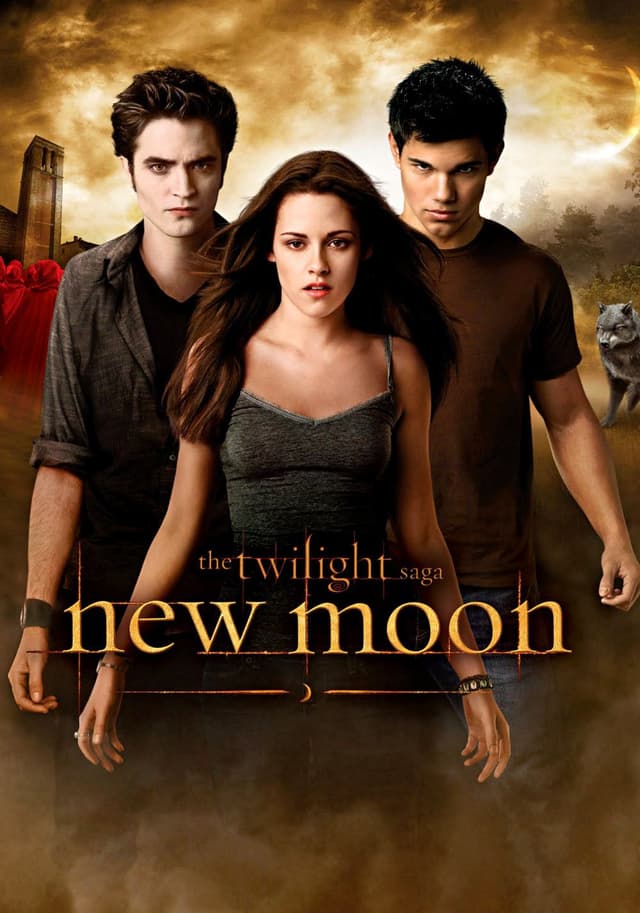
Forks, Washington resident Bella Swan is reeling from the departure of her vampire love, Edward Cullen, and finds comfort in her friendship with Jacob Black, a werewolf. But before she knows it, she's thrust into a centuries-old conflict, and her desire to be with Edward at any cost leads her to take greater and greater risks.
What Is the Budget of The Twilight Saga: New Moon?
The Twilight Saga: New Moon was produced on a budget of $50 million, a modest increase from the first Twilight film's $37 million. Despite the sequel's larger scope, including international location shoots and extensive visual effects for the werewolf transformations, Summit Entertainment kept spending disciplined. The studio had learned from the original film's outsized returns that the franchise's appeal rested on its cast and source material, not spectacle budgets.
Director Chris Weitz, who replaced Catherine Hardwicke after the first installment, brought a more polished visual sensibility while working within the financial constraints Summit imposed. The $50 million figure placed New Moon well below the typical blockbuster threshold, yet the film's marketing campaign and built-in fanbase ensured it would open as one of the biggest releases of 2009.
Key Budget Allocation Categories
- Cast Salaries: Kristen Stewart, Robert Pattinson, and Taylor Lautner all received significant raises from their original contracts, with Lautner's pay increasing substantially after his breakout role became central to the sequel's plot
- Visual Effects: Tippett Studio handled the complex werewolf transformation sequences, creating photo-realistic CGI wolves that needed to convey emotion and interact convincingly with live-action performers
- Location Filming: Production shot extensively in Vancouver, British Columbia as a stand-in for Forks, Washington, while the Volturi sequences required a unit in Montepulciano, Italy, adding travel and logistics costs
- Production Design: David Brisbin's team built the Volturi's underground lair and expanded the Cullen residence, creating elaborate sets that reflected the darker tone Chris Weitz brought to the sequel
- Score and Music: Alexandre Desplat composed the original score, while the soundtrack featured artists like Death Cab for Cutie, Thom Yorke, and Muse, with licensing fees contributing to the music budget
- Stunts and Action Choreography: The fight sequences in the Volturi throne room and the cliff-diving scenes required specialized stunt coordination, wire work, and safety equipment
How Does New Moon's Budget Compare to Similar Films?
New Moon's $50 million budget was remarkably lean for a franchise sequel with global box office expectations. Comparing it to other young adult adaptations and sequels from the same era reveals how efficiently Summit operated.
- Twilight (2008): Budget $37M | Worldwide $407M. The original film proved the franchise could deliver massive returns on modest investment, setting the template for New Moon's financial strategy
- The Twilight Saga: Eclipse (2010): Budget $68M | Worldwide $698M. The third installment received a budget increase to accommodate larger battle sequences, though Summit still kept costs well below typical blockbuster levels
- Harry Potter and the Half-Blood Prince (2009): Budget $250M | Worldwide $934M. Warner Bros. spent five times more on its comparable franchise entry, illustrating the gap between major studio and independent studio spending on YA adaptations
- The Hunger Games (2012): Budget $78M | Worldwide $694M. Lionsgate's franchise starter spent more than New Moon but delivered similar worldwide returns, suggesting Summit extracted superior efficiency from its investment
- Divergent (2014): Budget $85M | Worldwide $288M. A later YA adaptation that spent 70% more than New Moon yet earned less than half at the worldwide box office, highlighting how franchise loyalty outweighs production spending
The Twilight Saga: New Moon Box Office Performance
New Moon opened on November 20, 2009, to a staggering $142.8 million domestic opening weekend, which was the third-highest opening weekend in history at the time, trailing only The Dark Knight and Spider-Man 3. The film set a new record for the biggest midnight opening with $26.3 million from Thursday night screenings alone.
Domestically, New Moon earned $296,623,634, while international markets contributed an additional $413 million, bringing the worldwide total to $709,827,462. The film performed especially well in the United Kingdom, Germany, Brazil, and Australia, where the Twilight franchise had cultivated a passionate following.
Using the standard break-even estimate of roughly 2x the production budget to account for prints and advertising costs, New Moon needed approximately $100 million to reach profitability. The film cleared that threshold on its opening day. The return on investment was extraordinary: ($709.8M - $50M) / $50M x 100 = 1,319% ROI. Even accounting for Summit's marketing expenditure, estimated at $50 to $60 million, New Moon stands as one of the most profitable films of the decade relative to its production cost.
Box Office Breakdown
The Twilight Saga New Moon

The Twilight Saga: New Moon Production History
Summit Entertainment moved quickly to capitalize on Twilight's success, announcing the sequel in November 2008 before the first film had even completed its theatrical run. The studio's most consequential early decision was replacing director Catherine Hardwicke with Chris Weitz. Hardwicke had delivered the original on a tight budget and schedule, but creative differences with Summit over the sequel's direction led to her departure. Weitz, known for The Golden Compass and About a Boy, was announced as her replacement in December 2008.
The casting of Taylor Lautner became a defining storyline of the production. Stephenie Meyer's novel shifts focus from Edward Cullen to Jacob Black, requiring Lautner to carry much of the film. Summit reportedly considered recasting the role with an older, more physically imposing actor, but Lautner convinced the studio to keep him by gaining 30 pounds of muscle in the months between productions. His transformation became a major marketing narrative and cemented his status as a leading man.
Principal photography began on March 23, 2009, in Vancouver and wrapped in late May, an aggressive schedule driven by Summit's target release date of November 20, 2009. The Italian sequences were filmed on location in Montepulciano, Tuscany, where the production took over the town's central piazza for the climactic St. Marcus Day festival scene. Local residents served as extras, and the shoot drew international media attention.
Post-production was equally compressed. Tippett Studio, the Berkeley-based visual effects house founded by Phil Tippett, was tasked with creating the werewolf transformations. The studio developed a pipeline that allowed the CGI wolves to convey nuanced facial expressions, a technical challenge given the short timeline. Weitz pushed for a more cinematic visual style than the first film, working with cinematographer Javier Aguirresarobe to create a cooler, more desaturated palette that reflected Bella's emotional state after Edward's departure.
Awards and Recognition
New Moon's awards trajectory reflected the critical divide between the franchise's massive audience and the broader film establishment. The film received seven Golden Raspberry (Razzie) nominations, including Worst Picture, Worst Director for Chris Weitz, and Worst Screenplay. It took home the Razzie for Worst Screenplay.
On the fan-driven circuit, the film dominated. New Moon won five MTV Movie Awards, including Best Movie, Best Female Performance for Kristen Stewart, Best Male Performance for Robert Pattinson, and Best Kiss for Stewart and Pattinson. Taylor Lautner won the Breakthrough Male award at the Teen Choice Awards, which also gave the film multiple other honors. The People's Choice Awards recognized it as Favorite Movie and Favorite Drama.
The film's soundtrack earned recognition separate from the movie itself, with the compilation album debuting at number two on the Billboard 200 and earning praise for its curated selection of indie and alternative artists.
Critical Reception
Critics were largely dismissive of New Moon, which holds a 28% approval rating on Rotten Tomatoes based on 247 reviews, with a consensus noting that the film "offers more of what made the first film a hit but not enough to win over non-fans." The audience score, by contrast, sat at 62%, reflecting the gap between critical and popular opinion.
Roger Ebert gave the film two stars, writing that it "takes the tepid Twilight formula and dilutes it." A.O. Scott of The New York Times was more generous, noting Weitz's "visual sophistication" while acknowledging the film's pacing problems during its extended second act. Several critics praised the Volturi sequences, particularly Michael Sheen's campy performance as Aro, as the film's most engaging stretch.
The disconnect between critical reception and commercial performance became a recurring theme in Twilight coverage. New Moon demonstrated that franchise loyalty, particularly among young female audiences who were often underserved by Hollywood's blockbuster slate, could sustain massive box office returns regardless of review scores. The film's cultural impact extended beyond its grosses, helping establish the YA adaptation as a dominant Hollywood genre throughout the 2010s.
Frequently Asked Questions
How much did The Twilight Saga: New Moon cost to make?
The production budget was $50,000,000, more than 50% larger than the $37,000,000 spent on Twilight (2008). Summit Entertainment financed and distributed the sequel after the original's breakout success enabled significantly expanded scope.
How much did New Moon earn at the box office?
New Moon grossed $296,600,000 domestically and $415,000,000 internationally, for a worldwide total of approximately $711,600,000. It opened to $142,800,000 on November 20, 2009, the third-largest domestic opening weekend at the time after The Dark Knight (2008) and Spider-Man 3 (2007).
Who stars in New Moon?
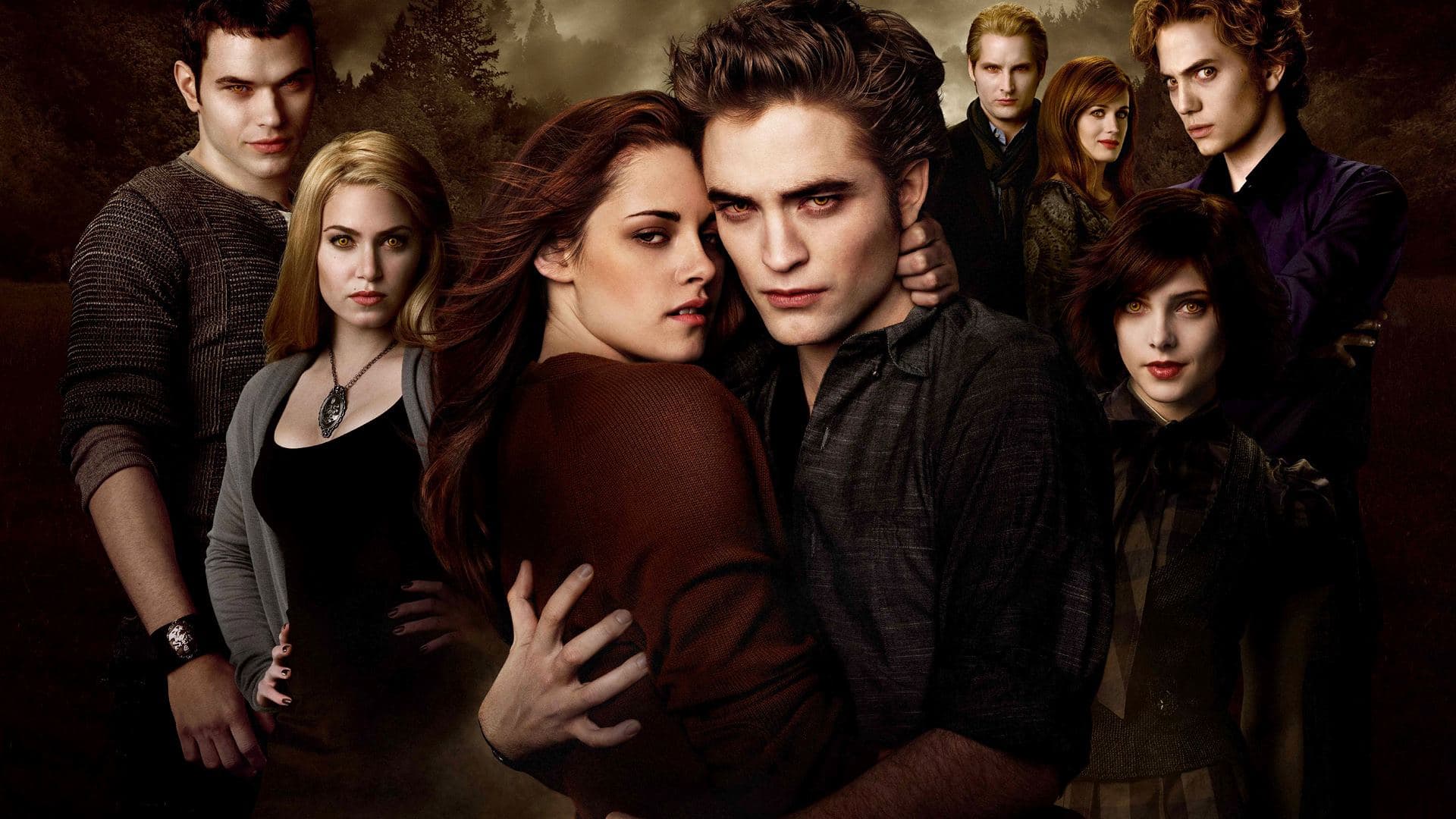
Kristen Stewart returns as Bella Swan and Robert Pattinson as Edward Cullen, alongside Taylor Lautner in his expanded role as Jacob Black. Supporting cast includes Ashley Greene, Peter Facinelli, Anna Kendrick, and Michael Sheen as Aro of the Volturi.
Who directed New Moon?
Chris Weitz directed the film, replacing Catherine Hardwicke from the original. Weitz had previously directed American Pie (1999) with brother Paul Weitz and About a Boy (2002). New Moon was his first major franchise assignment as a solo director.
Is New Moon based on a book?
Yes. The film adapts Stephenie Meyer's 2006 novel New Moon, the second book in the Twilight Saga series. Meyer remained closely involved as an executive producer across all five Twilight Saga adaptations.
Where was New Moon filmed?
Principal photography took place in Vancouver, British Columbia, with additional sequences shot in Volterra, Italy, doubling for the Volturi compound. British Columbia's Film Incentive BC tax credit and the dollar-cost benefit of Canadian production made the budget escalation viable.
What did critics think of New Moon?
Reviews were largely negative, with a 28% approval rating on Rotten Tomatoes and a 44 out of 100 score on Metacritic. Audiences gave the film an A- CinemaScore. Critics objected to the romantic-melodrama tone, while the audience-critic split confirmed the franchise's reliance on its built-in fan base.
Did New Moon win any awards?
The film won five MTV Movie Awards, including Movie of the Year, Best Male Performance for Robert Pattinson, and Best Kiss for Stewart and Pattinson. It received seven Razzie nominations and won Worst Actress for Kristen Stewart.
Was New Moon profitable?
Yes. Against a $50,000,000 production budget and an estimated $50,000,000 to $60,000,000 in marketing spend, the worldwide gross of $711,600,000 produced an enormous theatrical profit. The result cemented Summit Entertainment's independent-studio status before its 2012 acquisition by Lionsgate.
How does New Moon compare to other Twilight Saga films?
New Moon outgrossed Twilight (2008, $37,000,000 budget, $407,000,000 worldwide) and was followed by Eclipse (2010, $68,000,000 budget, $698,500,000 worldwide), Breaking Dawn: Part 1 (2011, $110,000,000 budget, $712,200,000 worldwide), and Breaking Dawn: Part 2 (2012, $120,000,000 budget, $848,200,000 worldwide). The five-film series grossed over $3,400,000,000 worldwide on aggregate budgets of $385,000,000.
Official Trailer
Build budgets like this one in Saturation
Start from an industry-standard feature film template, import the schedule and rates you already have, and let the cost report keep itself current as you spend. Real-time collaboration, no spreadsheets.