The Green Mile Budget
 FantasyDramaCrime3h 9m
Updated
Synopsis
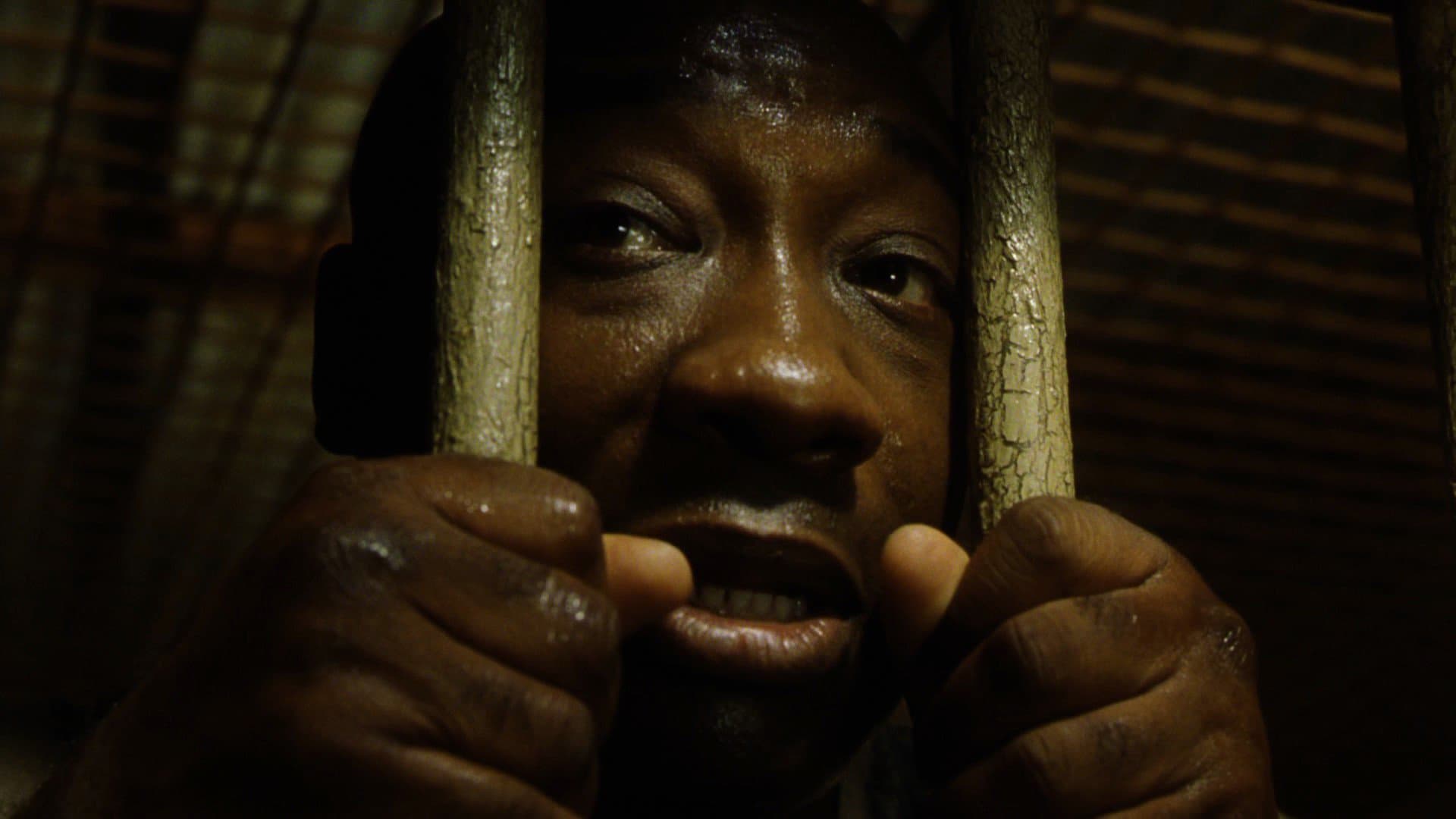
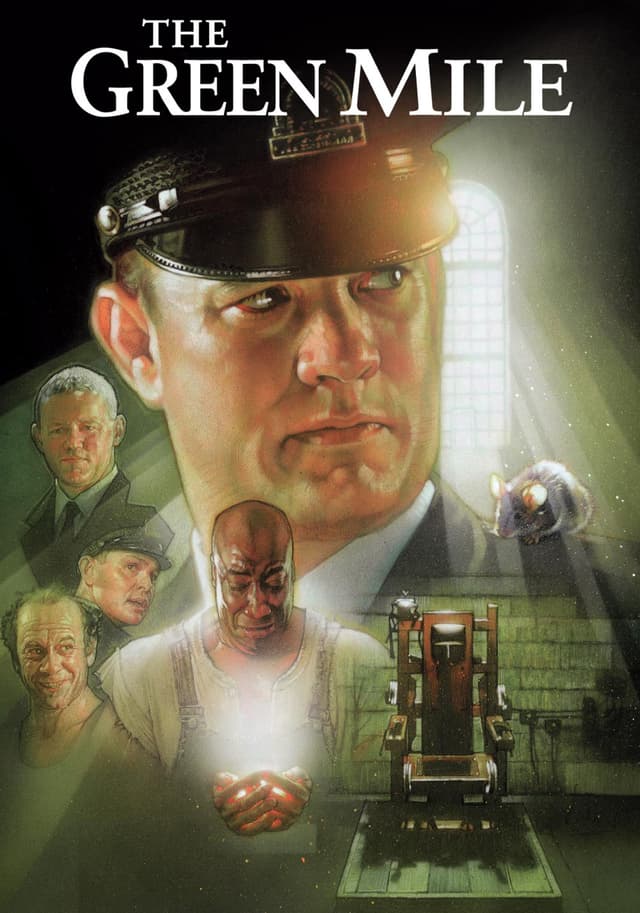
"The Green Mile" is a poignant drama set in the 1930s that follows the life of Paul Edgecomb, a death row prison guard at Cold Mountain Penitentiary. The story unfolds as Paul encounters John Coffey, a gentle giant with a mysterious past, who possesses extraordinary healing powers. As Paul and his fellow guards navigate the harsh realities of their jobs, they begin to uncover the truth about Coffey's wrongful conviction for the murder of two young girls. The film explores themes of compassion, justice, and the moral dilemmas faced by those who hold the power of life and death. Through a blend of supernatural elements and deep emotional storytelling, "The Green Mile" challenges viewers to reflect on the nature of humanity and the impact of kindness in a world often overshadowed by cruelty.
What is the budget of The Green Mile?
"The Green Mile," a fantasy released in 1999, was directed by Frank Darabont and stars Tom Hanks, David Morse. The production budget was $60,000,000, placing it in the high-budget range for fantasy productions of the 1990s.
Key Budget Allocation Categories
While specific budget breakdowns are not publicly available, typical cost drivers for a fantasy production like this include:
- Visual Effects & Creature Design: Fantasy productions require extensive VFX for magical elements, mythical creatures, and fantastical battle sequences.
- Costumes, Prosthetic Makeup & Production Design: Period-inspired or wholly original costumes, elaborate prosthetic and makeup applications, and richly detailed set construction are hallmarks of fantasy filmmaking.
- Music Score & Sound Design: Fantasy epics typically commission full orchestral scores recorded with 80 to 100 piece ensembles, plus extensive sound design for magical effects, creature vocalizations, and immersive world audio.
- Development: Frank Darabont adapted Stephen King's novel, The Green Mile, into a screenplay in under eight weeks.
What were the major cost factors in The Green Mile?
Several factors contributed to the overall production costs of "The Green Mile."
- Visual Effects: Visual Effects & Creature Design is one of the primary cost drivers in fantasy productions of this scale.
- Costumes: Costumes, Prosthetic Makeup & Production Design is one of the primary cost drivers in fantasy productions of this scale.
- Music Score: Music Score & Sound Design is one of the primary cost drivers in fantasy productions of this scale.
How Does The Green Mile's Budget Compare to Similar Films?
At $60,000,000, The Green Mile sits in the high-budget range. Here is how it compares to productions with a similar budget:
- 15 Minutes (2001): Budget $60,000,000, Worldwide Gross $56,359,980
- Almost Famous (2000): Budget $60,000,000, Worldwide Gross $47,386,287
- Analyze That (2002): Budget $60,000,000, Worldwide Gross $55,003,135
- Antz (1998): Budget $60,000,000, Worldwide Gross $171,757,863
- Cats & Dogs (2001): Budget $60,000,000, Worldwide Gross $200,687,492
The median budget for wide-release fantasy films in the era ranges from $30 to 80M for mid-budget to $150M+ for tentpoles.
The Green Mile Box Office Performance
"The Green Mile" earned $136,801,374 domestically and $286,801,374 worldwide at the box office. Against a production budget of $60,000,000, the film performed strongly at the box office.
A film typically needs to earn approximately twice its production budget to cover marketing and distribution costs. For "The Green Mile," that break-even threshold was roughly $120,000,000. With worldwide earnings of $286,801,374, the film cleared that threshold comfortably.
Box Office Breakdown
The Green Mile

At 378%, "The Green Mile" earned roughly $4.78 for every $1 invested in production.
The Green Mile Production History
Frank Darabont adapted Stephen King's novel, The Green Mile, into a screenplay in under eight weeks. The film was shot at Warner Hollywood Studios, West Hollywood, California; and on location in Shelbyville, Tennessee; Blowing Rock, North Carolina; and the old Tennessee State Prison. The interior sets were custom built by production designer Terence Marsh.
Tom Hanks and Darabont met at an Academy Award luncheon in 1994. Stephen King stated he envisioned Hanks in the role and was happy when Darabont mentioned his name. Because of this, Dabbs Greer was hired to play the older Edgecomb in his final film role.
The official film soundtrack, Music from the Motion Picture The Green Mile, was released on December 19, 1999, by Warner Sunset Records. It contains 37 tracks, primarily instrumental tracks from the film score composed and conducted by Thomas Newman. It also contains four vocal tracks: "Cheek to Cheek" by Fred Astaire, "I Can't Give You Anything but Love, Baby" by Billie Holiday, "Did You Ever See a Dream Walking?" by Gene Austin, and "Charmaine" by Guy Lombardo and His Royal Canadians..
Awards and Recognition
Nominated for 4 Oscars. 15 wins & 37 nominations total
Critical Reception
On Rotten Tomatoes The Green Mile holds an approval rating of 79% based on 136 reviews with an average rating of 6.80/10. The website's critics consensus states, "Though The Green Mile is long, critics say it's an absorbing, emotionally powerful experience." At Metacritic the film has a weighted average score of 61 out of 100, based on 36 critics, indicating "generally favorable reviews". Audiences polled by CinemaScore gave the film an average grade of "A" on an A+ to F scale.
Frequently Asked Questions
How much did it cost to make The Green Mile (1999)?
The production budget was $60,000,000, covering principal photography, visual effects, cast and crew salaries, locations, sets, post-production, and music. Marketing and distribution (P&A) costs are estimated at an additional $30,000,000 - $48,000,000, bringing the total studio investment to approximately $90,000,000 - $108,000,000.
How much did The Green Mile (1999) earn at the box office?
The Green Mile grossed $136,801,374 domestic, $150,000,000 international, totaling $286,801,374 worldwide.
Was The Green Mile (1999) profitable?
Yes. Against a production budget of $60,000,000 and estimated total costs of ~$150,000,000, the film earned $286,801,374 theatrically - a 378% ROI on production costs alone.
What were the biggest costs in producing The Green Mile?
The primary cost drivers were above-the-line talent (Tom Hanks, David Morse, Bonnie Hunt); VFX creature work, elaborate costume and prosthetic design, and orchestral scoring.
How does The Green Mile's budget compare to similar fantasy films?
At $60,000,000, The Green Mile is classified as a mid-budget production. The median budget for wide-release fantasy films in the era ranges from $30 - 80M for mid-budget to $150M+ for tentpoles. Comparable budgets: 15 Minutes (2001, $60,000,000); Almost Famous (2000, $60,000,000); Analyze That (2002, $60,000,000).
Did The Green Mile (1999) go over budget?
There are no widely reported accounts of significant budget overruns for this production. However, studios rarely disclose precise budget overrun figures publicly. The reported production budget reflects the final estimated cost.
What was the return on investment (ROI) for The Green Mile?
The theatrical ROI was 378.0%, calculated as ($286,801,374 − $60,000,000) ÷ $60,000,000 × 100. This measures gross revenue against production budget only - it does not account for P&A or exhibitor shares.
What awards did The Green Mile (1999) win?
Nominated for 4 Oscars. 15 wins & 37 nominations total.
Who directed The Green Mile and who were the key crew members?
Directed by Frank Darabont, written by Frank Darabont, shot by David Tattersall, with music by Thomas Newman, edited by Richard Francis-Bruce.
Where was The Green Mile filmed?
The Green Mile was filmed in United States of America.
Filmmakers
The Green Mile

Official Trailer
Build budgets like this one in Saturation
Start from an industry-standard feature film template, import the schedule and rates you already have, and let the cost report keep itself current as you spend. Real-time collaboration, no spreadsheets.