Wendell & Wild Budget
 AnimationComedyFantasyAdventureHorror1h 45m
Updated
Synopsis
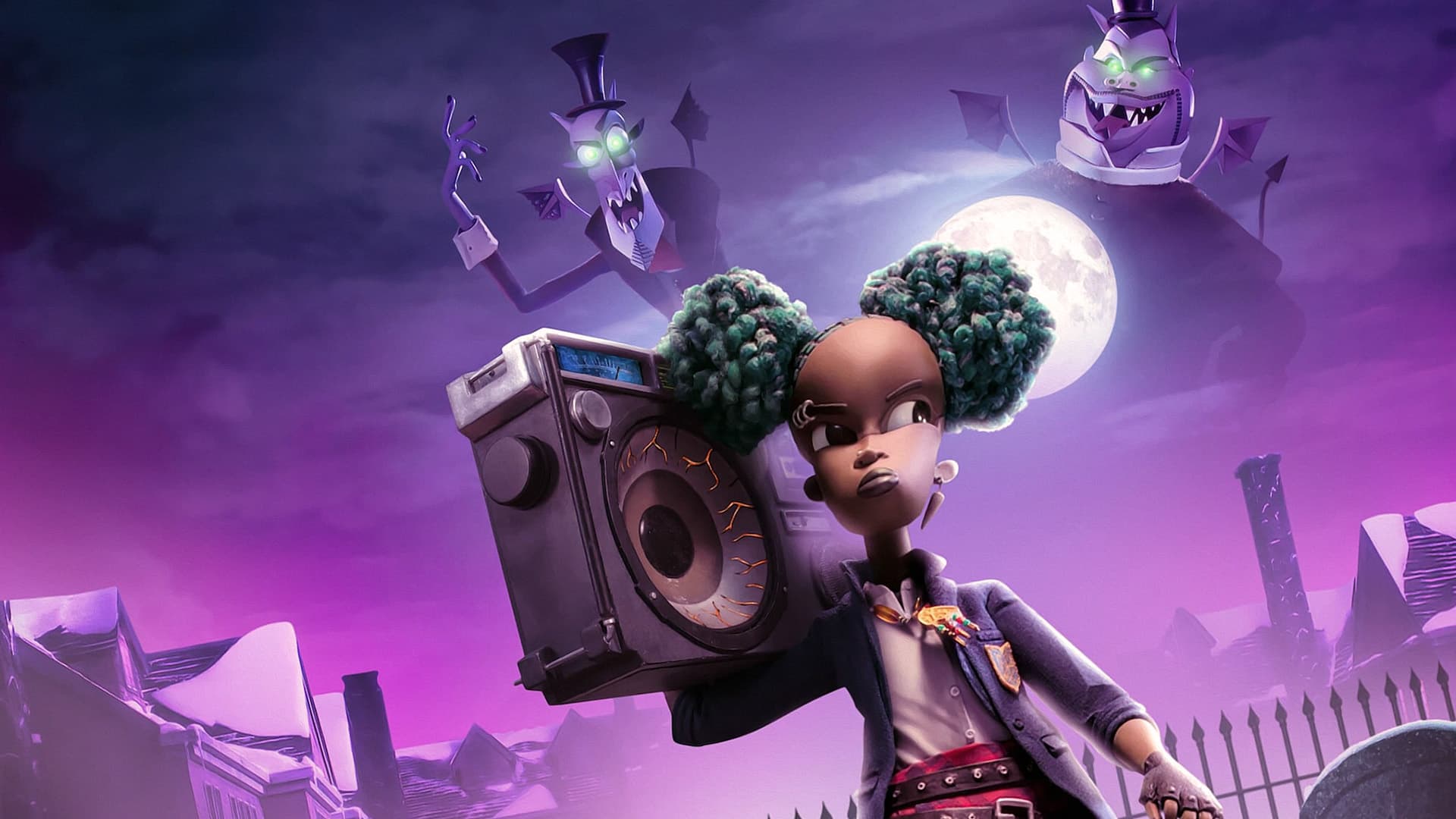
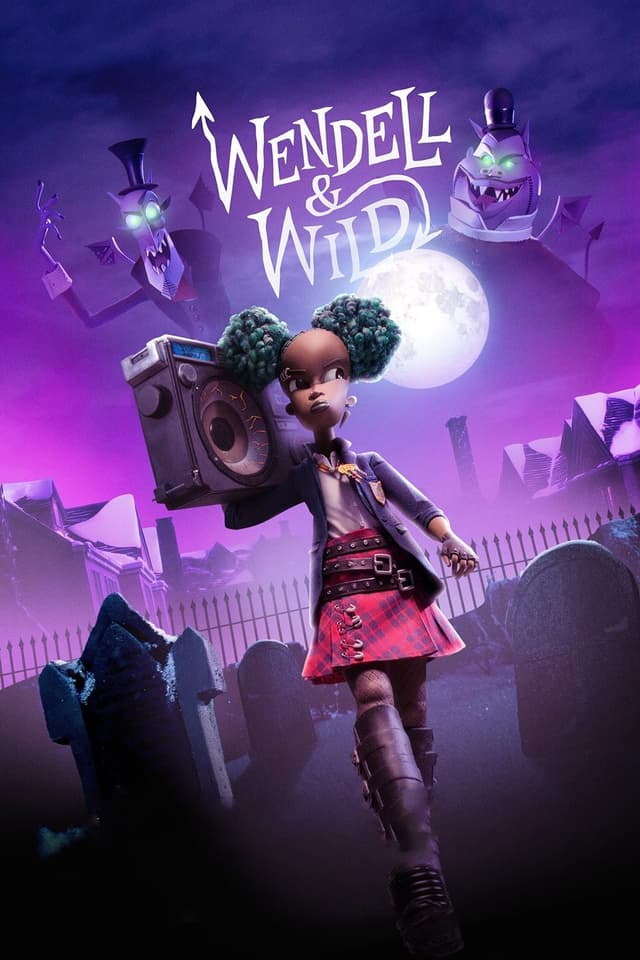
Demon brothers Wendell and Wild enlist the help of Kat Elliot, a tough thirteen-year-old orphan who carries the supernatural Hellmaiden ability, to summon them from the Underworld into the world of the living. In return, the brothers promise to resurrect Kat's deceased parents using their father's magical Soul Jar, only to find themselves caught in a tangle of small-town corruption, private-prison schemes, and her unresolved grief. Henry Selick's stop-motion gothic comedy, co-written and co-produced with Jordan Peele, was Selick's first feature since Coraline (2009).
What Is the Budget of Wendell & Wild (2022)?
Wendell & Wild (2022), directed by Henry Selick and co-written with Jordan Peele, was produced on a reported budget of approximately $60,000,000. The figure has circulated in industry trade coverage but was never officially confirmed by Netflix, which financed and distributed the film through its in-house animation division. As a streaming-original production, Wendell & Wild was not required to file Motion Picture Association cost reports, and Netflix has consistently declined to break out per-title spending on its animated slate.
The figure places the film squarely in the upper-mid range for stop-motion features, which are among the most labor-intensive forms of filmmaking in cinema. Stop-motion features routinely cost $60 million to $100 million because every frame is sculpted, posed, and shot one image at a time across multi-year shoots. Wendell & Wild was Selick's first stop-motion feature since Coraline (2009), and the thirteen-year gap between productions reflected both the difficulty of financing the format and the cost of assembling a craft team capable of executing it at feature scale.
Key Budget Allocation Categories
The reported $60 million budget broke down across the labor-intensive cost lines that define modern stop-motion production:
- Stop-Motion Animation Crew: The largest single cost line on any stop-motion feature, covering animators, riggers, and lead technicians working at roughly four to seven seconds of finished animation per animator per week. Wendell & Wild employed a Portland-based animation team across multi-year principal photography, with skilled stop-motion animators commanding union day rates that compound rapidly across a 3,000-shot feature.
- Puppet Fabrication and Character Design: Pablo Lobato's character designs were translated into physical puppets featuring intricate articulation, hand-painted faces, and 3D-printed replacement mouth pieces for dialogue. Hero puppets for the demon brothers Wendell and Wild required complex armatures, multiple wardrobe duplicates, and dedicated puppet wranglers. The puppet department alone typically represents 12 to 18 percent of a stop-motion budget.
- Set Construction and Practical Effects: Miniature set construction for the Underworld carnival of Buffalo Belzer, the Rust Bank Catholic school, and dozens of additional environments. Practical effects for fire, smoke, and supernatural transformations were combined with rear-projection plates and selective digital cleanup rather than full CG replacement, in keeping with Selick's tactile aesthetic.
- Above-the-Line Voice Cast and Filmmakers: Voice talent fees for Keegan-Michael Key, Jordan Peele, Lyric Ross, Angela Bassett, James Hong, and Ving Rhames, plus director and producer fees for Henry Selick (also co-writer), Jordan Peele (via Monkeypaw Productions), and Ellen Goldsmith-Vein (Gotham Group). Voice recording sessions in Los Angeles ran sporadically across the multi-year shoot as animation reels were locked.
- Post-Production, Compositing, and Music: Editorial under Mandy Hutchings and Jason Hooper, digital compositing to integrate practical photography with selective CG elements, sound design, and an original score composed by Bruno Coulais, Selick's frequent collaborator dating back to Coraline. Music licensing for the soundtrack's curated mix of Afro-punk and gothic tracks added an additional rights line.
- Studio Overhead and Multi-Year Production Timeline: Stop-motion shoots run for two to three years of principal photography on average, requiring sustained studio rent, equipment leases, insurance, and overhead in Portland, Oregon throughout the production. The COVID-19 pandemic extended the timeline further, requiring revised on-set safety protocols, reduced crew densities, and additional schedule contingency that absorbed budget over and above the original plan.
- Netflix Marketing and Streaming Launch: Marketing was handled in-house by Netflix and is not separately disclosed for streaming originals. The campaign included a Toronto International Film Festival premiere, a limited theatrical qualifying run on October 21, 2022, a digital marketing push timed to the Halloween 2022 streaming launch, and tie-in editorial coverage through the Netflix Tudum platform.
How Does Wendell & Wild's Budget Compare to Similar Films?
Compared against other Henry Selick projects, modern stop-motion features, and Jordan Peele's live-action work, Wendell & Wild sits in a clear mid-budget animation tier:
- Coraline (2009): Budget $60,000,000 | Worldwide $124,600,000. Selick's previous stop-motion feature for Laika cost the same nominal amount as Wendell & Wild and remains the benchmark for the format. Coraline's theatrical success demonstrated that adult-pitched stop-motion could find a mainstream audience, a precedent Netflix invoked when greenlighting Wendell & Wild thirteen years later.
- The Nightmare Before Christmas (1993): Budget $24,000,000 | Worldwide $91,500,000. Selick's debut feature, produced by Tim Burton and released by Touchstone, cost less than half of Wendell & Wild in nominal dollars and far less than that adjusted for inflation and the much smaller scale of mid-1990s stop-motion productions. It remains the template for Selick's blend of macabre and family-friendly tones.
- James and the Giant Peach (1996): Budget $38,000,000 | Worldwide $28,900,000. Selick directed this stop-motion and live-action hybrid for Disney, blending Roald Dahl source material with practical effects. It underperformed theatrically but established Selick as the leading stop-motion auteur of his era.
- Kubo and the Two Strings (2016): Budget $60,000,000 | Worldwide $77,500,000. Laika's stop-motion epic shared Wendell & Wild's nominal budget and similarly ambitious craft scope. Kubo's underwhelming theatrical return helped explain why Netflix, rather than a theatrical distributor, ended up financing Wendell & Wild for streaming.
- ParaNorman (2012): Budget $60,000,000 | Worldwide $107,100,000. Laika's gothic-leaning stop-motion film shared the same nominal budget and a kindred horror-comedy sensibility. ParaNorman's modest theatrical profit reinforced the format's commercial ceiling at the multiplex and the streaming case for Selick's project.
- My Life as a Zucchini (2016): Budget $8,000,000 | Worldwide $7,000,000. The Swiss-French stop-motion feature illustrates the lower end of the format, achieving festival acclaim and an Academy Award nomination at roughly one-eighth of Wendell & Wild's scale. The contrast highlights how studio-financed stop-motion at $60 million is a fundamentally different undertaking from indie stop-motion.
- Get Out (2017): Budget $4,500,000 | Worldwide $255,500,000. Jordan Peele's directorial debut cost a fraction of Wendell & Wild but established the producer's voice for socially-aware horror, which directly shaped his contributions to the Wendell & Wild screenplay and Monkeypaw Productions' involvement as a producing partner.
- Nope (2022): Budget $68,000,000 | Worldwide $171,200,000. Peele's third feature as director released the same year as Wendell & Wild and at a comparable budget level, showing the producer's reach across formats from live-action genre tentpoles to stop-motion family horror.
Wendell & Wild Box Office Performance
Wendell & Wild was a Netflix original. The film received a limited theatrical qualifying run beginning October 21, 2022, in select North American theaters, followed by its global streaming launch on Netflix on October 28, 2022. Netflix does not report grosses from its short qualifying windows, and Box Office Mojo and The Numbers do not list any reported theatrical revenue. As is standard for Netflix originals, the film's commercial performance was measured internally through viewership metrics rather than ticket sales.
The financial breakdown reflects the streaming-only release model:
Box Office Breakdown
Wendell & Wild

Without a public theatrical gross, traditional return-on-investment math does not apply. Netflix valued Wendell & Wild for its appeal to Halloween-season family-horror viewers, its prestige craft profile, and the long tail of catalog value typical of animated features that find repeat audiences across seasons.
In the weeks after release, Netflix reported the film among its top-streamed originals in late October and November 2022, and the title featured prominently in the platform's Halloween 2022 marketing window. The streaming revenue outlook for the film, in the form of recurring autumn viewing and international subscriber value, is the primary measure of commercial performance rather than a one-time theatrical window.
Wendell & Wild Production History
Wendell & Wild had a thirteen-year development journey. Henry Selick first conceived the project as an unpublished young-adult novel co-created with author Clay McLeod Chapman in the late 2000s, originally pitching it to Disney shortly after Coraline (2009) became one of the best-reviewed stop-motion features of its decade. Disney passed, and the project entered a long period of dormancy while Selick worked unsuccessfully on a different stop-motion feature at Pixar before that production was shelved in 2012.
Development resumed in November 2015 when Keegan-Michael Key and Jordan Peele, then concluding their Comedy Central sketch series, attached to voice the demon brothers and committed to rewriting the screenplay with Selick. Peele's involvement deepened beyond voice acting: after the breakout success of Get Out in 2017, his Monkeypaw Productions company joined as a producing partner alongside Selick's team and Ellen Goldsmith-Vein's Gotham Group, bringing Peele's perspective on social horror and Black identity to the screenplay's portrait of Kat Elliot, the orphaned thirteen-year-old protagonist.
Netflix acquired distribution and financing rights in March 2018, ending the project's lengthy search for a backer and committing to the stop-motion format at a scale Disney had declined to fund nearly a decade earlier. Pre-production scaled up through 2018 and 2019 with Pablo Lobato designing the demon brothers and lead characters in a distinctive flat, graphic style derived from his illustration work. The production established its base in Portland, Oregon, drawing on the city's well-developed stop-motion craft community and the technical infrastructure built up by Laika and HouseSpecial.
Principal photography ran across roughly two years in Portland, overlapping substantially with the COVID-19 pandemic. The shoot accommodated reduced crew densities, enhanced ventilation, and revised safety protocols that extended the schedule and absorbed contingency budget. Cinematographer Peter Sorg shot the stages, and editors Mandy Hutchings and Jason Hooper assembled the picture as animated reels arrived. Bruno Coulais, who had scored Coraline, returned to compose, and the soundtrack incorporated curated Afro-punk and gothic music selections by Peele. The completed film premiered in the Special Presentations section of the Toronto International Film Festival on September 11, 2022, ahead of its Netflix launch on October 28, 2022.
Awards and Recognition
Wendell & Wild received significant recognition in the animation community despite its streaming-only release. The film earned three nominations at the 50th Annie Awards on February 25, 2023, the animation industry's highest honor: Best Animated Feature, Outstanding Achievement for Character Design (Pablo Lobato), and Outstanding Achievement for Directing in an Animated Feature (Henry Selick). The directing nomination marked Selick's return to the Annie Awards spotlight for the first time since Coraline.
The film won Best Animated Feature at the African American Film Critics Association awards in March 2023, recognition that highlighted the screenplay's centering of a Black teenage protagonist within a genre that has historically marginalized such perspectives. Additional honors came from the Black Reel Awards and the NAACP Image Awards, where the film was nominated in animation categories, and from multiple year-end critic top-ten lists that placed it among the best animated features of 2022 alongside Pinocchio: Guillermo del Toro and Marcel the Shell with Shoes On.
The film premiered as a Special Presentation at the Toronto International Film Festival on September 11, 2022, which served as its primary festival platform. Industry coverage highlighted both Selick's return to stop-motion after thirteen years and Peele's expansion from live-action horror into producing animation, framing the film as a notable convergence of two distinctive genre voices.
Critical Reception
Wendell & Wild received broadly favorable reviews from critics, though notes about narrative density were consistent across positive and mixed notices. The film holds an 80% approval rating on Rotten Tomatoes based on 123 reviews, with the critical consensus calling it a spooky treat for budding horror fans that boasts visual marvels to match its ambitious and inclusive story. On Metacritic, the film scored 69 out of 100 based on 31 reviews, indicating generally favorable reviews. Audience response on Rotten Tomatoes was more measured at 64 percent, reflecting some viewer frustration with the screenplay's tonal swings.
Supporters lavished praise on the craft. Critics writing for outlets including The New York Times, Variety, and IndieWire highlighted the tactile beauty of the stop-motion work, the boldness of Pablo Lobato's character design, and the emotional weight of Lyric Ross's vocal performance as Kat. Reviewers consistently framed the film as a welcome return for Selick and as the most visually distinctive Netflix animated feature to that point, with The Hollywood Reporter calling the animation gorgeously detailed and Slant Magazine noting that the visual world-building outpaced the dialogue.
The most common reservation involved storytelling density. Critics at The Guardian, Vulture, and Polygon argued that the screenplay packed too many subplots into 105 minutes: orphan trauma, demon-brother sibling rivalry, school privatization politics, the Soul Jar resurrection mythology, and an extended carnival sequence in the Underworld competed for screen time and occasionally undercut emotional payoffs. Even critics who flagged narrative overload described the film as visually unforgettable and recommended it for animation enthusiasts and older children. The film did not produce a CinemaScore rating because of its limited theatrical footprint, leaving viewer-survey data confined to Rotten Tomatoes audience scoring and Netflix's internal metrics.
Frequently Asked Questions
How much did it cost to make Wendell & Wild (2022)?
Wendell & Wild was produced on a reported budget of approximately $60 million, financed by Netflix. The figure has circulated in industry trade coverage but was never officially confirmed by Netflix, which does not break out per-title spending on its animated slate. The budget reflects the labor-intensive nature of stop-motion production across a multi-year shoot in Portland, Oregon.
How much did Wendell & Wild earn at the box office?
Wendell & Wild is a Netflix original and did not have a traditional theatrical release. The film had a limited qualifying theatrical run starting October 21, 2022, before debuting on Netflix worldwide on October 28, 2022. No theatrical gross was reported by Box Office Mojo or The Numbers, as Netflix does not publish revenue from qualifying runs.
Who directed Wendell & Wild?
Henry Selick directed Wendell & Wild. The film marked his return to stop-motion features for the first time since Coraline (2009), a thirteen-year gap during which a planned project at Pixar was shelved. Selick also co-wrote the screenplay with Jordan Peele and co-produced the film.
Who wrote Wendell & Wild?
The screenplay was written by Henry Selick and Jordan Peele, based on an unpublished young-adult novel created by Selick with author Clay McLeod Chapman. Peele joined the writing team in 2015 alongside his attachment as a voice actor, and his contributions deepened after the success of Get Out (2017) reshaped the project's perspective on race, grief, and small-town corruption.
Where was Wendell & Wild filmed?
Wendell & Wild was produced in Portland, Oregon, using the city's established stop-motion infrastructure and craft community. Principal photography ran across roughly two years on physical stop-motion stages, overlapping substantially with the COVID-19 pandemic, which required revised safety protocols and extended the schedule.
Who are the voice cast members of Wendell & Wild?
The voice cast includes Keegan-Michael Key as Wendell, Jordan Peele as Wild, Lyric Ross as Kat Elliot, Angela Bassett as Sister Helley, James Hong as Father Bests, Ving Rhames as Buffalo Belzer, and Sam Zelaya and Tamara Smart in supporting roles. Key and Peele had been attached since November 2015, before Netflix acquired the project.
Is Wendell & Wild the first Henry Selick film since Coraline?
Yes. Wendell & Wild was Henry Selick's first stop-motion feature since Coraline (2009), a thirteen-year gap. During that time, Selick developed an unmade stop-motion project at Pixar that was shelved in 2012 before Wendell & Wild found financing at Netflix in March 2018. Composer Bruno Coulais, who scored Coraline, returned to score Wendell & Wild.
What did critics think of Wendell & Wild?
Wendell & Wild received broadly favorable reviews. The film holds an 80% approval rating on Rotten Tomatoes based on 123 reviews and a 69 out of 100 score on Metacritic based on 31 reviews. Critics praised the tactile beauty of the stop-motion work, Pablo Lobato's character design, and Lyric Ross's vocal performance, while some flagged narrative density as a weakness.
Did Wendell & Wild win any awards?
Wendell & Wild won Best Animated Feature at the African American Film Critics Association awards in March 2023 and received three nominations at the 50th Annie Awards on February 25, 2023: Best Animated Feature, Outstanding Achievement for Character Design (Pablo Lobato), and Outstanding Achievement for Directing in an Animated Feature (Henry Selick). The film also drew Black Reel Awards and NAACP Image Awards nominations.
When was Wendell & Wild released?
Wendell & Wild premiered at the Toronto International Film Festival on September 11, 2022, in the Special Presentations section. It received a limited theatrical qualifying run beginning October 21, 2022, and launched globally on Netflix on October 28, 2022, three days before Halloween.
Filmmakers
Wendell & Wild

Build budgets like this one in Saturation
Start from an industry-standard feature film template, import the schedule and rates you already have, and let the cost report keep itself current as you spend. Real-time collaboration, no spreadsheets.