James and the Giant Peach Budget
 FamilyAnimationAdventureFantasy79 minutes
Updated
Synopsis
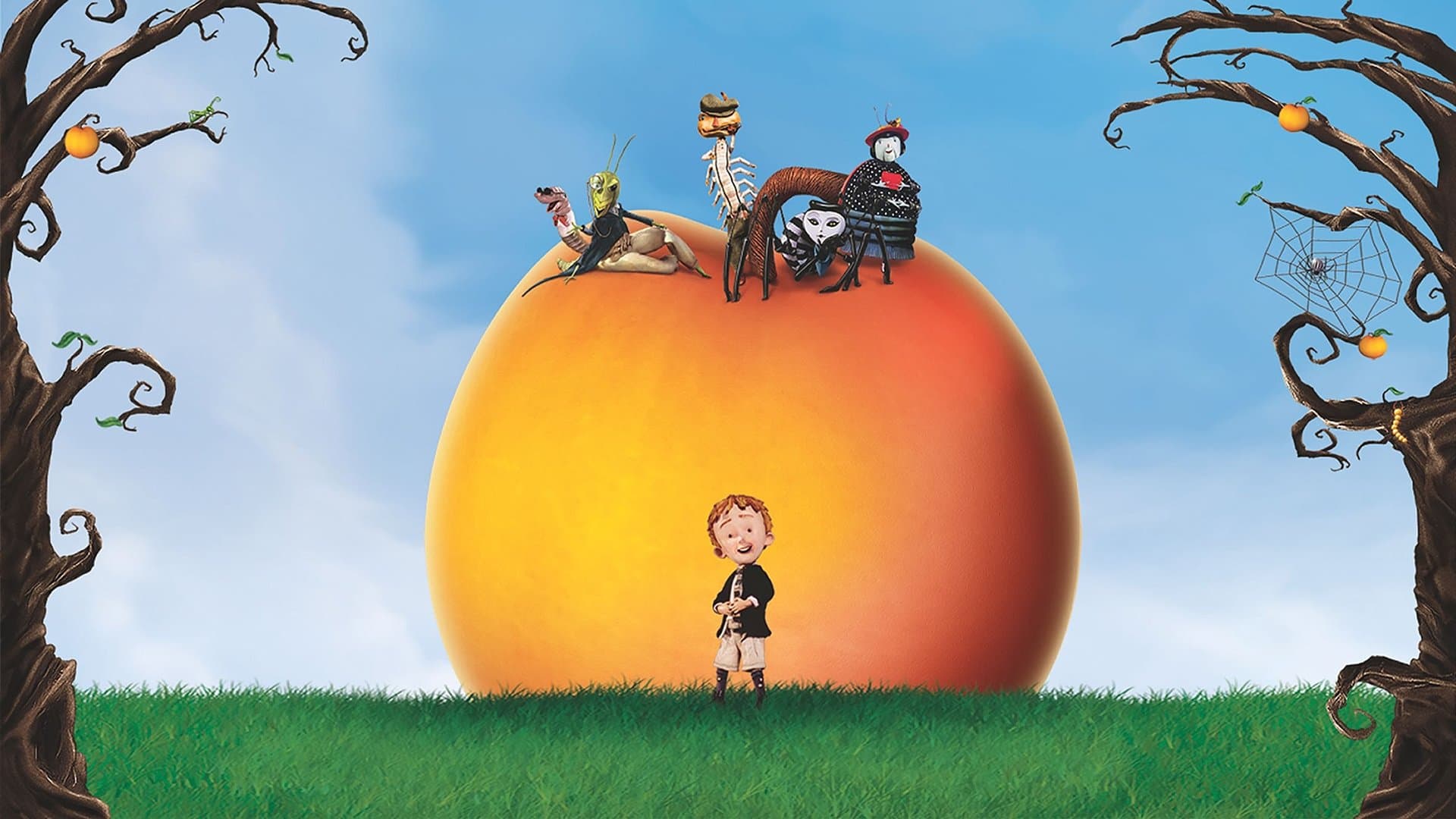
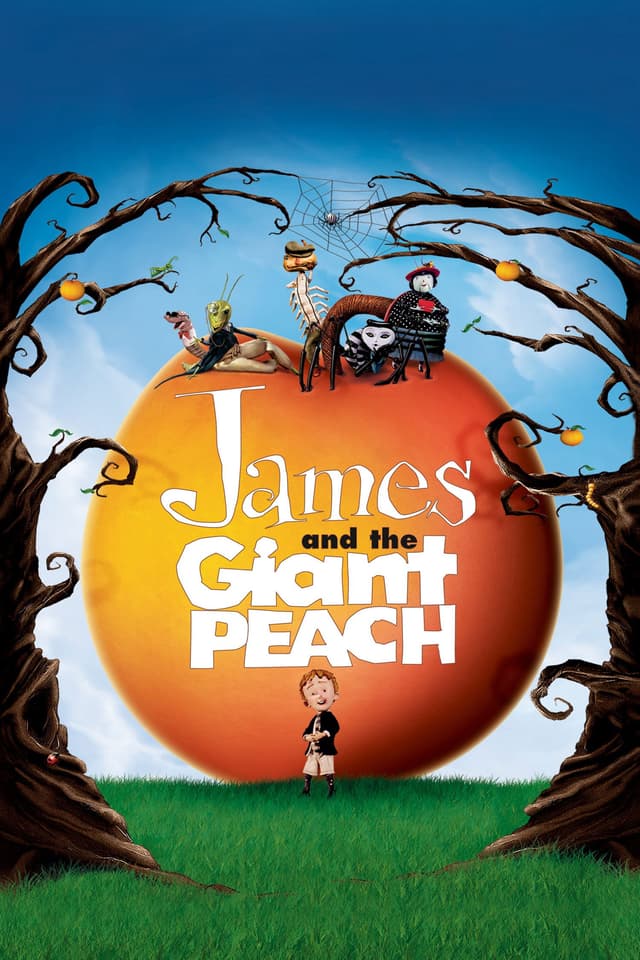
James' happy life at the English seaside is rudely ended when his parents are killed by a rhinoceros and he goes to live with his two horrid aunts. Daringly saving the life of a spider he comes into possession of magic boiled crocodile tongues, after which an enormous peach starts to grow in the garden. Venturing inside, he meets not only the spider but a number of new friends including a ladybug and a centipede who help him with his plan to try to get to New York.
What Is the Budget of James and the Giant Peach?
James and the Giant Peach (1996) was produced on a budget of $39 million, financed by Walt Disney Pictures and released through Buena Vista Pictures Distribution. The film was directed by Henry Selick, whose previous feature The Nightmare Before Christmas (1993) had demonstrated that stop-motion animation could achieve both critical acclaim and commercial success as a mainstream release. Tim Burton served as producer, reuniting with Selick to adapt Roald Dahl's beloved 1961 children's novel. The budget reflected the exceptional time and resource demands of stop-motion production combined with live-action bookend sequences, original songs by Randy Newman, and the challenge of adapting a literary classic for a new generation.
Stop-motion animation is among the most labor-intensive film production methods in existence. The Skellington Productions team, based in San Francisco, produced approximately one minute of finished animation per shooting day, meaning the film's roughly 73-minute stop-motion running time required over two years of continuous production. The production built more than 40 articulated puppet characters, elaborate miniature sets including the giant peach interior and exterior, and multiple versions of each main character puppet in different poses and expressions. The $39 million budget had to sustain this two-year effort while also financing the live-action sequences and post-production work.
Key Budget Allocation Categories
- Stop-Motion Animation Production: The core of the budget funded the Skellington Productions facility in San Francisco over two-plus years. The production employed approximately 100 animators, fabricators, and technicians working simultaneously across multiple camera stages. Building and maintaining the articulated puppet characters, constructing the giant peach set at various scales, and operating the camera rigs required sustained expenditure throughout the production period. Industry estimates place stop-motion animation at approximately $10,000 to $15,000 per finished minute, suggesting the stop-motion sequences alone consumed $20 to $25 million of the total budget.
- Puppet Fabrication and Character Design: The James character required over 300 individual replacement faces to achieve the range of expressions needed across the story. Lead puppet fabricator Blair Clark and character designer Lane Smith created articulated foam-latex bodies with internal armatures that could hold precise poses frame-by-frame. Insects including Centipede (voiced by Richard Dreyfuss), Grasshopper, Ladybug, Earthworm, Spider, and Glowworm each required multiple puppet bodies in different scales for different shot distances, multiplying fabrication costs significantly.
- Voice Cast: The film assembled a strong voice ensemble led by Richard Dreyfuss as the flamboyant Centipede, alongside Simon Callow as Grasshopper, Jane Leeves as Ladybug, David Thewlis as Earthworm, and Miriam Margolyes as Glowworm. Live-action performers Pete Postlethwaite (Aunt Sponge's husband) and Joanna Lumley and Miriam Margolyes as the grotesque aunts Spiker and Sponge appeared on camera in the bookend sequences. Paul Terry, a child actor, played James in live action. Coordinating dual casting across stop-motion voice actors and on-camera talent added complexity to the production schedule.
- Songs and Score: Randy Newman composed and performed six original songs for the film, including "My Name Is James," "That's the Life," and "Eating the Peach," alongside a full orchestral underscore. Newman, who had established himself as Disney's go-to songwriter through Toy Story (1995), was compensated accordingly. The songs required studio recording sessions with Newman and the voice cast, arrangement and orchestration, and integration into the finished animation. Newman's original score nomination at the Academy Awards confirmed the music was recognized as a standout element of the production.
- Live-Action Sequences and Visual Effects: The film opens and closes with live-action sequences in Aunt Sponge and Aunt Spiker's English cottage, requiring location scouting, period-appropriate set dressing, and on-camera child performance from Paul Terry. Optical compositing was used to blend the live-action and stop-motion worlds in several sequences, adding post-production complexity. The film's visual effects house handled the transitions between photographic and animated worlds, a process that was more technically demanding in 1995 than it would become with later digital compositing tools.
How Does James and the Giant Peach's Budget Compare to Similar Films?
James and the Giant Peach occupied a specific niche in 1990s animation: a stop-motion feature from the same director and production company as The Nightmare Before Christmas, adapted from a beloved literary source, and produced under the Disney banner. Its $39 million budget was modest compared to Disney's own hand-drawn animated features of the era but significant for a stop-motion production. The film's domestic performance of $28.9 million fell short of recouping its production cost in theaters alone, though home video and international television helped close the gap.
- The Nightmare Before Christmas (1993): Budget $18M | Worldwide BO $75.1M | Henry Selick's previous stop-motion feature set the benchmark. Made for less than half the cost of James and the Giant Peach, it earned considerably more at the box office and became a perennial Halloween and Christmas classic. The sequel of sorts cost more than twice as much and earned less than half the worldwide gross.
- Toy Story (1995): Budget $30M | Worldwide BO $361M | Pixar's first CG animated feature, also released under Disney and scored by Randy Newman, demonstrated that computer animation could achieve mainstream blockbuster results. Its success put pressure on traditional and stop-motion animation to deliver comparable box office performance, a bar James and the Giant Peach could not clear.
- The Hunchback of Notre Dame (1996): Budget $70M | Worldwide BO $325M | Released the same year by Disney's own animation studio, Hunchback represented the hand-drawn tradition at full budget scale. Its much larger production cost and much larger worldwide gross illustrated the competitive landscape James and the Giant Peach entered, competing for the same family audience against Disney's own theatrical output.
- Coraline (2009): Budget $60M | Worldwide BO $124.6M | Henry Selick's return to stop-motion over a decade later, based on Neil Gaiman's novel, showed how costs had escalated for the format. Coraline also adapted a literary work with a dark edge aimed at children, making it the closest spiritual successor to James and the Giant Peach in Selick's career.
James and the Giant Peach Box Office Performance
James and the Giant Peach opened in North American theaters on April 12, 1996, distributed by Buena Vista Pictures Distribution. The film earned $28.9 million domestically over its theatrical run. International box office figures were limited, with most available data reflecting the North American release, making the worldwide total essentially equivalent to the domestic gross at approximately $28.9 million. The film performed reasonably well for its format and target audience but did not achieve the breakout commercial success that would have signaled stop-motion animation as a repeatable studio formula.
Against a $39 million production budget and an estimated $20 million in prints and advertising, Disney's total investment was approximately $59 million. With theaters retaining roughly 50 percent of the gross, the studio's theatrical share was approximately $14.5 million, leaving the film substantially short of covering its combined production and marketing costs in theaters alone. Disney recovered the investment through home video, cable television licensing, and international distribution in markets where the film received a later theatrical release, but James and the Giant Peach was not the studio's intended theatrical hit. It opened the same month as Muppet Treasure Island and competed for family audiences in a crowded spring market.
Box Office Breakdown
James and the Giant Peach

James and the Giant Peach earned roughly $0.74 for every $1 invested in production, making it a theatrical loss before accounting for marketing spend. The economics of the film's initial release were challenging from the start: stop-motion animation is expensive to produce but generates a smaller audience than hand-drawn Disney features or emerging CG animation. The film's long-term value came through home video, where it became a staple of children's libraries, and through its Academy Award nomination, which sustained its cultural presence. The film remains in print and continues to generate licensing revenue for Disney decades after its theatrical run.
James and the Giant Peach Production History
James and the Giant Peach had a long path from Roald Dahl's 1961 novel to the screen. Earlier attempts to adapt the book had stalled over the decades, with various producers unable to agree on the right approach for translating Dahl's surreal, darkly comic world to film. Disney acquired the rights and attached Henry Selick to direct following the commercial success of The Nightmare Before Christmas in 1993, which Selick had directed for Tim Burton's Skellington Productions. Tim Burton, who served as producer on both films, saw James and the Giant Peach as a natural follow-up: another stop-motion adaptation of source material with a mischievous, subversive sensibility beneath its children's story surface.
Production began at the Skellington Productions facility in San Francisco, occupying multiple camera stages simultaneously to maximize throughput. The production team constructed the giant peach in several scales for different shot requirements: a small-scale peach for wide exterior shots, a medium-scale set for medium shots of characters on the peach surface, and a full-scale interior for the scenes inside the fruit. Character designer Lane Smith worked with fabricator Blair Clark to develop the foam-latex puppet bodies, each with internal steel wire armatures that animators would reposition frame by frame. Paul Terry was cast as the live-action James after a search for a child actor who could anchor the film's bookend sequences in England.
Randy Newman joined the production to write original songs, his first collaboration with Disney outside Toy Story. Newman composed the songs to fit specific emotional moments in the story, with "My Name Is James" establishing the protagonist's longing for connection and "That's the Life" expressing the insects' libertine philosophy. The recording sessions took place in Los Angeles with Newman performing his own compositions and the voice cast recording their vocal parts separately. Selick and his editors then cut the animation to match the recorded performances, a process opposite to how live-action musicals typically work.
The film completed production in late 1995 and was prepared for a spring 1996 release, which Disney determined would avoid competition with the studio's summer animated tentpoles. The April release date placed the film in a family market window before school let out, though it competed with Muppet Treasure Island (February) and other family releases for audience attention. Disney screened the film for press in early 1996, and the strong critical reception encouraged the studio to submit it for awards consideration. The Academy Award nomination for Randy Newman's score confirmed the film's standing as a quality production even as its theatrical box office fell short of expectations.
Awards and Recognition
James and the Giant Peach received an Academy Award nomination for Best Original Score, recognizing Randy Newman's work. Newman had established himself as a distinctive voice in film music through his collaborations with Disney, and his score for James and the Giant Peach was praised for capturing Roald Dahl's whimsy without sentimentality. The nomination placed the film alongside prestige releases in the Best Score category, including the eventual winner, Gabriel Yared's score for The English Patient. Newman did not win, but the nomination confirmed the film's artistic credibility beyond its commercial performance.
The film received positive recognition from critics and family film organizations. Henry Selick was recognized by animation industry groups for sustaining the stop-motion craft at feature scale, following the success of The Nightmare Before Christmas. The film was screened at international animation festivals and cited in surveys of the format's history as an important example of stop-motion storytelling. Its faithfulness to Roald Dahl's source material, while making necessary adaptations for the screen, was noted by the Dahl estate and by critics who championed the film's willingness to retain the novel's darker edges.
Critical Reception
James and the Giant Peach earned a 95% approval rating on Rotten Tomatoes and a score of 73 out of 100 on Metacritic, making it one of the most positively reviewed animated films of its era. Critics praised Henry Selick's direction, Randy Newman's songs, and the production's fidelity to Roald Dahl's voice. Roger Ebert gave the film three and a half stars, calling it "wonderful" and noting that Selick had found a visual language perfectly suited to Dahl's blend of the mundane and the fantastical. The New York Times, Los Angeles Times, and Entertainment Weekly all published enthusiastic reviews that highlighted the animation's craft and the film's emotional sincerity.
A number of critics singled out the voice performances, particularly Richard Dreyfuss as Centipede and Simon Callow as Grasshopper, as exceptional character work that elevated the material beyond standard family entertainment. The film's darkness, including the opening death of James's parents and the cruelty of Aunt Sponge and Aunt Spiker, was cited by many reviewers as a strength rather than a flaw: a reminder that Dahl's original work respected children enough not to shield them from difficulty.
James and the Giant Peach holds an IMDb rating of 6.9 out of 10. The rating reflects a slight gap between critical consensus and general audience response, with some viewers finding the stop-motion aesthetic dated compared to later CG animation and others expressing nostalgia-tinged affection for the film. The 95% Rotten Tomatoes score, however, makes it one of the most critically acclaimed animated films of the 1990s, and it continues to be recommended by film educators and critics writing about family cinema of the era.
Frequently Asked Questions
How much did James and the Giant Peach cost to make?
The production budget was $38,000,000. Walt Disney Pictures financed the stop-motion and live-action hybrid, with Tim Burton serving as a producer through his Skellington Productions banner alongside producer Denise Di Novi.
How much did James and the Giant Peach earn at the box office?
The film grossed $28,946,127 domestically and approximately $1,000,000 internationally in a limited overseas release, for a worldwide total of approximately $29,900,000. It opened to $7,539,000 on April 12, 1996, finishing third behind Primal Fear and A Family Thing.
Who directed James and the Giant Peach?
Henry Selick directed the film. Selick had previously directed The Nightmare Before Christmas (1993) for Disney, with Tim Burton as producer on both projects. Selick later directed Monkeybone (2001), Coraline (2009), and Wendell and Wild (2022).
Is James and the Giant Peach based on a book?
Yes. The film adapts Roald Dahl's 1961 children's novel, the first of his major children's books. The screenplay by Karey Kirkpatrick, Jonathan Roberts, and Steve Bloom expands several supporting characters and adds musical numbers composed by Randy Newman.
How was James and the Giant Peach made?
The film blends live-action and stop-motion animation, opening and closing in live action with the central peach journey rendered entirely in stop motion. The 79-minute feature required approximately three years of production at Skellington Productions, with frame-by-frame animation completed at roughly six seconds per animator per day.
Who is in the cast of James and the Giant Peach?
Paul Terry plays the live-action James in the bookend sequences. Voice cast for the stop-motion sequences includes Joanna Lumley and Miriam Margolyes as the cruel aunts, Simon Callow as Grasshopper, Susan Sarandon as Miss Spider, David Thewlis as Earthworm, Pete Postlethwaite, Richard Dreyfuss as Centipede, and Jane Leeves as Ladybug.
What did critics think of James and the Giant Peach?
The film received positive reviews, with a 91% approval rating on Rotten Tomatoes and a 79 out of 100 score on Metacritic. Critics praised the inventive stop-motion animation and the Randy Newman songs while noting that the film's darker tonal elements may unsettle younger children.
Did James and the Giant Peach win any awards?
Randy Newman received an Academy Award nomination for Best Original Musical or Comedy Score at the 69th Oscars, losing to The Hunchback of Notre Dame. The film won the British Academy Children's Award and multiple Annie Awards for its stop-motion animation.
Was James and the Giant Peach a box office disappointment?
Yes. Against the $38,000,000 production budget and an estimated $25,000,000 to $30,000,000 in marketing spend, the worldwide gross of $29,900,000 represented a clear theatrical loss. Strong home video, cable broadcast, and later streaming revenue brought the film into modest aggregate profit over time.
How does James and the Giant Peach compare to The Nightmare Before Christmas?
James and the Giant Peach underperformed compared with Henry Selick and Tim Burton's prior collaboration The Nightmare Before Christmas (1993, $24,000,000 budget, $76,200,000 worldwide). Disney positioned both films as cult curiosities rather than mainstream blockbusters, with home video, theatrical re-releases, and merchandising driving long-term value.
Official Trailer
Build budgets like this one in Saturation
Start from an industry-standard feature film template, import the schedule and rates you already have, and let the cost report keep itself current as you spend. Real-time collaboration, no spreadsheets.