My Life as a Zucchini Budget
 AnimationComedyDrama1h 6m
Updated
Synopsis
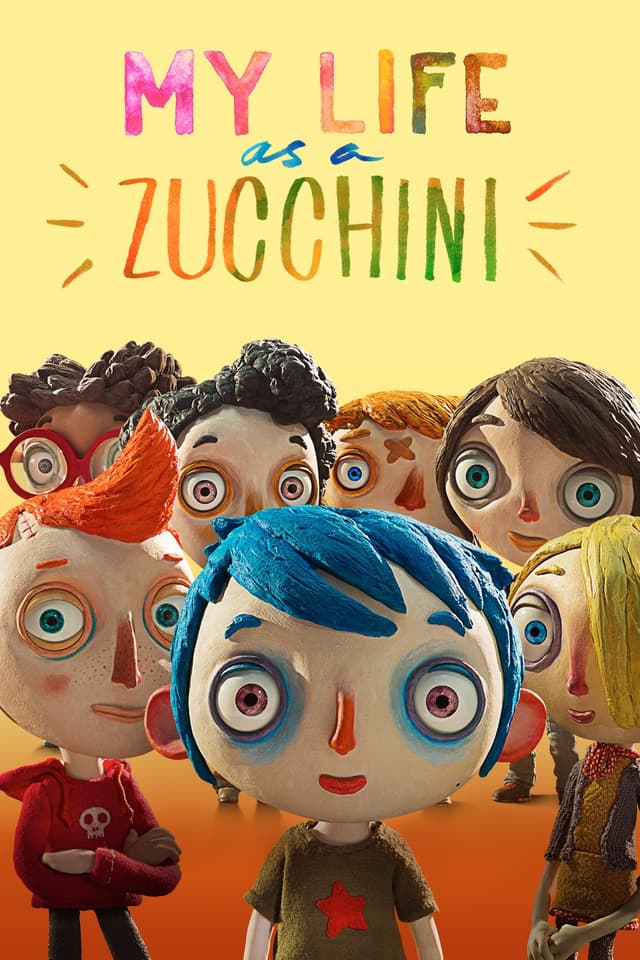
After his alcoholic mother dies in an accident, a nine-year-old boy nicknamed Courgette is placed in a Swiss children's home, where a kind police officer named Raymond keeps watch over him. As Courgette settles in alongside fellow residents Simon, Ahmed, Jujube, Béatrice, and Alice, the arrival of a new girl, Camille, whose own parents died violently, shifts the orphanage's emotional center and forces the children to confront whether grief can become the foundation of a chosen family.
What Is the Budget of My Life as a Zucchini (2016)?
My Life as a Zucchini (originally Ma vie de Courgette), the 2016 Swiss-French stop-motion feature directed by Claude Barras, was produced on a budget of approximately €6,500,000 (around $8,000,000). Financed as a Switzerland-France co-production between Rita Productions, Blue Spirit Productions, Gebeka Films, and KNM, the film was supported by the Swiss Federal Office of Culture, Cinéforom, the Centre national du cinéma et de l'image animée (CNC), and the canton of Vaud, with additional backing from RTS and France 3. The figure is modest for a stop-motion feature, where puppet fabrication and frame-by-frame shooting routinely push costs into the $20 million to $60 million range.
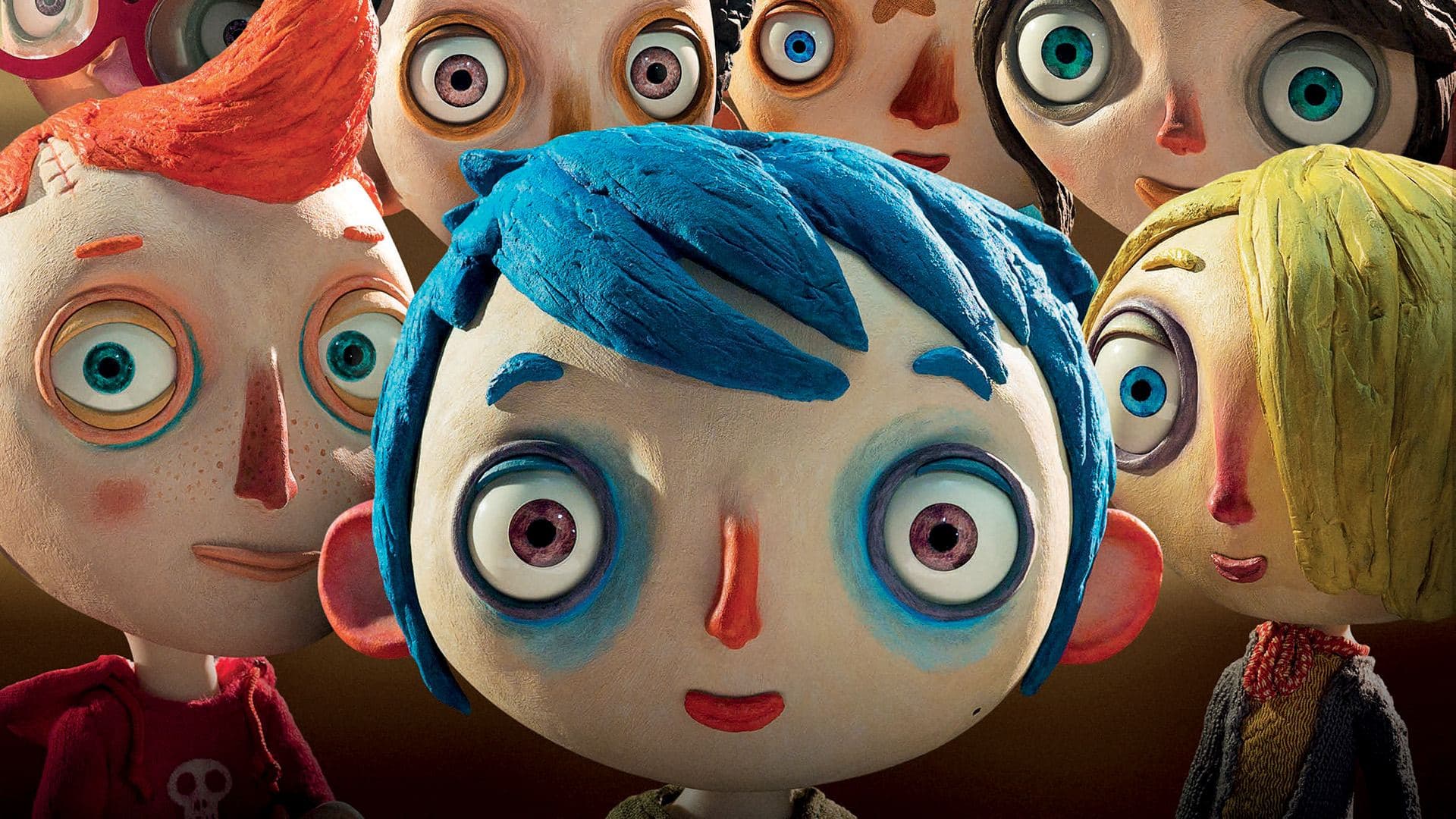
At 65 minutes, Zucchini is unusually short for a theatrical animated feature, and Barras and producer Max Karli used that compactness to channel the budget into character-driven craftsmanship rather than scale. Production designer Ludovic Chemarin and a small puppet workshop built the silicone-headed characters, with their oversized eyes and visible seams, on a scale designed for an intimate ensemble rather than an action set piece. The result is a film whose technical ambition reads on screen in proportion to its emotional payload, not to its sticker price.
Key Budget Allocation Categories
The $8 million budget was concentrated in the categories where stop-motion animation extracts the highest cost:
- Puppet Fabrication and Character Design: Around fifty silicone-headed puppets were built for the principal cast and the orphanage ensemble, each with magnetized faces and interchangeable expressions. Designer Ludovic Chemarin's deliberately raw look, with visible joins on the heads and oversized features, was less expensive than the porcelain-smooth finishes of Laika productions but still demanded months of workshop labor.
- Set Construction and Miniature Builds: The orphanage interiors, the snowbound mountain ski lodge, and the police-station and supermarket sets were all built as miniatures at the Pôle Pixel studio in Villeurbanne, France. Practical lighting rigs, dressable miniature props, and modular set pieces drove a significant share of the spend.
- Animation Labor and Studio Time: Stop-motion proceeds at roughly two to four seconds of usable footage per animator per day. The production sustained eight to ten animation units across an approximately eight-month principal shoot, paying skilled French and Swiss animators on union schedules, the single largest cost line on the picture.
- Voice Cast Recording (French and English): The original French voice cast of child actors Gaspard Schlatter, Sixtine Murat, Paulin Jaccoud, and Estelle Hennard was recorded in Switzerland, with adult roles played by Michel Vuillermoz and Brigitte Rosset. GKIDS later commissioned an English-language dub featuring Nick Offerman, Will Forte, Ellen Page, Amy Sedaris, and child actor Erick Abbate, adding a discrete recording and ADR cost ahead of the North American release.
- Score, Music Licensing, and Sound: Swiss singer-songwriter Sophie Hunger composed the original score and contributed the song "Le vent nous portera" cover that closes the film. The score, foley, and a layered sound design that gives the puppets tactile life all required dedicated post-production studios in Switzerland and France.
- Cinematography and Camera Package: Director of photography David Toutevoix shot frame-by-frame with motion-control rigs, DSLR-based stop-motion capture, and the specialty lenses that allow miniature sets to read at human scale. Equipment rentals across the long shoot represent a meaningful subcategory.
- Post-Production, VFX, and DI: Editorial by Valentin Rotelli, selective digital effects for fluids, weather, and rig removal, and a digital intermediate color grade in Geneva and Paris closed the picture. Post on a 65-minute film is proportionally lighter than on a typical 90-minute feature, an advantage Barras exploited.
- Festival and Distribution Costs: The Cannes Directors' Fortnight premiere, the Annecy Cristal campaign, GKIDS' North American Oscar push, and the international festival circuit carried promotional spend separate from the production budget but central to the film's commercial life.
How Does My Life as a Zucchini's Budget Compare to Similar Films?
Set against other stop-motion and arthouse animated features, Zucchini's $8 million budget sits at the low end of the form:
- Coraline (2009): Budget $60,000,000 | Worldwide $124,600,000. Laika's debut stop-motion feature cost roughly seven and a half times what Zucchini did and ran nearly twice as long, illustrating the gulf between American studio stop-motion and European arthouse stop-motion production economics.
- Kubo and the Two Strings (2016): Budget $60,000,000 | Worldwide $77,500,000. Released the same year, Laika's samurai epic deployed the maximum technical resources of contemporary stop-motion, including extensive 3D-printed face replacement, against Zucchini's deliberately handmade aesthetic at one-eighth the cost.
- Marcel the Shell with Shoes On (2022): Dean Fleischer Camp's indie stop-motion hybrid grossed roughly $6.7 million worldwide on a small budget. Both films demonstrate how character-led stop-motion at the indie scale can compete on festival circuits with major studio releases without matching their spend.
- Persepolis (2007): Marjane Satrapi and Vincent Paronnaud's 2D animated memoir, released by Sony Pictures Classics in North America, won the Cannes Jury Prize and earned an Oscar nomination for Best Animated Feature. Like Zucchini, Persepolis took a European arthouse animated film with a small budget and intimate subject matter through the Academy Awards on craft alone.
- Anomalisa (2015): Charlie Kaufman and Duke Johnson's adult stop-motion feature was made for an estimated $8 million via a Kickstarter-supported indie financing structure and grossed roughly $5.6 million worldwide. Anomalisa is the closest peer in budget, runtime feel, and arthouse positioning, and like Zucchini it converted festival prestige into an Oscar nomination rather than wide box office.
- Fantastic Mr. Fox (2009): Budget $40,000,000 | Worldwide $46,500,000. Wes Anderson's 20th Century Fox stop-motion feature operated at studio scale with a celebrity voice cast, contrasting with Zucchini's child-led recording sessions and decentralized European production base.
My Life as a Zucchini Box Office Performance
My Life as a Zucchini opened theatrically in Switzerland on September 22, 2016, and in France on October 19, 2016, where it sold over 700,000 tickets across French-speaking territories. GKIDS handled the North American release, opening in New York and Los Angeles on February 24, 2017, in the wake of the film's Academy Award nomination for Best Animated Feature and expanding to a peak of 87 screens over the following weeks.
The financial breakdown across the global release:
Box Office Breakdown
My Life as a Zucchini

At a reported worldwide theatrical gross of $5,889,304, the film returned roughly $0.74 in theatrical revenue for every $1 of total estimated investment, a figure that materially understates its commercial outcome. The $309,766 North American gross was always secondary to the European theatrical base and to the subsequent value extracted from streaming, broadcast, and home-video licensing.
The longer commercial life of the film played out across Netflix global streaming, free-to-air broadcast on France 3 and RTS, and a strong educational and library home-video market in both Europe and North America. For the Swiss-French co-production partners, the combination of a Cannes premiere, an Annecy Cristal, an Oscar nomination, and Sophie Hunger's award-winning score generated the cultural prestige and ancillary revenue that justified the spend regardless of the modest theatrical line.
My Life as a Zucchini Production History
My Life as a Zucchini originated as an adaptation of Gilles Paris's 2002 novel Autobiographie d'une Courgette, a book that Claude Barras and his co-writer Cédric Louis had been circling for nearly a decade before production began. Barras, a Swiss illustrator and animator with a background in short films, recruited screenwriter Céline Sciamma (Tomboy, Girlhood, and later Portrait of a Lady on Fire) to rewrite the script in 2013. Sciamma compressed the novel's sprawling chronology into a tight 65-minute arc focused on Icare, nicknamed Courgette, and his life inside a Swiss children's home.
Sciamma's script reshaped the source material: she retained the foster-home setting and the central friendships, sharpened the dialogue around how children describe their own trauma, and added the figure of Officer Raymond as the adult lens through which the orphanage is observed. The screenplay won her a César Award for Best Adapted Screenplay in 2017, and Barras has repeatedly credited Sciamma's structural rewrite with making the project financeable as a feature.
Production was anchored in Switzerland through Geneva-based Rita Productions, with French co-producers Gebeka Films and Blue Spirit Productions providing the bulk of the animation infrastructure. Principal photography ran for approximately eight months at the Pôle Pixel studio in Villeurbanne, near Lyon, France, with eight to ten animation units shooting frame-by-frame simultaneously. The puppets were fabricated at Studio Wadabazaar and at the production's own workshop, with character designer Ludovic Chemarin overseeing a small team that built every silicone head, magnetized face, and miniature costume by hand.
The choice of Switzerland and France as the dual production base reflected both the source material's setting and the financing reality of European animation. The Swiss federal and cantonal funding (Office fédéral de la culture, Cinéforom, canton of Vaud) was structured to require Swiss production leadership, while the French co-production benefits, including CNC support and the regional Auvergne-Rhône-Alpes incentive for the Villeurbanne shoot, made the eight-month animation campaign viable. Both broadcasters, RTS in Switzerland and France 3 in France, were attached as presale partners.
The film entered post-production in late 2015 and finished in time for a Cannes Directors' Fortnight premiere on May 15, 2016. Sophie Hunger composed the score in parallel with the final cut, recording in Geneva and Berlin. The English-language dub commissioned by GKIDS, with Nick Offerman, Will Forte, Ellen Page, and Amy Sedaris, was recorded in late 2016 ahead of the North American release.
Awards and Recognition
My Life as a Zucchini received the most decorated awards run for a European animated feature since Persepolis in 2007. It was nominated for the Academy Award for Best Animated Feature at the 89th Academy Awards (losing to Zootopia), the Golden Globe Award for Best Animated Feature Film, and the BAFTA Award for Best Animated Film. At the 42nd César Awards, the film won both Best Animated Film and Best Adapted Screenplay for Céline Sciamma, and Sophie Hunger was nominated for Best Original Music.
At the Annecy International Animation Film Festival in 2016, Zucchini won the Cristal du long métrage (Best Feature) along with the Audience Award, a rare combination that confirmed its standing within the animation community. The European Film Award for Best Animated Feature Film and the Satellite Award for Best Animated Feature followed in late 2016. The film was selected as the Swiss entry for Best Foreign Language Film at the 89th Academy Awards, where it advanced to the December shortlist before the Animated Feature nomination superseded the foreign-language campaign. The Cannes Directors' Fortnight premiere on May 15, 2016, anchored the festival run that carried it through the entire 2016 and 2017 awards calendar.
Critical Reception
Critics gave My Life as a Zucchini one of the strongest reviews of any animated feature of the decade. The film holds a 99% approval rating on Rotten Tomatoes from 137 reviews with an average score of 8.20 out of 10, and a Metacritic score of 85 out of 100 indicating "universal acclaim." The Rotten Tomatoes critical consensus reads that the film's "colorful visuals delight the senses even as it braves dark emotional depths, telling a tale that addresses tough themes in a thoughtful, age-appropriate way."
A. O. Scott in The New York Times called Zucchini "a small miracle of compression and feeling," singling out the way Barras and Sciamma trust child viewers to handle the material. Manohla Dargis described the puppets as "weirdly beautiful, unmistakably handmade," and Justin Chang in the Los Angeles Times praised the film as "an exquisite emotional gut-punch wrapped in eccentric beauty." In Variety, Peter Debruge wrote that the picture "achieves something extraordinary in 65 minutes" and credited Sciamma's screenplay for "respecting children rather than condescending to them."
The audience response on Rotten Tomatoes registered an 85% approval score, more modest than the critical reaction but still strongly positive, with many viewers flagging the heavy thematic content (parental death, abuse, foster care) as a caution for younger children. The few dissenting critical voices argued that the 65-minute runtime cut the secondary characters short, but even skeptical reviews acknowledged the technical achievement of the puppet work and the rare honesty of the script in writing children's grief.
Frequently Asked Questions
How much did it cost to make My Life as a Zucchini (2016)?
My Life as a Zucchini was produced on a budget of approximately €6,500,000 (around $8,000,000). The Swiss-French stop-motion feature was financed by Rita Productions, Blue Spirit Productions, Gebeka Films, and KNM, with support from the Swiss Federal Office of Culture, Cinéforom, the CNC, and broadcasters RTS and France 3.
How much did My Life as a Zucchini earn at the box office?
My Life as a Zucchini grossed $5,889,304 worldwide, comprising $309,766 in North America via GKIDS and $5,579,538 internationally. The film sold over 700,000 tickets in France alone and performed strongest in French-speaking European territories following its September 2016 release.
Who directed My Life as a Zucchini?
Swiss director Claude Barras directed My Life as a Zucchini, his feature debut. Barras, an illustrator and animator with a background in short films, developed the project over nearly a decade as an adaptation of Gilles Paris's novel Autobiographie d'une Courgette.
Who wrote the screenplay for My Life as a Zucchini?
Céline Sciamma wrote the screenplay, with additional credits to Claude Barras, Germano Zullo, and Morgan Navarro. Sciamma, who later wrote and directed Portrait of a Lady on Fire (2019), won the César Award for Best Adapted Screenplay in 2017 for her work on the film.
Where was My Life as a Zucchini made?
My Life as a Zucchini was produced as a Switzerland-France co-production. Principal stop-motion photography ran for approximately eight months at the Pôle Pixel studio in Villeurbanne, near Lyon, France, while financing and production leadership came from Geneva-based Rita Productions.
Did My Life as a Zucchini get nominated for an Oscar?
Yes. My Life as a Zucchini was nominated for the Academy Award for Best Animated Feature at the 89th Academy Awards in 2017, losing to Zootopia. It was also nominated for the Golden Globe for Best Animated Feature Film and the BAFTA for Best Animated Film.
Did My Life as a Zucchini win the Annecy Cristal?
Yes. At the 2016 Annecy International Animation Film Festival, My Life as a Zucchini won the Cristal du long métrage (Best Feature) along with the Annecy Audience Award, a rare combination that confirmed its standing in the animation community.
How long is My Life as a Zucchini?
My Life as a Zucchini runs 65 minutes, which is unusually short for a theatrical animated feature. Director Claude Barras and screenwriter Céline Sciamma deliberately compressed the source novel into a tight, character-driven arc rather than expanding it to a conventional 90-minute length.
Who voices the characters in the English dub of My Life as a Zucchini?
The English-language dub commissioned by GKIDS features child actor Erick Abbate as Courgette, Ness Krell as Camille, Nick Offerman as Officer Raymond, and Amy Sedaris as Aunt Ida, with Will Forte and Ellen Page in supporting roles. The dub was recorded in late 2016 ahead of the North American release.
What did critics think of My Life as a Zucchini?
Critics responded with near-universal acclaim. The film holds a 99% approval rating on Rotten Tomatoes from 137 reviews and a Metacritic score of 85 indicating "universal acclaim." Reviewers in The New York Times, Los Angeles Times, and Variety praised the handmade puppet aesthetic and Sciamma's writing for treating children's grief with rare honesty.
Filmmakers
My Life as a Zucchini

Official Trailer
Build budgets like this one in Saturation
Start from an industry-standard feature film template, import the schedule and rates you already have, and let the cost report keep itself current as you spend. Real-time collaboration, no spreadsheets.