The Nightmare Before Christmas Budget
 FantasyAnimationFamily1h 16m
Updated
Synopsis
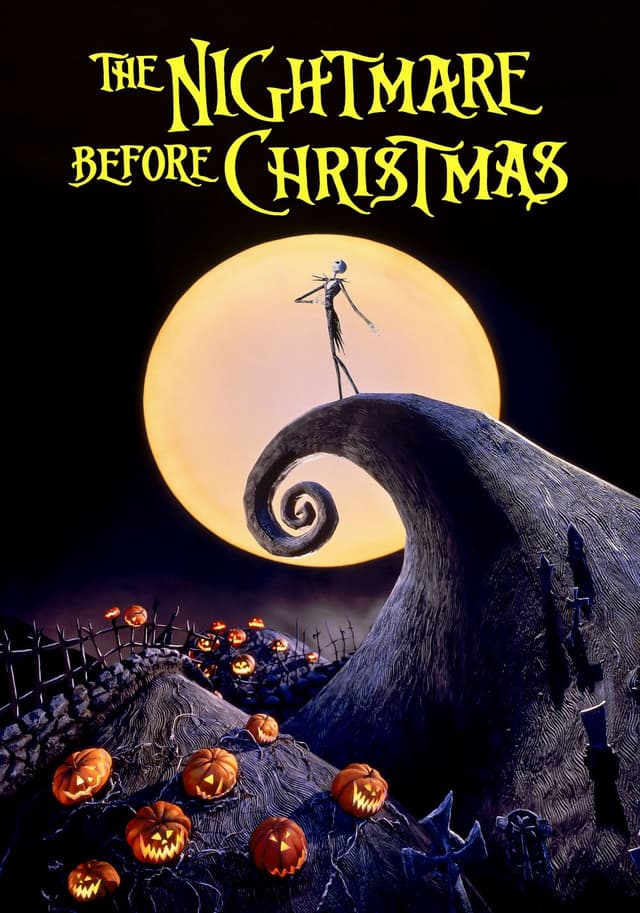
Tired of scaring humans every October 31 with the same old bag of tricks, Jack Skellington, the spindly king of Halloween Town, kidnaps Santa Claus and plans to deliver shrunken heads and other ghoulish gifts to children on Christmas morning. But as Christmas approaches, Jack's rag-doll girlfriend, Sally, tries to foil his misguided plans.
What Is the Budget of The Nightmare Before Christmas?
The Nightmare Before Christmas was produced for approximately $18 million, a figure that reflected the extraordinary labor demands of stop-motion animation at a feature-film scale. Production spanned roughly three years at Skellington Productions, a dedicated studio set up in San Francisco specifically for the project. At a time when most animated features relied on traditional cel animation or early CGI, the film required the construction of hundreds of puppets and miniature sets, each photographed frame by frame to create the illusion of movement.
The $18 million budget was modest by early 1990s studio standards, especially for a film that contained 10 original songs and a full orchestral score, all composed by Danny Elfman. Tim Burton produced and conceived the story but did not direct; Henry Selick helmed the day-to-day production, overseeing a crew of roughly 120 animators working across 20 sound stages simultaneously. Released under the Touchstone Pictures banner because Disney executives felt the film was too dark and potentially frightening for young children under the core Disney label, the movie went on to generate far more revenue in merchandise and re-releases than anyone at the studio anticipated.
Key Budget Allocation Categories
- Stop-Motion Puppet Fabrication: The film required over 200 individual puppets, with Jack Skellington alone having approximately 400 interchangeable heads to express different emotions and lip-sync Danny Elfman's songs. Each puppet was built with an internal armature (a jointed metal skeleton), sculpted foam latex skin, and hand-painted details. Sally required similar treatment, with her patchwork design demanding especially delicate construction. The sheer volume of puppets and replacement parts made fabrication one of the largest single line items in the budget.
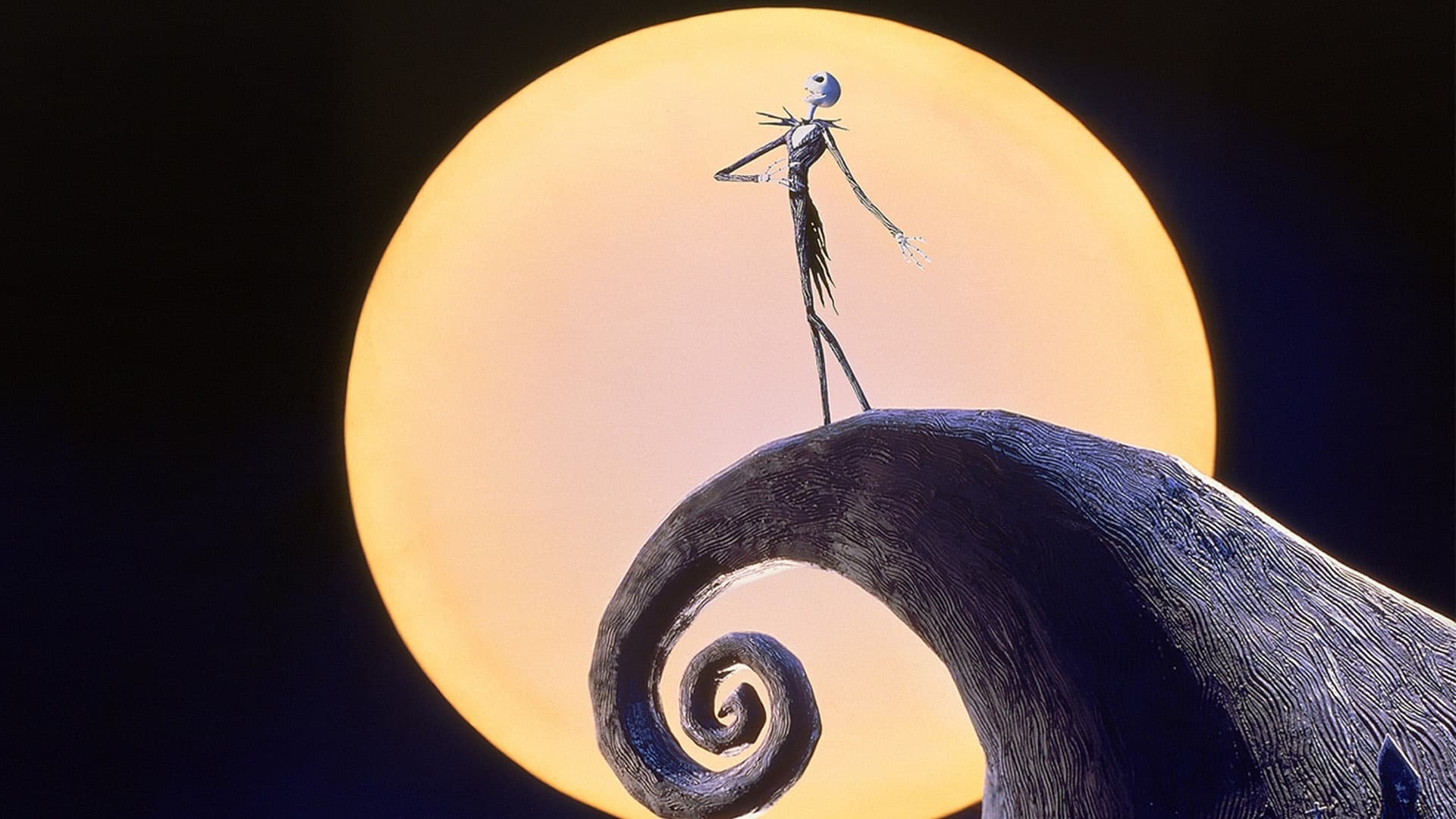
- Miniature Set Construction: Halloween Town, Christmas Town, and the interconnected world of holiday doors each required fully built miniature environments with working lighting rigs, textured surfaces, and architectural details visible under close-up camera work. The production ran 20 stages simultaneously, each housing a different scene's set. Sets ranged from Jack's spiral hilltop to Oogie Boogie's underground lair, with every surface designed to hold up under the macro photography that stop-motion requires.
- Animation Labor: With approximately 120 animators, each producing roughly 70 seconds of finished footage per week, the three-year production timeline was driven primarily by the painstaking nature of frame-by-frame photography. Each second of screen time required 24 individual adjustments to puppet positions. Complex sequences like the "What's This?" musical number, where Jack explores Christmas Town, took weeks to shoot for just a few minutes of final footage.
- Music and Score: Danny Elfman wrote all 10 songs and composed the full orchestral score, also providing the singing voice for Jack Skellington. The music sessions required a full orchestra and choir, recorded over multiple sessions. The songs were composed before animation began, which meant the animation had to be choreographed to match Elfman's existing recordings, adding a layer of precision to the already demanding production process.
- Camera and Lighting: Stop-motion photography at this scale demanded specialized camera rigs capable of precise, repeatable movements across miniature sets. Lighting had to remain perfectly consistent across days of shooting on each set, as even minor shifts would create visible flicker in the final footage. The production used motion-control cameras for select sequences, adding to the equipment and technical crew costs.
How Does The Nightmare Before Christmas's Budget Compare to Similar Films?
- James and the Giant Peach (1996): Budget $38M | Worldwide $29M. Henry Selick's follow-up cost more than twice as much as Nightmare, reflecting the rising cost of stop-motion production in the mid-1990s, yet earned significantly less at the box office.
- Coraline (2009): Budget $60M | Worldwide $124M. Also directed by Henry Selick, Coraline incorporated 3D printing technology for puppet faces, a major technical leap from the hand-sculpted approach used on Nightmare. The budget reflected 16 years of cost inflation and technical advancement in stop-motion.
- Corpse Bride (2005): Budget $40M | Worldwide $118M. Tim Burton co-directed this stop-motion film, which shares Nightmare's gothic aesthetic but cost more than double. The comparison highlights how efficiently Selick's team produced Nightmare for $18 million.
- Aladdin (1992): Budget $28M | Worldwide $504M. Released one year before Nightmare, Disney's cel-animated Aladdin cost 55% more and earned vastly more at the box office, illustrating the commercial gap between traditional Disney animation and the more niche stop-motion approach at the time of release.
- Jurassic Park (1993): Budget $63M | Worldwide $1.03B. Released the same year, Spielberg's blockbuster cost 3.5 times more and dominated the box office. It also beat Nightmare for the Best Visual Effects Oscar, the only Academy Award nomination Nightmare received.
The Nightmare Before Christmas Box Office Performance
The Nightmare Before Christmas opened on October 29, 1993, and earned approximately $50 million domestically during its original theatrical run. Against an $18 million production budget, the film needed roughly $36 million at the worldwide box office to break even after accounting for prints, advertising, and distribution costs (using the standard 2x production budget rule of thumb). The original worldwide gross reached approximately $76 million, meaning the film was profitable in its initial release, though not the kind of commercial hit Disney typically expected from its animated properties.
The film's financial story changed dramatically in subsequent years. Disney released a 3D conversion in 2006, followed by annual 3D re-releases from 2007 through 2009, which pushed the cumulative domestic total to approximately $91 million. Worldwide, the film has earned well over $100 million across all theatrical runs. Using ROI on the original release: ($76M worldwide minus $18M budget) divided by $18M times 100 equals approximately 322% return on investment. When factoring in re-release revenue and the film's extraordinary merchandise performance, the total return dwarfs the original production cost many times over.
The merchandise dimension of Nightmare's commercial legacy is arguably more significant than its box office. The film has become one of Disney's most valuable merchandising properties, generating billions in cumulative retail revenue across apparel, toys, theme park attractions, home goods, and seasonal products. Jack Skellington's image appears on products year-round, not just at Halloween, making the character one of Disney's most commercially versatile icons despite the film's initially modest theatrical performance.
Box Office Breakdown
The Nightmare Before Christmas

The Nightmare Before Christmas Production History
The project originated in 1982 when Tim Burton, then a young animator at Walt Disney Studios, wrote a three-page poem inspired by the collision of Halloween and Christmas imagery he observed when stores transitioned their seasonal displays. Burton also created character sketches and a rough story treatment. Disney shelved the concept, and Burton left the studio to pursue live-action directing, eventually breaking through with Pee-wee's Big Adventure (1985) and Batman (1989).
By the early 1990s, Burton had become one of Hollywood's most bankable directors, and he returned to Disney with enough leverage to revive his shelved poem as a feature film. Disney greenlit the project but Burton was contractually committed to directing Batman Returns (1992) and could not direct Nightmare himself. He recruited Henry Selick, a CalArts classmate and experienced stop-motion director who had worked at Disney and directed short films, to direct the production. Burton served as producer alongside Denise Di Novi, maintaining creative oversight while Selick handled day-to-day filmmaking.
Selick set up Skellington Productions in San Francisco, deliberately choosing a location far from the Hollywood studio system to give the team creative independence. The studio operated 20 stages simultaneously, each dedicated to a different scene. Production lasted approximately three years, from 1991 to 1993. Danny Elfman composed all the songs early in the process, and the animation was built around his recordings. Chris Sarandon provided Jack Skellington's speaking voice while Elfman handled all of Jack's singing, a dual-performance approach that required careful matching of vocal characterization.
Disney executives remained uneasy about the film's tone throughout production. The decision to release it under Touchstone Pictures rather than the Walt Disney Pictures banner reflected genuine concern that the darker imagery and themes would frighten young audiences and damage the Disney brand. This proved to be a miscalculation in hindsight: the film found a devoted audience that grew steadily over the following decades, and Disney eventually reclaimed the property under its own banner for re-releases and merchandise.
Awards and Recognition
The Nightmare Before Christmas received an Academy Award nomination for Best Visual Effects at the 66th Academy Awards, losing to Jurassic Park. The nomination was notable because the Visual Effects category had historically recognized live-action achievements, and the inclusion of a fully animated film acknowledged the technical complexity of the stop-motion work. The film did not receive an Animated Feature nomination because that category did not exist until 2001.
The film won the Saturn Award for Best Fantasy Film from the Academy of Science Fiction, Fantasy and Horror Films. Danny Elfman's score and songs received widespread industry recognition, with the soundtrack album becoming a perennial seller. The Annie Awards, which specifically honor achievement in animation, also recognized the film's contributions to the medium.
Over time, the film's cultural recognition has far exceeded its awards-season performance. It is regularly cited on lists of the greatest animated films ever made and is considered a landmark in stop-motion animation. The Library of Congress has not selected it for the National Film Registry as of 2025, but it remains a frequently discussed candidate. Its influence on subsequent stop-motion productions, from Corpse Bride to Coraline to Kubo and the Two Strings, is broadly acknowledged within the animation industry.
Critical Reception
Reviews at the time of release were generally positive but measured. Critics praised the visual ambition and Elfman's music while expressing uncertainty about the film's audience. Roger Ebert gave it three out of four stars, admiring the artistry but noting the story felt "more style than substance." Owen Gleiberman of Entertainment Weekly was more enthusiastic, calling it a visual feast. The film holds an 95% approval rating on Rotten Tomatoes based on reviews accumulated over the decades, reflecting a critical consensus that has only strengthened with time.
The initial critical caution was partly rooted in the film's genre ambiguity. It was neither a conventional children's film nor a straightforward adult animation, and reviewers in 1993 did not have a clear framework for evaluating it. The songs received near-universal praise, with "What's This?" and "This Is Halloween" becoming iconic. The film's reputation grew substantially through home video, where audiences could revisit its densely detailed imagery at their own pace.
By the 2000s, critical reassessment had firmly established the film as a classic. The 3D re-releases brought renewed critical attention, and the consensus shifted from "impressive but niche" to "essential viewing." The film's dual identity as both a Halloween and Christmas movie has given it a unique cultural position: it is one of very few films that audiences revisit across two separate holiday seasons every year, sustaining its relevance in a way that few animated features from any era have managed.
Frequently Asked Questions
How much did it cost to make The Nightmare Before Christmas (1993)?
The production budget was $18,000,000, covering principal photography, visual effects, cast and crew salaries, locations, sets, post-production, and music. Marketing and distribution (P&A) costs are estimated at an additional $9,000,000 - $14,400,000, bringing the total studio investment to approximately $27,000,000 - $32,400,000.
How much did The Nightmare Before Christmas (1993) earn at the box office?
The Nightmare Before Christmas grossed $77,368,668 domestic, $-1,734,259 international, totaling $75,634,409 worldwide.
Was The Nightmare Before Christmas (1993) profitable?
Yes. Against a production budget of $18,000,000 and estimated total costs of ~$45,000,000, the film earned $75,634,409 theatrically - a 320% ROI on production costs alone.
What were the biggest costs in producing The Nightmare Before Christmas?
The primary cost drivers were above-the-line talent (Danny Elfman, Chris Sarandon, Catherine O'Hara); VFX creature work, elaborate costume and prosthetic design, and orchestral scoring.
How does The Nightmare Before Christmas's budget compare to similar fantasy films?
At $18,000,000, The Nightmare Before Christmas is classified as a low-budget production. The median budget for wide-release fantasy films in the era ranges from $30 - 80M for mid-budget to $150M+ for tentpoles. Comparable budgets: 127 Hours (2010, $18,000,000); A Dog's Way Home (2019, $18,000,000); Amadeus (1984, $18,000,000).
Did The Nightmare Before Christmas (1993) go over budget?
There are no widely reported accounts of significant budget overruns for this production. However, studios rarely disclose precise budget overrun figures publicly. The reported production budget reflects the final estimated cost.
What was the return on investment (ROI) for The Nightmare Before Christmas?
The theatrical ROI was 320.2%, calculated as ($75,634,409 − $18,000,000) ÷ $18,000,000 × 100. This measures gross revenue against production budget only - it does not account for P&A or exhibitor shares.
What awards did The Nightmare Before Christmas (1993) win?
Nominated for 1 Oscar. 7 wins & 17 nominations total.
Who directed The Nightmare Before Christmas and who were the key crew members?
Directed by Henry Selick, written by Caroline Thompson, Tim Burton, shot by Pete Kozachik, with music by Danny Elfman, edited by Stan Webb.
Where was The Nightmare Before Christmas filmed?
The Nightmare Before Christmas was filmed in United States of America.
Filmmakers
The Nightmare Before Christmas

Official Trailer
Build budgets like this one in Saturation
Start from an industry-standard feature film template, import the schedule and rates you already have, and let the cost report keep itself current as you spend. Real-time collaboration, no spreadsheets.