The Lord of the Rings The Two Towers Budget
 AdventureFantasyAction2h 59m
Updated
Synopsis
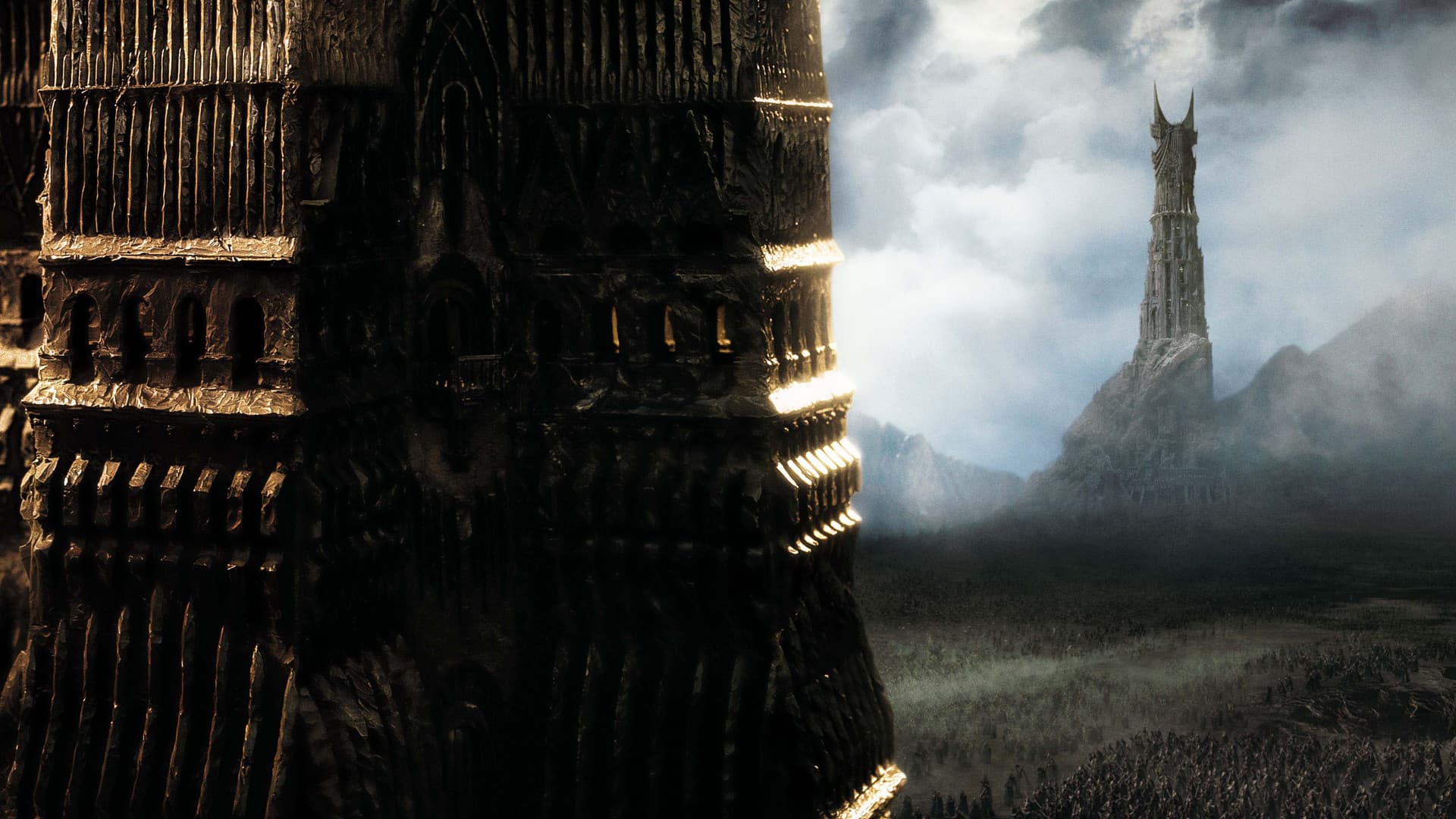
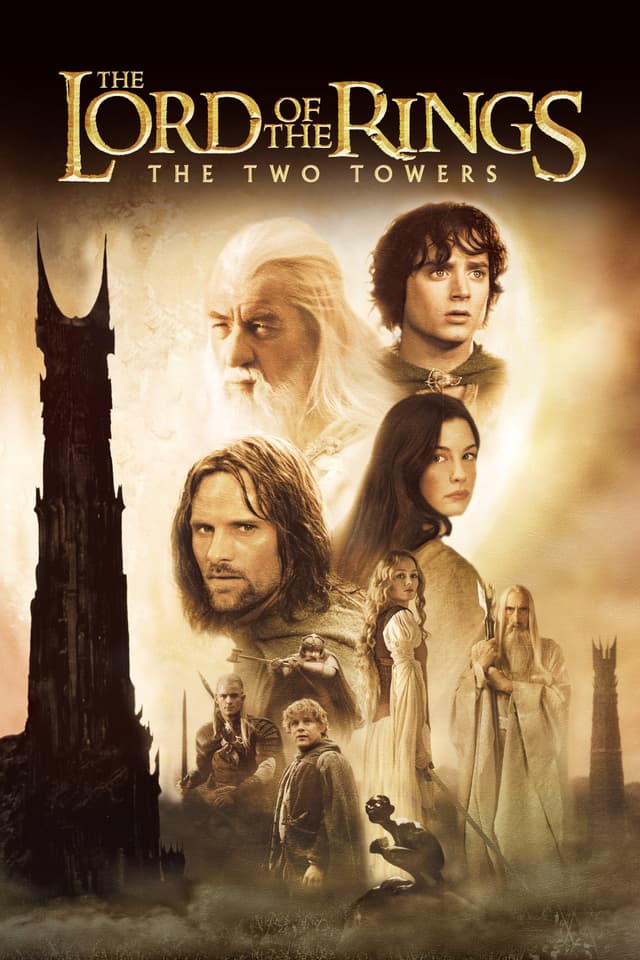
While Frodo and Sam edge closer to Mordor with the help of the shifty Gollum, the divided fellowship makes a stand against Sauron's new ally Saruman and his hordes of Isengard. Meanwhile, Aragorn, Legolas, and Gimli join the men of Rohan in defending the fortress of Helm's Deep against an army of 10,000 Uruk-hai. As the Ents of Fangorn awaken to confront Isengard, the fate of Middle-earth hangs on the courage of unlikely heroes scattered across three storylines.
What Is the Budget of The Lord of the Rings: The Two Towers (2002)?
The Lord of the Rings: The Two Towers (2002), directed by Peter Jackson and distributed by New Line Cinema, was produced on a reported budget of $94,000,000, allocated from the combined $281,000,000 negative cost of the back-to-back trilogy shoot. New Line Cinema, then a subsidiary of Time Warner, financed the entire trilogy in a single greenlight in 1998, an unprecedented decision championed by then-CEO Bob Shaye that committed the studio to filming all three J.R.R. Tolkien adaptations simultaneously in New Zealand under Jackson's direction. The Two Towers entered active production with most of its principal photography already completed during the trilogy block from October 1999 to December 2000, with dedicated pickup shoots in 2001 and 2002 expanding sequences such as the Battle of Helm's Deep, the Ents at Isengard, and Gollum's introduction.
The investment reflected a uniquely structured commitment. By financing the trilogy together, New Line absorbed enormous early risk in exchange for substantial economies of scale on sets, costumes, creature effects, and the New Zealand production infrastructure built around Wellington-based WETA Workshop and WETA Digital. After The Fellowship of the Ring earned $887,800,000 worldwide in 2001 and won four Academy Awards, the studio's gamble looked secure, and incremental spending on The Two Towers pickups, additional Gollum performance capture, and post-production was approved without hesitation through 2002.
Key Budget Allocation Categories
The Two Towers' reported $94,000,000 budget was distributed across several core production areas:
- Above-the-Line Talent: Director, co-writer, and producer Peter Jackson, co-writers Fran Walsh and Philippa Boyens, and producer Barrie M. Osborne anchored the creative team. The ensemble cast was led by Elijah Wood, Viggo Mortensen, Ian McKellen, Sean Astin, Liv Tyler, Cate Blanchett, John Rhys-Davies, Bernard Hill, Christopher Lee, Brad Dourif, Miranda Otto, Karl Urban, and David Wenham, with Andy Serkis providing the motion-capture performance and voice for Gollum. Negotiating compensation across a trilogy locked the entire ensemble in at favorable rates relative to standalone tentpole pricing.
- New Zealand Location Shoot: Principal photography spanned 274 days across more than 150 locations on both the North and South Islands, including the Tongariro National Park stand-in for Emyn Muil and Mordor approaches, the Mavora Lakes for Fangorn, the Poolburn Reservoir for Rohan, and Twizel for the Pelennor staging. Multiple unit productions ran in parallel to capture the geographically dispersed storylines that The Two Towers splits into three threads.
- WETA Digital and Gollum Performance Capture: WETA Digital, led by visual effects supervisor Joe Letteri, built Gollum as a fully digital character driven by Andy Serkis' on-set physical performance, then refined through extensive motion-capture passes after the principal shoot. The character required new pipelines for skin shading, eye reflectivity, and facial muscle simulation, work that consumed a significant share of the post-production budget and laid the foundation for modern performance-capture cinema.
- Helm's Deep Battle Sequence: The film's climactic 40-minute siege was shot over 120 nights at the Dry Creek Quarry near Wellington on a purpose-built set, using thousands of prosthetic Uruk-hai pieces produced by WETA Workshop, custom rain rigs to simulate the storm, and Massive software, also developed at WETA, to generate the digital armies. The sequence is widely cited as the most expensive single set piece in the trilogy.
- Creature Effects and WETA Workshop: WETA Workshop, led by Richard Taylor, produced thousands of weapons, suits of armor, prosthetic Uruk-hai and Orc appliances, the Ent puppetry for Treebeard, and the practical Warg models. The Two Towers' creature inventory grew substantially relative to Fellowship, with the Uruk-hai army alone requiring industrial-scale prosthetic and costume runs.
- Score and Music: Howard Shore composed the symphonic score, building on the Fellowship leitmotifs while introducing the Rohan theme, the Isengard machine ostinato, and the Helm's Deep choral material. The London Philharmonic Orchestra recorded the cues, with vocal performances from Sheila Chandra, Ben Del Maestro, and Emiliana Torrini providing the recurring solo voices.
- Visual Effects Beyond Gollum: Beyond Gollum, the film required extensive digital extensions for Helm's Deep, Isengard, and Orthanc, plus fully CG environments for Fangorn Forest and the Dead Marshes. Massive crowd simulation generated the Uruk-hai charge and the Ents' assault on Isengard, work that won the Academy Award for Best Visual Effects.
- Pickup Shoots and Post-Production: Dedicated pickup shoots in late 2001 and mid-2002 added new sequences after early cuts revealed the need to expand Gollum's screen time, restructure the Helm's Deep build-up, and clarify the parallel storylines. Pickups, ADR, sound editing, and final color extended post-production through November 2002, just weeks before the December release.
How Does The Lord of the Rings: The Two Towers' Budget Compare to Similar Films?
At a reported $94,000,000, The Two Towers sits at the mid-point of the trilogy and well below the inflated budgets of the later Hobbit films. The comparison set illustrates how its commercial outcome anchored the franchise's long-term economics:
- The Lord of the Rings: The Fellowship of the Ring (2001): Budget $93,000,000 | Worldwide $887,800,000. The trilogy opener established the template and earned only a slightly lower worldwide total, with The Two Towers improving on it by roughly $55,000,000 globally as word of mouth and Gollum-driven enthusiasm built across 2002.
- The Lord of the Rings: The Return of the King (2003): Budget $94,000,000 | Worldwide $1,148,061,608. The trilogy capstone matched The Two Towers' production cost and earned $200,000,000 more worldwide, winning all 11 of its Oscar nominations including Best Picture and Best Director.
- The Hobbit: An Unexpected Journey (2012): Budget $180,000,000 | Worldwide $1,017,003,568. Jackson's return to Middle-earth nearly doubled The Two Towers' negative cost while earning only modestly more, reflecting the Hobbit trilogy's expanded creature work, 48fps high-frame-rate format, and inflated above-the-line packaging a decade later.
- Harry Potter and the Chamber of Secrets (2002): Budget $100,000,000 | Worldwide $879,000,000. The closest 2002 fantasy peer cost slightly more and earned less than The Two Towers, illustrating how Jackson's film led the year's fantasy field both creatively and commercially.
- Spider-Man (2002): Budget $139,000,000 | Worldwide $825,025,036. Sony's superhero blockbuster cost nearly 50% more than The Two Towers and earned $100,000,000 less worldwide, a useful contrast for understanding the trilogy's exceptional cost efficiency.
- Star Wars: Episode II - Attack of the Clones (2002): Budget $115,000,000 | Worldwide $653,779,970. Lucasfilm's prequel cost 22% more than The Two Towers but trailed it by nearly $300,000,000 at the worldwide box office, the most direct evidence that Jackson's craftsmanship-first production model outperformed Hollywood's digital-effects-first competition.
The Lord of the Rings: The Two Towers Box Office Performance
The Two Towers opened on December 18, 2002, earning $62,007,528 over its three-day domestic opening weekend (and approximately $102,000,000 over its first five days), the largest December opening of all time at that point. The film ended its theatrical run as the highest-grossing release of 2002 worldwide, dethroning Spider-Man, and was the second film in history to clear $900,000,000 globally after only Titanic.
Against a reported production budget of $94,000,000, the film needed approximately $250,000,000 in worldwide gross to reach profitability when accounting for marketing and distribution costs. Here is the financial breakdown:
Box Office Breakdown
The Lord of the Rings The Two Towers

The Two Towers returned approximately $5.10 in theatrical revenue for every $1 invested when measured against total estimated production and marketing spend, an exceptional performance for a film whose production cost had been considered audacious only two years earlier. The domestic share of the gross was $350,104,956 against an international share of $594,199,062, a 37/63 split that confirmed Tolkien's global brand strength and gave New Line the cushion to absorb any softness that might have hit Return of the King a year later.
The performance further validated New Line's single-greenlight gamble. Home video releases, particularly the November 2003 Extended Edition with 43 minutes of additional footage, generated hundreds of millions of dollars in additional revenue. The trilogy's combined worldwide theatrical gross eventually exceeded $2,900,000,000, and ancillary sales, broadcast licenses, and merchandising pushed Time Warner's aggregate return on the entire trilogy investment past 10x.
The Lord of the Rings: The Two Towers Production History
Development on Peter Jackson's Lord of the Rings adaptation began at Miramax in 1995, where the project was conceived as two films before Bob Shaye at New Line Cinema famously asked Jackson, "Why aren't you doing three films, one for each book?" and committed $281,000,000 to finance the trilogy back-to-back in August 1998. Jackson, co-writers Fran Walsh and Philippa Boyens, and conceptual artists Alan Lee and John Howe spent more than a year on pre-production, designing every creature, weapon, costume, and set across the entire three-film arc before a single foot of film was exposed.
Principal photography ran from October 11, 1999 to December 22, 2000 across more than 150 locations throughout New Zealand, utilizing the country's landscapes for Middle-earth's wide range of geographies and benefiting from the New Zealand government's production incentives and currency advantage at the time. The trilogy's base was built around WETA Workshop and WETA Digital in Wellington, with as many as seven units shooting in parallel during peak production to keep the cast and the New Zealand summer weather windows on schedule. The Two Towers material was filmed alongside Fellowship and Return of the King footage, with continuity managed across years of shooting.
Casting Andy Serkis as Gollum in 1999 reframed the visual effects strategy for the trilogy. Originally intended primarily as a voice role with limited animated reference, Serkis' on-set performance became the foundation for a new pipeline at WETA Digital, in which his physical movement and facial work were captured during principal photography and later refined through dedicated motion-capture sessions. The Two Towers represented Gollum's first significant screen presence, and his Stinker-vs-Slinker mirror conversation became the trilogy's most cited proof-of-concept for performance-capture acting.
Dedicated Two Towers pickup shoots in late 2001 and mid-2002, after Fellowship's release confirmed the trilogy's commercial trajectory, expanded the Helm's Deep battle, added Gollum scenes, and reshot portions of the Faramir storyline to clarify the character's arc relative to the book. Post-production ran through November 2002, with Howard Shore recording the score in London, sound editing supervised by Ethan Van der Ryn, and final visual effects shots delivered by WETA Digital only weeks before the December 18, 2002 release. The film's premiere on December 5, 2002 at the Ziegfeld Theatre in New York launched a worldwide rollout that capitalized on the Fellowship audience's built-in momentum.
Awards and Recognition
The Lord of the Rings: The Two Towers received six nominations at the 75th Academy Awards in March 2003, winning two: Best Visual Effects (Jim Rygiel, Joe Letteri, Randall William Cook, and Alex Funke) and Best Sound Editing (Ethan Van der Ryn and Michael Hopkins). It was nominated for Best Picture, Best Director (Peter Jackson), Best Film Editing, and Best Sound, with the Best Picture loss to Chicago widely regarded as a placeholder ahead of Return of the King's 11-win sweep a year later.
At the BAFTAs, the film won Best Special Visual Effects and Best Costume Design, and was nominated for Best Film, Best Director, and the Audience Award. It received Saturn Award nominations across the major fantasy categories from the Academy of Science Fiction, Fantasy and Horror Films. Howard Shore's score earned a Grammy nomination for Best Score Soundtrack Album. The film also won the MTV Movie Award for Best Virtual Performance for Andy Serkis as Gollum, a category essentially created to recognize the new form of acting his work introduced. Critics groups including the Broadcast Film Critics Association, the Online Film Critics Society, and numerous regional circles awarded The Two Towers Best Picture or Best Director honors during the 2002-2003 awards season.
Critical Reception
The Lord of the Rings: The Two Towers received overwhelmingly positive reviews. The film holds a 95% approval rating on Rotten Tomatoes based on 263 critic reviews, with a critical consensus praising it as a worthy continuation that surpasses Fellowship in spectacle while deepening the emotional stakes. On Metacritic, the film scored 87 out of 100, indicating universal acclaim. Audiences surveyed by CinemaScore gave the film an A, matching the Fellowship grade and signaling that the trilogy's broad appeal had survived its narrative midpoint.
Critics broadly praised the Battle of Helm's Deep as a landmark battle sequence, the seamless integration of Gollum into live-action scenes, and Howard Shore's expanded score. Roger Ebert of the Chicago Sun-Times awarded the film three-and-a-half stars and wrote that "Gollum is a triumph of special effects and acting, a creature so visually realized that he holds his own opposite his human co-stars." Peter Travers of Rolling Stone called it "a movie that takes our breath away with the power of its imagery and the emotional honesty at its core." A.O. Scott of The New York Times wrote that Jackson "has made the rare sequel that surpasses its predecessor in scope, ambition, and pure cinematic excitement."
A small minority of critics, most notably Salon's Stephanie Zacharek, objected to the film's long battle sequences and the liberties taken with Faramir's character compared with the book. Tolkien purists raised similar concerns about the elves' appearance at Helm's Deep and the absence of the Scouring of the Shire foreshadowing. The film's reputation has only strengthened over time, with retrospective rankings consistently placing it among the greatest fantasy films ever made and the Battle of Helm's Deep among the most influential battle sequences in cinema history.
Frequently Asked Questions
How much did it cost to make The Lord of the Rings: The Two Towers (2002)?
The reported production budget was $94,000,000, allocated from the combined $281,000,000 negative cost of the back-to-back Lord of the Rings trilogy shoot. New Line Cinema financed the entire trilogy in a single August 1998 greenlight under then-CEO Bob Shaye, with WingNut Films and The Saul Zaentz Company as production partners.
How much did The Two Towers earn at the box office?
The film grossed $350,104,956 domestically and $594,199,062 internationally, for a worldwide total of $944,925,668. It opened to $62,007,528 in the United States over its December 20, 2002 three-day weekend and was the highest-grossing film of 2002 worldwide.
Was The Two Towers profitable?
Yes, decisively. Against a $94,000,000 production budget and an estimated $75,000,000 to $90,000,000 in marketing spend, the film returned approximately $5.10 in worldwide gross for every $1 invested. It is among the most cost-efficient blockbusters of the 2000s and validated New Line Cinema's single-greenlight trilogy gamble.
Who directed The Two Towers?
Peter Jackson directed the film, working from a screenplay he co-wrote with Fran Walsh, Philippa Boyens, and Stephen Sinclair, based on the novel by J.R.R. Tolkien. Jackson also produced through WingNut Films alongside Barrie M. Osborne and Tim Sanders.
Where was The Two Towers filmed?
Principal photography took place across more than 150 locations throughout New Zealand from October 1999 to December 2000, shot back-to-back with the other two trilogy installments. Notable locations included Tongariro National Park, the Mavora Lakes, the Poolburn Reservoir, Twizel, and the Dry Creek Quarry near Wellington, where the Helm's Deep set was built. Pickup shoots were conducted in late 2001 and mid-2002.
How does The Two Towers compare to the other Lord of the Rings films?
The Two Towers cost $94,000,000, fractionally more than The Fellowship of the Ring at $93,000,000 and matching The Return of the King at $94,000,000. Worldwide, Fellowship earned $887,800,000, The Two Towers earned $944,925,668, and Return of the King earned $1,148,061,608, with each entry outperforming the last. The Hobbit trilogy that followed nearly doubled the per-film negative cost without matching the worldwide gross trajectory.
Who plays Gollum in The Two Towers?
Andy Serkis plays Gollum, delivering an on-set physical performance that was later refined through extensive motion-capture sessions at WETA Digital in Wellington. The character was the first fully digital co-lead in a live-action film, and Serkis' work won the MTV Movie Award for Best Virtual Performance and is widely credited with launching modern performance-capture cinema.
How many Oscars did The Two Towers win?
The film won two Academy Awards at the 75th Oscars in March 2003: Best Visual Effects (Jim Rygiel, Joe Letteri, Randall William Cook, Alex Funke) and Best Sound Editing (Ethan Van der Ryn, Michael Hopkins). It received six nominations in total, including Best Picture and Best Director for Peter Jackson, but lost the top awards to Chicago.
What did critics think of The Two Towers?
The film received overwhelmingly positive reviews, with a 95% approval rating on Rotten Tomatoes (based on 263 critics) and an 87 out of 100 score on Metacritic. Audiences gave it an A CinemaScore. Critics praised the Battle of Helm's Deep, the seamless integration of Gollum, and Howard Shore's expanded score, with retrospective rankings consistently placing the film among the greatest fantasy films ever made.
Who composed the score for The Two Towers?
Howard Shore composed the symphonic score, building on the Fellowship leitmotifs while introducing the Rohan theme, the Isengard machine ostinato, and the Helm's Deep choral material. The score was recorded with the London Philharmonic Orchestra and featured vocal performances from Sheila Chandra, Ben Del Maestro, and Emiliana Torrini. The soundtrack received a Grammy nomination for Best Score Soundtrack Album.
Filmmakers
The Lord of the Rings The Two Towers

Official Trailer
Build budgets like this one in Saturation
Start from an industry-standard feature film template, import the schedule and rates you already have, and let the cost report keep itself current as you spend. Real-time collaboration, no spreadsheets.