The Lord of the Rings The Return of the King Budget
 AdventureFantasyAction3h 21m
Updated
Synopsis
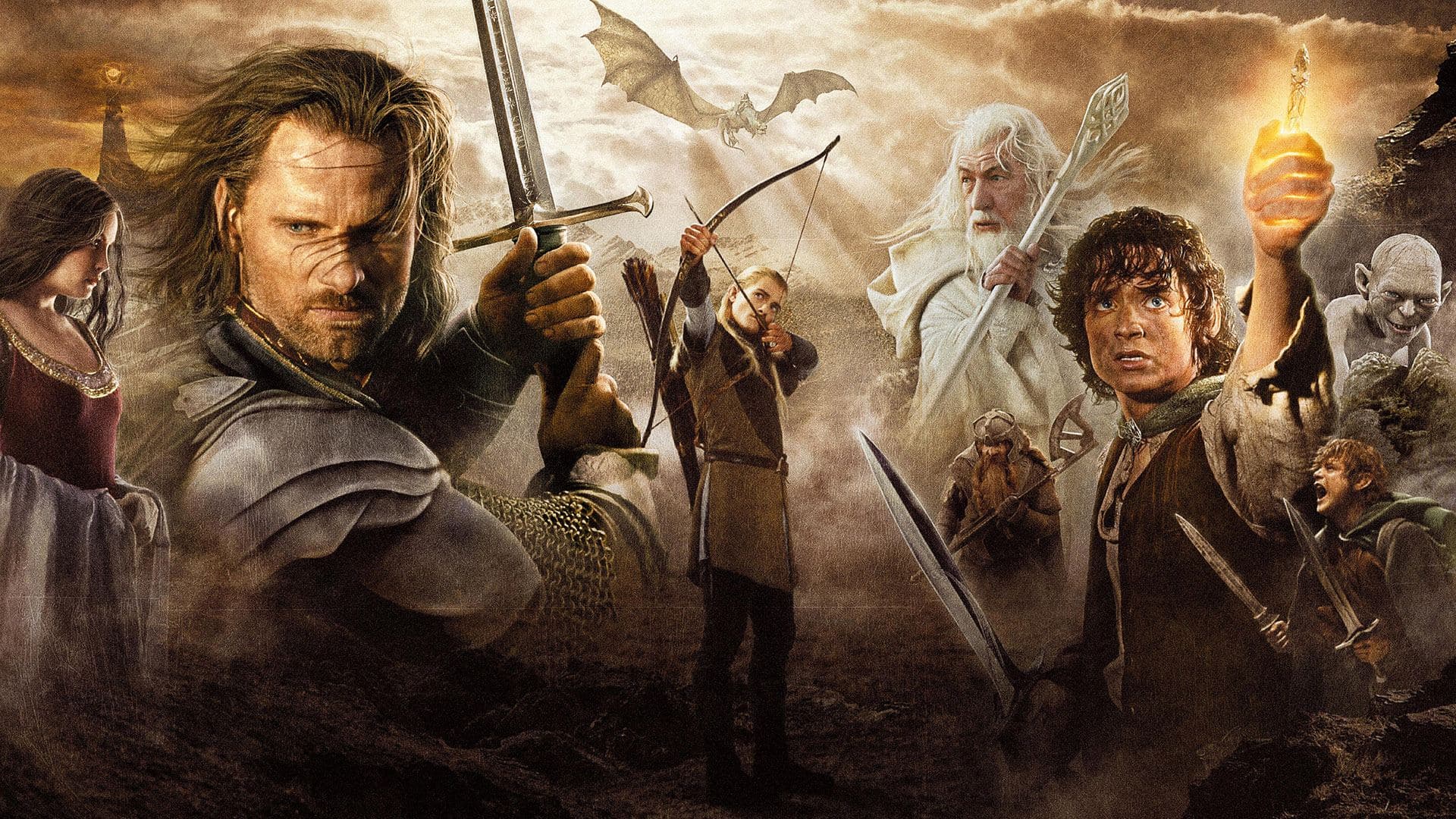
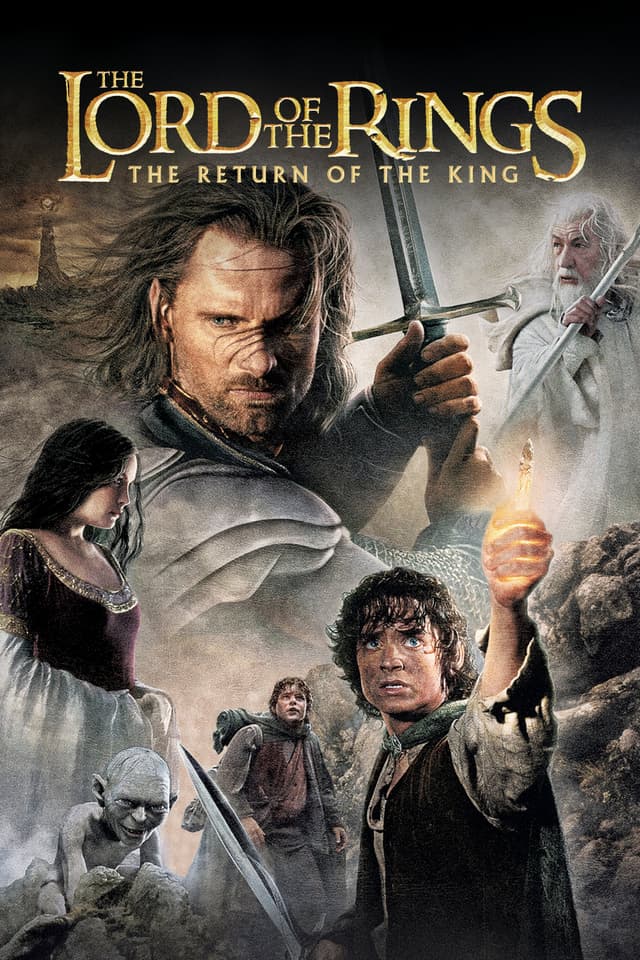
Aragorn is revealed as the heir to the ancient kings as he, Gandalf and the other members of the broken fellowship struggle to save Gondor from Sauron's forces. Meanwhile, Frodo and Sam bring the ring closer to the heart of Mordor, while the corrupted creature Gollum schemes against them in a final battle that will decide the fate of Middle-earth.
What Is the Budget of The Lord of the Rings: The Return of the King (2003)?
The Lord of the Rings: The Return of the King (2003), directed by Peter Jackson and distributed by New Line Cinema, was produced on an allocated budget of $94,000,000, drawn from the combined $281,000,000 the studio committed to shoot all three Lord of the Rings films back to back in New Zealand from October 1999 to December 2000. Because the trilogy was financed and produced as a single multi-year undertaking rather than three separate productions, the Return of the King figure represents an internal accounting split rather than a discrete line item, and several New Line executives and Peter Jackson have noted that the true marginal cost of the final film, including its extensive 2003 pickup shoots and visual effects completion work, ran well above the headline number.
The investment was unprecedented for an independent studio. New Line, then a subsidiary of Time Warner, effectively staked its corporate future on Jackson and producer Barrie Osborne delivering three releasable tentpoles from a single production block, a structure no Hollywood studio had attempted at this scale. By the time Return of the King reached theaters in December 2003, the trilogy had already generated $1.789 billion in worldwide box office from the first two installments, justifying the bet and giving Jackson roughly $150,000,000 in cumulative pickup and post-production resources to finish the final film.
Key Budget Allocation Categories
The allocated $94,000,000 for Return of the King and its share of the trilogy-wide infrastructure was distributed across several core production areas:
- Visual Effects and Weta Digital: The film required more than 1,400 visual effects shots, the highest count of any Lord of the Rings installment, including the Battle of the Pelennor Fields, the Army of the Dead sequence, Shelob, the Mouth of Sauron, and the climactic destruction of Mount Doom. Weta Digital, which Jackson co-owns, scaled to roughly 420 artists for the final film and pushed its proprietary Massive crowd-simulation software to render 200,000 individual Orc and Rohirrim soldiers in single frames.
- Practical Effects, Miniatures, and Bigatures: Richard Taylor's Weta Workshop built more than 48 miniature sets for Return of the King alone, including the seven-tier Minas Tirith model, which stood 7 meters tall and weighed several tons. The Workshop also produced 19,000 hand-crafted weapons, 2,000 sets of armor, and the elaborate Witch-king and Mouth of Sauron prosthetics, all of which carried real per-unit material and labor costs.
- Cast Salaries: Lead actors signed three-picture deals at the start of the trilogy, with backend participation that ultimately delivered substantial paydays once the films cleared their break-even points. Ian McKellen, Viggo Mortensen, Elijah Wood, Sean Astin, Bernard Hill, and the wider ensemble worked on Return of the King pickups in 2003 in addition to the principal 1999 to 2000 block.
- New Zealand Principal Photography and 2003 Pickups: The bulk of Return of the King material was captured during the original 274-day principal shoot, but Jackson returned to New Zealand for two additional pickup blocks in mid-2002 and mid-2003 to complete the Shelob sequence, the Paths of the Dead, the final confrontation at Mount Doom, and the multiple endings at Bag End and the Grey Havens.
- Score, Choirs, and Soundtrack: Howard Shore composed roughly 211 minutes of original music for the theatrical cut, recorded with the London Philharmonic Orchestra, the London Voices choir, the New Zealand Symphony Orchestra, and soloists including Renée Fleming, Ben Del Maestro, and the boy soprano Sir James Galway flautist. Annie Lennox's "Into the West" closing song was produced separately with Shore and Fran Walsh.
- Editorial and Post-Production: Editor Jamie Selkirk spent more than a year cutting the theatrical version from over 1,000 hours of footage, working concurrently with Jackson on the extended edition assembly. Post-production overlapped with Two Towers delivery, meaning Park Road Post in Wellington ran multiple Lord of the Rings pipelines simultaneously through 2002 and 2003.
- Marketing and Premiere Campaign: New Line's marketing spend for Return of the King is estimated between $120,000,000 and $150,000,000 worldwide, including the December 1, 2003 world premiere in Wellington, New Zealand attended by an estimated 100,000 fans along Courtenay Place, plus simultaneous premiere events in London, Berlin, and Los Angeles.
How Does The Lord of the Rings: The Return of the King's Budget Compare to Similar Films?
At an allocated $94,000,000, Return of the King sits in the middle of the trilogy in absolute terms but well below most fantasy tentpoles of the following decade. The comparison set illustrates how Jackson's economies of scale produced a fundamentally different cost structure than the genre that followed:
- The Lord of the Rings: The Fellowship of the Ring (2001): Budget $93,000,000 | Worldwide $898,204,420. The trilogy opener carried a near-identical allocated budget and earned 9.6x that figure, validating the gamble and giving New Line the cash flow to finish the back two films on schedule.
- The Lord of the Rings: The Two Towers (2002): Budget $94,000,000 | Worldwide $951,514,058. The middle film matched Return of the King's allocation and improved on Fellowship's gross by roughly $53,000,000, the rare second installment to out-earn its predecessor in absolute dollars.
- The Hobbit: An Unexpected Journey (2012): Budget $180,000,000 | Worldwide $1,021,103,568. Jackson's return to Middle-earth nearly doubled the per-film cost of Return of the King yet earned only 89% of its worldwide gross, underscoring how much more expensive the same New Zealand pipeline became a decade later.
- The Hobbit: The Battle of the Five Armies (2014): Budget $250,000,000 | Worldwide $962,201,338. The Hobbit trilogy finale cost more than 2.6x what Return of the King cost and grossed $184,000,000 less worldwide, a stark comparison the trade press cited when the second trilogy underperformed expectations.
- Avatar (2009): Budget $237,000,000 | Worldwide $2,923,706,026. James Cameron's effects-driven blockbuster cost 2.5x what Return of the King cost and is the only film of its era to clear the trilogy finale's box office on a per-film basis.
- Pirates of the Caribbean: At World's End (2007): Budget $300,000,000 | Worldwide $963,420,425. Disney's third Pirates film, released four years later, cost more than 3x what Return of the King cost yet finished $182,000,000 short of the trilogy finale's worldwide gross.
The Lord of the Rings: The Return of the King Box Office Performance
Return of the King opened on December 17, 2003 to $72,629,713 over a five-day debut and $34,504,938 in its three-day weekend, the largest December opening in industry history at that time. The film held first place at the domestic box office for four straight weekends and crossed $1,000,000,000 worldwide on February 8, 2004, becoming only the second film ever to do so after Titanic (1997). It would remain the second-highest-grossing film of all time for nearly six years until Avatar (2009).
Against the allocated $94,000,000 production budget plus an estimated $120,000,000 to $150,000,000 in worldwide marketing, the film returned an extraordinary multiple. Here is the financial breakdown:
Box Office Breakdown
The Lord of the Rings The Return of the King

Return of the King returned approximately $4.70 in theatrical revenue for every $1 invested when measured against total estimated production and marketing spend, a margin that propelled New Line to its highest single-year operating profit and effectively financed the studio's output for the remainder of the decade. Domestic gross of $377,845,905 represented 33% of the worldwide total against an international gross of $768,611,403 at 67%, the most internationally weighted of the three Lord of the Rings films and a precursor to the global-revenue tilt that would dominate the blockbuster era.
Subsequent home video, broadcast television, and extended-edition theatrical and Blu-ray releases pushed Return of the King's lifetime revenue well past $1,500,000,000 by 2020 estimates. The film's December 2020, 2021, and 2024 theatrical anniversary re-releases each added incremental returns and reaffirmed the property's evergreen commercial value.
The Lord of the Rings: The Return of the King Production History
Development on Peter Jackson's Lord of the Rings adaptation began at Miramax in 1997 as a two-film treatment co-written with Fran Walsh and Philippa Boyens. When Miramax cut the budget cap to $75,000,000 in mid-1998 and demanded a single film, Jackson took the project to New Line's Bob Shaye, who famously asked why they were not making three films instead of one. New Line committed to the full $281,000,000 trilogy production and Jackson moved his team to New Zealand to begin two and a half years of pre-production design with Alan Lee and John Howe.
Principal photography on all three films ran continuously from October 11, 1999 to December 22, 2000, a 274-day shoot that traversed more than 150 locations across the North and South Islands, including Mount Ngauruhoe (Mount Doom), Tongariro National Park (Mordor), Edoras at Mount Sunday, the Putangirua Pinnacles (Paths of the Dead approach), and Wellington-area soundstages at Stone Street Studios. The cast and crew expanded to more than 2,400 people at peak.
Jackson returned to New Zealand for Return of the King-specific pickup shoots in mid-2002 and again in mid-2003, completing the Shelob sequence after it was moved from Two Towers, the Army of the Dead sequence at the Dimholt Road, the Mouth of Sauron, and the multiple Bag End and Grey Havens endings. The 2003 pickups, conducted while editors were locking the theatrical cut, contributed to the film's reputation for "multiple endings" and remain a defining structural choice that critics have debated since release.
Post-production occupied 2002 and 2003 at Park Road Post and Weta Digital in Wellington, with Jamie Selkirk editing concurrently with Annie Collins and Michael Horton on Two Towers extended-edition work. The final theatrical cut ran 201 minutes; the 2004 extended edition added 50 minutes for a 251-minute total, including the death of Saruman, the Mouth of Sauron sequence, and additional Faramir and Eowyn material that did not make the theatrical version.
The world premiere took place on December 1, 2003 in Wellington, New Zealand, with an estimated 100,000 fans lining Courtenay Place and Prime Minister Helen Clark declaring the day a national event. Simultaneous premieres followed in Berlin (December 10), London (December 11), and Los Angeles (December 3), with wide release on December 17, 2003.
Awards and Recognition
The Lord of the Rings: The Return of the King swept the 76th Academy Awards on February 29, 2004, winning all 11 of its nominations to tie Ben-Hur (1959) and Titanic (1997) for the most Oscar wins in history. It is the only film of those three to win every single category in which it was nominated. The wins included Best Picture, Best Director (Peter Jackson), Best Adapted Screenplay (Jackson, Walsh, Boyens), Best Original Score (Howard Shore), Best Original Song ("Into the West" by Shore, Walsh, Annie Lennox), Best Film Editing, Best Art Direction, Best Costume Design, Best Makeup, Best Sound Mixing, and Best Visual Effects.
The film also won 4 Golden Globe Awards including Best Motion Picture, Drama and Best Director, 5 BAFTAs including Best Film and Best Adapted Screenplay, the Producers Guild of America's Darryl F. Zanuck Award, the Directors Guild of America Award for Outstanding Directing, and the Screen Actors Guild Award for Outstanding Performance by a Cast in a Motion Picture, the ensemble's only SAG win for the trilogy.
Howard Shore's score won a Grammy Award in 2005 for Best Score Soundtrack for Visual Media, while Annie Lennox's "Into the West" won the Grammy for Best Song Written for a Motion Picture, Television or Other Visual Media. The film also took the American Film Institute's Movie of the Year, the Broadcast Film Critics Association's Best Picture, and won the Hugo Award for Best Dramatic Presentation, Long Form in 2004.
Critical Reception
Return of the King received virtually universal acclaim. The film holds a 93% approval rating on Rotten Tomatoes based on 287 critic reviews, with a critical consensus that called it "an exciting, emotionally satisfying conclusion to a series with characters that have grown almost like family to viewers." On Metacritic, the film scored 94 out of 100, indicating universal acclaim. Audiences surveyed by CinemaScore gave the film an A, in line with audience response to the first two installments.
Roger Ebert awarded the film four stars in the Chicago Sun-Times and wrote that it "is such a crowning achievement, such a visionary use of all the tools of special effects, such a pure spectacle, that it can be enjoyed even by those who haven't seen the first two films." Peter Travers of Rolling Stone called it "a labor of love and a singular achievement," and Time's Richard Schickel described the film as "the most visionary film yet committed to celluloid."
Critics broadly praised the staging of the Battle of the Pelennor Fields, the emotional weight of Sam and Frodo's ascent of Mount Doom, Howard Shore's score, and the technical achievements of Weta Digital. The principal critical reservation concerned the film's multiple endings, with a number of reviewers including A.O. Scott in The New York Times noting that the picture appears to conclude several times before reaching its actual final scene. That reservation has not diminished the film's standing: subsequent decennial polls including the BBC's 21st Century's 100 Greatest Films (2016) have consistently placed Return of the King among the most acclaimed films of the new millennium.
Frequently Asked Questions
How much did it cost to make The Lord of the Rings: The Return of the King (2003)?
The allocated production budget was $94,000,000, drawn from the combined $281,000,000 New Line Cinema committed to shoot all three Lord of the Rings films back to back in New Zealand from October 1999 to December 2000. The trilogy was financed and produced as a single multi-year undertaking, so the per-film figure represents an internal accounting split. Including 2003 pickup shoots and post-production completion work, the true marginal cost of Return of the King ran above the headline number.
How much did The Lord of the Rings: The Return of the King earn at the box office?
The film grossed $377,845,905 domestically and $768,611,403 internationally, for a worldwide total of $1,146,457,308. It opened to $72,629,713 over its five-day debut and $34,504,938 in its three-day weekend, the largest December opening in industry history at that time, and crossed $1,000,000,000 worldwide on February 8, 2004 to become only the second film to do so after Titanic.
How many Oscars did The Return of the King win?
Return of the King won all 11 of its Academy Award nominations at the 76th Oscars on February 29, 2004, tying Ben-Hur (1959) and Titanic (1997) for the most Oscar wins in history. It is the only film of those three to win every single category in which it was nominated. Wins included Best Picture, Best Director, Best Adapted Screenplay, Best Original Score, Best Original Song, Best Film Editing, Best Art Direction, Best Costume Design, Best Makeup, Best Sound Mixing, and Best Visual Effects.
Who directed The Lord of the Rings: The Return of the King?
Peter Jackson directed the film, working from a screenplay he co-wrote with Fran Walsh and Philippa Boyens. Jackson directed all three Lord of the Rings films as a single continuous production from 1999 to 2000, with pickup shoots for Return of the King continuing through 2003.
Where was The Return of the King filmed?
The film was shot entirely in New Zealand, on more than 150 locations across the North and South Islands. Key locations included Mount Ngauruhoe (Mount Doom), Tongariro National Park (Mordor), Edoras at Mount Sunday in Canterbury, the Putangirua Pinnacles (the Paths of the Dead approach), and Wellington-area soundstages at Stone Street Studios. Pickup shoots in 2002 and 2003 returned to several of these locations.
Who composed the music for The Return of the King?
Howard Shore composed approximately 211 minutes of original music for the theatrical cut, recorded with the London Philharmonic Orchestra, the London Voices choir, the New Zealand Symphony Orchestra, and soloists including Renée Fleming and Ben Del Maestro. Annie Lennox co-wrote and performed the closing song "Into the West" with Shore and Fran Walsh, which won the Academy Award for Best Original Song.
How does Return of the King's budget compare to The Hobbit trilogy?
Return of the King's allocated budget of $94,000,000 was roughly half the cost of each Hobbit film. The Hobbit: An Unexpected Journey (2012) cost $180,000,000, The Desolation of Smaug (2013) cost $225,000,000, and The Battle of the Five Armies (2014) cost $250,000,000. The Hobbit trilogy finale cost more than 2.6x what Return of the King cost and grossed $184,000,000 less worldwide, a comparison cited frequently when the second Middle-earth trilogy underperformed expectations.
Why does The Return of the King have so many endings?
The theatrical cut concludes with a sequence of separate scenes including the destruction of the Ring, the coronation of Aragorn, the wedding of Aragorn and Arwen, the return to Bag End, and the departure for the Grey Havens. Several were shot during the 2003 pickup blocks rather than the original 1999 to 2000 principal photography, and Peter Jackson has stated they were preserved to honor J.R.R. Tolkien's novel, which devotes substantial pages to the aftermath. Critics including A.O. Scott of The New York Times noted that the picture appears to conclude multiple times before reaching its final scene.
What did critics think of The Return of the King?
The film received virtually universal acclaim, with a 93% approval rating on Rotten Tomatoes (based on 287 critics) and a Metacritic score of 94 out of 100. Audiences gave it an A CinemaScore. Roger Ebert awarded four stars and called it "such a crowning achievement, such a visionary use of all the tools of special effects, such a pure spectacle." The film has consistently placed among the most acclaimed films of the new millennium in subsequent decade-end polls.
How long is the extended edition of The Return of the King?
The 2004 extended edition runs 251 minutes (4 hours 11 minutes), 50 minutes longer than the 201-minute theatrical cut. The additional material includes the death of Saruman, the Mouth of Sauron sequence, the Houses of Healing material with Faramir and Eowyn, and additional Aragorn, Gimli, and Legolas scenes. The extended edition was released on DVD on December 14, 2004 and on Blu-ray in 2011.
Filmmakers
The Lord of the Rings The Return of the King

Official Trailer
Build budgets like this one in Saturation
Start from an industry-standard feature film template, import the schedule and rates you already have, and let the cost report keep itself current as you spend. Real-time collaboration, no spreadsheets.