The Hobbit: An Unexpected Journey Budget
 AdventureFantasyAction2h 49m
Updated
Synopsis
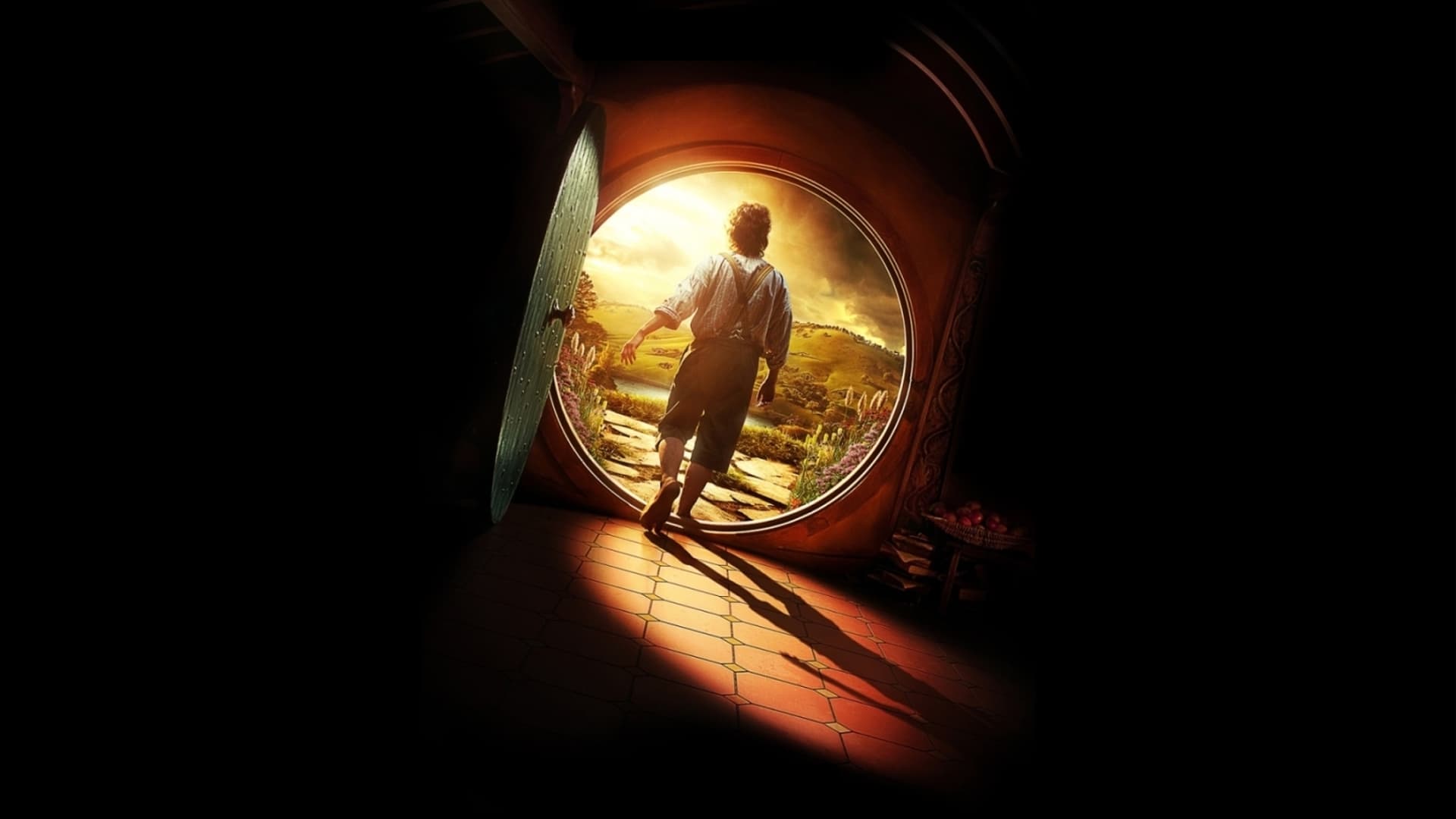
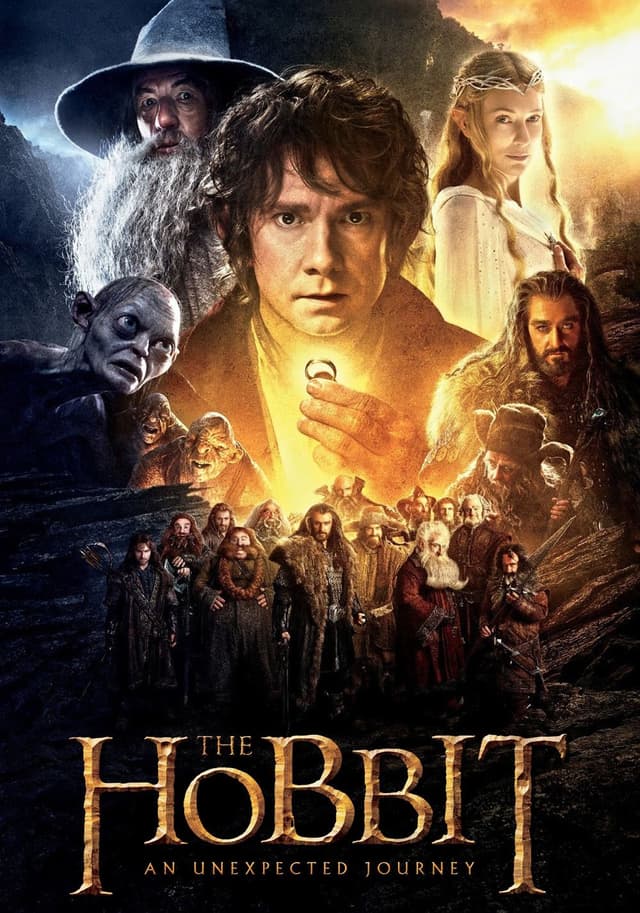
Bilbo Baggins, a comfort-loving Hobbit of the Shire, is swept into an epic quest when the wizard Gandalf and a company of thirteen dwarves led by the exiled king Thorin Oakenshield arrive at his door. Their mission: to reclaim the Lonely Mountain and its vast treasure from the fearsome dragon Smaug. Along the way, Bilbo encounters trolls, orcs, and the creature Gollum, from whom he acquires a mysterious ring of power that will shape the fate of Middle-earth.
What Is the Budget of The Hobbit: An Unexpected Journey?
The Hobbit: An Unexpected Journey (2012), directed by Peter Jackson and distributed by Warner Bros. Pictures and MGM, was produced on a budget of $180,000,000. The first installment of The Hobbit trilogy adapted the opening portion of J.R.R. Tolkien's 1937 novel, following Bilbo Baggins as he joins the wizard Gandalf and thirteen dwarves on a quest to reclaim the Lonely Mountain from the dragon Smaug. The film marked Jackson's return to Middle-earth after a decade-long gap following The Lord of the Rings trilogy.
The $180 million budget funded a production that was shot entirely in New Zealand using groundbreaking 48-frames-per-second (HFR) 3D technology, a first for a major theatrical release. The decision to expand the relatively short source novel from two films to three (announced during production) reflected both the creative ambition to incorporate Tolkien's appendices material and the commercial logic of tripling the franchise's theatrical revenue potential. Jackson's production infrastructure at Stone Street Studios in Wellington provided a cost-efficient base, though the scale of the digital effects work pushed the budget to levels comparable with the Lord of the Rings films when adjusted for inflation.
Key Budget Allocation Categories
The Hobbit: An Unexpected Journey distributed its $180 million budget across the following production areas:
- Visual Effects and 48fps 3D Pipeline: Weta Digital handled the vast majority of VFX work, including the CG creation of Gollum (Andy Serkis reprised the role with dramatically improved motion-capture technology), the Great Goblin and his underground kingdom, the Stone Giants sequence, and the Eagles rescue. The decision to shoot at 48 frames per second doubled the data captured per second compared to traditional 24fps, requiring Weta to render twice as many frames for every VFX shot, a decision that significantly increased post-production costs and timelines.
- Production Design and New Zealand Locations: Production designer Dan Hennah recreated and expanded the Middle-earth aesthetic established in The Lord of the Rings. Key builds included Bag End (rebuilt to full scale), Rivendell, Goblin Town, and the Trollshaw Forest. New Zealand locations included Piopio farmland for Hobbiton, the Rangitikei River gorge, and various sites across the South Island. The permanent Hobbiton set constructed for the film became a major tourist attraction and remains operational.
- Cast and Performance Capture: Martin Freeman led the cast as Bilbo Baggins, with Ian McKellen returning as Gandalf, Richard Armitage as Thorin Oakenshield, and Andy Serkis reprising Gollum. The thirteen-dwarf ensemble (including James Nesbitt, Ken Stott, and Aidan Turner) required extensive prosthetic makeup application daily. Serkis's Gollum scenes used a new generation of performance-capture technology that captured facial expressions with far greater fidelity than the original trilogy.
- Prosthetics and Creature Effects: Weta Workshop, the practical effects division, created prosthetic feet, ears, noses, and wigs for the thirteen dwarves, with daily application times of two to four hours per actor. The Great Goblin was performed by Barry Humphries in motion capture but required a fully CG character. Orcs, Wargs, and trolls combined practical makeup (for close-up shots) with digital creatures (for wide shots and action sequences).
- Score and Sound: Howard Shore returned to compose the score, extending his Middle-earth musical universe with new themes for the dwarves (including the "Misty Mountains" theme, adapted from Tolkien's lyrics) while reprising recognizable motifs from The Lord of the Rings. Neil Finn and plan9 contributed the end-credits song "Song of the Lonely Mountain." The score was recorded at studios in London and Wellington.
- Extended Production Timeline: The Hobbit films were shot as a single continuous production over approximately 266 shooting days across 2011 and 2012, with pick-ups continuing into 2012 for the first film. The extended timeline, while efficient for covering three films, required maintaining crew, sets, and equipment for well over a year, with associated overhead costs.
How Does The Hobbit: An Unexpected Journey's Budget Compare to Similar Films?
At $180,000,000, An Unexpected Journey sits at the lower end of the Hobbit trilogy's budget range. Comparing it with other Middle-earth films and fantasy epics:
- The Hobbit: The Desolation of Smaug (2013): Budget $225,000,000 | Worldwide $958,400,000. The second installment cost 25% more due to the extensive Smaug dragon sequences and Laketown set construction, while earning slightly less, suggesting audience erosion from the first entry.
- The Hobbit: The Battle of the Five Armies (2014): Budget $250,000,000 | Worldwide $956,000,000. The trilogy's most expensive entry, driven by the large-scale battle sequences, earned the least worldwide, confirming a consistent decline across the three films.
- The Lord of the Rings: The Fellowship of the Ring (2001): Budget $93,000,000 | Worldwide $897,700,000. Jackson's first Middle-earth film cost roughly half in nominal terms (and less when adjusted for inflation) while establishing the franchise that An Unexpected Journey depended upon. The comparison highlights how production costs escalated over the intervening decade.
- The Lord of the Rings: The Return of the King (2003): Budget $94,000,000 | Worldwide $1,146,000,000. The franchise high-water mark earned more on roughly half the budget, reflecting both the trilogy's building momentum and the leaner production economics of the early 2000s.
- Alice in Wonderland (2010): Budget $200,000,000 | Worldwide $1,025,500,000. Tim Burton's fantasy blockbuster, released two years earlier, cost 11% more and earned comparable returns, though the two films serve very different audiences and franchise contexts.
The Hobbit: An Unexpected Journey Box Office Performance
The Hobbit: An Unexpected Journey opened in the United States on December 14, 2012, debuting to $84.6 million domestically in its opening weekend. The December release positioned the film as the holiday season's dominant tentpole, a strategy Jackson had successfully employed with The Lord of the Rings.
Box Office Breakdown
The Hobbit: An Unexpected Journey

At approximately +465%, The Hobbit: An Unexpected Journey returned roughly $5.65 for every $1 of production budget invested during its theatrical run.
The first Hobbit film proved that Middle-earth remained a potent theatrical brand nearly a decade after The Return of the King. Its $714 million international gross (70% of worldwide) demonstrated particularly strong demand in Europe and Asia-Pacific markets, though the domestic total of $303 million fell short of the Lord of the Rings trilogy's per-film domestic averages.
The Hobbit: An Unexpected Journey Production History
The path to An Unexpected Journey was one of the most tortured development processes in blockbuster history. After the Lord of the Rings trilogy wrapped, MGM held the film rights to The Hobbit, and the studio's financial instability delayed development for years. Peter Jackson initially intended to produce while Guillermo del Toro directed, and del Toro spent nearly two years on pre-production before departing in May 2010 due to repeated scheduling delays caused by MGM's near-bankruptcy.
Jackson took over directing duties, inheriting some of del Toro's design work while reshaping the production to his own sensibilities. The original plan called for two films, but Jackson announced during production that the project would expand to three, incorporating additional material from Tolkien's Lord of the Rings appendices to flesh out the Necromancer subplot (Sauron's rise in Dol Guldur) and provide more connective tissue to the original trilogy.
Principal photography began on March 21, 2011, in Wellington, New Zealand, and continued through July 2012, with an additional block of pick-ups in mid-2012 specifically for the first film. The production used 48fps 3D cameras (RED Epic), a controversial choice that Jackson championed as the future of cinema. The higher frame rate reduced motion blur and produced hyper-sharp imagery, but early screenings divided audiences and critics, with many finding the look overly smooth and "video-like" rather than cinematic.
The New Zealand government provided significant tax incentives for the production, and a controversial labor dispute in 2010 between the actors' union and Warner Bros. resulted in legislation that redefined independent contractors in New Zealand's film industry. The dispute nearly caused the production to relocate before an agreement was reached that included additional tax rebates for the studio.
Awards and Recognition
The Hobbit: An Unexpected Journey received three Academy Award nominations: Best Visual Effects, Best Production Design, and Best Makeup and Hairstyling. The film did not win in any category, with the VFX award going to Life of Pi. The nominations recognized the production's technical achievements, particularly the advanced performance-capture work on Gollum and the practical prosthetics for the dwarf ensemble.
Andy Serkis's performance as Gollum in the "Riddles in the Dark" sequence received widespread praise, with many critics calling it a quantum leap over his original trilogy performance. The sequence reignited the ongoing industry debate about whether motion-capture performances should be eligible for traditional acting awards. The film also won the Saturn Award for Best Fantasy Film.
Critical Reception
The Hobbit: An Unexpected Journey earned a 64% approval rating on Rotten Tomatoes based on 323 reviews, with a consensus acknowledging Peter Jackson's visual mastery while criticizing the bloated runtime and the decision to stretch a single novel across three films. On Metacritic, the film scored 58 out of 100, indicating "mixed or average reviews."
Positive reviews praised the "Riddles in the Dark" sequence between Bilbo and Gollum as a masterful standalone set piece, Martin Freeman's warm and witty performance as Bilbo, and the production's visual grandeur. The return to Middle-earth, with Howard Shore's familiar musical themes and the lovingly detailed New Zealand landscapes, generated genuine emotional resonance for audiences invested in the original trilogy.
Negative reviews focused on three recurring issues: the 169-minute runtime felt excessive for the portion of story covered (roughly the first six chapters of the novel), the 48fps HFR format made the elaborate sets and makeup look artificially sharp and exposed the artifice rather than enhancing immersion, and the decision to pad the story with appendices material (the Radagast subplot, the Azog pursuit) diluted the simple adventure narrative that Tolkien wrote. Despite these criticisms, the film's billion-dollar gross demonstrated that the Middle-earth brand retained enormous commercial value.
Frequently Asked Questions
How much did it cost to make The Hobbit: An Unexpected Journey?
The production budget was $180,000,000. The film was shot entirely in New Zealand using groundbreaking 48fps 3D technology, with Weta Digital handling the vast majority of visual effects work. The continuous production schedule across all three Hobbit films allowed some overhead sharing.
How much did The Hobbit: An Unexpected Journey earn at the box office?
The film grossed $303,000,000 domestically and $714,000,000 internationally, totaling $1,017,000,000 worldwide. It was the fourth film of 2012 to cross the billion-dollar mark, alongside The Avengers, Skyfall, and The Dark Knight Rises.
Was The Hobbit: An Unexpected Journey profitable?
Yes, substantially. On a $180 million production budget, the $1.017 billion worldwide gross yielded an ROI of approximately 465%. Including marketing costs of around $150 million, the film still exceeded its break-even threshold by more than double.
Why was The Hobbit split into three films?
Peter Jackson initially planned two films but announced during production that the project would expand to three. The decision incorporated additional material from Tolkien's Lord of the Rings appendices, including the Necromancer subplot about Sauron's rise in Dol Guldur, to provide connective tissue to the original trilogy.
What is the 48fps High Frame Rate technology used in The Hobbit?
An Unexpected Journey was the first major theatrical release shot at 48 frames per second (double the standard 24fps). Peter Jackson championed the format for reducing motion blur and producing sharper 3D imagery, but the hyper-realistic look divided audiences and critics, with many finding it too smooth and "video-like."
Where was The Hobbit: An Unexpected Journey filmed?
The film was shot entirely in New Zealand. Key locations included Piopio farmland (Hobbiton, which became a permanent tourist attraction), the Rangitikei River gorge, and various South Island locations. Studio work took place at Stone Street Studios in Wellington. The production contributed an estimated $500 million to New Zealand's economy across all three films.
Who was originally going to direct The Hobbit?
Guillermo del Toro was attached to direct while Peter Jackson produced. Del Toro spent nearly two years on pre-production before departing in May 2010 due to repeated delays caused by MGM's financial instability. Jackson then took over as director, inheriting some of del Toro's design work.
How does the Gollum scene in The Hobbit compare to Lord of the Rings?
The "Riddles in the Dark" sequence between Bilbo and Gollum used dramatically improved motion-capture technology, with Andy Serkis's facial expressions captured with far greater fidelity than the original trilogy. Critics called it a quantum leap in performance-capture quality and one of the film's strongest sequences.
What awards did The Hobbit: An Unexpected Journey receive?
The film received three Academy Award nominations: Best Visual Effects, Best Production Design, and Best Makeup and Hairstyling. It won the Saturn Award for Best Fantasy Film. Andy Serkis's Gollum performance reignited debate about motion-capture acting eligibility for traditional awards.
What is the Rotten Tomatoes score for The Hobbit: An Unexpected Journey?
The film holds a 64% approval rating on Rotten Tomatoes based on 323 reviews. Critics praised Martin Freeman's Bilbo and the Gollum sequence but criticized the bloated 169-minute runtime and the decision to stretch a short novel across three films. On Metacritic it scored 58 out of 100.
Filmmakers
The Hobbit: An Unexpected Journey

Official Trailer
Build budgets like this one in Saturation
Start from an industry-standard feature film template, import the schedule and rates you already have, and let the cost report keep itself current as you spend. Real-time collaboration, no spreadsheets.