The Hobbit: The Battle of the Five Armies Budget
 ActionAdventureFantasy2h 24m
Updated
Synopsis
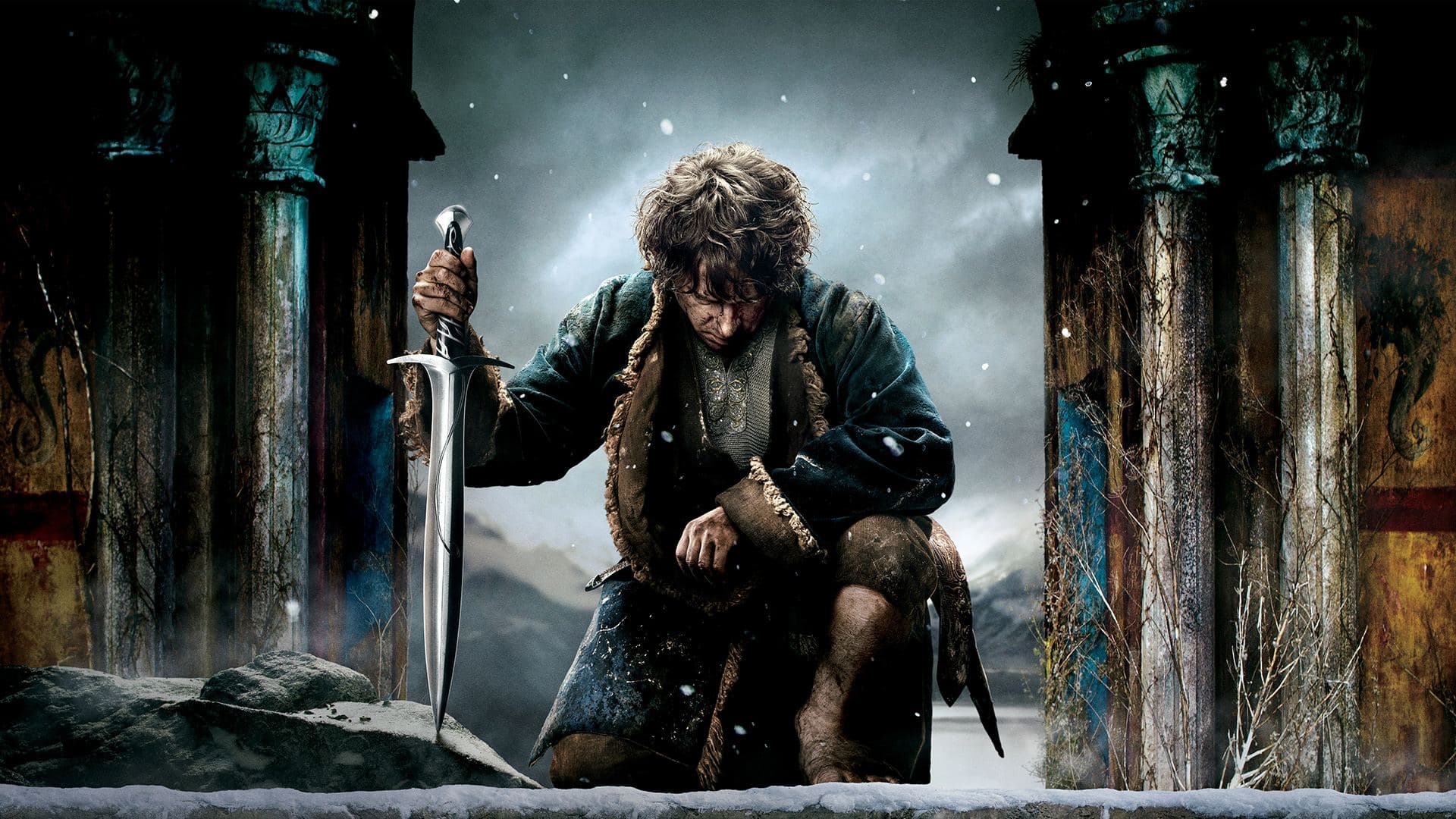
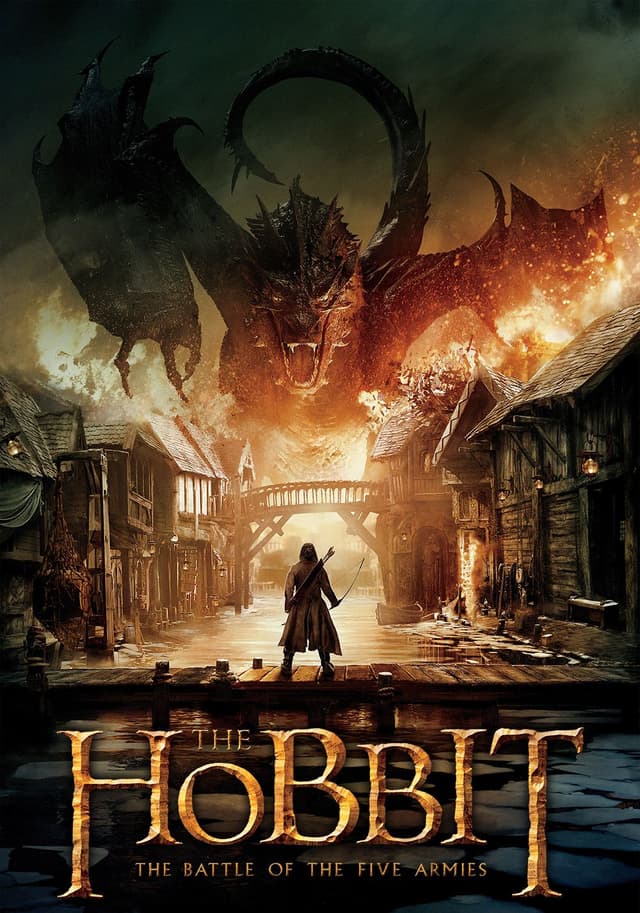
After Bilbo and the dwarves inadvertently unleash Smaug upon Laketown, Bard the Bowman brings down the dragon, but the aftermath draws five armies to the Lonely Mountain. Thorin Oakenshield, consumed by dragon sickness and possessive madness over the mountain's gold, refuses to honor his pledges to Laketown's survivors and the Elven king Thranduil. As war erupts between dwarves, elves, men, orcs, and eagles on the slopes of Erebor, Bilbo must find a way to save his friends and broker peace before all is lost.
What Is the Budget of The Hobbit: The Battle of the Five Armies?
The Hobbit: The Battle of the Five Armies (2014), directed by Peter Jackson and distributed by Warner Bros. Pictures and MGM, was produced on a budget of $250,000,000. The third and final installment of The Hobbit trilogy adapted the climax of J.R.R. Tolkien's novel, covering Smaug's attack on Laketown, the standoff over the Lonely Mountain's treasure, and the massive five-army battle between dwarves, elves, men, orcs, and eagles. The film concluded Peter Jackson's six-film, thirteen-year journey through Middle-earth.
The $250 million budget made Battle of the Five Armies the most expensive entry in the Hobbit trilogy, with costs driven primarily by the extensive digital battle sequences that dominate the film's second half. The title battle required Weta Digital to animate thousands of CG combatants across a multi-terrain battlefield, while practical photography provided the close-combat work between principal characters. The escalating budgets across the trilogy ($180M, $225M, $250M) reflected the increasing VFX complexity as the story moved from intimate adventure to large-scale warfare.
Key Budget Allocation Categories
The Battle of the Five Armies distributed its $250 million budget across the following production areas:
- Visual Effects and Digital Battle: Weta Digital's workload peaked on the trilogy's final entry. The Battle of Five Armies required thousands of digital soldiers, war beasts (including Wargs, trolls, and giant bats), environmental destruction (the collapsing watchtower of Ravenhill, Dale's streets crumbling under siege), and the Smaug attack on Laketown that opens the film. The Smaug sequence alone, with the dragon strafing a wooden town with fire, required detailed fluid simulation, destruction effects, and character animation integrated with live-action shots of Lake-town's inhabitants fleeing.
- Production Design and Laketown/Dale Sets: Production designer Dan Hennah built extensive practical sets for Dale (the ruined city at the Lonely Mountain's base) and Laketown, which was constructed at a water stage facility in Wellington. The Laketown set was partially destroyed practically for Smaug's attack, then augmented with CG fire and structural collapse. Erebor's treasure hall, with its mountains of gold and jewels, used a combination of practical props (thousands of fabricated gold coins and cups) and digital extension.
- Cast and Performance Capture: Martin Freeman, Ian McKellen, Richard Armitage, and the full dwarf ensemble returned, alongside Orlando Bloom (reprising Legolas), Evangeline Lilly (Tauriel), Luke Evans (Bard the Bowman), Lee Pace (Thranduil), and Benedict Cumberbatch (voice and motion capture for Smaug and the Necromancer/Sauron). The extended cast, many contracted across all three films, represented accumulated salary obligations. The Dol Guldur sequence featuring Cate Blanchett, Hugo Weaving, Christopher Lee, and Ian McKellen confronting the Necromancer reunited several of the original trilogy's highest-profile actors.
- Practical Battle Choreography: While the wide battle shots were predominantly digital, close-combat sequences between principal characters (Thorin vs. Azog on the frozen waterfall, Legolas fighting Bolg, Bard's defense of Dale) required weeks of stunt choreography, wire work, and practical set construction. The frozen waterfall set for the Thorin/Azog confrontation was built practically and enhanced with CG ice and environmental effects.
- Score and Sound Design: Howard Shore completed his Middle-earth scoring cycle with a final entry that reprised established themes while introducing new battle motifs. Billy Boyd performed the end-credits song "The Last Goodbye," serving as an emotional coda to the entire six-film franchise. The sound design team mixed practical steel-on-steel combat recordings with digital creature vocalizations and the environmental chaos of the five-army confrontation.
How Does The Hobbit: The Battle of the Five Armies's Budget Compare to Similar Films?
At $250,000,000, Battle of the Five Armies was the most expensive Hobbit film and one of the costliest fantasy films ever produced. Comparing it with other franchise conclusions and battle-heavy epics:
- The Hobbit: An Unexpected Journey (2012): Budget $180,000,000 | Worldwide $1,017,000,000. The trilogy opener cost 28% less and earned 6% more worldwide, demonstrating the consistent audience erosion across the three films despite escalating budgets.
- The Hobbit: The Desolation of Smaug (2013): Budget $225,000,000 | Worldwide $958,400,000. The middle entry cost 10% less and matched the third film's gross almost exactly, confirming a stable but declining floor for the trilogy.
- The Lord of the Rings: The Return of the King (2003): Budget $94,000,000 | Worldwide $1,146,000,000. The franchise's original battle climax cost 62% less (in nominal terms) and earned 20% more, highlighting both production cost inflation over the intervening decade and the stronger emotional investment audiences had in the original trilogy's characters.
- The Hunger Games: Mockingjay Part 2 (2015): Budget $160,000,000 | Worldwide $653,400,000. Another split-finale conclusion released the following year, costing 36% less and earning 32% less, confirming the broader pattern of diminishing returns for multi-part franchise finales.
- Transformers: Age of Extinction (2014): Budget $210,000,000 | Worldwide $1,104,000,000. Released the same year, this effects-heavy blockbuster cost 16% less and earned 15% more, demonstrating that the Hobbit trilogy's worldwide performance, while strong, was not the ceiling for VFX-driven tentpoles.
The Hobbit: The Battle of the Five Armies Box Office Performance
The Hobbit: The Battle of the Five Armies opened in the United States on December 17, 2014, debuting to $54.7 million domestically in its opening weekend. The December release continued the franchise's holiday-season strategy, though the opening was notably lower than An Unexpected Journey's $84.6 million and Desolation of Smaug's $73.6 million.
Box Office Breakdown
The Hobbit: The Battle of the Five Armies

At approximately +282%, The Hobbit: The Battle of the Five Armies returned roughly $3.82 for every $1 of production budget invested during its theatrical run.
The final Hobbit installment fell just short of the $1 billion mark, the only film in the combined six-film Middle-earth saga to do so. Its international gross of $700.9 million (73% of worldwide) continued the trilogy's pattern of stronger overseas than domestic performance, with the domestic total of $255.1 million representing the lowest of the three Hobbit films.
The Hobbit: The Battle of the Five Armies Production History
The Battle of the Five Armies was shot as part of the continuous production schedule that covered all three Hobbit films, with principal photography running from March 2011 through July 2012 in New Zealand. The production was based at Stone Street Studios in Wellington, with location work across both the North and South Islands. Additional pick-up shoots for the third film continued into mid-2013 and 2014, extending the post-production timeline to accommodate the increased VFX workload.
The film's existence as a separate entity was a relatively late decision. Peter Jackson announced the expansion from two to three films in July 2012, with the split occurring roughly along the lines of the novel's climactic sequences. This meant that The Battle of the Five Armies would need to sustain an entire film primarily on the battle that occupies fewer than ten pages in Tolkien's book, requiring extensive expansion of the action and the creation of subplots (Tauriel's arc, Legolas's expanded role, the Dol Guldur confrontation) to fill the runtime.
Peter Jackson later acknowledged in interviews that the accelerated timeline of taking over from Guillermo del Toro and the pressure of continuous production left him feeling underprepared for portions of the trilogy. He described entering the Battle of the Five Armies sequences without the storyboard preparation he had enjoyed on The Lord of the Rings, leading to a more improvised approach to the battle choreography that he felt produced less coherent results. The candid admission was unusual for a major franchise director and shed light on the creative pressures of extended blockbuster production.
Awards and Recognition
The Hobbit: The Battle of the Five Armies received an Academy Award nomination for Best Sound Editing, its sole nomination. The reduced awards attention compared to the original trilogy (The Return of the King won all eleven categories it was nominated for) reflected both the critical consensus that the Hobbit films were lesser achievements and the Academy's evolving relationship with fantasy blockbusters.
The film won the People's Choice Award for Favorite Action Movie and received Saturn Award nominations for Best Fantasy Film. Howard Shore's score was recognized by the World Soundtrack Academy. Billy Boyd's end-credits song "The Last Goodbye" was well-received as an emotional farewell to Middle-earth but did not receive an Oscar nomination for Best Original Song.
Critical Reception
The Hobbit: The Battle of the Five Armies earned a 59% approval rating on Rotten Tomatoes based on 275 reviews, the lowest score for any Middle-earth film. The critics consensus acknowledged the visual spectacle but criticized the thin characterization and the sense that the story had been stretched beyond its natural scope. On Metacritic, the film scored 59 out of 100, indicating "mixed or average reviews."
Positive reviews highlighted the Smaug attack on Laketown (described by several critics as the best sequence in the entire trilogy), the Thorin/Azog duel on the frozen waterfall, and the emotional weight of Bilbo's farewell to the surviving dwarves. Martin Freeman's performance as Bilbo continued to receive praise, with many noting that his quiet, humanistic approach anchored the film's more excessive battle sequences.
Negative reviews focused overwhelmingly on the titular battle, which many critics found repetitive, poorly staged in its wide CG shots, and lacking the emotional stakes and narrative clarity of the Helm's Deep and Pelennor Fields battles from The Lord of the Rings. The Tauriel/Kili romance was widely criticized as a forced addition, and Legolas's expanded action sequences (including a staircase-defying fight scene) were cited as examples of the trilogy prioritizing spectacle over the grounded storytelling that made the original trilogy beloved. The 59% score represented a significant critical decline from An Unexpected Journey's 64% and Desolation of Smaug's 74%.
Frequently Asked Questions
How much did it cost to make The Hobbit: The Battle of the Five Armies?
The production budget was $250,000,000, making it the most expensive film in the Hobbit trilogy. The high cost was driven by extensive digital battle sequences requiring thousands of CG combatants, the Smaug/Laketown destruction sequence, and practical set construction for Dale and the frozen waterfall duel.
How much did The Battle of the Five Armies earn at the box office?
The film grossed $255,100,000 domestically and $700,900,000 internationally, totaling $956,000,000 worldwide. It opened with $54.7 million domestically in December 2014, the lowest opening of the three Hobbit films.
Was The Battle of the Five Armies profitable?
Yes. On a $250 million production budget with approximately $150 million in marketing, the $956 million worldwide gross comfortably exceeded the break-even threshold. Across all three Hobbit films, the combined gross of approximately $2.93 billion on combined budgets of roughly $655 million was a massive commercial success.
Why did The Hobbit trilogy decline at the box office?
The trilogy showed consistent decline: $1.017B, $958M, $956M worldwide. Critics and audiences felt the decision to expand a single novel into three films stretched the material too thin. The increasingly CGI-dependent battle sequences were seen as lacking the emotional stakes and practical grounding of the Lord of the Rings trilogy.
Where was The Hobbit: The Battle of the Five Armies filmed?
The film was shot in New Zealand as part of the continuous production covering all three Hobbit films. Stone Street Studios in Wellington served as the primary base, with location work across both islands. Additional pick-up shoots continued into 2013 and 2014.
How was the Battle of Five Armies expanded from the book?
In Tolkien's novel, the battle occupies fewer than ten pages. The film expanded it into the majority of the runtime by adding subplots (Tauriel's arc, Legolas's expanded role), the Dol Guldur confrontation between the White Council and Sauron, and detailed individual combat sequences between principal characters.
Did Peter Jackson feel prepared for The Battle of the Five Armies?
Jackson later acknowledged feeling underprepared for portions of the trilogy. He described entering battle sequences without the storyboard preparation he had enjoyed on The Lord of the Rings, leading to a more improvised approach that he felt produced less coherent results. The candid admission highlighted the pressures of extended blockbuster production.
What awards did The Battle of the Five Armies receive?
The film received one Academy Award nomination for Best Sound Editing, a dramatic reduction from The Return of the King's eleven nominations and eleven wins. It won the People's Choice Award for Favorite Action Movie and received Saturn Award nominations.
How does Five Armies compare to Return of the King at the box office?
The Return of the King (2003) earned $1,146,000,000 worldwide on a $94 million budget, while Five Armies earned $956 million on $250 million. The original trilogy's climax earned 20% more on 62% less budget (in nominal terms), reflecting both stronger audience investment and lower production costs.
What is the Rotten Tomatoes score for The Battle of the Five Armies?
The film holds a 59% approval rating on Rotten Tomatoes based on 275 reviews, the lowest score for any Middle-earth film. Critics praised the Smaug/Laketown opening and the Thorin/Azog duel but found the titular battle repetitive and the material stretched beyond its natural scope. On Metacritic it scored 59 out of 100.
Filmmakers
The Hobbit: The Battle of the Five Armies

Official Trailer
Build budgets like this one in Saturation
Start from an industry-standard feature film template, import the schedule and rates you already have, and let the cost report keep itself current as you spend. Real-time collaboration, no spreadsheets.