The Hobbit: The Desolation of Smaug Budget
 FantasyAdventureAction2h 41m
Updated
Synopsis
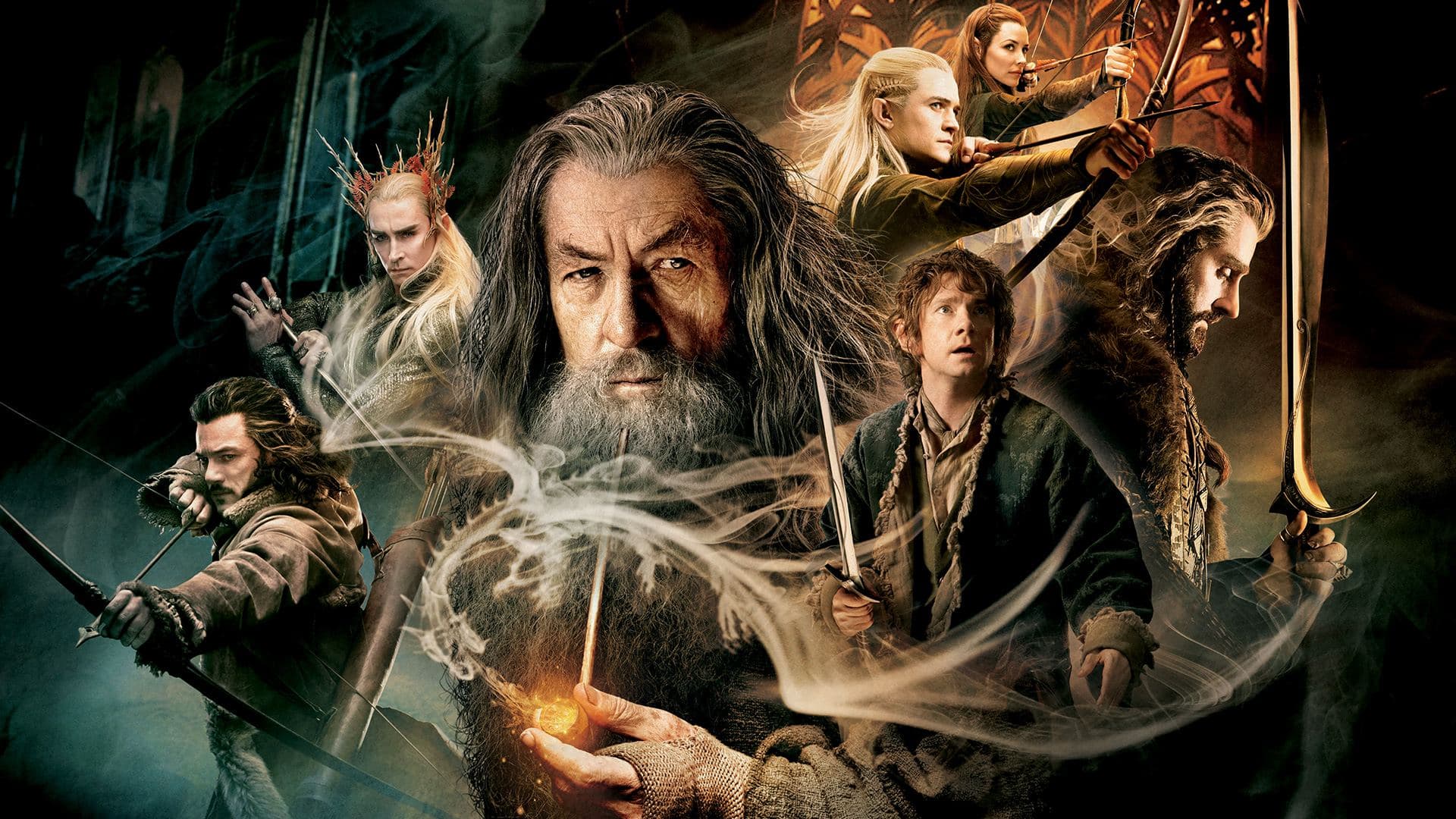
Bilbo Baggins and the dwarf company continue their journey toward the Lonely Mountain, passing through the dark Mirkwood forest where they face giant spiders and capture by the Wood-elves of Thranduil. After a daring escape by barrel down a rushing river, the company reaches Laketown, where Bard the Bowman warns of the danger of waking the dragon. Bilbo enters the Lonely Mountain alone and comes face to face with Smaug, the most devastating creature in Middle-earth, setting in motion a catastrophe that will engulf the entire region.
What Is the Budget of The Hobbit: The Desolation of Smaug?
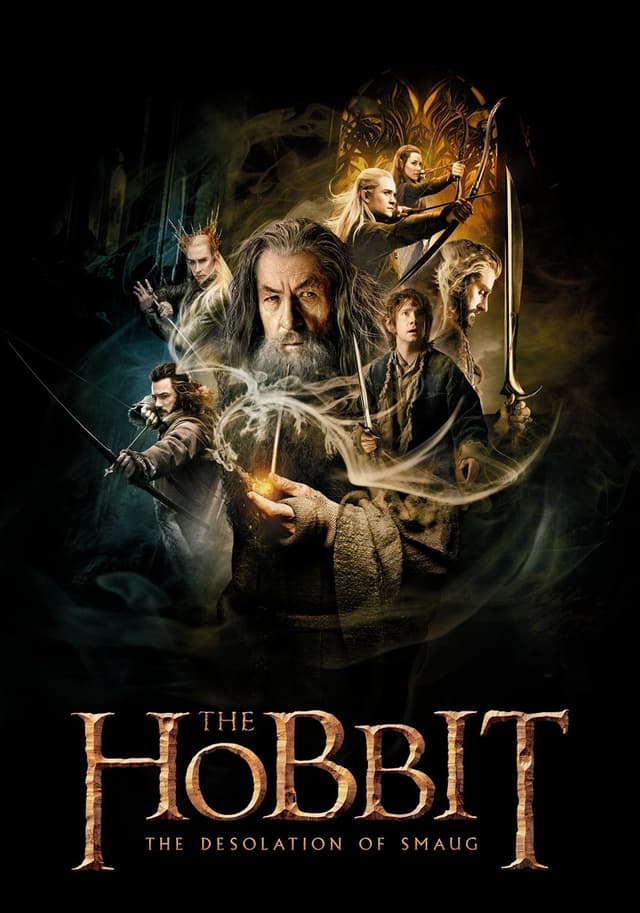
The Hobbit: The Desolation of Smaug (2013), directed by Peter Jackson and distributed by Warner Bros. Pictures and MGM, was produced on a budget of $225,000,000. The second installment of The Hobbit trilogy followed Bilbo and the dwarf company through Mirkwood forest, into the Wood-elves' kingdom, through Laketown, and finally into the Lonely Mountain for the confrontation with the dragon Smaug. The film introduced significant new characters and locations while building toward the trilogy's climactic battle.
The $225 million budget represented a 25% increase over An Unexpected Journey, driven primarily by the creation of Smaug himself, one of the most technically ambitious CG characters attempted at the time. Benedict Cumberbatch provided both voice and motion-capture performance for the dragon, whose design required months of animation refinement to convey intelligence, menace, and physical weight. The film also expanded the production's scope with the elaborate Laketown set (built on a water stage), the Mirkwood forest environments, and the barrel-ride river chase that combined practical water work with extensive digital augmentation.
Key Budget Allocation Categories
The Desolation of Smaug distributed its $225 million budget across the following production areas:
- Smaug: Character Design and Animation: The dragon Smaug was the film's centerpiece VFX challenge. Weta Digital spent over two years developing the character, with Benedict Cumberbatch performing motion capture and voice work that was translated into a fully CG creature interacting with live-action environments. Smaug's design went through multiple iterations, with Jackson and Weta refining the dragon's scale, movement, and facial expressiveness. The Erebor treasure hall confrontation between Bilbo and Smaug required frame-by-frame integration of the CG dragon with Martin Freeman's live-action performance.
- Laketown Set Construction: Production designer Dan Hennah built an extensive practical Laketown set on a water stage facility, creating a floating wooden town with canals, bridges, market squares, and residential areas. The set was designed for both intimate character scenes and the dragon attack that would open the third film. The water stage work required specialized construction techniques to create structures that appeared to float naturally while supporting camera equipment and crew.
- Barrel-Ride River Chase: The escape-by-barrel sequence, in which the dwarf company rides wine barrels down rapids while fighting pursuing orcs and elves, combined practical water work (actors in real barrels on a constructed river course), aerial photography, and extensive CG augmentation. The sequence required weeks of water-stage shooting, stunt coordination for the combat choreography, and post-production compositing to merge the practical and digital elements into a continuous action sequence.
- Cast and Performance Capture: The returning ensemble (Martin Freeman, Ian McKellen, Richard Armitage, and the full dwarf company) was augmented by new additions: Benedict Cumberbatch (Smaug and the Necromancer), Evangeline Lilly (Tauriel, an original character created for the films), Lee Pace (Thranduil, the Elvenking), and Luke Evans (Bard the Bowman). Orlando Bloom returned as Legolas, a character not in Tolkien's Hobbit novel but present in the films to connect to the Lord of the Rings continuity.
- Mirkwood Environments: The dark, corrupted Mirkwood forest required both practical set construction and extensive digital extension. Giant spider sequences (featuring CG arachnids attacking the dwarf company) demanded creature animation, web effects, and integration with actors performing against practical tree-set elements. The Woodland Realm of Thranduil, built as a combination of practical architecture and digital environments, provided a visually distinct Elven aesthetic separate from Rivendell.
- Score and Sound Design: Howard Shore composed the score, introducing new themes for Smaug, Laketown, Tauriel, and the Woodland Realm while continuing to develop the established Hobbit and Middle-earth motifs. Ed Sheeran performed the end-credits song "I See Fire," which became a commercial hit. The sound design for Smaug's voice combined Cumberbatch's performance with layered processing to create a register that conveyed both reptilian menace and regal intelligence.
How Does The Hobbit: The Desolation of Smaug's Budget Compare to Similar Films?
At $225,000,000, The Desolation of Smaug sits in the middle of the Hobbit trilogy's budget range. Comparing it with other dragon-heavy fantasy films and franchise sequels:
- The Hobbit: An Unexpected Journey (2012): Budget $180,000,000 | Worldwide $1,017,000,000. The first entry cost 20% less and earned 6% more, reflecting the natural advantage of franchise launchers and the audience's initial enthusiasm for returning to Middle-earth.
- The Hobbit: The Battle of the Five Armies (2014): Budget $250,000,000 | Worldwide $956,000,000. The trilogy closer cost 11% more and matched Desolation's gross almost exactly, suggesting a stable but non-growing audience floor for the franchise.
- How to Train Your Dragon 2 (2014): Budget $145,000,000 | Worldwide $621,500,000. DreamWorks' animated dragon sequel cost 36% less and represented the commercial ceiling for animated dragon narratives, a very different market from the Hobbit films but instructive about dragon-property audience sizes.
- Maleficent (2014): Budget $180,000,000 | Worldwide $758,500,000. Disney's fairy-tale reimagining from the following year cost 20% less and earned 79% of Desolation's gross, suggesting competitive pressure in the fantasy-blockbuster market.
- The Lord of the Rings: The Two Towers (2002): Budget $94,000,000 | Worldwide $947,500,000. The original trilogy's middle entry cost 58% less (in nominal terms) and earned comparable worldwide returns, reinforcing the pattern of cost escalation in the decade between the two trilogies.
The Hobbit: The Desolation of Smaug Box Office Performance
The Hobbit: The Desolation of Smaug opened in the United States on December 13, 2013, debuting to $73.6 million domestically in its opening weekend. The December release continued the franchise's holiday-positioning strategy, though the opening represented a 13% decline from An Unexpected Journey's $84.6 million debut.
Box Office Breakdown
The Hobbit: The Desolation of Smaug

At approximately +326%, The Hobbit: The Desolation of Smaug returned roughly $4.26 for every $1 of production budget invested during its theatrical run.
The second Hobbit film performed nearly identically to its predecessor at the worldwide level despite different seasonal competition. Its international gross of $700 million (73% of worldwide) and domestic total of $258.4 million tracked closely with An Unexpected Journey, suggesting a stable audience base for the trilogy rather than the growth the Lord of the Rings trilogy had experienced.
The Hobbit: The Desolation of Smaug Production History
The Desolation of Smaug was shot as part of the continuous Hobbit production, with principal photography running from March 2011 through mid-2012 in New Zealand. The film covers the middle section of Tolkien's novel, from the company's encounter with Beorn through the Mirkwood journey, the barrel escape, the sojourn in Laketown, and the entry into the Lonely Mountain to face Smaug.
The Smaug character underwent a significant evolution during production. Peter Jackson and Weta Digital experimented with multiple dragon designs, adjusting proportions, wing structures, and facial features to achieve a dragon that felt both physically believable and expressively capable of conveying Smaug's cunning intelligence. Benedict Cumberbatch performed motion capture in a specialized suit and headrig, providing facial expressions and body language that animators used as reference while building the final CG character.
The barrel-ride sequence was one of the production's most complex practical shoots. A water course was constructed at Stone Street Studios, and actors were placed in physical barrels for portions of the ride, though stunt doubles and CG replacement handled the more dangerous rapids. GoPro-style cameras mounted on barrels provided immersive first-person angles. The sequence's integration of orc combat (with stunt performers fighting on the riverbank and in the water) added layers of choreographic complexity.
Peter Jackson shot the film in 48fps 3D, continuing the High Frame Rate approach from An Unexpected Journey despite the divided audience and critical response to the first film's HFR presentation. The decision to maintain the format was partly practical (re-tooling mid-production would have been prohibitively disruptive) and partly philosophical (Jackson maintained that audiences would adapt to the format over time). Most theatrical presentations offered both HFR and standard 24fps options.
Awards and Recognition
The Hobbit: The Desolation of Smaug received three Academy Award nominations: Best Visual Effects, Best Sound Editing, and Best Sound Mixing. The VFX nomination recognized Weta Digital's work on Smaug, the barrel-ride sequence, and the Mirkwood environments. The film lost all three categories, with Gravity dominating the technical awards that year.
The Smaug character received particular industry recognition, with VFX professionals describing the dragon as one of the most convincing fully CG characters achieved to date. Benedict Cumberbatch's vocal performance, layered with digital processing to create Smaug's resonant, threat-laden voice, was praised as setting a new standard for motion-capture villain performances. Ed Sheeran's end-credits song "I See Fire" was a commercial hit, reaching top-ten positions in multiple countries.
Critical Reception
The Hobbit: The Desolation of Smaug earned a 74% approval rating on Rotten Tomatoes based on 275 reviews, a significant improvement over An Unexpected Journey's 64%. The critics consensus praised the improved pacing, the spectacular Smaug sequences, and the film's willingness to expand beyond Tolkien's novel with new characters and subplots. On Metacritic, the film scored 66 out of 100, indicating "generally favorable reviews."
The Smaug confrontation in the final act was almost universally praised, with critics describing it as the trilogy's finest sequence and a showcase for both Benedict Cumberbatch's performance and Weta Digital's animation. The barrel-ride escape was cited as a highlight of kinetic action filmmaking, and the introduction of Bard the Bowman (Luke Evans) and Tauriel (Evangeline Lilly) was generally well-received as adding needed human-scale stakes to the dwarf-heavy narrative.
Criticisms centered on the film's abrupt cliffhanger ending (cutting to black just as Smaug launches toward Laketown), the Tauriel/Kili romantic subplot (which many found tonally inconsistent with Tolkien's world), and the continued pacing issues inherent in stretching a children's novel across nine hours of cinema. The 48fps format continued to divide audiences. Despite these issues, the 74% score represented the strongest critical response in the Hobbit trilogy and suggested that the Middle-earth franchise still had the capacity to deliver moments of genuine cinematic wonder.
Frequently Asked Questions
How much did it cost to make The Hobbit: The Desolation of Smaug?
The production budget was $225,000,000, a 25% increase over the first film. The higher cost was driven primarily by the creation of Smaug, one of the most technically ambitious CG characters at the time, the Laketown water-stage set construction, and the complex barrel-ride river chase sequence.
How much did The Desolation of Smaug earn at the box office?
The film grossed $258,400,000 domestically and $700,000,000 internationally, totaling $958,400,000 worldwide. It opened with $73.6 million domestically in December 2013, a 13% decline from the first film's opening.
Was The Desolation of Smaug profitable?
Yes. On a $225 million production budget with approximately $150 million in marketing, the $958.4 million worldwide gross yielded an ROI of approximately 326% on production costs. The film comfortably exceeded its break-even threshold.
How was Smaug created for the film?
Smaug was a fully CG character developed by Weta Digital over more than two years. Benedict Cumberbatch provided voice and motion-capture performance using a specialized suit and headrig. The dragon's design went through multiple iterations, refining proportions and facial expressiveness. VFX professionals described the result as one of the most convincing CG characters achieved to date.
Where was The Desolation of Smaug filmed?
The film was shot in New Zealand as part of the continuous production covering all three Hobbit films. Stone Street Studios in Wellington served as the primary base, with a water-stage facility used for the extensive Laketown set. Location work covered both the North and South Islands.
How was the barrel-ride sequence filmed?
A water course was constructed at Stone Street Studios. Actors were placed in physical barrels for portions of the ride, with stunt doubles handling dangerous rapids. GoPro-style cameras mounted on barrels provided immersive angles. The sequence combined practical water work, stunt combat choreography on the riverbanks, and extensive CG augmentation in post-production.
Why does The Desolation of Smaug end on a cliffhanger?
The film cuts to black just as Smaug launches toward Laketown, with the dragon attack sequence saved for the opening of The Battle of the Five Armies. This was a consequence of Peter Jackson's decision to expand the Hobbit from two to three films, creating a natural cliffhanger break at the most dramatic possible moment.
Who is Tauriel and why is she not in Tolkien's book?
Tauriel, played by Evangeline Lilly, is an original character created by the filmmakers. She is a Woodland Elf captain who provides a female perspective absent from Tolkien's male-dominated novel. Her inclusion and romantic subplot with the dwarf Kili was one of the trilogy's most debated creative decisions.
What awards did The Desolation of Smaug receive?
The film received three Academy Award nominations: Best Visual Effects, Best Sound Editing, and Best Sound Mixing. It lost all three to Gravity. The Smaug character was praised by VFX professionals, and Ed Sheeran's end-credits song "I See Fire" became a commercial hit.
What is the Rotten Tomatoes score for The Desolation of Smaug?
The film holds a 74% approval rating on Rotten Tomatoes based on 275 reviews, the highest score of the Hobbit trilogy. Critics praised the improved pacing and spectacular Smaug sequences while noting the abrupt cliffhanger ending and pacing issues inherent in stretching the novel across three films. On Metacritic it scored 66 out of 100.
Filmmakers
The Hobbit: The Desolation of Smaug

Official Trailer
Build budgets like this one in Saturation
Start from an industry-standard feature film template, import the schedule and rates you already have, and let the cost report keep itself current as you spend. Real-time collaboration, no spreadsheets.