The Empire Strikes Back Budget
 AdventureActionScience Fiction2h 4m
Updated
Synopsis
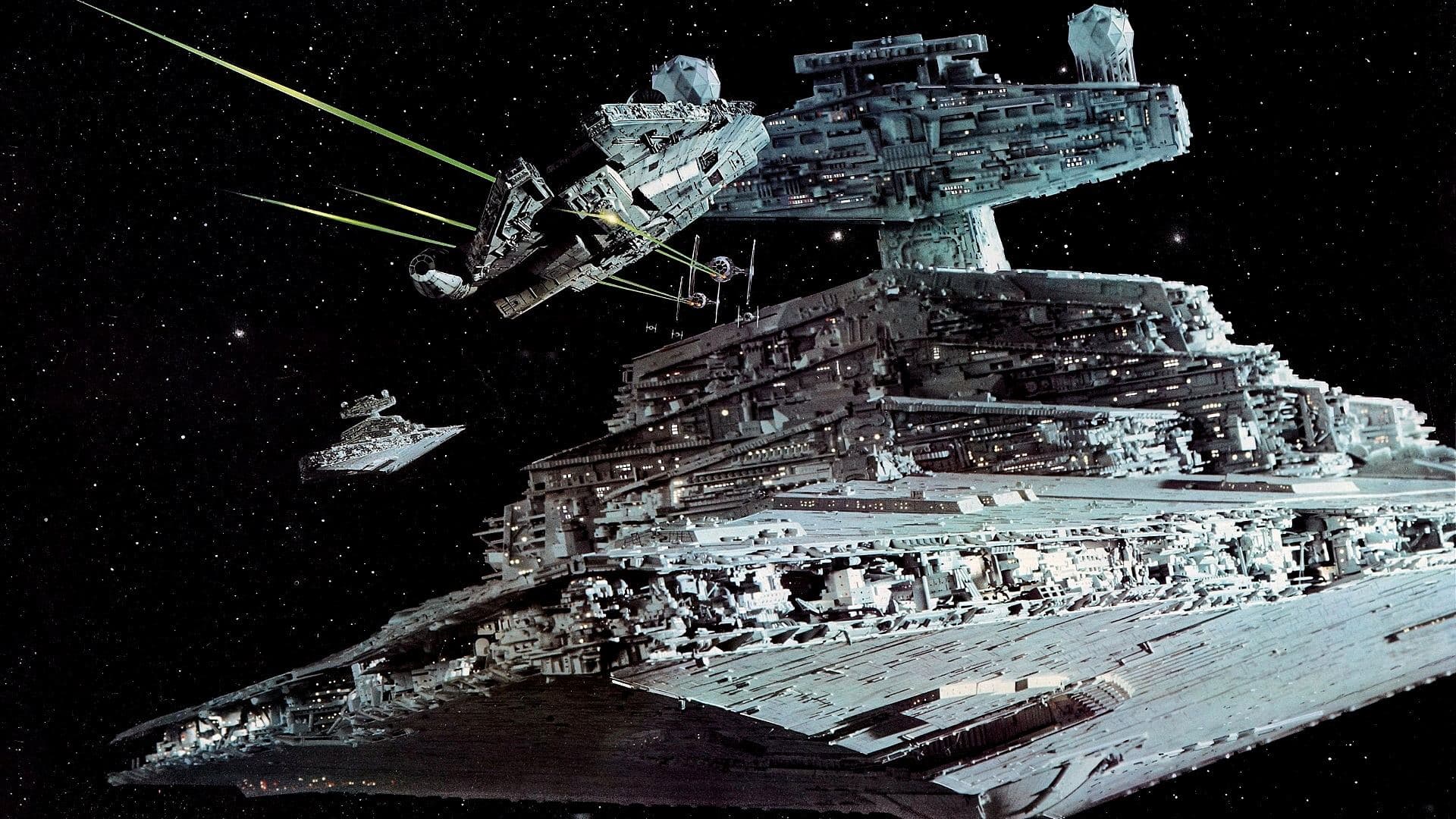
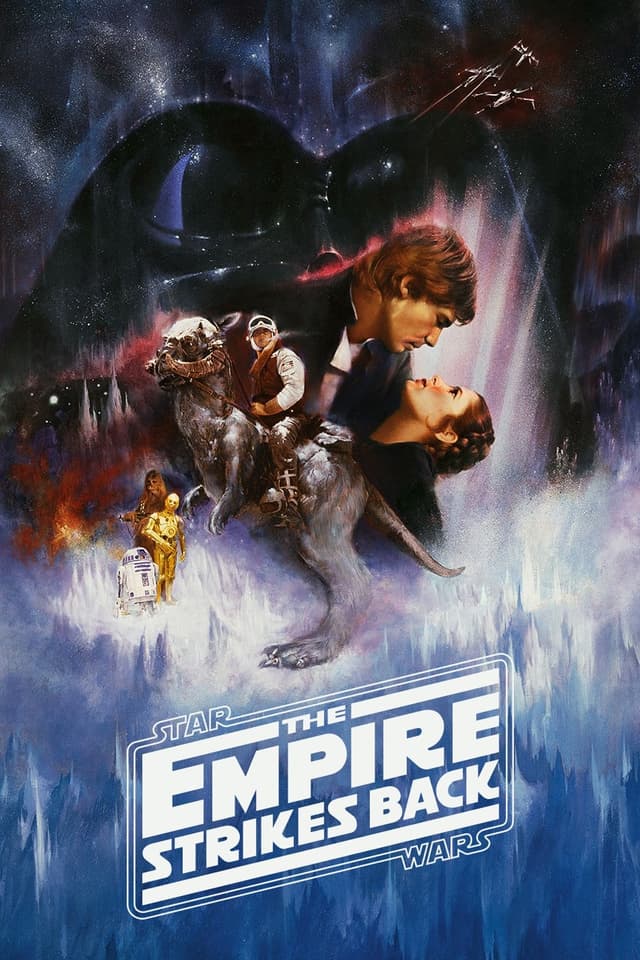
The Rebel Alliance, scattered after the Battle of Yavin, is hunted relentlessly by Darth Vader and the Imperial fleet. Luke Skywalker travels to the swamp planet Dagobah to train with the Jedi Master Yoda, while Han Solo, Princess Leia, and Chewbacca seek refuge in the floating Cloud City of Bespin, where a fateful trap awaits. Luke's confrontation with Vader ends in a revelation that reshapes the saga forever.
What Is the Budget of Star Wars: The Empire Strikes Back (1980)?
Star Wars: The Empire Strikes Back (1980), directed by Irvin Kershner and produced by Lucasfilm for distribution through 20th Century Fox, was made on a production budget of $33,000,000. That figure represented more than triple the $11,000,000 spent on the original Star Wars (1977) and made Empire one of the most expensive films in production at the time of its release. Crucially, George Lucas self-financed the sequel using profits from the first film and a $25,000,000 line of credit from Bank of America secured against Lucasfilm assets, a decision that gave him full creative and commercial control but also placed enormous personal financial risk on the production.
The escalated investment reflected the scope ambitions that Lucas wrote into the sequel: a snow battle on the ice planet Hoth, an asteroid field chase, a swamp planet introduction for Yoda, the floating Cloud City of Bespin, and the most elaborate practical creature effects the franchise had ever attempted. The project went significantly over its initial $18,000,000 estimate during production, with cost overruns triggered by weather delays in Norway, Yoda puppet redesign, and the construction of the largest stage at Elstree Studios. By the time the film opened on May 21, 1980, the negative cost had climbed to roughly $33,000,000, a figure Lucas later described as the moment he nearly lost the company.
Key Budget Allocation Categories
The Empire Strikes Back's $33,000,000 budget was distributed across several core production areas:
- Above-the-Line Talent: George Lucas paid himself a modest writer-producer fee while assigning the directing job to Irvin Kershner, his former USC instructor, for a guaranteed director's salary plus profit participation. Veteran screenwriter Leigh Brackett delivered the first draft (her final work before her death in 1978) and Lawrence Kasdan was hired to rewrite. Returning leads Mark Hamill, Harrison Ford, and Carrie Fisher received salary increases from their original Star Wars deals but no profit participation, a fact that became a long-running point of contention. Billy Dee Williams joined as Lando Calrissian and Frank Oz performed Yoda.
- Elstree Studios Stage Construction: Production built sets across all nine sound stages at EMI-Elstree Studios in Hertfordshire, England, including the construction of Stage 9, the largest stage in Europe at the time, specifically to accommodate the Hoth ice cave and rebel base interiors. The studio space, set construction, and stage rental over a nine-month principal photography schedule represented one of the single largest line items.
- Norway and Tunisia Location Photography: The Hoth exterior sequences were shot in Finse, Norway in March 1979 during one of the worst blizzards in fifty years, requiring helicopter crews, weather-resistant equipment, and lengthy weather delays. Earlier desert sequences planned for Tunisia and additional location days added travel, lodging, and union scale crew costs.
- Creature Effects and Yoda: Stuart Freeborn designed and built the Yoda puppet, performed and voiced by Frank Oz with assistance from a team of Henson-trained puppeteers. The Yoda redesign and multiple unit shooting added cost when Lucas rejected the first puppet design. Additional creature work included the tauntauns, wampa, and the slug-like exogorth in the asteroid field.
- Visual Effects: Industrial Light & Magic, Lucasfilm's own VFX house, handled all 700 effects shots, including the AT-AT Walker stop-motion sequences by Phil Tippett and Jon Berg, snowspeeder dogfights, asteroid field chases, and the Cloud City vistas. The studio expanded its Van Nuys facility specifically for Empire, hiring additional optical compositors, model makers, and motion-control camera operators.
- Score and Sound: John Williams returned as composer, recording the score with the London Symphony Orchestra at Anvil Studios. The session work introduced "The Imperial March (Darth Vader's Theme)," "Yoda's Theme," and "Han Solo and the Princess," all of which became permanent fixtures of the Star Wars musical vocabulary. Ben Burtt designed new sound effects for AT-ATs, the tauntauns, and the carbonite freezing chamber.
- Marketing and Merchandising Tie-Ins: Lucasfilm retained the merchandising rights that Fox famously surrendered in 1977, and the studio invested heavily in coordinated toy, book, and apparel launches with Kenner, Del Rey, and a global licensee network. The marketing campaign emphasized the secret of Vader's identity, with crew and cast kept in the dark about the climactic reveal during production.
How Does The Empire Strikes Back's Budget Compare to Similar Films?
At $33,000,000, Empire was among the most expensive films of its era and sat at the top tier of late-1970s and early-1980s blockbuster economics. The comparison set shows how its commercial outcome justified the escalated spend:
- Star Wars (1977): Budget $11,000,000 | Worldwide $775,512,064 (across all releases). The original spent one third of what Empire required and earned roughly 50% more, but its grosses are inflated by multiple theatrical re-releases. The cost ramp from A New Hope to Empire reflects three years of inflation, expanded scope, and the introduction of Yoda and Cloud City as effects-heavy environments.
- Return of the Jedi (1983): Budget $32,500,000 | Worldwide $475,106,177. The trilogy closer matched Empire's budget almost exactly and out-earned it on initial release, although adjusted for inflation Empire remains the higher-grossing film and is now widely regarded as the artistic peak of the franchise.
- Star Wars: Episode I - The Phantom Menace (1999): Budget $115,000,000 | Worldwide $1,046,515,409. The prequel restart cost more than three times Empire in nominal dollars and grossed more than double, but its cultural and critical reception fell well short of the 1980 film's legacy.
- Star Wars: The Force Awakens (2015): Budget $245,000,000 | Worldwide $2,071,310,218. The Disney-era revival cost more than seven times Empire and broke nearly every modern box office record, illustrating how the financial scale of the franchise has expanded while still measuring itself against Empire's storytelling benchmark.
- Apocalypse Now (1979): Budget $31,500,000 | Worldwide $150,000,000. Francis Ford Coppola's Vietnam epic, released the year before Empire, offers the closest budgetary comparison from the same period. Both films were independently financed by their directors, both ran over budget, and both stand as defining auteur projects of New Hollywood.
- Heaven's Gate (1980): Budget $44,000,000 | Worldwide $3,484,331. Michael Cimino's notorious flop, released the same year as Empire, cost roughly a third more and grossed less than 1% of Empire's domestic total, ending United Artists as an independent studio and providing the cautionary counter-example to Lucas's self-financed gamble.
The Empire Strikes Back Box Office Performance
The Empire Strikes Back opened on May 21, 1980 in 126 theaters in a limited release pattern, expanding wide on June 18. The film took in $4,910,483 from the first three days of limited release and went on to earn $209,398,025 in its initial domestic run, the highest-grossing film of 1980. Counting all theatrical reissues through 1997, the film has earned $290,475,067 domestically and approximately $258,000,000 internationally.
Against a production budget of $33,000,000, the film needed approximately $50,000,000 to $60,000,000 in worldwide gross to reach profitability when accounting for prints, advertising, and distribution costs. Here is the financial breakdown:
Box Office Breakdown
The Empire Strikes Back

The Empire Strikes Back returned approximately $10.36 in theatrical revenue for every $1 invested when measured against total estimated production and marketing spend, placing it among the most profitable films of the 1980s on a percentage basis. With subsequent theatrical reissues in 1981, 1982, and 1997 (the Special Edition), plus home video and broadcast revenue, the film has generated well over $1,000,000,000 in cumulative receipts for Lucasfilm and its successor Disney.
The financial success was decisive for Lucasfilm. Repayment of the Bank of America credit line within months of release left Lucas debt-free and independent, funding the construction of Skywalker Ranch and the expansion of Industrial Light & Magic into the dominant visual effects house of the 1980s and 1990s. The self-financing model became a template that few filmmakers, before or since, have been able to replicate at this scale.
The Empire Strikes Back Production History
Development on a Star Wars sequel began almost immediately after the May 1977 release of the original film. George Lucas, having seen Star Wars become a cultural phenomenon, opted to finance the sequel personally rather than return to 20th Century Fox's development pipeline, retaining all sequel rights, merchandising rights, and creative control in the process. He drafted a story outline that introduced Yoda, expanded the Force mythology, and established the climactic father-son revelation, then hired veteran science fiction screenwriter Leigh Brackett (The Big Sleep, Rio Bravo) to write the first draft. Brackett died of cancer in March 1978 shortly after delivering her draft, and Lucas brought in Lawrence Kasdan, then a young screenwriter who had also written Raiders of the Lost Ark, to rewrite the script.
Lucas hired Irvin Kershner, his former USC film school instructor, to direct, betting that Kershner's character-driven sensibility would deepen the saga emotionally. The supporting cast brought in Frank Oz, the Muppet performer, to puppeteer and voice Yoda, and Billy Dee Williams to play the smooth-talking Lando Calrissian. To preserve the secrecy of the "I am your father" reveal, only Kershner, Lucas, Kasdan, James Earl Jones (who looped Vader's dialogue), and Mark Hamill knew the actual line, with David Prowse delivering a decoy version of "Obi-Wan killed your father" on set.
Principal photography began on March 5, 1979 at EMI-Elstree Studios in the United Kingdom, occupying all nine of the studio's sound stages, including the newly constructed Stage 9. Hoth exteriors were shot at Finse, Norway in March 1979 during one of the worst blizzards in fifty years, with cinematographer Peter Suschitzky and the crew working through 25-foot snowdrifts and equipment failures. Additional desert plate work was captured in Tunisia.
Production ran significantly over schedule and over budget. The shoot stretched from 12 weeks to 27 weeks, with weather delays in Norway, the redesign of the Yoda puppet after Lucas rejected the first version, and the elaborate Cloud City sets accounting for most of the overrun. By July 1979, the production was so over budget that 20th Century Fox sent an executive to monitor spending, but because Lucas had self-financed the film, Fox had limited authority. Lucas brought in his Industrial Light & Magic team to handle all 700 effects shots in Van Nuys, with Phil Tippett and Jon Berg pioneering the stop-motion go-motion technique used for the AT-AT Walkers.
Post-production extended through early 1980, with John Williams recording the score at Anvil Studios with the London Symphony Orchestra. Williams introduced "The Imperial March (Darth Vader's Theme)," now one of the most recognizable pieces of film music ever composed. Ben Burtt designed the AT-AT footstep sound effects, the carbonite freezing chamber audio, and the tauntaun vocalizations. The film opened on May 21, 1980, three years and one day after the original.
Awards and Recognition
The Empire Strikes Back received one competitive Academy Award and one Special Achievement Award at the 53rd Academy Awards ceremony in 1981. Ben Burtt won the Special Achievement Award for Best Sound Effects Editing, and Bill Varney, Steve Maslow, Gregg Landaker, and Peter Sutton won the competitive Best Sound award. The film was nominated for Best Art Direction (Norman Reynolds, Leslie Dilley, Harry Lange, Alan Tomkins, Michael Ford) and Best Original Score (John Williams), losing the score Oscar to Michael Gore's Fame.
At the 38th Golden Globe Awards, John Williams won Best Original Score for his work on the film. At the 1981 Saturn Awards, the film won Best Science Fiction Film, Best Director (Irvin Kershner), Best Supporting Actor (Billy Dee Williams), Best Music (John Williams), and Best Special Effects. The Empire Strikes Back also won the Hugo Award for Best Dramatic Presentation in 1981, defeating Alien and The Black Hole.
In 2010, the Library of Congress selected The Empire Strikes Back for preservation in the United States National Film Registry as a film deemed "culturally, historically, or aesthetically significant," only 30 years after its release. The American Film Institute has ranked the film on multiple lists, including #3 on AFI's 10 Top 10 (Science Fiction category) and "I am your father" as #13 on AFI's 100 Years...100 Movie Quotes.
Critical Reception
The Empire Strikes Back holds a 94% approval rating on Rotten Tomatoes based on 138 critic reviews, with a critical consensus that calls it "dark, sophisticated, and unafraid to take risks, The Empire Strikes Back defies viewer expectations and takes the series to heightened emotional levels." On Metacritic, the film carries a score of 82 out of 100, indicating universal acclaim. The film was not surveyed by CinemaScore, which did not begin polling audiences until 1982.
Initial 1980 reviews were more divided than the modern consensus suggests. Vincent Canby of The New York Times wrote that the film was "not a truly terrible movie" but felt it was "malformed," while Roger Ebert gave the original release three out of four stars, calling it "a fine movie" but feeling the story was incomplete. David Denby of New York Magazine and Pauline Kael of The New Yorker were notably more critical, with Kael writing that the film "lacked emotional involvement." Within a decade, critical consensus had reversed dramatically, and Empire is now regularly cited as the rare sequel that surpasses its original.
Audience reception was rapturous from opening weekend. The "I am your father" revelation generated an unprecedented level of cultural discussion and theatrical re-attendance, with fans returning to theaters multiple times to process the twist. The film placed at #3 on Empire magazine's 2008 list of the 500 Greatest Movies of All Time, ranks among the top 15 highest-rated films of all time on IMDb based on user reviews, and is regularly named the greatest sequel ever made in industry retrospectives by Variety, Total Film, and the BBC. The cliffhanger ending, the carbonite freezing of Han Solo, and the father reveal have been parodied, homaged, and referenced in popular culture for more than four decades.
Frequently Asked Questions
How much did it cost to make Star Wars: The Empire Strikes Back (1980)?
The production budget was $33,000,000, more than triple the $11,000,000 spent on the original Star Wars (1977). George Lucas self-financed the sequel through Lucasfilm using profits from the first film and a $25,000,000 line of credit from Bank of America secured against Lucasfilm assets, rather than returning to 20th Century Fox's development pipeline.
How much did The Empire Strikes Back earn at the box office?
The film has grossed approximately $290,475,067 domestically and $258,400,000 internationally for a worldwide cumulative total of $548,875,092 across its 1980 initial release and subsequent reissues in 1981, 1982, and 1997. Its initial 1980 domestic run earned $209,398,025, making it the highest-grossing film of that year.
Who directed The Empire Strikes Back?
Irvin Kershner directed the film, working from a screenplay by Leigh Brackett and Lawrence Kasdan based on a story by George Lucas. Kershner was George Lucas's former USC film school instructor, and Lucas chose him specifically for his character-driven directing sensibility, betting that Kershner would deepen the saga emotionally rather than treat it as a pure spectacle sequel.
Where was The Empire Strikes Back filmed?
Principal photography took place at EMI-Elstree Studios in Hertfordshire, England from March 1979, occupying all nine of the studio's sound stages including the newly constructed Stage 9. The Hoth exterior sequences were shot in Finse, Norway during March 1979 in one of the worst blizzards in fifty years, with additional desert plate work captured in Tunisia.
Why did George Lucas self-finance The Empire Strikes Back?
After the success of Star Wars (1977), Lucas wanted to retain full creative and commercial control of the franchise, including merchandising rights that 20th Century Fox had famously surrendered in 1977. He used profits from the original film plus a $25,000,000 line of credit from Bank of America secured against Lucasfilm assets. The decision placed enormous personal financial risk on the production but ultimately made Lucasfilm an independent studio.
How does The Empire Strikes Back compare to other Star Wars films?
Star Wars (1977) cost $11,000,000 and earned $775,512,064 worldwide across all releases. Return of the Jedi (1983) cost $32,500,000 and earned $475,106,177. The Phantom Menace (1999) cost $115,000,000 and earned $1,046,515,409. The Force Awakens (2015) cost $245,000,000 and earned $2,071,310,218. Adjusted for inflation, Empire remains one of the top three highest-grossing entries in the saga and is widely regarded as the artistic peak of the franchise.
Did Leigh Brackett write The Empire Strikes Back?
Veteran science fiction novelist and screenwriter Leigh Brackett (The Big Sleep, Rio Bravo) delivered the first draft of the screenplay in early 1978, but died of cancer in March 1978 shortly after submitting it. George Lucas hired Lawrence Kasdan to rewrite the script, and the final screenplay credits both writers. Brackett's contribution was her final completed work.
Who plays Yoda in The Empire Strikes Back?
Frank Oz, the Muppet performer best known for Miss Piggy, Fozzie Bear, and Bert from Sesame Street, performed and voiced Yoda using a hand puppet designed by Stuart Freeborn at EMI-Elstree Studios. Lucas rejected the first puppet design, requiring a redesign that contributed to the production's budget overrun.
Did The Empire Strikes Back win any Oscars?
Yes. The film won the competitive Academy Award for Best Sound at the 53rd Academy Awards (Bill Varney, Steve Maslow, Gregg Landaker, Peter Sutton) and Ben Burtt received a Special Achievement Award for Sound Effects Editing. The film was also nominated for Best Art Direction and Best Original Score. John Williams won the Golden Globe for Best Original Score.
What did critics think of The Empire Strikes Back?
The film holds a 94% approval rating on Rotten Tomatoes and a Metacritic score of 82 out of 100. Initial 1980 reviews were more divided than the current consensus suggests, with Pauline Kael and Vincent Canby expressing reservations, but within a decade critical opinion had reversed dramatically. The film is now regularly cited by Variety, Empire magazine, and the BBC as the greatest sequel ever made, and was selected for the National Film Registry in 2010.
Filmmakers
The Empire Strikes Back

Official Trailer
Build budgets like this one in Saturation
Start from an industry-standard feature film template, import the schedule and rates you already have, and let the cost report keep itself current as you spend. Real-time collaboration, no spreadsheets.