Star Wars Episode I – The Phantom Menace Budget
 AdventureActionScience Fiction2h 16m
Updated
Synopsis
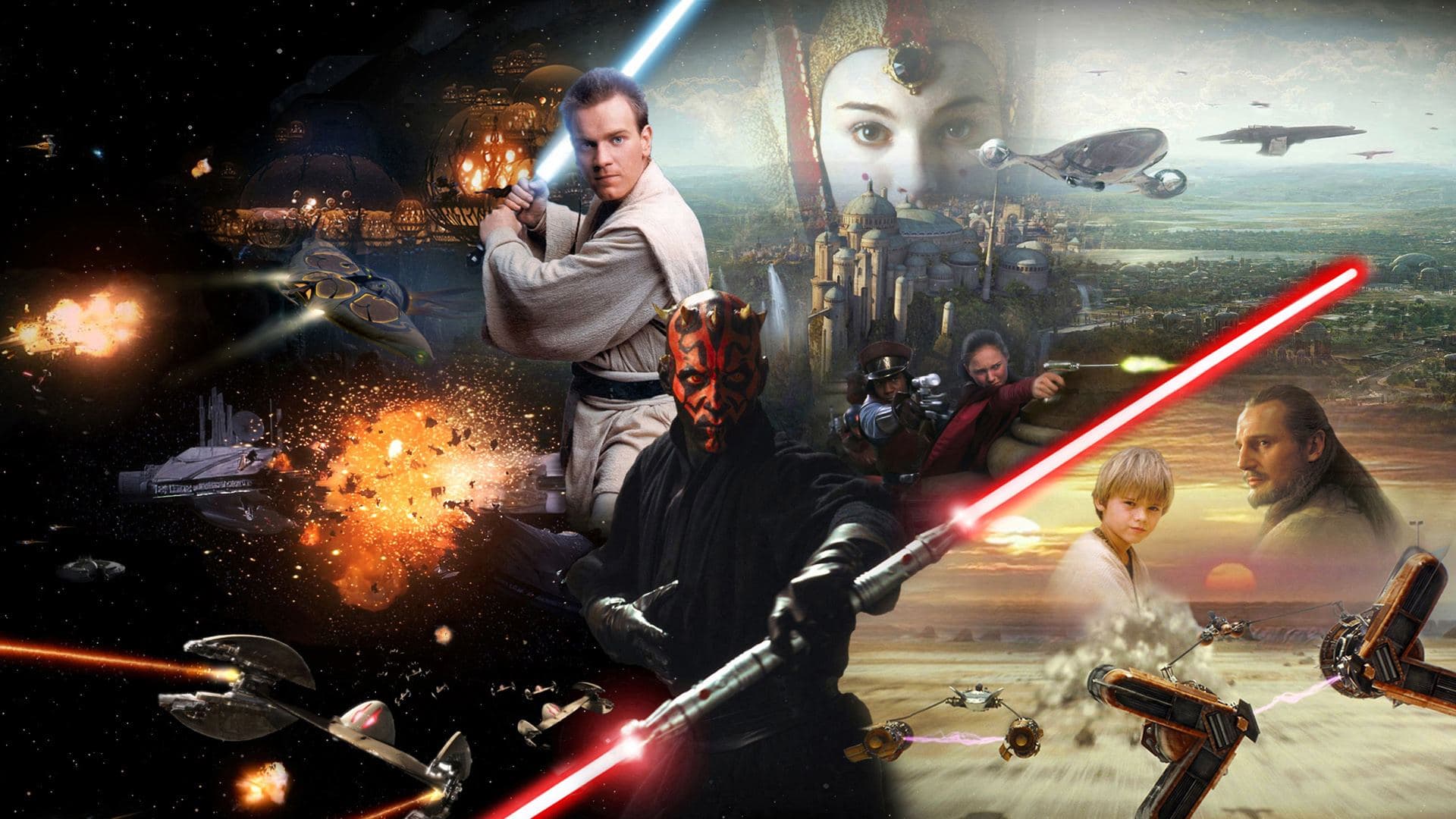
Anakin Skywalker, a young slave strong with the Force, is discovered on Tatooine. Meanwhile, the evil Sith have returned, enacting their plot for revenge against the Jedi.
What Is the Budget of Star Wars: The Phantom Menace?
Star Wars: The Phantom Menace (1999) was produced on a budget of $115 million, financed entirely by George Lucas through Lucasfilm Ltd. rather than through traditional studio financing. When Lucas began developing the prequel trilogy in the early 1990s, he declined to accept money from 20th Century Fox or any other studio, instead funding the production himself using the profits from the original Star Wars franchise. Fox distributed the film under a deal that gave Lucasfilm complete ownership of the negative and all ancillary rights.
Lucas's self-financing decision was one of the defining business moves in Hollywood history. It meant that every dollar of the $115 million budget came from Lucasfilm coffers — with no studio executives empowered to request script changes, casting revisions, or cuts to the director's vision. It also meant that Lucas bore the full downside risk himself. The gamble paid off spectacularly: the film grossed over $1 billion worldwide, and the prequel trilogy as a whole generated several billion dollars in theatrical and ancillary revenue, cementing Lucasfilm's position as one of the most valuable independent entertainment companies in history before its acquisition by Disney in 2012.
Key Budget Allocation Categories
- George Lucas and Core Creative Team: Lucas served as writer, director, and de facto final decision-maker on every aspect of the production. His singular creative authority meant no studio interference — but it also concentrated creative risk entirely in one person. Producer Rick McCallum coordinated the logistical scale of a production that operated across three countries and required the largest digital post-production pipeline ever assembled at the time.
- Industrial Light & Magic Digital Effects: ILM's work on The Phantom Menace represented the largest digital effects budget in film history up to 1999. The studio created over 2,000 visual effects shots, including the first fully CGI lead character in a live-action feature film: Jar Jar Binks. The Coruscant cityscape, the underwater Gungan city, and the climactic Naboo battle sequences were built entirely in digital space, with no physical counterparts. The VFX portion of the budget is estimated to have consumed $45 to $55 million of the total.
- John Williams Score and Soundtrack: John Williams composed an entirely original score for The Phantom Menace, including the iconic 'Duel of the Fates' — a choral orchestral piece that became one of the most recognizable compositions in the franchise and in Williams's career. The scoring sessions at Skywalker Sound required a full orchestra and chorus, with multiple recording passes. Williams scored all three prequel films, maintaining continuity with the original trilogy's musical identity across a 28-year span.
- Production at Leavesden Studios and Location Shoots: Principal photography took place at Leavesden Film Studios in Hertfordshire, UK, which Lucas chose for its large stages capable of holding the enormous practical sets required for the Jedi Council Chamber, Coruscant interiors, and the Queen's Royal Palace. Location shooting in Tunisia reproduced the Tatooine desert sequences, as Lucas had used the same locations for the original 1977 film. The Caserta Palace in Italy served as the exterior and interior of Naboo's royal palace, providing a baroque grandeur that CGI environments alone could not replicate.
- Global Marketing and P&A: Fox's worldwide theatrical release required an estimated $75 million in prints and advertising expenditure. The marketing campaign is notable for what it did not need: the film's first trailer, released in November 1998, generated such enormous organic demand that fans paid admission to other films simply to watch the trailer in theaters and then left. The trailer became a cultural event with essentially zero paid media spend behind it. The actual paid marketing push focused on broadcast television, print, and a massive merchandise licensing campaign coordinated with Hasbro, Lego, and Pepsi.
How Does The Phantom Menace Compare to Similar Films?
The Phantom Menace's $115 million budget placed it among the most expensive films ever made at the time of its 1999 release. Its commercial performance — $1.027 billion worldwide — validated the investment many times over and set the template for modern franchise tentpole economics. Comparing it to adjacent films in franchise history and the late-1990s landscape illuminates how significant the production gamble actually was.
- Return of the Jedi (1983): Budget $32.5M | Worldwide $475M. The final film of the original trilogy was made 16 years before The Phantom Menace on roughly a quarter of the budget. The gap illustrates how dramatically production costs had escalated — and how much of The Phantom Menace's budget was driven by ILM's digital revolution rather than pure crew and talent inflation.
- The Matrix (1999): Budget $63M | Worldwide $463M. Released in the same year, The Matrix was made at just over half the cost of The Phantom Menace and pioneered its own digital visual effects revolution with bullet-time photography. The contrast in commercial performance — The Phantom Menace earned more than twice as much worldwide — reflects the franchise gravitational pull that Star Wars carried into its return.
- Jurassic Park (1993): Budget $63M | Worldwide $1.03B. Spielberg's film, also an ILM production, was the direct predecessor to The Phantom Menace's digital ambitions. ILM's photorealistic CGI dinosaurs in 1993 established the technical foundation that Lucas expanded into full digital environments and characters six years later. Both films crossed $1 billion worldwide, at the time a rare threshold.
- Star Wars: The Force Awakens (2015): Budget $245M | Worldwide $2.07B. The next major franchise event, made 16 years after The Phantom Menace under Disney ownership, cost more than twice as much and earned roughly double the worldwide gross. The Force Awakens's success — and the explicit nostalgia it leveraged for the original trilogy — implicitly addressed the mixed reception that The Phantom Menace had received.
Star Wars: The Phantom Menace Box Office Performance
The Phantom Menace opened on May 19, 1999, in 2,970 theaters in North America and earned $28.5 million on opening day and $64.8 million in its opening weekend. It was the highest-grossing opening weekend in history at the time of release. The film went on to earn $431,088,295 domestically and $596 million internationally, for a worldwide total of $1,027,044,677 — the first Star Wars film to cross $1 billion globally and the highest-grossing film of 1999 worldwide. 20th Century Fox distributed the film theatrically in all territories.
With a production budget of $115 million and an estimated $75 million in prints and advertising, Lucasfilm's total investment was approximately $190 million. Theatrical exhibition agreements typically give studios roughly 50% of the worldwide gross after theater keep. On $1.027 billion worldwide, the studio share was approximately $513.5 million, meaning the film cleared its full investment and generated substantial profit on theatrical alone — before home video, television licensing, and the franchise's enormous merchandise revenues are counted.
Box Office Breakdown
Star Wars Episode I – The Phantom Menace

The Phantom Menace earned roughly $8.93 for every $1 invested in production costs. When total investment (production plus P&A) is used as the denominator, the return was approximately $5.40 per dollar invested. Either figure represents an exceptional theatrical return by the standards of any era. Ancillary revenues from VHS, DVD, Blu-ray, streaming, and the continuously replenished Star Wars merchandise ecosystem make the film's total financial contribution to Lucasfilm effectively impossible to fully account.
Star Wars: The Phantom Menace Production History
George Lucas began developing the story for the Star Wars prequel trilogy in the early 1990s, more than a decade after Return of the Jedi concluded the original saga in 1983. He had always conceived of Star Wars as a multi-part story and had sketched backstory for Anakin Skywalker's origins and the fall of the Old Republic during the writing of the original trilogy. By 1993 he was actively working on a script, and by 1994 he had committed to directing the first prequel himself — his first directorial credit since the original Star Wars (1977). The decision to self-finance the production through Lucasfilm was announced in 1994, and pre-production began in earnest in 1995 with the establishment of the digital production pipeline at Industrial Light & Magic and Skywalker Sound.
Casting concluded in early 1997. Liam Neeson was cast as Jedi Master Qui-Gon Jinn, and Ewan McGregor was selected to play the young Obi-Wan Kenobi — a role that required him to capture the essence of Alec Guinness's performance in the original trilogy while inhabiting an entirely different life stage for the character. Natalie Portman joined as Queen Amidala/Padme, and Jake Lloyd, a child actor, was chosen after an extensive global search to play young Anakin Skywalker. Principal photography began at Leavesden Film Studios in Hertfordshire, UK, on June 26, 1997, and wrapped in September 1997 after approximately 65 days of shooting.
Location shooting took the production to the Chott el-Djerid salt flats and the village of Matmata in Tunisia for Tatooine sequences — the same locations Lucas had used for the original 1977 film, creating a deliberate visual continuity across two decades of production. The Caserta Palace in Caserta, Italy, provided the exteriors and grand interiors of Naboo's Royal Palace, its baroque architecture lending the planet a specific visual identity that digital construction alone could not have achieved. Leavesden's largest stages housed the Jedi Council Chamber, the Senate rotunda interiors, and the physical elements of the podracing sequence set.
Post-production ran from late 1997 through early 1999, an unusually long period driven by the unprecedented scope of ILM's digital work. The studio created over 2,000 visual effects shots, more than any film had required at that point. The entirely CGI character Jar Jar Binks required the development of new software for cloth simulation and character animation. John Williams recorded the score at Skywalker Sound, and the film's first theatrical trailer was released in November 1998 and became an immediate cultural phenomenon. The Phantom Menace premiered in New York on May 16, 1999, and opened wide on May 19, 1999, to enormous commercial success and mixed critical reception.
Awards and Recognition
The Phantom Menace received three Academy Award nominations at the 72nd Academy Awards (2000): Best Sound (Gary Rydstrom and Tom Johnson), Best Sound Editing (Ben Burtt and Tom Bellfort), and Best Visual Effects (John Knoll, Dennis Muren, Scott Squires, and Rob Coleman). The film did not win in any of the three categories — a result that some observers attributed to Academy skepticism toward the film's otherwise mixed reception, despite the acknowledged technical accomplishment of ILM's work.
The film's cultural significance extends well beyond its award-season performance. The Phantom Menace was one of the most anticipated films in cinema history: the 16-year wait since Return of the Jedi made its release a generational event, and its $1 billion worldwide gross confirmed that the Star Wars franchise remained one of the most powerful commercial properties in the entertainment industry. The film's digital production innovations, particularly ILM's work on fully computer-generated characters and environments, established technical benchmarks that influenced the entire subsequent decade of visual effects filmmaking.
Critical Reception
The Phantom Menace opened to significant critical polarization. The initial press reviews reflected appreciation for the film's visual ambition and nostalgia value alongside substantial reservations about its script, pacing, and characterization. Roger Ebert gave the film three out of four stars, noting that despite its flaws the film delivered the spectacle audiences had waited 16 years to see. The New York Times called it a 'breathtaking' feat of production design while questioning whether it had the emotional depth of the original trilogy. Rotten Tomatoes aggregates the film at approximately 51% on the Tomatometer from critics, with an audience score around 59%.
The most persistent critical objections centered on three elements: the character of Jar Jar Binks, widely regarded as a failed comedic creation whose physical comedy undermined the film's dramatic tone; the performance and scripting of young Anakin Skywalker, which many critics felt failed to establish the tragic arc the character would need to follow across two subsequent films; and the film's opening act, a Trade Federation blockade plot that felt to many viewers unnecessarily dense and procedural for what had been marketed as a galactic adventure.
The decades since the film's release have produced a genuine and documented generational reassessment. Fans who were children when The Phantom Menace released in 1999 grew up with the film as their entry point to Star Wars, and their relationship to it differs fundamentally from fans of the original trilogy who experienced the film as a long-anticipated return. This generational split has become one of the more studied phenomena in contemporary fandom culture, with the prequel trilogy rehabilitated by internet culture and subsequent critical writing in the 2010s and 2020s. The Phantom Menace remains commercially one of the most successful films of its decade and technically one of the most influential productions in the history of digital filmmaking.
Frequently Asked Questions
How much did Star Wars: Episode I - The Phantom Menace cost to make?
The production budget was $115,000,000. Lucasfilm self-financed the prequel entirely from George Lucas's personal capital and Lucasfilm reserves, with Twentieth Century Fox handling distribution only and retaining no equity stake in the film.
How much did The Phantom Menace earn at the box office?
The film grossed $474,544,677 domestically and $552,500,000 internationally, for a worldwide total of approximately $1,027,000,000 across the initial release plus the 2012 3D re-release. The original 1999 release alone grossed $924,300,000 worldwide.
Who directed The Phantom Menace?
George Lucas directed the film, returning to the director's chair for the first time since Star Wars: Episode IV - A New Hope (1977). Lucas had previously delegated directing duties on The Empire Strikes Back (1980) and Return of the Jedi (1983) to focus on writing and producing.
Who stars in The Phantom Menace?
Liam Neeson plays Qui-Gon Jinn, Ewan McGregor plays a young Obi-Wan Kenobi, Natalie Portman plays Queen Padme Amidala, Jake Lloyd plays nine-year-old Anakin Skywalker, and Pernilla August plays Shmi Skywalker. Ian McDiarmid returns as Senator Palpatine and Samuel L. Jackson appears as Mace Windu.
Why was The Phantom Menace so heavily criticized?
Critical and fan reaction divided over the CGI-heavy aesthetic, the introduction of Jar Jar Binks, the heavy focus on trade-dispute politics, and the casting of nine-year-old Jake Lloyd as Anakin Skywalker. The 16-year gap from Return of the Jedi raised audience expectations to levels few films could meet.
What did critics think of The Phantom Menace?
The film received mixed reviews, with a 51% approval rating on Rotten Tomatoes and a 51 out of 100 score on Metacritic. Critics praised the podrace sequence and the Duel of the Fates climactic lightsaber battle while objecting to the wooden human performances and the prominence of Jar Jar Binks.
Where was The Phantom Menace filmed?
Principal photography took place at Leavesden Studios in England, with location work in Tunisia (Tatooine), Italy at Caserta Palace (Theed), and Spain at the Plaza de Espana in Seville. The Tunisian shoot survived a freak desert storm that damaged sets and effectively recreated A New Hope's 1976 production challenge.
Did The Phantom Menace win any awards?
The film received three Academy Award nominations at the 72nd Oscars for Best Visual Effects, Best Sound, and Best Sound Effects Editing, losing all three to The Matrix. It won the Saturn Award for Best Science Fiction Film and multiple technical guild awards.
How does The Phantom Menace compare to the original trilogy?
The Phantom Menace's $1,027,000,000 worldwide gross exceeded the original A New Hope (1977, $11,000,000 budget, $775,800,000 worldwide adjusted), The Empire Strikes Back (1980, $18,000,000 budget, $547,900,000 worldwide), and Return of the Jedi (1983, $32,500,000 budget, $475,300,000 worldwide) on a raw basis, though all three originals retain stronger critical legacies.
Did The Phantom Menace pioneer digital filmmaking?
Yes. The Phantom Menace was the first major studio film to use digital cameras for selected sequences, a precursor to the all-digital production of Episode II - Attack of the Clones (2002). The 2,200 CGI shots set a record at the time and required Industrial Light & Magic to expand its render farm substantially.
Official Trailer
Build budgets like this one in Saturation
Start from an industry-standard feature film template, import the schedule and rates you already have, and let the cost report keep itself current as you spend. Real-time collaboration, no spreadsheets.