Summer of Sam Budget
 Thriller/Suspense
Updated
Synopsis
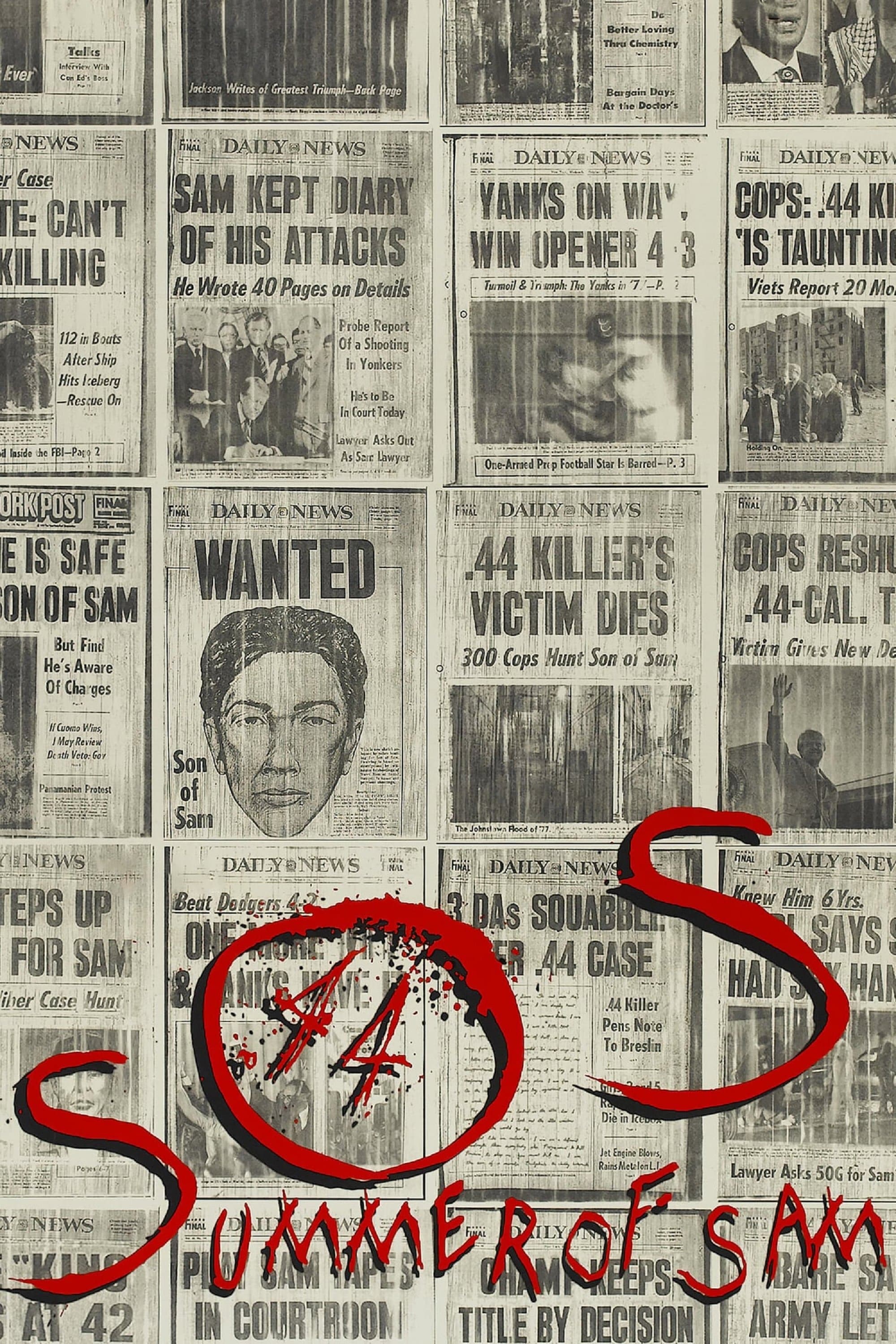
During the long, sweltering summer of 1977, the Son of Sam serial killings push New York City into a state of fevered paranoia. In a working-class Bronx neighborhood, a hairdresser named Vinny, his wife Dionna, and their old friend Ritchie, a CBGB-going punk freshly returned from Manhattan, watch their friendships and marriage unravel under the pressure of the manhunt and the neighborhood's growing appetite for a scapegoat.
What Is the Budget of Summer of Sam (1999)?
Summer of Sam (1999), directed by Spike Lee and distributed by Buena Vista Pictures, was produced on a reported budget of $22,000,000. Released through Touchstone Pictures in partnership with Lee's 40 Acres and a Mule Filmworks, it was the filmmaker's most expensive feature to that point and his first major studio production headlined entirely by non-Black lead actors. The story dramatizes the summer of 1977 in New York City, when the David Berkowitz "Son of Sam" murders held the five boroughs in a state of fevered paranoia, refracted through a working-class Italian American Bronx neighborhood and its punk-rock subculture in Brownsville, Brooklyn.
The investment reflected an ambitious mid-budget bet on adult-oriented period drama. Touchstone committed enough capital for a recreated 1977 New York City, an ensemble cast led by John Leguizamo, Adrien Brody, and Oscar winner Mira Sorvino, and an expensive licensed soundtrack stacked with The Who, Marvin Gaye, ABBA, and Chic. The math assumed Summer of Sam would clear roughly $50,000,000 worldwide to break even after marketing, a target the film fell well short of when its domestic-only release stalled at $19,288,130.
Key Budget Allocation Categories
Summer of Sam's $22,000,000 budget was distributed across several core production areas:
- Above-the-Line Talent: Spike Lee directed and co-wrote, commanding both a director's fee and a producer credit through 40 Acres and a Mule. John Leguizamo, fresh off To Wong Foo and Spawn, took the lead role of Vinny alongside Mira Sorvino (an Academy Award winner for Mighty Aphrodite) as Dionna and rising actor Adrien Brody as Ritchie. Anthony LaPaglia, Jennifer Esposito, Michael Rispoli, and Michael Badalucco (cast as Berkowitz) filled out the ensemble, with each role commanding fees appropriate to the cast's prestige and post-Oscar visibility.
- 1977 New York City Period Production Design: Production designer Therese DePrez and her team recreated late 1970s New York across Bronx neighborhoods including Country Club, Morris Park, and Throggs Neck, plus Brownsville, Brooklyn. The job required vintage Trans Ams and Cadillacs, period-correct disco and punk wardrobe, recreated 1977 storefronts and Italian American social clubs, and dressed exteriors for the blackout sequence and CBGB scenes. Period authenticity at this scale typically consumes 15 to 20 percent of a mid-budget feature.
- Large Ensemble Cast: The film carries an unusually deep bench. Beyond the named leads, the screenplay tracks Detective Lou Petrocelli's investigation team, a sprawling neighborhood crew of friends turned vigilantes, the disco scene at the fictional Hot Tin Roof club, the punk scene at CBGB, and Berkowitz himself in isolation. Each storyline required its own cast, costume, and rehearsal time, swelling daily production costs throughout the 16-week summer 1998 shoot.
- Music Licensing: The needle-drop soundtrack is one of the most expensive elements of the film. The Who's "Baba O'Riley" anchors the climactic sequence, with additional licensed tracks from Marvin Gaye, ABBA, Chic, The Lovin' Spoonful, Sly and the Family Stone, and others. Major label master-and-publishing clearances for catalog hits of this caliber routinely run $100,000 to $500,000 per track, pushing total music licensing well into seven figures. Terence Blanchard composed the original score.
- Cinematography and Camera Package: Director of photography Ellen Kuras shot on 35mm with a deliberately overheated, sweat-soaked visual palette. Her camera package, lighting trucks, and grip equipment supported night exteriors, blackout sequences, and the orgy and club interiors that Lee staged at length.
- MPAA Re-edit: After the MPAA threatened an NC-17 rating for the orgy and sexual content, Lee and editor Barry Alexander Brown returned to the cutting room to trim explicit shots and secure an R rating. The extra post-production cycle added editorial, sound, and finishing costs that were not in the original schedule.
How Does Summer of Sam's Budget Compare to Similar Films?
At $22,000,000, Summer of Sam sits in the mid-range of Spike Lee's filmography and below the typical budget of late-1990s serial-killer dramas. The comparison set illustrates how its commercial outcome diverged from its peers:
- Do the Right Thing (1989): Budget $6,500,000 | Worldwide $37,300,000. Lee's breakthrough Brooklyn ensemble cost less than a third of Summer of Sam and out-grossed it by nearly double, demonstrating how much more efficient his earlier neighborhood-set films were at converting cultural relevance into theatrical dollars.
- Malcolm X (1992): Budget $34,000,000 | Worldwide $48,200,000. Lee's most expensive previous film, a three-hour biographical epic with Denzel Washington, ran 55 percent above Summer of Sam and earned more than 2.4 times its domestic take.
- He Got Game (1998): Budget $25,000,000 | Worldwide $21,600,000. Lee's basketball drama with Denzel Washington, released a year earlier, offers the closest production-cost peer and posted a similarly disappointing theatrical result.
- Se7en (1995): Budget $33,000,000 | Worldwide $327,300,000. David Fincher's serial-killer thriller cost 50 percent more than Summer of Sam and grossed roughly 17 times more worldwide, illustrating the commercial ceiling the genre could reach when wrapped in a thriller framework rather than a period social drama.
- Zodiac (2007): Budget $65,000,000 | Worldwide $84,800,000. Fincher's later procedural treatment of the Zodiac killings cost three times Summer of Sam and earned more than four times its worldwide take, the inverse outcome of Lee's ensemble-driven approach to the same subgenre.
- Boogie Nights (1997): Budget $15,000,000 | Worldwide $43,100,000. Paul Thomas Anderson's 1970s San Fernando Valley ensemble cost two thirds of Summer of Sam and grossed more than double, confirming that period New Hollywood pastiche could find a wider audience when its protagonists were more sympathetic and its central trauma was less personal.
Summer of Sam Box Office Performance
Summer of Sam opened on July 2, 1999, on 1,536 screens in the United States, finishing eighth at the domestic box office with $7,991,450 over its opening weekend, a per-screen average of $5,202. It dropped to tenth in its second weekend with $3,440,000 and exhausted its theatrical run with a domestic total of $19,288,130. Buena Vista did not give the film a wide international release, and there is no publicly reported international gross.
Against a reported production budget of $22,000,000, the film needed approximately $50,000,000 in worldwide gross to reach profitability when accounting for marketing and distribution costs. Here is the financial breakdown:
Box Office Breakdown
Summer of Sam (1999)

Summer of Sam returned approximately $0.46 in theatrical revenue for every $1 invested when measured against total estimated production and marketing spend, placing it among the more visible underperformers of summer 1999. The film generated its full reported gross from the domestic market alone, an unusual outcome for a Spike Lee studio production and a clear signal that the property did not translate abroad.
The financial result tempered Touchstone's appetite for adult-oriented Lee material going forward. His next several features (Bamboozled in 2000 and 25th Hour in 2002) returned to more contained budgets and tighter cast configurations, with the studio-tentpole-scale ensemble period piece set aside until the much-later Inside Man (2006) restored his commercial footing on a heist-thriller premise.
Summer of Sam Production History
The screenplay originated with actor Michael Imperioli (later The Sopranos) and his friend Victor Colicchio, both Bronx natives who had grown up under the shadow of the Son of Sam summer. Their original draft followed a group of working-class Italian American friends in 1977, weaving the panic generated by Berkowitz's shootings through neighborhood dynamics, marital strain, the disco-versus-punk cultural divide, and the New York City blackout. Spike Lee came on board to direct and rewrite, expanding the script's focus on scapegoating and mob mentality and adding the Berkowitz scenes performed by Michael Badalucco.
Casting John Leguizamo, Mira Sorvino, and Adrien Brody shaped the production in different ways. Leguizamo, already a Lee collaborator, anchored the Vinny role with a star presence the studio underwrote at higher cast cost than Lee's earlier ensembles. Sorvino had an Oscar (Mighty Aphrodite) and was on the cover of magazines. Brody, then 25 and still pre-Pianist, took the part of Ritchie the punk and was billed second; he later credited the role as the moment his career graduated from supporting parts.
Principal photography ran for 16 weeks in summer 1998 in New York, primarily in Bronx neighborhoods (Country Club, Morris Park, Throggs Neck) and Brownsville, Brooklyn. Ellen Kuras shot on 35mm. The blackout sequence required nighttime exteriors lit only by car headlights, period candles, and practical sources, while the disco interiors were staged at a recreated club set built for the production.
The film became the focus of two significant external pressures during post-production. First, the families of the actual Son of Sam victims went public to protest the production, with several family members telling the New York Daily News that they objected to the killings being dramatized for entertainment and that Lee had not consulted them. Second, the MPAA assigned an initial NC-17 rating to the orgy sequence and other sexual content. Lee and editor Barry Alexander Brown cut several explicit shots to secure the R rating required for a wide release. Berkowitz himself, serving consecutive life sentences at the Sullivan Correctional Facility, wrote to Lee from prison asking him not to make the film, an appeal Lee declined.
Awards and Recognition
Summer of Sam received limited awards recognition. At the 2000 Black Reel Awards, the film was nominated for Best Film Soundtrack (Terence Blanchard, original score) and Best Director (Spike Lee), without winning in either category. The Casting Society of America (Artios Awards) nominated the film for Best Dramatic Casting, recognizing the ensemble work. Mira Sorvino was nominated for a Razzie for Worst Supporting Actress, a contentious nod that critics widely contested.
The film received no recognition at the Academy Awards, Golden Globes, or BAFTAs, and was not selected for major festival competition. Its awards footprint is consistent with Lee's mid-career studio work in that era, where critical division and a mixed commercial outcome combined to keep prestige-circuit attention modest. Within the broader Spike Lee filmography, Summer of Sam is regularly reassessed in retrospective critical surveys, with several outlets calling for a reappraisal of its ensemble craft and period production design.
Critical Reception
Summer of Sam received divided reviews on release and remains one of the more debated entries in Spike Lee's filmography. The film holds a 50% approval rating on Rotten Tomatoes based on 104 critic reviews, with a critical consensus that praised its ambition while flagging the uneven tone and runtime. On Metacritic, the film scored 67 out of 100 based on 27 critics, indicating generally favorable reviews. Audiences surveyed by CinemaScore gave it a D-, an unusually low grade reflecting how strongly the film's tone and content polarized mainstream summer moviegoers.
Roger Ebert gave the film four stars in the Chicago Sun-Times, calling it "a film about how a community responds to its fears" and arguing that the film was not really about Berkowitz at all but about "scapegoating and mob mentality." Janet Maslin of The New York Times praised the visual ambition and Kuras's cinematography, while Owen Gleiberman in Entertainment Weekly was more guarded, writing that Lee "creates a remarkable atmosphere of menace" but that the script's structural sprawl undercut its dramatic payoff.
Detractors objected to the film's length (142 minutes), the centrality of the orgy sequence, and the decision to dramatize a real series of murders within the lifetimes of the victims' families. Critic David Edelstein in Slate wrote that the film "wants to be epic but loses focus," while Stephen Hunter in The Washington Post called the result "loud, profane, ambitious, and unfocused." In the years since release, the film has been frequently revisited in coverage of Adrien Brody's career arc and of Lee's 1990s output, with retrospectives treating it as a flawed but distinctive entry that captured a specific texture of New York life that few other films of the era attempted.
Frequently Asked Questions
How much did it cost to make Summer of Sam (1999)?
The reported production budget was $22,000,000. Touchstone Pictures financed the production in partnership with Spike Lee's 40 Acres and a Mule Filmworks, with Buena Vista Pictures handling distribution. It was Lee's most expensive feature to that point and his first major studio production headlined by non-Black lead actors.
How much did Summer of Sam earn at the box office?
Summer of Sam grossed $19,288,130 domestically across its theatrical run. The film opened to $7,991,450 across 1,536 screens on July 2, 1999, finishing eighth at the domestic box office that weekend. Buena Vista did not give the film a wide international release, and there is no publicly reported international gross.
Was Summer of Sam a box office bomb?
Yes. Against a $22,000,000 production budget and an estimated $15,000,000 to $20,000,000 in marketing spend, the film returned approximately $0.46 in worldwide gross for every $1 invested. It is one of the more visible commercial misses of Spike Lee's studio-era filmography.
Who directed Summer of Sam?
Spike Lee directed the film, working from a screenplay he co-wrote with Victor Colicchio and Michael Imperioli (later The Sopranos). The original script by Colicchio and Imperioli predated Lee's involvement and was based on the writers' own memories of growing up in the Bronx during the 1977 Son of Sam summer.
Who stars in Summer of Sam?
John Leguizamo plays Vinny, a hairdresser at the center of the story. Mira Sorvino plays his wife Dionna, Adrien Brody plays the returning punk Ritchie, Jennifer Esposito plays Ruby, Anthony LaPaglia plays Detective Lou Petrocelli, and Michael Badalucco plays David Berkowitz. The ensemble also features Ben Gazzara, Patti LuPone, and Bebe Neuwirth.
Where was Summer of Sam filmed?
Principal photography ran for 16 weeks in summer 1998 in New York. The Bronx neighborhoods of Country Club, Morris Park, and Throggs Neck doubled for the 1977 setting, with additional shooting in Brownsville, Brooklyn. Ellen Kuras shot on 35mm with a deliberately overheated, sweat-soaked visual palette.
Why was Summer of Sam controversial?
The film drew protests from the families of the actual Son of Sam victims, who objected to the killings being dramatized for entertainment and said they had not been consulted. David Berkowitz himself wrote to Spike Lee from the Sullivan Correctional Facility asking him not to make the film, a request Lee declined. The MPAA also initially rated the film NC-17 over the orgy sequence, forcing Lee to recut for an R.
What is Summer of Sam rated and why?
Summer of Sam is rated R for graphic sexuality and nudity, strong violence, pervasive strong language, and drug use. The MPAA initially assigned an NC-17 rating, and Spike Lee and editor Barry Alexander Brown cut several explicit shots from the orgy sequence and other sexual content to secure the R rating required for a wide theatrical release.
How does Summer of Sam compare to other Spike Lee films?
Summer of Sam cost more than three times Do the Right Thing (1989, $6,500,000 budget) and 65 percent of Malcolm X (1992, $34,000,000 budget). It is most closely comparable in budget to He Got Game (1998, $25,000,000 budget), which also underperformed theatrically. Within Lee's 1990s studio output, Summer of Sam is the most ensemble-driven and the only entry not headlined by a Black lead actor.
What did critics think of Summer of Sam?
The film received divided reviews. It holds a 50% approval rating on Rotten Tomatoes (based on 104 critics) and a 67 out of 100 score on Metacritic (generally favorable). Roger Ebert gave the film four stars, calling it a study of "scapegoating and mob mentality." Audiences gave it a D- CinemaScore, reflecting how strongly its 142-minute runtime, sexual content, and bleak tone polarized mainstream summer 1999 moviegoers.
Filmmakers
Summer of Sam (1999)

Build budgets like this one in Saturation
Start from an industry-standard feature film template, import the schedule and rates you already have, and let the cost report keep itself current as you spend. Real-time collaboration, no spreadsheets.