Do the Right Thing Budget
 Drama2h
Updated
Synopsis
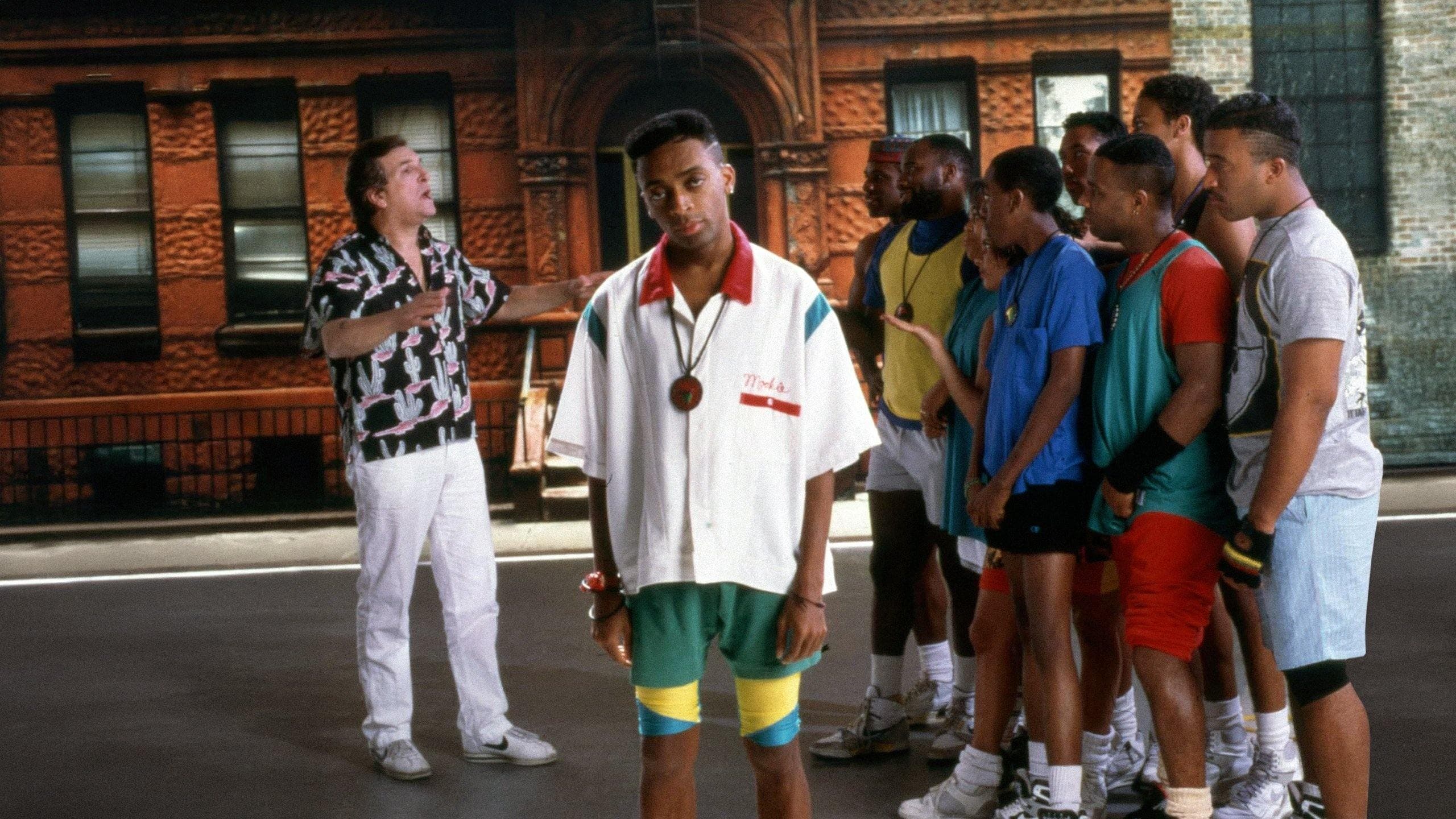
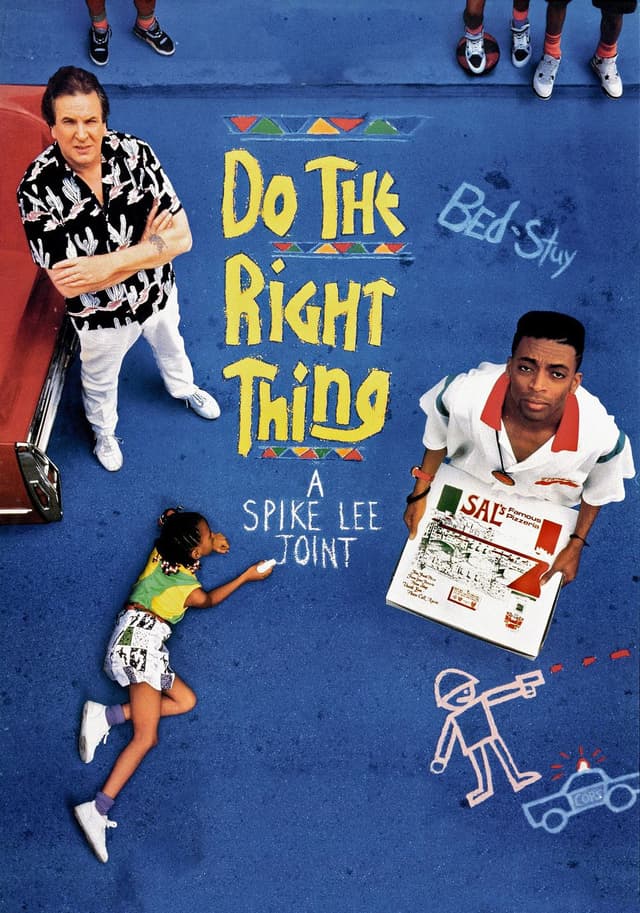
This film looks at life in the Bedford-Stuyvesant district of Brooklyn on a hot summer Sunday. As he does everyday, Sal Fragione opens the pizza parlor he's owned for 25 years. The neighborhood has changed considerably in the time he's been there and is now composed primarily of African-Americans and Hispanics. His son Pino hates it there and would like nothing better than to relocate the eatery to their own neighborhood. For Sal however, the restaurant represents something that is part of his life and sees it as a part of the community. What begins as a simple complaint by one of his customers, Buggin Out - who wonders why he has only pictures of famous Italian-Americans on the wall when most of his customers are black - eventually disintegrates into violence as frustration seemingly brings out the worst in everyone.
What is the budget of Do the Right Thing?
"Do the Right Thing," a drama released in 1989, was directed by Spike Lee and stars Danny Aiello, Ossie Davis. The production budget was $6,500,000, placing it in the low-budget range for drama productions of the 1980s.
Key Budget Allocation Categories
While specific budget breakdowns are not publicly available, typical cost drivers for a drama production like this include:
- Above-the-Line Talent: Drama films live or die on the strength of their performances.
- Location Filming & Period Production Design: Authentic locations , whether contemporary or historical , require scouting, permits, travel, lodging, and often significant dressing to match the story's time period.
- Post-Production, Color Grading & Score: The editorial process for dramas is typically longer than genre films, with careful attention to pacing and tone.
- Casting: Initially considering De Niro for the role of "Sal," Lee eventually cast Danny Aiello at De Niro's suggestion.
What were the major cost factors in Do the Right Thing?
Several factors contributed to the overall production costs of "Do the Right Thing."
- Above-the-Line Talent: Above-the-Line Talent is one of the primary cost drivers in drama productions of this scale.
- Location Filming: Location Filming & Period Production Design is one of the primary cost drivers in drama productions of this scale.
- Post-Production: Post-Production, Color Grading & Score is one of the primary cost drivers in drama productions of this scale.
How Does Do the Right Thing's Budget Compare to Similar Films?
At $6,500,000, Do the Right Thing sits in the low-budget range. Here is how it compares to productions with a similar budget:
- Shame (2011): Budget $6,500,000, Worldwide Gross $3,909,002
- Men (2022): Budget $6,500,000, Worldwide Gross $11,152,071
- Sentinelle (2021): Budget $6,500,000
- Crash (2005): Budget $6,500,000, Worldwide Gross $98,400,000
- The Terminator (1984): Budget $6,400,000, Worldwide Gross $78,371,200
The median budget for wide-release drama films in the era ranges from $30 to 80M for mid-budget to $150M+ for tentpoles.
Do the Right Thing Box Office Performance
"Do the Right Thing" earned $27,545,445 domestically and $37,300,000 worldwide at the box office. Against a production budget of $6,500,000, the film performed strongly at the box office.
A film typically needs to earn approximately twice its production budget to cover marketing and distribution costs. For "Do the Right Thing," that break-even threshold was roughly $13,000,000. With worldwide earnings of $37,300,000, the film cleared that threshold comfortably.
Box Office Breakdown
Do the Right Thing

At 473.8%, "Do the Right Thing" earned roughly $5.74 for every $1 invested in production.
Do the Right Thing Production History
Initially considering De Niro for the role of "Sal," Lee eventually cast Danny Aiello at De Niro's suggestion. Four of the cast members were stand-up comedians: Martin Lawrence, Steve Park, Steve White and Robin Harris. Samuel L.
Principal photography commenced on July 18, 1988, on a single block in Brooklyn, New York. The film crew transformed the dilapidated Stuyvesant Avenue, between Quincy Street and Lexington Avenue in the Bedford,Stuyvesant neighborhood, creating new structures such as the Korean grocery store, a functional pizza parlor representing Sal's Famous Pizzeria, and a radio station replacing a burnt-out building. Some characters' residences were set in a former crack house shut down by the production, and the brownstone serving as the home of the only white resident, "Clifton," was a vacant building before filming.
The film's score (composed and partially performed by jazz musician Bill Lee, father of Spike Lee) was released in early July 1989 while the soundtrack was released in late June 1989 on Columbia Records and Motown Records, respectively. The soundtrack was successful, reaching the number eleven spot on the Top R&B/Hip-Hop Albums chart, and peaking at sixty-eight on the Billboard 200. On the Hot R&B/Hip-Hop Singles & Tracks chart, the Perri track "Feel So Good" reached the fifty-first spot, while Public Enemy's "Fight the Power" reached number twenty, and Guy's "My Fantasy" went all the way to the top spot.
Awards and Recognition
Nominated for 2 Oscars. 21 wins & 19 nominations total
- Los Angeles Film Critics Association Award for Best Director: Spike Lee
- NAACP Image Award for Outstanding Supporting Actor in a Motion Picture: Ossie Davis
- NAACP Image Award for Outstanding Actress in a Motion Picture: Ruby Dee
- Los Angeles Film Critics Association Award for Best Film
Frequently Asked Questions
How much did it cost to make Do the Right Thing (1989)?
The production budget was $6,500,000, covering principal photography, cast and crew salaries, locations, sets, post-production, and music. Marketing and distribution (P&A) costs are estimated at an additional $3,250,000 - $5,200,000, bringing the total studio investment to approximately $9,750,000 - $11,700,000.
How much did Do the Right Thing (1989) earn at the box office?
Do the Right Thing grossed $27,545,445 domestic, $9,754,555 international, totaling $37,300,000 worldwide.
Was Do the Right Thing (1989) profitable?
Yes. Against a production budget of $6,500,000 and estimated total costs of ~$16,250,000, the film earned $37,300,000 theatrically - a 474% ROI on production costs alone.
What were the biggest costs in producing Do the Right Thing?
The primary cost drivers were above-the-line talent (Danny Aiello, Ossie Davis, Ruby Dee); talent compensation, authentic period production design, and meticulous post-production.
How does Do the Right Thing's budget compare to similar drama films?
At $6,500,000, Do the Right Thing is classified as a micro-budget production. The median budget for wide-release drama films in the era ranges from $30 - 80M for mid-budget to $150M+ for tentpoles. Comparable budgets: Shame (2011, $6,500,000); Men (2022, $6,500,000); Sentinelle (2021, $6,500,000).
Did Do the Right Thing (1989) go over budget?
There are no widely reported accounts of significant budget overruns for this production. However, studios rarely disclose precise budget overrun figures publicly. The reported production budget reflects the final estimated cost.
What was the return on investment (ROI) for Do the Right Thing?
The theatrical ROI was 473.8%, calculated as ($37,300,000 − $6,500,000) ÷ $6,500,000 × 100. This measures gross revenue against production budget only - it does not account for P&A or exhibitor shares.
What awards did Do the Right Thing (1989) win?
Nominated for 2 Oscars. 21 wins & 19 nominations total.
Who directed Do the Right Thing and who were the key crew members?
Directed by Spike Lee, written by Spike Lee, shot by Ernest R. Dickerson, with music by Bill Lee, edited by Barry Alexander Brown.
Where was Do the Right Thing filmed?
Do the Right Thing was filmed in United States of America. Principal photography commenced on July 18, 1988, on a single block in Brooklyn, New York. The film crew transformed the dilapidated Stuyvesant Avenue, between Quincy Street and Lexington Avenue in the Bedford - Stuyvesant neighborhood, creating new structures such as the Korean grocery store, a functional pizza parlor representing Sal's Famous Pizzeria, and a radio station replacing a burnt-out building.
Filmmakers
Do the Right Thing

Official Trailer
Build budgets like this one in Saturation
Start from an industry-standard feature film template, import the schedule and rates you already have, and let the cost report keep itself current as you spend. Real-time collaboration, no spreadsheets.