Zodiac Budget
 CrimeMysteryThriller2h 37m
Updated
Synopsis
Over the course of a decade, editors of the San Francisco Chronicle entice themselves in the murders of the Zodiac Killer. However, as time runs its course, interest in the case dwindles in the eyes of the professionals. The Killer stops interacting with the public. However, believing he has the answers, an amateur cartoonist from the initial sightings races against time to prevent what he believes is another murder.
What Is the Budget of Zodiac (2007)?
Zodiac was produced on a budget of $65 million by Phoenix Pictures in association with Paramount Pictures, which handled worldwide distribution. The budget reflected David Fincher's commitment to authentic period reconstruction of the San Francisco Bay Area across nearly a decade of the investigation, from the first Zodiac murders in 1968 through the editorial obsession that consumed Robert Graysmith into the late 1970s.
Fincher approached the material as a procedural document rather than a thriller, which shaped every spending decision. Rather than stylizing the period, the production invested heavily in restoring the actual texture of late-1960s and 1970s San Francisco: the Chronicle newsroom, the streets of the Haight and the Richmond district, the police corridors in which Toschi worked. The result was a film that functioned as both a crime investigation and a precise reconstruction of a specific American city at a specific historical moment.
Key Budget Allocation Categories
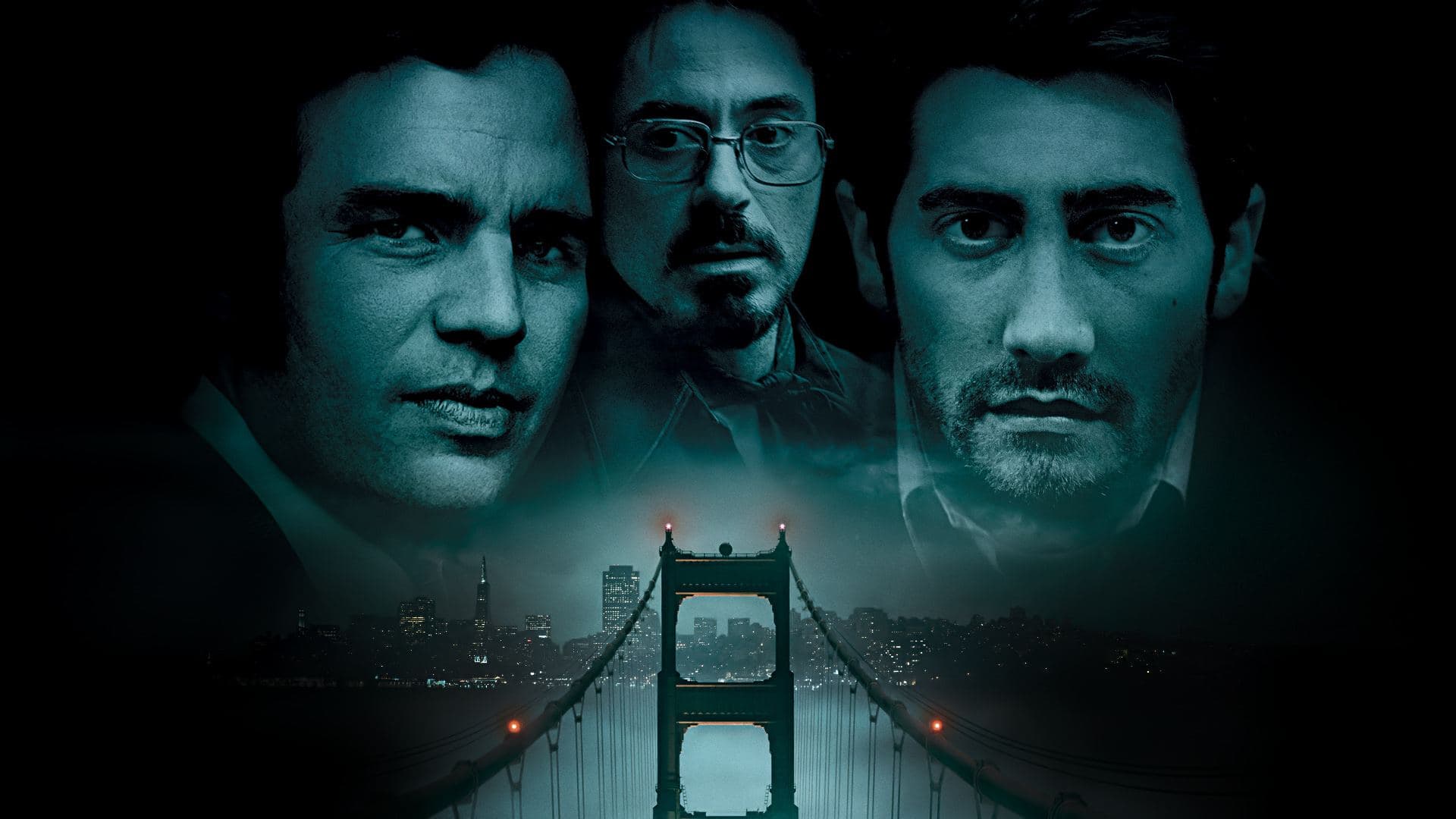
- Cast and Above-the-Line Talent: Jake Gyllenhaal, Mark Ruffalo, and Robert Downey Jr. anchor three parallel narrative perspectives as cartoonist Graysmith, detective Toschi, and reporter Paul Avery. The ensemble also includes Anthony Edwards, Brian Cox, Chloë Sevigny, and John Carroll Lynch, whose performance as prime suspect Arthur Leigh Allen is among the film's most unsettling elements. The above-the-line talent package, including Fincher's director fee and James Vanderbilt's screenplay rights, likely consumed $20 to $25 million of the budget.
- Period San Francisco Reconstruction: Fincher's production designer hired researchers to document street-by-street visual changes to San Francisco neighborhoods between 1968 and 1978. Digital compositing was used to restore period-accurate storefronts, signage, and vehicle traffic throughout. The Chronicle newsroom set was rebuilt to replicate the actual layout of the paper's editorial floor during the period, based on archival photography. Location-based period dressing across the Bay Area represented one of the largest single line items outside of talent.
- Harris Savides Cinematography: Cinematographer Harris Savides shot the film in a naturalistic, often fluorescent-drenched style that grounded the period without romanticizing it. Savides, who also shot Fincher's earlier work, resisted the amber-and-grain nostalgia of typical 1970s period films, instead reproducing the institutional bleakness of offices, police stations, and newsrooms where the investigation actually unfolded. His approach required careful lighting design for extended dialogue scenes rather than the conventional visual grammar of serial killer films.
- David Shire Score: Composer David Shire, whose credits include All the President's Men and The Taking of Pelham One Two Three, was a natural fit for a film rooted in 1970s procedural tension. Shire's compositions are period-authentic without being pastiche, functioning as an ambient underpinning to the obsession that drives all three protagonists rather than as thriller accompaniment. The licensed music throughout the film, including Donovan's Hurdy Gurdy Man and Three Dog Night's Easy to Be Hard, was carefully cleared and calibrated to specific scenes and years within the narrative.
- Research and Source Material: Fincher's team conducted years of original research beyond Robert Graysmith's two books. Surviving investigators were interviewed, police files were accessed, and the timelines of the letters, murders, and investigation were reconstructed from primary sources. The production secured rights to Graysmith's Zodiac (1986) and Zodiac Unmasked (2002), and Fincher's obsessive attention to factual accuracy extended to commissioning handwriting analysis of reproduction Zodiac letters for use in the film.
How Does Zodiac's Budget Compare to Similar Films?
At $65 million, Zodiac sits at the upper range of prestige adult drama in the 2000s. The comparison field is defined not by genre peers but by Fincher's own filmography and by the tradition of investigative procedural filmmaking that Zodiac consciously extends.
- Se7en (1995): Budget $33M | Worldwide $327M. Fincher's breakthrough serial killer film cost roughly half what Zodiac cost twelve years later and earned nearly four times as much. Se7en is a psychological thriller that operates on visual dread and a compressed timeframe. Zodiac inverts almost every choice Se7en makes: open geography, vast timeframe, no cathartic resolution. The comparison reveals how deliberately Fincher moved away from the formula that made him commercially viable.
- The Girl with the Dragon Tattoo (2011): Budget $90M | Worldwide $232M. Fincher's later return to the crime investigation genre cost nearly $30 million more than Zodiac and earned significantly more, partly due to the built-in global audience for Stieg Larsson's source material. Dragon Tattoo is the closer commercial peer, sharing Zodiac's procedural structure and Fincher's meticulous production design. That film returned a modest profit; Zodiac did not.
- All the President's Men (1976): Budget $8.5M | Worldwide $70M. The obvious antecedent to Zodiac's structure: two journalists, an investigation with institutional resistance, no clean resolution. Alan J. Pakula's film cost far less in real terms but shares Zodiac's procedural DNA and its faith that audiences will sustain interest in process rather than revelation. Fincher has cited it as a direct influence.
- Prisoners (2013): Budget $46M | Worldwide $122M. Denis Villeneuve's crime film also features Jake Gyllenhaal as an investigator pursuing an obsessive, unresolved case. Prisoners performed better commercially on a smaller budget. The comparison illustrates the distinction between a film that provides thriller resolution and one, like Zodiac, that refuses it. Both films are considered among the finest crime dramas of their respective decades.
Zodiac Box Office Performance
Zodiac was released by Paramount Pictures on March 2, 2007. The film opened to $13.1 million in 2,362 theaters, finishing second in its opening weekend behind Wild Hogs. The domestic theatrical run closed at $33.1 million, and international markets added $51.7 million, bringing the worldwide total to $84.8 million against a $65 million production budget.
Accounting for estimated theatrical marketing and print costs, Zodiac's total investment was approximately $95 million. Theatrical distribution returns roughly 50 percent of gross to the studio after exhibitor splits, meaning the studio's share of the $84.8 million worldwide gross was approximately $42.4 million. At that return, Zodiac did not recoup its investment through theatrical alone, making it a commercial disappointment relative to its production cost. Home video, cable licensing, and streaming revenue improved the long-term picture.
Box Office Breakdown
Zodiac

On production budget alone, Zodiac earned roughly $1.30 for every $1 invested. When total marketing and distribution costs are factored in, the film operated at a loss theatrically. The gap between commercial performance and critical standing makes Zodiac one of the defining cases of a prestige film that succeeded at every standard except the one that determines studio greenlight decisions.
Zodiac Production History
The source material for Zodiac arrived in two volumes separated by sixteen years. Robert Graysmith, who covered the Zodiac case as a political cartoonist at the San Francisco Chronicle beginning in 1969, published Zodiac in 1986, a book that drew heavily on his personal investigation conducted in parallel with law enforcement. A second volume, Zodiac Unmasked, followed in 2002, naming Arthur Leigh Allen as Graysmith's prime suspect with additional supporting evidence. Screenwriter James Vanderbilt optioned the books and spent several years adapting them into a script, then brought the project to Phoenix Pictures producers Mike Medavoy and Arnold Messer. Brad Fischer joined as a producer alongside Vanderbilt. David Fincher, fresh from Panic Room (2002), was attached to direct in the early 2000s and spent years in development and research before the film began production.
Fincher's research methodology for Zodiac was documented by several journalists covering the production. He reviewed thousands of pages of police files, interviewed surviving investigators including Dave Toschi himself, and commissioned analysis of the Zodiac letters by forensic document examiners. The production team developed a proprietary timeline mapping every confirmed and suspected Zodiac event against the parallel investigative and journalistic threads, a document that ran to hundreds of pages and informed every scene's period accuracy. Fincher has described Zodiac as the film that most fully realized his intentions, in part because the research gave the production a factual foundation that prevented the stylization that can make true-crime films feel exploitative.
Casting the three central perspectives required finding actors willing to subordinate individual performance to procedural accumulation. Jake Gyllenhaal, cast as Graysmith, was committed to depicting the cartoonist's obsession as an intellectual compulsion rather than heroism. Mark Ruffalo researched Dave Toschi extensively, studying the real detective's mannerisms and vocal patterns. Robert Downey Jr.'s portrayal of Paul Avery captures the reporter's decline over the decade, a physical and psychological arc shaped by the production's commitment to aging the characters authentically. Downey wore period-accurate clothing and adopted Avery's documented speech patterns and physical habits.
Principal photography took place primarily in the San Francisco Bay Area and in Los Angeles. Fincher and production designer Donald Graham Burt reconstructed the Chronicle's editorial floor on a Los Angeles stage, building it to exact period specifications based on archival photographs. Location photography in San Francisco included actual sites connected to the Zodiac investigation, though extensive digital compositing was required to remove contemporary buildings, vehicles, and signage from frame. The film was shot over approximately 75 days. Post-production extended through 2006, with the theatrical release set for March 2007 following a world premiere at the Berlin International Film Festival.
Awards and Recognition
Zodiac received no Academy Award nominations at the 80th Academy Awards ceremony in February 2008. The omission was widely noted by critics and awards observers as one of the more significant snubs of the 2007 film year, given the critical consensus positioning the film among the strongest American releases of the year. Harris Savides's cinematography, in particular, was frequently cited in discussions of the nominations as a notable absence from the Best Cinematography field.
The film's award season standing did not reflect its critical reception. Multiple critics' associations and year-end publications named Zodiac among the top films of 2007, and the film appeared consistently on decade-end lists through 2009 and 2010. David Fincher has stated in interviews that he considers Zodiac his finest film, a position that a significant portion of critics and film scholars share. The Sight and Sound Poll and similar canonical surveys have included Zodiac in discussions of the defining American films of the 2000s.
The film's reputation has grown steadily since its theatrical release, a pattern more common to films from earlier decades than to 21st-century studio productions. By the mid-2010s it was consistently placed among the greatest American crime films, and by the 2020s its influence on the prestige crime drama form, particularly on streaming series structured around unresolved investigations, was frequently cited by directors and showrunners.
Critical Reception
Zodiac opened to strong reviews in early 2007, with most major critics recognizing it as a major work while acknowledging the challenges its structure posed to mainstream audiences. Roger Ebert awarded the film four stars, writing that Fincher had made a film about the experience of obsession itself rather than about the Zodiac case as a solvable puzzle. A.O. Scott in The New York Times described it as Fincher's most mature and disciplined film to that point, noting how it subverted the audience's expectation of genre resolution while remaining genuinely gripping across its 157-minute runtime.
The film's initial critical reception was complicated by its length and by the absence of the cathartic ending that audiences expect from serial killer films. Several reviews acknowledged the film's quality while predicting it would be divisive with mainstream audiences, a prediction that proved accurate when the film underperformed commercially in its opening weeks. The unresolved ending, which mirrors the factual outcome of the Zodiac investigation, was both praised as honest and cited by some reviewers as dramatically unsatisfying.
Zodiac holds an 89 percent approval rating on Rotten Tomatoes from critics and a matching 89 percent audience score, a rare alignment that reflects the film's gradual conversion of general viewers to the position that critics initially staked. The film's Metacritic score of 78 places it among the more acclaimed releases of 2007. The critical reassessment has been essentially complete: most major critics and publications that revisit the film place it among Fincher's three best works alongside Fight Club and The Social Network, with a significant faction arguing it is his finest achievement.
Frequently Asked Questions
How much did it cost to make Zodiac (2007)?
The production budget was $65,000,000, covering principal photography, cast and crew salaries, locations, sets, post-production, and music. Marketing and distribution (P&A) costs are estimated at an additional $32,500,000 - $52,000,000, bringing the total studio investment to approximately $97,500,000 - $117,000,000.
How much did Zodiac (2007) earn at the box office?
Zodiac grossed $33,080,084 domestic, $51,705,830 international, totaling $84,785,914 worldwide.
Was Zodiac (2007) profitable?
The film did not break even theatrically, earning $84,785,914 against an estimated $162,500,000 needed. Ancillary revenue may have improved the picture.
What were the biggest costs in producing Zodiac?
The primary cost drivers were above-the-line talent (Jake Gyllenhaal, Mark Ruffalo, Anthony Edwards); talent compensation, location cinematography, and tension-driven editorial.
How does Zodiac's budget compare to similar crime films?
At $65,000,000, Zodiac is classified as a mid-budget production. The median budget for wide-release crime films in the 2000s ranges from $30 - 80M for mid-budget to $150M+ for tentpoles. Comparable budgets: 300 (2007, $65,000,000); A Knight's Tale (2001, $65,000,000); Collateral (2004, $65,000,000).
Did Zodiac (2007) go over budget?
There are no widely reported accounts of significant budget overruns for this production. However, studios rarely disclose precise budget overrun figures publicly. The reported production budget reflects the final estimated cost.
What was the return on investment (ROI) for Zodiac?
The theatrical ROI was 30.4%, calculated as ($84,785,914 − $65,000,000) ÷ $65,000,000 × 100. This measures gross revenue against production budget only - it does not account for P&A or exhibitor shares.
What awards did Zodiac (2007) win?
3 wins & 71 nominations total.
Who directed Zodiac and who were the key crew members?
Directed by David Fincher, written by James Vanderbilt, shot by Harris Savides, with music by David Shire, edited by Angus Wall.
Where was Zodiac filmed?
Zodiac was filmed in United States of America.
Filmmakers
Zodiac

Official Trailer
Build budgets like this one in Saturation
Start from an industry-standard feature film template, import the schedule and rates you already have, and let the cost report keep itself current as you spend. Real-time collaboration, no spreadsheets.