Zwartboek Budget
 Thriller/Suspense
Updated
Synopsis
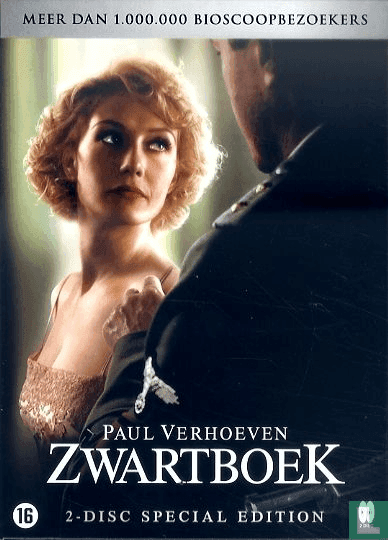
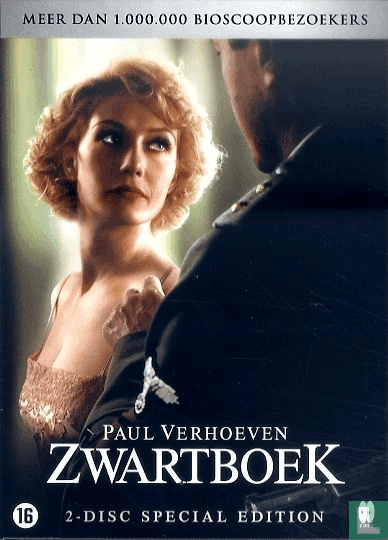
A young Jewish woman in the Nazi-occupied Netherlands infiltrates the regional Gestapo headquarters as a singer, falling for a German officer while feeding intelligence to the Dutch resistance. Paul Verhoeven's sweeping wartime thriller blends romance, espionage, and moral ambiguity across the final years of the Second World War.
What Is the Budget of Zwartboek (2006)?
Zwartboek (Black Book) was produced on a budget of approximately $22 million, an exceptionally large figure for a Dutch-language feature. Director Paul Verhoeven assembled financing from Dutch, German, British, and Belgian co-producers to support extensive period reconstruction, location shooting, and a large ensemble cast portraying the final months of Nazi occupation in the Netherlands.
Key Budget Allocation Categories
Period Set Construction, recreating 1944 to 1945 occupied Holland required extensive dressing of streets, interiors, and Gestapo headquarters across Dutch and German locations.
Costume and Makeup, over two thousand period costumes were sourced or built, with multiple distinctive looks for lead Carice van Houten across her undercover transformation.
Cast Ensemble, a large multilingual cast performing in Dutch, German, and English added scheduling and rehearsal complexity on top of headline fees for the leads.
Action and Pyrotechnics, gun battles, an armored car ambush, sewer escape sequences, and a climactic liberation set piece required practical effects and a stunt unit.
Music and Score, Anne Dudley's orchestral score was recorded with a full European ensemble, with additional licensed period source music for cabaret and resistance radio scenes.
Post-Production, extensive sound design, color timing, and visual effects cleanup were handled across studios in the Netherlands and Germany.
How Does Zwartboek's Budget Compare to Similar Films?
Saving Private Ryan (1998), Budget $70,000,000 | Worldwide $482,000,000. A vastly larger Hollywood war film, useful as the gold standard for combat realism but operating at three times Zwartboek's budget.
Inglourious Basterds (2009), Budget $70,000,000 | Worldwide $321,000,000. Quentin Tarantino's revisionist WWII thriller cost roughly three times as much and reached a far wider global audience.
The Counterfeiters (2007), Budget $3,500,000 | Worldwide $22,000,000. A much lower-budget German-language WWII film released the same season that ultimately won the Foreign Language Oscar.
Atonement (2007), Budget $30,000,000 | Worldwide $129,000,000. A comparable prestige wartime drama from the same year, somewhat more expensive and more commercially successful.
Zwartboek Box Office Performance
Zwartboek opened in the Netherlands in September 2006 to strong domestic results and rolled out across Europe through late 2006 before Sony Pictures Classics handled the North American release the following April. The Dutch opening alone delivered one of the strongest local debuts of the decade.
Box Office Breakdown
Zwartboek

On theatrical revenue alone the film returned roughly $0.39 for every $1 invested, a soft commercial result offset by strong long-tail home video and television performance, particularly in the Netherlands and Germany.
In its domestic Dutch market the film became one of the highest-grossing local releases of the 2000s, and international art-house performance in the UK, France, and the United States was respectable for a foreign-language WWII drama in a crowded prestige season.
Zwartboek Production History
Paul Verhoeven and longtime collaborator Gerard Soeteman first sketched the project in the late 1980s as a follow-up to their 1977 hit Soldier of Orange. The screenplay went through more than a dozen drafts and was repeatedly shelved as Verhoeven's Hollywood career took priority. After the commercial disappointment of Hollow Man in 2000, Verhoeven returned to the Netherlands intending to make Zwartboek his next picture.
Financing came together through Dutch producers Jeroen Beker, San Fu Maltha, and Frans van Gestel alongside German partner Jens Meurer at Egoli Tossell Film, with additional support from Belgian and British investors. Casting Carice van Houten in the lead was a pivotal decision; she was relatively unknown internationally but a rising star in Dutch theater.
Principal photography began in 2005 across multiple Dutch and German locations, including The Hague, Berlin, and rural areas dressed to represent occupied Holland. The shoot extended over more than four months. Verhoeven shot extensive coverage with multiple cameras to manage the large ensemble and action sequences.
Anne Dudley composed the orchestral score, recorded in Europe. Post-production took roughly eight months and included substantial visual effects cleanup for period accuracy across modern locations. The film premiered at the Venice Film Festival in September 2006 and rolled out internationally over the following twelve months.
Awards and Recognition
Zwartboek won three Golden Calf awards at the Netherlands Film Festival, including Best Film, Best Actress for Carice van Houten, and Best Sound. It was selected as the Dutch submission for the 79th Academy Awards Best Foreign Language Film category, though it did not advance to the final nominees.
The film received a BAFTA nomination for Best Film Not in the English Language and won the Golden Goblet at the Shanghai International Film Festival. Carice van Houten received multiple European acting honors that year, including the Rembrandt Award and a nomination for the European Film Award for Best Actress.
Industry retrospectives have repeatedly cited Zwartboek as one of the strongest Dutch productions of the 2000s, with several critics polls naming it the best Dutch film of the decade. Verhoeven himself has described it as the most personal film of his career.
Critical Reception
Critical reception was strong, with Rotten Tomatoes registering approximately 76 percent positive reviews and Metacritic settling at a score of 71. Reviewers praised Verhoeven's refusal to draw simple lines between heroes and collaborators, Carice van Houten's commanding lead performance, and the film's willingness to confront the ugly opportunism of liberation-era Dutch society.
A. O. Scott in The New York Times praised the film's "headlong storytelling and moral complexity," while Manohla Dargis at the same paper called it "Verhoeven's most ambitious film." Roger Ebert awarded three and a half stars and noted the film's effective fusion of pulp wartime thriller mechanics with serious historical reckoning.
Some critics objected to the film's sexual explicitness and its melodramatic plot turns, arguing that Verhoeven's pulp instincts occasionally undermined the gravity of the subject. The film has nevertheless held up strongly in retrospect and remains a touchstone for European WWII cinema of the 2000s.
Frequently Asked Questions
What is the budget of Zwartboek (Black Book)?
Zwartboek had a production budget of approximately $22 million, making it one of the most expensive Dutch films ever produced at the time of its release.
Who directed Zwartboek?
Paul Verhoeven directed the film, returning to the Netherlands after two decades of Hollywood work on titles such as RoboCop, Total Recall, and Basic Instinct.
When was Zwartboek released?
The film premiered at the Venice Film Festival in September 2006 and opened in Dutch cinemas the same month. Sony Pictures Classics released it theatrically in North America on April 4, 2007.
Where was Zwartboek filmed?
Principal photography took place in the Netherlands and Germany, with key sequences shot in The Hague, Berlin, and locations across the Dutch countryside that doubled for wartime occupation settings.
How much did Zwartboek earn at the box office?
The film grossed approximately $4.4 million in the United States and around $22 million internationally for a worldwide total of roughly $26.4 million.
Who stars in Zwartboek?
Carice van Houten stars as Rachel Stein, with Sebastian Koch as Ludwig Muntze, Thom Hoffman as Hans Akkermans, and Halina Reijn as Ronnie. The role launched van Houten into international stardom.
Is Zwartboek based on a true story?
The screenplay by Gerard Soeteman and Paul Verhoeven draws on multiple real wartime episodes and resistance figures, though the central character is a composite rather than a single historical person.
What awards did Zwartboek win?
The film won three Dutch Golden Calf awards including Best Film, was selected as the Netherlands' submission for the Academy Award for Best Foreign Language Film, and earned a BAFTA nomination for Best Film Not in the English Language.
What language is Zwartboek in?
The film is performed primarily in Dutch, German, and English, with shifts between languages used deliberately to mark the political loyalties and survival strategies of the characters.
How long did Zwartboek take to make?
Verhoeven and Soeteman developed the screenplay over nearly two decades, with the project repeatedly stalled by financing challenges. Active production lasted roughly two years from greenlight to release.
Filmmakers
Zwartboek

Build budgets like this one in Saturation
Start from an industry-standard feature film template, import the schedule and rates you already have, and let the cost report keep itself current as you spend. Real-time collaboration, no spreadsheets.