Spectre Budget
 ActionAdventureThriller2h 28m
Updated
Synopsis
A cryptic message from the past sends James Bond on a rogue mission to Mexico City and eventually Rome, where he meets the widow of an infamous criminal and infiltrates a secret meeting of a global terrorist organization known as SPECTRE. Meanwhile, back in London, the new M faces political pressure from C, the head of the Joint Intelligence Service, who wants to shut down the 00 program in favor of a global surveillance initiative called Nine Eyes. As Bond uncovers the connection between SPECTRE and the events of his recent past, he discovers that the organization's leader has a deeply personal link to his own history.
What Is the Budget of Spectre?
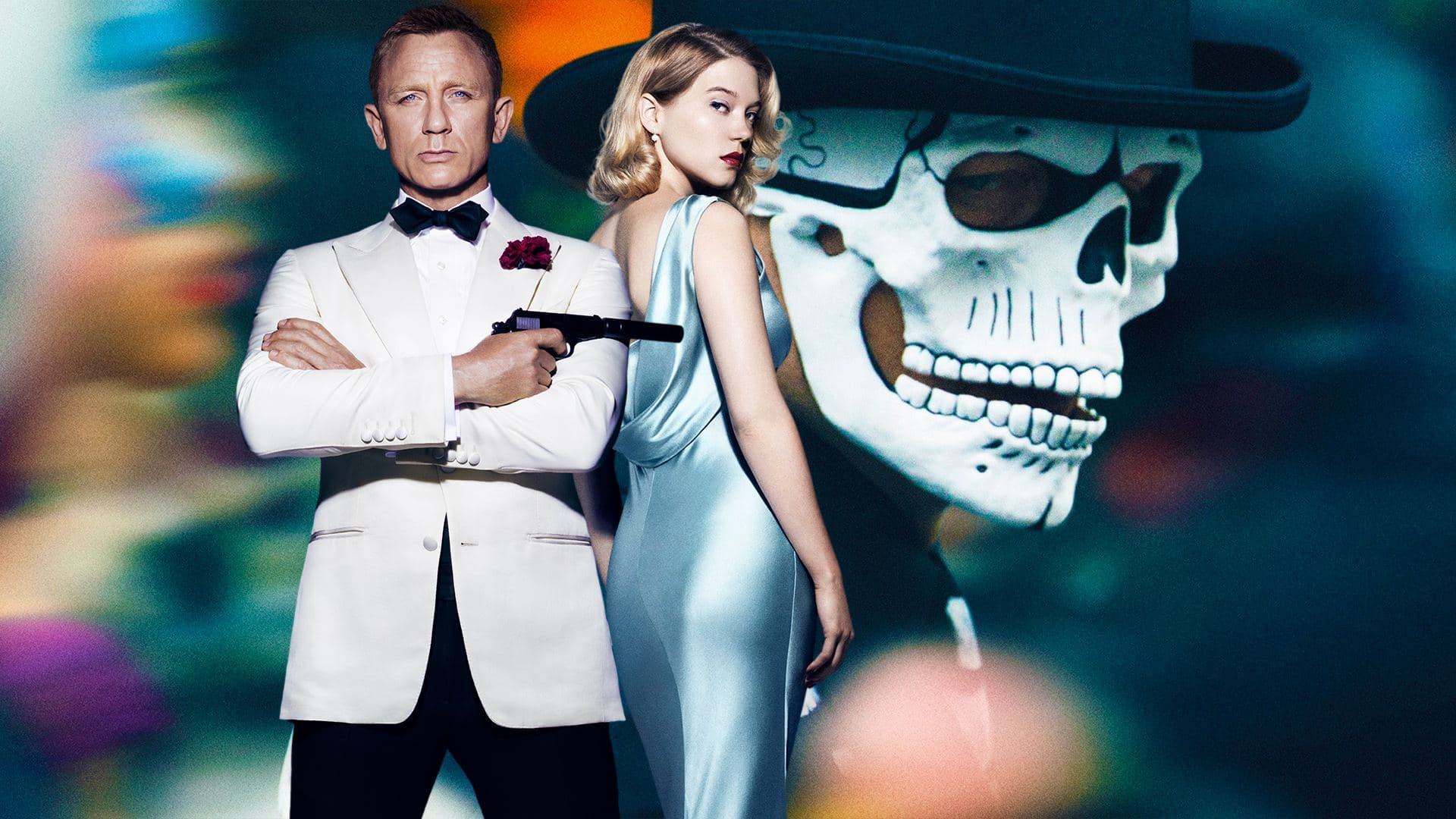
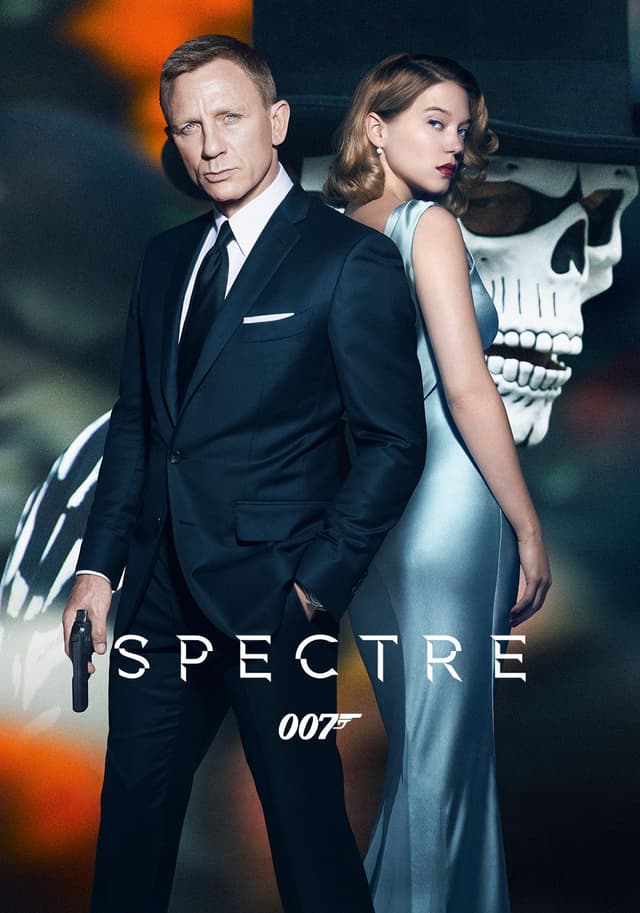
Spectre (2015), directed by Sam Mendes and distributed by Metro-Goldwyn-Mayer and Columbia Pictures, was produced on a budget of $245,000,000. The 24th official James Bond film starred Daniel Craig in his fourth outing as 007, with the story connecting threads from Casino Royale (2006), Quantum of Solace (2008), and Skyfall (2012) through the revelation that all previous villains were connected to a single criminal organization led by Ernst Stavro Blofeld, played by Christoph Waltz. The film also starred Lea Seydoux as Madeleine Swann, Dave Bautista as the henchman Hinx, Ralph Fiennes as M, and Monica Bellucci as Lucia Sciarra.
The $245 million production budget made Spectre the most expensive Bond film ever produced at the time of its release, surpassing Skyfall's $200 million. Costs were driven by an ambitious global shoot spanning Mexico City, Rome, the Austrian Alps, Morocco, and London, a record-breaking practical explosion in the film's opening sequence, and the logistical demands of a production that aimed to top Skyfall's critical and commercial success.
Key Budget Allocation Categories
Spectre distributed its $245 million budget across the following production areas:
- Practical Action Sequences and Stunts: The film's centerpiece practical effect was the opening sequence set during a Day of the Dead parade in Mexico City, which culminated in a building demolition that earned a Guinness World Record for the largest film explosion ever staged. The explosion used 8,418 liters of fuel and 33 kilograms of explosives. Additional major action sequences included a car chase through Rome's empty nighttime streets (featuring the Aston Martin DB10 and a Jaguar C-X75), a brutal fight aboard a train between Bond and Hinx, and a helicopter fight above Mexico City's Zocalo square.
- Global Location Photography: Spectre shot across five countries with elaborate setups at each location. The Mexico City opening required coordination with the city government to close major streets and stage a parade with over 1,500 extras. The Rome car chase shut down streets around the Tiber River and Vatican area for night shoots. The Austrian Alps sequences at the Ice Q restaurant and Hoffler Klinik were filmed at an altitude of 3,048 meters at the Gaislachkogl summit in Solden, requiring helicopter transport for crew and equipment. The Morocco sequences were filmed at Erfoud and Oujda, and the London finale utilized real locations along the Thames.
- Production Design and Set Construction: Production designer Dennis Gassner, returning from Skyfall, built elaborate sets at Pinewood Studios including Blofeld's meteorite crater lair in Morocco, the interior of the Hoffler Klinik, and the decaying old MI6 building used in the finale. Gassner's work on the Moroccan lair drew from Ken Adam's classic Bond villain lairs while updating the aesthetic for a more grounded Craig-era sensibility.
- Cast and Above-the-Line Talent: Daniel Craig's salary reportedly reached $25 million, reflecting his status as the definitive modern Bond. Christoph Waltz, a two-time Academy Award winner, joined as the primary antagonist. Sam Mendes returned to direct after Skyfall's $1.1 billion success, commanding a significant directing fee. The screenplay was credited to John Logan, Neal Purvis, Robert Wade, and Jez Butterworth, with the multi-writer process reflecting the complexity of tying together four films' worth of narrative threads.
- Vehicles and Product Partnerships: Aston Martin designed the DB10 specifically for Spectre, with only ten cars built for the production. Seven were used for filming, and several were destroyed during the Rome chase. The Jaguar C-X75, a prototype hypercar, was modified for the chase sequence. While product placement deals with Aston Martin, Omega, Tom Ford, and Heineken offset some costs, the custom vehicle builds and choreographed destruction represented a significant expense.
- Score and Title Sequence: Thomas Newman returned to compose the score after Skyfall. Sam Smith recorded "Writing's on the Wall" as the title song, which won the Academy Award for Best Original Song. Daniel Kleinman designed the title sequence, continuing his collaboration with the franchise.
How Does Spectre's Budget Compare to Similar Films?
At $245,000,000, Spectre was the most expensive Bond film ever produced. Comparing it with other action franchise entries of the era:
- Skyfall (2012): Budget $200,000,000 | Worldwide $1,108,600,000. Spectre's predecessor cost 18% less and earned 26% more worldwide. Skyfall's tighter budget and stronger critical reception produced a higher ROI, and its $1.1 billion gross set the commercial bar that Spectre could not quite match.
- Mission: Impossible - Rogue Nation (2015): Budget $150,000,000 | Worldwide $682,700,000. Released the same summer as Spectre, the competing spy franchise delivered strong returns at 39% less budget. The comparison underscored questions about whether Bond's escalating budgets were sustainable.
- No Time to Die (2021): Budget $250,000,000 | Worldwide $774,200,000. Craig's final Bond film cost slightly more but earned less worldwide, partly due to the pandemic's lasting effects on theatrical attendance.
- The Dark Knight Rises (2012): Budget $250,000,000 | Worldwide $1,081,000,000. Christopher Nolan's Batman conclusion carried a similar budget and also filmed extensively on location with practical effects, crossing $1 billion worldwide.
- Furious 7 (2015): Budget $190,000,000 | Worldwide $1,515,000,000. Released the same year, the Fast & Furious franchise delivered far greater returns on a lower budget, reflecting the franchise's broader global audience appeal.
Spectre Box Office Performance
Spectre opened in the United Kingdom on October 26, 2015, debuting to a then-record $63.8 million opening weekend in the UK. The film opened in the United States on November 6, 2015, debuting to $70.4 million domestically. The opening was solid but fell below Skyfall's $88.4 million domestic debut, a gap that reflected mixed advance reviews and audience awareness that the film was receiving less enthusiastic critical reception than its predecessor.
- Production Budget: $245,000,000
- Estimated Prints & Advertising (P&A): approximately $150,000,000
- Total Estimated Investment: approximately $395,000,000
- Worldwide Gross: $880,700,000
- Net Return: approximately +$635,700,000
- ROI: approximately +259%
At approximately +259%, Spectre returned roughly $3.59 for every $1 of production budget invested during its theatrical run.
While commercially successful in absolute terms, Spectre's $880.7 million worldwide fell 21% below Skyfall's $1.11 billion, a pattern typical of Bond sequels struggling to match a predecessor that benefited from the franchise's 50th anniversary momentum. The international gross of $680.6 million (77% of worldwide) maintained Bond's traditionally strong overseas skew, with the UK contributing $95 million as the franchise's home territory.
Spectre Production History
Development on the 24th Bond film began shortly after Skyfall's record-breaking release in 2012. Sam Mendes initially declined to return, but ultimately agreed to direct after a hiatus. John Logan, who had written Skyfall, provided the initial screenplay, with Neal Purvis and Robert Wade (who had written every Bond film since The World Is Not Enough) contributing subsequent drafts. Jez Butterworth performed a final polish, particularly on the film's emotional scenes between Bond and Madeleine Swann.
The decision to bring back SPECTRE and Blofeld, the iconic criminal organization and villain from the classic Bond films, was significant. Legal disputes between MGM/Eon Productions and the estate of Kevin McClory had prevented the use of SPECTRE and Blofeld for decades, and their resolution opened the door for Mendes and the writers to connect Craig's four-film arc through a single overarching antagonist. This narrative choice, while ambitious, divided audiences who debated whether retroactively linking Blofeld to all of Craig's previous villains enhanced or diminished those earlier films.
A major production crisis occurred in December 2014 when Sony Pictures suffered a massive cyberattack. Leaked emails revealed script drafts, budget details, and internal creative disagreements about Spectre, including concerns about the film's third act and the handling of Blofeld's reveal. The leaks generated unwanted pre-release attention and exposed the sausage-making of blockbuster filmmaking to public scrutiny.
Principal photography ran from December 2014 to July 2015, spanning locations in Mexico City, Rome, Solden (Austria), Erfoud and Oujda (Morocco), and London. The Mexico City opening sequence alone required weeks of preparation, coordination with local authorities, and the construction of a massive practical set for the building demolition. The Rome car chase was filmed over several nights with streets closed around the Tiber River, using multiple Aston Martin DB10 prototypes and Jaguar C-X75 vehicles.
Awards and Recognition
Spectre won the Academy Award for Best Original Song for "Writing's on the Wall" by Sam Smith and Jimmy Napes, making it the second consecutive Bond film (after Skyfall's "Adele") to win the category. The film also received a BAFTA nomination for Outstanding British Film, recognizing its production at Pinewood Studios and the extensive British crew.
The opening sequence's record-breaking explosion earned the production a Guinness World Record. The film's stunt work, particularly the helicopter fight above Mexico City and the Hinx train fight, received recognition from stunt industry organizations. Dave Bautista's physical performance as the near-silent assassin Hinx was widely praised as one of the best Bond henchman portrayals in the franchise's history.
Critical Reception
Spectre earned a 63% approval rating on Rotten Tomatoes based on 355 reviews, with a consensus acknowledging the film's visual spectacle while noting that it "struggles to maintain momentum" and that the Blofeld connection "feels more obligatory than organic." On Metacritic, the film scored 60 out of 100, indicating "mixed or average reviews." Audiences gave it an A- on CinemaScore.
Positive reviews praised the Mexico City opening sequence as one of the finest set pieces in Bond history, Hoyte van Hoytema's luminous cinematography, and the Hinx train fight as a throwback to classic Bond physicality. The film's attempt to deliver a more personal Bond story, with Craig's Bond contemplating retirement and a life with Madeleine Swann, was cited as emotionally ambitious even when the execution faltered.
Negative reviews centered on Christoph Waltz's underutilized Blofeld, whose reveal as Bond's foster brother ("the author of all your pain") struck many critics as contrived. The film's 148-minute runtime drew complaints about pacing, particularly in the second half. Several critics argued that Spectre's attempt to retroactively connect Casino Royale, Quantum of Solace, and Skyfall through SPECTRE's influence diminished the standalone quality of those earlier films. The consensus placed Spectre as a respectful but overstuffed continuation of the Craig era that could not match Skyfall's focused excellence.
Frequently Asked Questions
How much did it cost to make Spectre?
The production budget was $245,000,000, making it the most expensive Bond film ever produced at the time. Costs were driven by an ambitious global shoot across Mexico City, Rome, Austria, Morocco, and London, a record-breaking practical explosion, and custom-built Aston Martin DB10 vehicles.
How much did Spectre earn at the box office?
The film grossed $200,100,000 domestically and $680,600,000 internationally, totaling $880,700,000 worldwide. It opened with $70.4 million domestically and $63.8 million in the UK.
Was Spectre profitable?
Yes. With a $245 million production budget and estimated $150 million in marketing, Spectre's $880.7 million worldwide gross comfortably exceeded the break-even threshold. However, it generated less profit than predecessor Skyfall, which earned $1.1 billion on a lower $200 million budget.
How does Spectre compare to Skyfall at the box office?
Skyfall earned $1,108,600,000 worldwide on a $200 million budget, while Spectre earned $880,700,000 on a $245 million budget. Spectre cost 22% more but earned 21% less, producing a lower ROI despite remaining profitable.
Where was Spectre filmed?
The film shot across Mexico City (Day of the Dead opening), Rome (car chase), Solden in the Austrian Alps (clinic and mountain sequences), Erfoud and Oujda in Morocco (villain's lair), London (finale along the Thames), and Pinewood Studios in England for studio work.
What was the Guinness World Record set during Spectre?
The opening sequence featured the largest film explosion ever staged, earning a Guinness World Record. The demolition used 8,418 liters of fuel and 33 kilograms of explosives to destroy a building set during the Mexico City Day of the Dead sequence.
Did Spectre win any Academy Awards?
Yes. "Writing's on the Wall" by Sam Smith and Jimmy Napes won the Academy Award for Best Original Song, making Spectre the second consecutive Bond film to win the category after Skyfall's "Adele." The film also received a BAFTA nomination for Outstanding British Film.
Why was Spectre's script leaked?
In December 2014, Sony Pictures suffered a massive cyberattack that leaked script drafts, budget details, and internal emails about Spectre. The leaks revealed creative disagreements about the film's third act and Blofeld's reveal, generating unwanted pre-release attention.
Who plays Blofeld in Spectre?
Christoph Waltz plays Ernst Stavro Blofeld, the leader of SPECTRE and a figure from Bond's personal past. Legal disputes with the Kevin McClory estate had prevented the use of Blofeld for decades, and their resolution allowed the character's return to the franchise.
What is Spectre's Rotten Tomatoes score?
Spectre earned a 63% approval rating on Rotten Tomatoes and a 60 on Metacritic. Audiences gave it an A- CinemaScore. Critics praised the Mexico City opening and Hinx train fight but criticized Christoph Waltz's underutilized Blofeld and the film's pacing issues.
Filmmakers
Spectre

Official Trailer
Build your own production budget
Create professional budgets with industry-standard feature film templates. Real-time collaboration, no spreadsheets.