No Time to Die Budget
 ActionThrillerAdventure2h 43m
Updated
Synopsis
Five years after the events of Spectre, James Bond has left active service and is living in Jamaica when his old CIA friend Felix Leiter asks for help tracking down a kidnapped scientist. The mission goes wrong, plunging Bond into the orbit of Lyutsifer Safin, a masked villain who has weaponized a nanobot technology capable of targeting individuals by their DNA. When Bond discovers that the weapon's reach extends to Madeleine Swann and their daughter, whom he never knew existed, he returns to MI6 and confronts Safin's island fortress in a final mission that will demand the ultimate sacrifice to protect his family and the world.
What Is the Budget of No Time to Die?
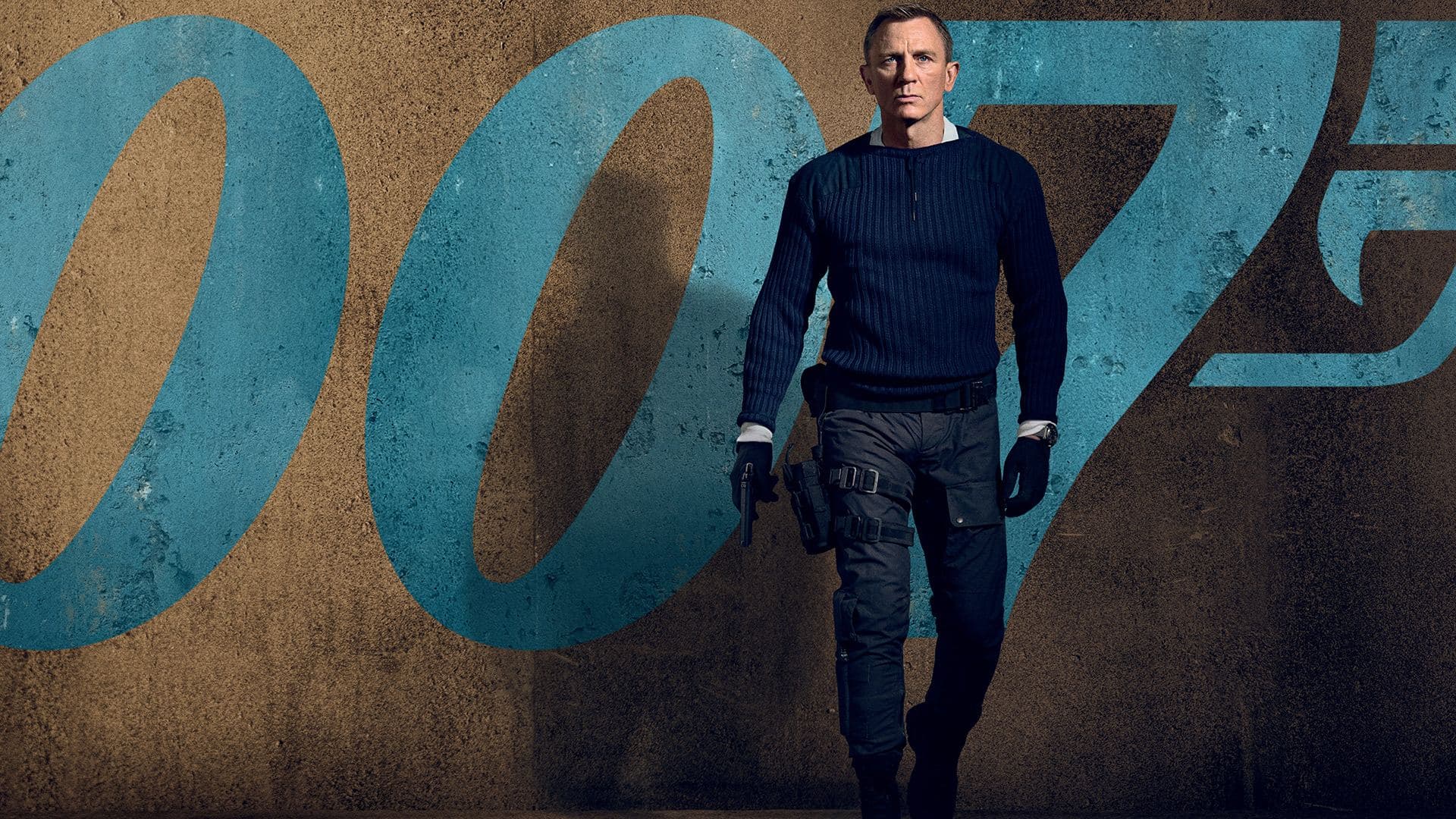
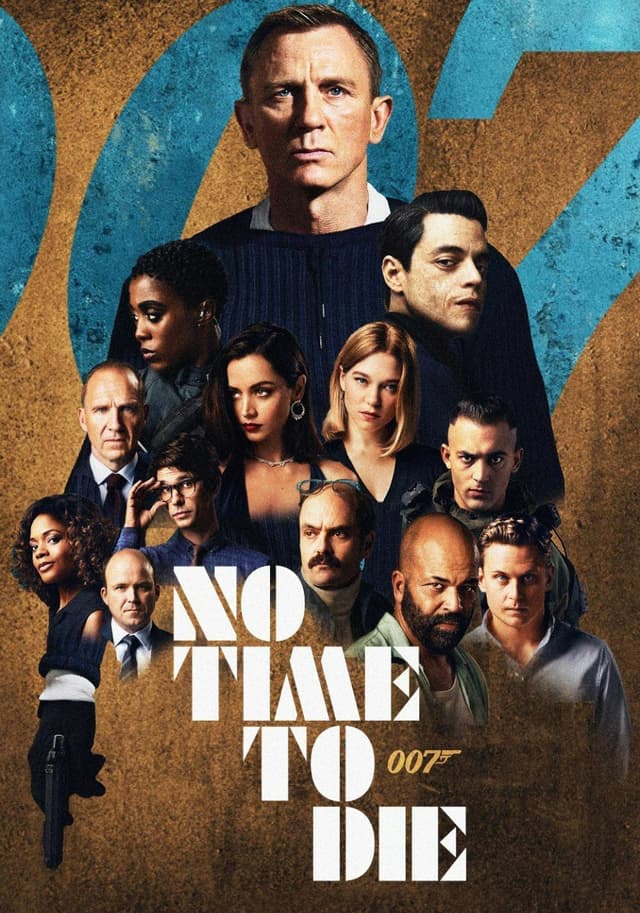
No Time to Die (2021), directed by Cary Joji Fukunaga and distributed by United Artists Releasing (in partnership with Universal Pictures internationally), was produced on a budget of $250,000,000. The 25th film in the James Bond franchise and Daniel Craig's fifth and final appearance as 007, No Time to Die concluded the serialized storyline that began with Casino Royale (2006). The film pitted Bond against Lyutsifer Safin (Rami Malek), a bioterrorism mastermind wielding a nanobots weapon, while resolving Bond's relationship with Dr. Madeleine Swann (Lea Seydoux) and introducing Nomi (Lashana Lynch) as the new 007.
The $250 million budget made No Time to Die the most expensive James Bond film ever produced, a figure inflated by the film's protracted development, multiple release delays due to the COVID-19 pandemic, and the high costs of practical action filmmaking that the Bond franchise prizes over VFX-driven spectacle. Production took place across international locations including Matera in Italy, Port Antonio in Jamaica, Aviemore in the Scottish Highlands, multiple locations in Norway, and Pinewood Studios in England, reflecting Bond's tradition of globe-trotting production design.
Key Budget Allocation Categories
No Time to Die distributed its $250 million budget across the following production areas:
- Practical Action and Stunt Work: The Bond franchise has historically emphasized practical stunts over CG action, and No Time to Die continued this tradition at scale. Stunt coordinator Lee Morrison and second unit director Alexander Witt orchestrated the Matera pre-title chase (combining Aston Martin DB5 machine guns with motorcycle jumps and bridge explosions), the Cuba nightclub single-take fight, the Norway forest car chase, and the climactic island assault. The Aston Martin DB5 sequences alone required multiple cars, each modified for specific stunts, plus the construction and destruction of the Matera bridge set. Chris Corbould, the franchise's special effects supervisor since GoldenEye, oversaw extensive practical pyrotechnics and mechanical effects.
- International Location Photography: Bond films derive their identity from real-world locations, and No Time to Die filmed across at least five countries. The Matera, Italy sequences required street closures and set dressing in the ancient stone city. Port Antonio, Jamaica provided the opening act's Caribbean setting. Aviemore and the Cairngorms National Park in Scotland served as backdrop for key dramatic scenes. Norway's Rauma Municipality and the Atlantic Ocean Road provided the film's dramatic Norway sequences. Additional shooting took place in the Faroe Islands (though this was ultimately cut). Each location demanded advance production teams, permits, local crew, and transportation logistics.
- Pinewood Studios and Stage Work: The majority of interior filming took place at Pinewood Studios in England, where production designer Mark Tildesley built elaborate sets including Safin's island fortress, the MI6 interiors, and the nanobot laboratory. The island fortress set was one of the largest ever constructed at Pinewood, requiring months of construction and incorporating both practical and VFX-ready elements for the climactic action sequence. The 007 Stage, one of the world's largest soundstages, housed several of the film's most complex set builds.
- Cast and Above-the-Line Talent: Daniel Craig's salary for his final Bond outing was reported at approximately $25 million. Rami Malek joined as the villain Safin, with Lea Seydoux, Lashana Lynch, Ralph Fiennes, Naomie Harris, Ben Whishaw, Jeffrey Wright, and Ana de Armas rounding out the cast. Cary Joji Fukunaga's directing fee, producers Barbara Broccoli and Michael G. Wilson's costs, and the screenwriting team of Neal Purvis, Robert Wade, Fukunaga, and Phoebe Waller-Bridge completed the above-the-line allocation.
- COVID-19 Delays and Extended Post-Production: No Time to Die was originally scheduled for release in April 2020 but was delayed three times: first to November 2020, then to April 2021, and finally to October 2021. Each delay incurred costs for marketing campaign restarts, extended post-production timelines, and the carrying costs of the finished or near-finished film. The delays added an estimated $30-50 million to the total investment beyond the production budget, though these costs are typically categorized separately from the production budget itself.
- Score and Sound Design: Hans Zimmer composed the score, replacing Dan Romer, who departed the project during post-production. Zimmer's score blended orchestral grandeur with electronic textures, incorporating and reimagining musical themes from across Craig's five-film Bond tenure. Billie Eilish and Finneas O'Connell wrote and performed the title song "No Time to Die," which won the Academy Award for Best Original Song. Sound design for the practical action sequences required detailed field recording and Foley work to capture the mechanical authenticity that distinguishes Bond's action from CG-heavy alternatives.
How Does No Time to Die's Budget Compare to Similar Films?
At $250,000,000, No Time to Die is the most expensive Bond film in franchise history. Comparing it with other Bond entries and spy film franchises:
- Spectre (2015): Budget $245,000,000 | Worldwide $880,700,000. Craig's previous Bond cost slightly less and earned 14% more worldwide, though Spectre benefited from a pre-pandemic theatrical market and a wider international release window.
- Skyfall (2012): Budget $200,000,000 | Worldwide $1,108,600,000. Sam Mendes's first Bond film cost 20% less and earned 43% more, representing the commercial peak of Craig's tenure and one of the most successful franchise reinventions in cinema history.
- Mission: Impossible - Fallout (2018): Budget $178,000,000 | Worldwide $791,100,000. The closest competitor in the practical-action spy genre cost 29% less and earned 2% more, demonstrating that the Mission: Impossible franchise achieved comparable commercial results with greater cost efficiency.
- Casino Royale (2006): Budget $150,000,000 | Worldwide $616,500,000. Craig's debut Bond cost 40% less and earned 20% less, but its cultural impact and franchise revitalization vastly exceeded what the raw numbers suggest, as it transformed Bond from a declining franchise into a prestige blockbuster series.
- The Batman (2022): Budget $185,000,000 | Worldwide $770,800,000. Matt Reeves's detective-driven superhero film cost 26% less and earned a nearly identical worldwide gross, illustrating how both franchises operate in a similar commercial band for character-driven action films.
No Time to Die Box Office Performance
No Time to Die opened in the United Kingdom on September 30, 2021, and in the United States on October 8, 2021. The film debuted to $55.2 million domestically in its opening weekend, a figure impacted by the ongoing pandemic's suppression of theatrical attendance, particularly among older demographics who represent a significant portion of the Bond audience.
Box Office Breakdown
No Time to Die

At approximately +210%, No Time to Die returned roughly $3.10 for every $1 of production budget invested during its theatrical run.
Daniel Craig's final Bond outing was significantly impacted by the COVID-19 pandemic, with its release delayed three times from April 2020 to October 2021. The international gross of $613.3 million (79% of worldwide) followed Bond's traditionally strong overseas skew, while the domestic total of $160.9 million reflected the still-recovering North American theatrical market. Despite clearing its break-even threshold, the film's returns were well below the franchise's pre-pandemic trajectory set by Skyfall ($1.11 billion).
No Time to Die Production History
Development on the 25th Bond film began shortly after Spectre's release in 2015, with Daniel Craig initially uncertain about returning. Danny Boyle was announced as director in March 2018, with a script co-written by John Hodge. However, Boyle departed in August 2018 over "creative differences," reportedly centered on disagreements about the film's third act and the fate of the Bond character. Cary Joji Fukunaga, known for directing the first season of True Detective and the film Beasts of No Nation, was announced as Boyle's replacement in September 2018.
The screenplay was reworked by the Bond writing team of Neal Purvis and Robert Wade, with additional contributions from Fukunaga and an uncredited polish by Phoebe Waller-Bridge, the creator of Fleabag, who was brought in to sharpen the dialogue and the female characters. The decision to kill Bond at the film's conclusion, a first in the franchise's 59-year history, was reportedly in place from early in the scripting process and was supported by Daniel Craig, who saw it as the only fitting conclusion to the five-film character arc he had built.
Principal photography ran from April to October 2019, spanning Pinewood Studios, Matera (Italy), Port Antonio (Jamaica), Aviemore and the Cairngorms (Scotland), and multiple locations in Norway. The Matera sequence, filmed in the ancient Italian city's narrow streets, required extensive coordination with local authorities to stage car chases, explosions, and bridge destruction. The Jamaica sequences, filmed in Port Antonio, established Bond's retirement setting and his relationship with Nomi. Norway's dramatic landscapes provided the film's emotional climax locations.
The film's release was delayed three times due to the COVID-19 pandemic, pushing from April 2020 to October 2021. No Time to Die was the first major Hollywood production to delay its release due to COVID-19, a decision made on March 4, 2020, before the World Health Organization declared the pandemic. The delays created an 18-month gap between the completion of principal photography and the film's theatrical debut, during which time MGM explored selling streaming rights to platforms including Apple TV+ and Netflix before ultimately proceeding with a theatrical release. Amazon's acquisition of MGM in March 2022, completed after the film's release, was influenced in part by the Bond franchise's proven theatrical value.
Awards and Recognition
No Time to Die won the Academy Award for Best Original Song for "No Time to Die" by Billie Eilish and Finneas O'Connell, making Eilish the youngest Bond theme performer and the youngest solo artist to win in the category at age 18 (at the time of recording). The song's moody, orchestral-pop style was praised for capturing the emotional finality of Craig's Bond farewell.
The film received additional nominations at the Academy Awards for Best Sound and Best Visual Effects. It won the BAFTA for Best Editing (Tom Cross and Elliot Graham) and was nominated for Best British Film, Best Cinematography, and Best Special Visual Effects. Hans Zimmer's score received nominations from the Grammy Awards and the International Film Music Critics Association. The film's practical stunt work, particularly the Matera chase and the island assault, was recognized by the Screen Actors Guild's stunt ensemble nomination.
Critical Reception
No Time to Die earned an 83% approval rating on Rotten Tomatoes based on 381 reviews, with a critics consensus praising Daniel Craig's emotional farewell while acknowledging the film's occasionally overwrought villain subplot. On Metacritic, the film scored 68 out of 100, indicating "generally favorable reviews." Audiences gave it an A- on CinemaScore.
Critics praised the film as a fitting and unexpectedly moving conclusion to Craig's five-film Bond arc. The decision to kill Bond, initially controversial among franchise purists, was widely accepted by reviewers as a brave narrative choice that gave Craig's era a definitive emotional endpoint. Ana de Armas's extended cameo in the Cuba sequence was singled out as the film's most purely entertaining set piece, with many critics lamenting that her character's brief appearance warranted its own spinoff. Lashana Lynch's Nomi was praised for bringing a modern energy to the 007 designation.
Detractors focused on Rami Malek's Safin, whose motivations and plan many reviewers found underdeveloped and confusing despite the 163-minute runtime. The nanobot weapon concept was criticized as overly complex and lacking the visceral threat of classic Bond villain schemes. Some reviewers felt the film's emotional weight came at the cost of the propulsive pacing that characterized Casino Royale and Skyfall, with the elongated runtime creating sags in the second act. Despite these reservations, the critical consensus recognized No Time to Die as a poignant, if imperfect, capstone to the most character-driven era in Bond history.
Frequently Asked Questions
How much did it cost to make No Time to Die?
The production budget was $250,000,000, making it the most expensive James Bond film ever produced. Costs were driven by extensive practical stunt work across international locations (Italy, Jamaica, Scotland, Norway), elaborate sets at Pinewood Studios, and Daniel Craig's approximately $25 million salary.
How much did No Time to Die earn at the box office?
The film grossed $160,900,000 domestically and $613,300,000 internationally, totaling $774,200,000 worldwide. The UK was the strongest single market at $96.2 million, Bond's best-ever UK performance. The domestic total was impacted by pandemic-era theatrical attendance declines.
Was No Time to Die profitable?
The film was profitable on paper, with $774.2 million worldwide against a $250 million budget. However, extended COVID-19 delays, marketing resets, and reduced pandemic-era theatrical margins meant that actual profitability was modest. MGM and the Bond producers reportedly saw thinner returns than the raw numbers suggest.
Why was No Time to Die delayed so many times?
The film was delayed three times due to COVID-19: from April 2020 to November 2020, then to April 2021, and finally to October 2021. It was the first major Hollywood production to announce a COVID-related delay, on March 4, 2020. MGM explored selling streaming rights during the delays before committing to theatrical release.
Where was No Time to Die filmed?
Principal photography spanned Pinewood Studios (England), Matera (Italy), Port Antonio (Jamaica), Aviemore and the Cairngorms (Scotland), and multiple locations in Norway including Rauma Municipality and the Atlantic Ocean Road. The international locations reflect Bond's tradition of globe-trotting production.
Does James Bond die in No Time to Die?
Yes. In a franchise first across 59 years and 25 films, James Bond dies at the end of No Time to Die. After being infected with nanobots that would kill Madeleine and their daughter on contact, Bond chooses to remain on Safin's island as missiles destroy the facility. The decision was supported by Daniel Craig as the definitive conclusion to his five-film character arc.
Who directed No Time to Die?
Cary Joji Fukunaga directed the film after Danny Boyle departed due to creative differences. Fukunaga, known for True Detective season one and Beasts of No Nation, became the first American to direct a Bond film. He also co-wrote the screenplay alongside Neal Purvis, Robert Wade, and Phoebe Waller-Bridge.
What awards did No Time to Die win?
The film won the Academy Award for Best Original Song ("No Time to Die" by Billie Eilish and Finneas O'Connell) and the BAFTA for Best Editing. It received additional Oscar nominations for Best Sound and Best Visual Effects, plus BAFTA nominations for Best British Film, Cinematography, and Special Visual Effects.
How does No Time to Die compare to Skyfall at the box office?
Skyfall (2012) earned $1,108,600,000 worldwide on a $200 million budget, while No Time to Die earned $774,200,000 on a $250 million budget. Skyfall cost 20% less and earned 43% more, representing the commercial peak of Craig's Bond tenure. No Time to Die's lower gross is largely attributed to pandemic-era theatrical conditions.
What is the Rotten Tomatoes score for No Time to Die?
The film holds an 83% approval rating on Rotten Tomatoes based on 381 reviews and scored 68 out of 100 on Metacritic. Audiences gave it an A- on CinemaScore. Critics praised Craig's emotional farewell and the brave decision to kill Bond, while criticizing Rami Malek's underdeveloped villain.
Filmmakers
No Time to Die

Official Trailer
Build budgets like this one in Saturation
Start from an industry-standard feature film template, import the schedule and rates you already have, and let the cost report keep itself current as you spend. Real-time collaboration, no spreadsheets.