Children of Men Budget
 Science FictionThrillerAction1h 49m
Updated
Synopsis
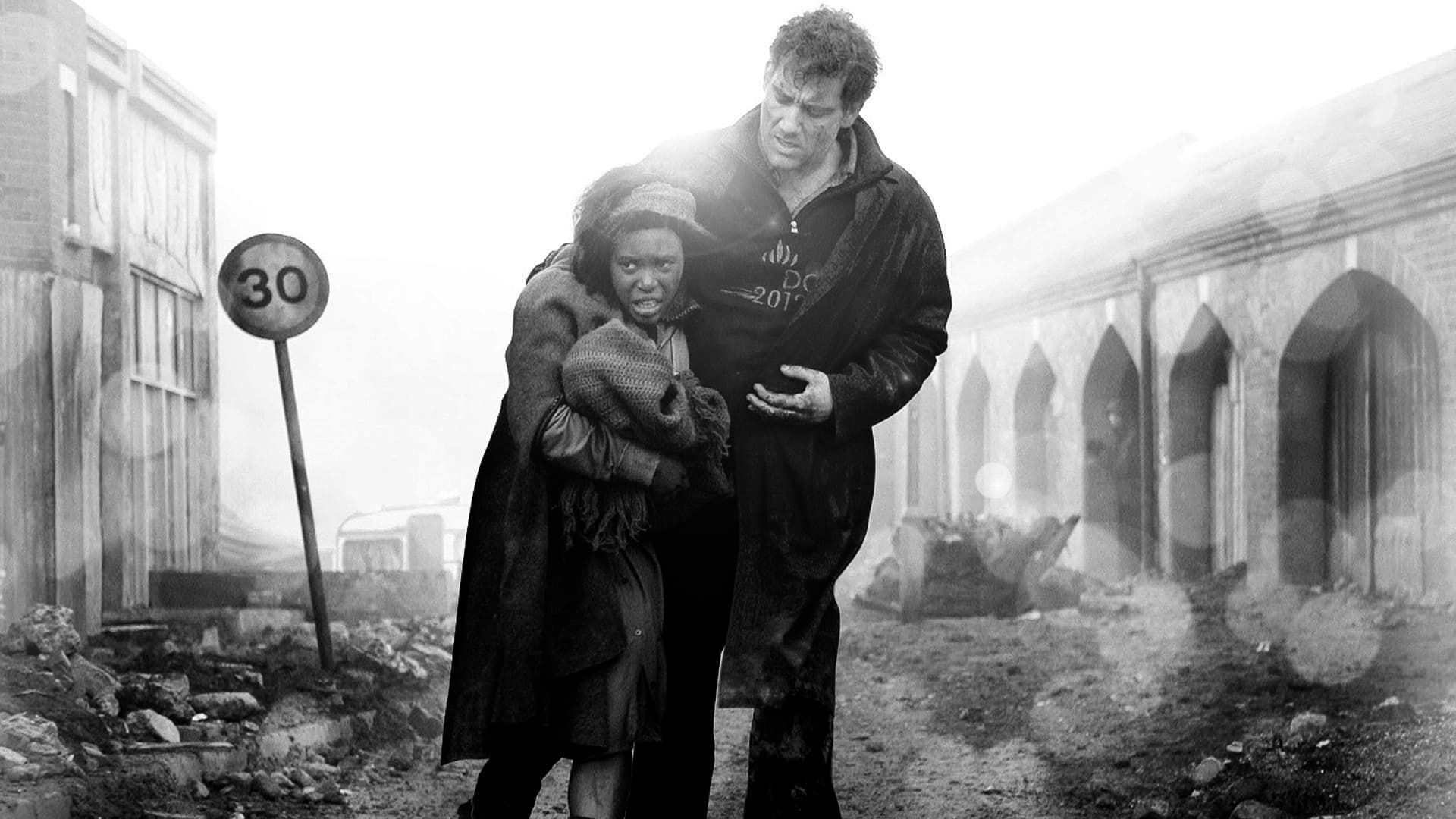
London, 2027. In this dystopian world, humans have been incapable of reproducing for eighteen years for an unknown reason, meaning the imminent extinction of the species. Britain is the one remaining civilized society on the planet, which has resulted in people wanting to immigrate there. As such, it has become a police state in order to handle the immigrants, who are placed into refugee camps. Lowly government bureaucrat Theo Faron, once an activist, is approached by the Fishes, deemed a terrorist group, led by his ex-wife Julian Taylor, who he has not seen in close to twenty years, their marriage which disintegrated following the death of their infant son Dylan during the 2008 flu pandemic. Although the Fishes did use terrorist means in their on-going revolution against the state in the fight for immigrant rights, Julian vows that they now garner support solely by speaking to the people. What she wants is for Theo to use his connections to get transit papers for a young immigrant woman named Kee who needs to get to the coast. Although initially reluctant to do it because of the difficulty, Theo is able to grant Julian this favor, however with the change that he now needs to accompany Kee on her journey. As Theo and Kee progress on that journey, Theo learns more and more about what's going on, including the reason that Kee needs to get to the coast, the fact that no one in the group knows if their end destination even exists, and that his and Kee's lives are in greater danger than he believed when they started the journey. But Theo's sole mission becomes to help Kee at any cost for the survival of the species.
What Is the Budget of Children of Men?
Children of Men was produced on a budget of $76,000,000. For an ambitious dystopian science fiction film shot almost entirely on location in the United Kingdom, that figure was notably lean. Director Alfonso
Cuaron and cinematographer Emmanuel Lubezki deliberately rejected the glossy, effects-heavy approach that defines most big-budget sci-fi productions. Rather than constructing elaborate sets or leaning heavily on computer-generated imagery, the pair opted for a raw, documentary-inspired visual language shot on real London streets and UK countryside locations. That creative choice compressed the budget without compromising the film's scope.
The $76 million covered an 18-month production that included a principal cast of internationally recognized actors, the design and fabrication of custom camera rigs for the film's signature long-take sequences, extensive on-location logistics across London and rural England, and a score composed by John Tavener alongside a curated selection of licensed music. Universal Pictures financed and distributed the film in partnership with Strike Entertainment and Hit and Run Productions.
Key Budget Allocation Categories
- Above-the-line talent: Clive Owen as lead commanded the largest single-talent fee. Julianne Moore, Michael Caine, and Chiwetel Ejiofor added further above-the-line costs, though none were at the peak of their quote at the time. Alfonso Cuaron received both a directing fee and a writing credit, and his reputation post-Y Tu Mama Tambien and Harry Potter and the Prisoner of Azkaban gave him meaningful negotiating power.
- Custom cinematography infrastructure: The extended single-take sequences required bespoke engineering. A specially designed camera rig built by Gary Thieltges of Doggicam Systems modified the car used in the country road ambush, with tilting seats, a removable windshield, and mounting hardware for a four-person roof crew. That fabrication and the 12-day location hold for the ambush sequence alone represented significant below-the-line spend.
- Location production across the UK: The production shot extensively in London, including East End streets dressed to reflect accelerated urban decay, Trafalgar Square, and Battersea Power Station. Rural sequences were filmed across the English countryside. Managing access, crowd control, and period dressing across dozens of real locations added cost that purpose-built sets would have avoided.
- Visual effects integration: While Lubezki resisted CGI-heavy approaches, the film still required over 160 seamless digital transitions across its long-take sequences, handled by visual effects houses Double Negative and Framestore. The Shard was digitally added based on architectural drawings since the building did not yet exist during production. Effects work was used to extend practical shots invisibly rather than replace real photography.
- Score and music licensing: Composer John Tavener contributed original music, and the film licensed a wide catalogue of tracks spanning King Crimson, Jarvis Cocker, and various classical pieces. Music rights for a period film with a significant international release carry meaningful cost.
- 18-month production timeline: An extended shoot with a large cast and crew on UK union rates, combined with multiple returns to locations for the stitched long-take sequences, drove the overall below-the-line spend higher than a conventional six-month schedule would have.
How Does Children of Men's Budget Compare to Similar Films?
Children of Men sits at the lower end of the budget range for prestige dystopian science fiction. That restraint was a deliberate authorial choice rather than a financing limitation, and it shows in how differently the film spends its money compared to contemporaries.
- Minority Report (2002): Budget $102M, Worldwide $358.4M. Spielberg and Cruise went the opposite direction: massive sets, sweeping CGI, and a glossy near-future aesthetic. Where Children of Men used real London locations, Minority Report built elaborate production design from scratch. The $26M gap represents roughly the cost of that construction investment.
- Blade Runner (1982): Budget $28M (equivalent to roughly $88M in 2006 dollars), Worldwide $41.7M. The film Cuaron explicitly rejected as a visual reference point. Ridley Scott created an iconic dystopian aesthetic through set design and controlled studio photography. Children of Men took the inverse approach: shoot what already exists and dress it minimally.
- District 9 (2009): Budget $30M, Worldwide $210.8M. The closest comparable in terms of documentary-realist approach to near-future sci-fi. District 9 achieved even greater efficiency by shooting in South Africa on a much smaller budget and relying on local talent for most roles. Its box office return dwarfed Children of Men despite a fraction of the cost.
- The Road (2009): Budget $25M, Worldwide $27.1M. Another bleak near-future adaptation of a literary source, this one Cormac McCarthy. Despite strong critical reception and a well-known cast, The Road struggled commercially in a pattern similar to Children of Men: critical acclaim did not translate to audience turnout for genuinely dark material.
- Gravity (2013): Budget $100M, Worldwide $723.2M. Cuaron himself directed this seven years later with a budget 32% larger. The contrast illustrates how his reputation and commercial ambition scaled after Children of Men: Gravity used cutting-edge CGI to achieve spectacle where Children of Men used real locations and long takes to achieve dread.
Children of Men Box Office Performance
Universal released Children of Men on a limited 16-theater platform in the United States on December 22, 2006, expanding to over 1,200 theaters in January 2007. The opening weekend gross of $501,003 across those initial screens was respectable per-theater, but the distributor's minimal awards-season marketing and the film's uncompromisingly bleak tone made wide-release momentum difficult to build. The UK release on September 22, 2006 opened at number one with approximately $2.4 million across 368 screens, a stronger debut relative to screen count.
Box Office Breakdown
Children of Men

Against its combined production and marketing investment, Children of Men was a theatrical loss. For every $1 spent, the film returned approximately $0.73 at the box office, leaving Universal reliant on home video, television licensing, and eventual streaming revenue to recoup the shortfall.
The commercial underperformance stands in sharp contrast to the film's critical standing. The CinemaScore of B minus indicated that audiences who did attend were divided, with the film's austere pace and bleak conclusion failing to generate the word-of-mouth momentum needed for a sustained run. Strong home video sales and later critical reappraisal have since moved the title into sustained profitability, but it took years rather than weeks.
Children of Men Production History
P.D. James published the novel The Children of Men in 1992. The rights were acquired by Beacon Pictures as early as 1997, but the project cycled through multiple screenwriters and directors for years before Alfonso Cuaron came aboard in 2001. Cuaron, fresh from Y Tu Mama Tambien, was drawn to the material's political themes but concerned that reading the full novel would constrain his creative instincts. He gave co-writer Timothy J. Sexton a deep immersion in the source material while he worked from an abridged summary, a process he later described as a deliberate strategy to avoid second-guessing his adaptation choices.
Early drafts by Paul Chart and then Mark Fergus and Hawk Ostby shaped the project, but it was a subsequent rewrite by David Arata that secured Clive Owen's commitment and moved the production toward greenlight. Owen's involvement was decisive in confirming the $76 million budget from Universal. Cuaron spent an extended pre-production period studying social conflict films, most significantly The Battle of Algiers, which established the documentary-realist aesthetic he and Lubezki would bring to the shoot.
Principal photography began in 2005. The July 7 London bombings occurred during pre-production, and Cuaron seriously considered relocating the shoot. He ultimately concluded that London's specific geography, and the psychological weight it carried in 2005, was inseparable from the film's meaning. The production pressed forward, dressing East London streets to look as though further decay had accumulated over the following 20 years.
The car ambush sequence, in which a burning tree rolls across a country road and armed attackers surround the vehicle carrying Theo and Kee, is the film's most technically demanding set piece. The production held its country road location for 12 days. Ten of those days were spent getting the camera rig axes correct, positioning attackers for entry after the fiery roadblock, choreographing the motorcycle attack, and rehearsing the crash. The specially built rig by Gary Thieltges allowed the camera operator, director, and two other crew members to ride on the roof of the vehicle while seats inside tilted to keep actors clear of the lens. The windshield could be removed entirely to allow the camera to move in and out through the front of the car. The sequence as it appears in the film was assembled from six sections shot at four different locations, with five invisible digital transitions created by Double Negative. Director and editor Alfonso Cuaron and co-editor Alex Rodriguez cut it to create the illusion of a single unbroken take running four minutes and seven seconds.
The Bexhill battle sequence near the film's climax presented a different set of challenges. Filming in an active quarry dressed as a war zone, the production used hundreds of extras and practical explosions. During one take, blood from a squib mechanism splattered across Lubezki's lens. Rather than cutting and resetting, he urged Cuaron to keep the take and leave the blood on screen. The director agreed. That bloodstained lens shot remains in the final cut, a visible reminder of the production's commitment to the unbroken moment over technical perfection.
Post-production took several months, with visual effects houses Double Negative and Framestore completing over 160 digital transitions throughout the film. The score, composed by John Tavener and supplemented with licensed tracks from King Crimson and others, was finalized for a Venice Film Festival premiere on September 3, 2006.
Awards and Recognition
Children of Men earned three Academy Award nominations at the 79th Academy Awards in February 2007: Best Cinematography for Emmanuel Lubezki, Best Film Editing for Alfonso Cuaron and Alex Rodriguez, and Best Adapted Screenplay for Cuaron, Timothy J. Sexton, David Arata, Mark Fergus, and Hawk Ostby. The film won none of the three, losing Cinematography to Guillermo Navarro for Pan's Labyrinth in an outcome widely regarded as one of the more contentious Oscar results of that decade. Lubezki had been the heavy favorite.
At the 60th BAFTA Awards, the film received multiple nominations and won two: Best Cinematography for Lubezki and Best Production Design for Jim Clay and Geoffrey Kirkland. Additional wins that season included:
- Saturn Award for Best Science Fiction Film
- American Society of Cinematographers (ASC) Award for Best Cinematography (Lubezki)
- Venice Film Festival Golden Osella for Best Cinematography (Lubezki)
- Online Film Critics Society: Best Cinematography and Best Adapted Screenplay
- USC Scripter Award for Outstanding Screenplay Adaptation
- AFI Top 10 Films of 2006
Critical recognition has continued to accumulate in the decades since release. In 2016, BBC's poll of 177 international film critics voted Children of Men the 13th greatest film of the 21st century. Rolling Stone named it the best science fiction film of the 21st century in 2017. The Writers Guild of America ranked the screenplay 18th in their list of the 101 Greatest Screenplays of the 21st century (so far) in 2021. In 2025, The New York Times ranked it number 13 on their list of the 100 best films of the 21st century.
Critical Reception
Children of Men holds a 92% approval rating on Rotten Tomatoes based on 252 reviews, with an average score of 8.5 out of 10. The critics consensus reads: 'Works on every level: as a violent chase thriller, fantastical cautionary tale, and sophisticated human drama.' Metacritic aggregated 38 reviews to a score of 84 out of 100, indicating universal acclaim. The audience CinemaScore of B minus reflected a more divided popular reaction, with the film's unrelenting darkness and restrained emotional release frustrating viewers expecting more conventional genre satisfactions.
Roger Ebert awarded the film four out of four stars, describing it as a vision of 'a world ending not with a bang but a whimper' and placing it among the year's best. Manohla Dargis in The New York Times called it 'a superbly directed political thriller.' Dana Stevens at Slate wrote that the film provided evidence of 'the arrival of a great director' and singled out the virtuoso single-shot sequences as unlike anything she had seen in contemporary cinema.
At year's end, Children of Men appeared at number one on best-of-year lists from The A.V. Club, San Francisco Chronicle, Slate, and The Washington Post. Entertainment Weekly placed it seventh on its end-of-decade top 10 list for the 2000s. Metacritic named it the 11th greatest film of the decade.
The film's reputation has only grown since its initial release. Critics in retrospect have focused on how the film's themes of immigration, political authoritarianism, and civilizational despair proved more prescient than anyone recognized in 2006. Its influence on subsequent prestige science fiction, particularly the extended long-take aesthetic Lubezki brought to Gravity and The Revenant, is now widely acknowledged. What appeared to be a moderately successful arthouse release at the time has come to be regarded as one of the defining films of its era.
Frequently Asked Questions
What was the production budget for Children of Men?
Children of Men was produced on a budget of $76,000,000. For a dystopian science fiction film with a major studio release, that was a lean figure achieved by shooting on real London locations rather than constructed sets, and by using practical long-take cinematography over extensive CGI.
How much did Children of Men make at the box office?
Children of Men earned $35,552,383 domestically and $70,595,464 worldwide. Against a combined production and marketing investment of approximately $96 million, the film was a theatrical loss. It was released on only 16 US screens at launch in December 2006 before expanding in January 2007, and a CinemaScore of B minus indicated mixed audience response that limited word-of-mouth momentum.
How were the famous long-take sequences filmed?
The long-take sequences in Children of Men were created by stitching multiple shorter takes together with invisible digital transitions rather than shooting continuous unbroken shots. The country road ambush, which appears to run for over four minutes without a cut, was actually assembled from six sections shot across four locations with five seamless digital joins. A custom camera rig designed by Gary Thieltges of Doggicam Systems was built into the car, with tilting seats, a removable windshield, and rooftop mounting hardware for a four-person crew including Lubezki himself. The production held the country road location for 12 days, spending 10 of those on setup and choreography before the shots were captured.
Is Children of Men based on a book?
Yes. Children of Men is based on the 1992 novel The Children of Men by British author P.D. James. The film significantly departs from the novel, shifting the focus from the perspective of a government official to a more working-class protagonist and grounding the political allegory more directly in contemporary immigration debates. Alfonso Cuaron deliberately worked from an abridged summary of the novel rather than the full text to avoid having the source material constrain his adaptation choices.
What awards did Children of Men win?
Children of Men received three Academy Award nominations at the 79th Oscars: Best Cinematography, Best Film Editing, and Best Adapted Screenplay. It did not win any of them, with Lubezki losing Cinematography to Pan's Labyrinth in a widely debated result. The film did win two BAFTA Awards: Best Cinematography and Best Production Design. Other wins include the Saturn Award for Best Science Fiction Film, the American Society of Cinematographers Award, and the Venice Film Festival Golden Osella for Best Cinematography. It has since been named by BBC critics as the 13th greatest film of the 21st century and was ranked 13th on The New York Times 100 Best Movies of the 21st Century list in 2025.
Why did Children of Men underperform at the box office despite critical acclaim?
Several factors combined to limit the commercial performance of Children of Men. Universal employed a limited platform release strategy in the United States, starting with just 16 theaters in December 2006 during a crowded awards season. The distributor minimized marketing spend, which reduced awareness. Audience testing produced a CinemaScore of B minus, indicating that viewers expecting a more conventional thriller were disappointed by the film's bleak tone, deliberate pacing, and ambiguous ending. Dark dystopian science fiction without a clear hero victory arc has historically struggled to draw broad audiences regardless of critical enthusiasm, a pattern also seen with The Road and other literary adaptations of similar material.
Filmmakers
Children of Men

Official Trailer
Build budgets like this one in Saturation
Start from an industry-standard feature film template, import the schedule and rates you already have, and let the cost report keep itself current as you spend. Real-time collaboration, no spreadsheets.