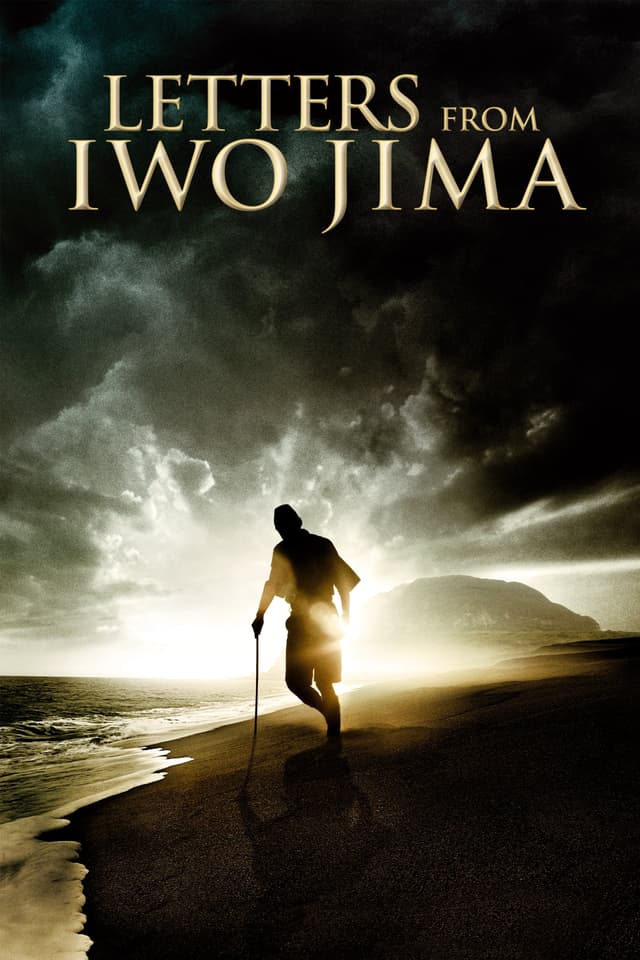
Letters from Iwo Jima Budget
 ActionDramaWar2h 21m
Updated
Synopsis
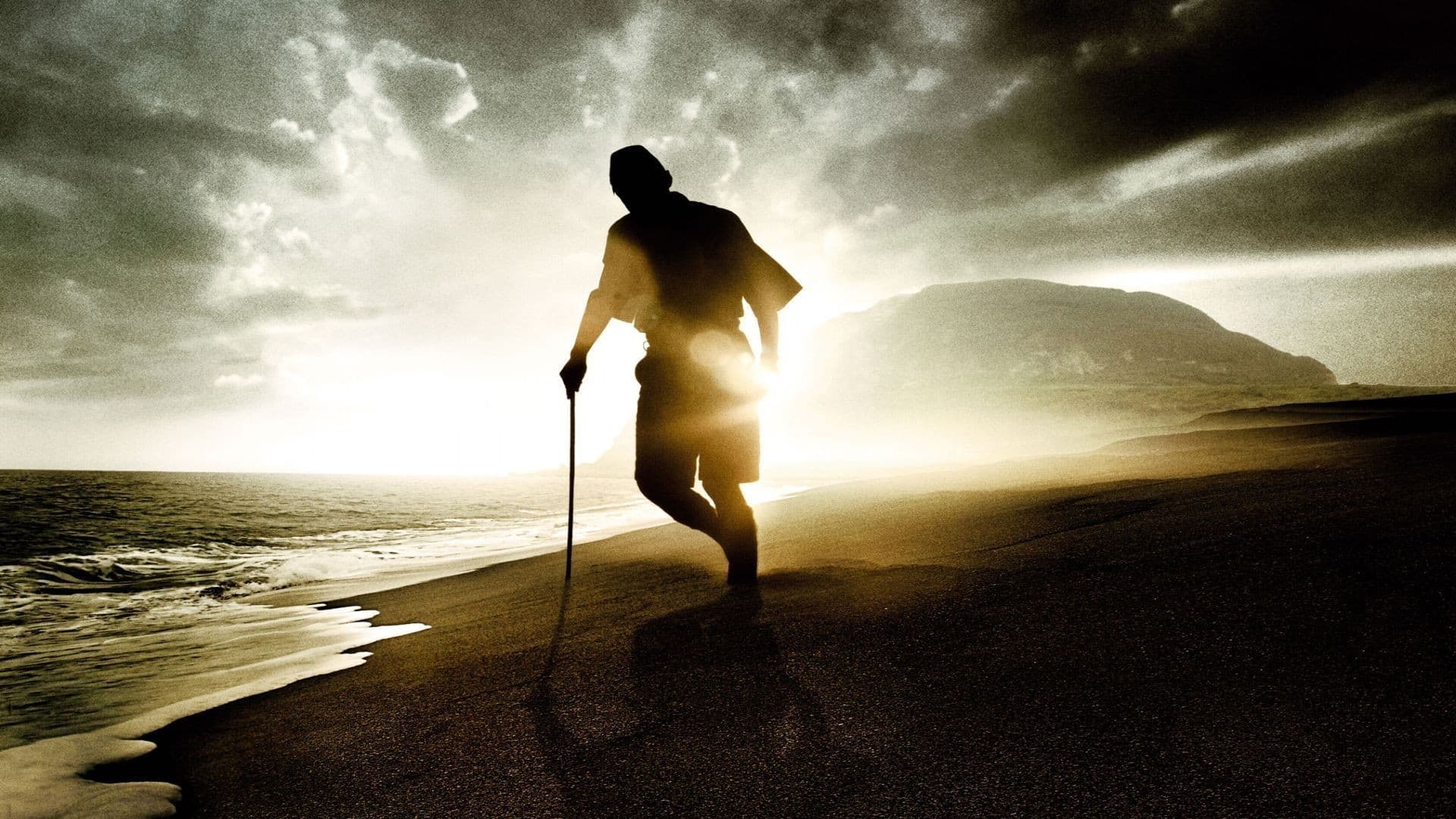
In 1944, General Tadamichi Kuribayashi is sent to the small volcanic island of Iwo Jima to lead the doomed defense against the advancing United States Marines. As the American invasion looms, Kuribayashi and his men, including a young baker named Saigo, write letters home that they know may never be delivered, confronting their duty, their fear, and the meaning of honor in a war they cannot win.
What Is the Budget of Letters from Iwo Jima (2006)?
Letters from Iwo Jima (2006), directed by Clint Eastwood and distributed by Warner Bros. Pictures, was produced on a reported budget of $19,000,000. The film is the companion piece to Eastwood's Flags of Our Fathers, released earlier the same year, and was shot back-to-back with that production using shared infrastructure, locations, and creative leadership. Unlike its English-language counterpart, Letters was filmed almost entirely in Japanese with a Japanese cast, an unusual creative bet for a major Hollywood studio release.
The budget reflected the lean economics that came with sharing pre-production, sets, and certain post-production resources with Flags of Our Fathers, which itself carried a much larger $90,000,000 price tag. Steven Spielberg and Eastwood co-produced through DreamWorks Pictures, Malpaso Productions, and Amblin Entertainment, with Warner Bros. handling the worldwide theatrical release. Iris Yamashita wrote the screenplay from a story she developed with Paul Haggis, working from the published letters of General Tadamichi Kuribayashi and his fellow soldiers.
Key Budget Allocation Categories
Letters from Iwo Jima's reported $19,000,000 budget was distributed across several core production areas:
- Above-the-Line Talent: Director Clint Eastwood worked at a reduced rate as part of the dual-film arrangement with Warner Bros. and DreamWorks, with the savings reinvested into production. Lead Ken Watanabe, an Oscar nominee for The Last Samurai, took the central role of General Kuribayashi alongside pop star turned actor Kazunari Ninomiya, Tsuyoshi Ihara, Ryo Kase, and Shidou Nakamura. The Japanese ensemble worked at standard Japanese industry rates rather than Hollywood A-list quotes, materially lowering the talent line.
- Shared Production with Flags of Our Fathers: The two films shared sets, military equipment, costumes, period weapons, and a substantial portion of the crew. Production designer Henry Bumstead and his team built the volcanic battlefield once and recycled the dressing across both shoots, with the cost amortized across the larger Flags budget.
- California and Iceland Shoot: Principal photography moved between Barstow and the dunes near Bakersfield in California, with additional black-sand and volcanic terrain captured in Iceland. The Iceland unit, though brief, was essential to recreating the look of Iwo Jima's volcanic ash and was the single largest location-services line item.
- Practical Effects and Battle Choreography: Stunt and pyrotechnic teams staged sustained battle sequences including artillery barrages, flamethrower exchanges, and cave-network combat. Practical effects dominated, with relatively limited reliance on digital extensions, keeping the visual effects budget modest by 2006 war film standards.
- Cinematography and Bleach-Bypass Look: Tom Stern shot the film on 35mm with a near-monochromatic palette achieved through a partial bleach-bypass process. The desaturated look required specialized lab handling and color timing during post, an unusual cost line that distinguished both Iwo Jima films from typical studio fare.
- Score and Sound: Kyle Eastwood and Michael Stevens composed a minimalist piano-led score, recorded with a small ensemble rather than a full orchestra. Sound editing, the discipline the film would ultimately win an Oscar for, required extensive on-location recording for the cave acoustics and a long post sound build to map artillery, voices, and silence.
- Post-Production and Subtitling: Editor Joel Cox and Gary D. Roach assembled the film for an English-speaking primary market, requiring careful subtitle work, audio mix passes for Dolby Digital and DTS, and an accelerated finishing schedule to meet a December 2006 awards-qualifying release.
How Does Letters from Iwo Jima's Budget Compare to Similar Films?
At $19,000,000, Letters from Iwo Jima is one of the lowest-budget films in Clint Eastwood's late-career filmography and an outlier among major studio war films. The comparison set illustrates how unusual its economics were:
- Flags of Our Fathers (2006): Budget $90,000,000 | Worldwide $65,937,694. Eastwood's American-perspective companion film cost nearly five times as much and earned less worldwide, making Letters the more efficient half of the pairing on every metric except domestic gross.
- The Last Samurai (2003): Budget $140,000,000 | Worldwide $456,758,981. The Tom Cruise-led Edward Zwick production is the most direct point of contrast for a Japanese-language-heavy Hollywood release. The Last Samurai outspent Letters by more than seven times and out-grossed it by a factor of six, but it placed a global A-list star at the center and shot primarily in New Zealand and Japan with full studio scale.
- Saving Private Ryan (1998): Budget $70,000,000 | Worldwide $482,349,603. Steven Spielberg's World War II benchmark cost almost four times what Letters cost and remains the gold standard for the genre. Eastwood deliberately worked at a smaller scale, trading set-piece spectacle for chamber-drama intimacy inside the Iwo Jima cave network.
- American Sniper (2014): Budget $58,800,000 | Worldwide $547,426,372. Eastwood's later war film cost three times what Letters cost and went on to gross more than $500 million worldwide. The comparison underlines how rare a $19 million war film was within Eastwood's own filmography, even at the studio level.
- Hacksaw Ridge (2016): Budget $40,000,000 | Worldwide $180,485,367. Mel Gibson's Pacific theater film cost more than double Letters but operated in a similar mid-budget war-drama lane, demonstrating that even a decade later, Letters' price point remained unusually low for the genre.
- Unforgiven (1992): Budget $14,400,000 | Worldwide $159,157,447. Eastwood's prior Best Picture winner is one of the few comparable points in his own catalog for tight-budget filmmaking, and its commercial outperformance illustrates the pattern of Eastwood doing more with less when the material demands restraint.
Letters from Iwo Jima Box Office Performance
Letters from Iwo Jima opened in limited release on December 20, 2006, expanding nationwide on January 12, 2007 to coincide with awards season. Domestic exhibition concentrated on art-house and prestige circuits before the wide January push, an unusual rollout for a Warner Bros. release but appropriate for a Japanese-language film carrying late-year Oscar momentum.
Against a $19,000,000 production budget, the film needed roughly $50,000,000 worldwide to clear marketing and distribution costs. Here is the financial breakdown:
Box Office Breakdown
Letters from Iwo Jima

Letters returned approximately $1.27 to $1.56 in theatrical revenue for every $1 invested when measured against total estimated production and marketing spend, a strong result for a Japanese-language film distributed by a major Hollywood studio. The domestic share of the gross was $13,756,082 against an international share of $54,917,146, a 20/80 split heavily weighted toward international markets, with Japan alone contributing more than $40,000,000 of the worldwide total.
The performance was the inverse of Flags of Our Fathers, which leaned domestic and underperformed worldwide. Together, the two films produced approximately $134 million in combined worldwide gross against $109 million in combined production budgets, with Letters carrying the commercial weight of the diptych and providing the awards prestige that Warner Bros. used to drive late-cycle theatrical and home video sales.
Letters from Iwo Jima Production History
Letters from Iwo Jima originated as a companion piece during the development of Flags of Our Fathers, when Clint Eastwood became convinced that telling the battle from only the American perspective would be incomplete. Eastwood approached Paul Haggis, his Million Dollar Baby collaborator, who in turn brought in newcomer Iris Yamashita to write the Japanese-language screenplay. Yamashita researched the published wartime letters of General Tadamichi Kuribayashi, the commander of the Iwo Jima garrison, and the surviving correspondence of the soldiers who served under him, weaving them into a fictionalized narrative anchored by Kuribayashi's perspective.
Casting began with Ken Watanabe in the role of Kuribayashi, with Eastwood pursuing him directly on the strength of his work in The Last Samurai and Memoirs of a Geisha. Pop singer and Arashi member Kazunari Ninomiya was cast as the baker turned reluctant conscript Saigo, his first major film role. Tsuyoshi Ihara, Ryo Kase, and Shidou Nakamura completed the principal Japanese ensemble. The cast worked predominantly in Japanese, with Eastwood directing through translators and trusting Yamashita's dialogue work to carry the dramatic load.
Principal photography began in March 2006 in California, with the production using the same Barstow and Bakersfield-area dune locations that had served Flags of Our Fathers. A second-unit team captured volcanic black-sand exteriors in Iceland to provide authentic Iwo Jima geology. Production designer Henry Bumstead, working on what would be his final film before his death later in 2006, oversaw an extensive practical build of the Japanese cave-and-tunnel network that anchors most of the film's second half.
The shoot ran roughly nine weeks and wrapped in May 2006, with post-production accelerated to make a December 20, 2006 limited release for Academy Awards eligibility. Eastwood, editor Joel Cox, and cinematographer Tom Stern collaborated on the desaturated near-monochrome look using a partial bleach-bypass process during the lab work, with only blood and explosive flares preserved at full saturation. The accelerated finishing schedule allowed Warner Bros. to position the film as the late-arriving prestige play of the 2006 awards calendar, several months after Flags of Our Fathers had already begun its commercial run.
Awards and Recognition
Letters from Iwo Jima received four Academy Award nominations at the 79th Oscars, including Best Picture, Best Director for Clint Eastwood, and Best Original Screenplay for Iris Yamashita and Paul Haggis. The film won Best Sound Editing for Alan Robert Murray and Bub Asman, the only Oscar of the night for either of Eastwood's 2006 war films and a meaningful technical honor for a Japanese-language Hollywood release.
The film also won Best Foreign Language Film at the Golden Globes, an unusual outcome given that it was produced by an American studio and directed by an American filmmaker, and was named Best Picture by the National Board of Review and the Los Angeles Film Critics Association. It received BAFTA nominations and won the Japanese Academy Prize for Best Foreign Language Film, becoming one of the few films to win major foreign-language awards in both the United States and Japan in the same cycle.
Critical Reception
Letters from Iwo Jima received broadly positive reviews and is widely considered the stronger half of Eastwood's 2006 war diptych. The film holds a 91% approval rating on Rotten Tomatoes based on 222 critic reviews, with a critical consensus praising its humanity, restraint, and willingness to humanize an enemy perspective rarely seen in American war cinema. On Metacritic, the film scored 89 out of 100, indicating universal acclaim.
Roger Ebert awarded the film four stars and wrote that Eastwood "has made a film that honors the men, on both sides, who fought and died." A.O. Scott of The New York Times called it "a powerful and unsettling counterpart to Flags of Our Fathers" and singled out Ken Watanabe's performance as the emotional anchor of the production. Manohla Dargis, also writing in The Times, praised the film as a meditation on duty and futility that "stares unblinkingly at the costs of obedience and the costs of refusal."
Japanese-language critics responded with notable enthusiasm given the unusual provenance of a Japanese-perspective war film made by an American studio. The film was praised for its respectful treatment of Kuribayashi's legacy and for casting Japanese actors in Japanese roles rather than the Hollywood pattern of foreign-language films built around an American lead. The combination of strong domestic art-house reception, robust Japanese commercial performance, and major awards recognition has cemented Letters from Iwo Jima's reputation as one of the most acclaimed war films of the 2000s and a creative high point of Eastwood's late directorial career.
Frequently Asked Questions
How much did it cost to make Letters from Iwo Jima (2006)?
The reported production budget was $19,000,000. The film was shot back-to-back with Flags of Our Fathers, sharing sets, costumes, military equipment, and substantial portions of the crew, which kept costs unusually low for a major studio war film. DreamWorks Pictures and Warner Bros. Pictures co-financed the production through Malpaso Productions and Amblin Entertainment.
How much did Letters from Iwo Jima earn at the box office?
The film grossed $13,756,082 domestically and $54,917,146 internationally for a worldwide total of $68,673,228. Japan alone contributed more than $40,000,000 of that figure, making it the dominant market for the film. The international share of 80% was unusually high for a Warner Bros. release and reflected the appeal of the Japanese-language story to Japanese audiences.
Was Letters from Iwo Jima profitable?
Yes. Against a $19,000,000 production budget and an estimated $25,000,000 to $35,000,000 in marketing spend, the film returned approximately $1.27 to $1.56 in worldwide gross for every $1 invested. The combination of theatrical revenue, home video sales, and television licensing made it a clear commercial success for Warner Bros. and DreamWorks.
Who directed Letters from Iwo Jima?
Clint Eastwood directed the film, working from a screenplay by Iris Yamashita and a story by Yamashita and Paul Haggis. Eastwood co-produced with Steven Spielberg and Robert Lorenz through his Malpaso Productions and Spielberg's Amblin Entertainment. Letters was the second of Eastwood's two 2006 war films, following Flags of Our Fathers.
Where was Letters from Iwo Jima filmed?
Principal photography took place in California, primarily around Barstow and the dunes near Bakersfield, with a second-unit shoot in Iceland to capture authentic volcanic black-sand terrain. The production used the same locations that had served Flags of Our Fathers, with extensive practical cave and tunnel builds overseen by production designer Henry Bumstead. Filming ran from March to May 2006.
Was Letters from Iwo Jima filmed in Japanese?
Yes. The film was shot almost entirely in Japanese with a Japanese cast, including Ken Watanabe, Kazunari Ninomiya, Tsuyoshi Ihara, Ryo Kase, and Shidou Nakamura. This was an unusual choice for a major Hollywood studio release. Eastwood directed through translators and relied on screenwriter Iris Yamashita's dialogue work to carry the dramatic weight of scenes performed in a language he did not speak.
How does Letters from Iwo Jima compare to Flags of Our Fathers?
Flags of Our Fathers cost $90,000,000 and grossed $65,937,694 worldwide, while Letters from Iwo Jima cost just $19,000,000 and grossed $68,673,228 worldwide. Letters was both cheaper to produce and slightly higher grossing, making it the commercially stronger half of the diptych. Letters also received four Oscar nominations, including Best Picture and Best Director, while Flags received only two nominations.
Did Letters from Iwo Jima win any Oscars?
Yes. The film won the Academy Award for Best Sound Editing for Alan Robert Murray and Bub Asman at the 79th Oscars. It also received nominations for Best Picture, Best Director for Clint Eastwood, and Best Original Screenplay for Iris Yamashita and Paul Haggis. The film won Best Foreign Language Film at the Golden Globes and was named Best Picture by the National Board of Review and the Los Angeles Film Critics Association.
Who plays General Kuribayashi in Letters from Iwo Jima?
Ken Watanabe plays General Tadamichi Kuribayashi, the historical commander of the Japanese garrison at Iwo Jima. Watanabe came to the role on the strength of his Oscar-nominated performance in The Last Samurai (2003) and his work in Memoirs of a Geisha (2005). Clint Eastwood pursued him directly for the part and has frequently described his performance as the emotional anchor of the production.
What did critics think of Letters from Iwo Jima?
The film received broadly positive reviews, holding a 91% approval rating on Rotten Tomatoes based on 222 critic reviews and a Metacritic score of 89 out of 100, indicating universal acclaim. Roger Ebert awarded it four stars, and The New York Times praised it as a powerful counterpart to Flags of Our Fathers. It is widely considered the stronger half of Eastwood's 2006 war diptych and one of the most acclaimed war films of the 2000s.
Filmmakers
Letters from Iwo Jima

Official Trailer
Build budgets like this one in Saturation
Start from an industry-standard feature film template, import the schedule and rates you already have, and let the cost report keep itself current as you spend. Real-time collaboration, no spreadsheets.