The Dark Knight Rises Budget
 ActionCrimeDramaThriller2h 44m
Updated
Synopsis
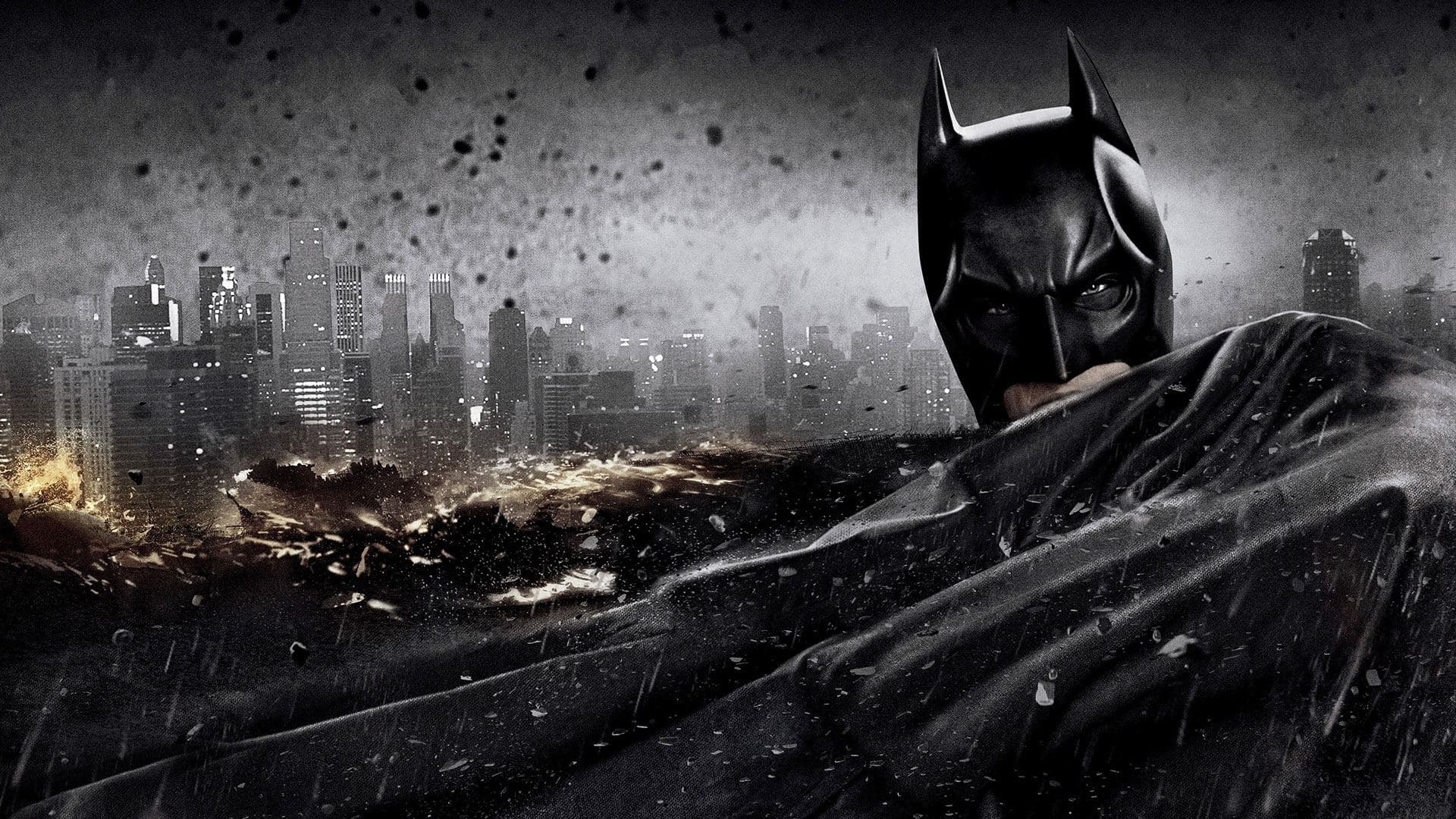
Eight years after taking the blame for Harvey Dent's crimes, Bruce Wayne has become a recluse, physically broken and emotionally withdrawn from Gotham City. When the masked terrorist Bane emerges with a plan to seize control of Gotham, cut it off from the outside world, and threaten nuclear annihilation, Bruce must return as Batman one final time. With the help of cat burglar Selina Kyle and idealistic police officer John Blake, he faces his greatest physical and psychological challenge to save the city and find redemption.
What Is the Budget of The Dark Knight Rises?
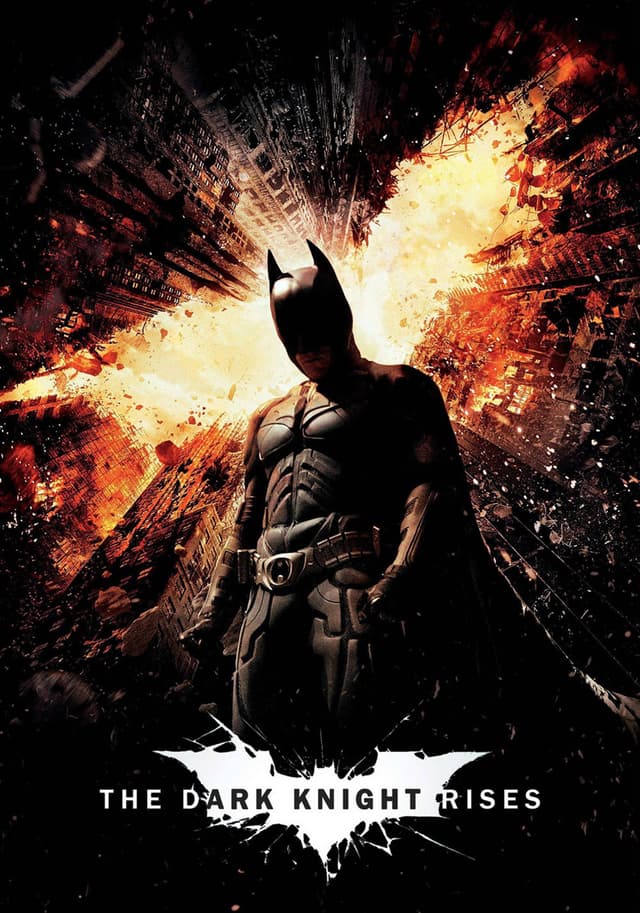
The Dark Knight Rises (2012), directed by Christopher Nolan and distributed by Warner Bros. Pictures, was produced on a budget of $250,000,000. The final chapter of Nolan's Dark Knight trilogy brought Bruce Wayne out of an eight-year retirement to face Bane, a masked revolutionary who isolates Gotham City from the outside world and holds it hostage with a nuclear device. The film concluded the most critically acclaimed and commercially successful superhero trilogy of its era.
The $250 million budget made The Dark Knight Rises the most expensive Nolan film at the time and one of the costliest superhero productions ever. Costs were driven by Nolan's commitment to practical filmmaking at massive scale: real explosions destroying Pittsburgh's Heinz Field (now Acrisure Stadium), thousands of extras for the Gotham siege sequences, IMAX film cameras (with their significantly higher stock and processing costs), and a global production that shot across Pittsburgh, New York City, London, and locations in India. Unlike contemporary superhero films that relied heavily on CG environments, Nolan built and destroyed as much as possible in camera.
Key Budget Allocation Categories
The Dark Knight Rises distributed its $250 million budget across the following production areas:
- Practical Action and Large-Scale Destruction: Nolan's insistence on practical effects over CG drove some of the budget's most dramatic expenditures. The destruction of Heinz Field (a football stadium explosion filmed during a real Steelers game rehearsal with 11,000 extras) required weeks of preparation and pyrotechnic engineering. The aircraft extraction sequence in the film's prologue, where Bane's men hijack a CIA plane mid-flight, used a real Lockheed C-130 and a smaller aircraft connected by cables, with stuntmen performing actual wire transfers between the planes. The Batpod and Tumbler chase sequences used functional vehicles on closed city streets.
- IMAX Film Photography: Cinematographer Wally Pfister shot over an hour of the film's 164-minute runtime on 15/70mm IMAX film stock, the most IMAX footage in any narrative film at that time. IMAX cameras are heavier, louder, and require more frequent magazine changes than standard 35mm equipment, creating significant logistical constraints and costs. The IMAX sequences, which included the prologue plane hijack, the stadium destruction, the pit escape, and the climactic street battle, provided an image quality and scale that digital formats could not match in 2012.
- Cast and Above-the-Line Talent: Christian Bale returned as Bruce Wayne/Batman, with Tom Hardy joining as Bane, Anne Hathaway as Selina Kyle/Catwoman, Joseph Gordon-Levitt as John Blake, and Marion Cotillard as Miranda Tate. The supporting cast included returning actors Gary Oldman, Morgan Freeman, and Michael Caine, alongside newcomers Cillian Murphy (reprising Scarecrow) and Matthew Modine. Christopher Nolan's directing fee, plus back-end participation that would eventually yield hundreds of millions in profit sharing, represented a substantial above-the-line commitment.
- Multi-City Location Production: Pittsburgh served as the primary Gotham stand-in, with extensive street closures in the downtown Golden Triangle district for the Bane occupation and street battle sequences. New York City locations included Wall Street (the stock exchange raid), the Brooklyn Bridge, and various Manhattan streets. London's Cardington Studios housed interior sets, and Mehrangarh Fort in Jodhpur, India provided the exterior for the underground prison (the "pit"). The four-city, two-continent production required parallel logistics operations and significant travel budgets.
- Score and Sound Design: Hans Zimmer composed the score, building on his Dark Knight themes while introducing the Bane chant ("Deshi Basara"), which Zimmer created by recording thousands of fan-submitted vocal recordings layered into a massive choral arrangement. The sound design, led by supervising sound editor Richard King, faced the challenge of mixing Tom Hardy's muffled Bane voice (a choice that required post-production ADR adjustments after early IMAX previews drew audience complaints about intelligibility) with Zimmer's wall-of-sound score and the practical effects audio.
How Does The Dark Knight Rises's Budget Compare to Similar Films?
At $250,000,000, The Dark Knight Rises sits at the top of the practical-filmmaking superhero category. Comparing it with other concluding trilogy chapters and blockbusters from 2012:
- The Dark Knight (2008): Budget $185,000,000 | Worldwide $1,006,000,000. The predecessor cost 26% less and earned slightly less, though its cultural impact (amplified by Heath Ledger's posthumous performance) arguably exceeded the sequel's. The budget increase reflected the larger scale of Rises's Gotham siege narrative compared to The Dark Knight's more contained crime thriller structure.
- The Avengers (2012): Budget $220,000,000 | Worldwide $1,518,800,000. Released three months earlier in the same summer, Marvel's ensemble film cost 12% less and earned 40% more. The comparison highlighted the MCU's growing commercial dominance over DC's filmmaker-driven approach, though Nolan's trilogy maintained higher critical prestige.
- Skyfall (2012): Budget $200,000,000 | Worldwide $1,108,600,000. The Bond franchise's own "dark trilogy conclusion" (following Casino Royale and Quantum of Solace) cost 20% less and earned comparable returns, suggesting a commercial ceiling around $1 billion for serious-toned franchise finales in 2012.
- The Amazing Spider-Man (2012): Budget $230,000,000 | Worldwide $757,900,000. Sony's Spider-Man reboot, released between The Avengers and Rises in summer 2012, spent nearly as much but earned 30% less, underscoring how Nolan's brand elevated DC above other solo superhero properties in commercial terms.
- Man of Steel (2013): Budget $225,000,000 | Worldwide $668,000,000. Nolan's own production (as executive producer) of DC's Superman reboot cost 10% less and earned 38% less, illustrating how audience enthusiasm for Nolan's Batman specifically did not transfer automatically to the broader DC universe.
The Dark Knight Rises Box Office Performance
The Dark Knight Rises opened in the United States on July 20, 2012, debuting to $160.9 million domestically over its opening weekend. The film's theatrical run was tragically affected by the Aurora, Colorado mass shooting at a midnight screening on opening night, which killed twelve people and injured seventy. Warner Bros. pulled marketing, canceled press events, and the film's domestic trajectory was measurably dampened by the tragedy and the somber atmosphere surrounding its release.
Box Office Breakdown
The Dark Knight Rises

At approximately +332%, The Dark Knight Rises returned roughly $4.32 for every $1 of production budget invested during its theatrical run.
The conclusion to Christopher Nolan's Batman trilogy crossed $1 billion worldwide despite the tragic Aurora theater shooting that overshadowed its opening weekend. The domestic gross of $448.1 million represented 41% of the worldwide total, a higher domestic share than most superhero films of comparable scale, reflecting the franchise's particularly strong North American following.
The Dark Knight Rises Production History
Christopher Nolan initially expressed ambivalence about directing a third Batman film after The Dark Knight, describing the trilogy conclusion as "the most daunting" creative challenge of his career. He co-wrote the screenplay with his brother Jonathan Nolan, with the story credited to Christopher Nolan and David S. Goyer. The script drew thematic inspiration from Charles Dickens's A Tale of Two Cities, with the Gotham siege echoing the French Revolution's class upheaval, and from the Knightfall comic arc (Bane breaking Batman) and No Man's Land (Gotham as an isolated city-state).
Principal photography began in May 2011 in Jodhpur, India, filming at Mehrangarh Fort for the exterior shots of the ancient prison. The production then moved to Pittsburgh in July 2011 for six weeks, with the city serving as Gotham. Pittsburgh's mayor and film commission granted extensive street closures in the downtown area, and the production employed approximately 10,000 local extras. The Heinz Field sequence used 11,000 extras during an actual Pittsburgh Steelers practice day.
Filming continued in New York City (Wall Street, the Brooklyn Bridge), at Newark's City Hall, and at Cardington Studios near London. The aerial plane hijack prologue was filmed over Scotland using real aircraft and practical stunt work. Wally Pfister's IMAX photography required careful planning due to the cameras' noise level (which could bleed into dialogue) and their limited magazine capacity (roughly four minutes of footage per reload).
Tom Hardy's portrayal of Bane, with the character's face covered by a pain-suppressing mask, required extensive ADR (automated dialogue replacement) after early IMAX screenings at which audiences struggled to understand his dialogue. Nolan adjusted the vocal mix for theatrical release, increasing Bane's vocal clarity while maintaining the muffled, metallic quality.
Awards and Recognition
The Dark Knight Rises did not receive any Academy Award nominations, a notable absence given The Dark Knight's eight nominations and two wins four years earlier. The omission reflected both the Academy's continued difficulty categorizing superhero films in top-tier categories and a critical reception that, while strongly positive, did not reach the universal acclaim of its predecessor.
The film won the MTV Movie Award for Best Hero (Christian Bale), earned Saturn Award nominations for Best Science Fiction Film and Best Director, and received People's Choice Awards for Favorite Movie and Favorite Action Movie. Hans Zimmer's score received a Grammy nomination for Best Score Soundtrack. The film's most lasting legacy in industry terms was confirming that a filmmaker-driven superhero trilogy could conclude on its own terms, without franchise extension, setting a standard that no subsequent DC film series has replicated.
Critical Reception
The Dark Knight Rises earned an 87% approval rating on Rotten Tomatoes based on 356 reviews, with a consensus praising Nolan's ambitious scope and the emotional weight of the trilogy's conclusion while noting that the film could not match the singular intensity of The Dark Knight. On Metacritic, the film scored 78 out of 100, indicating "generally favorable reviews."
Critics who praised the film highlighted Nolan's commitment to practical, large-scale filmmaking, the emotional arc of Bruce Wayne from broken recluse to self-sacrificing hero, and Tom Hardy's physically imposing performance as Bane despite the mask's limitations. Anne Hathaway's Selina Kyle received particular praise as a grounded, morally ambiguous counterpoint to the film's more grandiose elements. The IMAX photography, particularly the prologue plane sequence and the climactic street battle, was widely celebrated as cinema at its most immersive.
Negative reviews focused on the film's plotting, which some found overloaded with subplots (John Blake's parallel journey, Miranda Tate's true identity, the stock exchange heist, the pit escape) at the expense of taut storytelling. Bane's dialogue intelligibility remained a point of contention, and the reveal of Miranda Tate as Talia al Ghul was criticized as undermining Bane's authority as the primary antagonist. Despite these criticisms, the 87% Rotten Tomatoes score and billion-dollar gross confirmed The Dark Knight Rises as a commercially and critically successful, if imperfect, conclusion to the most influential superhero trilogy of its generation.
Frequently Asked Questions
How much did it cost to make The Dark Knight Rises?
The production budget was $250,000,000, making it Christopher Nolan's most expensive film at the time. Costs were driven by practical large-scale action (including destroying a real football field with 11,000 extras), IMAX film photography, and a multi-city production spanning Pittsburgh, New York, London, and India.
How much did The Dark Knight Rises earn at the box office?
The film grossed $448,100,000 domestically and $632,900,000 internationally, totaling $1,081,000,000 worldwide. It opened with $160.9 million domestically in July 2012, becoming the third film that year to cross the billion-dollar mark.
Was The Dark Knight Rises profitable?
Yes, significantly. With a $250 million production budget and approximately $175 million in marketing, the $1.081 billion worldwide gross yielded an ROI of approximately 332% on production costs. The film was the third-highest-grossing film of 2012.
Where was The Dark Knight Rises filmed?
Pittsburgh served as the primary Gotham stand-in with extensive downtown street closures. Additional locations included New York City (Wall Street, Brooklyn Bridge), Cardington Studios near London, and Mehrangarh Fort in Jodhpur, India (the pit prison). The aerial prologue was filmed over Scotland using real aircraft.
How much of The Dark Knight Rises was shot on IMAX?
Over one hour of the 164-minute runtime was shot on 15/70mm IMAX film stock, the most IMAX footage in any narrative film at the time. IMAX sequences included the plane hijack prologue, the stadium destruction, the pit escape, and the climactic street battle.
How was the Heinz Field destruction scene filmed?
The production used Heinz Field (now Acrisure Stadium) during a real Pittsburgh Steelers practice day with 11,000 extras in the stands. Pyrotechnic charges were placed on a specially constructed section of the field, creating the practical explosion that was then augmented with visual effects for the collapsing stands.
Why was Bane's voice controversial?
Tom Hardy's Bane wore a pain-suppressing mask that muffled his voice. After early IMAX preview screenings where audiences struggled to understand the dialogue, Nolan adjusted the vocal mix, increasing Bane's clarity while maintaining the metallic quality. The balance between intelligibility and character authenticity remained debated.
How does The Dark Knight Rises compare to The Dark Knight?
The Dark Knight (2008) cost $185 million and earned $1.006 billion, while Rises cost $250 million and earned $1.081 billion. Despite the higher gross, Rises's domestic performance ($448M vs $535M) was lower, attributed partly to the Aurora tragedy's impact. Critically, Rises earned 87% on Rotten Tomatoes versus The Dark Knight's 94%.
What awards did The Dark Knight Rises receive?
The film did not receive Academy Award nominations, a notable absence after The Dark Knight's eight nominations. It won MTV and People's Choice awards, earned Saturn Award nominations, and Hans Zimmer's score received a Grammy nomination. The film's critical standing, while strong, did not match its predecessor's.
What is the Rotten Tomatoes score for The Dark Knight Rises?
The film holds an 87% approval rating on Rotten Tomatoes based on 356 reviews. Critics praised the ambitious scope, practical IMAX filmmaking, and emotional trilogy conclusion, while noting the overloaded plotting and Bane's dialogue intelligibility. On Metacritic it scored 78 out of 100.
Filmmakers
The Dark Knight Rises

Official Trailer
Build budgets like this one in Saturation
Start from an industry-standard feature film template, import the schedule and rates you already have, and let the cost report keep itself current as you spend. Real-time collaboration, no spreadsheets.