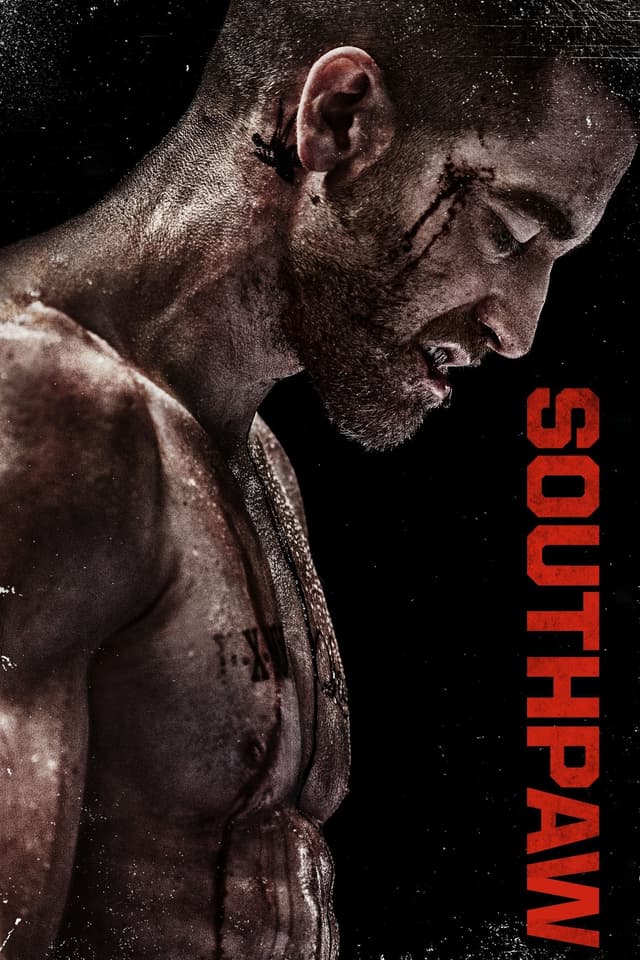
Southpaw Budget
 ActionDrama2h 3m
Updated
Synopsis
Light heavyweight champion Billy Hope hits rock bottom after a personal tragedy costs him his family, his fortune, and his title. Stripped of everything, he turns to a hardened gym owner and former fighter, Tick Wills, to rebuild his discipline, repair his relationship with his daughter, and earn back his place in the ring.
What Is the Budget of Southpaw (2015)?
Southpaw (2015), directed by Antoine Fuqua from an original screenplay by Sons of Anarchy creator Kurt Sutter, was produced on a reported budget of $30,000,000. The Weinstein Company financed and distributed the film domestically through its boutique sports-drama playbook, with international rights handled separately by a patchwork of foreign distributors that helped the project clear its production cost before a single ticket was sold in North America.
The investment reflected a deliberate mid-budget bet on a star-driven adult drama in an era when the studios were retreating from that exact category. Roughly half of the $30,000,000 went to above-the-line costs, including Jake Gyllenhaal's salary and an extensive 16-week physical training program, with the remainder covering a Pittsburgh-anchored shoot, fight choreography, and original score composition. The math assumed Southpaw would clear approximately $75,000,000 to $90,000,000 worldwide to reach profitability after marketing and distribution, a target the film cleared comfortably on the strength of its domestic theatrical performance and a robust home video tail.
Key Budget Allocation Categories
Southpaw's $30,000,000 budget was distributed across several core production areas:
- Above-the-Line Talent: Jake Gyllenhaal commanded the largest single line item, following an awards-bait run that included Prisoners, Nightcrawler, and End of Watch. Director Antoine Fuqua, fresh off the commercial success of The Equalizer, took a feature-director rate appropriate to a Weinstein Company prestige play, with Rachel McAdams, Forest Whitaker, Curtis '50 Cent' Jackson, and Naomie Harris filling supporting roles at compensation tiers reflecting their visibility in 2014.
- Actor Physical Transformation: Gyllenhaal trained for approximately five months under boxing coach Terry Claybon, performing two-a-day workouts that included up to 2,000 sit-ups daily and adding roughly 15 pounds of lean muscle to his post-Nightcrawler frame. The production carried the cost of an in-house gym, dedicated trainers, sparring partners, nutritionists, and the extended pre-production window required for the transformation.
- Pittsburgh Location Shoot: Principal photography ran for roughly two months in and around Pittsburgh and Indianapolis, with the Pennsylvania Film Tax Credit anchoring the choice of location. The budget covered local crew, location rentals at gyms and venues including the Petersen Events Center, lodging, and the unit move to a New York stage for arena fight sequences.
- Boxing Choreography and Stunt Work: Veteran fight choreographer Terry Claybon, who also trained Gyllenhaal, staged the in-ring sequences with input from real fighters cast as opponents, including Miguel Gomez as Miguel 'Magic' Escobar. The film used real boxing tempo rather than the stylized slow-motion of Raging Bull or the montage shorthand of Rocky, which required longer ring rehearsal blocks, multi-camera coverage, and dedicated medic and rigging crews for each bout.
- Score and Music: James Horner composed the orchestral score, his final completed work before his death in a June 2015 plane crash three weeks before the film's release. Horner waived a portion of his usual fee, and the music budget covered original composition, orchestra recording, and licensing of needle drops including Eminem's "Phenomenal," the lead single from the soundtrack album that helped drive marketing.
- Cinematography and Editing: Two-time Oscar nominee Mauro Fiore served as director of photography, using anamorphic lenses and natural light wherever possible to give the film a worn, mid-1970s sports-drama texture. Editor John Refoua, an Oscar nominee for Avatar, cut the picture, with the boxing sequences requiring particularly intensive post time to assemble the multi-camera ring coverage into coherent rounds.
- Marketing and Soundtrack: The Weinstein Company paired the theatrical campaign with a Shady Records soundtrack curated by Eminem, who had originally been attached to star before the project pivoted to Gyllenhaal after the death of Eminem's friend Proof reshaped the rapper's interest in the material. The soundtrack rollout, including a Saturday Night Live performance and the "Phenomenal" music video, functioned as a parallel marketing channel that the studio did not have to fund directly.
How Does Southpaw's Budget Compare to Similar Films?
At $30,000,000, Southpaw sits in the mid-range of theatrical boxing dramas. The comparison set illustrates how its commercial outcome stacked up against the genre's defining titles:
- Rocky (1976): Budget $1,075,000 | Worldwide $225,000,000. The genre-defining underdog film was produced for roughly 3.5% of Southpaw's budget and out-grossed it more than three times over, winning Best Picture and launching a franchise that still anchors the category nearly fifty years later.
- Raging Bull (1980): Budget $18,000,000 | Worldwide $23,400,000. Martin Scorsese's Jake LaMotta biopic cost a comparable inflation-adjusted figure to Southpaw and underperformed at the box office, but its eight Academy Award nominations and two wins (Best Actor for Robert De Niro, Best Film Editing) cemented it as the artistic benchmark Southpaw was openly measured against.
- Million Dollar Baby (2004): Budget $30,000,000 | Worldwide $216,800,000. Clint Eastwood's boxing drama cost the same as Southpaw and grossed more than double, going on to win Best Picture, Best Director, Best Actress, and Best Supporting Actor. The contrast underscores how decisively the Eastwood film converted budget-equivalent spending into both commercial and awards returns.
- The Fighter (2010): Budget $25,000,000 | Worldwide $129,200,000. David O. Russell's Micky Ward biopic cost slightly less than Southpaw and earned roughly 33% more worldwide, with Christian Bale and Melissa Leo winning the supporting acting Oscars. The Fighter is the closest commercial and critical comparison point, and the one Southpaw most clearly hoped to emulate.
- Creed (2015): Budget $35,000,000 | Worldwide $173,567,581. Ryan Coogler's Rocky spin-off, released four months after Southpaw the same year, cost roughly $5,000,000 more and out-grossed it by a factor of more than 2.5, while also securing a Best Supporting Actor nomination for Sylvester Stallone. The two films directly competed for the 2015 boxing-drama audience.
- Warrior (2011): Budget $25,000,000 | Worldwide $23,300,000. Gavin O'Connor's MMA drama is the cautionary example, a critically beloved film that failed theatrically despite a Best Supporting Actor nomination for Nick Nolte. Southpaw out-earned it by more than four times, demonstrating that a recognizable lead and a major studio release window were the difference between a cult title and a profitable mid-budget drama.
Southpaw Box Office Performance
Southpaw opened on July 24, 2015, in 2,772 theaters, finishing third at the domestic box office with $16,720,089 over its opening weekend. That figure trailed Pixar's second-weekend Inside Out and the wide release of Adam Sandler's Pixels, but landed ahead of pre-release tracking and gave the Weinstein Company a sustainable platform for the film's adult-skewing word of mouth. Strong CinemaScore exit polling translated into a domestic multiplier above 3.0, healthy for a star-driven drama in mid-summer.
Against a $30,000,000 production budget, the film needed approximately $75,000,000 to $90,000,000 in worldwide gross to reach profitability after marketing and distribution. Here is the financial breakdown:
Box Office Breakdown
Southpaw

Southpaw returned approximately $1.35 to $1.57 in theatrical revenue for every $1 invested when measured against total estimated production and marketing spend, a solid result for a star-driven adult drama in a marketplace dominated by superhero and franchise tentpoles. The domestic share of the gross was $52,417,508, with international ticket sales adding $42,099,833 across territories where boxing dramas historically face cultural ceilings.
The film performed strongest on the home video and television back end. The Weinstein Company recouped further income from streaming licenses, premium cable windows, and an enduring catalog presence that has kept Southpaw in regular rotation on cable sports-adjacent programming. The combined ancillary revenue is widely understood to have lifted the project from modest theatrical profitability into firmly profitable territory across its full distribution life.
Southpaw Production History
Development on Southpaw began in 2010 at DreamWorks, with Kurt Sutter writing the original screenplay specifically as a vehicle for Eminem. The rapper, then beginning his return to recording after his post-Encore hiatus, was attached to play Billy Hope, a fictional light heavyweight champion whose life unravels after a personal tragedy. Eminem was set to follow his 8 Mile (2002) success with a second autobiographical-adjacent role, and the project was structured as a Shady Records and Imagine Entertainment co-production.
Eminem departed the project in 2011, with the rapper publicly citing the death of his close friend and Detroit collaborator DeShaun "Proof" Holton in 2006 as a turning point that made the material's grief-driven narrative too personally fraught to perform. The script went into turnaround, eventually landing at The Weinstein Company in 2013. Antoine Fuqua came aboard as director in 2014 after the commercial success of The Equalizer, and Jake Gyllenhaal signed on after a string of physically transformative roles (he had lost roughly 30 pounds for Nightcrawler) made him an attractive candidate for a part that required the opposite trajectory.
Principal photography ran from June to August 2014 in Pennsylvania, primarily in and around Pittsburgh, with additional unit work in Indianapolis. The production used the Pennsylvania Film Tax Credit to anchor the shoot, with local crew supplementing a Los Angeles-based department head team. The fight sequences were staged at the Petersen Events Center on the University of Pittsburgh campus and at a New York arena that filled in for Madison Square Garden in the film's climactic title bout.
Gyllenhaal trained for approximately five months before cameras rolled, working two-a-day boxing sessions with coach Terry Claybon and adding roughly 15 pounds of lean muscle. The training regimen, which became one of the most-cited press hooks ahead of release, included up to 2,000 sit-ups per day, sparring with active professional fighters, and a strict caloric protocol that the actor maintained throughout the shoot. Gyllenhaal performed the vast majority of his own boxing on camera, with stunt doubles used only for sequences requiring specific impact protection.
James Horner completed his original score in spring 2015 and recorded it weeks before his death in a June 22, 2015 single-engine plane crash in Southern California. Southpaw was released on July 24, 2015, just over a month later, making it Horner's final completed feature score to reach theaters. The composer's name remained in the marketing materials and the in-memoriam credit at the end of the film, and the score has since been the subject of multiple posthumous reassessments of his late-period work.
Awards and Recognition
Southpaw did not break through at the major Academy ceremonies, despite a sustained pre-release awards-season conversation around Jake Gyllenhaal's lead performance. Gyllenhaal, who had been a Best Supporting Actor nominee for Brokeback Mountain (2005) and who many critics felt deserved a Best Actor nomination for Nightcrawler (2014), again failed to land an Oscar nomination, extending a streak of awards near-misses that became a recurring industry storyline.
Gyllenhaal did receive a Critics' Choice Movie Award nomination for Best Actor in an Action Movie, and the film picked up a Golden Trailer Award for its theatrical marketing campaign. James Horner's score received posthumous attention from the World Soundtrack Awards and Film Music Critics Association in the wake of his death. The Eminem-curated soundtrack album, including the lead single "Phenomenal," was certified Gold by the RIAA and competed in the Best Original Song conversation for early-year 2016 ceremonies, though it did not advance to an Oscar shortlist.
Forest Whitaker's supporting turn as trainer Tick Wills drew warm notices in the supporting actor conversation but did not convert into nominations. The film's most lasting awards-adjacent legacy has been as part of the broader argument, advanced regularly in awards-season retrospectives, that Gyllenhaal has been one of the most consistently under-recognized lead actors of his generation.
Critical Reception
Southpaw received mixed-to-positive reviews. The film holds a 60% approval rating on Rotten Tomatoes based on 247 critic reviews, with a critical consensus noting that Jake Gyllenhaal's committed lead performance elevates a familiar boxing-drama framework. On Metacritic, the film scored 57 out of 100, indicating mixed or average reviews. Audiences surveyed by CinemaScore gave Southpaw a rare A grade, a strong endorsement that translated directly into the film's above-tracking domestic multiplier.
Critics broadly praised Gyllenhaal's physical and emotional transformation, Forest Whitaker's grounded trainer performance, and the visceral choreography of the fight sequences, while objecting to the predictability of Kurt Sutter's screenplay and its heavy reliance on familiar Rocky and Raging Bull beats. The New York Times' Manohla Dargis wrote that Gyllenhaal "throws himself into the role with such ferocity that he nearly wills the movie into a higher class than its script can support," while the Los Angeles Times' Kenneth Turan called the film "old-fashioned in the best and worst senses, a Rocky for a generation that has already seen Rocky."
Genre-press reaction was more divided. IndieWire criticized the film for trading on boxing-movie cliches without interrogating them, and Variety's Justin Chang noted that the film's grief beats and recovery arc felt mechanical compared with The Fighter or Warrior. Ten years on, Southpaw's reputation has settled into a stable middle position: a sturdy, emotionally direct showcase for a star at the peak of his physical and dramatic powers, anchored by a final James Horner score that has gained stature with time, even as the film itself rarely enters the conversation about the genre's best.
Frequently Asked Questions
How much did it cost to make Southpaw (2015)?
The reported production budget was $30,000,000. The Weinstein Company financed and distributed the film domestically, with foreign rights sold separately to a patchwork of international distributors that helped recoup the production cost before North American release.
How much did Southpaw earn at the box office?
The film grossed $52,417,508 domestically and $42,099,833 internationally, for a worldwide total of $94,517,341. It opened to $16,720,089 in the United States, finishing third on its July 24, 2015 opening weekend behind Pixar's Inside Out and Adam Sandler's Pixels.
Was Southpaw profitable?
Yes. Against a $30,000,000 production budget and an estimated $30,000,000 to $40,000,000 in marketing spend, the film returned approximately $1.35 to $1.57 in worldwide gross for every $1 invested. Strong home video, streaming, and cable performance pushed it firmly into profitable territory across its full distribution life.
Who directed Southpaw?
Antoine Fuqua directed the film, working from an original screenplay by Sons of Anarchy creator Kurt Sutter. Fuqua came aboard the project in 2014 after the commercial success of The Equalizer, and Southpaw became one of his most personally driven projects.
Where was Southpaw filmed?
Principal photography ran from June to August 2014, primarily in and around Pittsburgh, Pennsylvania, with additional unit work in Indianapolis and a New York arena that doubled for Madison Square Garden. The production used the Pennsylvania Film Tax Credit, with fight sequences staged at the Petersen Events Center on the University of Pittsburgh campus.
How much weight did Jake Gyllenhaal gain for Southpaw?
Gyllenhaal added approximately 15 pounds of lean muscle to his post-Nightcrawler frame, training for roughly five months under boxing coach Terry Claybon. The regimen included two-a-day workouts, up to 2,000 sit-ups daily, sparring with active professional fighters, and a strict caloric protocol that he maintained throughout the shoot.
Was Eminem originally going to star in Southpaw?
Yes. Kurt Sutter originally wrote the screenplay in 2010 as a vehicle for Eminem to follow his 8 Mile (2002) lead role. Eminem departed in 2011, publicly citing the death of his close friend DeShaun "Proof" Holton in 2006 as a turning point that made the material's grief-driven narrative too personally fraught. The script went into turnaround and landed at The Weinstein Company in 2013.
Was Southpaw James Horner's last film?
Yes. James Horner completed the Southpaw score in spring 2015 and recorded it weeks before his death in a June 22, 2015 single-engine plane crash in Southern California. Southpaw was released on July 24, 2015, just over a month later, making it Horner's final completed feature score to reach theaters.
How does Southpaw compare to Creed (2015)?
Creed cost roughly $5,000,000 more than Southpaw ($35,000,000 versus $30,000,000) and grossed $173,567,581 worldwide compared with Southpaw's $94,517,341, more than 1.8 times the domestic gross. Creed also earned Sylvester Stallone a Best Supporting Actor Oscar nomination. Released four months apart in 2015, the two films directly competed for the year's boxing-drama audience.
What did critics think of Southpaw?
The film received mixed-to-positive reviews, with a 60% approval rating on Rotten Tomatoes based on 247 critics and a 57 out of 100 score on Metacritic. Audiences gave it an A CinemaScore. Critics praised Jake Gyllenhaal's physical and emotional transformation and Forest Whitaker's supporting performance, while objecting to the predictability of Kurt Sutter's screenplay and its heavy reliance on familiar Rocky and Raging Bull beats.
Filmmakers
Southpaw

Official Trailer
Build budgets like this one in Saturation
Start from an industry-standard feature film template, import the schedule and rates you already have, and let the cost report keep itself current as you spend. Real-time collaboration, no spreadsheets.