Rocky Budget
 Drama2h
Updated
Synopsis
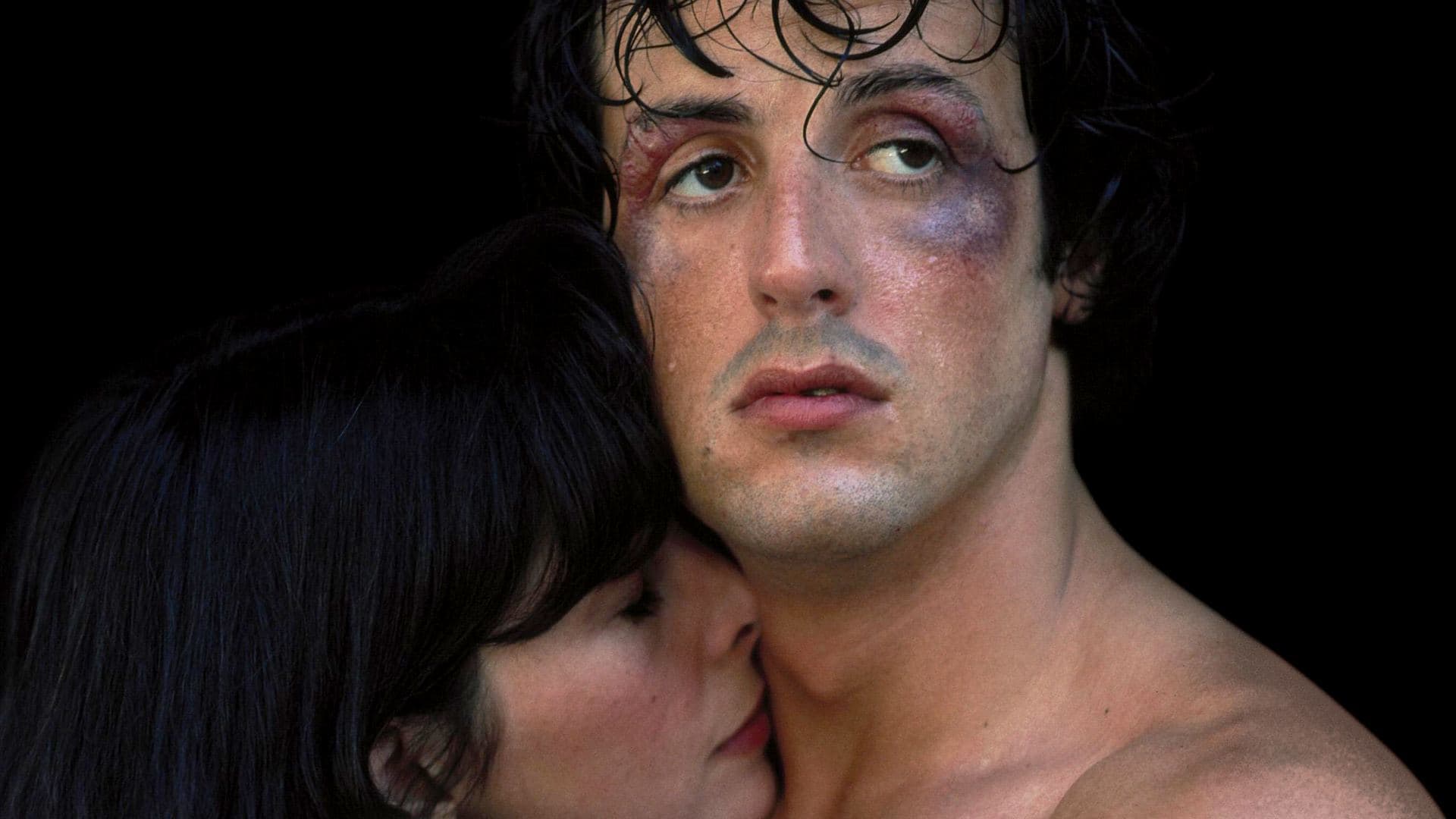
Down-and-out Philadelphia club fighter Rocky Balboa, a small-time enforcer for a local loan shark, gets the unlikely shot of a lifetime when heavyweight champion Apollo Creed picks him as a bicentennial-themed publicity opponent. Training under crusty veteran cornerman Mickey Goldmill and finding love with shy pet-store clerk Adrian, Rocky pushes himself to go the distance against the champion and prove to himself that he is not just another bum from the neighborhood.
What Is the Budget of Rocky (1976)?
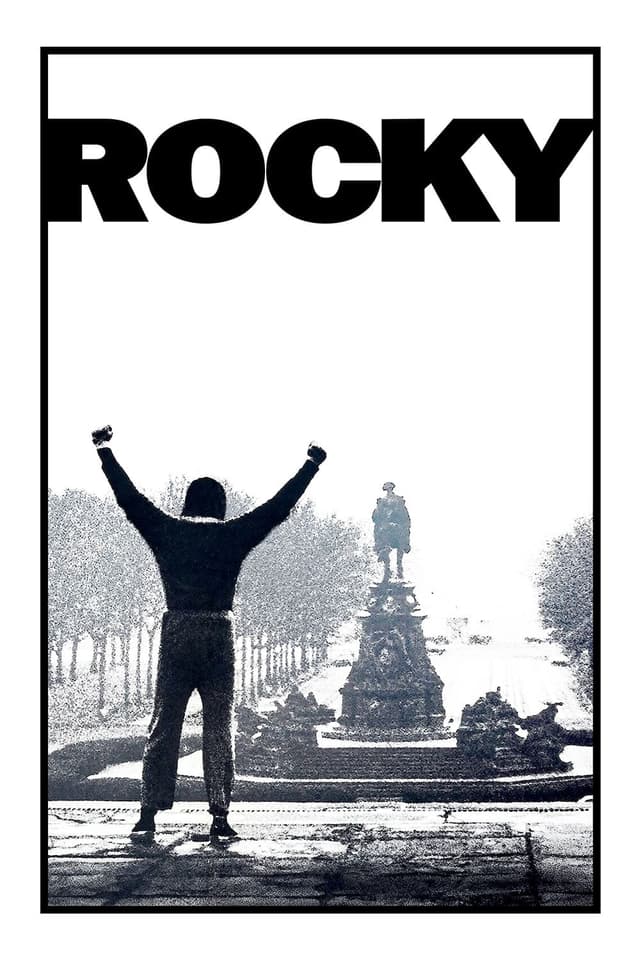
Rocky (1976), directed by John G. Avildsen and distributed by United Artists, was produced on a reported budget of $1,075,000, an extraordinarily lean figure for what would become a Best Picture winner and the foundation of a multi-billion-dollar franchise. Sylvester Stallone, then a virtually unknown actor with credits in The Lords of Flatbush and a few small television roles, wrote the screenplay in roughly three days after watching the March 1975 Muhammad Ali versus Chuck Wepner heavyweight title fight, then refused multiple six-figure offers for the script from producers Irwin Winkler and Robert Chartoff unless he was allowed to play the lead.
Winkler, Chartoff, and United Artists eventually agreed to the gamble, but only on the condition that the production be made cheaply. The film was greenlit at just over $1,000,000, with Stallone accepting a $23,000 acting fee plus a back-end participation. Principal photography ran 28 days in Philadelphia and Los Angeles on a punishing schedule, with the climactic fight sequence at the Los Angeles Memorial Sports Arena improvised within three days of stage time. The minuscule budget forced creative choices, location shooting in real Philadelphia neighborhoods, an unknown lead, a small supporting cast, and a single primary location set, that would later define the film's gritty authenticity.
Key Budget Allocation Categories
Rocky's reported $1,075,000 budget was distributed across several core production areas:
- Above-the-Line Talent: Sylvester Stallone accepted $23,000 for both writing the screenplay and starring, well below standard scale for a lead actor in a studio production, in exchange for back-end participation. Director John G. Avildsen took a flat directing fee, and supporting cast Talia Shire, Burgess Meredith, Burt Young, and Carl Weathers each worked at lower-than-rate compensation to fit the budget envelope.
- Philadelphia Location Shoot: Production used real Philadelphia neighborhoods, the Italian Market, Pat's King of Steaks, the Schuylkill River banks, and the now-iconic 72 steps of the Philadelphia Museum of Art, rather than building sets. Producers shot guerrilla style without permits in many cases, with cinematographer James Crabe and a skeleton crew using a Steadicam prototype operated by Garrett Brown for the training montage. The location-first approach saved enormous money on set construction.
- Boxing Choreography and Stunts: Stallone and Carl Weathers rehearsed the climactic Apollo Creed fight for weeks ahead of principal photography, choreographing every punch by the count rather than improvising on set. The Los Angeles Memorial Sports Arena was rented for only three days, and the crowd was filled out with extras and dressed dummies in the upper rows to suggest a sold-out title fight on a fraction of the budget such a sequence would normally demand.
- Score and Music: Composer Bill Conti delivered the iconic "Gonna Fly Now" theme along with the full score for a modest fee that reflected his pre-fame status. The trumpet-led main theme, performed by DeEtta West and Carol Connors, became a Billboard Hot 100 number one single after the film's release and one of the most recognizable cues in American cinema, all built on a session-musician budget rather than a major orchestra.
- Camera and Equipment: The production was an early high-profile use of the Steadicam, then a brand-new piece of technology invented by Garrett Brown. The rental cost was modest relative to the visual impact, particularly during the museum steps training run, which became one of the most parodied and homaged shots in movie history.
- Production Schedule: Principal photography lasted only 28 days, an aggressively short schedule that minimized crew overtime, equipment rental, and per diem costs. Post-production was similarly compressed, with editor Richard Halsey and Scott Conrad cutting the film quickly for a planned November 1976 release.
- Marketing and Distribution: United Artists initially planned only a modest platform release given the film's tiny budget and unknown star. Test screenings drove a rapid expansion. The studio committed to wider marketing only after the film began breaking out, keeping initial P&A spend low relative to typical studio releases of the era.
How Does Rocky's Budget Compare to Similar Films?
At a reported $1,075,000, Rocky was made for a fraction of comparable boxing dramas and underdog sports films. The comparison set demonstrates how dramatically the film overperformed against both its budget peers and the better-financed competition:
- Raging Bull (1980): Budget $18,000,000 | Worldwide $23,400,000. Martin Scorsese's Jake LaMotta biopic, released four years after Rocky, cost nearly eighteen times more and earned only a fraction of Rocky's worldwide haul. The films represent opposite poles of boxing cinema, Rocky's populist underdog uplift versus Raging Bull's self-destructive interiority.
- The Champ (1979): Budget $7,000,000 | Worldwide $30,452,031. Franco Zeffirelli's remake of the 1931 boxing weepie cost seven times Rocky's budget and earned far less worldwide. The comparison shows how Rocky's no-budget authenticity outperformed a glossy studio remake aimed at the same audience.
- Rocky Balboa (2006): Budget $24,000,000 | Worldwide $155,721,132. Stallone's sixth Rocky film, released thirty years later, cost twenty-two times the original's budget and earned roughly two thirds of the original's worldwide gross in unadjusted dollars, underscoring just how lightning-in-a-bottle the 1976 original's economics were.
- Creed (2015): Budget $35,000,000 | Worldwide $173,567,581. Ryan Coogler's legacy sequel built around Apollo Creed's son cost thirty-three times Rocky and earned a comparable worldwide total in modern dollars. Creed validated that the franchise template still drew audiences four decades after Stallone first wrote the screenplay.
- Creed III (2023): Budget $75,000,000 | Worldwide $276,074,419. Michael B. Jordan's directorial debut and third Creed entry cost roughly seventy times the original Rocky and earned more than any prior film in the combined Rocky and Creed canon, demonstrating the long tail value of the franchise Stallone seeded in 1976.
Rocky Box Office Performance
Rocky opened on November 21, 1976 in a limited release of three theaters in New York and Los Angeles, then expanded nationally through December as positive word of mouth and critical acclaim built. The film earned $5,000,000 in its opening weekend after wide expansion and finished its initial run with $117,235,147 in domestic box office, the highest-grossing film of 1976. Worldwide, the film grossed approximately $225,000,000 across its theatrical run, an extraordinary multiple on its sub-$1,100,000 production budget.
Against a reported production budget of $1,075,000, the film returned a financial outcome that has rarely been matched in studio cinema. Here is the financial breakdown:
Box Office Breakdown
Rocky

Rocky returned approximately $31.79 in theatrical revenue for every $1 invested when measured against total estimated production and marketing spend, placing it among the most profitable studio releases in American cinema history. The domestic share of the gross was $117,235,147, representing more than half of the worldwide total, with the international take split across European, Latin American, and Asian markets where the underdog-versus-champion premise translated effectively without dialogue dependence.
The financial success transformed every party involved. United Artists, then in a turbulent post-Transamerica acquisition period, found a franchise anchor. Producers Irwin Winkler and Robert Chartoff secured a multi-decade production base on Rocky's back-end. Sylvester Stallone, who had accepted $23,000 in upfront fees, earned millions in profit participation and became one of the most bankable stars of the next two decades. The film also catalyzed five direct sequels through 1990 and 2006 plus the three-film Creed spinoff series.
Rocky Production History
The genesis of Rocky is one of the most documented underdog stories in Hollywood history. Sylvester Stallone, broke and selling his dog because he could not afford to feed it, attended the March 24, 1975 heavyweight title fight in which journeyman Chuck Wepner went the distance with Muhammad Ali in Cleveland, losing by TKO in the fifteenth round. Stallone returned to his apartment and wrote a first draft of Rocky in three and a half days. He shopped the script through agents to Irwin Winkler and Robert Chartoff, who had a development deal with United Artists, and the producers brought it to studio executives Mike Medavoy and Arthur Krim.
United Artists initially offered $265,000 for the script alone, then raised the offer to $325,000 if Stallone would let Ryan O'Neal, Burt Reynolds, or Robert Redford play Rocky Balboa. Stallone refused all offers. The eventual deal saw the film greenlit at roughly $1,000,000 with Stallone playing the lead for $23,000 against back-end participation. John G. Avildsen, fresh off Save the Tiger which won Jack Lemmon a Best Actor Oscar, was hired as director on a flat fee.
Principal photography ran 28 days from January 9 to February 28, 1976, primarily in Philadelphia, Pennsylvania, with additional photography in Los Angeles. The Philadelphia shoot used real neighborhoods, the Italian Market on Ninth Street, Pat's King of Steaks at Passyunk and Ninth, the Schuylkill River banks, and the Philadelphia Museum of Art steps, often without permits and frequently with hidden cameras. Cinematographer James Crabe deployed Garrett Brown's newly invented Steadicam for several signature sequences, including the training montage in which Rocky runs through the Italian Market and up the museum steps. The Apollo Creed fight was shot at the Los Angeles Memorial Sports Arena across three compressed days.
Talia Shire was cast as Adrian after Stallone met with Carrie Snodgress, who passed on the role over salary disputes. Burgess Meredith, then a veteran character actor, was cast as the trainer Mickey Goldmill. Burt Young played Rocky's brother-in-law Paulie. Carl Weathers, a former Oakland Raiders defensive lineman with limited acting experience, won the Apollo Creed role after a screen-test sparring session with Stallone. Composer Bill Conti, who had scored a handful of films, was hired late in production and wrote "Gonna Fly Now" alongside the rest of the score.
Post-production was rapid. Editors Richard Halsey and Scott Conrad assembled the film through summer 1976 for a November theatrical release. Test screenings drew unprecedented audience reactions, with viewers reportedly cheering and standing during the climactic fight. United Artists, initially planning a small platform release, expanded the campaign aggressively. Rocky opened in three theaters on November 21, 1976 and expanded nationwide through December, building word of mouth that would carry it through the spring of 1977 and into the Academy Awards.
Awards and Recognition
Rocky received ten Academy Award nominations at the 49th Oscars ceremony in March 1977 and won three of the field's top categories: Best Picture (Irwin Winkler and Robert Chartoff), Best Director (John G. Avildsen), and Best Film Editing (Richard Halsey and Scott Conrad). The Best Picture win came against The Network, Bound for Glory, All the President's Men, and Taxi Driver, one of the most competitive Best Picture fields of the 1970s. Sylvester Stallone became only the third person in Academy history to be nominated for both Best Actor and Best Original Screenplay for the same film, following Charlie Chaplin (The Great Dictator) and Orson Welles (Citizen Kane).
Beyond the Oscars, Rocky won the Golden Globe Award for Best Motion Picture Drama and earned Stallone Golden Globe nominations for Best Actor and Best Screenplay. The Writers Guild of America nominated Stallone for Best Original Screenplay. The Directors Guild of America nominated John G. Avildsen for Outstanding Directorial Achievement. The film's legacy recognition has only grown over the decades. In 2006, Rocky was selected by the Library of Congress for preservation in the National Film Registry as "culturally, historically, or aesthetically significant." The American Film Institute has placed it on multiple definitive lists, including AFI's 100 Years 100 Movies (number 78 in 2007), AFI's 100 Years 100 Cheers (number 4), and AFI's 100 Years 100 Heroes and Villains, with Rocky Balboa ranked number 7 among film heroes. "Gonna Fly Now" was selected for AFI's 100 Years 100 Songs at number 58.
Critical Reception
Rocky received broadly enthusiastic reviews on its 1976 release and has only grown in critical stature in the decades since. The film holds a 94% approval rating on Rotten Tomatoes based on 92 critic reviews, with a critical consensus describing it as "a sentimental but rousing underdog story powered by Sylvester Stallone's career-defining performance." On Metacritic, the film scored 70 out of 100 based on 19 critics, indicating generally favorable reviews. The wide gap between contemporaneous and retrospective consensus reflects a film that the 1976 trade press treated as a pleasant surprise and that subsequent generations of critics elevated to canonical status.
Roger Ebert awarded the film four stars and wrote that "Stallone has emerged as a major star, with the kind of presence that makes audiences happy when he's on the screen," singling out the chemistry between Stallone and Talia Shire as the film's emotional anchor. Vincent Canby of the New York Times called it "purest Hollywood make-believe of the original sort, that is, a movie that revives our spirits as it grips our attention." Pauline Kael of the New Yorker, more skeptical of the film's sentimentality, nonetheless conceded that "the picture is poorly made, but its naïve, emotional shamelessness is funny and engaging." Variety praised the screenplay and noted that Stallone's performance and writing combination announced "a major new talent in American film."
Audience response was extraordinary. Test screenings in summer 1976 saw audiences cheering, weeping, and applauding the climactic fight in a way that convinced United Artists to abandon the originally planned platform release in favor of a wider rollout. CinemaScore was not yet tracking exit polls in 1976, but observational reports from theater chains during the November 1976 to spring 1977 run consistently described standing ovations, particularly at the moment when Rocky tells Adrian "I just want to go the distance" the night before the fight. Rocky has since been canonized as a foundational text of American populist cinema, its training-montage structure copied across hundreds of subsequent sports films and its underdog ethos imitated across action, drama, and even superhero filmmaking.
Frequently Asked Questions
How much did it cost to make Rocky (1976)?
The reported production budget was $1,075,000, an extraordinarily lean figure for a studio release. United Artists greenlit the film cheaply because Sylvester Stallone, then an unknown actor, insisted on playing the lead and refused six-figure offers for the script alone. Producers Irwin Winkler and Robert Chartoff backed the gamble through their United Artists deal.
How much did Rocky earn at the box office?
Rocky grossed $117,235,147 domestically and approximately $107,765,000 internationally, for a worldwide total of approximately $225,000,000. It was the highest-grossing film of 1976 in North America and returned roughly $32 in theatrical revenue for every $1 invested when measured against total estimated production and marketing spend.
How many Oscars did Rocky win?
Rocky won three Academy Awards at the 49th Oscars in March 1977: Best Picture (Irwin Winkler and Robert Chartoff), Best Director (John G. Avildsen), and Best Film Editing (Richard Halsey and Scott Conrad). It received ten nominations in total, including Best Actor and Best Original Screenplay for Sylvester Stallone.
Who directed Rocky?
John G. Avildsen directed Rocky from Sylvester Stallone's original screenplay. Avildsen had just won acclaim for Save the Tiger (1973), which earned Jack Lemmon his Best Actor Oscar, and went on to direct The Karate Kid (1984) and three of the Rocky sequels.
How much was Sylvester Stallone paid for Rocky?
Sylvester Stallone accepted $23,000 in upfront compensation for both writing the screenplay and starring as Rocky Balboa. The deal included back-end profit participation, which earned him millions once the film became one of the highest-grossing releases of the decade and transformed him into a top-tier Hollywood star.
Where was Rocky filmed?
Principal photography ran from January 9 to February 28, 1976, primarily in Philadelphia, Pennsylvania, with additional sequences in Los Angeles. Philadelphia locations included the Italian Market on Ninth Street, Pat's King of Steaks, the Schuylkill River banks, and the Philadelphia Museum of Art steps. The Apollo Creed fight was shot at the Los Angeles Memorial Sports Arena.
How long did it take Stallone to write Rocky?
Sylvester Stallone wrote the first draft of the Rocky screenplay in roughly three and a half days after attending the March 24, 1975 heavyweight title fight between Muhammad Ali and journeyman Chuck Wepner in Cleveland. Wepner went the distance with Ali before losing by TKO in the fifteenth round, directly inspiring the underdog premise of the film.
Who composed the Rocky theme "Gonna Fly Now"?
Bill Conti composed "Gonna Fly Now" along with the rest of the Rocky score. The trumpet-led main theme, performed by DeEtta West and Carol Connors, reached number one on the Billboard Hot 100 in July 1977. The American Film Institute later named it one of the 100 greatest songs in American cinema at number 58.
How does Rocky compare to its sequels?
The original Rocky cost $1,075,000 and grossed approximately $225,000,000 worldwide. Rocky Balboa (2006) cost $24,000,000 and grossed $155,721,132. Creed (2015) cost $35,000,000 and grossed $173,567,581, and Creed III (2023) cost $75,000,000 and grossed $276,074,419. No subsequent Rocky or Creed film has matched the original's return on investment, though Creed III is the highest-grossing entry in unadjusted dollars.
What did critics think of Rocky?
Rocky received broadly positive reviews on release and holds a 94% approval rating on Rotten Tomatoes based on 92 critics. Metacritic scored it 70 out of 100. Roger Ebert awarded it four stars and praised Stallone's screen presence. Vincent Canby of the New York Times called it "purest Hollywood make-believe of the original sort." Audience response at test screenings was so strong that United Artists abandoned its planned small platform release for a wider rollout.
Filmmakers
Rocky

Official Trailer
Build budgets like this one in Saturation
Start from an industry-standard feature film template, import the schedule and rates you already have, and let the cost report keep itself current as you spend. Real-time collaboration, no spreadsheets.