Shang-Chi and the Legend of the Ten Rings Budget
 ActionAdventureFantasy2h 12m
Updated
Synopsis
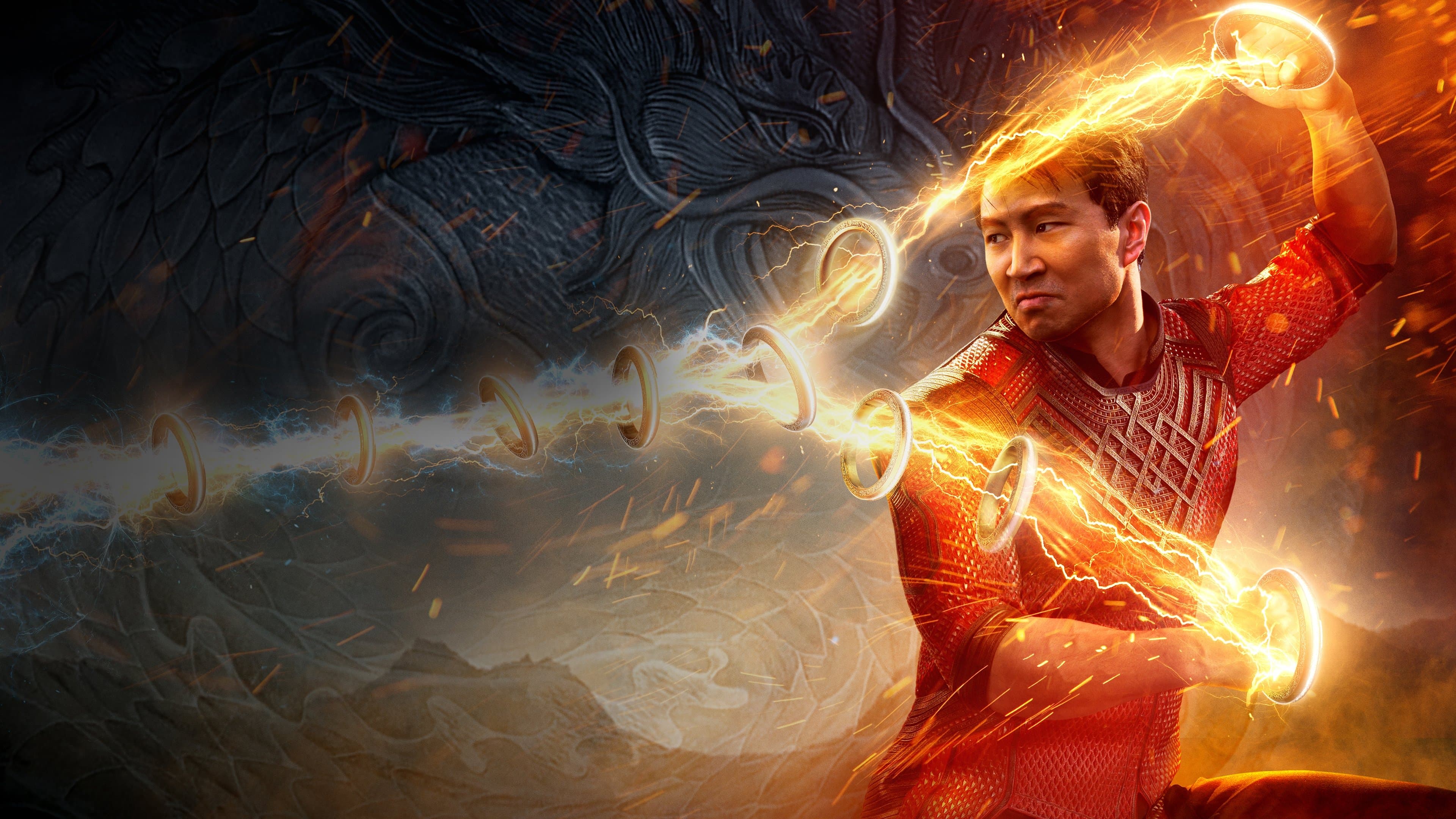
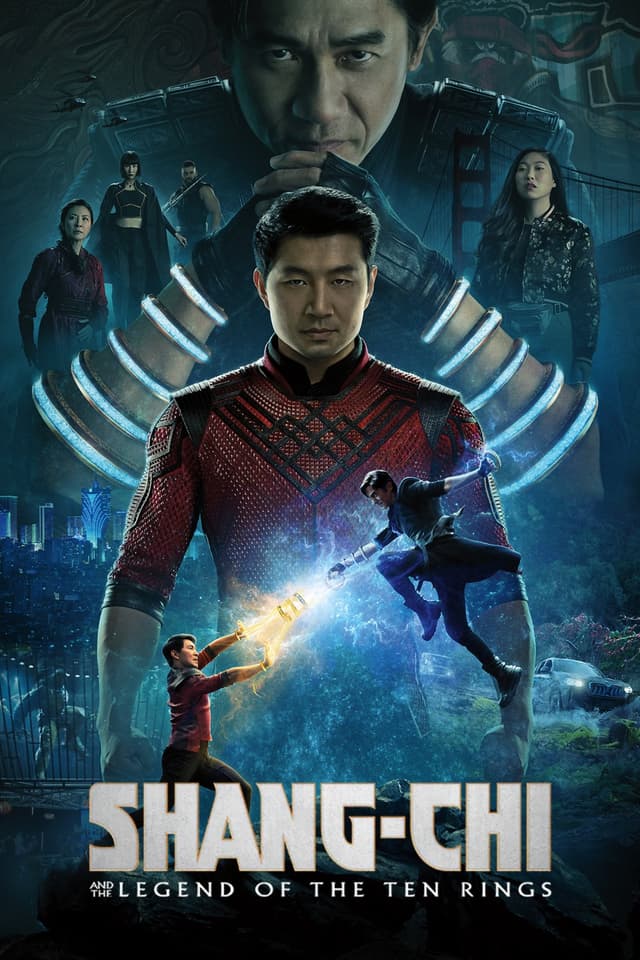
Shang-Chi, the master of unarmed weaponry-based Kung Fu, is forced to confront his past after being drawn into the Ten Rings organization. Together with his sister Xialing and friend Katy, Shang-Chi must face the legacy of his father Wenwu, the centuries-old wielder of the mythical Ten Rings, and confront the forces gathering at the gates of the mystical realm of Ta Lo.
What Is the Budget of Shang-Chi and the Legend of the Ten Rings (2021)?
Shang-Chi and the Legend of the Ten Rings (2021), directed by Destin Daniel Cretton and distributed by Walt Disney Studios Motion Pictures, was produced on a reported budget of $200,000,000. The film marked the Marvel Cinematic Universe's first solo movie led by an Asian superhero and stood as Marvel Studios' first Phase Four theatrical release made specifically for cinemas after Black Widow's hybrid Disney+ Premier Access window. Kevin Feige produced through Marvel Studios, with Jonathan Schwartz and Cretton sharing additional producing credits, and Disney financed the production on the expectation that the property would anchor a new franchise within the MCU's expanding Asian and Pan-Asian storytelling.
The $200,000,000 budget placed Shang-Chi in the established tier for MCU solo origin films, comparable in scale to Doctor Strange (2016) and Captain Marvel (2019) but below the ensemble Avengers tentpoles. The investment reflected the cost of a full-scale Marvel production that combined large-scale visual effects, a globe-spanning cast led by Hong Kong cinema legend Tony Leung in his first English-language Hollywood feature, an extended Australia-based shoot, and a martial arts choreography commitment unprecedented for Marvel. The math assumed the film would clear roughly $400,000,000 worldwide to reach theatrical profitability after marketing, a target it ultimately exceeded.
Key Budget Allocation Categories
The reported $200,000,000 budget was distributed across several core production areas:
- Above-the-Line Talent: Director Destin Daniel Cretton (Short Term 12, Just Mercy) commanded a Marvel feature-director rate, while breakout lead Simu Liu, cast off the strength of his work on Kim's Convenience and a viral Twitter pitch, signed a multi-picture deal at a tier-one MCU origin-lead rate. Tony Leung Chiu-wai, one of the most decorated actors in world cinema, commanded a top-line salary for his Hollywood debut as Wenwu, the real Mandarin. Awkwafina, Michelle Yeoh, Meng'er Zhang, Fala Chen, and Florian Munteanu filled out a high-profile ensemble whose collective compensation reflected each performer's standing in Asian and global markets.
- Australia Location Shoot: The bulk of principal photography ran at Fox Studios Australia in Sydney, with the production qualifying for the Australian Producer Offset and the federal Location Incentive. Sydney location work covered the Macao fight tower interiors, the bus-chase sequences staged on San Francisco-doubling streets, and the Ta Lo village dragon-scale forests built on stage. Australia, lodging, local crew, and location permits added significant cost compared with a fully Los Angeles or London-based shoot, but the regional incentives offset a sizable portion of the qualifying spend.
- Martial Arts Choreography and Stunts: Stunt coordinator Brad Allan, a veteran of the Jackie Chan Stunt Team and the 87Eleven Action Design house, supervised the film's fight design, with Andy Cheng and Liu Yong overseeing wirework and traditional wushu staging. The choreography of Wenwu and Ying Li's courtship duel, the Macao tower sequence, and the bamboo-scaffold bus chase required months of pre-production rehearsal, dedicated stunt doubles for Liu, Leung, and Chen, and extended on-set blocking, all of which expanded the principal photography schedule and the stunt budget meaningfully beyond a typical MCU baseline.
- Visual Effects: Weta Digital, Industrial Light & Magic, and Scanline VFX led the visual effects pipeline, which delivered over 2,000 effects shots across the Ta Lo village, the inter-dimensional Dweller-in-Darkness, the Great Protector water dragon, and the climactic battle. The Ten Rings themselves required custom animation models that responded to Wenwu and Shang-Chi's movements, and the de-aging of Tony Leung for flashback sequences relied on the same toolset used on Avengers: Endgame and The Irishman.
- Score and Music: Joel P. West, Cretton's longtime collaborator from Short Term 12 and Just Mercy, scored the film, blending traditional Chinese instrumentation with full orchestra and electronic textures. The accompanying soundtrack album, executive produced by 88rising, featured tracks from Anderson .Paak, Rich Brian, NIKI, and Saweetie, requiring separate music licensing, original commissioning budgets, and marketing tie-ins around the album's August 2021 release.
- Production Design and Costumes: Production designer Sue Chan built the Ten Rings compound, the Ta Lo village, and the Macao fight tower as full-scale practical sets at Fox Studios Australia, with Chinese architectural and textile references guiding the dressing. Costume designer Kym Barrett, a longtime Wachowski collaborator, designed Wenwu's rings, the Dragon Scale Armor of Ta Lo, and dozens of Iron Gang uniforms, with the Ten Rings themselves requiring multiple practical and digital iterations.
- Marketing and Promotion: Disney mounted a sizable global campaign anchored on Liu's breakout-star narrative, Tony Leung's Hollywood debut, and the cultural significance of the first Asian-led Marvel solo film. The studio committed to a 45-day theatrical exclusivity window after the experiment with Black Widow's hybrid release drew vocal pushback from theater owners, and the campaign included a U.S.-China dual rollout strategy that ultimately ran aground when the film did not receive a mainland China release.
- Pandemic Production Costs: Filming ran from January through August 2020 with a roughly four-month shutdown for the COVID-19 pandemic, returning to set in late April 2020 under strict health protocols. The shutdown costs, on-set testing, quarantining of cast and crew, and revised shooting schedule added carrying costs not factored into the original budget projection. Marvel had to rework set workflows mid-production, with director Cretton later directing portions of the climactic battle remotely after testing positive for COVID-19.
How Does Shang-Chi's Budget Compare to Similar Films?
At $200,000,000, Shang-Chi sits squarely within the MCU's standard solo-origin tier and significantly above contemporaneous Asian-led blockbusters. The comparison set illustrates how its commercial outcome reframed Hollywood's assumptions about Asian-led tentpoles:
- Doctor Strange (2016): Budget $165,000,000 | Worldwide $677,718,395. Marvel's previous mystic-arts origin film cost 17.5% less and earned 1.6 times Shang-Chi worldwide in a pre-pandemic theatrical market, providing the closest creative and structural blueprint for a new sorcerer-tier MCU lead.
- Black Panther (2018): Budget $200,000,000 | Worldwide $1,344,103,000. Ryan Coogler's franchise opener cost the same as Shang-Chi but earned more than three times worldwide, demonstrating both the ceiling Marvel can hit when an identity-forward solo origin lands with full festival-season runway and the steep theatrical climb Shang-Chi faced amid Delta variant restrictions.
- Captain Marvel (2019): Budget $175,000,000 | Worldwide $1,131,416,446. The previous MCU solo-origin film cost 12.5% less than Shang-Chi and earned 2.6 times worldwide thanks to its proximity to Avengers: Endgame in a fully open theatrical market, a benchmark Shang-Chi could not approach in a pandemic-constrained release window.
- Crazy Rich Asians (2018): Budget $30,000,000 | Worldwide $238,532,055. The Jon M. Chu romantic comedy, the highest-grossing Hollywood film with a majority-Asian cast prior to Shang-Chi, cost just 15% as much and was a cultural touchstone that proved the appetite for Asian-led studio films. Shang-Chi out-grossed it by 81% on a budget nearly seven times larger, validating the case for big-budget Asian-led tentpoles.
- Everything Everywhere All at Once (2022): Budget $14,300,000 | Worldwide $143,409,945. The Daniels' A24 indie, headlined by Shang-Chi co-star Michelle Yeoh, illustrates the dramatic difference in scale between a studio MCU production and the Oscar-winning indie that arrived seven months later, with Shang-Chi grossing three times as much on a budget fourteen times larger.
- Eternals (2021): Budget $200,000,000 | Worldwide $402,064,899. Marvel's next Phase Four release after Shang-Chi cost exactly the same and earned $30 million less worldwide, despite featuring a more established ensemble cast (Angelina Jolie, Salma Hayek, Richard Madden) and Oscar-winning director Chloé Zhao, suggesting that Shang-Chi's commercial outperformance against expectations was driven by audience response to the film itself rather than star power alone.
Shang-Chi and the Legend of the Ten Rings Box Office Performance
Shang-Chi and the Legend of the Ten Rings opened on September 3, 2021, over the four-day Labor Day weekend, debuting to $94,663,964 across four days and $75,388,688 over the traditional three-day frame. Both figures set Labor Day weekend records, eclipsing the previous record set by Halloween (2007) by more than $20 million and confirming that audiences were willing to return to theaters for a buzzed-about MCU release. Despite opening during the Delta variant surge and without a mainland China release, the film won its opening weekend and held the number-one domestic spot for four consecutive weekends.
Against a reported production budget of $200,000,000, the film needed approximately $400,000,000 in worldwide gross to reach profitability when accounting for marketing and distribution costs. Here is the financial breakdown:
Box Office Breakdown
Shang-Chi and the Legend of the Ten Rings

Shang-Chi returned approximately $1.30 in worldwide theatrical revenue for every $1 invested when measured against total estimated production and marketing spend, finishing as the second-highest grossing domestic release of 2021 behind only Spider-Man: No Way Home. The domestic share of the gross was $224,543,292 against an international share of $207,700,000, a 52/48 split that read as a clear win given the absence of a China release and the persistent international theatrical disruption from Delta-era restrictions.
The result reset internal Disney assumptions about Asian-led tentpoles and accelerated the development of a sequel, Shang-Chi 2, with Destin Daniel Cretton returning to direct and Simu Liu reattached. The film also vindicated Disney CEO Bob Chapek's mid-release decision to keep Shang-Chi theatrical-exclusive after Black Widow's hybrid Disney+ Premier Access window had drawn lawsuit-level pushback from Scarlett Johansson and the broader exhibition industry.
Shang-Chi and the Legend of the Ten Rings Production History
Development of a Shang-Chi feature began at Marvel Studios in 2018, with Kevin Feige greenlighting the project to expand the MCU's Asian representation following the global success of Black Panther. Marvel hired Chinese-American screenwriter Dave Callaham (Wonder Woman 1984, the Mortal Kombat reboot) to draft the screenplay in March 2019, with the explicit mandate of reinventing the comics character away from the orientalist framing of the 1970s source material and rebuilding the Mandarin as a complex three-dimensional patriarch rather than the Iron Man 3 fake-out version played by Ben Kingsley. Destin Daniel Cretton was attached to direct in March 2019, becoming one of the first Asian-American filmmakers to helm a Marvel Studios feature, on the strength of his small-scale character work in Short Term 12 and Just Mercy.
Casting Simu Liu as Shang-Chi in July 2019 launched the project's public visibility. Liu, a Canadian actor best known for the CBC sitcom Kim's Convenience, had publicly campaigned for the role on Twitter the year before, and the producers chose him after a search that considered Ross Butler, Lewis Tan, and Manny Jacinto. Tony Leung Chiu-wai's casting as Wenwu in July 2019 was the bigger industry shock: the Hong Kong legend, who had previously declined Hollywood offers including a role in The Dark Knight Rises, agreed to make his English-language debut on the strength of Cretton's pitch to make Wenwu the emotional center of the film. Awkwafina, Michelle Yeoh, Fala Chen, Florian Munteanu, Ronny Chieng, and newcomer Meng'er Zhang rounded out the cast.
Principal photography began on February 12, 2020 at Fox Studios Australia in Sydney, Australia, utilizing the Australian Producer Offset and federal Location Incentive to anchor the studio shoot. The production was forced into a four-month shutdown in March 2020 by the global COVID-19 pandemic, returning to set in late April 2020 under strict health protocols. Filming resumed and continued through August 2020 in Sydney and at additional Australian locations, with second-unit work covering city-doubling exteriors for San Francisco, Macao, and the bamboo-forest gateway to Ta Lo. Director Cretton tested positive for COVID-19 during the climactic battle sequence shoot and directed portions of those scenes remotely via video link, with second-unit director Brad Allan handling on-set coordination.
Post-production extended through summer 2021, with visual effects work split among Weta Digital, Industrial Light & Magic, Scanline VFX, and Method Studios. Stunt coordinator Brad Allan, working in what would tragically be his final feature credit before his death in August 2021, oversaw the choreography of the film's signature setpieces alongside fight choreographer Andy Cheng. The film's August 2021 SDCC reveal of the first full trailer drew the largest opening-day YouTube view count for any Marvel trailer to date, and the September 3, 2021 theatrical release was scheduled to take advantage of the traditionally underutilized Labor Day frame.
Awards and Recognition
Shang-Chi and the Legend of the Ten Rings received one Academy Award nomination, for Best Visual Effects at the 94th Academy Awards (2022), recognizing the work of Christopher Townsend, Joe Farrell, Sean Noel Walker, and Daniel Sudick. The award ultimately went to Dune, but the nomination made Shang-Chi only the third MCU film to receive a visual effects nomination, following Guardians of the Galaxy (2014) and Avengers: Endgame (2019).
The film won the Saturn Award for Best Comic-to-Motion Picture Release at the 47th Saturn Awards, where it also received nominations for Best Director (Destin Daniel Cretton), Best Actor (Simu Liu), Best Supporting Actor (Tony Leung), Best Supporting Actress (Awkwafina), and Best Costume Design (Kym Barrett). Tony Leung won the Asian Film Award for Best Supporting Actor at the 16th Asian Film Awards, and the film received nominations at the Visual Effects Society Awards, the MTV Movie & TV Awards (winning Best Fight for the Macao tower sequence), and the Critics' Choice Super Awards (where it won Best Action Movie, Best Actor in an Action Movie for Liu, and Best Actress in an Action Movie for Awkwafina).
Critical Reception
Shang-Chi and the Legend of the Ten Rings received broadly positive reviews. The film holds a 91% approval rating on Rotten Tomatoes based on 397 critic reviews, with a critical consensus that praised it as a refreshingly character-driven and culturally specific Marvel origin story. On Metacritic, the film scored 71 out of 100, indicating generally favorable reviews. Audiences surveyed by CinemaScore gave the film an A, the joint-highest CinemaScore for any MCU film at the time alongside Black Panther, signaling word-of-mouth strength that would drive the film's leggy four-weekend run at number one.
Critics broadly singled out Tony Leung's performance as the emotional anchor of the film, with Variety's Owen Gleiberman writing that "Leung does what only the greatest actors can do: he gives a Marvel villain genuine soul" and The New York Times' Manohla Dargis calling him "the best villain Marvel has ever had." Simu Liu drew praise for his charisma and physical commitment, and the bus-chase and Macao tower fight sequences were widely cited as among the best action choreography in MCU history. Reviewers also praised Joel P. West's score, Sue Chan's production design, and Cretton's commitment to grounding the family melodrama at the heart of the film.
Criticisms centered on the third-act CGI battle, which several reviewers including IndieWire's David Ehrlich and Slant Magazine's Steven Scaife found tonally disconnected from the smaller-scale character drama that defined the film's first two acts. The Dweller-in-Darkness creature design drew particular scrutiny as a generic Marvel third-act-monster choice. Despite these reservations, the film was widely considered one of the strongest Marvel Phase Four releases and a model for how the MCU could expand its cultural specificity while delivering studio-tentpole entertainment.
Frequently Asked Questions
How much did it cost to make Shang-Chi and the Legend of the Ten Rings (2021)?
The reported production budget was $200,000,000, financed entirely by Walt Disney Studios through Marvel Studios. The figure placed Shang-Chi in the established tier for MCU solo origin films, comparable in scale to Black Panther (2018) at the same $200,000,000 and above Doctor Strange (2016) at $165,000,000 and Captain Marvel (2019) at $175,000,000.
How much did Shang-Chi earn at the box office?
The film grossed $224,543,292 domestically and $207,700,000 internationally, for a worldwide total of $432,243,292. It opened to $94,663,964 over the four-day Labor Day weekend, setting a Labor Day box office record, and held the number-one domestic spot for four consecutive weekends.
Was Shang-Chi a box office success?
Yes. Against a $200,000,000 production budget and an estimated $100,000,000 to $150,000,000 in marketing spend, the film returned approximately $1.30 in worldwide gross for every $1 invested. It finished as the second-highest grossing domestic release of 2021 behind only Spider-Man: No Way Home, an outcome considered a major commercial success given the Delta variant theatrical conditions and the absence of a mainland China release.
Who directed Shang-Chi and the Legend of the Ten Rings?
Destin Daniel Cretton directed the film, working from a screenplay he co-wrote with Dave Callaham and Andrew Lanham. Cretton had previously directed the indie drama Short Term 12 (2013) and the legal drama Just Mercy (2019), and Shang-Chi was his first studio tentpole.
Where was Shang-Chi filmed?
Principal photography ran from February 2020 through August 2020 at Fox Studios Australia in Sydney, with the production qualifying for the Australian Producer Offset and the federal Location Incentive. Filming was interrupted by a four-month shutdown for the COVID-19 pandemic and resumed in late April 2020 under strict health protocols. Sydney location work covered San Francisco-doubling streets, Macao fight tower interiors, and the Ta Lo village forests built on stage.
How does Shang-Chi compare to other MCU solo origin films?
Shang-Chi cost the same as Black Panther (2018) at $200,000,000 but earned only one third the worldwide gross ($432,243,292 vs $1,344,103,000), largely a function of pandemic theatrical conditions and the absence of a China release. It cost more than Doctor Strange (2016) at $165,000,000 and Captain Marvel (2019) at $175,000,000, and earned 64% of the former's worldwide gross and 38% of the latter's, despite releasing in the most theatrically constrained market of any MCU origin film to date.
Who plays Shang-Chi in the 2021 film?
Simu Liu plays Shang-Chi. The Canadian actor was best known for the CBC sitcom Kim's Convenience and had publicly campaigned for the role on Twitter the year before his casting in July 2019. The role made Liu the first Asian actor to headline an MCU solo film and launched a multi-picture Marvel contract.
Why did Tony Leung take the role of Wenwu?
Tony Leung Chiu-wai, one of the most decorated actors in world cinema, had previously declined Hollywood offers including a role in The Dark Knight Rises. He agreed to make his English-language Hollywood debut on the strength of director Destin Daniel Cretton's pitch to make Wenwu the emotional center of the film. The performance was widely cited as the strongest villain turn in MCU history and won Leung the Asian Film Award for Best Supporting Actor.
Did Shang-Chi get a release in China?
No. Despite extensive marketing planning around a U.S.-China dual rollout, Shang-Chi did not receive a release in mainland China. Chinese state media criticism of the film's source material, the 1970s Marvel comics character's orientalist framing, and the reinvented Mandarin character prevented the film from securing import approval, costing the production the substantial gross that other MCU films had drawn from the Chinese market.
What did critics think of Shang-Chi and the Legend of the Ten Rings?
The film received broadly positive reviews, with a 91% approval rating on Rotten Tomatoes based on 397 critics and a 71 out of 100 score on Metacritic. Audiences gave it an A CinemaScore, the joint-highest for any MCU film at the time alongside Black Panther. Tony Leung was widely praised as the strongest Marvel villain to date, the Macao tower and bus-chase fight sequences were singled out as among the best action choreography in MCU history, and Joel P. West's score drew particular acclaim. The third-act CGI battle drew some criticism as tonally disconnected from the smaller-scale family drama of the first two acts.
Filmmakers
Shang-Chi and the Legend of the Ten Rings

Official Trailer
Build budgets like this one in Saturation
Start from an industry-standard feature film template, import the schedule and rates you already have, and let the cost report keep itself current as you spend. Real-time collaboration, no spreadsheets.