Green Room Budget
 HorrorCrimeThriller1h 35m
Updated
Synopsis
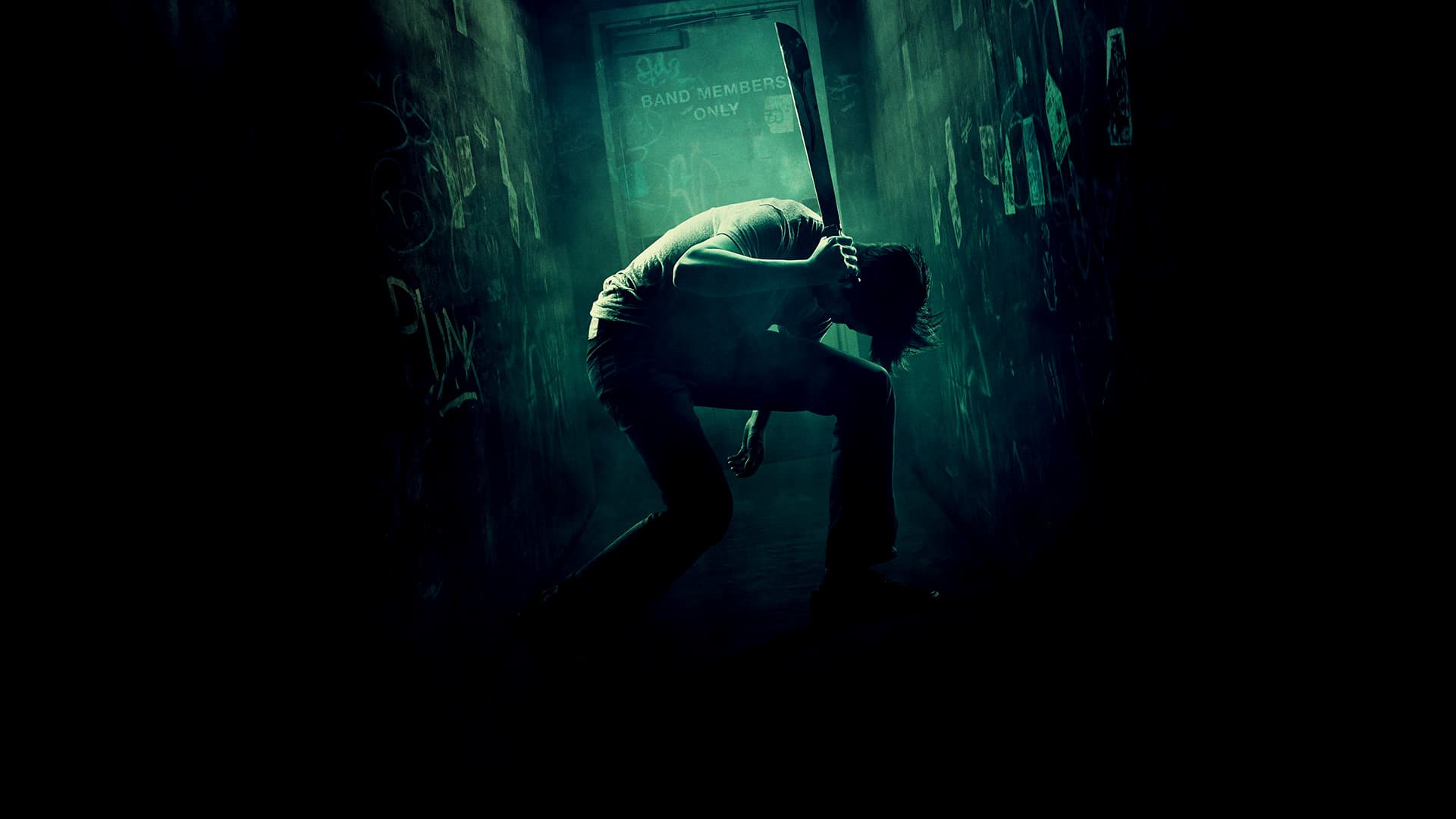
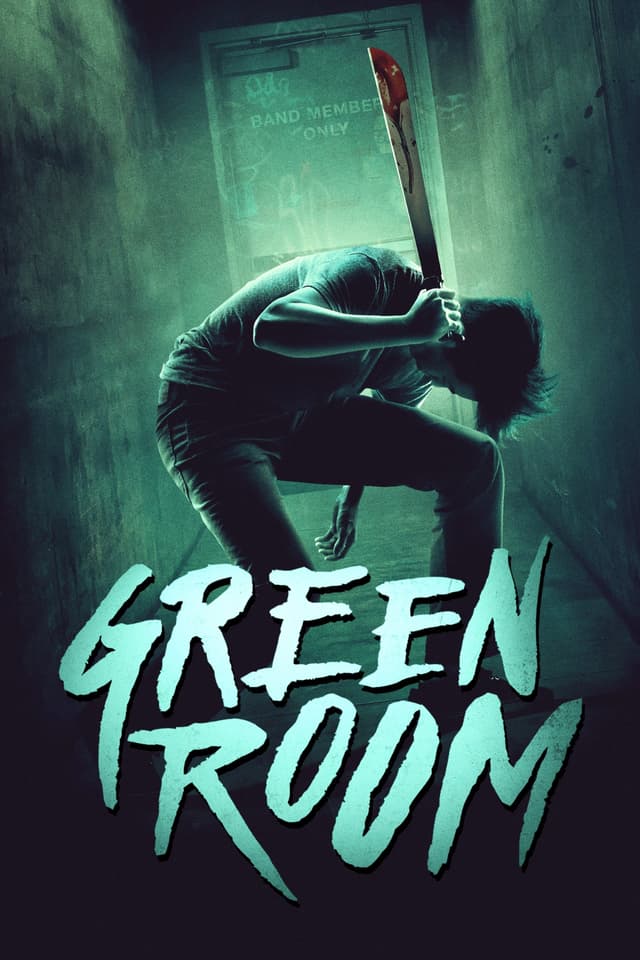
A struggling punk band, the Ain't Rights, takes a last-minute gig at a remote backwoods Oregon venue run by neo-Nazi skinheads, only to witness a murder backstage and find themselves locked inside the green room. As Patrick Stewart's coolly methodical proprietor Darcy Banker organizes a cleanup operation designed to leave no witnesses, the band, joined by a venue regular played by Imogen Poots, fights to survive the night through the building's narrow hallways and exits.
What Is the Budget of Green Room (2016)?
Green Room (2016), directed by Jeremy Saulnier and distributed by A24, was produced on a reported budget of $5,000,000. The figure reflects a deliberate scale-up from Saulnier's previous feature, the Kickstarter-funded Blue Ruin (2013), which was made for roughly $420,000, but it sits firmly within the lean indie tradition that defines A24's genre slate. Broad Green Pictures, Film Science, and Saulnier's longtime producer Anish Savjani financed the production, with key partners including Macon Blair, who served as both producer and supporting actor.
What that $5 million bought was a single-location siege thriller with a recognizable cast, anchored by Anton Yelchin, Patrick Stewart in a rare antagonist role, and Imogen Poots. The money funded a real backwoods Oregon location build, a fight-choreography-intensive shoot constrained to one cramped venue, prosthetic gore effects, and the legal music clearances for the punk soundtrack that drives the opening act. Saulnier and cinematographer Sean Porter optimized every dollar for confined, visceral staging rather than spectacle.
Key Budget Allocation Categories
At $5 million for a single-location ensemble thriller, the production concentrated its spend in a small number of high-impact categories:
- Cast and Above-the-Line Talent: Anton Yelchin, Patrick Stewart, Imogen Poots, Alia Shawkat, Joe Cole, and Callum Turner all worked for indie-scale fees relative to their profiles. Stewart agreed to play neo-Nazi proprietor Darcy Banker after Saulnier sent him the Blue Ruin screenplay and a letter, and the cast roster represented the production's single largest line item.
- Location Build and Production Design: The Ain't Rights' backwoods skinhead venue was a purpose-built set located near Astoria, Oregon. Production designer Ryan Warren Smith constructed the dressing room, hallway, and main stage as a working three-dimensional space, allowing Saulnier to stage continuous tactical movement through the building rather than cut around a partial set.
- Stunt Coordination and Practical Gore: Fight coordinator Larnell Stovall blocked the close-quarters violence, and special effects coordinator Eric Hayser delivered the practical prosthetic work, including the box-cutter forearm injury, attack-dog bites, and a much-discussed shotgun wound. Practical effects carried the violence almost entirely, holding the visual-effects line tight.
- Music Rights and Score: The Ain't Rights perform "Nazi Punks Fuck Off" by Dead Kennedys as deliberate provocation, and the soundtrack draws on Bad Brains, Fear, Poison Idea, and a Brian McOmber score. Punk licensing was negotiated direct with artists and labels, a meaningful cost on a $5 million budget but central to the film's identity.
- Cinematography and Camera Package: Cinematographer Sean Porter shot on the ARRI Alexa with anamorphic lenses to add scope to confined interiors. The camera package, lighting rigs designed for the venue's pre-existing fluorescent and incandescent sources, and steadicam coverage of the hallway choreography accounted for the technical premium on the shoot.
- Production Schedule in Oregon and Portland: Principal photography ran roughly twenty-five days across late 2014 and early 2015 in and around Portland and Astoria, Oregon. Below-the-line crew, lodging for the cast in the Pacific Northwest, weather-cover contingencies, and the practicalities of running a night-heavy shoot in the rainforest climate shaped a meaningful portion of the budget.
- Festival Marketing and Distribution Support: Cannes Directors' Fortnight 2015, Toronto International Film Festival, and the staged North American theatrical rollout through A24 in April 2016 each carried publicity, prints, and travel costs. A24's platform-release model relied on critical word of mouth, which kept marketing spend disciplined.
How Does Green Room's Budget Compare to Similar Films?
Set alongside other Saulnier features, A24 horror, and contained siege thrillers, Green Room's $5 million budget reads as efficiently deployed:
- Blue Ruin (2013): Budget $420,000 | Worldwide $590,000. Saulnier's previous feature was Kickstarter-funded and shot guerrilla-style in Virginia, and Green Room represents a roughly twelvefold scale-up that retained the director's same minimalist sensibility, lean crew approach, and emphasis on practical violence.
- Hold the Dark (2018): Saulnier's Netflix-funded Alaska-set follow-up cost an estimated $13 million, more than double Green Room's spend, and bypassed theatrical entirely. The contrast shows how Saulnier's indie aesthetic scaled into a streaming-era budget without losing his slow-burn, weather-bitten tone.
- The Witch (2015): Robert Eggers' A24 debut cost a reported $4 million and grossed roughly $40 million worldwide, becoming a defining A24 horror release. Green Room arrived at A24 in the same vintage with a comparable budget but pursued a contemporary genre register, illustrating the range of the label's 2015 to 2016 horror slate.
- Hereditary (2018): Ari Aster's family horror was produced for about $10 million and grossed approximately $80 million worldwide, dwarfing Green Room's commercial reach while operating at twice the budget. The two films together bracket A24's mid-2010s investment range in elevated horror.
- Don't Breathe (2016): Fede Álvarez's contained Detroit siege thriller cost roughly $9.9 million and grossed approximately $157 million worldwide, dramatically outperforming Green Room at the box office. Both films released in 2016 and built around a single hostile location, but Don't Breathe's wide release and PG-13-adjacent accessibility delivered a very different commercial outcome.
- You Were Never Really Here (2017): Lynne Ramsay's Joaquin Phoenix-led thriller, also distributed by Amazon Studios, cost a reported $9 million and grossed around $11 million worldwide. The festival-circuit thriller comparison highlights how Green Room's tighter budget and earlier release outperformed an arthouse premium-priced cousin on a per-dollar basis.
Green Room Box Office Performance
A24 opened Green Room in limited release on April 15, 2016, on 3 screens with a per-screen average of $30,055, one of the strongest indie debuts of the spring. The platform expanded over the following weeks to a peak of 564 screens by early May, before contracting through a long tail of art-house and second-run engagements. International distribution rolled out across mid-2016, with Picturehouse Entertainment handling the United Kingdom and additional partners managing Europe, Australia, and Asia.
The available financial breakdown:
Box Office Breakdown
Green Room

At a worldwide theatrical gross of about $4.05 million on a roughly $9 million all-in investment, Green Room returned approximately $0.45 for every $1 spent in theatres. Domestic receipts of $3.22 million accounted for the bulk of the total, with international territories adding roughly $830,000.
Theatrical returns understate the film's commercial life. Strong home-video sales, premium VOD performance, a long Netflix and other SVOD licensing tail, and durable Blu-ray catalog demand have all contributed material revenue since the 2016 release. For A24 the bigger return was reputational: Green Room cemented the label's standing in genre cinema and reinforced the platform model that would deliver larger commercial hits with Hereditary and Midsommar over the following three years.
Green Room Production History
Green Room originated as a Jeremy Saulnier screenplay drafted in parallel with Blue Ruin's post-production, drawing on his teenage experience in the Washington, D.C. hardcore punk scene and a documented incident in which a band he toured with stumbled into a backwoods skinhead venue. Saulnier developed the script around the question of what an ordinary touring band would actually do if they witnessed something they were not supposed to see, and built the dramatic engine from there.
Casting Patrick Stewart was the key creative gamble. Saulnier sent Stewart a copy of Blue Ruin and a letter explaining the role, and Stewart accepted after reading the screenplay despite later admitting he found the material so disturbing he installed a new security system at home. Anton Yelchin signed on as Pat, the bassist for the Ain't Rights, in what would become one of his final completed performances. Imogen Poots cast as Amber, a venue regular who reluctantly aligns with the band, completed the principal trio. Macon Blair, who had carried Blue Ruin, took a key supporting role as Stewart's second-in-command Gabe and produced.
Principal photography began in late 2014 in Oregon, primarily around Portland and the coastal town of Astoria, with the skinhead venue itself constructed as a purpose-built set on a wooded property. Cinematographer Sean Porter shot on the ARRI Alexa with anamorphic lenses, working in tight confines while maintaining geographic clarity through long lateral takes. Fight coordinator Larnell Stovall and special effects coordinator Eric Hayser delivered the practical violence, with prosthetic work on the box-cutter forearm injury, attack-dog wounds, and the shotgun aftermath designed to land at full visceral weight.
Post-production wrapped in spring 2015 in time for a Cannes Directors' Fortnight premiere on May 17, 2015, where the film generated the strongest early genre buzz of the festival. A24 acquired North American distribution, and an extended platform rollout followed through Toronto International Film Festival and Sundance Midnight, building word of mouth ahead of the April 2016 release. Anton Yelchin's death in a freak driveway accident at age twenty-seven on June 19, 2016, two months after the film opened, recast Green Room as a memorial showcase of his work, a status the film has held in the years since.
Awards and Recognition
Green Room earned a string of genre and critics' awards across 2015 and 2016. At the Saturn Awards, the film received nominations for Best Horror Film, Best Director for Jeremy Saulnier, Best Actor for Anton Yelchin, and Best Supporting Actor for Patrick Stewart, recognising the production across categories rather than within a single technical lane.
The film received the Robert Altman Award at the 2017 Independent Spirit Awards, honoring director Jeremy Saulnier, casting director Avy Kaufman, and the full ensemble, a citation reserved for collective performance work. Patrick Stewart received the Empire Award for Best Actor in a Horror, and the film took the Fright Meter Awards for Best Director, Best Original Screenplay, and Best Supporting Actor for Stewart, alongside nominations from the Fangoria Chainsaw Awards. Festival recognition included the Cannes Directors' Fortnight 2015 official selection, Toronto International Film Festival 2015, and Sundance Midnight Madness, with subsequent appearances at Fantastic Fest and other genre showcases.
Critical Reception
Green Room received broad critical acclaim, with a 91 percent approval rating on Rotten Tomatoes based on 270 reviews and an average critic rating of 7.7 out of 10, alongside a Metacritic score of 79 out of 100 from 41 reviews indicating generally favorable reviews. The Rotten Tomatoes critics' consensus described the film as a "lean, queasily effective" thriller that "thrives on Jeremy Saulnier's tightly wound direction" and "a terrifically dark turn by Patrick Stewart."
A. O. Scott in The New York Times praised the film as "a hugely accomplished, tough-minded genre exercise," and Manohla Dargis, also in The Times, called it "a satisfyingly nasty siege movie that's deceptively smart." Variety's Justin Chang wrote that Saulnier "delivers a virtuoso bloodbath" and singled out Patrick Stewart's "magnetically understated" Darcy Banker as a career-shading reinvention. Mark Kermode at The Observer awarded the film four stars and called it a "claustrophobic horror" that confirmed Saulnier as "one of the most exciting genre filmmakers working today."
Audiences gave Green Room a B-minus CinemaScore on opening night, reflecting the gap between hardcore genre devotees and casual ticket buyers caught off guard by the relentless violence. Rotten Tomatoes audience score sits at 71 percent, a more measured response than the critical adulation but consistent with a hard-R thriller that defies easy genre marketing. In the years since the release, the film's reputation has only grown, with multiple critics' polls naming it among the best horror films of the 2010s and the punk-versus-skinheads premise treated as a defining mid-decade A24 statement.
Frequently Asked Questions
How much did it cost to make Green Room (2016)?
Green Room's production budget was reported at $5 million. Financed by Broad Green Pictures and Film Science, the spend funded a backwoods Oregon location build, an ensemble cast led by Anton Yelchin and Patrick Stewart, fight choreography, practical prosthetic gore effects, and punk-music licensing for the soundtrack.
How much did Green Room earn at the box office?
Green Room grossed approximately $4,053,000 worldwide, with about $3,220,000 from the North American theatrical run and roughly $830,000 from international territories. A24 opened the film on April 15, 2016, in 3 theatres with a $30,055 per-screen average before expanding to a peak of 564 screens.
Who directed Green Room?
Jeremy Saulnier wrote and directed Green Room. The film was his follow-up to the Kickstarter-funded Blue Ruin (2013) and marked his largest production to date, scaling roughly twelvefold from Blue Ruin's $420,000 budget while retaining the same lean, practical-violence sensibility.
Where was Green Room filmed?
Green Room was filmed in late 2014 in Oregon, primarily around Portland and the coastal town of Astoria. The skinhead venue itself was constructed as a purpose-built set on a wooded property, allowing director Jeremy Saulnier to stage continuous tactical movement through the building.
Did Green Room premiere at Cannes?
Yes. Green Room premiered at the Cannes Film Festival in the Directors' Fortnight section on May 17, 2015, where it generated the strongest early genre buzz of the festival. The film went on to play Toronto International Film Festival 2015 and Sundance Midnight Madness ahead of its April 2016 theatrical release.
Did Green Room win any awards?
Green Room won the Robert Altman Award at the 2017 Independent Spirit Awards, honoring the director and full ensemble. Patrick Stewart received the Empire Award for Best Actor in a Horror, and the film took multiple Fright Meter Awards including Best Director and Best Original Screenplay. The Saturn Awards nominated the film for Best Horror Film, Best Director, Best Actor for Anton Yelchin, and Best Supporting Actor for Patrick Stewart.
Was Green Room one of Anton Yelchin's final films?
Yes. Green Room was one of Anton Yelchin's final completed performances. He died in a freak driveway accident at age twenty-seven on June 19, 2016, two months after the film opened theatrically, and the picture has since been treated as a defining showcase of his work in independent genre cinema.
How did A24 distribute Green Room?
A24 acquired North American distribution rights and opened Green Room on April 15, 2016, in a 3-theatre platform release before expanding to a peak of 564 screens by early May. The platform model relied on critical word of mouth from the Cannes Directors' Fortnight premiere and Toronto International Film Festival appearance to build commercial momentum.
How did Patrick Stewart get cast in Green Room?
Director Jeremy Saulnier sent Patrick Stewart a copy of Blue Ruin (2013) and a letter explaining the role of neo-Nazi proprietor Darcy Banker. Stewart accepted after reading the Green Room screenplay despite later admitting he found the material so disturbing he installed a new security system at his home during the shoot.
What did critics think of Green Room?
Critics responded with broad acclaim. Green Room holds a 91 percent Rotten Tomatoes approval rating from 270 reviews with an average rating of 7.7 out of 10, and a Metacritic score of 79 out of 100. Reviewers praised the lean direction of Jeremy Saulnier and Patrick Stewart's magnetically understated turn as Darcy Banker, with the film widely cited as one of the best horror titles of the 2010s.
Filmmakers
Green Room

Official Trailer
Build budgets like this one in Saturation
Start from an industry-standard feature film template, import the schedule and rates you already have, and let the cost report keep itself current as you spend. Real-time collaboration, no spreadsheets.