My Soul to Take Budget
 HorrorMystery1h 47m
Updated
Synopsis
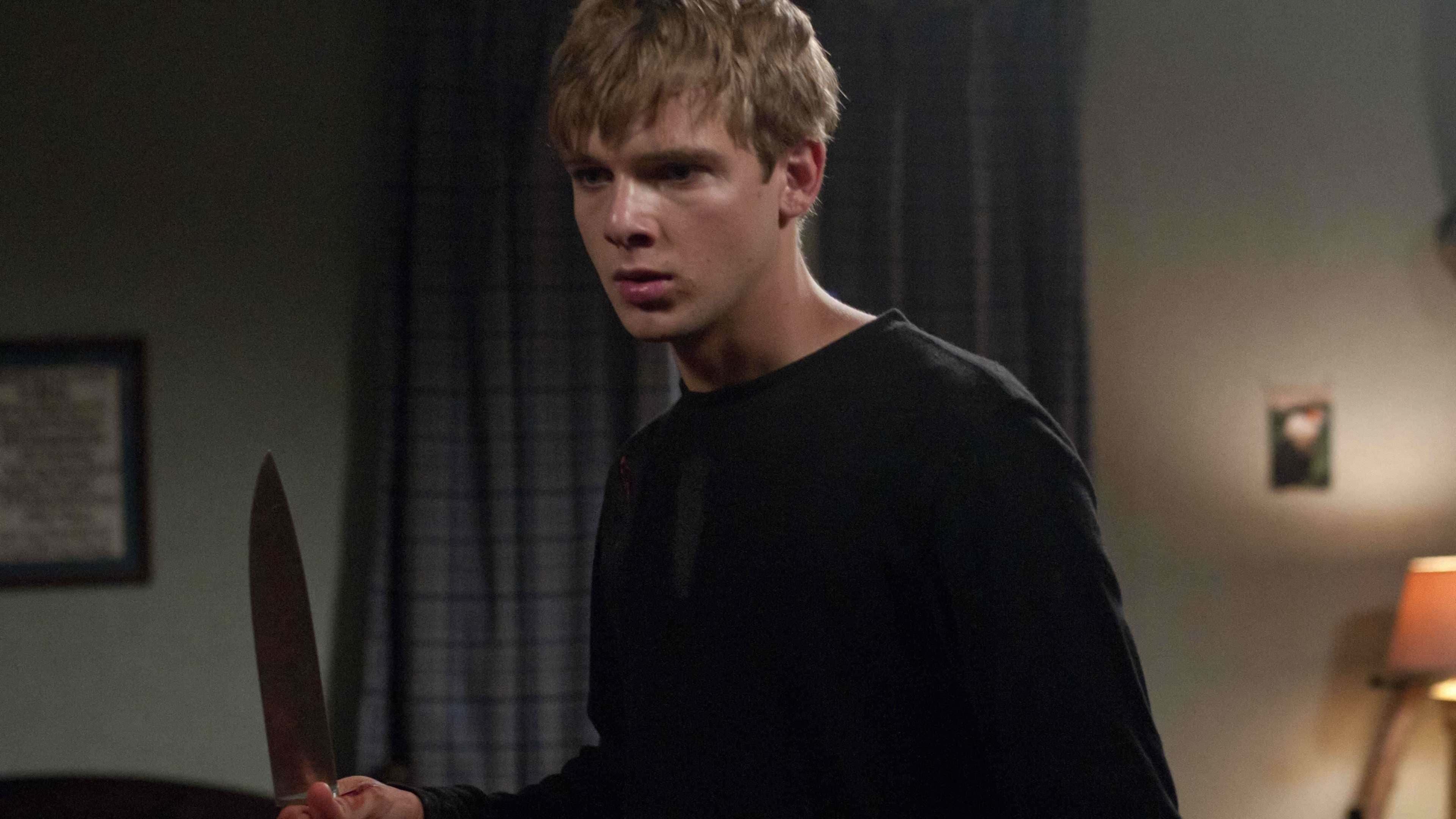
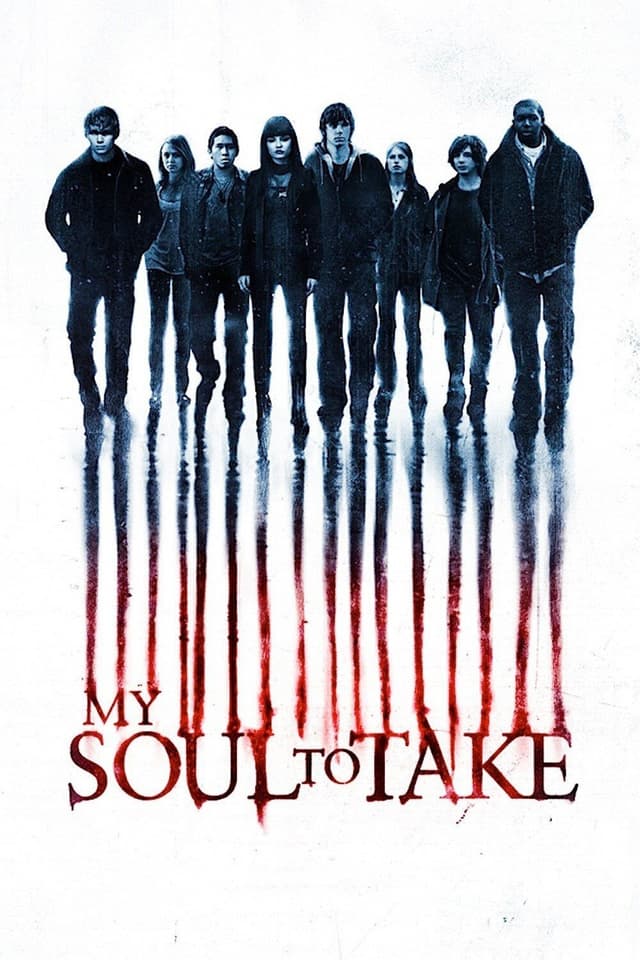
On the night seven children are born in the small town of Riverton, a vicious serial killer known as the Riverton Ripper is killed by police. Sixteen years later, on the anniversary of the killer's death, the seven Riverton teens who share that birthday begin to die one by one, leaving outcast Bug Heyerdahl to discover whether the killer's soul has returned and which of the seven now carries it.
What Is the Budget of My Soul to Take (2010)?
My Soul to Take (2010), produced, written, and directed by Wes Craven and distributed by Rogue Pictures (under Relativity Media), was made on a reported production budget of $25,000,000. The supernatural slasher was financed by Rogue Pictures and Relativity Media, with Craven's Corvus Corax Productions co-producing. It marked the first time Craven had served as sole writer and director on an original feature since Wes Craven's New Nightmare in 1994, and was personally championed as a passion project after his five-year hiatus from directing.
At $25,000,000, the film sat at the upper end of the traditional studio slasher budget range. The math assumed a worldwide gross of roughly $55,000,000 to $65,000,000 once prints and advertising were factored in, a target the film missed by a wide margin when it opened to weak reviews and a record-low 3D debut. The post-production 3D conversion, added to chase the Avatar-driven format boom, contributed several million dollars in additional spend without measurably lifting the opening.
Key Budget Allocation Categories
The $25,000,000 budget was distributed across these core areas:
- Above-the-Line Talent: Wes Craven, coming off Red Eye (2005) and a string of producing credits on The Hills Have Eyes and Last House on the Left remakes, commanded writer/director/producer fees commensurate with his standing as a horror icon. The ensemble of largely unknown young actors, including Max Thieriot, John Magaro, Denzel Whitaker, Emily Meade, Zena Grey, and Nick Lashaway, was deliberately cast at SAG scale or near-scale rates to preserve budget for production design and effects.
- Connecticut and Massachusetts Location Shoot: Principal photography took place primarily in Connecticut, with key sequences at Tolland High School (now Tolland Middle School) in Tolland, Bull's Bridge in Kent, locations across New Milford, and Westhill High School in Stamford. Additional photography occurred in Massachusetts. New England location shooting added travel, lodging, and per-diem costs over a Los Angeles soundstage shoot but anchored the film's small-town Riverton, New Jersey setting.
- Practical Effects and Stunts: The Riverton Ripper kill sequences relied on practical knife effects, prosthetics, and blood gags rather than digital gore, a Craven hallmark dating to the original Last House on the Left. Stunt coordination covered a multi-character chase through the woods, the climactic rooftop confrontation, and the prologue ambulance sequence, each of which required precision blocking and safety rehearsal.
- Production Design: Production designer Adam Stockhausen, who later won an Oscar for The Grand Budapest Hotel, built out the small-town Riverton world with practical school interiors, a hospital ward, and the riverside woodland that frames the seven-births birthday ritual. The serial-killer mythology required period-evocative news clippings, evidence-board props, and a striking demonic-killer costume.
- Score and Soundtrack: Composer Marco Beltrami, a longtime Craven collaborator dating back to Scream (1996), delivered an orchestral and electronic score recorded with a chamber ensemble. Beltrami's fee and the cost of orchestral recording sessions accounted for a meaningful share of the post-production line.
- 3D Post-Conversion: The film was shot in 2D, then post-converted to stereoscopic 3D late in post-production to capitalize on the Avatar-driven 3D theatrical premium. The conversion was contracted to a vendor and reportedly added several million dollars to the back end of the budget, a decision Craven later acknowledged in MTV interviews was added without stereoscopic photography being planned during principal.
- Visual Effects and Color: While the film leaned heavily on practical effects, modest digital work was used for blood enhancement, environmental cleanups, and the supernatural soul-transfer sequences. A digital intermediate finish and full color timing rounded out the post-production line.
How Does My Soul to Take's Budget Compare to Similar Films?
At $25,000,000, My Soul to Take cost roughly five to ten times what most contemporary horror hits spent, and its commercial failure stands out against a comparison set of studio slashers and 2010 horror releases:
- Paranormal Activity 2 (2010): Budget $3,000,000 | Worldwide $177,512,032. Paramount's found-footage sequel, released two weeks after My Soul to Take, cost roughly one eighth as much and earned more than eight times the worldwide gross, exemplifying the micro-budget horror model that was eating the studio slasher's lunch in 2010.
- Saw 3D: The Final Chapter (2010): Budget $20,000,000 | Worldwide $136,151,556. Lionsgate's franchise capper, also released in 3D in October 2010, spent less than My Soul to Take and grossed more than six times as much, demonstrating that a recognizable horror brand drove returns far more than a respected auteur name.
- A Nightmare on Elm Street (2010): Budget $35,000,000 | Worldwide $115,664,236. The Platinum Dunes remake of Craven's own franchise spent 40% more than My Soul to Take and grossed more than five times its worldwide haul earlier in the same year, underscoring that the Craven name on a known property was a different commercial proposition than the Craven name on an original.
- Scream 4 (2011): Budget $40,000,000 | Worldwide $97,170,322. Craven's next directorial effort, released six months after My Soul to Take, cost 60% more and earned roughly 4.5 times the worldwide gross, confirming that audiences would pay for Craven within a familiar franchise but not for an original premise.
- Red Eye (2005): Budget $26,000,000 | Worldwide $96,279,883. Craven's previous original feature, a Wes Craven thriller from DreamWorks, cost roughly the same as My Soul to Take and out-grossed it by more than 4x, illustrating how far Craven's commercial standing on original material fell between 2005 and 2010.
- Insidious (2010): Budget $1,500,000 | Worldwide $99,870,886. James Wan's low-budget supernatural haunt, shot the same year for a fraction of My Soul to Take's budget, became a runaway hit and franchise starter, signaling a generational shift from auteur slasher to producer-led micro-budget horror.
My Soul to Take Box Office Performance
My Soul to Take opened on October 8, 2010 in 2,572 theaters and finished fifth on its opening weekend with $6,842,220, behind The Social Network, Life as We Know It, Secretariat, and Legend of the Guardians: The Owls of Ga'Hoole. The opening set an unwanted record at the time for the lowest debut of a 3D film released to more than 1,500 venues, a particularly painful result given the format premium ticket prices the studio was relying on to lift the gross.
Against a $25,000,000 production budget, the film needed approximately $55,000,000 to $65,000,000 worldwide to reach profitability after marketing and distribution costs. Here is the financial breakdown:
Box Office Breakdown
My Soul to Take

My Soul to Take returned approximately $0.45 in theatrical revenue for every $1 invested when measured against total estimated production and marketing spend, placing it among the most decisive studio horror losses of the 2010 calendar year. The domestic share of the gross was $14,744,435 against an international share of $6,756,378, a 69/31 domestic-heavy split that confirmed the film had no overseas crossover, with Russia/CIS alone contributing $4,211,467 of the foreign total.
The collapse effectively ended Rogue Pictures' tenure as an independent horror brand under Relativity Media, and Craven returned to franchise filmmaking with Scream 4 the following spring rather than continuing to develop original screenplays. The 3D post-conversion strategy was widely criticized in trade press as a cynical bid to lift ticket prices on a film that did not need or benefit from the format, and contributed to the broader 2010-2011 backlash against post-converted 3D releases.
My Soul to Take Production History
Wes Craven began developing My Soul to Take, then titled 25/8 in reference to the killer's claim that he had more lives than the calendar allowed, in 2007 after a five-year break from solo writer/director duties. Craven had spent the intervening years producing remakes of The Hills Have Eyes (2006) and The Last House on the Left (2009) and directing the studio thriller Red Eye (2005), but had not written an original screenplay he directed himself since Wes Craven's New Nightmare in 1994. Rogue Pictures, then the genre division of Universal Studios that had been spun off to Relativity Media in late 2008, financed the project as part of Relativity's push to establish itself as a mid-budget horror producer.
Casting in 2008 leaned heavily on emerging young talent rather than established stars. Max Thieriot, then nineteen and known from The Pacifier and Jumper, was cast as the central role of Bug Heyerdahl. John Magaro, Denzel Whitaker, Emily Meade, Zena Grey, Nick Lashaway, and Paulina Olszynski filled out the seven Riverton teenagers tied by the killer's prophecy, with Frank Grillo, Jessica Hecht, Danai Gurira, and Raúl Esparza in supporting adult roles. Craven told MTV the goal was to build the ensemble around faces that would not yet read as movie stars, so the seven-birth premise would carry the suspense rather than recognizable performers.
Principal photography ran in 2008 across Connecticut and Massachusetts. Key sequences were shot at Tolland High School (now Tolland Middle School) in Tolland, at Bull's Bridge in Kent, across New Milford locations, and at Westhill High School in Stamford. New England exteriors stood in for the fictional small town of Riverton, New Jersey, and the production made extensive use of practical locations rather than soundstage builds. Production designer Adam Stockhausen, several years before his Oscar-winning work for Wes Anderson, built out the school, hospital, and Heyerdahl-home interiors as the central staging grounds.
Post-production stretched into 2009 and early 2010. The most consequential late decision was the conversion of the 2D negative to stereoscopic 3D after the runaway success of Avatar in December 2009 made 3D ticketing the most attractive premium format in exhibition. Craven publicly acknowledged that 3D had not been part of the original photography plan and described the conversion as something the studio added in post to capture the premium ticket. Marco Beltrami, who had scored every Scream film for Craven, delivered an orchestral and electronic score, and the film was released theatrically by Rogue on October 8, 2010, more than two years after the wrap of principal photography.
Awards and Recognition
My Soul to Take received no major awards recognition. It was not nominated at the Saturn Awards, the Fangoria Chainsaw Awards, or any of the horror-genre festival circuits that typically honor work by recognized auteurs like Wes Craven. The film was effectively shut out of the 2010 horror conversation that otherwise lifted Paranormal Activity 2, Insidious, and Let Me In to genre best-of lists.
The film also drew Razzie attention rather than industry honors. It earned a Razzie Award nomination for Worst Eye-Gouging Mis-Use of 3D at the 31st Golden Raspberry Awards in 2011, sharing the dubious category with the post-converted 3D releases Clash of the Titans, The Last Airbender, and Cats & Dogs: The Revenge of Kitty Galore, which ultimately won. The nomination underscored the critical backlash against post-conversion 3D that My Soul to Take had come to symbolize.
Critical Reception
My Soul to Take received some of the worst reviews of Wes Craven's career. The film holds an 11% approval rating on Rotten Tomatoes with a 3.4 out of 10 average critic score, and a critical consensus that called it "dull, joyless, and formulaic" and suggested that Craven's five-year directing hiatus had ended prematurely. On Metacritic, the film scored 25 out of 100, indicating "generally unfavorable reviews," among the lowest scores of any wide-release studio film in October 2010. Audiences surveyed by CinemaScore gave the film a D, an extremely poor result for any wide-release theatrical film and a clear sign of word-of-mouth collapse from the opening night onward.
Critics objected to a convoluted seven-character mythology that delayed the killer reveal, dialogue that veered toward inadvertent comedy, and a pacing problem that left the film's slasher set pieces feeling unmoored from the supernatural premise. Roger Ebert wrote that the film "doesn't make a lick of sense," while Slant Magazine called it "a disappointingly inert piece of work" and faulted Craven for "indulging genre tropes he had earlier helped to reinvent." The New York Times' Mike Hale wrote that the film "lacks any of the elegance or invention of Craven's best work."
In the years since release, the film has undergone a modest critical reappraisal among horror specialists and Craven completists, with some genre publications now characterizing it as one of the more underrated entries in his filmography, particularly for its commitment to practical effects and its willingness to layer supernatural and slasher conventions. The reappraisal has not changed the consensus that the film was a commercial misfire, but it has positioned My Soul to Take alongside Vampire in Brooklyn and Cursed as a Craven curiosity worth revisiting rather than dismissing outright. The film proved to be Craven's penultimate directorial credit before Scream 4 (2011), which would be his final feature before his death in 2015.
Frequently Asked Questions
How much did it cost to make My Soul to Take (2010)?
The reported production budget was $25,000,000. The film was financed by Rogue Pictures and Relativity Media, with Wes Craven's Corvus Corax Productions co-producing. It was Craven's first original screenplay he both wrote and directed since Wes Craven's New Nightmare (1994).
How much did My Soul to Take earn at the box office?
The film grossed $14,744,435 domestically and $6,756,378 internationally, for a worldwide total of $21,500,813. It opened to $6,842,220 in the United States on October 8, 2010, finishing fifth at the domestic box office behind The Social Network, Life as We Know It, Secretariat, and Legend of the Guardians.
Was My Soul to Take a box office bomb?
Yes. Against a $25,000,000 production budget and an estimated $20,000,000 to $25,000,000 in marketing spend, the film returned approximately $0.45 in worldwide gross for every $1 invested. It set a then-record for the lowest opening of a 3D film released in more than 1,500 venues and effectively ended Rogue Pictures' tenure as an independent horror brand under Relativity Media.
Who directed My Soul to Take?
Wes Craven directed the film and also wrote and produced it. It was his first solo writer/director credit on an original feature since Wes Craven's New Nightmare (1994), and his penultimate directorial credit before Scream 4 (2011), which would be his final feature before his death in 2015.
Where was My Soul to Take filmed?
Principal photography took place in 2008 across Connecticut and Massachusetts. Connecticut locations included Tolland High School (now Tolland Middle School) in Tolland, Bull's Bridge in Kent, multiple locations in New Milford, and Westhill High School in Stamford. The New England exteriors stood in for the fictional small town of Riverton, New Jersey.
Was My Soul to Take shot in 3D?
No. The film was shot in 2D and post-converted to stereoscopic 3D late in post-production to capture the Avatar-driven 3D ticket premium. Wes Craven acknowledged in interviews that 3D had not been planned during principal photography. The conversion was widely criticized in trade press as a cynical cash grab and earned the film a Razzie nomination for Worst Eye-Gouging Mis-Use of 3D.
How does My Soul to Take compare to Wes Craven's other films?
My Soul to Take grossed $21,500,813 worldwide against a $25,000,000 budget, far below Craven's previous original Red Eye (2005), which earned $96,279,883 on a $26,000,000 budget. His follow-up Scream 4 (2011) grossed $97,170,322 on a $40,000,000 budget, confirming Craven's commercial appeal had migrated to franchise material. My Soul to Take is among the lowest-grossing of his major studio releases.
Who stars in My Soul to Take?
The ensemble was led by Max Thieriot as Bug Heyerdahl, with John Magaro, Denzel Whitaker, Emily Meade, Zena Grey, Nick Lashaway, and Paulina Olszynski as the seven Riverton teenagers tied by the Ripper's prophecy. Frank Grillo, Jessica Hecht, Danai Gurira, and Raúl Esparza appeared in supporting adult roles. The cast was deliberately built around emerging young actors rather than established stars.
What did critics think of My Soul to Take?
The film received some of the worst reviews of Wes Craven's career. It holds an 11% approval rating on Rotten Tomatoes with a 3.4 out of 10 average and a 25 out of 100 score on Metacritic. Audiences gave it a D CinemaScore, an extremely poor result for any wide-release theatrical film. Critics objected to a convoluted mythology, dialogue that veered toward inadvertent comedy, and a slasher premise that never cohered with the supernatural element.
Who composed the score for My Soul to Take?
Marco Beltrami composed the score. Beltrami was a longtime Wes Craven collaborator dating back to Scream (1996) and had scored every Scream film, as well as Red Eye, The Hills Have Eyes (2006), and Cursed. He delivered an orchestral and electronic score recorded with a chamber ensemble for the Riverton Ripper mythology.
Filmmakers
My Soul to Take

Official Trailer
Build budgets like this one in Saturation
Start from an industry-standard feature film template, import the schedule and rates you already have, and let the cost report keep itself current as you spend. Real-time collaboration, no spreadsheets.