You Were Never Really Here Budget
 CrimeDramaThriller1h 29m
Updated
Synopsis
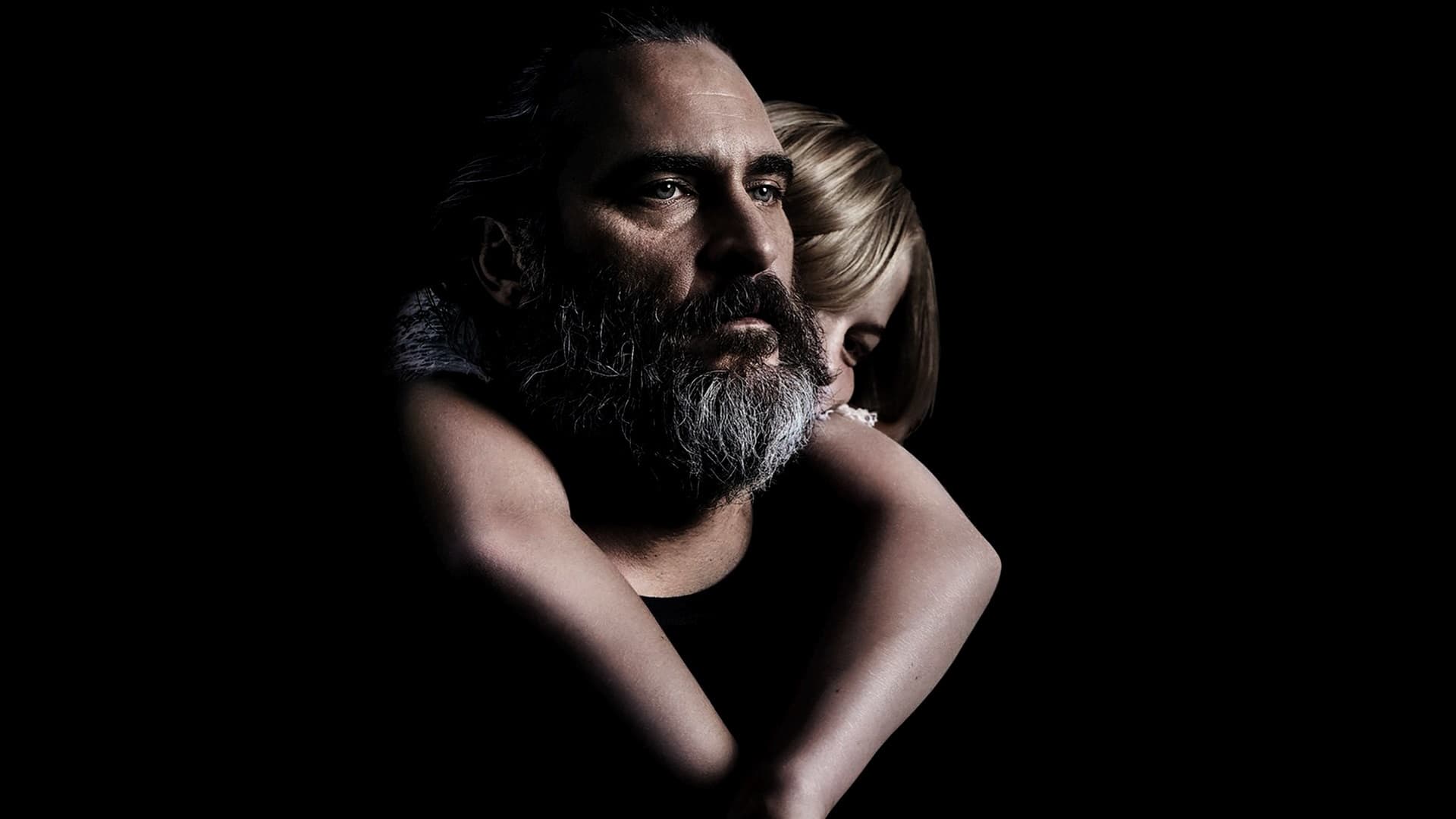
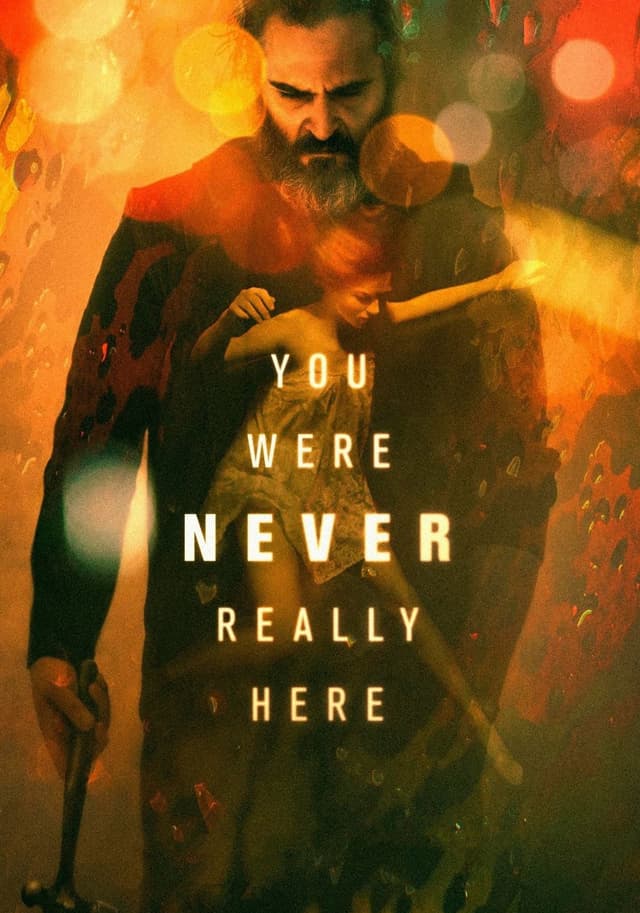
A traumatized veteran, unafraid of violence, tracks down missing girls for a living. When a job spins out of control, his nightmares begin to overtake him, and a conspiracy is uncovered—leading to what may be his death trip or his awakening.
What Is the Budget of You Were Never Really Here?
You Were Never Really Here was produced for an estimated $3.5 million, placing it firmly in micro-budget territory for a film that premiered in competition at the Cannes Film Festival. Director Lynne Ramsay secured financing through a combination of Film4, Why Not Productions, and Amazon Studios, which also handled North American distribution. The lean budget reflected Ramsay's intentional approach: stripping the story down to its most visceral essentials rather than building out large-scale action sequences.
For context, $3.5 million in 2017 was roughly equivalent to two days of shooting on a mid-range studio thriller. Ramsay used that constraint as a creative advantage, relying on Joaquin Phoenix's physical performance, Jonny Greenwood's dissonant score, and Tom Townend's handheld cinematography to carry scenes that a bigger production might have padded with dialogue or spectacle. The result was a 90-minute film that felt more dangerous and immediate than most movies made for fifty times the price.
Key Budget Allocation Categories
- Above-the-Line Talent accounted for the largest single expense. Joaquin Phoenix commanded a reduced fee to work with Ramsay, but his salary, along with writer-director compensation and producer fees, still consumed a significant share of the $3.5 million budget.
- Production Design and Locations kept costs low by shooting primarily in practical New York City locations. Production designer Tim Grimes transformed real apartments, bodegas, and residential streets into the film's claustrophobic world, avoiding expensive set construction.
- Cinematography and Camera relied on handheld digital work from Tom Townend, shooting on location with natural and minimal supplemental lighting. This approach compressed the shooting schedule and eliminated the need for large grip and electric departments.
- Music and Score was composed by Jonny Greenwood, who had previously scored several Paul Thomas Anderson films. Greenwood's fee and the recording sessions represented a notable line item, but the score's unconventional instrumentation kept orchestra costs below what a traditional thriller score would require.
- Post-Production and Editing was where Ramsay spent considerable creative time. The film's elliptical structure required extensive editing experimentation under editor Joe Bini, with the final cut running just 89 minutes despite months in the editing room.
- Stunt Coordination and Practical Effects remained minimal despite the film's violent subject matter. Ramsay deliberately kept most violence off-screen or glimpsed in fragments, which reduced the need for elaborate stunt rigs, prosthetics, or digital effects work.
How Does You Were Never Really Here's Budget Compare to Similar Films?
- Taxi Driver (1976) had a $1.9 million budget (roughly $9 million adjusted for inflation), making it a close spiritual and financial cousin. Both films follow a traumatized loner through New York City's underworld, and both relied on a single star performance over expensive action.
- Drive (2011) cost $15 million, more than four times Ramsay's budget. Nicolas Winding Refn's stylized thriller shared the minimalist dialogue approach but spent considerably more on car sequences, stunt work, and Los Angeles production costs.
- Blue Ruin (2013) was made for under $1 million through crowdfunding and ran a lean crew. Jeremy Saulnier's revenge thriller proved the genre could work at even lower budgets, though it lacked the star power and festival positioning that Phoenix brought to Ramsay's film.
- A Beautiful Day in the Neighborhood (2019) cost $25 million, illustrating the premium that Phoenix's post-Oscar profile could command. You Were Never Really Here caught him at a moment when he was deliberately seeking smaller, riskier projects between larger studio commitments.
- Sicario (2015) had a $30 million budget for Denis Villeneuve's cartel thriller. The comparison highlights how much scale separates a studio-backed genre film from an independent one tackling similarly dark subject matter with a fraction of the resources.
You Were Never Really Here Box Office Performance
You Were Never Really Here earned $2,498,801 domestically and $9,242,897 worldwide against its $3.5 million production budget. Using the standard 2x multiplier to account for prints and advertising, the film needed roughly $7 million to break even theatrically. Its worldwide total of $9.2 million cleared that threshold, making it a modest theatrical success before ancillary revenues.
The film opened in limited release on April 6, 2018, expanding slowly through art house circuits. Amazon Studios handled North American distribution, positioning it as a prestige release rather than a wide commercial play. The domestic gross of $2.5 million reflected that narrow rollout, but strong per-screen averages in its opening weekends demonstrated concentrated demand among cinephiles and Phoenix fans.
The ROI calculation: ($9,242,897 worldwide gross minus $3,500,000 budget) divided by $3,500,000, multiplied by 100, yields an approximate 164% return on investment on production costs alone. Streaming revenue through Amazon Prime Video, where the film found a substantial second life, likely pushed overall returns well beyond what the theatrical numbers suggest. For a $3.5 million art house thriller, these numbers represent a clear financial win.
Box Office Breakdown
You Were Never Really Here

You Were Never Really Here Production History
Lynne Ramsay first optioned Jonathan Ames's 2013 novella shortly after its publication, drawn to its terse, interior narration and its protagonist Joe, a traumatized Gulf War veteran turned hired rescuer of trafficked children. Ramsay had not directed a feature since We Need to Talk About Kevin in 2011, and the six-year gap was partly due to her acrimonious departure from the Jane Got a Gun production in 2013, where she left the set on the first day of shooting over creative differences with producer Scott Steindorff. You Were Never Really Here became her comeback.
Joaquin Phoenix signed on after reading Ramsay's screenplay adaptation, which compressed Ames's already slim novella into an even more elliptical structure. Phoenix reportedly took a significant pay cut to make the project viable at its budget level. He prepared for the role by gaining weight and studying PTSD behavior, building Joe's physicality through small gestures: the way he holds a hammer, the way he covers his head with a plastic bag in moments of self-destructive impulse.
Principal photography took place over 29 days in New York City during the fall of 2016. Tom Townend shot on location with a small crew, often in real apartments and storefronts. Ramsay encouraged improvisation and kept setups loose, sometimes repositioning the camera mid-take to follow Phoenix as he moved through spaces. The cramped, observational style was intentional: Ramsay wanted the audience pressed up against Joe's experience, never given the comfortable distance of a conventional thriller.
Post-production stretched longer than the shoot. Editor Joe Bini, who had cut several Werner Herzog documentaries, worked with Ramsay to find the film's rhythm. Entire sequences were removed or reduced to single shots. A pivotal scene of violence in a house was recut so that the audience sees it only through security camera footage, a decision that defined the film's radical approach to depicting brutality. Jonny Greenwood composed the score concurrently, layering percussive textures and string dissonance that underscored Joe's fractured mental state.
Awards and Recognition
You Were Never Really Here premiered in competition at the 2017 Cannes Film Festival, where it won two of the festival's top prizes. Joaquin Phoenix received the Best Actor award, and Lynne Ramsay won Best Screenplay. Phoenix notably did not attend the ceremony, and Ramsay accepted both prizes. The dual win was a significant validation for a film that many had considered too abrasive for mainstream festival recognition.
Beyond Cannes, the film earned nominations from the British Independent Film Awards, where Ramsay was nominated for Best Director. It appeared on over 60 year-end top ten lists from major critics and publications, including Sight & Sound, Cahiers du Cinema, and the National Board of Review. The National Board of Review named Ramsay's screenplay among the year's best original screenplays, and several critics' circles recognized Phoenix's performance as one of the finest of 2018.
The film's awards trajectory was limited by its April 2018 release date, which placed it outside the typical Oscar-season window. Amazon Studios did not mount a significant Academy Awards campaign, choosing instead to let the Cannes laurels and critical reputation drive awareness. Despite the lack of Oscar nominations, the film cemented Ramsay's standing as one of the most distinctive directors working in English-language cinema and confirmed Phoenix's willingness to prioritize artistic ambition over commercial calculation.
Critical Reception
You Were Never Really Here holds an 89% approval rating on Rotten Tomatoes based on 228 reviews, with a critics' consensus praising its "artfully brutal approach." On Metacritic, the film scored 82 out of 100, indicating "universal acclaim." Critics consistently highlighted the tension between the film's genre framework and Ramsay's art-house sensibility as its defining achievement.
Reviewers singled out Phoenix's performance as a career highlight, noting how much he communicated through silence and physicality rather than dialogue. Peter Bradshaw in The Guardian called it "a delirious hallucinatory nightmare of paranoia and rage," while A.O. Scott in The New York Times described the film as "a series of jolts, shocks, and tremors, a series of moments that feel both inevitable and utterly surprising." Manohla Dargis praised Ramsay's ability to "compress a world of pain into 89 minutes without a wasted frame."
Some critics found the film's elliptical storytelling frustrating, arguing that Ramsay's fragmented approach made it difficult to fully engage with the narrative or its supporting characters. A minority felt that the violence, while stylistically restrained, still relied too heavily on the suffering of young women as a plot mechanism. These critiques were present but distinctly outnumbered by praise for the film's formal daring, its refusal to explain or sentimentalize, and Ramsay's confidence in trusting the audience to fill in what the camera refused to show.
Frequently Asked Questions
How much did it cost to make You Were Never Really Here (2017)?
The production budget was $17,000,000, covering principal photography, cast and crew salaries, locations, sets, post-production, and music. Marketing and distribution (P&A) costs are estimated at an additional $8,500,000 - $13,600,000, bringing the total studio investment to approximately $25,500,000 - $30,600,000.
How much did You Were Never Really Here (2017) earn at the box office?
You Were Never Really Here grossed $2,528,078 domestic, $6,871,922 international, totaling $9,400,000 worldwide.
Was You Were Never Really Here (2017) profitable?
The film did not break even theatrically, earning $9,400,000 against an estimated $42,500,000 needed. Ancillary revenue may have improved the picture.
What were the biggest costs in producing You Were Never Really Here?
The primary cost drivers were above-the-line talent (Joaquin Phoenix, Judith Roberts, Ekaterina Samsonov); talent compensation, location cinematography, and tension-driven editorial; international production across United Kingdom, France.
How does You Were Never Really Here's budget compare to similar crime films?
At $17,000,000, You Were Never Really Here is classified as a low-budget production. The median budget for wide-release crime films in the 2010s ranges from $30 - 80M for mid-budget to $150M+ for tentpoles. Comparable budgets: Away We Go (2009, $17,000,000); Deuce Bigalow: Male Gigolo (1999, $17,000,000); Jeepers Creepers 2 (2003, $17,000,000).
Did You Were Never Really Here (2017) go over budget?
There are no widely reported accounts of significant budget overruns for this production. However, studios rarely disclose precise budget overrun figures publicly. The reported production budget reflects the final estimated cost.
What was the return on investment (ROI) for You Were Never Really Here?
The theatrical ROI was -44.7%, calculated as ($9,400,000 − $17,000,000) ÷ $17,000,000 × 100. This measures gross revenue against production budget only - it does not account for P&A or exhibitor shares.
What awards did You Were Never Really Here (2017) win?
Nominated for 1 BAFTA Award24 wins & 78 nominations total.
Who directed You Were Never Really Here and who were the key crew members?
Directed by Lynne Ramsay, written by Lynne Ramsay, shot by Thomas Townend, with music by Jonny Greenwood, edited by Joe Bini.
Where was You Were Never Really Here filmed?
You Were Never Really Here was filmed in United Kingdom, France.
Filmmakers
You Were Never Really Here

Official Trailer
Build budgets like this one in Saturation
Start from an industry-standard feature film template, import the schedule and rates you already have, and let the cost report keep itself current as you spend. Real-time collaboration, no spreadsheets.