Zombieland Budget
 ComedyHorror1h 27m
Updated
Synopsis
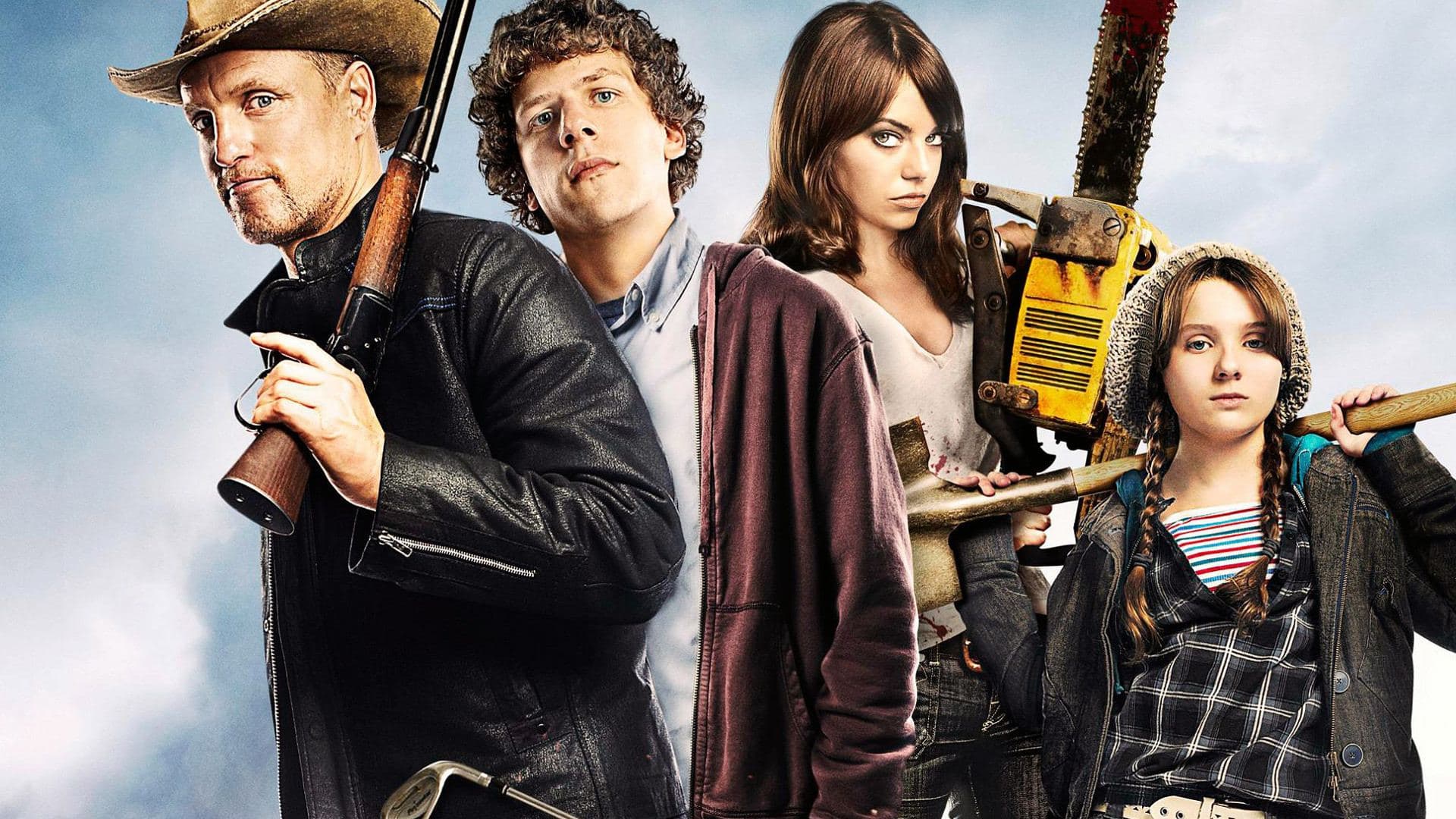
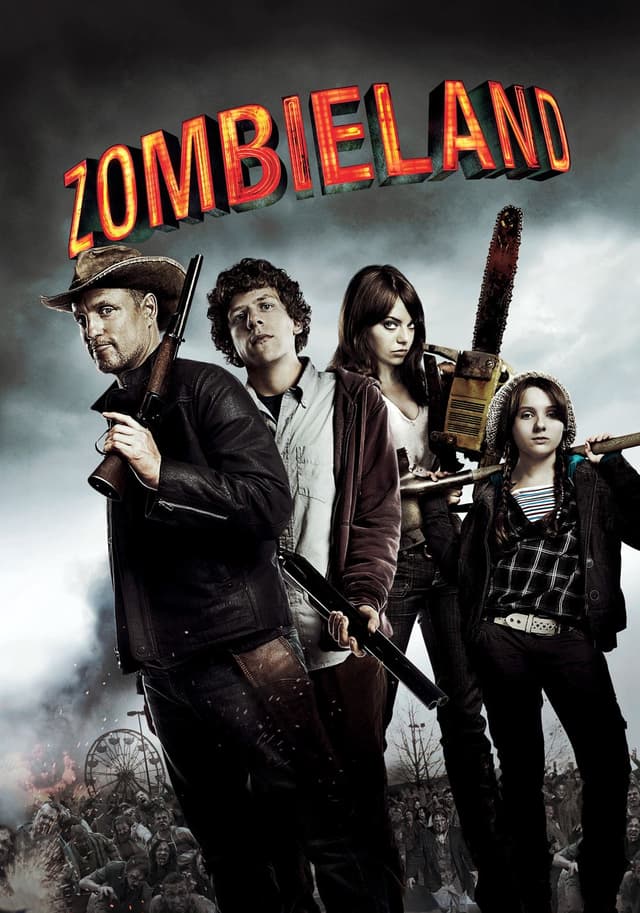
In a post-apocalyptic world overrun by zombies, "Zombieland" follows the journey of a timid college student known as Columbus, who has managed to survive by adhering to a strict set of survival rules. His solitary existence takes a turn when he encounters the tough and resourceful Tallahassee, who is on a quest to find the last remaining Twinkie. Together, they form an unlikely duo, navigating the dangers of the undead while searching for safety. Along the way, they meet two cunning sisters, Wichita and Little Rock, who have their own agenda. As they face hordes of zombies and their own personal challenges, the group learns the importance of friendship, trust, and the occasional laugh in a world gone mad. With a blend of horror and comedy, "Zombieland" delivers a unique take on the zombie genre, filled with memorable characters and witty one-liners.
What Is the Budget of Zombieland (2009)?
Zombieland (2009) was produced on a budget of approximately $23.6 million, financed and distributed by Columbia Pictures, a division of Sony Pictures. The figure is a lean allocation for a commercially ambitious zombie comedy with a recognizable ensemble cast, practical special effects makeup, and a nationwide road-trip premise spanning multiple filming locations across Georgia. For a film that ultimately earned $102.4 million worldwide, the budget represented an exceptional investment decision by Sony.
The project originated in 2005 as a spec script written by Rhett Reese and Paul Wernick as a television pilot. When the television format did not sell, Reese and Wernick rewrote the material as a self-contained feature film, stripping the episodic structure and concentrating the narrative into a single road-trip arc. Director Ruben Fleischer, who came from a background in music videos and television commercials, was hired for what would be his feature directorial debut. Producer Gavin Polone, who had produced Panic Room (2002) and Gilmore Girls for television, championed the project at Sony.
Sony greenlit the film at a budget level consistent with a mid-range genre film, a decision the studio was comfortable with given the relatively contained shooting schedule of 41 days and Georgia's emerging tax incentive program, which significantly reduced below-the-line costs. The film opened on October 2, 2009, to a $24.7 million opening weekend and held strong through October, becoming the number one film in America on its debut weekend.
Key Budget Allocation Categories
- Cast and Above-the-Line Talent: Woody Harrelson led the film as Tallahassee, a Twinkie-obsessed zombie hunter, with Jesse Eisenberg as the rules-driven Columbus, Emma Stone as the resourceful Wichita, and Abigail Breslin as her younger sister Little Rock. Bill Murray appeared in a celebrated cameo as himself, improvising most of his scenes with Harrelson; Murray was brought in approximately one week before filming after the original casting fell through. Above-the-line talent across the ensemble likely consumed $10 to $12 million of the total budget, with Harrelson carrying the largest individual fee as the most established star at the time of production.
- Special Effects Makeup: Tony Gardner, whose credits include Michael Jackson's "Thriller" music video and Hocus Pocus (1993), was hired as the film's special effects makeup designer. Gardner's approach centered on fully practical prosthetics for the zombie horde, avoiding CGI enhancement in favor of physical foam latex applications, contact lenses, and specialized wound makeup. The practical approach was a deliberate stylistic choice by Fleischer and the producers, and Gardner's team applied makeup to dozens of background performers per shooting day across the 41-day schedule. The zombie transformation work represented a meaningful allocation of the film's below-the-line budget.
- Georgia Tax Incentives and Location Savings: Principal photography took place almost entirely in Georgia, with the state's film tax credit program providing substantial savings compared to a California or New York shoot. Atlanta doubled for multiple American cities: downtown Atlanta's Edgewood Avenue served as urban post-apocalyptic environments, Atlanta Motor Speedway in Hampton stood in for the highway rest stop, and the Bill Murray mansion sequence was filmed at 490 West Paces Ferry Road in the Argonne Forest suburb of Atlanta. The film's climactic Pacific Playland amusement park sequence was shot at Wild Adventures Water and Theme Park in Valdosta, Georgia, with Netherworld Haunted House outside Atlanta providing the interior.
- Digital Camera and Practical Production: Zombieland was shot digitally on the Panavision Genesis camera, an early professional digital cinema platform that allowed the production to move quickly and shoot long takes without the cost and logistics of film stock. Cinematographer Michael Bonvillain, who had shot Cloverfield (2008), used the digital format to capture the kinetic energy of the zombie action sequences and the film's moments of physical comedy. The digital-first approach, combined with the Georgia tax incentives, helped keep below-the-line costs well within the budget envelope.
- Music and Soundtrack: David Sardy composed the film's original score, a blend of rock-inflected orchestral cues and contemporary tracks suited to the film's irreverent tone. The soundtrack was released by Relativity Music on October 6, 2009. The needle-drop use of established rock tracks throughout the film, including for the opening credits sequence, required synchronization licensing fees that added to the music budget beyond Sardy's score commission. Metallica's music appears prominently in the film, representing a recognizable and expensive licensing decision.
How Does Zombieland's Budget Compare to Similar Films?
At $23.6 million, Zombieland sits at the efficient end of Hollywood studio comedies with genuine star power. Its $102.4 million worldwide gross on that budget made it one of the better-performing genre films of 2009, and its ROI compares favorably to contemporaries at similar budget levels in horror-comedy and action-comedy.
- Shaun of the Dead (2004): Budget $8M | Worldwide $30M. Edgar Wright and Simon Pegg's British zom-com is Zombieland's most obvious tonal predecessor, made for roughly one-third the budget and earning roughly one-third the gross. Zombieland's larger Hollywood production scale brought in a star cast and broader distribution, translating directly into significantly greater commercial reach.
- 28 Days Later (2002): Budget $8M | Worldwide $82.7M. Danny Boyle's UK zombie thriller earned nearly as much as Zombieland worldwide on a fraction of the budget, demonstrating the commercial potential of the zombie genre for adult audiences before Zombieland proved the comedy variant could perform at mainstream theatrical scale.
- Superbad (2007): Budget $20M | Worldwide $169.9M. The Judd Apatow-produced R-rated comedy opened two years before Zombieland and at a comparable budget delivered dramatically more at the box office, largely on the strength of its younger ensemble. Zombieland's gross of $102 million is strong but illustrates the ceiling difference between a straight comedy and a niche genre-comedy hybrid for the same investment.
- Zombieland: Double Tap (2019): Budget $42M | Worldwide $122.8M. The direct sequel, made ten years later with the original ensemble reunited, cost nearly twice as much and earned only $20 million more worldwide. The comparison illustrates both the inflation in above-the-line talent costs as the ensemble's careers advanced and the diminishing returns of sequels to cult hits when the novelty of the original has been absorbed by the culture.
Zombieland Box Office Performance
Zombieland earned $102.4 million worldwide: $75.6 million at the domestic box office and $26.6 million internationally. Columbia Pictures released the film on October 2, 2009, in 3,036 US theaters, where it opened to $24.7 million, finishing first at the domestic box office and setting a record at the time for the highest-grossing opening weekend for a zombie film. It held well in subsequent weekends, benefiting from strong audience word-of-mouth and the Halloween corridor driving sustained horror-adjacent traffic through October.
Against a $23.6 million production budget and an estimated $20 million in prints and advertising for a genre release, total investment was approximately $43.6 million. With theaters retaining roughly 50 percent of ticket sales, Columbia's share of worldwide theatrical gross was approximately $51.2 million. The film comfortably cleared break-even from theatrical revenue alone, returning a meaningful profit before home video, television rights, and digital rentals were factored in. Zombieland was released on DVD and Blu-ray on January 5, 2010, and performed strongly in the home market.
Box Office Breakdown
Zombieland

For every $1 invested in production, Zombieland earned approximately $4.34 in worldwide theatrical gross, one of the strongest returns among all studio horror releases of 2009. The film's domestic performance was particularly strong, with the $75.6 million domestic gross representing more than 70 percent of its worldwide total, reflecting the film's deeply American cultural references and its resonance with US audiences in the immediate aftermath of the 2008 financial crisis.
Zombieland Production History
Rhett Reese and Paul Wernick began writing Zombieland in 2005 as a spec script for a television pilot, conceived as a serialized road-trip across a zombie-infested America. When the television format did not attract a buyer, the pair rewrote the material as a self-contained feature film, compressing the episodic premise into a single journey from Texas to Los Angeles. Ruben Fleischer was hired to direct in his feature debut, bringing a music video director's instinct for kinetic pacing and visual wit. Producer Gavin Polone, working with Columbia Pictures, shepherded the project into production. The script attracted Woody Harrelson and Jesse Eisenberg early; Emma Stone and Abigail Breslin completed the ensemble.
Principal photography began in February 2009 in Hollywood, California, before moving to Georgia, where the production was based for the majority of the 41-day shoot. The Georgia Tax Credit, which offered up to 30 percent on in-state production expenditures, was a significant factor in the location decision. Filming took place across Atlanta, Hapeville, Morrow, Decatur, Newnan, and Powder Springs through March 2009. The production used Atlanta's existing urban environments extensively: downtown Atlanta's Edgewood Avenue at Park Place NE stood in for the post-apocalyptic cityscape of Columbus's survival sequences, and Atlanta Motor Speedway in Hampton served as the highway rest stop set.
The climactic Pacific Playland amusement park sequence required the most elaborate on-location work in the film. Wild Adventures Water and Theme Park in Valdosta, Georgia, provided the exterior theme park environment, while Netherworld Haunted House outside Atlanta supplied the interior haunted house set. The production built a purpose-made haunted house facade at Wild Adventures for the sequence. Cinematographer Michael Bonvillain shot on the Panavision Genesis digital camera throughout, giving the film a kinetic, almost documentary quality during action sequences. Special effects makeup designer Tony Gardner applied fully practical prosthetics to the zombie performers each shooting day, avoiding CGI zombie creation in favor of physical makeup craft.
Bill Murray's cameo as himself was a late addition to the production. The actor originally cast in the role dropped out approximately one week before the sequence was scheduled to shoot; Woody Harrelson made a phone call, and Murray agreed to participate. Murray improvised much of his dialogue with Harrelson, including the Ghostbusters references and the moment where Columbus accidentally shoots him while mistaking him for a zombie. The cameo became one of the most celebrated surprise appearances in modern comedy film history. Zombieland premiered at Fantastic Fest in Austin, Texas, on September 25, 2009, and opened wide on October 2.
Awards and Recognition
Zombieland received significant genre awards recognition and strong nominations across the horror and comedy categories. At the Saturn Awards (Academy of Science Fiction, Fantasy and Horror Films), the film earned nominations for Best Horror Film and Best Supporting Actor for Woody Harrelson. The film's blend of comedy and horror made it a strong contender in the genre space where mainstream awards rarely reach.
At the MTV Movie Awards, Zombieland received a nomination for Best WTF Moment for the Bill Murray cameo sequence, a nomination that reflected the cultural impact of the appearance. The Critics Choice Award committee nominated the film for Best Comedy Movie in 2010. Woody Harrelson's performance as Tallahassee was consistently cited as the film's standout acting achievement across multiple critics' groups and awards bodies.
The film holds an 89 percent approval rating on Rotten Tomatoes based on 259 critic reviews, with an audience score of 87 percent. Critics and audience reception aligned on the film's comedic energy, the chemistry of the ensemble, and the sustained invention of the "rules of survival" premise. Zombieland has since become a touchstone of the zombie-comedy subgenre and is regularly cited alongside Shaun of the Dead as a defining film in that tradition. The film's cultural influence extended to a 2013 Amazon pilot for a Zombieland television series, with the original cast returning, though the series was not picked up to full season. A theatrical sequel, Zombieland: Double Tap, was released in October 2019, a decade after the original.
Critical Reception
Zombieland holds an 89 percent approval rating on Rotten Tomatoes based on 259 reviews, with a critical consensus that reads: "Zombieland is a hilariously raucous horror comedy, elevated by strong performances and impressive style." Metacritic scores the film at 73 out of 100 based on 31 critic reviews, placing it in the "generally favorable" category. The IMDb user rating is 7.5 out of 10, reflecting strong and lasting audience affection.
Stephanie Zacharek of Salon described the film as "beautifully paced," praising Fleischer's ability to sustain the film's tonal balance between genuine zombie horror and physical comedy. Claudia Puig of USA Today noted that "underlying the carnage in Zombieland is a sweetly beating heart," pointing to the surrogate-family dynamic between the four leads as the film's emotional core. Cinematographer Michael Bonvillain was specifically praised by several critics for "transforming the destruction of a souvenir shop into a rough ballet," a reference to a mid-film sequence that became emblematic of the film's visual wit.
Woody Harrelson's performance received the most consistent critical praise, with reviewers noting that his physical commitment to Tallahassee's manic energy gave the film its primary comedic motor. Emma Stone, who had appeared in Superbad (2007) but had not yet broken through to leading-lady status, was recognized as a breakout performance: her timing and chemistry with Eisenberg established her as a major comedy performer. The Bill Murray cameo was almost universally cited as the film's comic peak, with many critics calling it one of the funniest surprise appearances in modern cinema. Roger Ebert gave the film three out of four stars, calling it "a fresh and fizzling entertainment" and praising the ensemble's collective rhythm.
Frequently Asked Questions
How much did it cost to make Zombieland (2009)?
The production budget was $23,600,000, covering principal photography, cast and crew salaries, locations, sets, post-production, and music. Marketing and distribution (P&A) costs are estimated at an additional $11,800,000 - $18,880,000, bringing the total studio investment to approximately $35,400,000 - $42,480,000.
How much did Zombieland (2009) earn at the box office?
Zombieland grossed $75,590,286 domestic, $26,801,254 international, totaling $102,391,540 worldwide.
Was Zombieland (2009) profitable?
Yes. Against a production budget of $23,600,000 and estimated total costs of ~$59,000,000, the film earned $102,391,540 theatrically - a 334% ROI on production costs alone.
What were the biggest costs in producing Zombieland?
The primary cost drivers were above-the-line talent (Jesse Eisenberg, Woody Harrelson, Emma Stone); star comedian salaries, location filming, and aggressive marketing campaigns.
How does Zombieland's budget compare to similar comedy films?
At $23,600,000, Zombieland is classified as a low-budget production. The median budget for wide-release comedy films in the 2000s ranges from $30 - 80M for mid-budget to $150M+ for tentpoles. Comparable budgets: Princess Mononoke (1997, $23,500,000); Double Take (2001, $24,000,000); Faster (2010, $24,000,000).
Did Zombieland (2009) go over budget?
There are no widely reported accounts of significant budget overruns for this production. However, studios rarely disclose precise budget overrun figures publicly. The reported production budget reflects the final estimated cost.
What was the return on investment (ROI) for Zombieland?
The theatrical ROI was 333.9%, calculated as ($102,391,540 − $23,600,000) ÷ $23,600,000 × 100. This measures gross revenue against production budget only - it does not account for P&A or exhibitor shares.
What awards did Zombieland (2009) win?
10 wins & 29 nominations total.
Who directed Zombieland and who were the key crew members?
Directed by Ruben Fleischer, written by Rhett Reese, Paul Wernick, shot by Michael Bonvillain, with music by David Sardy, edited by Peter Amundson, Alan Baumgarten.
Where was Zombieland filmed?
Zombieland was filmed in United States of America.
Filmmakers
Zombieland

Official Trailer
Build budgets like this one in Saturation
Start from an industry-standard feature film template, import the schedule and rates you already have, and let the cost report keep itself current as you spend. Real-time collaboration, no spreadsheets.