Finishing the Game Budget
 Comedy1h 24m
Updated
Synopsis
In 1973, Bruce Lee dies with his final film "Game of Death" unfinished, and a panicked Hollywood studio launches a nationwide search for a replacement who can pass for him on screen. Justin Lin's mockumentary follows five hopefuls through the audition process, among them a swaggering B movie veteran, a fading television actor and a white performer willing to be cast as Asian, while the executives running the search weigh box office against everything else. The result is a period satire about typecasting, opportunity and what the industry of the 1970s was prepared to do for a hit.
What Is the Budget of Finishing the Game?
"Finishing the Game: The Search for a New Bruce Lee" was produced on a confirmed production budget of $500,000. Justin Lin directed it from a script he co-wrote with Josh Diamond, and it premiered at the Sundance Film Festival on January 21, 2007 before IFC First Take gave it a limited theatrical release on October 5, 2007.
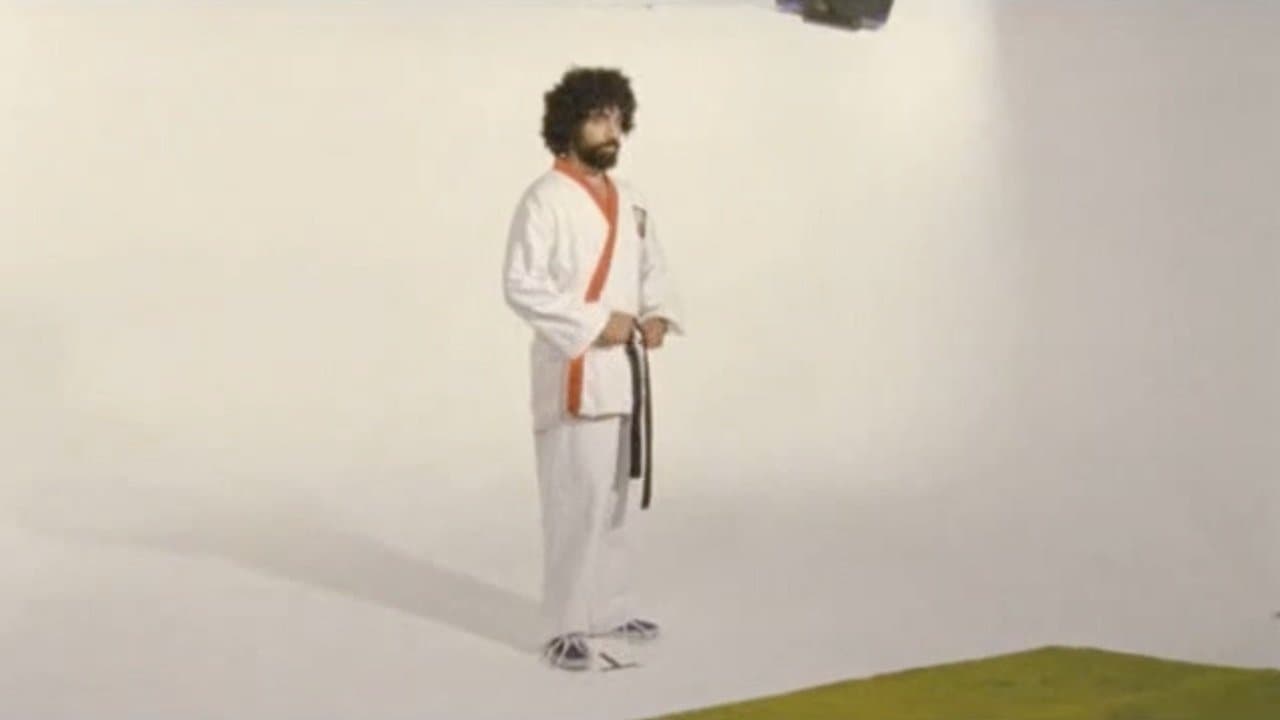
Half a million dollars buys a specific kind of film, and Lin built one that fits inside it. "Finishing the Game" is a mockumentary: handheld interview setups, talking heads against neutral backdrops, and a faux-1970s audition process that can be staged in rooms rather than built as sets. The entire picture was shot in 18 days. That schedule is the budget's defining constraint and its defining advantage, because a mockumentary absorbs a compressed shoot in a way a conventional narrative cannot. Rough coverage and handheld framing read as documentary texture rather than as corners cut.
The $500,000 figure also sits oddly against its director's résumé. Lin had come off Better Luck Tomorrow (2002), the $250,000 Sundance breakout that made his name, and then two studio pictures in a single year: "Annapolis" in January 2006 and "The Fast and the Furious: Tokyo Drift" that June. "Finishing the Game" premiered at Sundance seven months after a franchise sequel with an $85,000,000 budget. It is the rare case of a director stepping down two orders of magnitude on purpose, and the satire's subject, an industry that will hire any Asian American actor who can pass for Bruce Lee, is one no studio was likely to finance.
Key Budget Allocation Categories
At $500,000 across an 18 day schedule, almost nothing about this production is discretionary. The money went to the handful of line items a period mockumentary genuinely cannot avoid:
- Ensemble Cast Over Star Salaries - The film carries a large speaking ensemble: Roger Fan, McCaleb Burnett, Sung Kang, Dustin Nguyen, Mousa Kraish, James Franco, Meredith Scott Lynn, Monique Gabriela Curnen, Sam Bottoms and Ron Jeremy among them. No single performer at this level commands a salary a $500,000 budget could not absorb, so the cost is breadth rather than depth. A cast this size is a scheduling expense as much as a payroll one, because every actor has to be fitted into 18 days.
- The 18 Day Schedule Itself - Crew, equipment rental and insurance all bill by the day, so the shooting schedule is the single largest multiplier on an independent budget. Compressing to 18 days is the primary reason the picture landed at $500,000 rather than well above it, and it is a choice the mockumentary form makes survivable.
- 1970s Period Detail - The satire depends on the era reading correctly: wardrobe, hair, grooming and the specific visual grammar of a 1973 Hong Kong and Hollywood co-production. Period is the one place a comedy like this cannot be cheap without undercutting the joke, so wardrobe and art department carry disproportionate weight against the total.
- Cinematography and Post - Tom Clancey shot the film, and Greg Louie cut it to a lean 84 minutes. A mockumentary is built in the edit more than most narrative features, since the comic timing of an interview cutaway is assembled rather than staged, which shifts a meaningful share of the budget from the shoot into post.
- Original Score - Brian Tyler composed the music. A score that has to pastiche 1970s martial arts cinema convincingly is a real line item, and Tyler's involvement on a half million dollar independent reflects the relationships Lin had built on his studio pictures rather than what the budget could ordinarily command.
- No Prints and Advertising Provision - The $500,000 covers production only. IFC First Take opened the film in a single theater and expanded it to a maximum of five, a platform pattern that carries no meaningful marketing spend and leaves no P&A figure to report.
How Does Finishing the Game's Budget Compare to Similar Films?
Placing $500,000 against its neighbours shows both how ordinary the budget was for American independent film and how far outside the norm the commercial result fell:
- Better Luck Tomorrow (2002) - Budget $250,000 | Worldwide $3,809,226. Lin's own breakout cost half as much and grossed roughly 71 times more. The two films share a director, a producing circle and a subject, which makes the gap a distribution story rather than a filmmaking one: MTV Films and Paramount put "Better Luck Tomorrow" into theaters nationwide, while IFC First Take opened "Finishing the Game" in one.
- The Motel (2005) - Budget $250,000 | Worldwide $51,540. Michael Kang's coming of age drama, produced through the same Asian American independent circuit and featuring Sung Kang, grossed within $2,100 of "Finishing the Game" worldwide on half the budget. The pairing is the clearest illustration available of what a platform release in this corner of the market actually returned in the mid 2000s.
- Napoleon Dynamite (2004) - Budget $400,000 | Worldwide $46,141,106. A comparable production budget and a Sundance premiere produced a result roughly 860 times larger. Fox Searchlight's platform to wide expansion is the variable; the production spend is almost identical.
- The Blair Witch Project (1999) - Budget $60,000 | Worldwide $248,639,099. The reference case for a faux documentary made for almost nothing. It confirms that neither the budget level nor the mockumentary form limits commercial ceiling, and that what separates these outcomes is marketing reach.
- The Fast and the Furious: Tokyo Drift (2006) - Budget $85,000,000 | Worldwide $158,964,610. Lin's studio picture from the year before cost 170 times as much and grossed roughly 2,967 times as much. The comparison is the point: the same director, seven months apart, at opposite ends of the financing spectrum.
What the set makes plain is that $500,000 was never the problem. "Napoleon Dynamite" and "The Blair Witch Project" prove a budget in this range can reach a mass audience. The determining factor for "Finishing the Game" was a five theater maximum release, which caps a gross before a single review is written.
Finishing the Game Box Office Performance
IFC First Take opened "Finishing the Game" in a single theater on October 5, 2007 to $11,903, which accounted for 22.5% of everything the film would eventually earn domestically. It expanded to a maximum of five theaters and averaged a 3.4 week run per location. The domestic gross was $52,868, with $702 from international markets, for a worldwide total of $53,570.
Box Office Breakdown
Finishing the Game (2007)

No prints and advertising spend was disclosed for this release. The usual convention, that a film needs roughly twice its production budget to cover marketing and distribution, is built for a wide release and does not describe a platform run that never exceeded five screens.
Against the production budget alone, the $53,570 worldwide gross recovered roughly 11% of the $500,000 spent to make the film, leaving about $446,430 of production cost unrecouped through theatrical exhibition. That calculation deliberately excludes marketing and the exhibitor's share of the gross, both of which would worsen it. Theatrical was never the whole business for a film of this kind: home video, a DVD release carrying Lin's commentary, and later streaming and television licensing are where a title with Sundance provenance and a cast that includes James Franco and Sung Kang continues to earn, and none of that revenue is publicly reported.
Because no prints and advertising figure exists for this release, there is no total investment against which a per dollar return can be calculated.
Finishing the Game Production History
Lin co-wrote the screenplay with Josh Diamond around a real and unresolved piece of film history. Bruce Lee died in July 1973 with roughly 100 minutes of footage shot for "Game of Death"; the film that eventually reached screens in 1978 filled the gap with doubles, cardboard cutouts and recycled footage. "Finishing the Game" invents the casting search that would have preceded that decision and uses it to examine how the industry of the period saw Asian American actors.
The film was produced by Julie Asato, Salvador Gatdula, Jeffrey Gou and Lin himself, through Cherry Sky Films and Trailing Johnson Productions, with Joan Huang as executive producer. Lin producing his own picture is the structural fact that made a $500,000 budget workable: it removes a layer of approval and lets the director absorb the compromises a compressed schedule forces. Principal photography ran 18 days.
The casting reads as a roll call of the Asian American independent film community Lin had been building since "Better Luck Tomorrow." Roger Fan plays Breeze Loo, the swaggering B movie veteran. Sung Kang, who had appeared in "Better Luck Tomorrow" and would reunite with Lin across the Fast and Furious films, plays Cole Kim. Dustin Nguyen plays Troy Poon, a former television actor chasing relevance. Mousa Kraish plays Raja, and McCaleb Burnett plays Tarrick Tyler, a white actor attempting to pass as Asian, which is the film's sharpest joke about the era. James Franco, fresh off the Spider-Man trilogy, appears as agent Dean Silo, and Ron Jeremy and Sam Bottoms fill out the margins.
That ensemble has aged into its own argument for the film. Sung Kang went on to Snakehead (2021), directed Shaky Shivers (2022), appeared in Weekend in Taipei (2024), and delivered his feature directorial debut with Drifter (2026), which premiered at Toronto in September 2026 on a budget raised from the car community. Lin, meanwhile, returned to the franchise he had left, directing "Fast & Furious" in 2009 and three further entries. "Finishing the Game" sits in the middle of both careers as the film neither man had to make.
Distribution went to IFC First Take, the arm of IFC Films built for day and date and limited theatrical runs, with The Weinstein Company also attached. The release strategy was platform from the outset. One screen on October 5, 2007, a maximum of five, and no wide expansion at any point.
Awards and Recognition
"Finishing the Game" had its world premiere as an Official Selection at the 2007 Sundance Film Festival on January 21, 2007, nine months before it reached theaters. It was subsequently chosen as the opening night film of the 25th San Francisco International Asian American Film Festival, a placement that reflects the standing Lin held in that community after "Better Luck Tomorrow" premiered at the same festival circuit five years earlier.
No competitive awards or major award nominations for the film are on record. Its recognition is the festival selection itself: a Sundance berth and an opening night slot, both secured before the reviews that followed.
Critical Reception
Reviews were largely unfavourable. On Rotten Tomatoes the film holds a 34% approval rating from 35 reviews with an average score of 4.8 out of 10, and the site's critical consensus reads: "Though Justin Lin's premise is precocious enough, the sight gags and comic timing are tired in this mockumentary about Asian typecasting in the 1970s." Metacritic assigns a score of 46 out of 100 from 10 critics, in its "mixed or average" band. The audience score on Rotten Tomatoes sits higher, at 47% from more than 2,500 ratings.
The negative reviews converged on execution rather than intent. Mark Rahner of the Seattle Times wrote that "this tedious mockumentary isn't even as entertaining as one of Ed Wood's actual films." The Los Angeles Times found it "intermittently funny at best, but mostly full of dead air." Noel Murray, writing for The A.V. Club, made the most specific version of the complaint: that "Finishing the Game doesn't get anywhere that Hollywood Shuffle didn't go to first," and that "there's a much richer movie hiding in Finishing the Game, having to do with loss of cultural identity," which the mockumentary format keeps at arm's length.
The defenders responded to the film's target rather than its gag rate. David Wiegand of the San Francisco Chronicle called it "a very funny, equal-opportunity broadside that targets Asian stereotyping." Don Willmott at Filmcritic.com wrote that "you can easily tell how great a time everyone is having, and it's infectious." The split is consistent: critics who valued the argument about representation rated it well above those measuring it strictly as a comedy, which is the same divide that produced a 34% critic score and a 47% audience score on the same aggregator.
Frequently Asked Questions
What was the production budget of Finishing the Game (2007)?
Finishing the Game was produced on a confirmed budget of $500,000. That sum covered an 18 day principal photography schedule, a large speaking ensemble, 1970s period wardrobe and art department work, Tom Clancey's cinematography, Greg Louie's edit and an original score by Brian Tyler. It does not include any prints and advertising spend, because distribution was handled separately by IFC First Take as a limited platform release.
How much did Finishing the Game make at the box office?
The film grossed $52,868 domestically and $702 internationally for a worldwide total of $53,570. It opened in a single theater on October 5, 2007 to $11,903, which represented 22.5% of its entire domestic run, and expanded to a maximum of five theaters with an average booking of 3.4 weeks per location.
Was Finishing the Game profitable?
Not through theatrical exhibition. The $53,570 worldwide gross recovered roughly 11% of the $500,000 production budget, leaving approximately $446,430 of production cost unrecouped, and that calculation excludes both marketing spend and the exhibitor's share of ticket revenue. No prints and advertising figure has been disclosed for the release, so a complete return on total investment cannot be calculated. Home video, DVD, streaming and television licensing revenue for the title has never been publicly reported.
Why did Finishing the Game earn so little despite premiering at Sundance?
Release width, not reception, set the ceiling. IFC First Take opened the film on one screen and never expanded it beyond five, a platform pattern that caps a gross regardless of how the film plays. For comparison, Napoleon Dynamite was made for a similar $400,000 and grossed $46,141,106 worldwide after Fox Searchlight expanded it from a platform launch into wide release. A five theater maximum makes a result above roughly $100,000 arithmetically difficult.
Who stars in Finishing the Game and who plays which role?
Roger Fan plays Breeze Loo, a swaggering B movie veteran, and McCaleb Burnett plays Tarrick Tyler, a white actor attempting to pass as Asian. Sung Kang plays Cole Kim, Dustin Nguyen plays Troy Poon, and Mousa Kraish plays Raja. James Franco appears as agent Dean Silo, with Meredith Scott Lynn, Monique Gabriela Curnen, Sam Bottoms, Jake Sandvig and Ron Jeremy filling out the supporting cast across the film's 84 minute running time.
How did critics receive Finishing the Game?
Reviews were mostly negative. Rotten Tomatoes records a 34% approval rating from 35 reviews with a 4.8 out of 10 average, and Metacritic assigns 46 out of 100 from 10 critics. Mark Rahner of the Seattle Times called it a tedious mockumentary, while David Wiegand of the San Francisco Chronicle praised it as a very funny, equal opportunity broadside targeting Asian stereotyping. The Rotten Tomatoes audience score is higher, at 47% from more than 2,500 ratings.
Filmmakers
Finishing the Game (2007)

Official Trailer
Build budgets like this one in Saturation
Start from an industry-standard feature film template, import the schedule and rates you already have, and let the cost report keep itself current as you spend. Real-time collaboration, no spreadsheets.